How do pilots control an emergency evacuation?

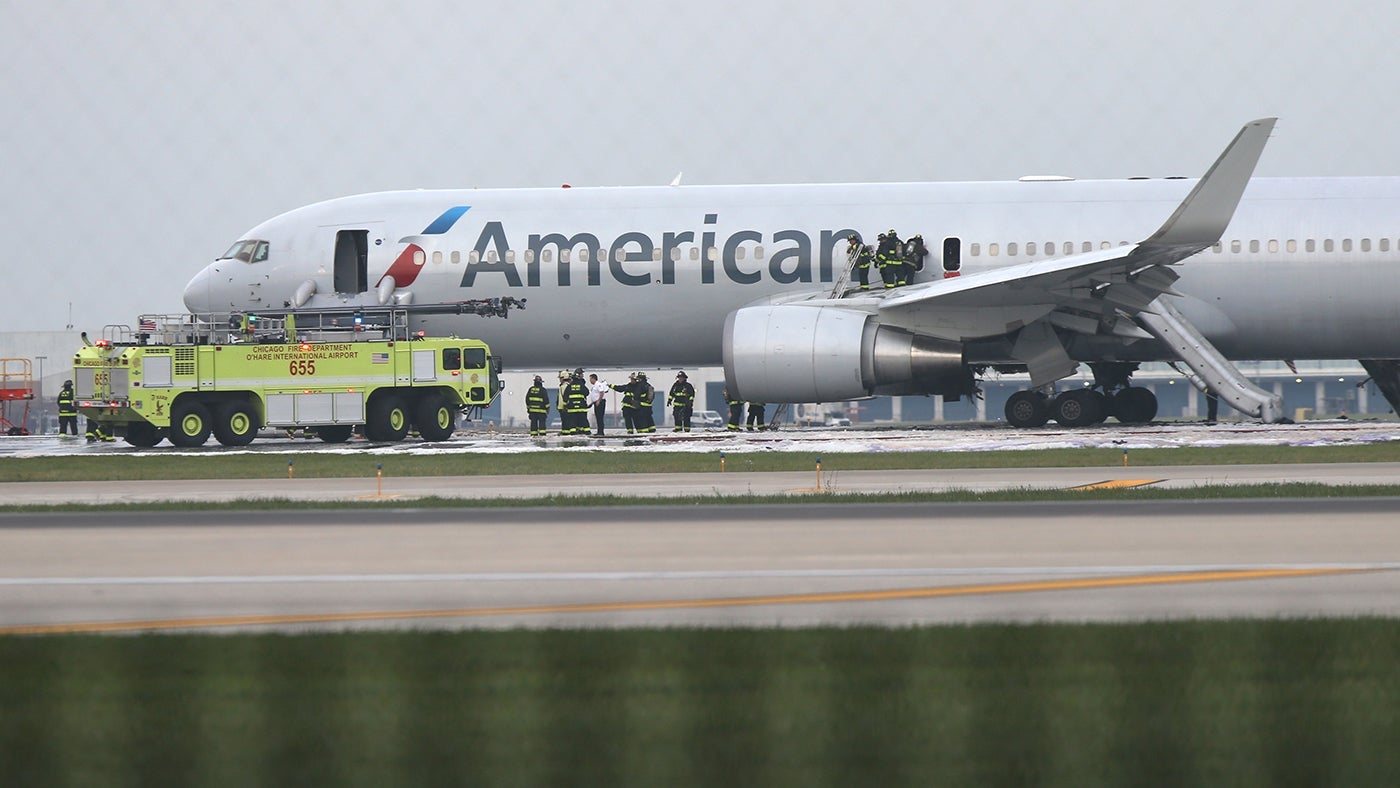
Commanding an emergency evacuation is one of the most serious decisions we can make as a pilot. It is also one of the most stressful. Invariably it has come about from an unexpected event, for example, an engine fire on the takeoff run. The key to a successful outcome is to be able to think calmly and clearly, deciding if an evacuation is indeed the best option for the situation.
In the flight deck
The decision to evacuate an aircraft is not as straightforward as it may seem. Ultimately it comes down to whether the captain deems it is safer to remain inside the cabin or outside on the ground.
Unfortunately, due to the nature of the evacuation, some people will get injured. It's not uncommon to have several people with sprained ankles and broken arms as they move away from the aircraft. In addition, the outside environment must also be considered.
Departing at night in the middle of the Canadian winter, evacuated passengers may have to wait some time in the freezing weather before they are returned to the terminal building. Less than ideal when most people are probably not dressed for the occasion.
As a result, we must weigh up the pros and cons of both options.
"This is an emergency. Evacuate. Evacuate."
More often than not, the situation leading to a potential evacuation would be unexpected. Meaning that it is most likely to have come from a rejected takeoff or a problem as part of a normal landing. As a result, the flight attendants will be as surprised as the passengers.
To alert the crew to the potential need for an evacuation, we will make an announcement on the PA system, the exact wording will be airline specific. "Flight attendants! At doors!", for example.
Importantly, this is not an instruction for the crew to begin evacuation but to alert them that one may be necessary. This alert call gives them time to prepare, checking that the door is in the automatic mode, making sure that the escape route is clear and looking through the window for any hazards such as a fire.
The evacuation checklist
If the decision to evacuate is made, it is done slowly and methodically. All aircraft types will have a hard copy of the evacuation checklist on the back of the quick reference handbook. This gives us easy access to the procedure, even if all the screens in the flight deck have powered down.

The aim of the checklist is to put the aircraft into a safe configuration to allow the crew to begin the evacuation. Jumping down the slides when the engines are still running could potentially be fatal.
The captain and first officer run the checklist together, normally with the first officer reading it out loud. For example: "Number one. Captain. Parking brake. Set."
With adrenaline pumping, the danger is getting caught up in the situation, rushing through the checklist and missing out an item, or actioning it incorrectly. To counter this, we deliberately read it as slowly as possible. This may seem counter-intuitive for the situation but it is much better to take a few seconds longer to complete the checklist correctly than to finish it too quickly and make mistakes.
Read more: What happens when pilots have to fly without an autopilot?

The first line ensures that the aircraft is stationary. It may sound obvious, but at night, with no visual references out of the window, a slow forward movement is difficult to detect. With the park brake set, we must then equalize the pressure between the inside and outside of the aircraft.
As we start the takeoff roll, the air conditioning system begins to pressurize the cabin. With this difference in pressure, it can be difficult to open the doors. As a result, we must open the outflow valves to allow the air pressure to equalize.
Next, possibly the most important step, the engines must be shut down. If even they are not on fire, they can still cause fatal injuries to those who get too close both in front and behind them.
With the engines shut down, all electrical power will be lost. However, the aircraft will detect this power loss and automatically convert to using the emergency battery. This will continue to power essential items such as the evacuation lighting and some flight deck equipment such as the radios.
Do we really want to jump?
With the first four steps complete, we pause.
The aircraft is now in a safe configuration to evacuate. However, this does not mean that we still have to see it through. By shutting the engines down, maybe the smoke in the cabin has cleared. Maybe the fire in the engine has gone out. This is our final chance to decide if we really want to start jumping.
To get to this point could take a couple of minutes. In the moment, it will feel like hours to those in the cabin. However, with the crew at their doors, it is a signal that the pilots are dealing with the problem. We are assessing what is the safest course of action. If we haven't initiated the evacuation, it could be due to a reason that those in the cabin are unaware of. Stay seated, listen to the crew and wait for instructions.
If, after careful deliberation, we decide that it is safer to be outside the aircraft, we continue with the checklist.
Step five is the point of no return. When the captain makes the announcement to the cabin, it is the sign for the cabin crew to start the evacuation procedure. This is backup with the activation of the evac alarm by the captain. This produces a loud, piercing beeping at each cabin door. If the crew did not hear the PA for whatever reason, the activation of the alarm is their signal to open the door.
The final stages of the checklist involve securing the engines by pulling the fire handles. This totally disconnects the engines from the fuel supply. If there are any indications of fire we discharge the fire extinguishers.
Read more: To land or to divert? How pilots decide the safest option
Time to leave
With the checklist complete, it's time for us to leave the flight deck. On the way out, we will grab a high visibility jacket and also the flight paperwork. This will show the fire services where any dangerous goods (more on this next week) are located in the cargo holds.
Before leaving the cabin, conditions permitting, we will make one last check of the cabin to ensure that everyone is out. We will then exit down the slides with the captain taking charge on the left-hand side of the aircraft and the first officer on the right.
Certification test
For an aircraft to be certified to carry a certain number of passengers, the manufacturer must satisfy the regulating authorities that they can all be safely evacuated in less than 90 seconds. Not only must this be done in the 90-second time frame, but it must also be completed with only half of the exit doors available.
One of the most impressive tests to prove this was done by Airbus for the A380.
Doors to automatic and crosscheck
The Boeing 787 Dreamliner has eight cabin doors, all of which are fitted with a slide/raft. In the event of an emergency evacuation, these automatically inflate creating a slide when on land and a raft if the aircraft is on water. However, how do we know when the slide will inflate and when it will not? The clue is in the title above.
The cabin doors are needed on a daily basis not only to allow passengers to board and disembark but also to give access to caterers and cleaners who prepare the aircraft for its next flight. As a result, the doors need to be able to open without the slide deploying, but then be ready to deploy when the aircraft is moving.

If you've ever wondered what the large box on the bottom of the door that sometimes obstructs your legroom is, it is called the slide bustle. In here, the slide/raft is perfectly packed, ready to be deployed when needed.
In normal operation, the slide sits in the bustle, allowing the door to be opened without the slide deploying. However, when we push back from the gate, the crew change the door mode into "automatic" by moving the mode select lever in the door.
This lever moves a bar in the bottom of the slide, known as the girt bar, and connects it to brackets in the door frame. On the 787, this is hidden away out of view. However, on older types of the 737, this is done manually and can be seen in the video below.
Read more: How pilots deal with radiation and flights over the North Pole
With the door in automatic mode and the girt bar attached to the aircraft floor, when the door is opened the slide is dragged from its stowage and falls out.
In addition, when moving the lever to automatic mode, the emergency power assist systems (EPAS) is armed. When the door handled is rotated to the open position, the EPAS uses electric and pneumatic power to drive the door open, without the need for the crew member to push it. This can be seen in the video below
Opening the door of a 787 Dreamliner in automatic mode. With the handle in the open position, the EPAS drives the door open. (The automatic closing is only part of the door trainer and does not happen on the aircraft).
How the slide works
When the door opens in automatic mode, as the slide is connected to the floor in the doorway, it is dragged out from the bottom of the floor. This activates the automatic inflation of the slide.
It is important to note that it can take up to 10 seconds for the slide to fully inflate. During this time, the crew member will guard the doorway, instructing passengers to wait until it is safe to leave the aircraft.
If you find yourself in the position where you are responsible for opening a door in an emergency, remember this important point.
On the 787, doors one and three have a single lane slide/raft and doors two and four have a dual lane slide/raft. When inflated, these angle away from the engines, giving a greater distance from the bottom of the slide and any hazard around the engine or wing. This can be seen in the video below.
With the slide inflated, it is time to start evacuating the aircraft as quickly as possible.
The correct technique when evacuating is to "jump and slide". Do not stop to ease yourself onto the slide as this will only delay the evacuation of those behind you. As you descend the slide, cross your arms across your body and prepare for the landing.
If people just slid off the bottom of the slide, there would be a huge pile-up of bodies. To stop this from happening, at the bottom of the slide is a friction strip. When you hit this strip, your legs and behind are rapidly slowed but the inertia of your upper body causes you to be thrown up onto your feet in a forward motion.
This forward motion encourages you to keep moving away from the slide, creating space for those evacuating behind you.
Bottom line
To achieve a safe outcome from an emergency evacuation, everyone on board has their part to play. As pilots, before every single departure, we rehearse what we would do in the event of an emergency evacuation. When the crew are sat in their seats before departure, they are running through in their heads what they would do if a sudden evacuation is needed.
Passengers can also help. By reading the safety card and knowing where your nearest exit is located, you can directly affect how long it will take to exit the aircraft in a hurry.
Finally, on behalf of all pilots and flight attendants around the world, please watch the safety demonstration. It's for your benefit.
TPG featured card

at Capital One's secure site
Terms & restrictions apply. See rates & fees.
| 5X miles | Earn 5X miles on hotels, vacation rentals and rental cars booked through Capital One Travel |
| 2X miles | Earn unlimited 2X miles on every purchase, every day |
Pros
- Stellar welcome offer of 75,000 miles after spending $4,000 on purchases in the first three months from account opening. Plus, a $250 Capital One Travel credit to use in your first cardholder year upon account opening.
- You'll earn 2 miles per dollar on every purchase, which means you won't have to worry about memorizing bonus categories
- Rewards are versatile and can be redeemed for a statement credit or transferred to Capital One’s transfer partners
Cons
- Highest bonus-earning categories only on travel booked via Capital One Travel
- LIMITED-TIME OFFER: Enjoy $250 to use on Capital One Travel in your first cardholder year, plus earn 75,000 bonus miles once you spend $4,000 on purchases within the first 3 months from account opening - that’s equal to $1,000 in travel
- Earn unlimited 2X miles on every purchase, every day
- Earn 5X miles on hotels, vacation rentals and rental cars booked through Capital One Travel
- Miles won't expire for the life of the account and there's no limit to how many you can earn
- Receive up to a $120 credit for Global Entry or TSA PreCheck®
- Use your miles to get reimbursed for any travel purchase—or redeem by booking a trip through Capital One Travel
- Enjoy a $50 experience credit and other premium benefits with every hotel and vacation rental booked from the Lifestyle Collection
- Transfer your miles to your choice of 15+ travel loyalty programs
- Top rated mobile app