How to Fly With a Hearing Impairment

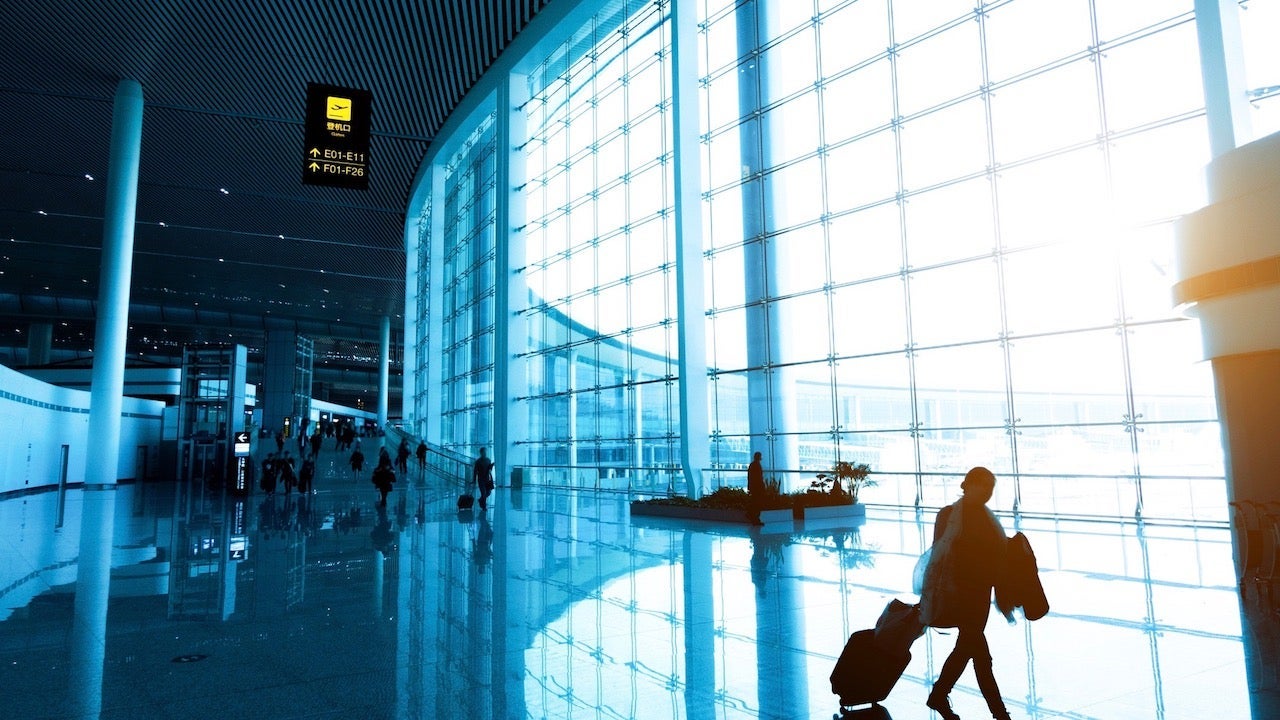
Unless you travel through exclusive VIP terminals like The Private Suite at LAX or the Lufthansa First Class Terminal, and put on your noise-canceling headphones the moment you board the plane, air travel is far from a quiet experience. From reminders to place your large electronic devices in separate bins when going through TSA screening, to last minute gate changes, passengers encounter countless announcements — both on the ground and in the air. With the exception of dubious credit card pitches made on many flights, most announcements provide important flight information.
So, what do you do if you are deaf or hard of hearing? While it may seem daunting at first, airlines, airports and the TSA have policies in place to make flying as seamless as possible for those who are hearing-impaired.
Notify the airline
Airlines ask that you notify them about any auditory disabilities at least 24 hours before your flight through a Special Service Request (SSR) regardless of whether you require special assistance. This can be as simple as checking a box when managing your booking online, DMing the airline on Twitter or calling.
More than anything, the purpose of an SSR is to make the airline crew aware of the disability and offer services like preboarding. Unless you specifically request special assistance, this doesn't mean that someone will be there to accompany you through the airport. "Sometimes it's just meant to identify the customer so that the flight attendant is aware where they're seated and so that the gate agent can ensure they've boarded," an American Airlines spokesperson told TPG in an email.
That said, Dr. Nicole E. Snell, an assistant professor at Bentley University in Boston who is hard of hearing, suggests that it's not uncommon for SSRs to be misunderstood: "Perhaps the most comical result of such a request was a wheelchair waiting for me after the flight. Obviously, I didn't need it," she said in an email. "This occurrence has also happened to other deaf/hard-of-hearing individuals as well, so it wasn't just an isolated incident."
Besides SSRs being miscommunicated, they can sometimes be forgotten, so you'll want to remind the airline when you arrive at the airport. "My routine when traveling is to first tell the ticket agent at the counter, while checking baggage. I do this, so they can tell me if there have been audio announcements about the flight and boarding," Snell explained.
Don't be afraid to ask for assistance, if necessary
Whether or not you submitted an SSR, you can, and should, ask for assistance whenever necessary. This is not limited to assistance from airline crewmembers, but also TSA and Customes & Border Patrol officers.
[pullquote]Perhaps the most stressful part of traveling without being able to hear audio announcements is making sure that I make it through the security checkpoint without delay.[/pullquote]
Snell always tells officers at security checkpoints that she cannot hear, in case they attempt to talk from behind her. "You must stay alert and aware of your surroundings. They are usually understanding and helpful," Snell said. You are not required to remove any hearing aids or cochlear implants, though additional screening may be required if the devices cause the screening machines to beep.

For the best experience, passengers requiring additional assistance at the checkpoint are encouraged to call or email the TSA Cares helpline 72 hours before travel. Dial (855) 787-2227 x 711 to reach a representative on weekdays between 8am to 11pm ET, or on weekends and holidays between 9am to 8pm ET. However, don't fret if you forget to call; you could also ask a TSA officer or supervisor for a passenger support specialist who can provide on-the-spot assistance.
The same is true with proceeding through immigration. While travelers requiring special assistance when going through US immigration are encouraged to request it from the airline, "any supervisor or manager will assist, support, and/or coordinate reasonable accommodations for travelers," a CBP spokesperson told us.
Use the airlines' mobile apps
Flight display boards aside, your best bet for staying up-to-date on important information is by using the airlines' mobile apps. The apps tend to be pretty user friendly and will notify you the moment there is a change to your flight — often even before the gate agent makes an announcement about it. That is, of course, only if your phone has strong enough cellular service for the app to work in the background, so you should still regularly refresh it manually given how spotty service can be in airports. In addition to getting notifications from the apps, you'll want to provide your mobile number when booking flights to sign up for flight change alerts via text.
Take advantage of preboarding
You'll want to get to your gate early and let the gate agents know about your hearing impairment. Although they should already be aware of this if you submitted the SSR, this will allow them to remember your face and find you when it's time to board. You'll typically be the first one on the plane, giving you plenty of time to communicate with the flight attendants and verify your preferred communication method (for example, lip reading or written notes). As an added benefit, you also won't need to worry about finding space for your bag in the overhead bins.
Enjoy your flight
Being profoundly deaf unfortunately means that you won't be able to snag an extra legroom seat in an emergency row, though those with lesser degrees of loss may, provided they answer affirmatively to the crewmembers' questions. That said, you may request disability seating from the airline — free of charge, of course. These tend to be aisle seats in the front of the cabin, in the "preferred" seating area, making it easy to lip read announcements and for flight attendants to get to you quickly to communicate important information. You can ask flight attendants to let you know when safety announcements are made, if turbulence is forecast and if you'll be arriving late.
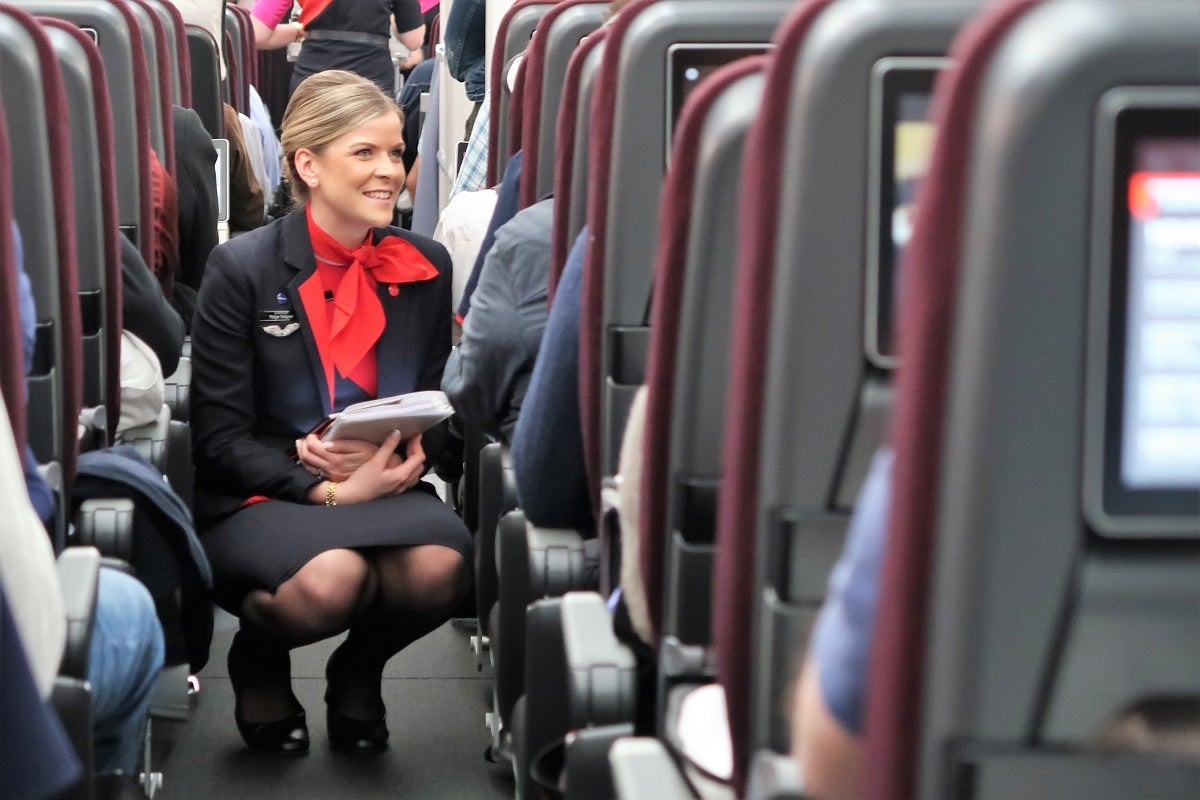
Snell described closed captioning (CC) for in-flight entertainment as an absolute dream, but it hasn't always been consistently offered. Luckily, that's changing. The US Department of Transportation recently mandated the following:
- All new in-flight entertainment systems, whether on newly delivered aircraft or newly-installed on existing aircraft, must be capable of supporting closed captions and audio descriptions as of the effective date of the final rule.
- If an aircraft has inaccessible seatback in-flight entertainment systems, it must provide an alternative personal entertainment device with accessible comparable video content.
- Airlines shall request from video content providers that 100% of covered in-flight entertainment content are closed-captioned and audio-described, and shall obtain such covered video content with closed captions and audio descriptions available from the content providers, including edited versions.
- Airlines will need to provide users the ability to customize closed captions (font sizes, colors, etc.)
American Airlines, Delta and United already offer a selection of CC entertainment on all planes with seatback screens, and for the most part, the feature is easy to locate. United recently improved its entertainment options for customers with disabilities by adding a main menu category titled "Accessible Entertainment" on seatback on-demand systems so that all titles with accessible content will appear in one list. JetBlue offers CC entertainment on its entire fleet of A321 aircraft and will begin offering it on restyled A320s equipped with a new in-flight entertainment system.
The CC selection is even greater with wireless entertainment — it's available for all entertainment sourced by Gogo and streamed on-demand on their in-flight entertainment service, Gogo Vision (available on airlines like Alaska, American, Delta and United). Additionally, Southwest's streaming provider offers it for live TV channels.
Before you know it, you'll be on the ground and your journey will come to an end — at least the flying part. Airlines' mobile apps and text alerts will typically provide you with important arrival information like gate and baggage carousel numbers. If you are connecting on to another flight, you can ask ground crew if someone can accompany you to your next gate.
"Don't be afraid to let ticketing, security, and gate agents know you can't hear. Often, they are super helpful and it makes for a less stressful trip all around," Snell said.
TPG featured card

at Capital One's secure site
Terms & restrictions apply. See rates & fees.
| 5X miles | Earn 5X miles on hotels, vacation rentals and rental cars booked through Capital One Travel |
| 2X miles | Earn unlimited 2X miles on every purchase, every day |
Pros
- Stellar welcome offer of 75,000 miles after spending $4,000 on purchases in the first three months from account opening. Plus, a $250 Capital One Travel credit to use in your first cardholder year upon account opening.
- You'll earn 2 miles per dollar on every purchase, which means you won't have to worry about memorizing bonus categories
- Rewards are versatile and can be redeemed for a statement credit or transferred to Capital One’s transfer partners
Cons
- Highest bonus-earning categories only on travel booked via Capital One Travel
- LIMITED-TIME OFFER: Enjoy $250 to use on Capital One Travel in your first cardholder year, plus earn 75,000 bonus miles once you spend $4,000 on purchases within the first 3 months from account opening - that’s equal to $1,000 in travel
- Earn unlimited 2X miles on every purchase, every day
- Earn 5X miles on hotels, vacation rentals and rental cars booked through Capital One Travel
- Miles won't expire for the life of the account and there's no limit to how many you can earn
- Receive up to a $120 credit for Global Entry or TSA PreCheck®
- Use your miles to get reimbursed for any travel purchase—or redeem by booking a trip through Capital One Travel
- Enjoy a $50 experience credit and other premium benefits with every hotel and vacation rental booked from the Lifestyle Collection
- Transfer your miles to your choice of 15+ travel loyalty programs
- Top rated mobile app