5 Surprising Things You Might Not Know About Air Traffic Controllers

TPG Contributor "Vic Vector" is an air traffic controller at a major ATC facility in the United States. In this installment of our "Insider Series," he shares some behind-the-scenes facts about how being an ATC really works.
If you've been following my ATC Insider Series for a while, hopefully by now you're well versed in the world of air traffic control and the influence it has on the travel industry. If not, or if you're curious to learn more about how it all works, here are five things that might surprise you about the job of an air traffic controller.
1. We Don't All Work in Towers
While air traffic control towers are certainly the most visible part of our workplaces, tower controllers are only responsible for the airport surfaces and the airspace immediately surrounding the airport.
Everything not in or near a major airport — as in, the vast majority of the airspace in this country — is under the charge of controllers using radar who work in dark, windowless rooms, sometimes hundreds of miles away from the airspace they're watching.
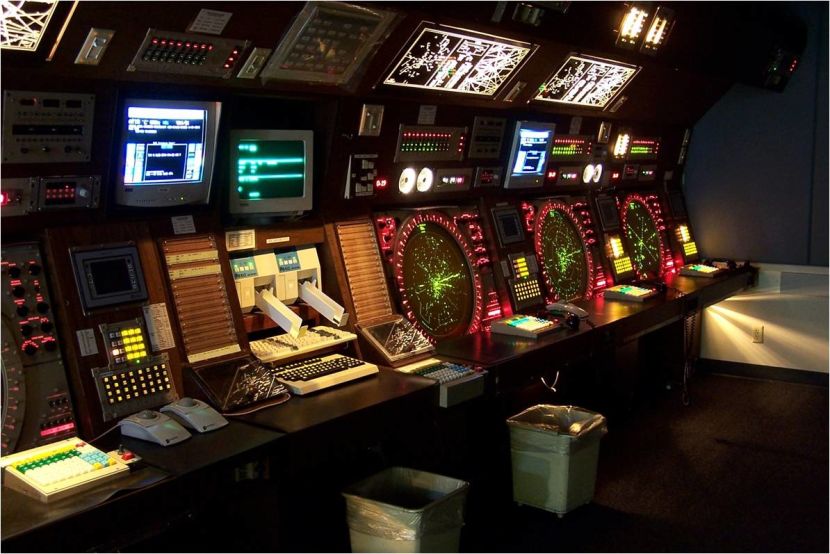
2. Our Schedules Tend to be Fairly Terrible
Air traffic control is a 24/7/, 365 days a year business. Not only do airplanes fly at night, over weekends and on holidays, but those actually tend to be some of our busiest times.
As a result, most air traffic facilities have people manning the tower or radar scopes continuously. Most controllers work a variety of shifts, with the most common schedules starting the week off with night shifts and finishing the week with day shifts. This is great because it maximizes your weekend time off, however it also means that at some point every week you'll work what we call a "quick turn," or a night shift immediately followed by a day shift.
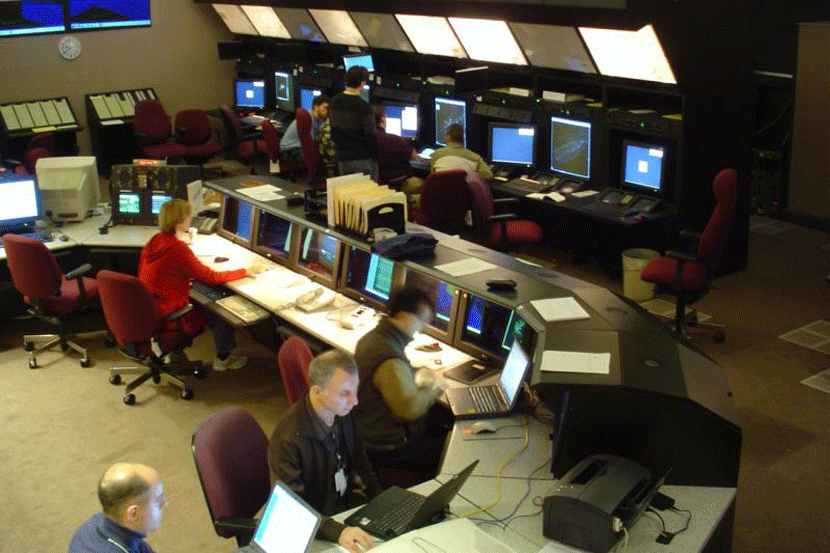
By the way, when I say "weekend," I'm using the term figuratively. Our schedules are bid annually based on seniority, so it can often take years or even decades for a controller to get weekends off. Most junior controllers have RDOs (regular days off) like Tuesday/Wednesday or a Wednesday/Thursday break.

3. The Stress is Real But We're Well Compensated for Our Efforts
Invariably the first comment anyone makes when they find out what I do is "Oh, I hear that's so stressful."
While that can be true, it's not always the case. Traffic tends to come in waves, or "pushes" as we call them, so there are some slow moments where the hardest part is just staying focused.
However, if you add bad weather or an emergency situation to an already busy push, things can get very stressful very quickly. In the winter, ice and snow storms reduce arrival capacity at airports and make it difficult for aircraft to take off and land. During the summer months, thunderstorm season wreaks havoc daily on air traffic as airplanes are rerouted or deviate from their courses to avoid storm cells.

Staffing levels are trending downward at facilities all over the country as about a third of the 10,000+ controller workforce is eligible to retire, and we're struggling to keep up with the losses.
This job is certainly not for everyone, but the good news (for those of us who can hack it) is that in general, we are paid at a level commensurate to our responsibility — for instance, the median pay of an air traffic controller in 2015 was $122,950 or about $59 per hour. Not too shabby.
4. Many of us Are Also Pilots
While a college degree is not specifically a requirement to be hired as an air traffic controller, I would estimate that the majority of controllers do in fact have them. Many have an aviation background of some sort, and for some of us, our interest and passion in aviation has led to flying lessons along the way.
From private pilots to commercial flight instructors, the full spectrum of flying experience is often represented inside an ATC facility. It's also not unheard of in recent years for airline pilots to leave low paying regional airlines in search of greener, higher paying pastures as an air traffic controller.

From private pilots to commercial flight instructors, the full spectrum of flying experience is often represented inside an ATC facility. It's also not unheard of in recent years for airline pilots to leave low paying regional airlines in search of greener, higher paying pastures as an air traffic controller.
Though flying experience is by no means a requirement to do the job — surely some controllers have never set foot inside an airplane — having a baseline of aviation knowledge and experience can certainly make initially learning the job easier.
5. Certifying at a Busy ATC Facility is Basically Like Getting a Graduate Degree
All controllers spend several months at the FAA Academy in Oklahoma City learning the basics before reporting to their facility to begin training. The time it takes to fully certify as an air traffic controller varies depending on the actual facility. At a smaller, low-level tower with light traffic, it may only take a matter of months, whereas at a larger, busier radar facility, it could take upwards of three or four years.
Think of the national airspace system as a giant three-dimensional puzzle with hundreds of pieces connecting to one another. The job of an air traffic controller is to become a subject matter expert on every single thing about their piece of the puzzle.
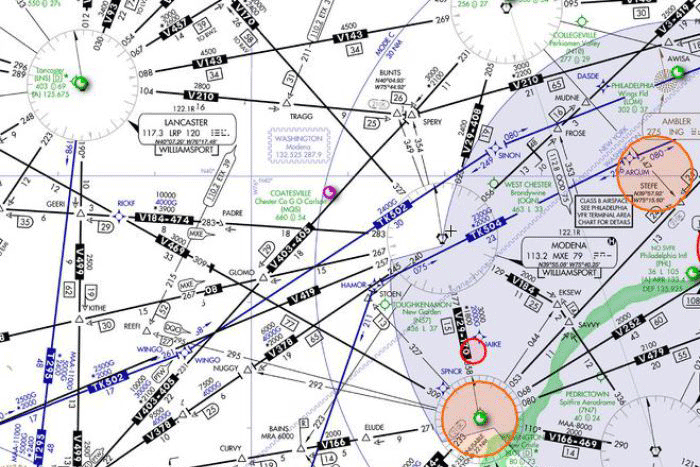
This starts right away with map drawing a process by which new controllers must memorize every airway, navigational aid, intersection, radio frequency, bit of airspace and all standard operating procedures pertaining to their puzzle piece and the puzzle pieces immediately surrounding them. It's a dizzying amount of information that can take weeks or months to commit to memory before our real training even begins.
A Final Tip
For more information, check out some of my earlier installments of this Insider Series. And if you have any questions or misconceptions you'd like cleared up in a future post, let me know in the comments, below.
TPG featured card

at Capital One's secure site
Terms & restrictions apply. See rates & fees.
| 5X miles | Earn 5X miles on hotels, vacation rentals and rental cars booked through Capital One Travel |
| 2X miles | Earn unlimited 2X miles on every purchase, every day |
Pros
- Stellar welcome offer of 75,000 miles after spending $4,000 on purchases in the first three months from account opening. Plus, a $250 Capital One Travel credit to use in your first cardholder year upon account opening.
- You'll earn 2 miles per dollar on every purchase, which means you won't have to worry about memorizing bonus categories
- Rewards are versatile and can be redeemed for a statement credit or transferred to Capital One’s transfer partners
Cons
- Highest bonus-earning categories only on travel booked via Capital One Travel
- LIMITED-TIME OFFER: Enjoy $250 to use on Capital One Travel in your first cardholder year, plus earn 75,000 bonus miles once you spend $4,000 on purchases within the first 3 months from account opening - that’s equal to $1,000 in travel
- Earn unlimited 2X miles on every purchase, every day
- Earn 5X miles on hotels, vacation rentals and rental cars booked through Capital One Travel
- Miles won't expire for the life of the account and there's no limit to how many you can earn
- Receive up to a $120 credit for Global Entry or TSA PreCheck®
- Use your miles to get reimbursed for any travel purchase—or redeem by booking a trip through Capital One Travel
- Enjoy a $50 experience credit and other premium benefits with every hotel and vacation rental booked from the Lifestyle Collection
- Transfer your miles to your choice of 15+ travel loyalty programs
- Top rated mobile app