The Points Guy believes that credit cards can transform lives, helping you leverage everyday spending for cash back or travel experiences that might otherwise be out of reach. That's why we publish a variety of editorial content and card comparisons: to help you find a great card to turn your goals into reality.
Our site may earn compensation when a customer clicks on a link, when an application is approved, or when an account is opened with our partners, and this may impact how or where these products appear. While we don't cover all available credit cards, our editorial team creates and maintains all of the analysis of these cards, and our content is not influenced nor subject to review by any credit card company, bank or partner prior to (or after) publication. Please view our advertising policy and product review methodology for more information.
Advertiser disclosure
The Points Guy believes that credit cards can transform lives, helping you leverage everyday spending for cash back or travel experiences that might otherwise be out of reach. That's why we publish a variety of editorial content and card comparisons: to help you find a great card to turn your goals into reality.
Our site may earn compensation when a customer clicks on a link, when an application is approved, or when an account is opened with our partners, and this may impact how or where these products appear. While we don't cover all available credit cards, our editorial team creates and maintains all of the analysis of these cards, and our content is not influenced nor subject to review by any credit card company, bank or partner prior to (or after) publication. Please view our advertising policy and product review methodology for more information.
News
Travel essentials that can save your trip when things go wrong
Clint Henderson is a managing editor at TPG who has worked in the journalism industry for more than 25 years. He is obsessed with travel and has used points and miles to explore the world.
July 15, 2026 • 9 min read
The cards we feature here are from partners who compensate us when you are approved through our site, and this may impact how or where these products appear. We don't cover all available credit cards, but our analysis, reviews, and opinions are entirely from our editorial team. Terms apply to the offers listed on this page. Please view our advertising policy and product review methodology for more information.Editorial disclaimer: Opinions expressed here are the author's alone, not those of any bank, credit card issuer, airline or hotel chain, and have not been reviewed, approved or otherwise endorsed by any of these entities.
Comments
By commenting, you agree to our Community Guidelines to help create a positive space for conversation. The responses below are not provided or commissioned by the bank advertiser, our partners, or The Points Guy (“TPG”). They have not been reviewed, approved, or otherwise endorsed by any of these parties. All responses are submitted by individual contributors, and neither the bank advertiser, our partners, nor TPG are responsible for ensuring that all posts and/or questions are answered.
Related stories
Quick summary
Travelers should always pack essential documents such as passports, backup identification and printed copies of key travel details.
Carrying a Global Entry card can be crucial, especially at certain border crossings and preclearance facilities where physical proof may be required.
Printed itineraries, hotel confirmations and emergency contacts provide a vital backup if technology fails or devices are lost.
Bringing backup payment methods and proof of parentage for children can help avoid complications during travel.
What to consider
Some border crossings and airports may require physical documentation, not just digital versions, for entry or expedited processing.
Airlines may request the original payment method at check-in, particularly for international routes, so travelers should confirm requirements in advance.
Carrying notarized documents and official permissions is recommended for families, especially when traveling with children or in complex custody situations.
What you'll miss from the article
Personal anecdotes and detailed packing strategies from experienced travelers that can help you prepare for unexpected travel disruptions.
Generated by AI with support from our editorial team.
They're some of the most panic-inducing things that can happen on a trip: realizing your phone is dead or gone, leaving you without access to trip details or the ability to check in; losing your passport or other form of ID ahead of a flight; or being asked for proof of where you are going only to realize you don't have the necessary documentation to show.
It has happened to most of us at TPG.
Learn from our experiences (and mistakes) and always pack these essentials so you can better protect your trips (and peace of mind) when you travel.
Passports
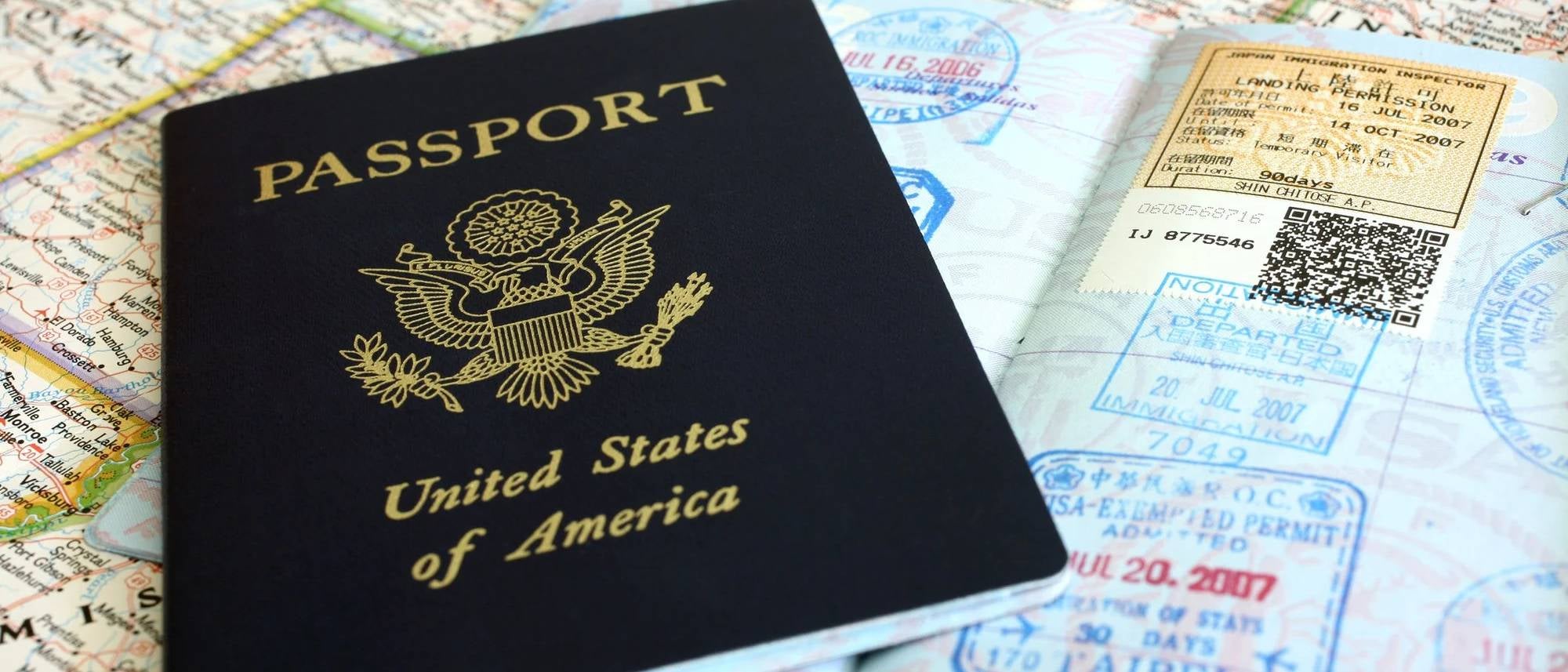
U.S. passport book open showing stamps from around the world. YENWEN/GETTY IMAGES
Passports are absolutely critical when traveling abroad (even to Canada), and several of us on the TPG staff go to extraordinary lengths to keep them safe and prevent them from disappearing.
"I bring my passport on every trip I embark on (even domestic), and I store it in a radio-frequency identification-blocking wallet in my backpack," said TPG's YouTube channel strategist, Adam Silverstein.
Like Adam, I also carry my passport on domestic trips. You never know when an international trip might pop up, and it's a good backup in case I ever lose my wallet.
TPG travel vlogger Medha Imam says she keeps her passport in a hidden compartment in her backpack. Smart.
As for TPG engineer Amanda Donnelly-Rankin, in addition to having her main passport when traveling domestically in case she loses her driver's license, she makes sure to bring it plus her two other passports when traveling overseas "to increase the likelihood of an available embassy/consulate in desperate times. This is something I adopted post-coronavirus pandemic after all the horror stories of people being trapped places."
While abroad, credit card editor Olivia Mittak ensures she keeps her passport on her "100% of the time." That way, if she's ever stopped and asked for documentation, she can quickly produce it.
I've personally found this important to do when traveling in China, where it is expected you will have your passport on you at all times and show it at various museums (and other buildings) to gain entry.
Shanghai at night. CLINT HENDERSON/THE POINTS GUY
One final note on passports: Be sure to print out a copy of the informational page and any visas in the passport, just in case. I keep the printed copies in my bag and photographs of them on my phone as well.
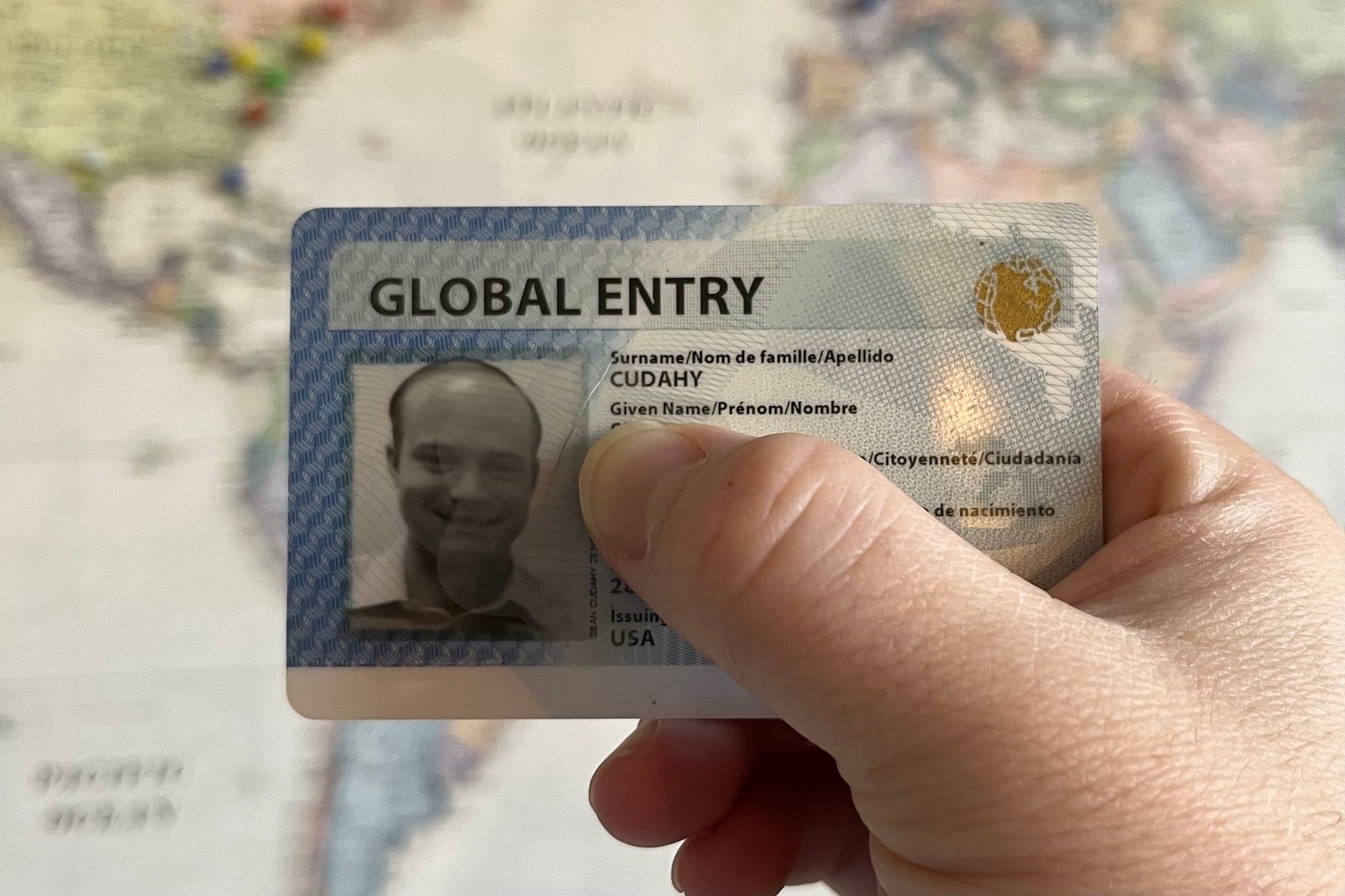
Did you know that you can be denied access to Global Entry lanes if you don't have your physical card on you? It's true.
Global Entry allows prescreened members to skip long customs lines by using designated lanes and kiosks at points of entry. It can literally save you hours, but some airports (especially those at Canadian border crossings) will demand to see your physical card.
When traveling to airports with Transportation Security Administration preclearance facilities (like those in Canada, Aruba and Ireland)
When traveling to a destination where you will use Global Entry before returning to the U.S.
When entering the U.S. by car via SENTRI or Nexus lanes or via a cruise terminal
That's why many of us now carry our Global Entry cards with us whenever we travel overseas.
"I had actually read about it ahead of time," TPG's editor-in-chief, Nick Ewen, told me about a prior family trip to Toronto, "so I brought [the Global Entry cards] just in case. Sure enough, the first agent who directed travelers into the Global Entry versus non-Global Entry line required us to show them."
Christine Gallipeau, TPG's senior editor of points and loyalty programs, also brings her Global Entry card whenever she travels abroad.
"I always make sure I have that and my Priority Pass card in my travel wallet, too, as backups," she said.
I similarly have mine when I travel (though I keep it in a pocket in my rollaboard separate from my other ID), mainly as another form of ID if I lose my passport and need to prove who I am to an embassy.
Printed itinerary, hotel confirmations and contacts
The Laylow Waikiki, Autograph Collection in Honolulu. CLINT HENDERSON/THE POINTS GUY
Several of us at TPG are old-school and print documents and trip itineraries despite this digital age. I like to have printouts of visas and a printed copy of my passport and driver's license as well.
Christine takes it a step further, packing printed versions of everything tied to an international trip.
"I always have a folder of every single itinerary-related thing I may possibly need," she said, "including each flight's booking confirmation and receipt, hotel confirmations, visa printouts and payment confirmations, fast-track airport service details (for when I use it or a hotel is arranging), confirmations and receipts for any tours/activities and any restaurant reservation confirmations. Most of the time, I don't need everything I bring, but there seems to be at least one time each trip when I need to show proof of something to someone along the way."
Becky Blaine, TPG's managing editor of newsletters, prefers to use Google Docs.
"I always make a Google Doc itinerary and sometimes print it but also share it to multiple email addresses in case I lose my phone/access via one email," she said.
She has learned to do this from others' misfortunes.
"My cousin had her phone completely fritz out on our France trip in January, and she realized she had access to nothing and knew no one's phone numbers," she said. "She couldn't check in for her flight, etc. I think we forget how dependent we are on technology until it quits on us."
Amanda had a similar anecdote to share.
"I got extremely close to my phone dying on the way to a hotel years ago and considered it a warning from the universe," she said. "I would have struggled to find it, for sure."
Because of the experience, Amanda now brings along a piece of paper "with things like the address and numbers of hotels I am staying at, friends' phone numbers/email addresses, etc."
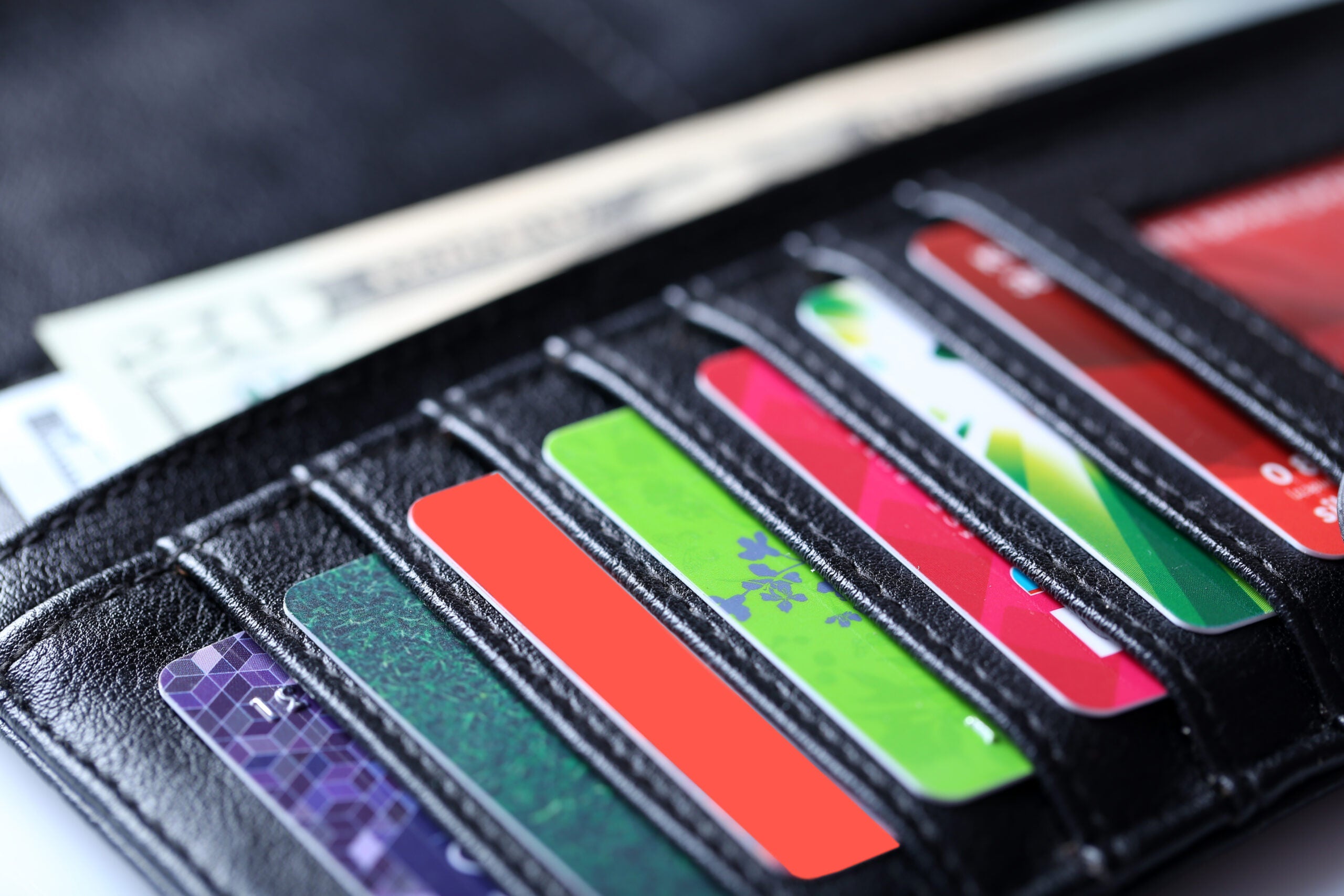
As someone who has 27 credit cards, I never have a shortage of cards in my bags. I like to have one in my passport holder, and I keep several in my primary wallet. But I also have two backup wallets with cards that I keep separate from my luggage at all times so that I always have a card I can use.
Olivia also separates her cards when she travels.
"I always leave a couple of credit cards and some cash in the hotel safe in case my wallet is stolen, and all debit cards stay home (I never carry them anyway)," she said.
As for Becky, she keeps her credit cards in a digital wallet on her iPhone but also has some physically with her.
"I leave one to two backups with my passport in the hotel safe and usually only do tap to pay when out and about," she said. "Everything has a photo backup in my Google Drive for easy access."
One other note on credit cards: Some airlines will ask you to present the credit card that was used to purchase your trip when you check in at the airport.
We've found this is especially common for travel to Africa. Delta Air Lines, for example, made me show my Delta credit card used to pay for a trip to Accra, Ghana, a few years ago. This can be problematic if your employer or someone else booked your travel, so you might want to call the airline ahead of time to make sure it won't be a problem.
It might be important to show that your children are, in fact, your children.
When I was growing up, my father once tried to bring me and my brothers to Canada on a road trip, but we were denied entry because officials were worried that my mom wasn't there and that my dad didn't have specific proof of permission to take us across the border. Because of the experience, my brother often carries a letter from his ex-wife that states he is allowed to travel with his kids.
One colleague goes to extraordinary lengths to protect her family. She is married to a woman and worries about any anti-gay officials she might run into.
"If I'm traveling with my kids, I bring their birth certificates, notarized copies of passports, adoption papers and a notarized letter that me and [my spouse] both consent to them traveling with us that's specific for the travel dates and location, plus our wills, marriage certificate and power of attorneys," she said.
To protect her documents, she makes sure to carry them in a fireproof bag.
Bottom line
Koloa Landing Resort at Poipu, Autograph Collection on Kauai, Hawaii. CLINT HENDERSON/THE POINTS GUY
Look, things happen when you travel. People lose phones, wallets and even passports, but a little bit of prep can save you from some major headaches.
Keeping backup documents, having multiple payment methods and packing printed versions of key travel information can help you recover quickly.
Hopefully, knowing what's in the TPG team's bags, wallets and phones can help you plan accordingly.
By commenting, you agree to our Community Guidelines to help create a positive space for conversation. The responses below are not provided or commissioned by the bank advertiser, our partners, or The Points Guy (“TPG”). They have not been reviewed, approved, or otherwise endorsed by any of these parties. All responses are submitted by individual contributors, and neither the bank advertiser, our partners, nor TPG are responsible for ensuring that all posts and/or questions are answered.