Everything you need to know about 'cancel for any reason' trip protection


Editor's Note
When you make travel plans, do you ever stop to think about all the events that could potentially derail your trip — like illness, a work conflict or maybe even a broken leg? After considering the "what-ifs," many people decide to purchase travel insurance, but oftentimes, travelers overlook the "cancel for any reason" add-ons (sometimes called CFAR).
As much as we like to be eternally optimistic, unlikely scenarios can and do occur, and they may not always be covered by your standard travel insurance policy.
Wondering if you should spring for the additional protection? If you're unsure what "cancel for any reason" travel protection is and when you should purchase it, here's everything you need to know.
What you need to know about travel insurance
"Cancel for any reason," also known as CFAR, is a time-sensitive, optional benefit that can be added to some comprehensive travel insurance policies. Before we delve into the details, it's useful to understand trip insurance in general.

Here are some resources that explain everything you need to know about travel insurance and its benefits, from trip cancellation and interruption coverage to emergency medical and baggage delay coverage:
- The best travel insurance policies and providers
- Should you get travel insurance if you have credit card protection?
- Best credit cards with travel insurance
- The best cards for trip cancellation and interruption insurance — and what it actually covers
- Which credit cards cover baggage delays?
What is 'cancel for any reason' protection?
While travel insurance policies can offer a range of inclusions (such as medical evacuation, trip cancellation due to foreign or domestic terrorism, or damage to your rental car), not every eventuality is included in every insurance policy.
For example, some trip insurance plans may offer coverage in the event of employment layoffs, while others do not. Some policies may have robust emergency medical coverage, while competitors don't. That's why selecting a plan that meets your specific needs for each trip is important.
When it comes to travel insurance, it's common to see a long list of incidents excluded from coverage: normal pregnancy, the illness of a pet, death by suicide (yours or a traveling companion) or any self-inflicted injury, psychological disorders, mountain climbing, bungee jumping, skydiving, declared (or undeclared) war, and epidemics and pandemics.


If you're worried about a new type of pandemic or epidemic occurring, a standard travel insurance policy may not cover a trip you cancel because of that fear. This is where CFAR comes into play.
CFAR is a time-sensitive add-on you can purchase from some providers when buying specific comprehensive travel insurance plans — as long as you meet certain eligibility requirements. By paying extra for this coverage, you can cancel for any reason under the sun as long as you follow the policy's purchase and cancel stipulations.
When am I eligible to add CFAR protection?
In general, you're only eligible to add CFAR protection to a comprehensive travel insurance policy at the time of purchase — you typically can't purchase the policy and then later decide to commit to the CFAR add-on.
In addition, you'll need to commit to the policy and CFAR protection fairly soon after making your initial trip payment. According to InsureMyTrip, typically, "a policy must be purchased within 10-21 days of making the initial trip payment to be eligible for CFAR benefits."
Many providers will require you to insure the entire value of your trip, and additional requirements may apply. As always, it's critical to read through all of the terms before purchasing any travel insurance policy — including CFAR coverage.
How much does CFAR coverage cost?
CFAR coverage can be a good way to hedge bets against the unknown uncertainties that may pop up before you travel. The fee for this add-on is usually calculated as a percentage of the price of the standard insurance policy you select.
Standard comprehensive plans can cost about 4% to 10% of the total cost of the insured trip, and CFAR coverage can cost 40% to 60% more on top of the standard plan (not the cost of the trip).
Consider the following illustrative example for a $5,000 trip with two 50-year-old travelers to Aruba:
- A standard, comprehensive plan might cost around $250 — which is 5% of the total trip cost.
- A comprehensive plan with the CFAR upgrade included might cost around $375 — which is the price of the standard plan ($250) plus an additional 50% ($125).
However, please note that all plan costs will differ based on individual quote details.
Will you get all your money back if you purchase CFAR coverage?
No. Generally speaking, CFAR coverage can reimburse up to 75% of your total insured, prepaid, nonrefundable trip cost. In addition, CFAR coverage typically requires you to cancel your trip no less than two days before departure to be eligible for reimbursement.
Check the insurance policy terms carefully to find out how much your refund would be if you invoked the CFAR terms and canceled your insured trip — and be sure to know the deadline for doing so.
Should you buy CFAR coverage?
Whether you choose to travel and what level of insurance to purchase — or not — is always a personal decision. However, TPG has consistently received a lot of reader questions over the past few years about this topic.

"One of the top questions travelers ask is about when to splurge for the CFAR upgrade," says Meghan Walch, a travel insurance expert and director of product at InsureMyTrip. "It's important to note that a standard comprehensive policy does not cover fear of travel. That's why we strongly recommend all travelers consider CFAR, if eligible."
If your total trip cost is low, you may decide to forgo insurance — or the additional CFAR coverage — and instead "self-insure" (i.e., eat the nonrefundable trip costs if you cancel). But, if your vacation is expensive, the additional fee for CFAR coverage may feel like a bargain — it beats the alternative of potentially losing thousands of dollars if you have to cancel nonrefundable reservations.
Related: Truths and myths about 'cancel for any reason' travel insurance
A few more words of advice
Many people had never considered the possibility of a pandemic thwarting their travel plans before the outbreak of COVID-19 in 2020. Though we're now beyond the era of lockdowns, it added a new layer of complexity to decisions about booking future vacations. Here are a few specific scenarios to consider:
What to do if you're about to book a trip but are hesitant because of future pandemic concerns
If you're afraid to commit a large amount of money to a future trip, purchasing a comprehensive travel insurance policy and adding the CFAR coverage option might be the best bet.
"Cancel for any reason is the only way to protect the majority of your trip cost if you would like the flexibility to cancel your trip," says Walch.
This could also be a great option for immunocompromised travelers. Even if a doctor attests to your inability to travel, it may not be enough to qualify you for reimbursement under a standard, comprehensive plan — but CFAR coverage could help recoup some of your forfeited costs.
If you're shopping for CFAR coverage, you can use a site like InsureMyTrip, and then check the applicable box under the search results:
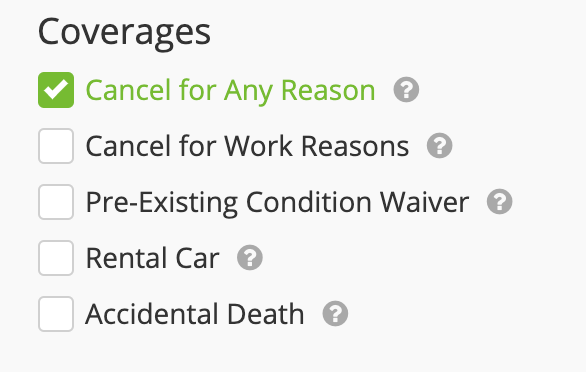
Doing so will only show policy results that include that type of coverage.
What to do if you booked a trip and have insurance — but your policy doesn't include a CFAR clause
If you purchased a comprehensive travel insurance plan for an upcoming trip but didn't add CFAR coverage, be aware that your options are more limited. While CFAR protection may cover you for pandemic-related risks, other comprehensive policies may cover other medical-related concerns.
These may include:
- Coverage for common concerns like cancellation due to diagnosed illness before traveling
- Emergency medical care from a doctor or hospital if you become ill while traveling
- Accommodation coverage if quarantined at your destination
Always review your policy carefully to understand the exclusions — but note that, without CFAR coverage, canceling a trip simply because you're afraid of a new outbreak will likely not result in a successful claim under standard, comprehensive travel insurance plans.
What to do if you booked a trip and have no travel insurance
First, look at when you actually booked the trip. If it was within the last three weeks, you may still be eligible for a comprehensive travel insurance plan with the CFAR add-on.
If not, there may still be comprehensive travel insurance policies that provide additional protection for illness-related concerns — including emergency medical evacuation.
In short, it's critical to investigate your travel insurance options as soon as you book (and make an initial payment on) a trip. This will maximize the number of applicable plans and is particularly important regarding time-sensitive benefits — like CFAR protection.
Best credit cards for trip cancellation and interruption insurance
Credit cards don't generally offer CFAR travel insurance. However, many do come with an array of other travel insurance policies that may very well cover your needs and act as an added layer of security on top of any additional policies you might take out.
If you're specifically looking for CFAR travel insurance, we'd recommend taking out an independent policy. That said, here are some cards we recommend that offer a range of other travel insurance coverage.
- Chase Sapphire Reserve® (see rates and fees): Best for travelers who want the most travel protections
- Chase Sapphire Preferred® Card (see rates and fees): Best for travelers looking for a sub-$100 annual fee
- Capital One Venture X Rewards Credit Card: Best for Capital One loyalists
- United Club℠ Card (see rates and fees): Best for United Airlines loyalists
- IHG One Rewards Premier Credit Card (see rates and fees): Best for IHG loyalists
- World of Hyatt Credit Card (see rates and fees): Best for Hyatt loyalists
- Ink Business Preferred® Credit Card (see rates and fees): Best for business travelers
- American Express Platinum Card®: Best when traveling with nonfamily companions
Bottom line
Having the peace of mind that travel insurance provides is important, and though we hope you never have to use it, it could prove invaluable if plans go awry. You may have previously shrugged off the idea of trip insurance (especially expensive policies that offer a CFAR add-on), but if you want to be covered for uncertainties on a pricey trip, CFAR may be a great option to consider.
Disclaimer: This information is provided by IMT Services, LLC (InsureMyTrip.com), a licensed insurance producer (NPN: 5119217) and a member of the Tokio Marine HCC group of companies. IMT's services are only available in states where it is licensed to do business and the products provided through InsureMyTrip.com may not be available in all states. All insurance products are governed by the terms in the applicable insurance policy, and all related decisions (such as approval for coverage, premiums, commissions and fees) and policy obligations are the sole responsibility of the underwriting insurer. The information on this site does not create or modify any insurance policy terms in any way. For more information, visit insuremytrip.com.
For Capital One products listed on this page, some of the benefits may be provided by Visa® or Mastercard® and may vary by product. See the respective Guide to Benefits for details, as terms and exclusions apply.
TPG featured card

at Capital One's secure site
Terms & restrictions apply. See rates & fees.
| 5X miles | Earn 5X miles on hotels, vacation rentals and rental cars booked through Capital One Travel |
| 2X miles | Earn unlimited 2X miles on every purchase, every day |
Pros
- Stellar welcome offer of 75,000 miles after spending $4,000 on purchases in the first three months from account opening. Plus, a $250 Capital One Travel credit to use in your first cardholder year upon account opening.
- You'll earn 2 miles per dollar on every purchase, which means you won't have to worry about memorizing bonus categories
- Rewards are versatile and can be redeemed for a statement credit or transferred to Capital One’s transfer partners
Cons
- Highest bonus-earning categories only on travel booked via Capital One Travel
- LIMITED-TIME OFFER: Enjoy $250 to use on Capital One Travel in your first cardholder year, plus earn 75,000 bonus miles once you spend $4,000 on purchases within the first 3 months from account opening - that’s equal to $1,000 in travel
- Earn unlimited 2X miles on every purchase, every day
- Earn 5X miles on hotels, vacation rentals and rental cars booked through Capital One Travel
- Miles won't expire for the life of the account and there's no limit to how many you can earn
- Receive up to a $120 credit for Global Entry or TSA PreCheck®
- Use your miles to get reimbursed for any travel purchase—or redeem by booking a trip through Capital One Travel
- Enjoy a $50 experience credit and other premium benefits with every hotel and vacation rental booked from the Lifestyle Collection
- Transfer your miles to your choice of 15+ travel loyalty programs
- Top rated mobile app