6 Mistakes Travelers Make When Buying Their First Backpack

The Points & Miles Backpacker is a weekly column appearing every Monday. TPG contributor Brian Biros, who has backpacked the globe for the past 15 years, discusses how to fund this adventurous, budgeted and increasingly popular form of travel with points and miles. He'll also explore all things backpacking-related. Read his story here and his high-level approach here.
Using a backpack isn't actually a requirement of being a backpacker, but it's highly suggested. At first, the case against backpacks appears strong in an age of wheeled luggage. Why carry something when you can roll it behind you? But lugging a suitcase up three flights of hostel stairs; or dragging it across a beach to get to your hut; or even hauling it across tiny cobblestone streets during a month-long tour of Europe will make you rethink that.
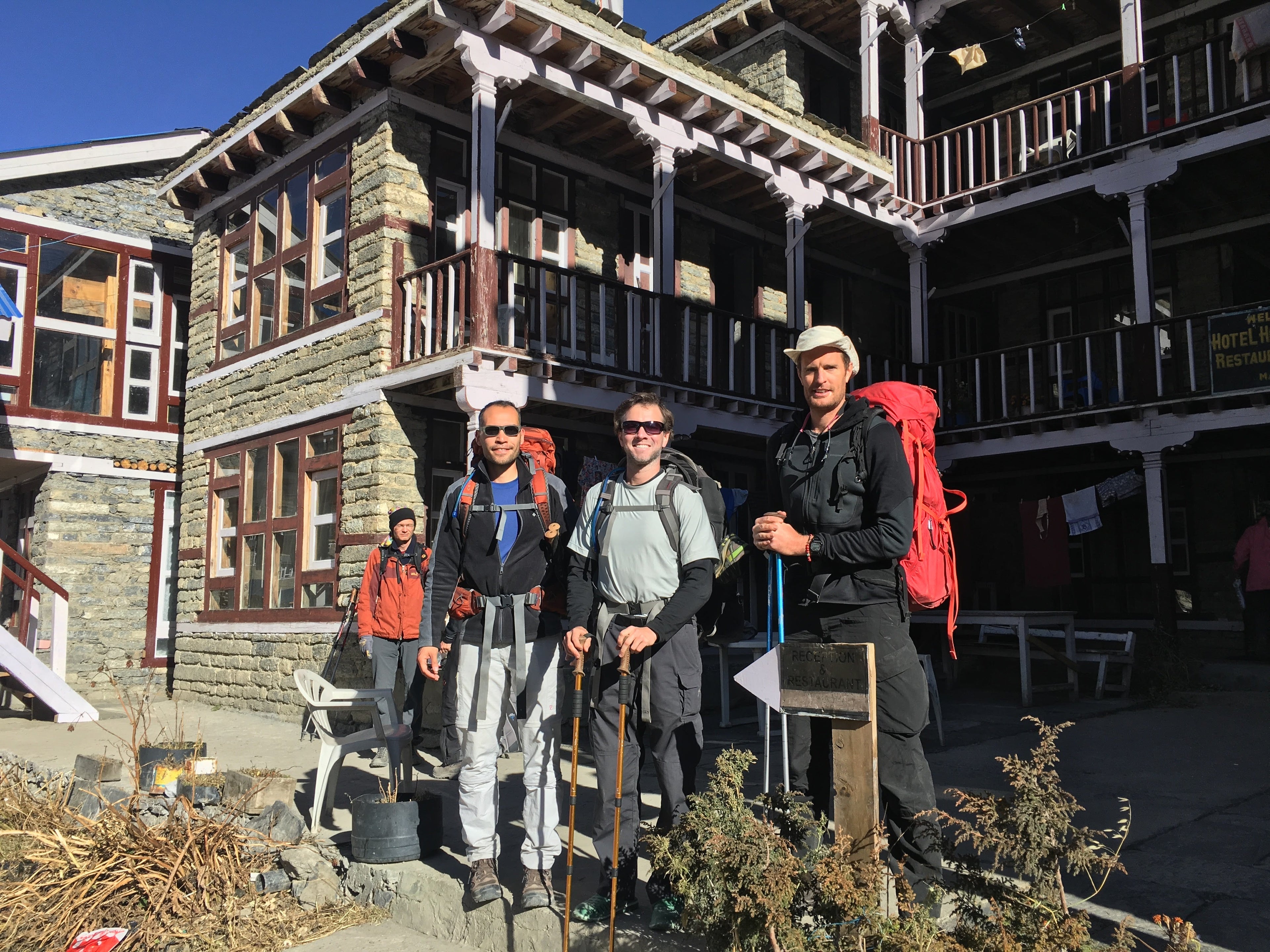
Backpacks are still the preferred luggage choice for backpackers, and not just because we have a name and image to uphold. When worn correctly, backpacks feel much lighter than they look, and they allow for more agility than a suitcase on wheels when the terrain is anything other than smooth and flat.
However, you want to invest in a good pack that properly distributes weight and stores your belongings efficiently. This pack may be more or less attached to you for a good portion of your travels, and every one of those days could be a reminder you should have invested more into picking a backpack if you don't do it right the first time.
Here are the mistakes many people make when shopping for a pack — and my tips for avoiding them. Trust me: I've made all these mistakes myself at one point or another.
1. Getting a Top Loader
The single greatest buyer's remorse people experience with backpacks is getting a top-loading pack instead of front loading (also called panel loading). A top loader opens only at, well, the top, while the entire front side zips open on a front loader. That makes retrieving something from your pack a lot easier. With a top loader, you may have to unpack and repack everything to grab something from the bottom half.
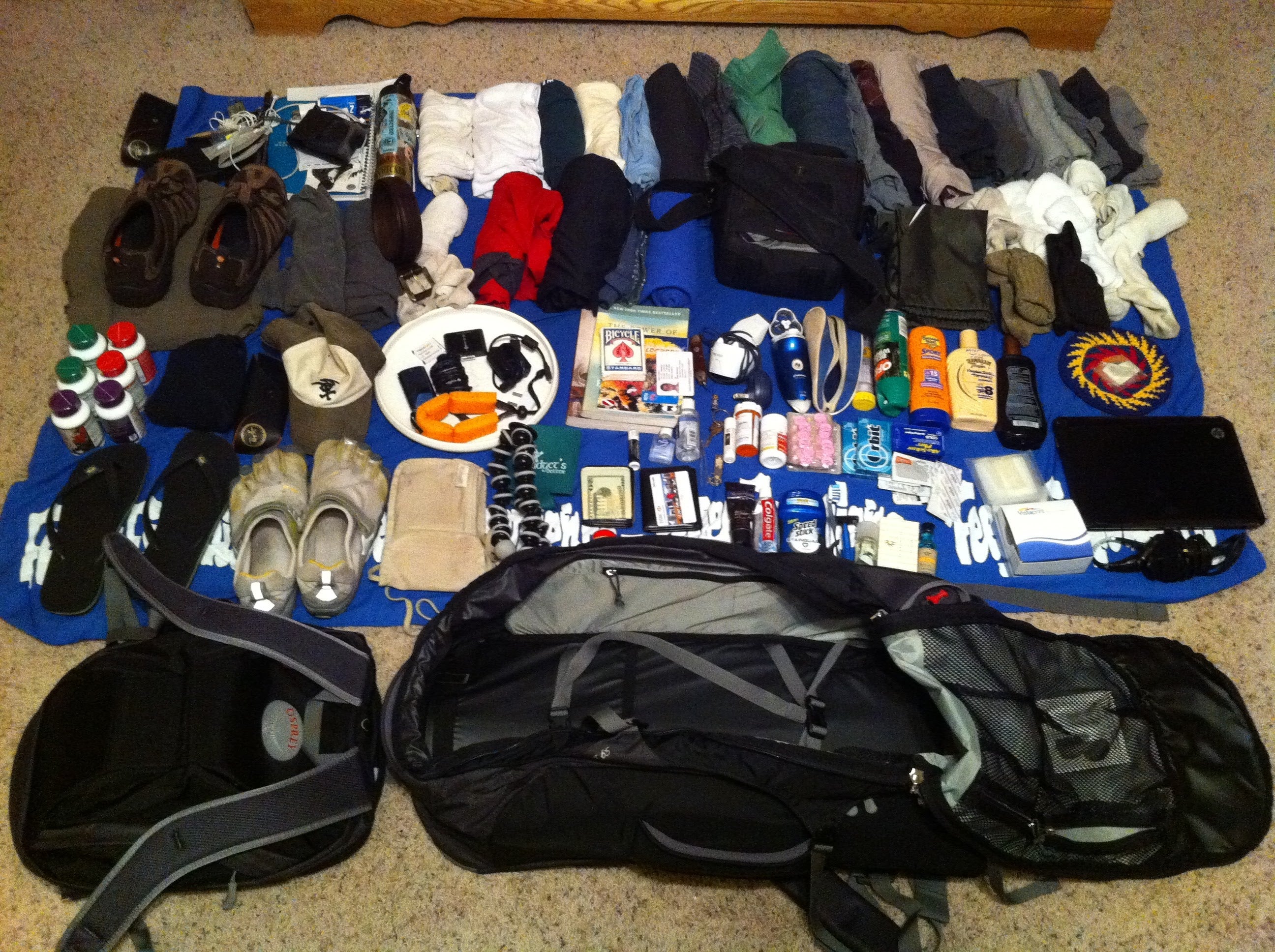
I've read arguments for a top loading pack, but any minor advantage of a top loader is far outweighed by how inaccessible the majority of your belongings are. For top loaders to be convenient, you must always make sure the next thing you need is near the top of your pack. Good luck with that. Murphy's laws of backpacking clearly state the next thing you will need is at the bottom of your pack. No rain in the forecast? That'll change as soon as you put your rain jacket in the bottom of your pack.
2. Buying Without Trying
You can read reviews online for hours, but no one other than you can decide if the pack fits your body. Trying on an empty pack at a store won't tell you much either: You want to simulate the real experience.
I suggest buying several backpacks and filling them with the exact contents you expect to carry while traveling. Take a couple long walks with each pack; climb up and down several flights of stairs; and practice taking them on and off. If you find a clear winner, return the others. (Just be sure to purchase from a retailer with a generous return policy, such as REI.)

If you are short on time, head straight to an REI store and try out the bags there. Most locations should have sandbags to simulate the weight you expect to carry, or you can fill a pack with items from around the store to get a sense of how the bag will sit and feel when packed.
3. Making Incorrect Adjustments
A good backpack worn incorrectly is no longer a good backpack. Unlike what you used for the entirety of your academic career, the weight of your pack should rest on your hips — not on your shoulders. Therefore, you want to begin with the shoulder straps loosened and first secure your hip belt and tighten it so the pack's weight rests comfortably on your hip bones.
Next, you'll tighten the shoulder straps dangling near your elbows to pull the pack in tight to your body. Then, you'll adjusts the straps up on either side of your neck to pull the weight off your shoulders. Lastly, buckle the sternum strap to keep the shoulder straps pulled inward. REI lays out these fitting steps in much more detail with a handy infographic here.
Also, whether you're using a top or front loader, you always want to keep your heaviest items toward the bottom your backpack.
4. Choosing a Detachable Daypack
Detachable daypacks aren't the great two-in-one deal they may seem. When attached, the weight from the detachable daypack is far from your body and can throw you off balance. You'll likely realize you don't ever want the daypack attached and opt to wear it in front, which better distributes the weight.
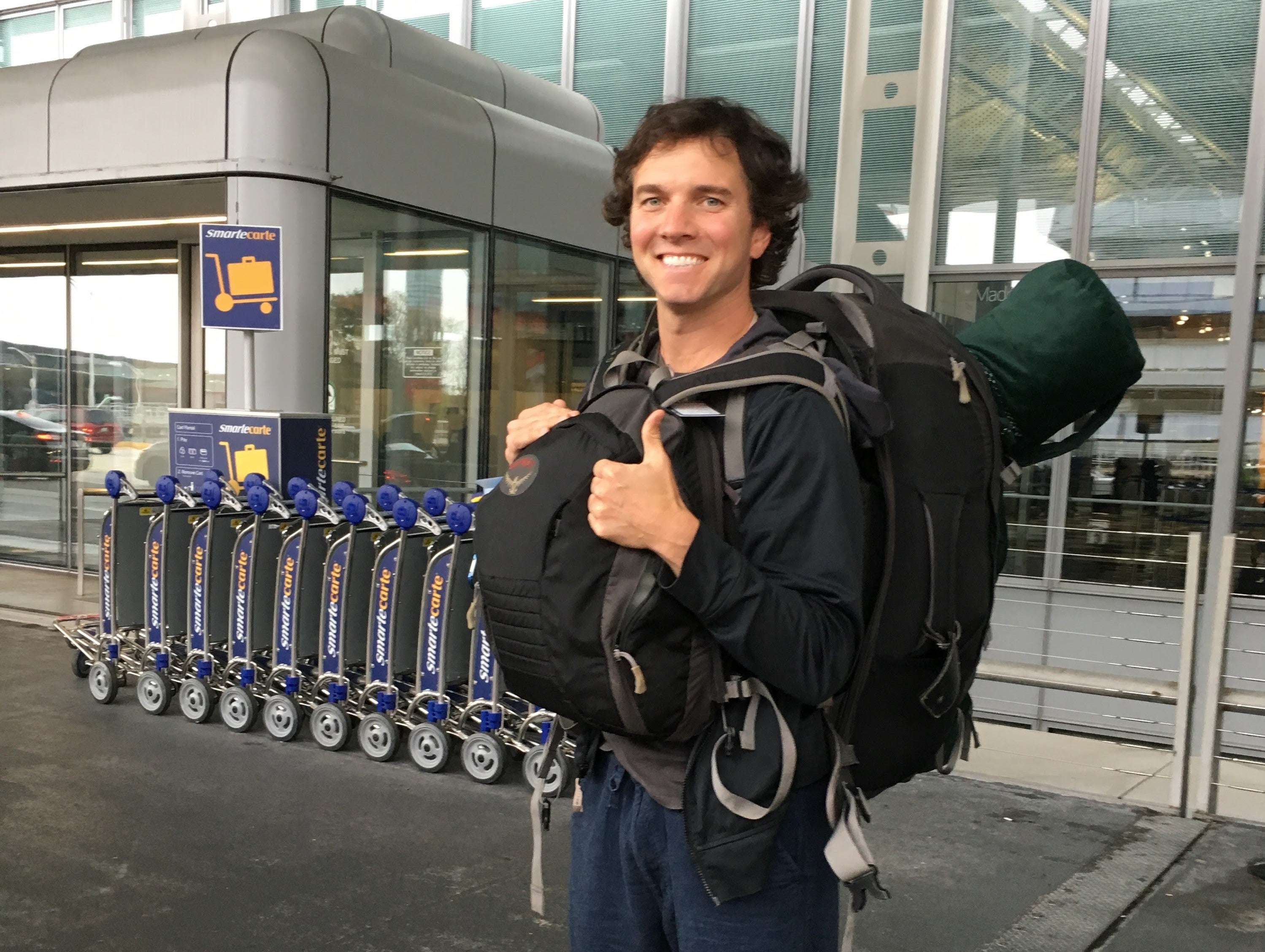
Eventually, I ditched the included daypack all together and bought a better daypack. Because the two-in-ones are designed to attach and you may not ever carry them this way, you're better off purchasing a stand-alone backpack and a great daypack separately.
5. Falling for Wheels
I have yet to find a backpack with wheels that works well as both a backpack and a wheeled suitcase. Most often, when one tries to also be the other, it fails at both. Wheels add weight to backpacks, and the frame is far less comfortable. Any wheeled suitcase that adds straps does it in a way that the hip belt and straps can't be properly fitted. I'll be happy to be proven wrong someday when the perfect hybrid is invented, but I haven't seen it yet.
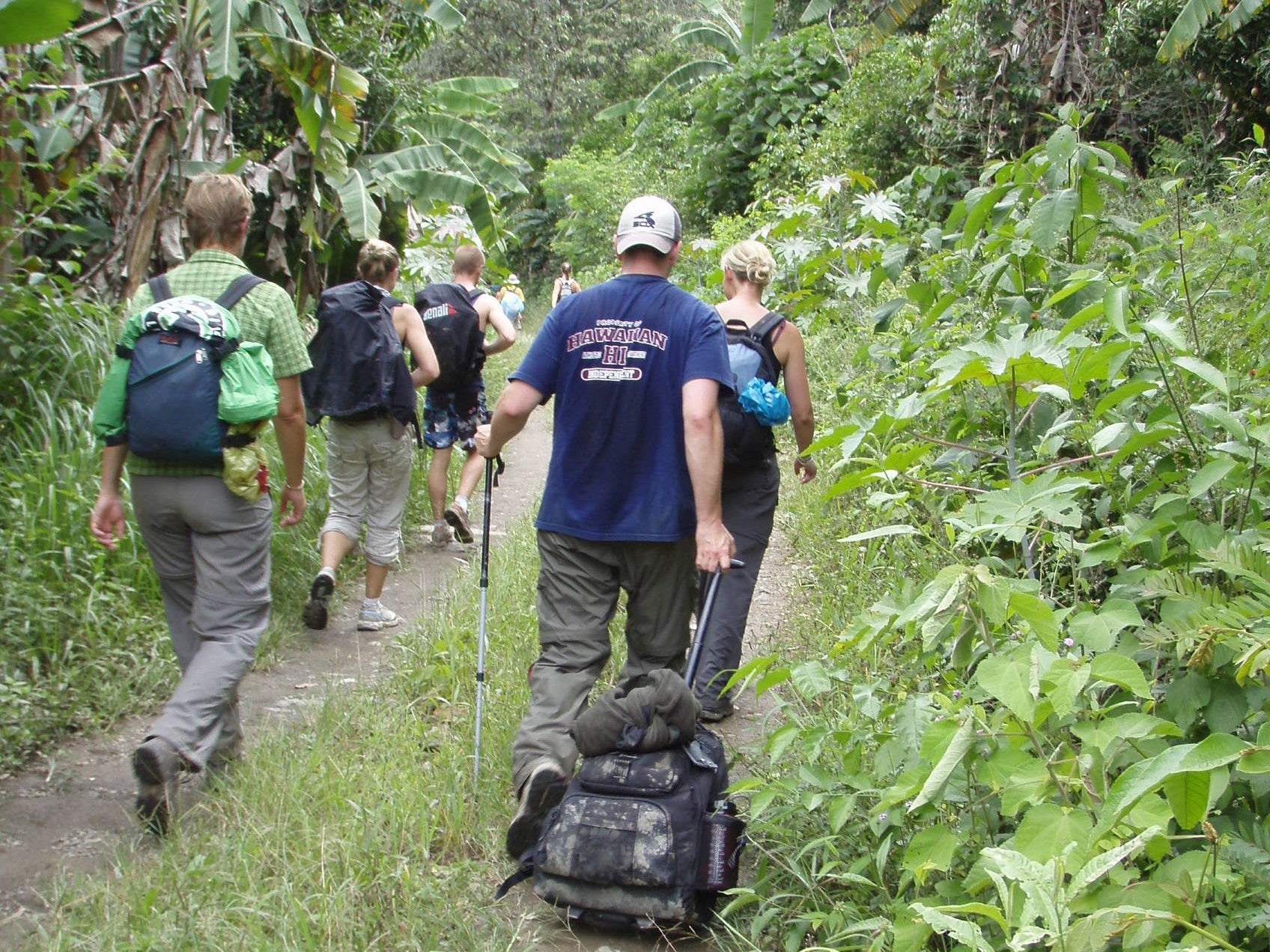
Instead, pick one bag type and commit to it for that trip. I naturally use a backpack for my backpacking adventures, but for most short domestic trips on flat, solid terrain, I chooses a carry-on size rollaboard.
6. Opting for an Off-Brand Bargain
Be prepared to spend $150 or more on a backpack. Don't buy anything off-brand or imitation. Those Oprey and South Face bags may seem fine now, but those zippers won't outlast your trip.
So, what bag should you purchase? If you're looking for an answer key instead of a homework assignment, I recommend an actual Osprey pack, because their products carry a lifetime guarantee. I've had my Osprey since 2011 though and, despite taking a hefty beating over the years, I haven't needed to use that warranty. If you're looking for a carry-on size backpack, I recommend the Osprey Farpoint 40. If you want a full-size pack, I like the Osprey Porter 65.
However, the advice I stand by more than any other is to give several backpacks a test drive before committing. That way the decision is yours, and it very well may not agree with my other suggestions.
Backpacking Tips
Got your very first backpack? Congrats. Now, read up on these backpacking tips and you'll be a pro in no time.
- Learn the Ranger Roll. It's the most efficient packing technique there is.
- Make the leap to carry-on only travel.
- Use packing cubes to keep your pack organized.
- At the request of several readers, I'll remind everyone again to remove your backpack before boarding a plane, train, bus or subway that is even remotely crowded.
If you're looking to back that pack up and get some guidance, send your questions to backpacker@thepointsguy.com!
All images courtesy of the author.
TPG featured card

at Capital One's secure site
Terms & restrictions apply. See rates & fees.
| 5X miles | Earn 5X miles on hotels, vacation rentals and rental cars booked through Capital One Travel |
| 2X miles | Earn unlimited 2X miles on every purchase, every day |
Pros
- Stellar welcome offer of 75,000 miles after spending $4,000 on purchases in the first three months from account opening. Plus, a $250 Capital One Travel credit to use in your first cardholder year upon account opening.
- You'll earn 2 miles per dollar on every purchase, which means you won't have to worry about memorizing bonus categories
- Rewards are versatile and can be redeemed for a statement credit or transferred to Capital One’s transfer partners
Cons
- Highest bonus-earning categories only on travel booked via Capital One Travel
- LIMITED-TIME OFFER: Enjoy $250 to use on Capital One Travel in your first cardholder year, plus earn 75,000 bonus miles once you spend $4,000 on purchases within the first 3 months from account opening - that’s equal to $1,000 in travel
- Earn unlimited 2X miles on every purchase, every day
- Earn 5X miles on hotels, vacation rentals and rental cars booked through Capital One Travel
- Miles won't expire for the life of the account and there's no limit to how many you can earn
- Receive up to a $120 credit for Global Entry or TSA PreCheck®
- Use your miles to get reimbursed for any travel purchase—or redeem by booking a trip through Capital One Travel
- Enjoy a $50 experience credit and other premium benefits with every hotel and vacation rental booked from the Lifestyle Collection
- Transfer your miles to your choice of 15+ travel loyalty programs
- Top rated mobile app