In California, Wildflowers Are Already Blooming Following Wet Winter


March is right around the corner, and though it's not quite spring, it is officially wildflower season.
According to DesertUSA — a resource that provides regular wildflower reports — blossoms have been appearing earlier than usual across the region. Some areas are even anticipating full super blooms.
For a super bloom (an exceptionally high proliferation of wildflowers) to occur, there must be unusually heavy rainfall during the late fall, followed by consistent rains throughout the winter. Blooms typically begin appearing in late February or early March and, depending on the location, can continue straight through the summer. The higher the elevation, the later in the season the blooms will appear.
Already, in southern California, the green hills around Lake Elsinore have been transformed by a super bloom of bright orange poppies. According to KABC, a recent bout of heavy rain triggered the wildflower blossoms, which has crowds of visitors pulling off Interstate 15 to admire the colorful fields.
At Diamond Valley Lake, about 24 miles east, experts are expecting a mid-March super bloom of not just California poppies, but also arroyo lupines, Canterbury bells, rancher's fiddleneck and other wildflowers, following a winter of record-braking rains. On Saturday, March 2, a seasonal wildflower trail encircling the lake will open to the public, the Associated Press reported.
Heavy rains around Palm Springs suggest a forthcoming super bloom in the Coachella Valley, too, while Joshua Tree National Park has already been flowering. "I've lived here in the Coachella Valley for over three decades, and there have been maybe two to four exceptional wildflower years," a research ecologist at UC Riverside's Center for Conservation Biology told USA Today. "And this is one of those."

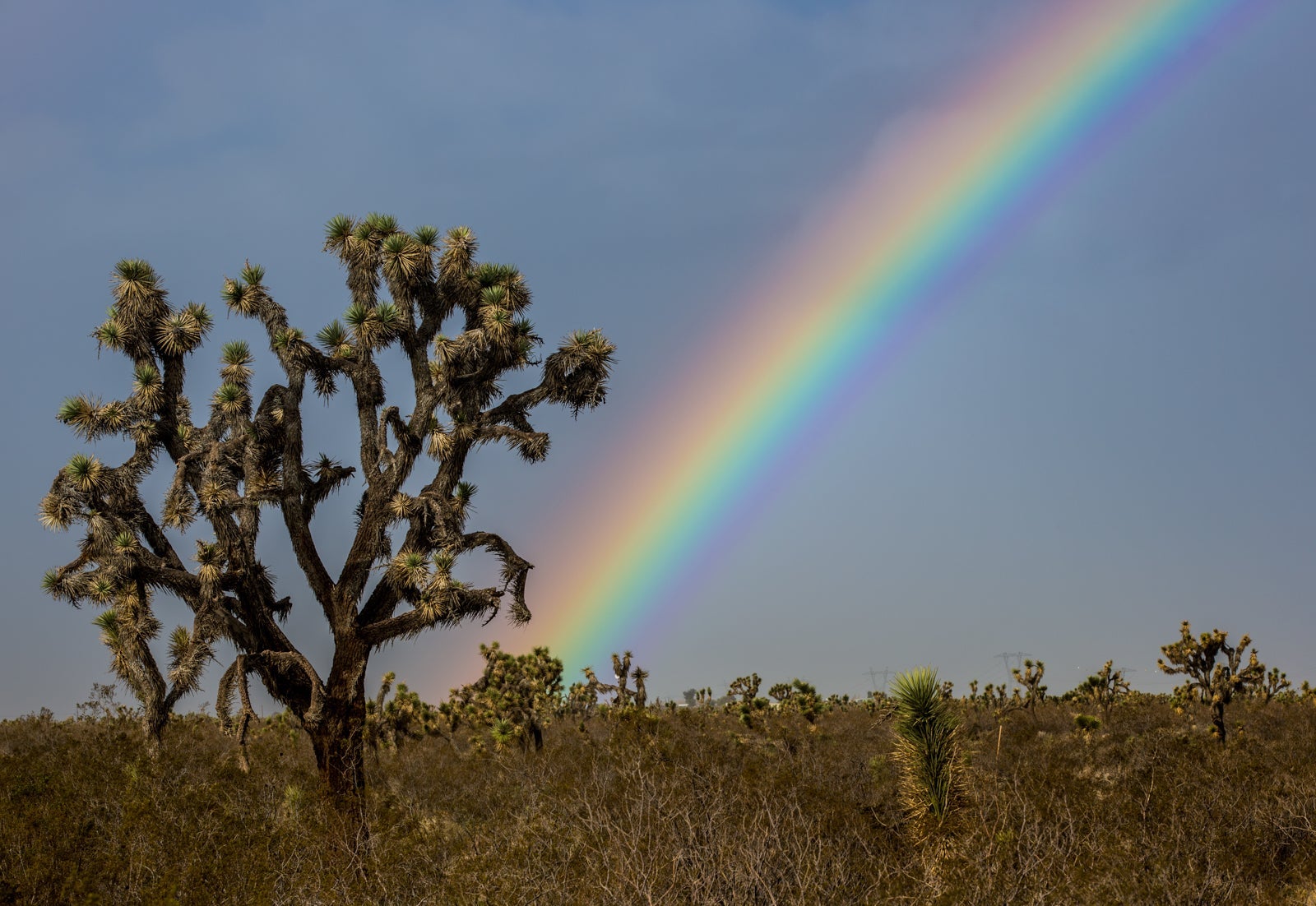
At Joshua Tree, which straddles the Mojave and Colorado deserts, blooms could last even longer than usual, thanks to recent drop in temperature (read: snowstorm).
Wildflowers have also been blooming around Antelope Valley, Carrizo Plain National Monument and Anza-Borrego State Park, the latter of which is already boasting an impressive display of wildflowers, DesertUSA reported.
Though California's wildflowers tend to attract the most attention, the Golden State is hardly the only place in the nation to see arid desert landscapes erupt with colorful flora come springtime. Wide Open Country is reporting that the spring of 2019 could be one of the best wildflower seasons in a decade, thanks to "above-average" rainfall. Instead of golden Californias poppies, of course, the landscape is expected to electrified by Texas bluebonnets.
Sadly, a super bloom at Death Valley National Park is unlikely this year. It's considered one of the more spectacular wildflower events in the world, thanks to its rarity: the last one occurred in 2016, and before that, 2005.
Whether you're photographing poppies in California, or searching for wildflower blooms elsewhere, remember to be thoughtful and conscientious during your travels. After all, there's no faster way to end a wildflower super bloom than to pick the flowers (or go stomping off the trail).
TPG featured card

at American Express's secure site
Terms & restrictions apply. See rates & fees.
| 4X | Earn 4X Membership Rewards® points per dollar spent on purchases at restaurants worldwide, on up to $50,000 in purchases per calendar year, then 1X points for the rest of the year. |
| 4X | Earn 4X Membership Rewards® points per dollar spent at US supermarkets, on up to $25,000 in purchases per calendar year, then 1X points for the rest of the year. |
| 5X | Earn 5X Membership Rewards® points on prepaid hotel stays booked through AmexTravel.com or the Amex Travel App™. |
| 3X | Earn 3X Membership Rewards® points on flights booked through AmexTravel.com, the Amex Travel App™, or purchased directly from airlines. |
| 2X | Earn 2X Membership Rewards® points on prepaid car rentals booked through AmexTravel.com or the Amex Travel App™ and cruises booked and paid through AmexTravel.com. |
| 1X | Earn 1X Membership Rewards® point per dollar spent on all other eligible purchases. |
Pros
- Valuable dining and food-related credits
- Flexible rewards with airline and hotel transfer partners
- Multiple travel and purchase protections
- No foreign transaction fees
- Access to Amex Offers for additional savings (enrollment required)
Cons
- Not as useful for those living outside the U.S.
- Some may have trouble using Uber and other dining credits
- You may be eligible for as high as 100,000 Membership Rewards® Points after you spend $8,000 in eligible purchases on your new Card in your first 6 months of Card Membership. Welcome offers vary and you may not be eligible for an offer. Apply to know if you’re approved and find out your exact welcome offer amount – all with no credit score impact. If you’re approved and choose to accept the Card, your score may be impacted.
- Earn 4X Membership Rewards® points per dollar spent on purchases at restaurants worldwide, on up to $50,000 in purchases per calendar year, then 1X points for the rest of the year.
- Earn 4X Membership Rewards® points per dollar spent at US supermarkets, on up to $25,000 in purchases per calendar year, then 1X points for the rest of the year.
- Earn 5X Membership Rewards® points on prepaid hotel stays booked through AmexTravel.com or the Amex Travel App™.
- Earn 3X Membership Rewards® points on flights booked through AmexTravel.com, the Amex Travel App™, or purchased directly from airlines.
- Earn 2X Membership Rewards® points on prepaid car rentals booked through AmexTravel.com or the Amex Travel App™ and cruises booked and paid through AmexTravel.com.
- Earn 1X Membership Rewards® point per dollar spent on all other eligible purchases.
- Pay It® lets you tap in the American Express® App to quickly pay for small purchase amounts throughout the month and still earn rewards the way you usually do. Plan It® gives you the option to split up big purchases into equal monthly payments with a fixed fee. You’ll know upfront exactly how much you’ll pay.
- $120 Dining Credit: Earn up to a total of $10 in statement credits monthly when you pay with the Gold Card at Grubhub (including Seamless), Buffalo Wild Wings, Five Guys, The Cheesecake Factory, and Wonder. This can be an annual savings of up to $120. Enrollment required.
- $100 Resy Credit: Get up to $100 in statement credits each calendar year at over 10,000 qualifying U.S. Resy restaurants after you pay for eligible purchases with the American Express® Gold Card. That’s up to $50 in statement credits semi-annually. Enrollment required.
- $84 Dunkin' Credit: Earn up to $7 in monthly statement credits after you pay with the American Express® Gold Card at U.S. Dunkin’ locations. Enrollment required.
- $120 Uber Cash on Gold: Enjoy up to $120 in Uber Cash annually with your Gold Card. Just add your Card to your Uber account and you'll get $10 in Uber Cash each month to use on orders and rides in the U.S. when you select an Amex Card for your transaction.
- Enjoy complimentary Hertz Five Star® Status benefits like skipping the counter at select locations, adding an additional driver at no additional cost*, and vehicle upgrades**. Benefit enrollment and Hertz Gold+ registration are required. *Additional drivers must meet standard rental qualifications and must be a spouse or domestic partner to qualify as complimentary. Other additional drivers subject to fees. **Benefits are subject to availability and vary by location. Additional Hertz program Terms and Conditions including age restrictions apply.
- Book two nights or more with The Hotel Collection through AmexTravel.com or the Amex Travel App™ and receive a $100* credit towards eligible charges at over 1,400 upscale hotels worldwide. *Eligible charges vary by property.
- Book your travel through the Amex Travel App™ with added peace of mind – backed by American Express® service and support. Only for American Express® Card Members.
- Whenever you need us, we're here. Our Member Services team will ensure you are taken care of. From lost Card replacement to statement questions, we are available to help 24/7.
- No Foreign Transaction Fees.
- Annual Fee is $325.
- Terms Apply.