Why You Won't Be Flying Russian or Chinese Planes Soon
Boeing and Airbus. Embraer and Bombardier.
A large chunk of aircraft manufacturing is dominated by duopolies.
And even within the duopolies, competition is limited. Despite the prolonged grounding of the 737 MAX, the prevailing wisdom is that Boeing's single-aisle bestseller will recover, if nothing else because Airbus is sold out for years, leaving nowhere to buy competing planes.
But is there truly no other place to buy commercial passenger aircraft?
For the answer, look first at smaller jets that seat up to about 110 people, a space where Embraer and Bombardier produce most of the world's fleets. And look, more precisely, at Houston and San Antonio, where once a day in each place, according to ch-aviation schedule data, a flight takes off on a plane not made by those two small-jet manufacturers.
Those flights — one from each airport, both to Monterrey, Mexico and both painted in the livery of the Mexican low-cost airline InterJet — are on Russian-built Sukhoi Superjet 100s, or SSJ100s. They are the only two regularly scheduled flights from the US on non-Western aircraft.
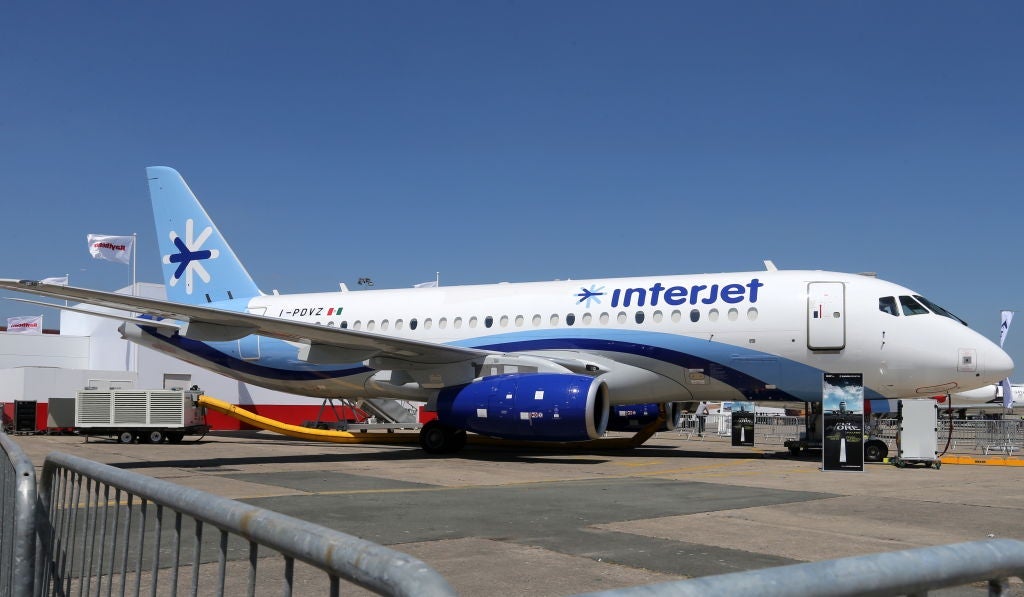
The InterJet SSJ100s, however, offer strong evidence that Embraer and Bombardier, nor Boeing and Airbus, have nothing to fear in the near term. Quite the contrary: More SSJs would surely be flying in the US if not for the fact that 16 of InterJet's 21 SSJs are grounded because of reliability and maintenance issues, according to ch-aviation fleet data.
Russia's United Aircraft Corporation has struggled to sell SSJs outside its home region and InterJet's experience won't do anything to change that. Even Russia's Aeroflot, presumably with access to some of the best SSJ maintenance expertise, struggles to keep its SSJs in the air. Thomas Jaeger, ch-aviation's CEO, cites data showing that Aeroflot's SSJs fly an average of just five hours per day, compared to nearly nine for KLM's similarly-sized fleet of Embraer jets.
But could a non-Western manufacturer ever compete effectively against Boeing and Airbus, as well as Embraer and Bombardier? Could China, Russia or Japan design and build planes that can break up the duopolies? Those are the three countries where manufacturers are taking orders for new jets that aren't made in the West.

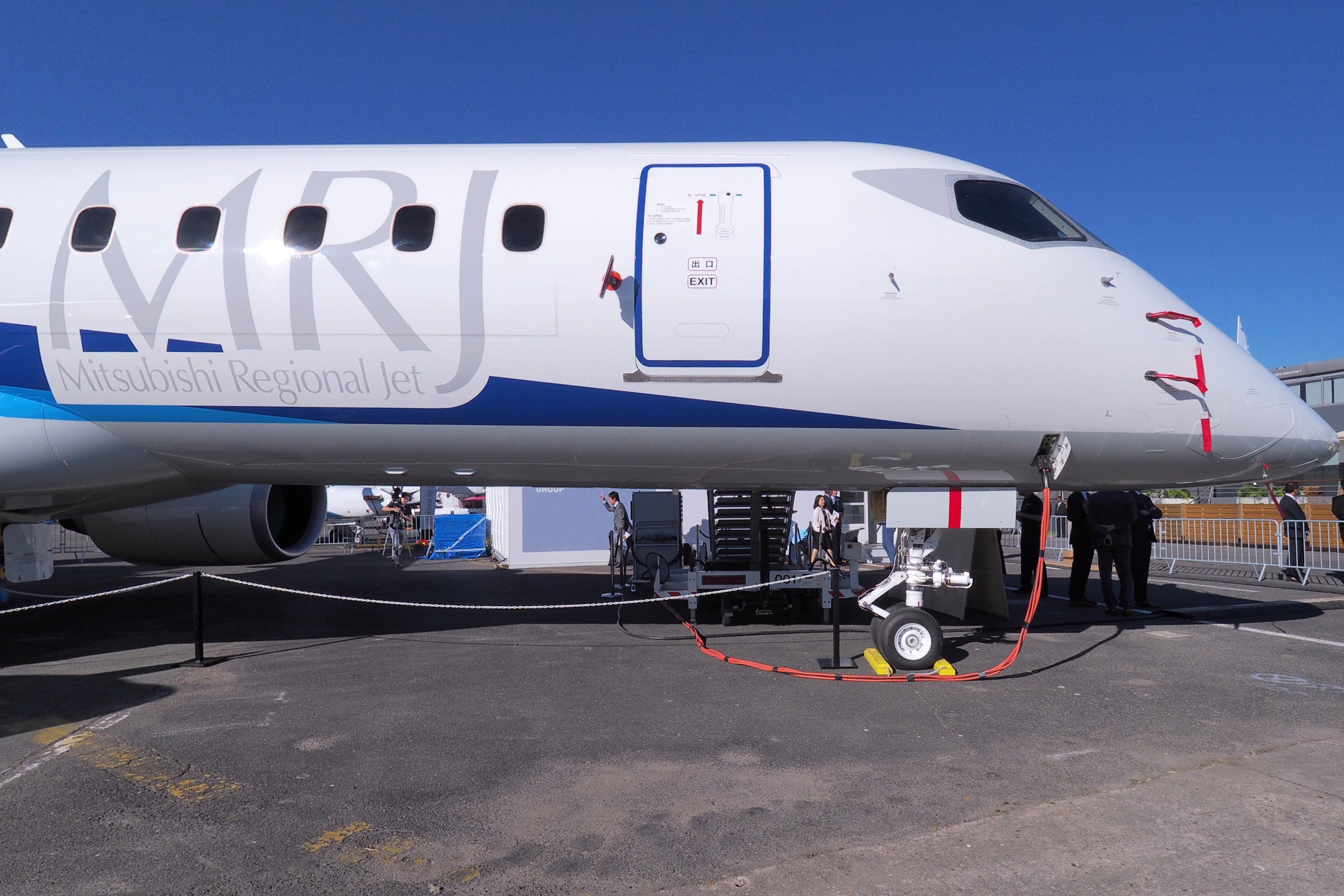
Japan's Mitsubishi is marketing the Mitsubishi Regional Jet, or MRJ, in two variants: the MRJ70 and MRJ90, designed to compete roughly against Embraer's E170 through E190 and Bombardier's CRJ700 and CRJ900.
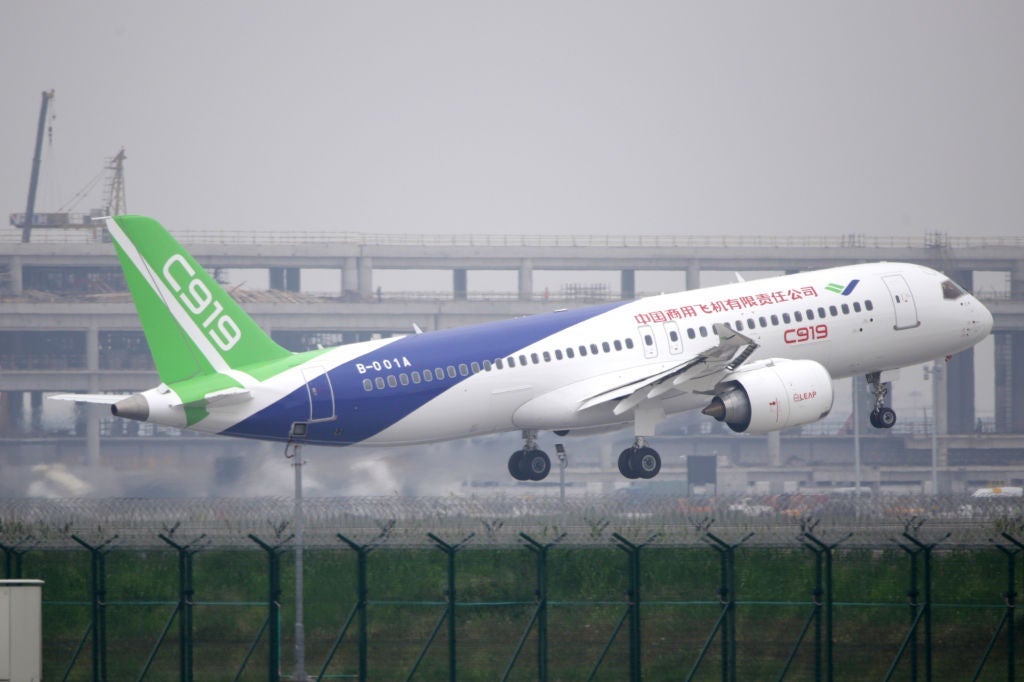
China's state-owned Comac offers not only the 78-seat ARJ21-700 but, more interestingly, the C919, designed to compete against the A320neo and 737 MAX.
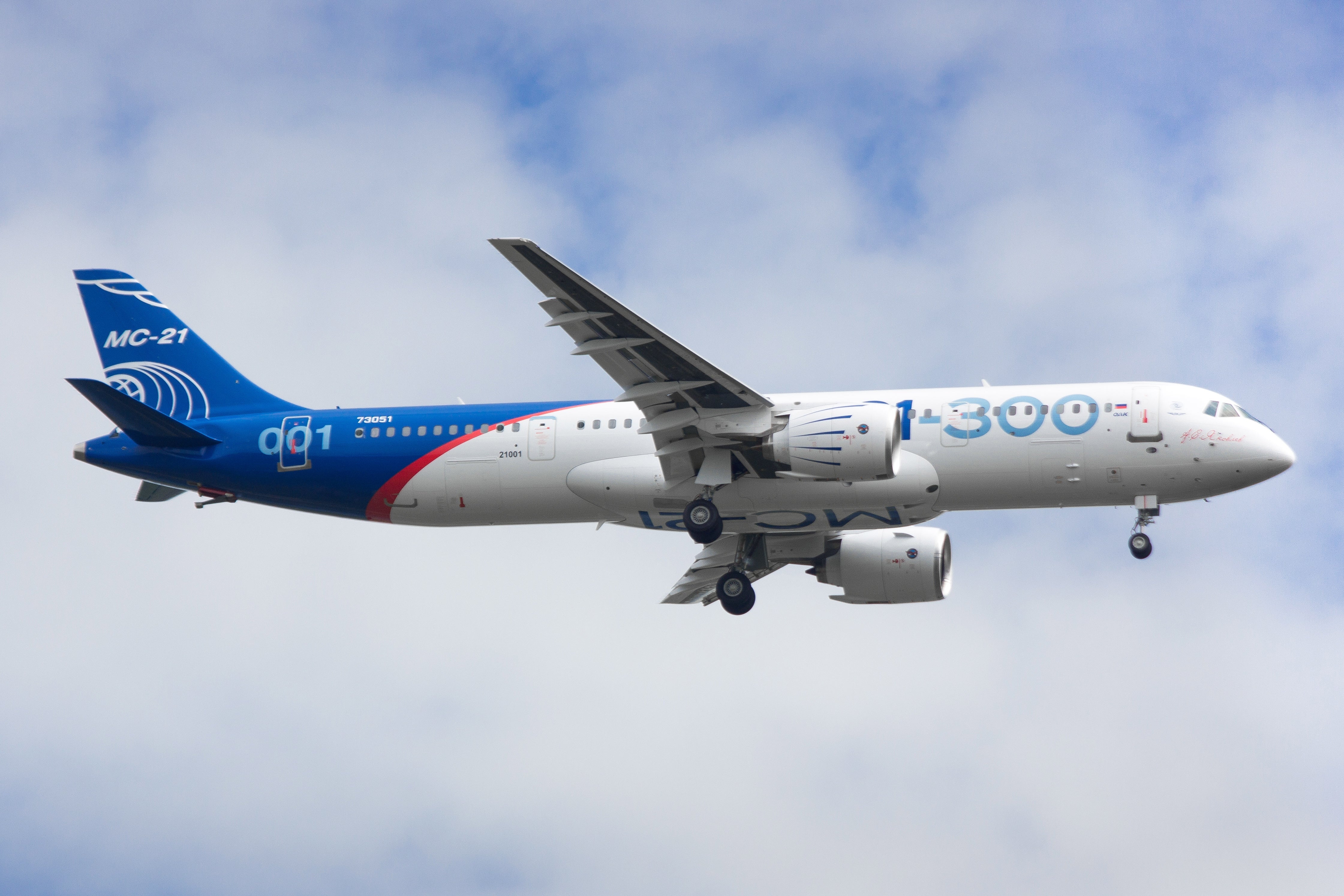
And Russia's Irkut, which shares a state-owned parent company with Sukhoi, offers the MS-21, also a 320/737 competitor.
All three manufacturers have gotten many (in Mitsubishi's case) or most (in Comac's and Irkut's cases) of their orders from airlines in their home markets, no doubt a result of government prodding to support local industry. But their stories diverge when it comes to orders from the West.
The MRJ features new geared turbofan engines from Pratt & Whitney, similar to the ones on the wildly popular A320neo family and the up-and-coming A220. Mitsubishi generated orders for no fewer than 150 MRJs from two US regional airlines, SkyWest and Trans States. However, those orders began coming in a decade ago, when passengers were expected to be flying on the planes by 2015, a projection that has slid to 2020. There's also a major question of whether US airlines will ever be able to fly them, because of a need to renegotiate pilot contracts at airlines like American, Delta and United. Without a new contract, those airlines may not be able to permit SkyWest and Trans States to operate MRJs on their behalf.
Comac and Irkut have taken orders for 305 C919s and 175 MS-21s (sometimes written MC-21, from the Cyrillic alphabet). But not a single one of those is destined for an airline in North America or Europe.
Why does Mitsubishi, despite ongoing delays and other issues, still have Western airline orders for 150 units on its books, while Comac and Irkut have none? "That probably can be attributed to the fact that there generally is a higher level of trust in Japanese rather than Russian and Chinese engineering in the Western world," Jaeger, the CEO of ch-aviation, said recently.
Can either manufacturer change that?
Not anytime soon, said Richard Aboulafia, vice president of analysis at Teal Group, an aviation consultancy. Between the two, he gives better odds to Comac, partly because "no one watching InterJet and Superjet is thinking warm, fuzzy thoughts," he said. Other issues related to geopolitics, such as sanctions on Russia, would also make it difficult for many Western airlines to order MS-21s even if they wanted them, he noted.
Comac — whose C919s look a lot like A320s, some of which are assembled in China — had the better opportunity but has largely squandered it, according to Aboulafia, because of two big missteps. First, the production of the airframe itself involved too much vertical integration, counting almost entirely on Chinese suppliers. Second, foreign suppliers have been reluctant to work on the project anyway because of inadequate guarantees of intellectual property protection. Non-Chinese firms make the plane's engines and onboard electronics.
Another fact that probably won't inspire confidence in Comac: The manufacturer's smaller ARJ21, already in service with Chengdu Airlines, seems to be even less reliable than the beleaguered SSJ, according to Jaeger. How could Comac change that?
"Once we see 100-plus Comac aircraft forming part of the mainline fleets [of Chinese airlines] delivering similar performance to comparable Western aircraft, they will be taken seriously outside China," Jaeger said.
And what about the plight of the 737 MAX? Could that push otherwise-reluctant airlines into the embrace of Comac, if not Irkut?
"This is a long-term game," Aboulafia said. "If we're still talking about the MAX in a year, then yes. But I have a strong feeling we won't be."
Still, in the very long term, anything's possible.
Drawing on Embraer's history, Jaeger said, "If I would tell you today that there is a new Brazilian aircraft manufacturer and they will sell their aircraft all over the world in five years, you would consider me crazy as well. If Irkut, Comac and Mitsubishi manage to do well where Sukhoi has struggled, there is no reason why in 25 years you would not see them compete on a global scale."
TPG featured card

at Capital One's secure site
Terms & restrictions apply. See rates & fees.
| 5X miles | Earn 5X miles on hotels, vacation rentals and rental cars booked through Capital One Travel |
| 2X miles | Earn unlimited 2X miles on every purchase, every day |
Pros
- Stellar welcome offer of 75,000 miles after spending $4,000 on purchases in the first three months from account opening. Plus, a $250 Capital One Travel credit to use in your first cardholder year upon account opening.
- You'll earn 2 miles per dollar on every purchase, which means you won't have to worry about memorizing bonus categories
- Rewards are versatile and can be redeemed for a statement credit or transferred to Capital One’s transfer partners
Cons
- Highest bonus-earning categories only on travel booked via Capital One Travel
- LIMITED-TIME OFFER: Enjoy $250 to use on Capital One Travel in your first cardholder year, plus earn 75,000 bonus miles once you spend $4,000 on purchases within the first 3 months from account opening - that’s equal to $1,000 in travel
- Earn unlimited 2X miles on every purchase, every day
- Earn 5X miles on hotels, vacation rentals and rental cars booked through Capital One Travel
- Miles won't expire for the life of the account and there's no limit to how many you can earn
- Receive up to a $120 credit for Global Entry or TSA PreCheck®
- Use your miles to get reimbursed for any travel purchase—or redeem by booking a trip through Capital One Travel
- Enjoy a $50 experience credit and other premium benefits with every hotel and vacation rental booked from the Lifestyle Collection
- Transfer your miles to your choice of 15+ travel loyalty programs
- Top rated mobile app