Why Traveling Helps You Face Your Fears

We're partnering with Capital One on our Purposeful Travel Hub. If you have unique ways you like to give back when you travel or just love exploring new places with family and friends, we want to hear about it. Share your most treasured travel moments and purposeful travel tips with us using #MeaningfulMoments.
The thought of jumping from a plane, going cliff diving or eating bugs totally freaks you out. You would never in a million years do those things, right? Yet you find yourself on vacation skydiving, doing somersaults into a waterfall and chowing down on crickets.
Why is that?
To understand how we overcome our fears, we have to first understand what exactly fear is. Do you ever wonder why you're scared of clowns, eating foreign foods or, in my case, bees? It comes down to pure nature and nurture.
"Fear is basically our fight or flight response," said Margee Kerr, an author and sociologist who studies fear. "Our ability to recognize and respond to a threat quickly is what's kept us alive. And sometimes, that response can be to freeze in certain situations."
But just because we have a universal physical response (activation of the sympathetic nervous system) to a threat, doesn't mean the thing that makes us feel threatened is universal. "The experience of fear is individualized," she said. "Our bodies are the same, but how we're wired is changed by our genes, past experiences, culture, time and place. While a clown might cause one person to burst into laughter and joy, it will cause someone else to burst into screams and hide."
And it turns out there are many psychological and behavioral reasons why we throw caution to the wind when setting foot in a new destination. We chatted with several experts — psychologists, a sociologist and behaviorist — to reveal why we're more likely to face our fears and have profound, life-changing experiences when traveling.
Your Brain Is More Flexible
The act of traveling is inherently setting your brain up to face your fears. At home, we're on autopilot, but the simple act of walking down a new street becomes a novel experience for our brains. This heightens our sensitivity to the environment.
"When we travel, we're already walking through a door," said Kerr. "We've set aside our expectations and daily routine and [entered] a window of flexibility where we're open to experiences. We become more adaptable and ready to react more quickly because you can't just rely on your past. And so that makes it easier to be open to new ways of doing things."

You Detach From Reality
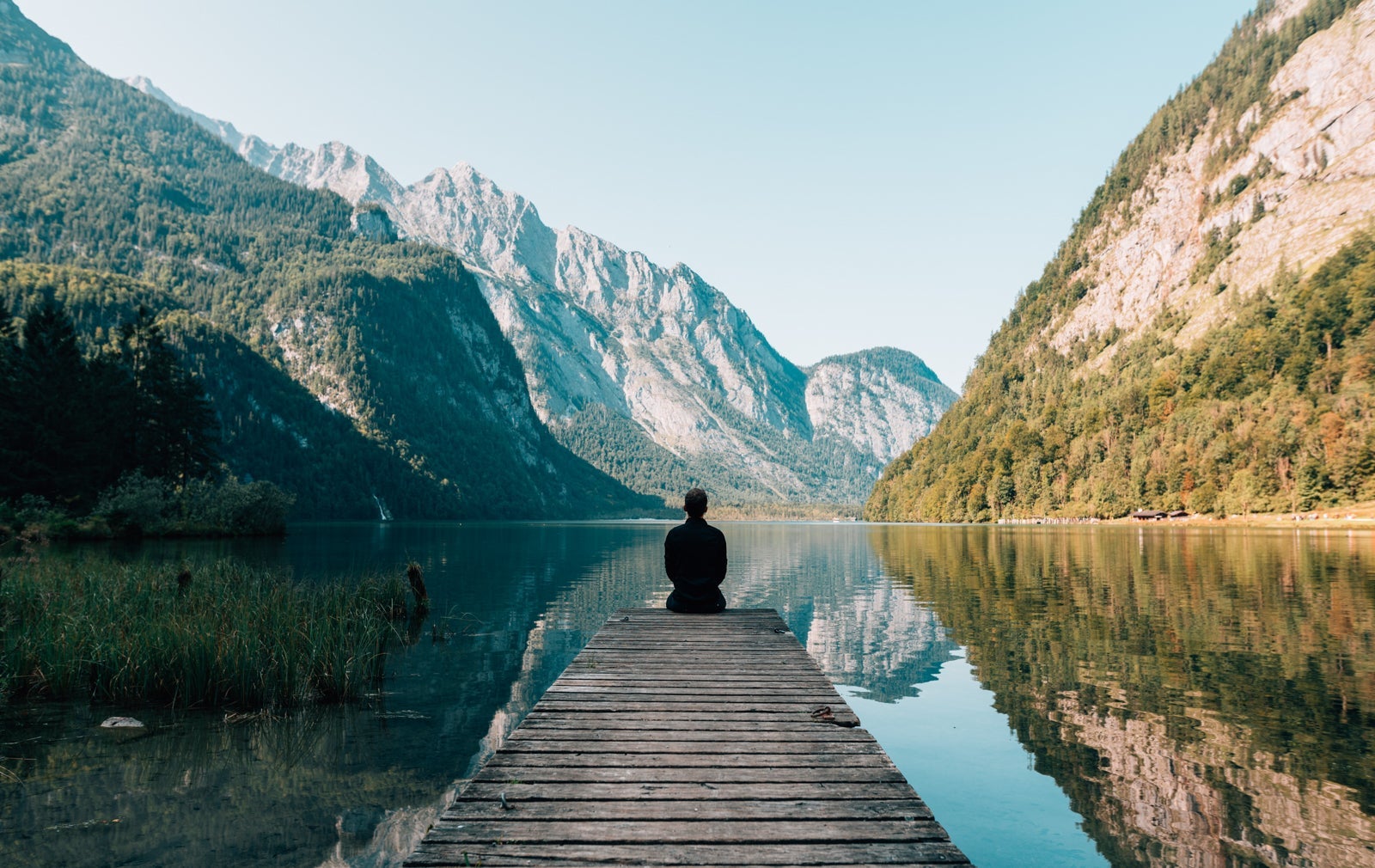
Vacations are designed to be a break from our normal lives and immerse us in something outside of the ordinary. This can extend to behaviors that are not typical at home.
"This detachment from 'reality' is often enough for a person to step out of their comfort zone while on vacation, whether it's socially, financially or physically," said Lindsay Henderson, PsyD, a psychologist who treats patients virtually through the telehealth app, LiveHealth Online. "The very act of going on vacation can be defined [as] temporarily taking on a new mindset, and this allows [you] to be open to and even seek out new experiences."
You're Outside Your Comfort Zone
Once you detach from reality, you're able to step out of your comfort zone and consequently do things you wouldn't usually try.
"We don't have our home, our safe space or our predictable routines to keep us stuck," said psychologist Jessica Nicolosi. "We are already in unfamiliar territory. So, leaping into the unfamiliar and even the uncomfortable may not feel like a leap at all."
There's Opportunity
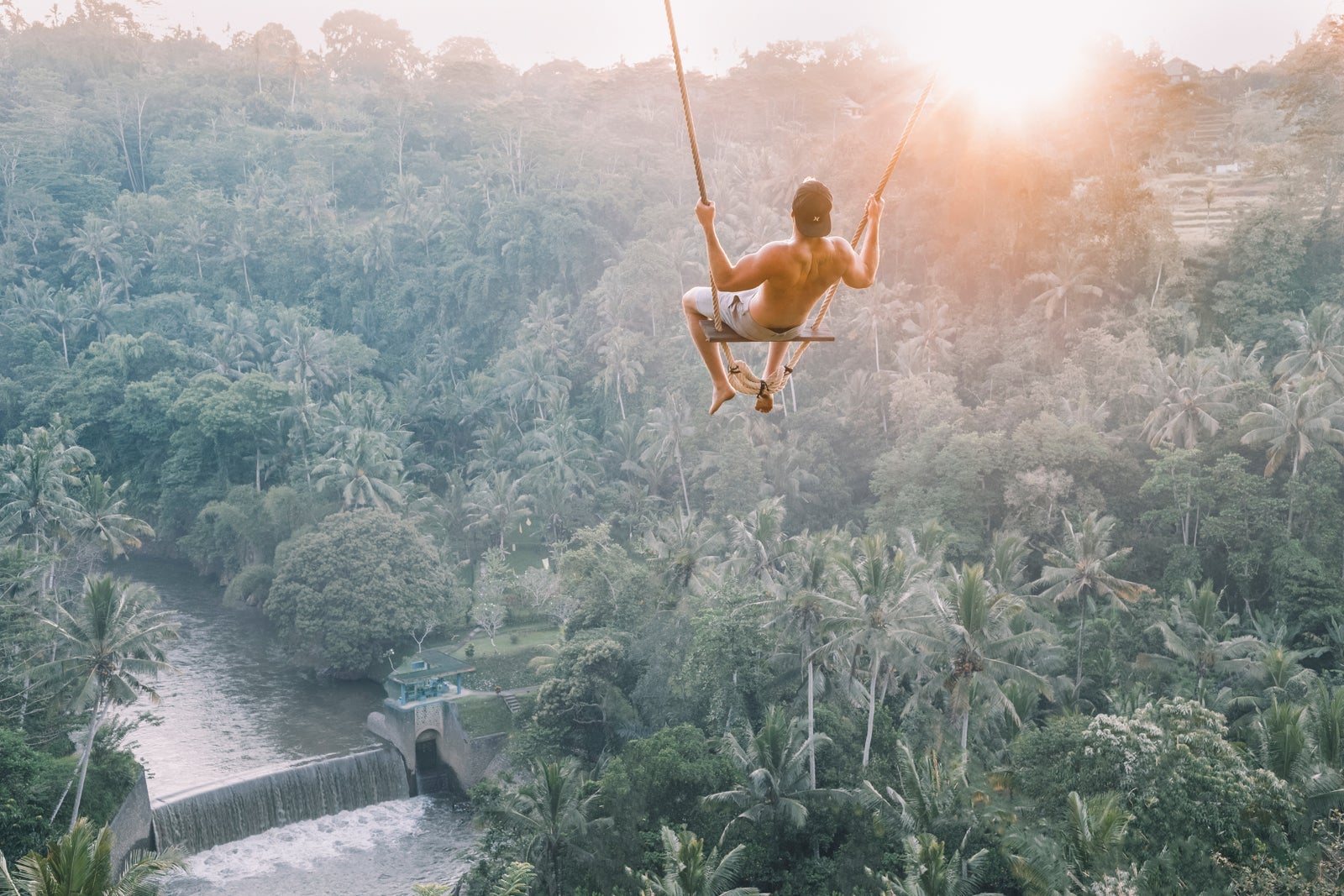
Not only are we mentally more likely to participate in activities while on vacation that we wouldn't otherwise do at home, but we are often surrounded by the opportunity to do so while traveling.
"We may not come across an opportunity for an adventure excursion on our typical errands to the grocery store and dry cleaner," said Henderson. "But, we certainly do as tourists. That vacation mentality makes it easy to say, 'Why not?' Opportunity and departure from our typical mindset combine to make us far more likely to engage in activities while on vacation that we would not while at home."
You're Trying to Make the Most of an Experience
OK, so you're presented with the opportunity to go shark diving (likely not something that happens too often in your daily routine). While your aversion to all things "Jaws" might prevent you from jumping in the ocean with shark bait at home, you're all about it on vacation because you feel like you might not have the opportunity again.
"You have a finite period of time. So, there's more pressure to make decisions," certified behavioral analyst Jessica Stephans told TPG. "You're blinded to the fear that the situation should be producing because there's so much pressure to experience it. Plus, the farther you travel and the more money you spend, the more the pressure mounts to make it worth every penny. You feel you need to extract every ounce of pleasure out of the trip."

You Get a Confidence Boost
Every aspect of traveling is a confidence boost. You make it on the plane when you're nervous to fly. You don't speak the language but manage to order off the menu. You navigate a foreign public transportation system without getting lost.
"Each step along the journey is reinforcing to our strength, confidence and resiliency," said Kerr. "That builds a sense of how strong you can be in an unknown environment."
There's Peer Pressure
Ah, good old peer pressure. You thought that was long gone after your high school and college years. But it pops up again when you travel. "If we are traveling with a group, such as a tour, we may engage in activities that we normally would avoid simply to not stand out from the crowd," said Nicolosi. "Traveling with a group often means getting to know each other quickly, and the desire to be part of the group may outweigh our fears. We are social creatures, after all."
Stephans added that if strangers surround you, you're more likely do something out of the ordinary. "I'm far more likely to jump off a cliff when I see locals doing it, and there's a crowd watching," she said. "You feel that pressure."
You Become a Different Person
Ever feel yourself acting differently on Halloween when you don a costume? It's because you're transforming into someone else for the evening. And the same thing happens when you travel.
"When you're in a new place, and no one knows you, you can be whomever you want to be," said Stephans. "You're uninhibited and often don't need to take on the responsibility [you would] if you behaved that way at home."
For example, if you're thrifty at home, you might want to be a big spender and splurge on an expensive prix-fixe dinner at the hotel. Or, you may be shy, but on vacation, you want to be the life of the party and chat with everyone. And you may not consider yourself a thrill-seeker, but you might just find yourself ziplining or bungee-jumping.
"Even those taking a staycation may find themselves doing things in their hometown that they never thought of doing in their day-to-day lives," Henderson added.

TPG featured card

at Capital One's secure site
Terms & restrictions apply. See rates & fees.
| 5X miles | Earn 5X miles on hotels, vacation rentals and rental cars booked through Capital One Travel |
| 2X miles | Earn unlimited 2X miles on every purchase, every day |
Pros
- Stellar welcome offer of 75,000 miles after spending $4,000 on purchases in the first three months from account opening. Plus, a $250 Capital One Travel credit to use in your first cardholder year upon account opening.
- You'll earn 2 miles per dollar on every purchase, which means you won't have to worry about memorizing bonus categories
- Rewards are versatile and can be redeemed for a statement credit or transferred to Capital One’s transfer partners
Cons
- Highest bonus-earning categories only on travel booked via Capital One Travel
- LIMITED-TIME OFFER: Enjoy $250 to use on Capital One Travel in your first cardholder year, plus earn 75,000 bonus miles once you spend $4,000 on purchases within the first 3 months from account opening - that’s equal to $1,000 in travel
- Earn unlimited 2X miles on every purchase, every day
- Earn 5X miles on hotels, vacation rentals and rental cars booked through Capital One Travel
- Miles won't expire for the life of the account and there's no limit to how many you can earn
- Receive up to a $120 credit for Global Entry or TSA PreCheck®
- Use your miles to get reimbursed for any travel purchase—or redeem by booking a trip through Capital One Travel
- Enjoy a $50 experience credit and other premium benefits with every hotel and vacation rental booked from the Lifestyle Collection
- Transfer your miles to your choice of 15+ travel loyalty programs
- Top rated mobile app