Why Are Delta and United Investing in Their Aging 767s?

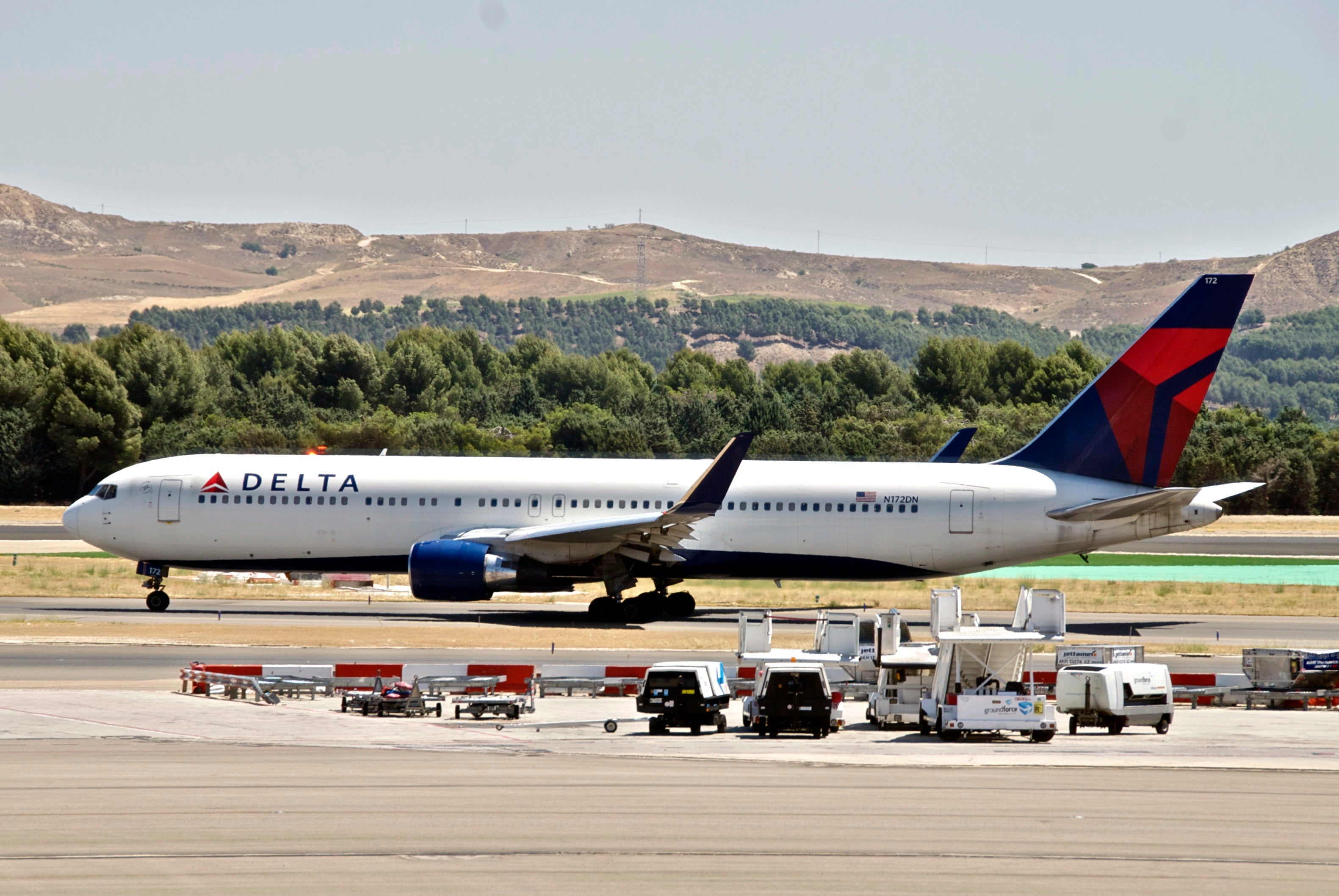
We recently learned of Delta's plans to install a new Delta One seat onboard its Boeing 767-400s, starting later this year. United is also in the process of retrofitting its 767s with Polaris cabins, and the airline is even adding extra business class seats to several of the planes, creating a biz-class-heavy jet to be used on routes with lots of premium traffic, like the one TPG Editor-at-Large Zach Honig flew from Newark to London Heathrow in March.
While these developments are exciting news for passengers, a key question remains to be asked: When so many airlines are phasing out their aging 767s, why are Delta and United doubling down on them?
The Backstory
The average age of both United and Delta 767s is almost 22 years. United's 767s are the oldest planes in the entire fleet, whereas Delta's are second behind the Airbus A320s inherited from Northwest. American has already planned on retiring its entire fleet of 767s by 2021, and while Boeing still produces freight variants of the 767, the last time a passenger model rolled off the assembly line was in 2012. Only two major European carriers, Austrian Airlines and Condor, still operate 767s. Simply put, the 767 is an aging plane, and most airlines are deciding to accelerate its retirement if they haven't done so already.
767s burn far more fuel per seat than their more recent counterparts. This alone might seem like a good reason to accelerate retirement, but these aircraft have already been bought and paid for by the airlines. Keeping them in service for a few more years is clearly worth it from a cost-benefit perspective, despite their below-average fuel efficiency.
But age and outsized fuel burn doesn't necessarily have to correlate with a negative customer experience. Despite the fact that the cabins on many 767s (like those on American Airlines) are outdated, the relatively narrow fuselage compared to other twin-aisle jets means that most airlines arrange economy on their 767s in a 2-3-2 layout, giving passengers an easier configuration to deal with than they might have on a different wide-body jet like the 777, which is mostly in 3-4-3 layout.
United and Delta clearly see their 767s not as a burden, but as an opportunity to keep making money by flying planes that still can turn a profit, with updated cabins.

Delta
"We want to give customers access to the same product/choices they have on our other international widebody aircraft," said Savannah Huddleston, a corporate communications rep for Delta. "We made a similar move by refreshing our 747 interiors before their retirement."
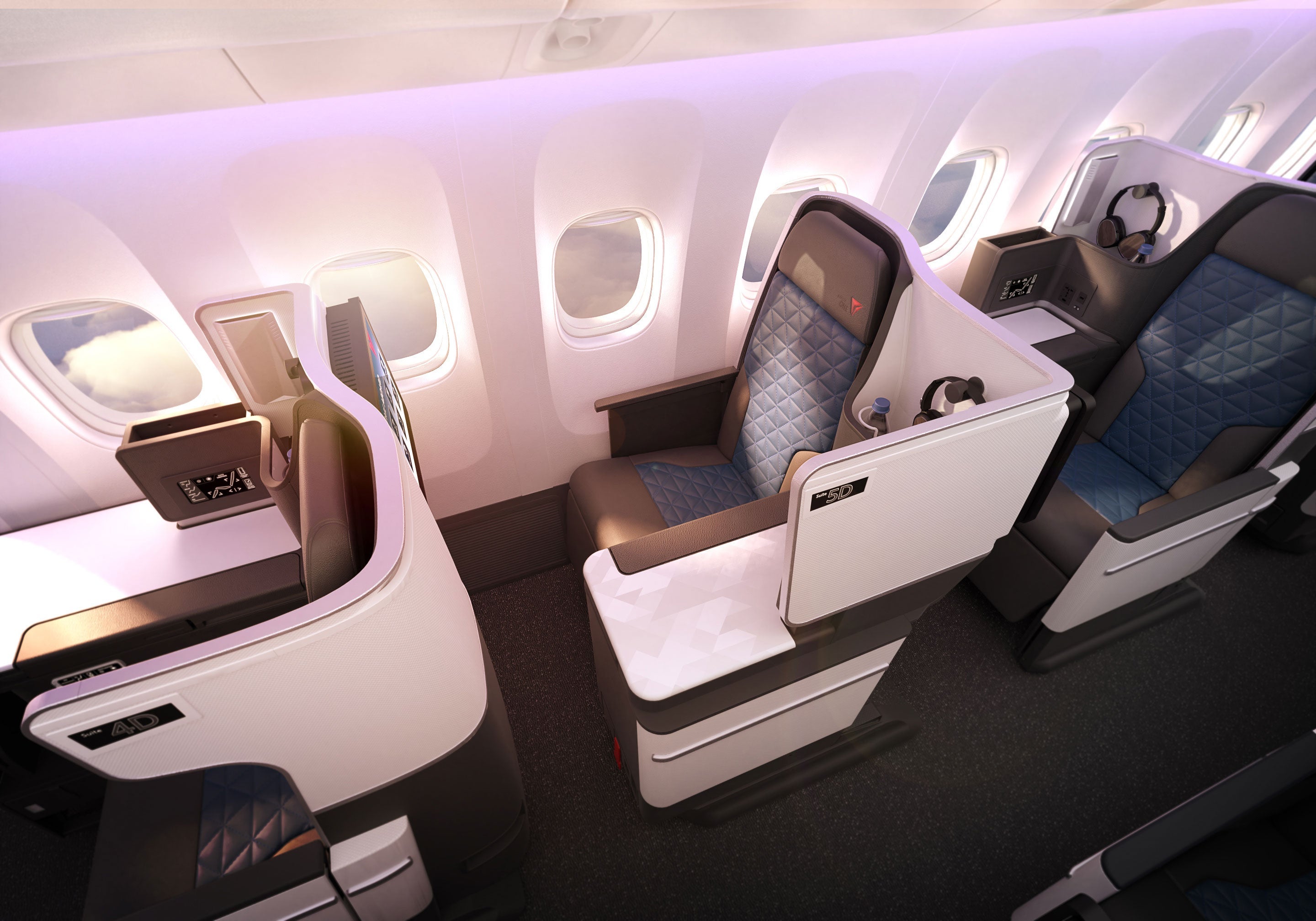
Delta's all-new Delta One seat, featured on refurbished Boeing 767-400 aircraft (Rendering courtesy of Delta Air Lines)
There are no plans to refurbish the 767-300ERs, a smaller variant of the plane, which is found on many routes to Asia and Europe and will be phased out with the introduction of the Airbus A330-900.
United
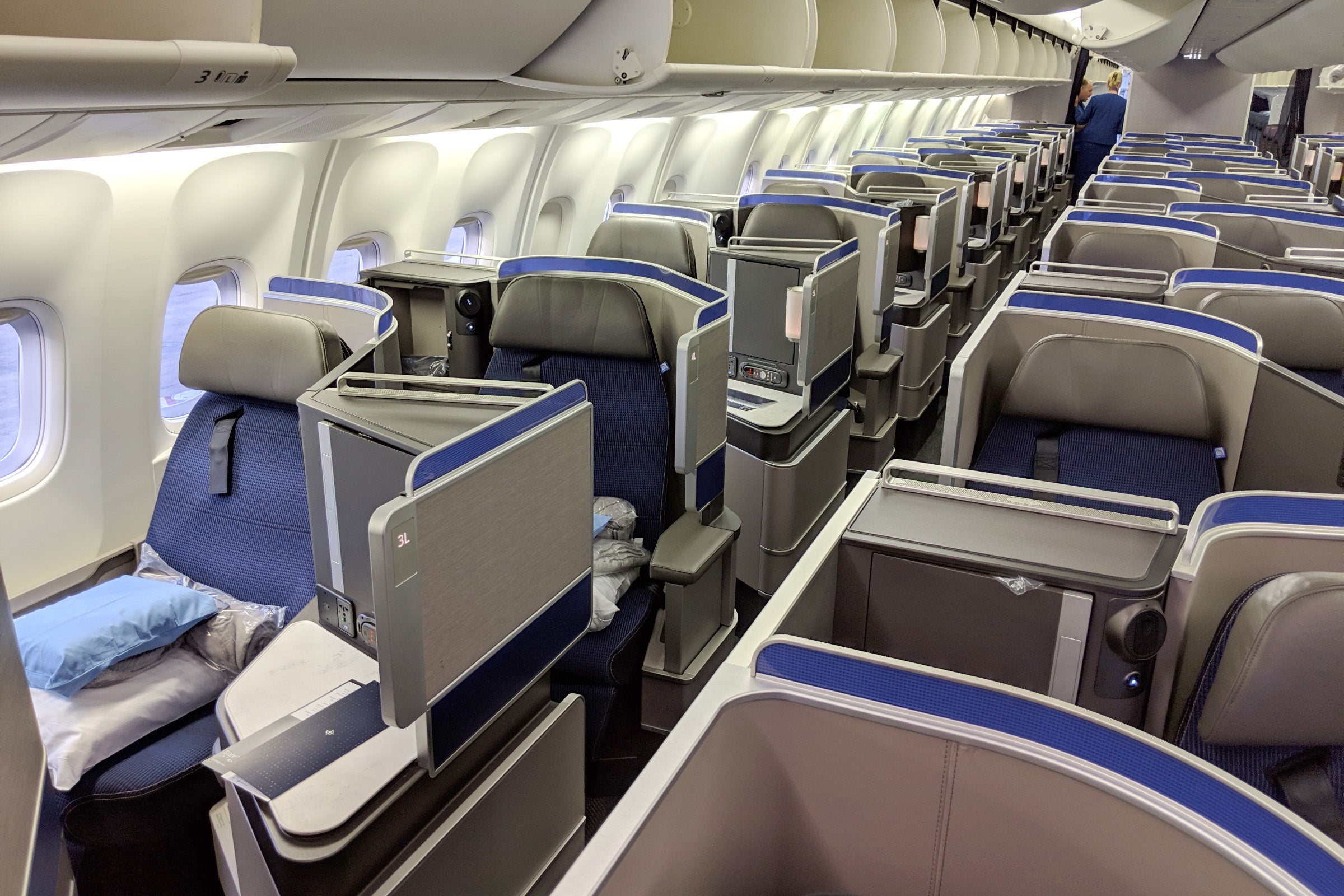
United didn't design an entirely new business class product for the 767s, but is in the process of installing Polaris business class seats on many (but not all) of its 767-300ERs in a spacious 1-1-1 layout. At least seven of these planes won't receive the new Polaris seats before retirement.
When asked about the thought process behind retrofitting the 767 fleet despite the impending retirement, United echoed Delta's response. "Our 767 aircraft are a good fit on the routes we operate them on — they are safe and have good operating economics," said Jonathan Guerin, a spokesman for United. "By investing in reconfiguring these aircraft we are providing our customers with a great product."
United and Delta will eventually replace their 767s with newer planes like the 787, A350, and A330-900, reducing fuel burn per seat and providing a better passenger experience. But the two airlines seem committed to providing as positive a customer experience as possible in the interim.
TPG featured card

at Capital One's secure site
Terms & restrictions apply. See rates & fees.
| 5X miles | Earn 5X miles on hotels, vacation rentals and rental cars booked through Capital One Travel |
| 2X miles | Earn unlimited 2X miles on every purchase, every day |
Pros
- Stellar welcome offer of 75,000 miles after spending $4,000 on purchases in the first three months from account opening. Plus, a $250 Capital One Travel credit to use in your first cardholder year upon account opening.
- You'll earn 2 miles per dollar on every purchase, which means you won't have to worry about memorizing bonus categories
- Rewards are versatile and can be redeemed for a statement credit or transferred to Capital One’s transfer partners
Cons
- Highest bonus-earning categories only on travel booked via Capital One Travel
- LIMITED-TIME OFFER: Enjoy $250 to use on Capital One Travel in your first cardholder year, plus earn 75,000 bonus miles once you spend $4,000 on purchases within the first 3 months from account opening - that’s equal to $1,000 in travel
- Earn unlimited 2X miles on every purchase, every day
- Earn 5X miles on hotels, vacation rentals and rental cars booked through Capital One Travel
- Miles won't expire for the life of the account and there's no limit to how many you can earn
- Receive up to a $120 credit for Global Entry or TSA PreCheck®
- Use your miles to get reimbursed for any travel purchase—or redeem by booking a trip through Capital One Travel
- Enjoy a $50 experience credit and other premium benefits with every hotel and vacation rental booked from the Lifestyle Collection
- Transfer your miles to your choice of 15+ travel loyalty programs
- Top rated mobile app