What Is Jet Fuel, and How Does It Work?
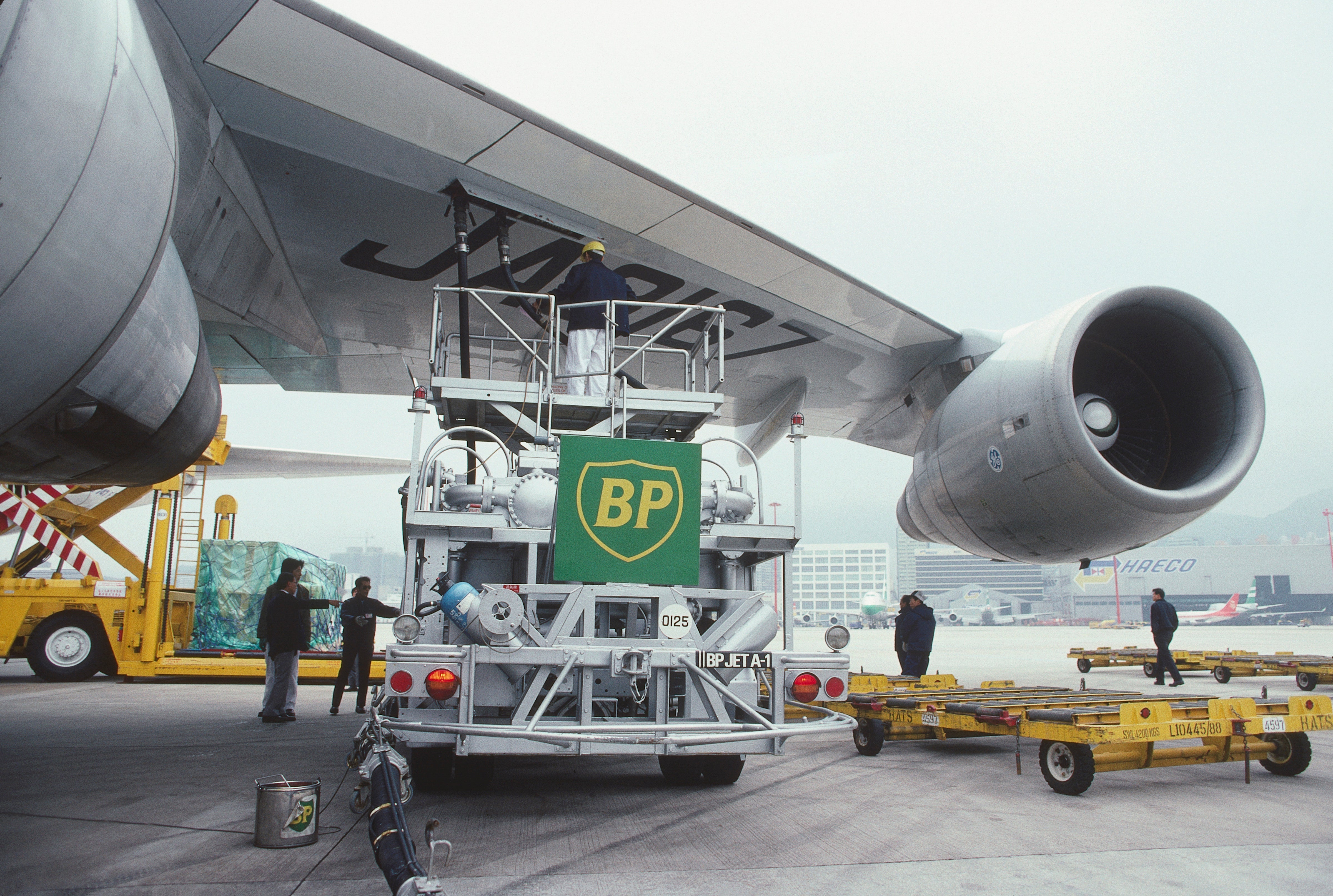
As you walk down the jetway to board your aircraft, you may smell exhaust fumes — it's the peculiar tang of jet fuel, usually burned by the small, auxiliary engines in aiprlane's tails that keep the air conditioning and power going while the main engines are off.
But what, exactly, is jet fuel?
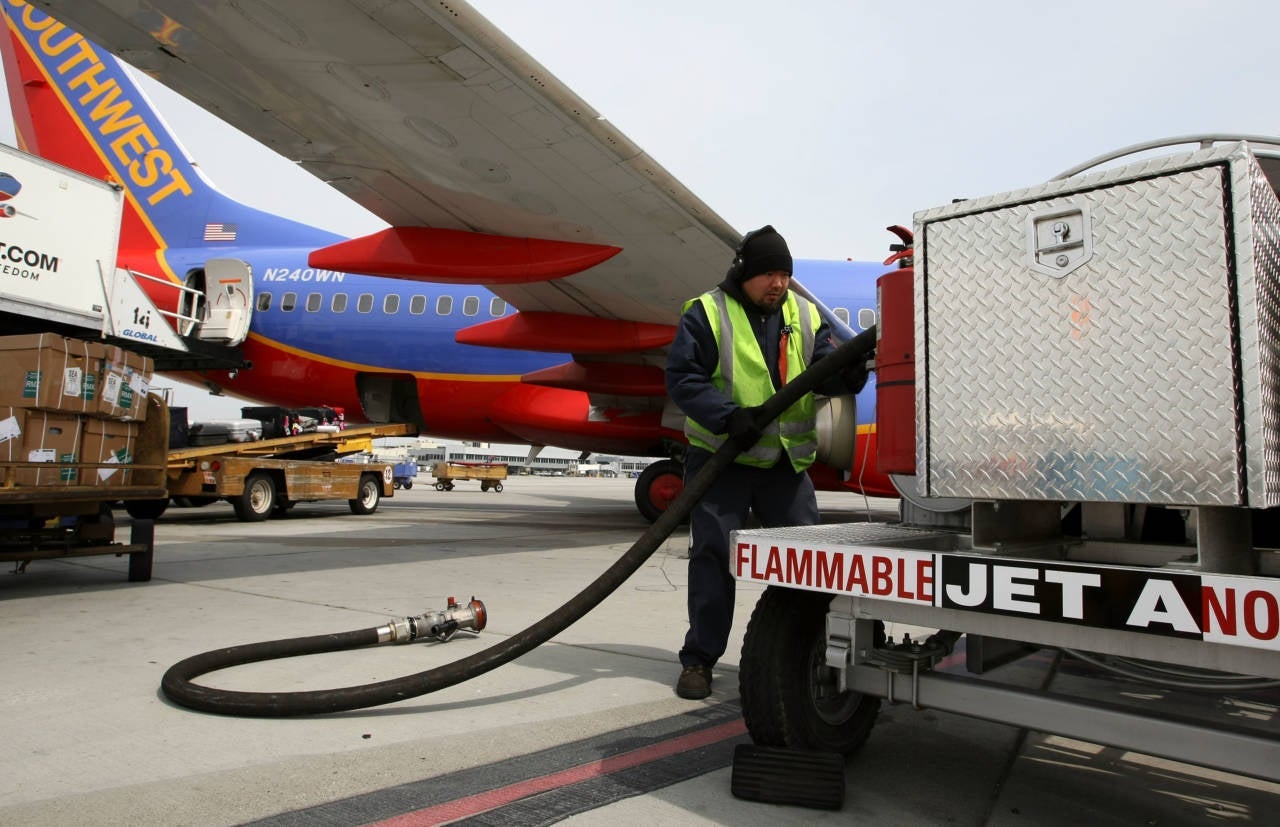
"Jet fuel is diesel," says Scott Martin, Research Faculty at Embry Riddle Aeronautical University, an expert in propulsion technologies with experience at Boeing and federally-funded research grants under his belt. "Unlike gasoline for your car or piston-driven aircraft, which requires a spark plug to ignite, jet fuel tends to auto-ignite much more easily with heat and compression." Just like diesel fuel! This makes it the fuel of choice for a jet engine, which does not have spark plugs.
Some readers may point out that jet fuel is kerosene, and they are correct. Kerosene is one of two types of diesel, a version for jet engines that's lighter than what goes in a truck. For that matter, you could put jet fuel in your diesel truck, although experts warn that it's not necessarily a wise idea.
"Fuel is not one single component. There can be thousands of different types of molecules," Martin says. "Jet fuel refined in California will be chemically different than jet fuel from Pennsylvania, and the same is true for automotive gasoline. The fuels do have to fit in a range, but there can be millions of different chemical combinations."
Jet fuel is straw- or yellow-colored, and the closest a passenger will get to smelling it is the exhaust from engines. A highly refined type of kerosene, called RP-1, was mixed with liquid oxygen to power the Saturn V rocket that brought the Apollo 11 astronauts to the moon.
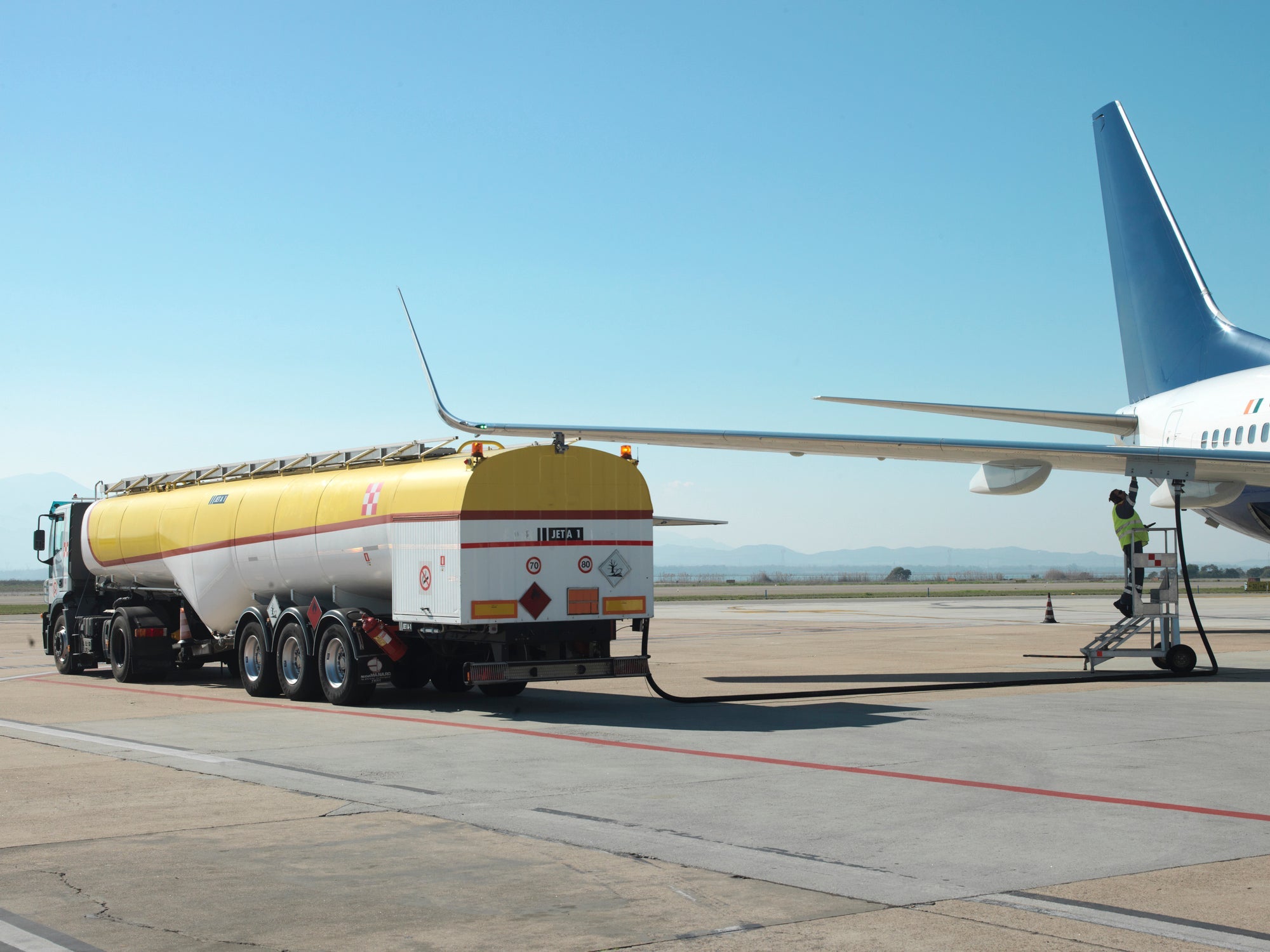
There are two types of jet fuel: Jet A and Jet A-1. Jet A-1 is primarily used around the world, whereas Jet A is only available in the US and Canada (though Canada primarily uses Jet A-1). What's the difference? The freezing point of Jet A is -40 degrees Celsius and the freezing point of Jet A-1 is -47; at that point wax crystals will form in the fuel, which can impede fuel flow to the engines. There are some other minor differences between the two types, Martin said, but they are essentially the same product.
Fuel temperature management is an important task for the airline's operations team and pilots. The temperature outside of the aircraft can be less than -60 degrees Celsius, and it's even colder at the poles. So, how do the pilots and the plane keep the fuel heated? Jet fuel cools at the rate of around 3°C per hour, faster in very cold climates. The engines contain heat exchangers, which are boxes around 18 inches in diameter that run hot engine oil past cold jet fuel. The hot engine oil is cooled by the cold jet fuel, and the cold jet fuel is warmed by the hot engine oil. Isn't that brilliant? It's basically the same concept as the radiator in your car.
If the fuel gets too cold, sensors in the tanks will alert the flight deck. The pilots can also descend, or even increase speed; the friction of the air over the wings can increase the temperature by 0.5° to 0.7°C for each 0.01 Mach of speed added.

How Much Does Jet Fuel Cost?
Jet fuel prices fluctuate, but at present the spot price is around $1.90 per gallon. A Boeing 777-300ER has a full fuel capacity of 47,890 gallons and burns fuel at the rate of roughly 2,500 gallons per hour (depending on the conditions, such as winds aloft and takeoff weight). A typical flight from New York to London on the Boeing 777-300ER would then cost around $33,000 in fuel.
Biofuels to the Rescue
Are we due for "synthetic" kerosene in the future? Martin seems to think so, citing the development in bio-derived fuels and the threat of a carbon tax on jet fuel, similar to the taxes we've had on gasoline since the 1970s. Biofuels are made by taking material such as corn, then distilling and applying processes to it to create a type of synthetic kerosene. These fuels are petroleum-free.
He cites the case of Virgin Atlantic, which tested a flight in 2008 between London and Amsterdam with 20% bio-fuel, 80% Jet A-1. "As long they are lower than a certain percent—not 100%—they are good to go. There's no technical reason aircraft couldn't use 100% biofuel, but the FAA does not have enough data yet to allow for it. Even the military is investing in research on biofuel for jet aircraft, for reasons of national security," Martin explained. "The use of biofuel will really come down to economics and the business case for it."
There's also th case of at least one airline making its own jet fuel. In 2012, Delta airlines acquired a side business — one that it's currently trying to unload. The airline owns a subsidiary called Monroe Energy that operates an East Coast refinery in Trainer, Pennsylvania. There, Delta produces jet fuel, gasoline and other petroleum products. It bought the money-losing operation for $150 million, with the idea that vertical integration of fuel-to-planes would be a cost-saver for the airline, and even make a profit. That has turned out not to be the case, with jet fuel prices very low. The refinery needs to produce other fuels to make up the difference.
Mike Arnot is the founder of Boarding Pass NYC, a New York-based travel brand; a private pilot; and a marketing consultant to airlines, none of which were cited in this article.
TPG featured card

at Capital One's secure site
Terms & restrictions apply. See rates & fees.
| 5X miles | Earn 5X miles on hotels, vacation rentals and rental cars booked through Capital One Travel |
| 2X miles | Earn unlimited 2X miles on every purchase, every day |
Pros
- Stellar welcome offer of 75,000 miles after spending $4,000 on purchases in the first three months from account opening. Plus, a $250 Capital One Travel credit to use in your first cardholder year upon account opening.
- You'll earn 2 miles per dollar on every purchase, which means you won't have to worry about memorizing bonus categories
- Rewards are versatile and can be redeemed for a statement credit or transferred to Capital One’s transfer partners
Cons
- Highest bonus-earning categories only on travel booked via Capital One Travel
- LIMITED-TIME OFFER: Enjoy $250 to use on Capital One Travel in your first cardholder year, plus earn 75,000 bonus miles once you spend $4,000 on purchases within the first 3 months from account opening - that’s equal to $1,000 in travel
- Earn unlimited 2X miles on every purchase, every day
- Earn 5X miles on hotels, vacation rentals and rental cars booked through Capital One Travel
- Miles won't expire for the life of the account and there's no limit to how many you can earn
- Receive up to a $120 credit for Global Entry or TSA PreCheck®
- Use your miles to get reimbursed for any travel purchase—or redeem by booking a trip through Capital One Travel
- Enjoy a $50 experience credit and other premium benefits with every hotel and vacation rental booked from the Lifestyle Collection
- Transfer your miles to your choice of 15+ travel loyalty programs
- Top rated mobile app