Skip to content

Big cruise ships may say goodbye to the classic Venice sail-away: Here's why

April 02, 2021
3 min read
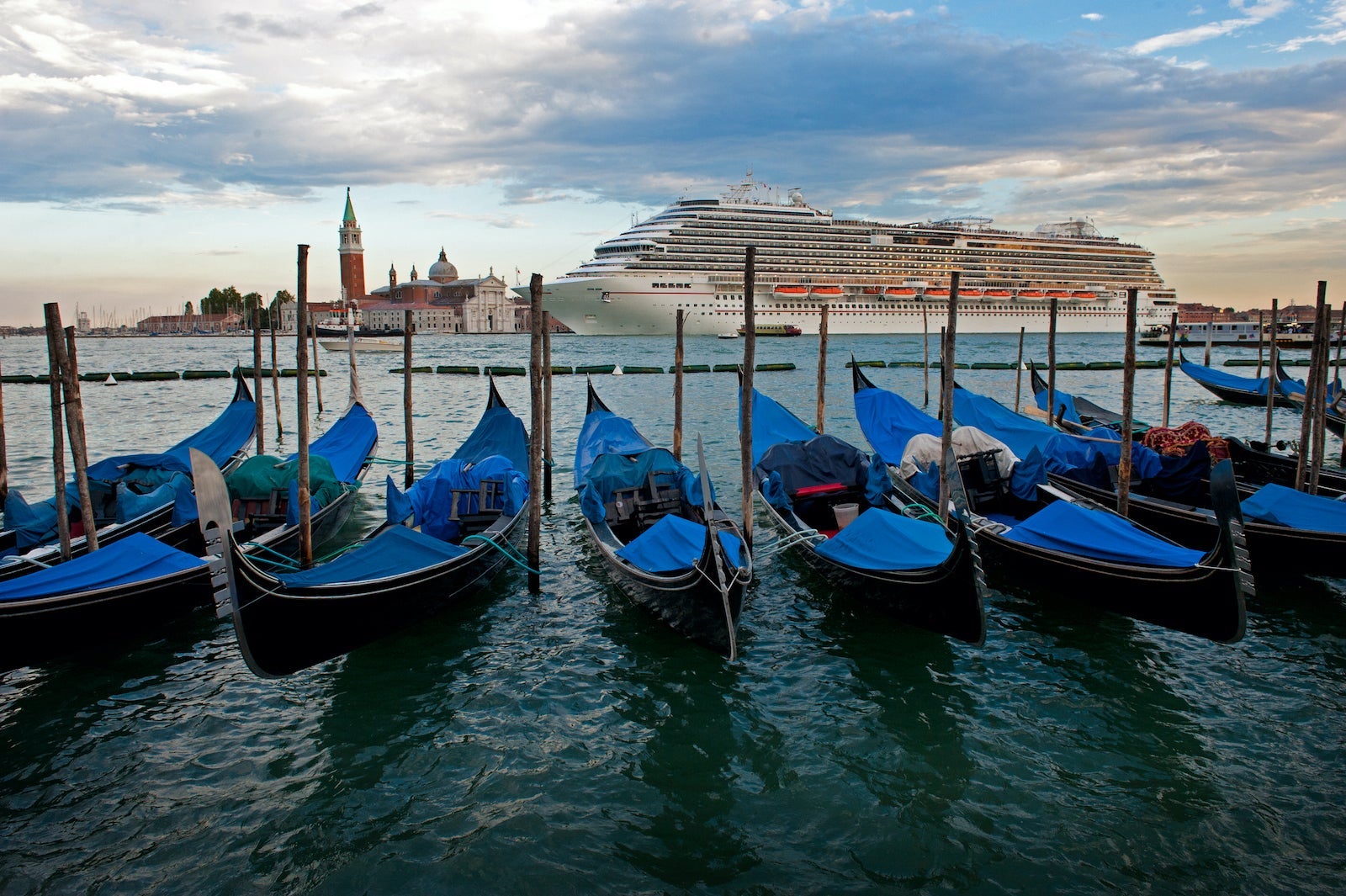
A cruise ship sails past gondolas in Venice Italy.
Big cruise ships may say goodbye to the classic Venice sail-away: Here's why
The cards we feature here are from partners who compensate us when you are approved through our site, and this may impact how or where these products appear. We don’t cover all available credit cards, but our analysis, reviews, and opinions are entirely from our editorial team. Terms apply to the offers listed on this page. Please view our advertising policy and product review methodology for more information.

If you love the idea of sailing the Guidecca Canal, past St. Mark's Square, to dock in Venice, you may need to adjust your expectations. In the decade-long debate over whether Venice should "ban" large cruise ships from its historic city center, the issue once again bubbled to the surface in Italy. The issue at hand: what type of cruise ships can dock at Venice's Marittima.

If the measure is put into place, large cruise ships would need to dock elsewhere in Venice Lagoon and approach the city via a different route -- possibly eliminating that gorgeous sail-by of Piazza San Marco.

However, all is not lost for those that want the quintessential "old world" experience. Simply look to smaller ships, such as those operated by Silversea or the soon-to-launch Ritz-Carlton Yacht Collection. Due to their smaller size, they'll still find a home at Marittima.

Cruise ships in recent years have become the poster child for overcrowding in Venice, despite only accounting for a small percentage of the more than 25 million tourists that visit the city each year. In recent years, there have been fewer than 2 million cruise passenger movements in Venice a year, and the number has been on the decline, according to the cruise industry's main trade group, the Cruise Lines International Association.

In 2013, the Italian government banned vessels of more than 96,000 gross tons from crossing the Giudecca Canal, a major artery connecting the city's network of waterways to Piazza San Marco (St. Mark's Square). But the ruling was overturned. A similar initiative in 2017 also failed.

The most recent ruling bans vessels of more than 40,000 tons. Ships will instead dock in Marghera, a mainland industrial port located 15 minutes by car from the historic center. The solution is temporary, while officials figure out a long-term plan to create an alternate route.

Daily Newsletter
Reward your inbox with the TPG Daily newsletter
Join over 700,000 readers for breaking news, in-depth guides and exclusive deals from TPG’s experts

The more than 25 million tourists per year that visit Venice are a heavy burden on its 14th-century buildings, which are built on shallow and unstable mudbanks.

Modern cruise ships traversing the Guidecca Canal tower over the buildings. They have been involved in several accidents in recent years and, critics say, cause erosion of the city's fragile foundations.

On March 25, Italy's minister of ecological transition Roberto Cingolani; minister of culture Dario Franceschini; minister of tourism Massimo Garavaglia; and minister of sustainable infrastructures and mobility Enrico Giovannini came together to make a public statement to "protect a historical cultural heritage not only of Italy but of the whole world."

It's unclear whether the latest plan will work or what will make this time different, but it's a move many — including members of the cruise industry — support.

"We welcome the announcement regarding access routes to Venice as we have consistently advocated moving large ships away from the Giudecca canal," Ukko Metsola, director general of CLIA Europe said in a statement sent to TPG. "We recognize that agreeing and implementing new access routes into Venice is a long-term project and will require the adoption of legislative measures. We note therefore that there will be temporary measures required during an interim period. We will continue to work in close collaboration with the Italian authorities and relevant stakeholders as these recommendations are developed into concrete policy actions."

Featured image by Getty Images
Editorial disclaimer: Opinions expressed here are the author’s alone, not those of any bank, credit card issuer, airline or hotel chain, and have not been reviewed, approved or otherwise endorsed by any of these entities.

TPG featured card

4 / 5
Go to review
Rewards rate
1XChoose to earn up to 1X points on rent and mortgage payments with no transaction fee
2XEarn 2X points + the option to earn 4% back in Bilt Cash on everyday purchases
Intro offer
Open Intro bonus
50,000 Bilt Points + Gold Status + $300 of Bilt Cash
Annual fee
$495
Regular APR
26.74 - 34.74% variable
Recommended credit
Open Credit score description
Good Credit, Excellent Credit

Pros

  • Choice to earn up to 1 Bilt Point per dollar spent on rent and mortgage payments
  • Elevated everyday earnings with both Bilt Points and the option to earn Bilt Cash
  • $400 Bilt Travel Portal hotel credit per year (up to $200 biannually)
  • $200 Bilt Cash annually
  • Priority Pass membership
  • No foreign transaction fees

Cons

  • Moderate annual fee
  • Designed primarily for members seeking a premium, all-in-one card
  • Earn points on housing with no transaction fee
  • Choose to earn 4% back in Bilt Cash on everyday spend. Use Bilt Cash to unlock point earnings on rent and mortgage payments with no transaction fee, up to 1X.
  • 2X points on everyday spend
  • $400 Bilt Travel Hotel credit. Applied twice a year, as $200 statement credits, for qualifying Bilt Travel Portal hotel bookings.
  • $200 Bilt Cash (awarded annually). At the end of each calendar year, any Bilt Cash balance over $100 will expire.
  • Welcome bonus (subject to approval): 50,000 Bilt Points + Gold Status after spending $4,000 on everyday purchases in the first 90 days + $300 of Bilt Cash.
  • Priority Pass ($469/year value). See Guide to Benefits.
  • Bilt Point redemptions include airlines, hotels, future rent and mortgage payments, Lyft rides, statement credits, student loan balances, a down payment on a home, and more.