US mask mandates are going away ... what's next?

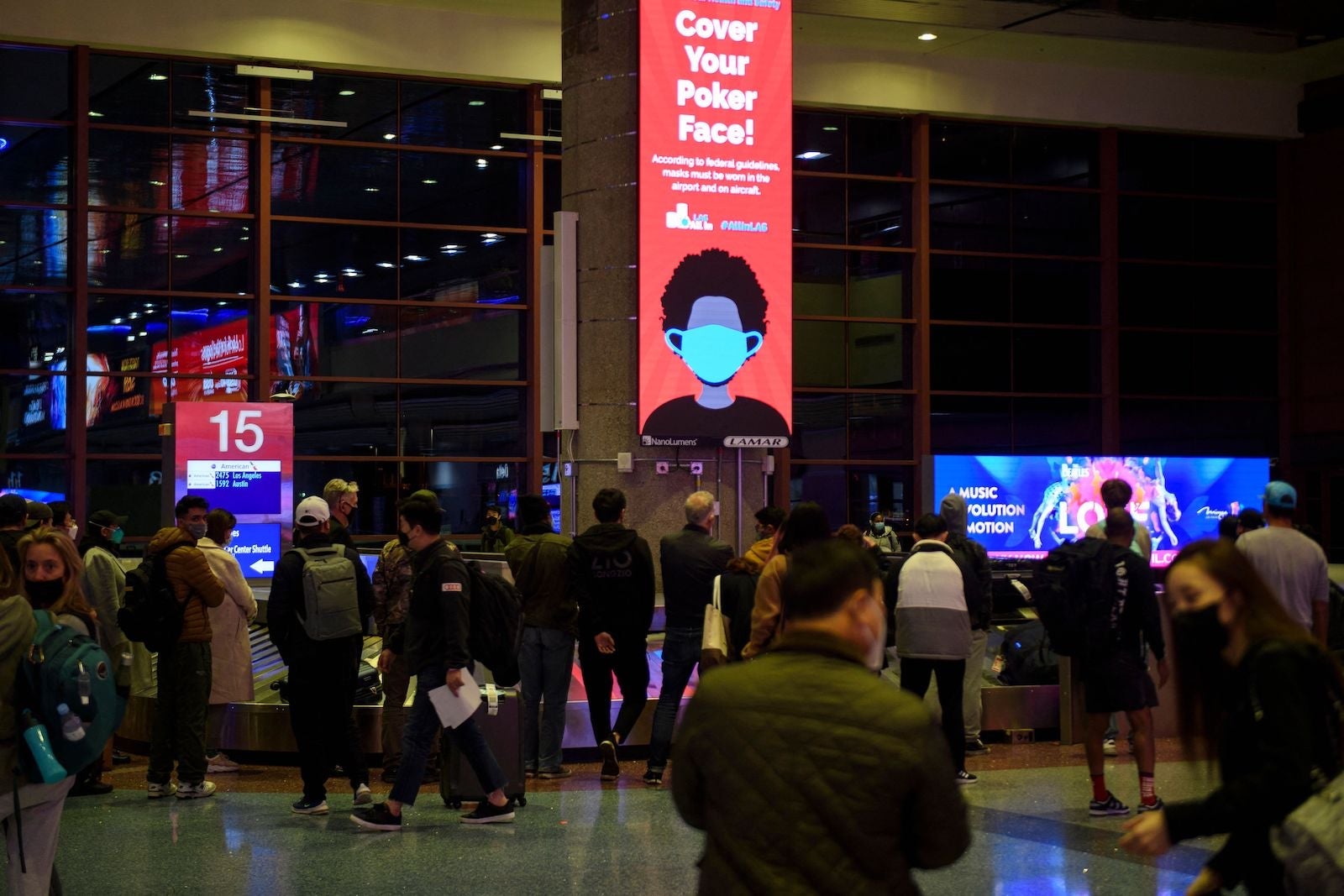
Earlier this week, Hawaii officials announced that the state will be dropping its mask mandate at the end of March. With mask mandates in Oregon and Washington set to expire this week, it will mark the removal of all state mask mandates by March 26.
Although states are no longer forcing their residents to wear masks, the federal government continues to do just that thanks to the recently extended public transportation mask mandate, which will require passengers on flights within the U.S. to continue wearing face coverings for at least another month.
This raises a question: As states willingly give Americans a taste of post-pandemic life, when will the same opportunity apply to air travel?
How did we get here? States and the federal government at odds
Throughout 2021 and 2022 thus far, states have gradually removed statewide mask mandates, compounded by cities following suit to varying degrees, while still allowing private businesses to require masks if they so choose.
Every single state will have dropped its previous statewide mask mandate by March 26. However, face coverings remain required on all public transit nationwide, per the aforementioned federal mandate, since the federal law applies to any public transit system throughout the U.S., including buses, subways and commercial airplanes.
Speaking from personal experience, having ridden the subway in both New York City and the Metro in Washington, D.C., throughout this time, I've yet to see any person not wearing a mask actually be penalized for failing to comply.
Enforcement of COVID-19 policies has proven to be a tricky thing, as is usually the case with U.S. law. Perhaps this is why the Biden administration has continually extended its mandate since first enforcing it in February 2021.
The mandate, which was set to expire on March 18, was extended on March 10 through April 18. At that point we expect the U.S. Centers for Disease Control and Prevention, the Biden administration and the Transportation Security Administration to release a revised mask policy for use on public transit, including airplanes. This would allow the current mandate to be lifted, as reported by TPG senior aviation reporter David Slotnick.
Congruently, the government's Jan. 30, 2020, declaration of COVID-19 as a public health emergency is set to expire April 15, having been most recently renewed for 90 days on Jan. 16. However, it's unclear whether that will be extended as well, according to Slotnick.

The White House did not respond to a request for comment for this story.
Read more: US travel mask mandate to be extended 1 month, with plans to loosen it in April
Hawaii becomes final state to drop its mask mandate
This brings us to this week, when Hawaii Gov. David Ige said he would lift the statewide indoor mask requirement on March 25 at 11:59 p.m. PT, marking the conclusion of statewide mask mandates.
"Together, we have reduced COVID-19 in Hawai'i to the point where most of us will be safe without masks indoors," Ige said in a statement on March 8. "Right now, hospitalizations are trending down. Case counts are falling."
Although this suggests progress, Ige did not hesitate to say that both locals and travelers to Hawaii could be asked to wear masks in the future should local case numbers begin increasing again, as they did this summer.
Otherwise, the other two currently remaining broad sweeping state mask mandates were in Oregon and Washington, both of which expired on March 11.
Read more: Travel industry groups urge White House to temporarily drop predeparture test for vaccinated flyers
Although governors Ige, Kate Brown of Oregon and Jay Islee of Washington all credited the timing of the removal to public health data, it hardly seems coincidental as the country eagerly awaits a decision from the White House regarding how long we can expect masks on planes to last.
It's about more than just masks in the form of a predeparture test
Along with the mask mandate, the U.S. continues to require all travelers over the age of 2, regardless of vaccination status, to submit a negative COVID-19 test taken within one day of departure for the country.
Travel industry groups have been vocal about this testing rule since it began in December. This includes a public plea in early February from nearly 30 national and international organizations asking the Biden administration to drop the predeparture testing requirement for vaccinated individuals entering the U.S. by air.
Despite their frustration, they've continued to comply with both the testing and mask rules.
"A4A passenger carriers continue to lean into science, and we are encouraged by the lifting of mask requirements in all 50 states and other COVID-related restrictions across the country," said Katherine Estep, a spokesperson for Airlines for America, the trade group representing North American airlines. "We remain in communication with the administration as they reassess the existing mask requirements and work to identify a path forward from COVID-era policies."
Some industry experts, including Henry Harteveldt, president of the San Francisco-based Atmosphere Research Group, think other countries are waiting on the U.S. to drop its test requirement for incoming travelers before dropping their own.
"I think a lot of countries from around the world are going to take that cue from the U.S.," Harteveldt told me. "A lot of people are hoping all of these travel requirements will go away because they create anxiety, they interfere with your trip, they add expense and with families, for example, a lot of expense."
Related: Travel is back in a big way as COVID-19 appears to be entering endemic stage; why I'm still nervous
What does this mean for upcoming travel within the US?
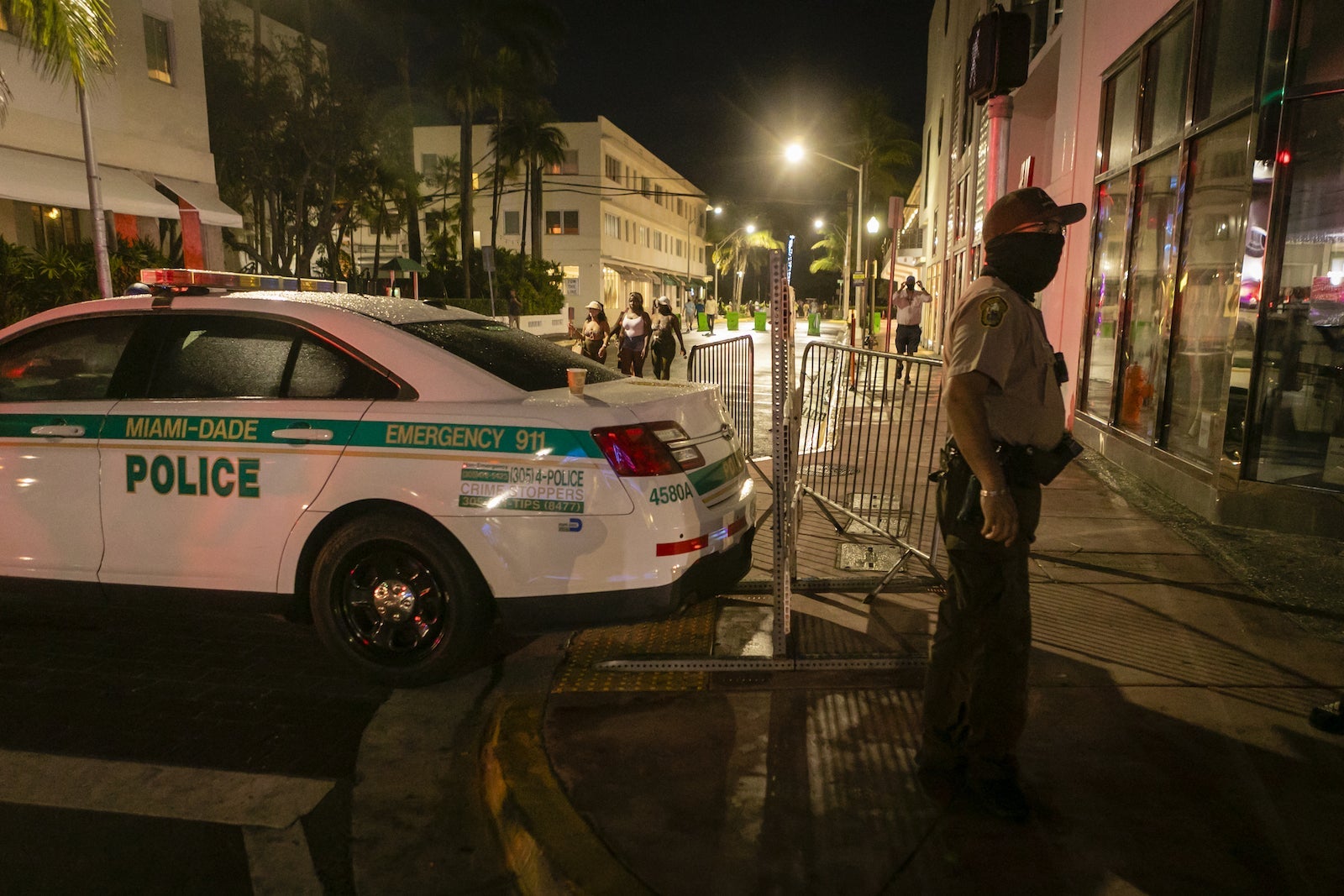
Looking ahead to domestic travel for the short term at least, it seems that travelers are more than ready to get back to what were once assumed annual travels, such as spring break, a weeklong celebration that American schools most commonly observed during the last two weeks of March.
Nowhere says spring break in the U.S. quite like Florida, where local officials from Fort Lauderdale to Miami are preparing for a surge of raucous incoming travelers.
In Orlando, current leisure advance hotel bookings for travel in March and April are pacing at 82% and 88%, respectively, of pre-pandemic levels according to Casandra Matej, president and CEO of Visit Orlando.
"Nationally, sentiment data is showing that 90% of U.S. travelers have travel plans in the next six months, which should benefit Orlando," Matej said.
Overall, the prices for hotels and flights into this summer across the country are expected to increase, per recent TPG reporting that the price of domestic airfare will increase 7% monthly through June.
This data, along with that from the past year, suggests that although flyers' attitude toward wearing masks on planes might suggest a collective "we are over it" sentiment, it's not keeping them from doing so in order to get to their desired destination. The industry experts I spoke with agree.
However, as more and more people ditch masks in their day-to-day lives because no one is telling them to keep them on, the recent decision by the government to revise the mask policy over the next month remains puzzling at best. It may also only fuel further anger toward flight attendants who are simply trying to do their jobs during challenging times.
"This does make airplane transport stand out as a very different situation, which could cause more friction," said Brett Snyder, president of Cranky Concierge air travel assistance and author of the "Cranky Flier" blog. Additionally, Snyder said that mask-wearing should be more of an individual choice at this point, as there's no scientific evidence showing that airplane passengers are more at risk of COVID-19.
Harteveldt, the airline and travel industry analyst, echoed Snyder's sentiment and expressed surprise at the CDC's decision to extend the mask requirement.
"I would've hoped, at the very least, they would've examined the different forms of public transit and recognized that the transport industry has invested HEPA filters at airports ... and the data showing that the air on commercial planes is among the cleanest anywhere," he told me. Harteveldt also acknowledged that it's not going to inconvenience anyone too terribly to wear a mask on airplanes for the next month, but he anticipates short-term confusion for the traveling public.
"What it does do is create this very confusing environment for everybody because where you live may not require masks and the destination you're going to may not require masks but you have to remember to wear and pack masks for the airport and plane," he continued. "I'm sure there are a lot of airport travelers who don't realize airports operate under federal law."
Bottom line
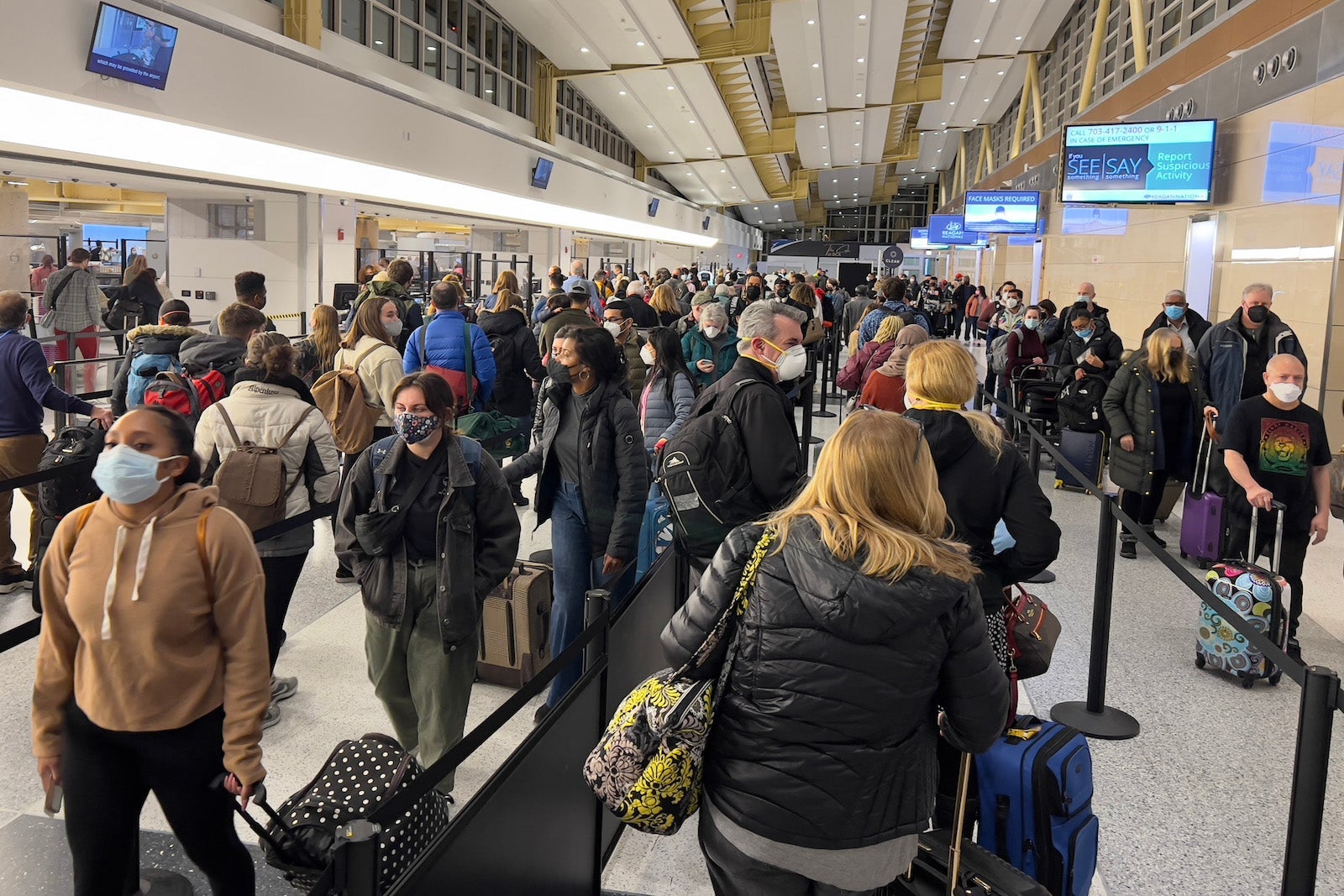
Given that the government expects to issue an updated mask policy for public transit next month, we may potentially see a reprieve from the mask mandate in time for summer travels.
If past precedence is any indication of the future, we can look to the rest of the world, which largely has made it easier for travelers to visit by curbing restrictions related to arrival testing, quarantining and the like.
For now, though, there's been no indication that the predeparture testing requirement is going anywhere. However, we can hope the U.S. government will feel pressure from other world leaders to discontinue the patchwork policy we've seen thus far.
Perhaps it's time for U.S. officials to read the room.
TPG featured card

at Capital One's secure site
Terms & restrictions apply. See rates & fees.
| 5X miles | Earn 5X miles on hotels, vacation rentals and rental cars booked through Capital One Travel |
| 2X miles | Earn unlimited 2X miles on every purchase, every day |
Pros
- Stellar welcome offer of 75,000 miles after spending $4,000 on purchases in the first three months from account opening. Plus, a $250 Capital One Travel credit to use in your first cardholder year upon account opening.
- You'll earn 2 miles per dollar on every purchase, which means you won't have to worry about memorizing bonus categories
- Rewards are versatile and can be redeemed for a statement credit or transferred to Capital One’s transfer partners
Cons
- Highest bonus-earning categories only on travel booked via Capital One Travel
- LIMITED-TIME OFFER: Enjoy $250 to use on Capital One Travel in your first cardholder year, plus earn 75,000 bonus miles once you spend $4,000 on purchases within the first 3 months from account opening - that’s equal to $1,000 in travel
- Earn unlimited 2X miles on every purchase, every day
- Earn 5X miles on hotels, vacation rentals and rental cars booked through Capital One Travel
- Miles won't expire for the life of the account and there's no limit to how many you can earn
- Receive up to a $120 credit for Global Entry or TSA PreCheck®
- Use your miles to get reimbursed for any travel purchase—or redeem by booking a trip through Capital One Travel
- Enjoy a $50 experience credit and other premium benefits with every hotel and vacation rental booked from the Lifestyle Collection
- Transfer your miles to your choice of 15+ travel loyalty programs
- Top rated mobile app