United’s frustrating lounge policy that's much more punitive than American Airlines

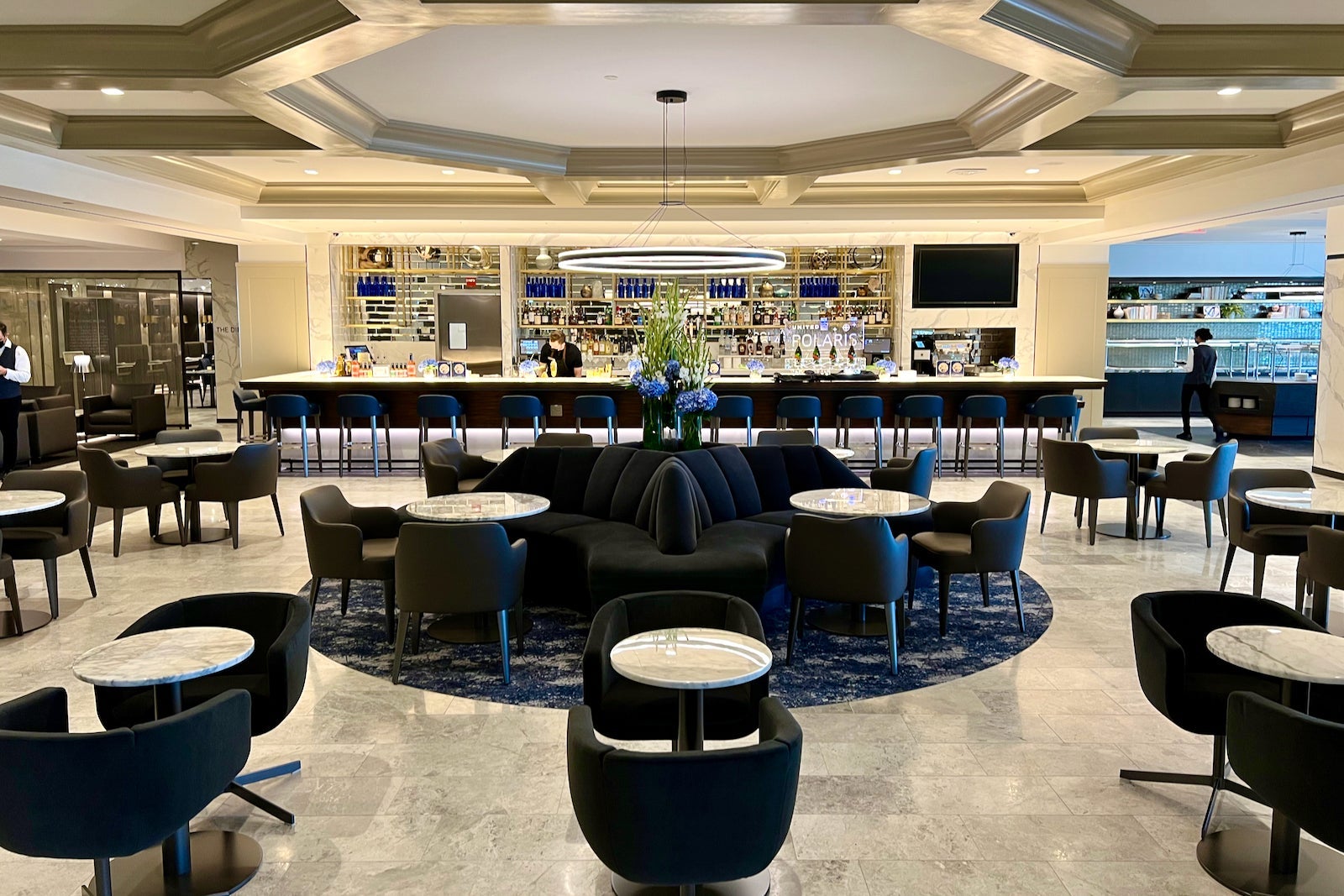
Both United and American Airlines offer two different types of airport lounges with vastly different amenities and experiences.
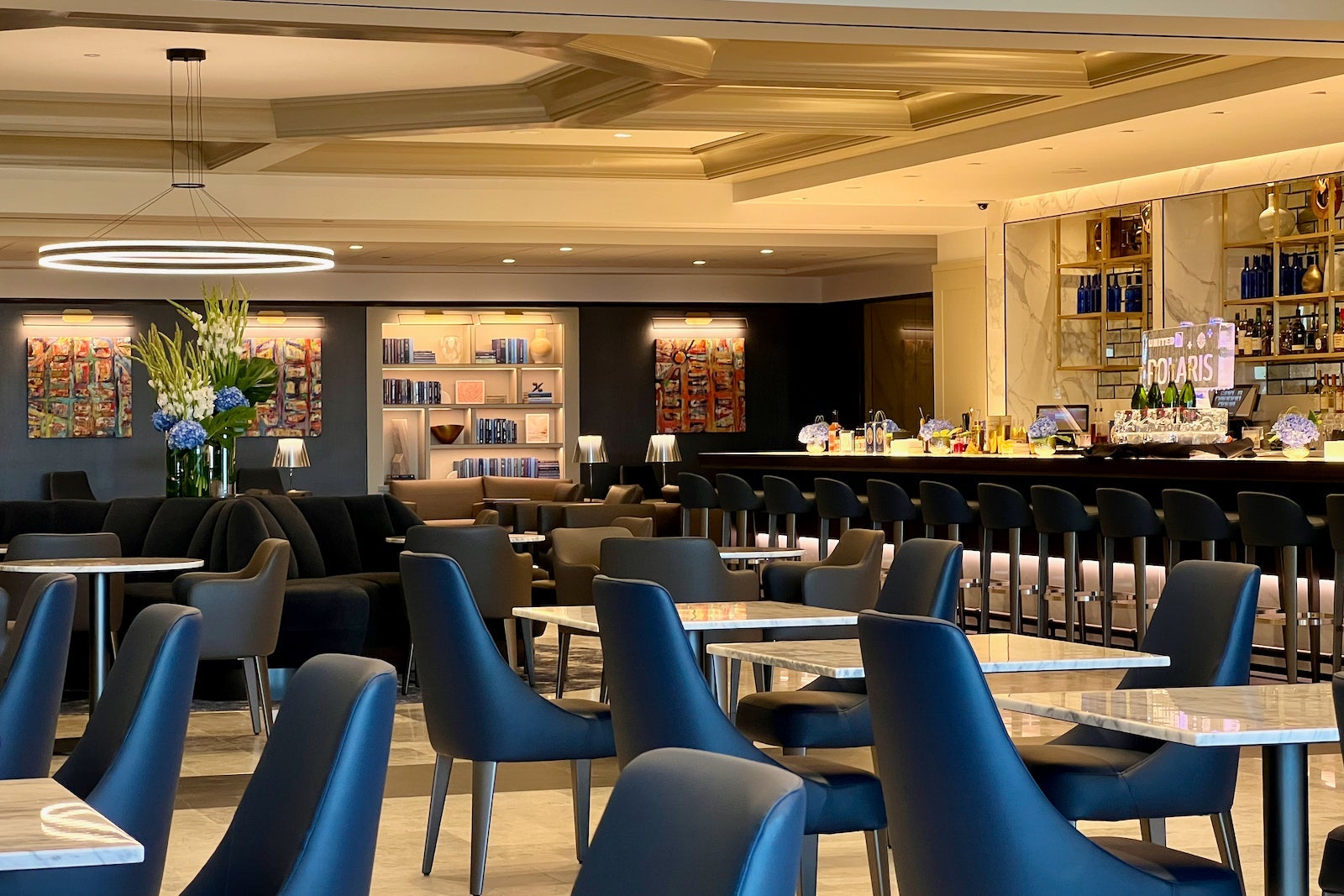
There are standard run-of-the-mill membership lounges — dubbed the United Club and Admirals Club, respectively — and then there are exclusive spaces, respectively called the Polaris Lounge and Flagship Lounge, which are reserved for business-class passengers.
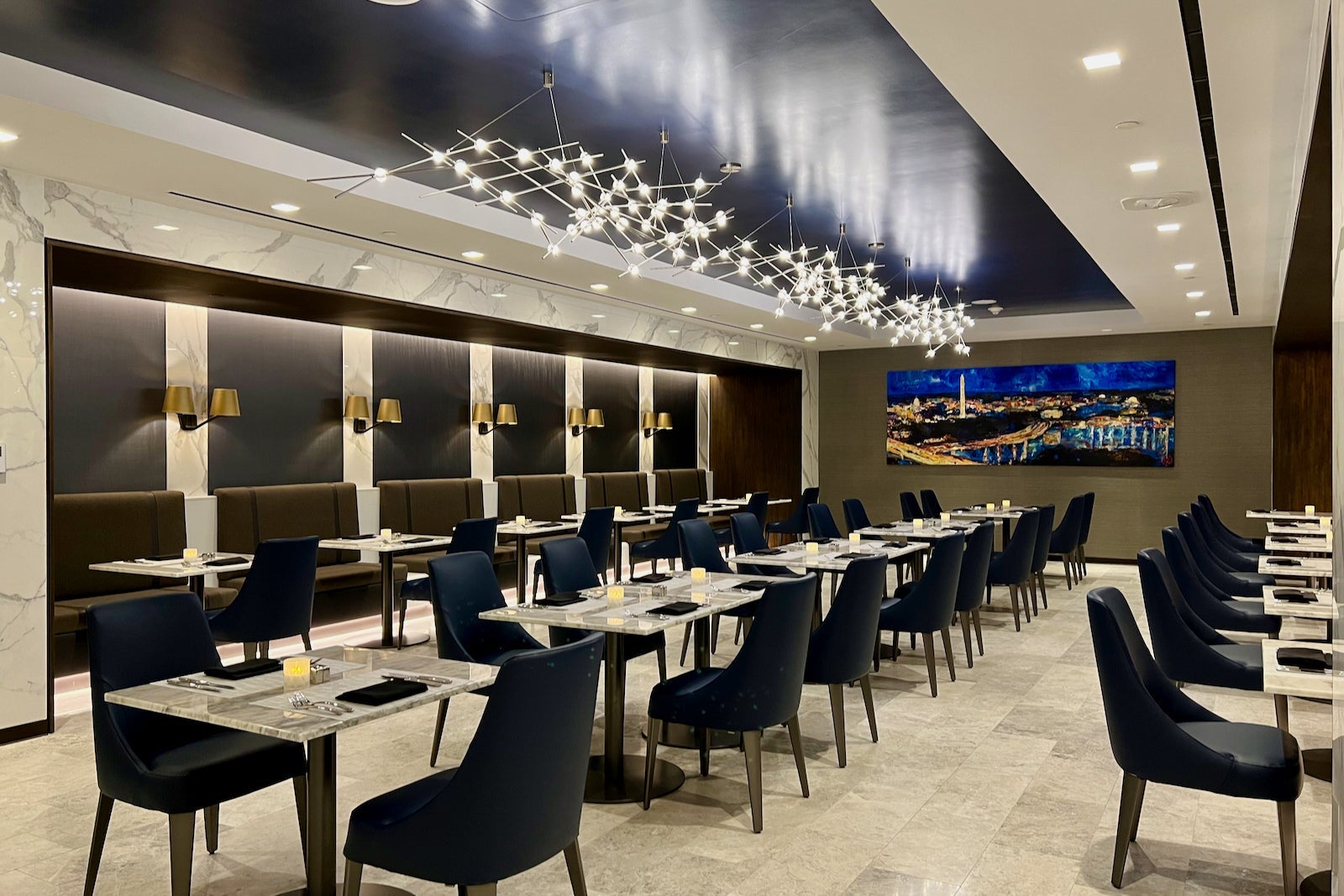
In recent years, the two carriers have invested significantly in building out their poshest lounges. American now operates five Flagship Lounges (across its biggest international gateway hubs), while United has six Polaris Lounges (one in every domestic hub, except for Denver).
These business-class-only lounges offer an upgraded experience compared to the standard membership clubs. This includes more luxurious seating arrangements, including nap pods and a plethora of phone booths, an elevated buffet with better catering, top-shelf liquor, shower suites and more.
It's no surprise then that the airlines limit access to these lounges to their most lucrative flyers. This helps avoid overcrowding in the lounges, while also reserving this experience to those paying the big bucks to sit in the pointy end of the plane on international flights.
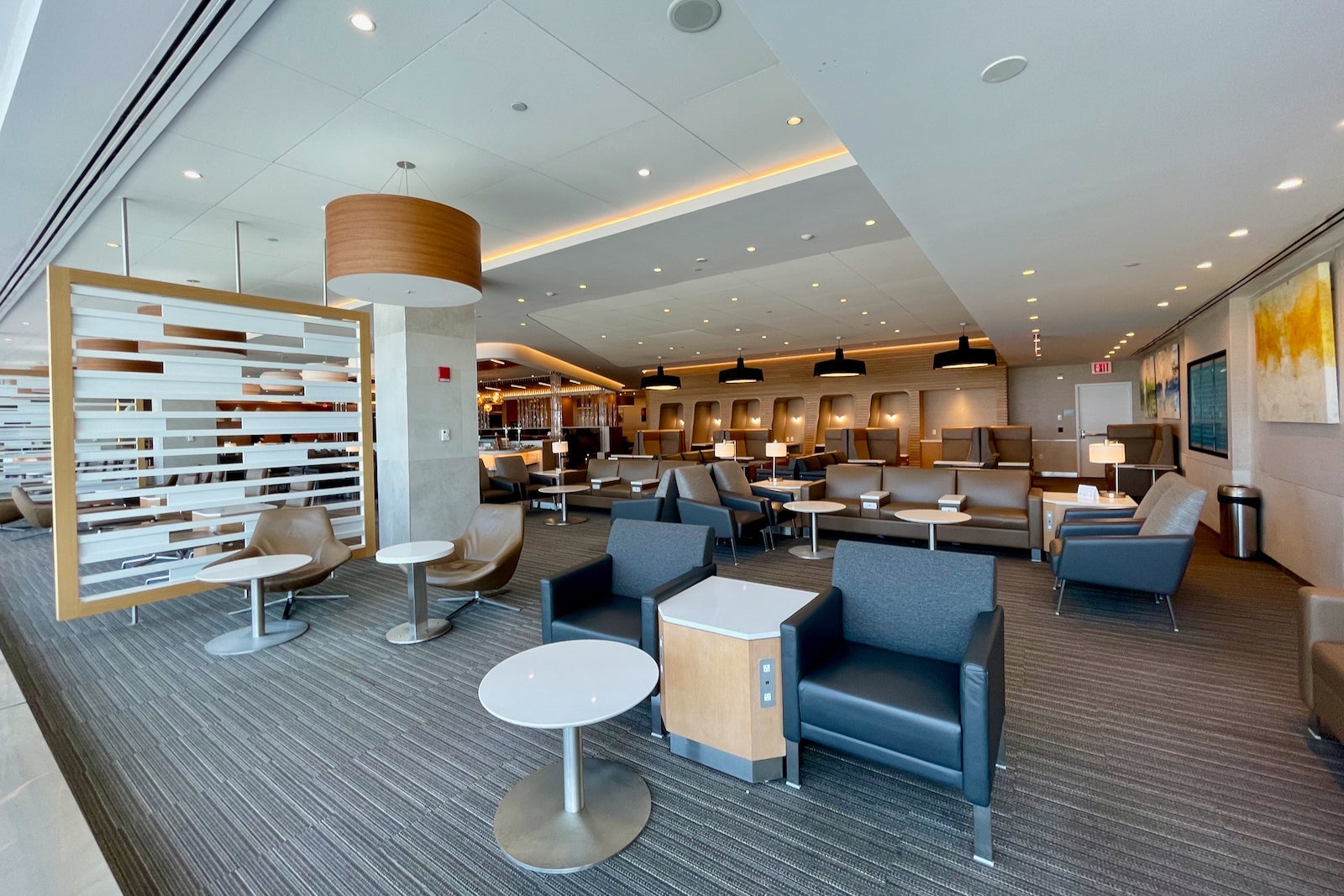
While both airlines allow business-class flyers to use the lounge before long-haul flights, American is more welcoming than United when it comes to a carve-out for certain domestic flights — those seated in American's Flagship business or first class on premium transcontinental routes receive access to the Flagship Lounge. (American also admits its top-tier elites before long-haul flights, regardless of the cabin flown.)
Meanwhile, those flying in the United Polaris lie-flat pods on the same routes are relegated to the standard United Club.
In fact, I recently flew from Newark to San Francisco on one of United's premium transcontinental coast-to-coast services. I booked a business-class ticket, and despite enjoying the Polaris "hard product" on board the plane, I was locked out from using the Polaris Lounge before my flight.
Instead, I spent a good chunk of a 3-hour departure delay sitting in the much less premium United Club at Newark. The airline currently operates just one "standard" membership club at Newark Terminal C, and it's dark, outdated and notoriously overcrowded.

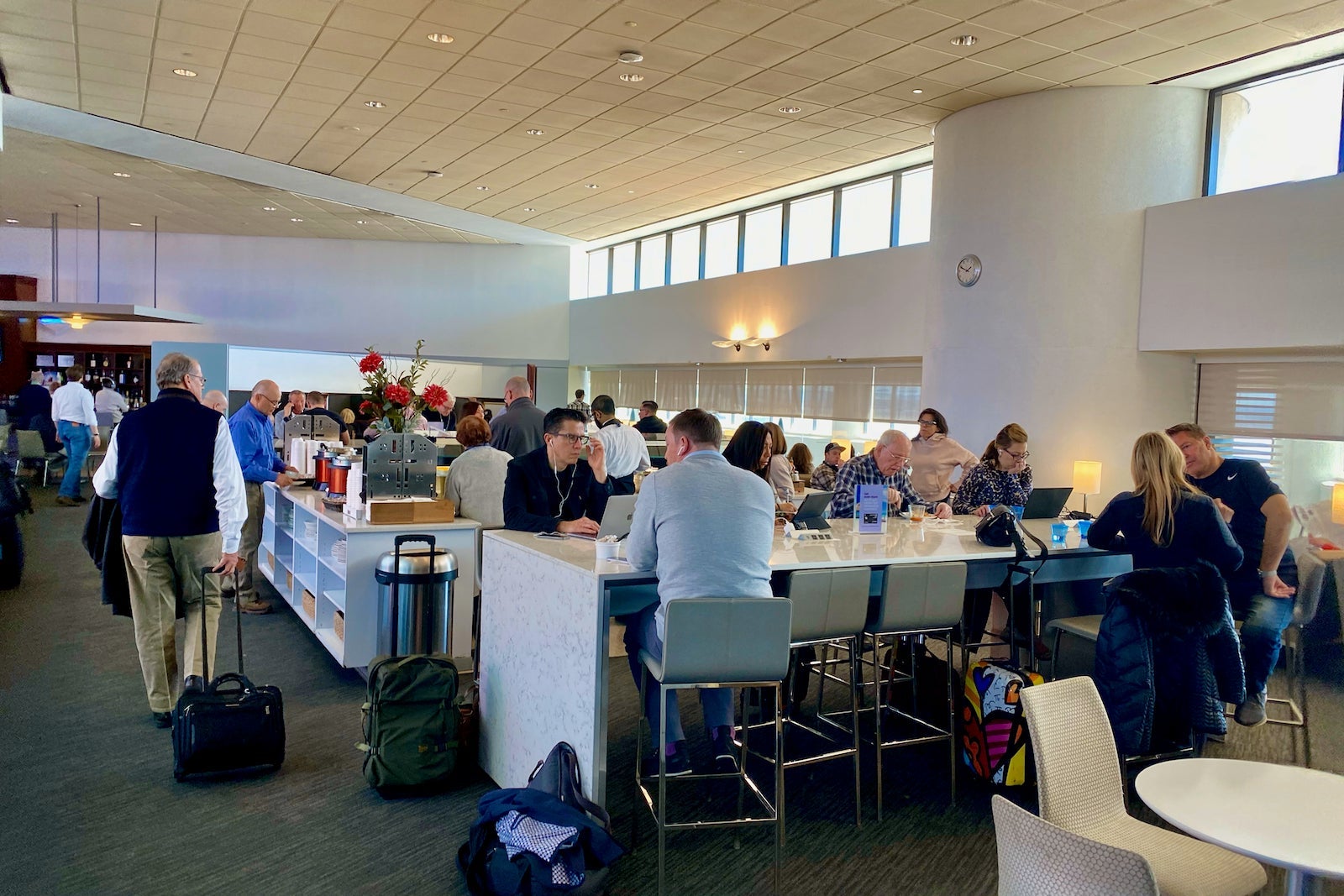
(United is building an upgraded club in the C3 concourse. Until then, the airline also operates a temporary pop-up club near Gate C93, but that's only used during peak departure windows.)
During the departure delay, I kept thinking to myself that had I been flying American, I would've had access to the Flagship Lounge, where I could relax and enjoy the upgraded amenities included with my business-class ticket.
Of course, I understand United's perspective for keeping the Polaris Lounge limited to its long-haul international passengers. The airline can limit overcrowding and reserve the space for travelers driving the most revenue.
But, premium transcontinental routes have historically been some of the most profitable in the domestic network. Business and deep-pocketed leisure travelers splurge for the lie-flat pods, which can go for more than $1,000 in each direction. Plus, many corporations award their travel contracts to airlines based on the coast-to-coast product offering and the number of frequencies.
In United's case, the airline recently restarted serving the JFK airport with flights from San Francisco and Los Angeles, after a more than 5-year hiatus.
Pulling out of JFK in 2015 has since been deemed a "strategic mistake" by United executives, who say that the airline lost corporate contracts and other big spenders due to the move.
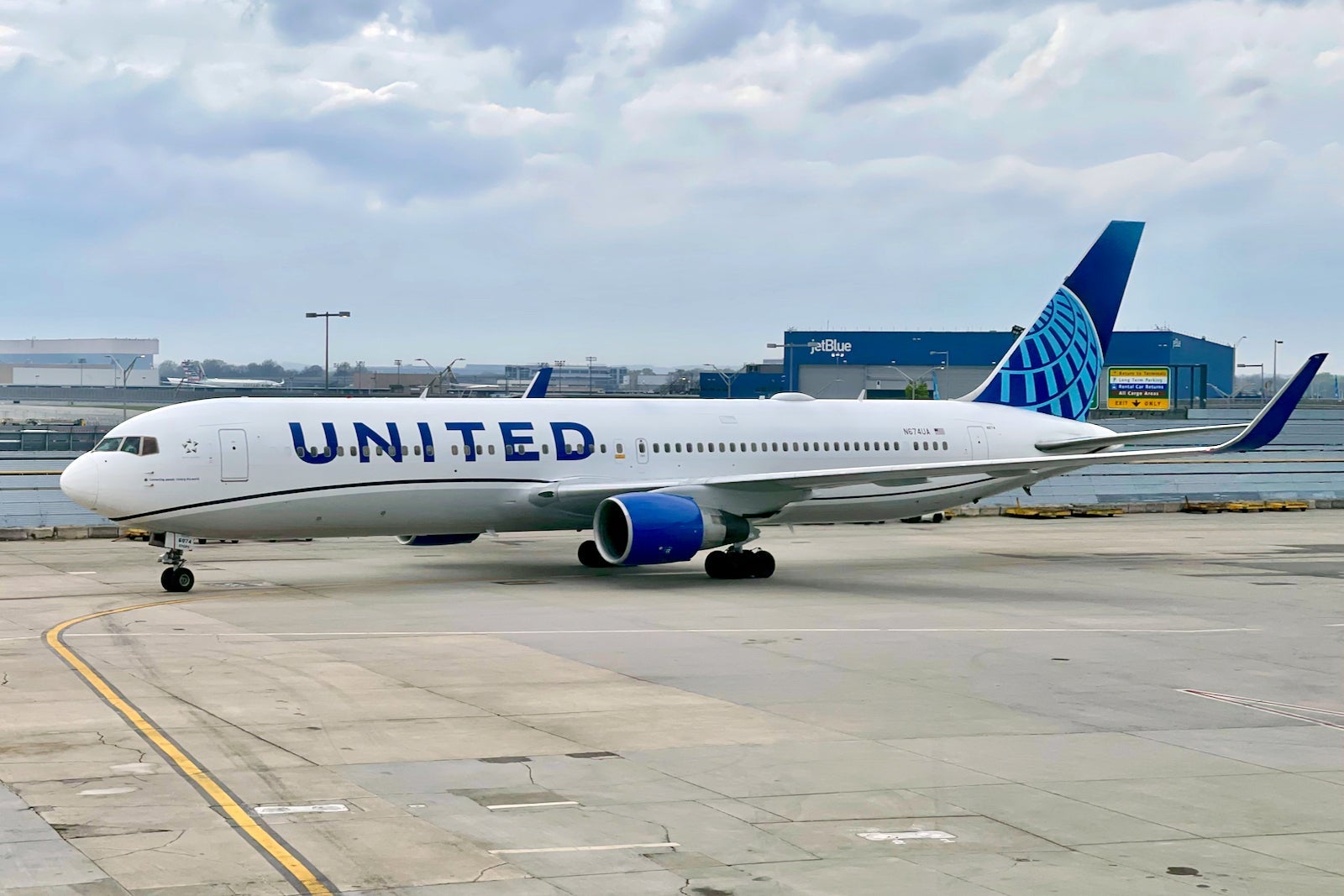
It's apparent that these transcon routes are some of the highest-profile flights in United's domestic system, yet the airline is letting its business-class flyers down by denying them entry to the Polaris Lounge before travel.
If the airline wanted to upgrade the pre-departure experience, it could consider letting these passengers into the fancy lounges. And, if United is worried about "cheapening" or overcrowding the experience, it could even limit access to those paying for business fares, and exclude those redeeming miles or upgrades from using the Polaris Lounge.
This is a move that's been recently popularized by United's Star Alliance partner north of the border. Air Canada's top lounge, the Signature Suite, is only accessible to those paying for business-class fares — others can use the standard Maple Leaf Lounge before departure.
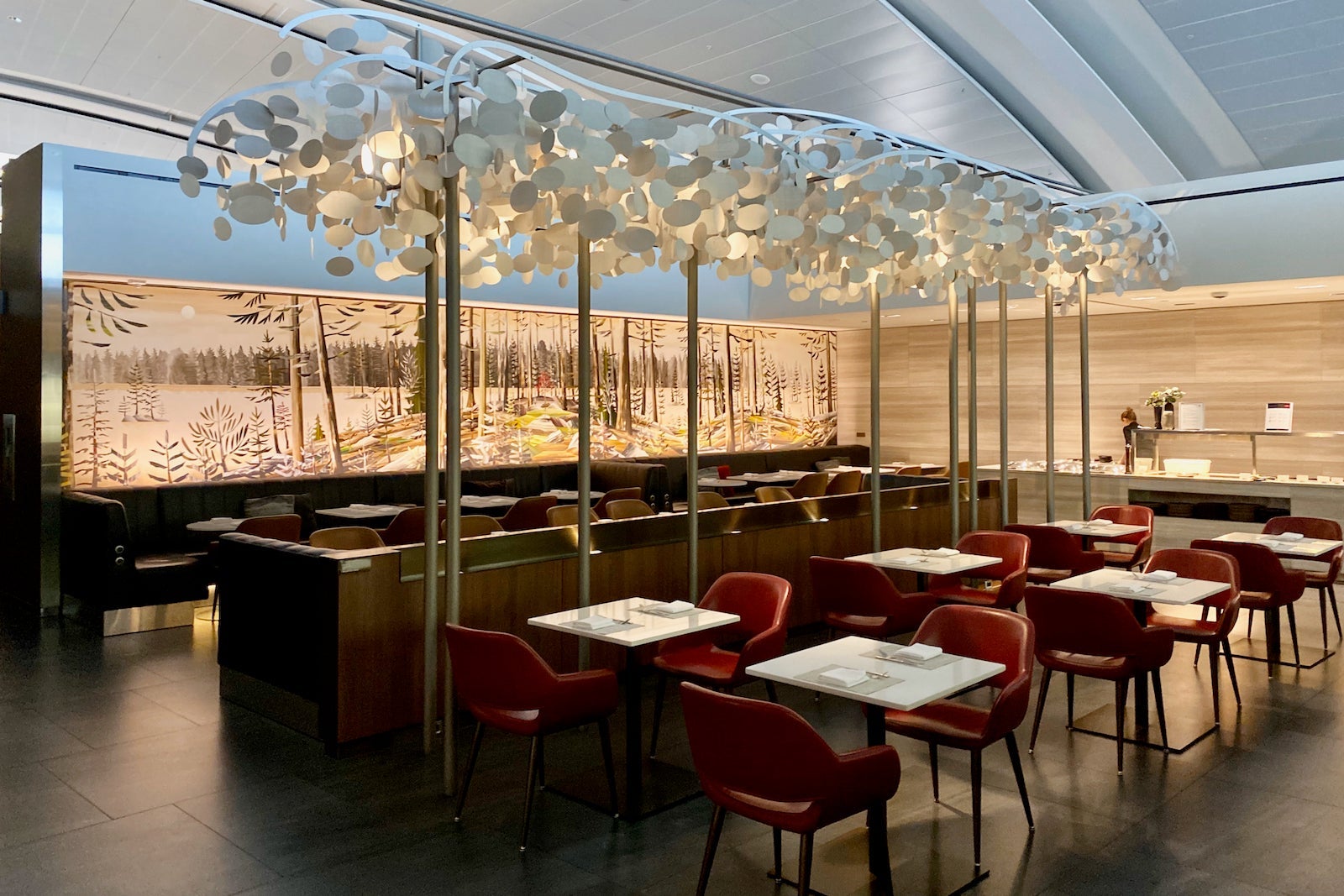
Another alternative is to restrict transcon business-class passengers from using the Polaris Lounge bistro area. Each Polaris lounge has a restaurant-style dining room (in addition to an extensive buffet) with waiter service and cooked-to-order menu items.
United could differentiate the transcon and long-haul premium travel experience by only allowing those traveling internationally to use the dining room — which would still represent a big improvement compared to the status quo for coast-to-coast travel.
It'll ultimately be interesting to see if United ever adjusts its Polaris Lounge access policy to include premium transcontinental routes. Until then, American Airlines will continue to take the cake when it comes to offering the best domestic ground experience that your money (or miles) can get you.
TPG featured card

at Capital One's secure site
Terms & restrictions apply. See rates & fees.
| 5X miles | Earn 5X miles on hotels, vacation rentals and rental cars booked through Capital One Travel |
| 2X miles | Earn unlimited 2X miles on every purchase, every day |
Pros
- Stellar welcome offer of 75,000 miles after spending $4,000 on purchases in the first three months from account opening. Plus, a $250 Capital One Travel credit to use in your first cardholder year upon account opening.
- You'll earn 2 miles per dollar on every purchase, which means you won't have to worry about memorizing bonus categories
- Rewards are versatile and can be redeemed for a statement credit or transferred to Capital One’s transfer partners
Cons
- Highest bonus-earning categories only on travel booked via Capital One Travel
- LIMITED-TIME OFFER: Enjoy $250 to use on Capital One Travel in your first cardholder year, plus earn 75,000 bonus miles once you spend $4,000 on purchases within the first 3 months from account opening - that’s equal to $1,000 in travel
- Earn unlimited 2X miles on every purchase, every day
- Earn 5X miles on hotels, vacation rentals and rental cars booked through Capital One Travel
- Miles won't expire for the life of the account and there's no limit to how many you can earn
- Receive up to a $120 credit for Global Entry or TSA PreCheck®
- Use your miles to get reimbursed for any travel purchase—or redeem by booking a trip through Capital One Travel
- Enjoy a $50 experience credit and other premium benefits with every hotel and vacation rental booked from the Lifestyle Collection
- Transfer your miles to your choice of 15+ travel loyalty programs
- Top rated mobile app