New first class, overhauled economy cabin shine on United's revamped Airbus A319


United Airlines is taking the passenger experience to the "next" level.
Back in 2021, the Chicago-based carrier unveiled a massive retrofit project alongside its largest-ever aircraft order for a whopping 270 narrow-body jets — all branded under a so-called United Next campaign designed to direct the company through its post-pandemic development.
To coincide with the United Next kickoff, the airline debuted a new domestic cabin experience that includes seatback TVs, larger overhead bins and faster and more reliable Wi-Fi, among other upgrades.
While factory-fresh planes (namely the Boeing 737 MAX 8 and new Boeing 737 MAX 9) already come installed with the new signature domestic interiors, United has its work cut out for it: retrofitting its existing domestic fleet with the new signature interior.
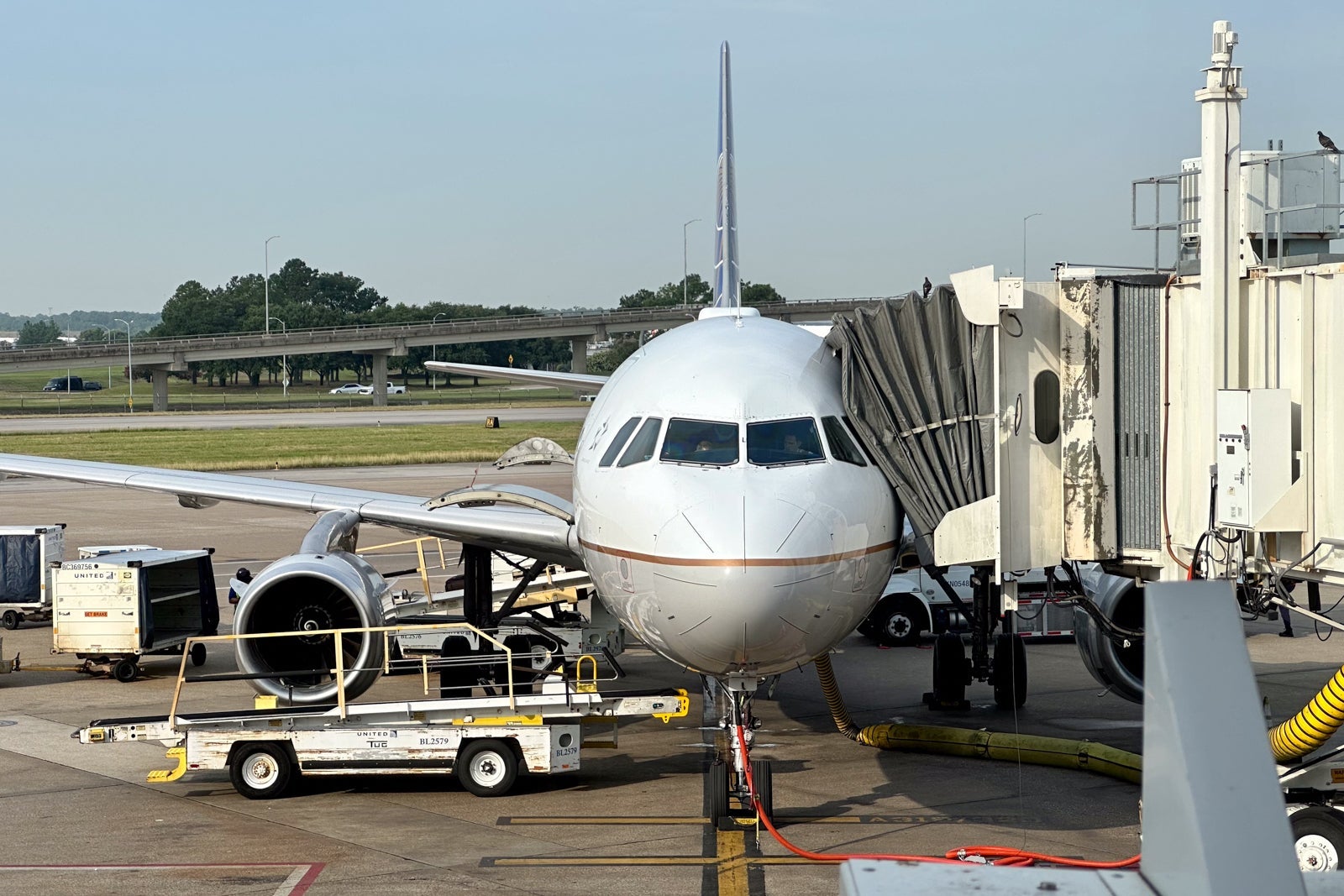
The original plans called for fleetwide completion by 2025, but that timeline has since slipped by a year or two due to supply-chain constraints and a slower-than-expected retrofit ramp-up.
This yearslong project formally kicked off earlier this year on the Airbus A319 fleet. Since then, I've been eager to track down one of the retrofitted planes to check out the upgrades for myself.
More from TPG: The best credit cards for United Airlines flyers
While the first retrofitted A319 (registered N801UA) proved to be elusive, I just had the opportunity to fly the second retrofitted A319 (N832UA) from New York to Houston.
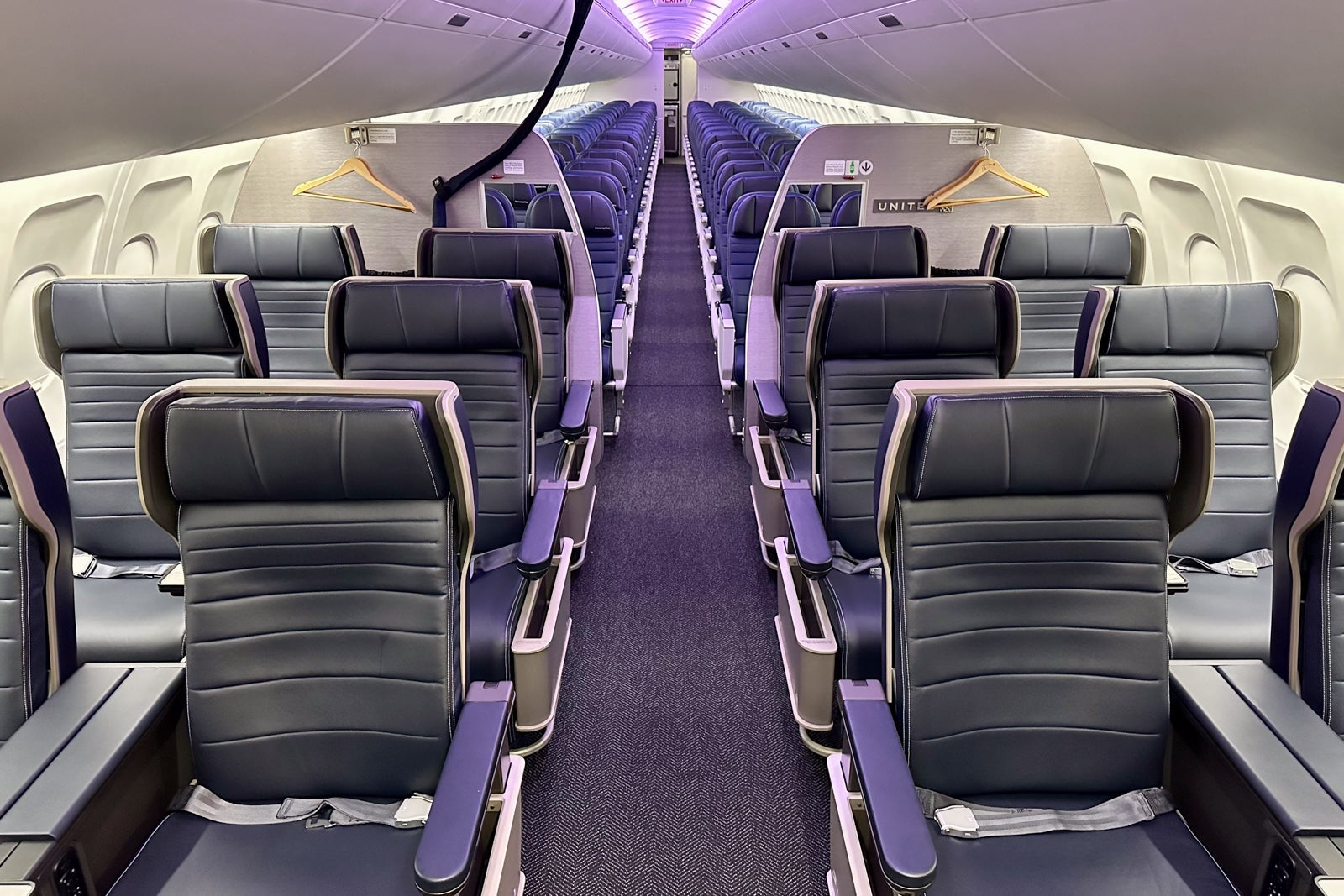
And what I found is a harbinger of good things to come for United flyers.

United's new first-class product
United's Airbus A319s feature 12 first-class seats arranged in a 2-2 configuration with 37 inches of pitch.
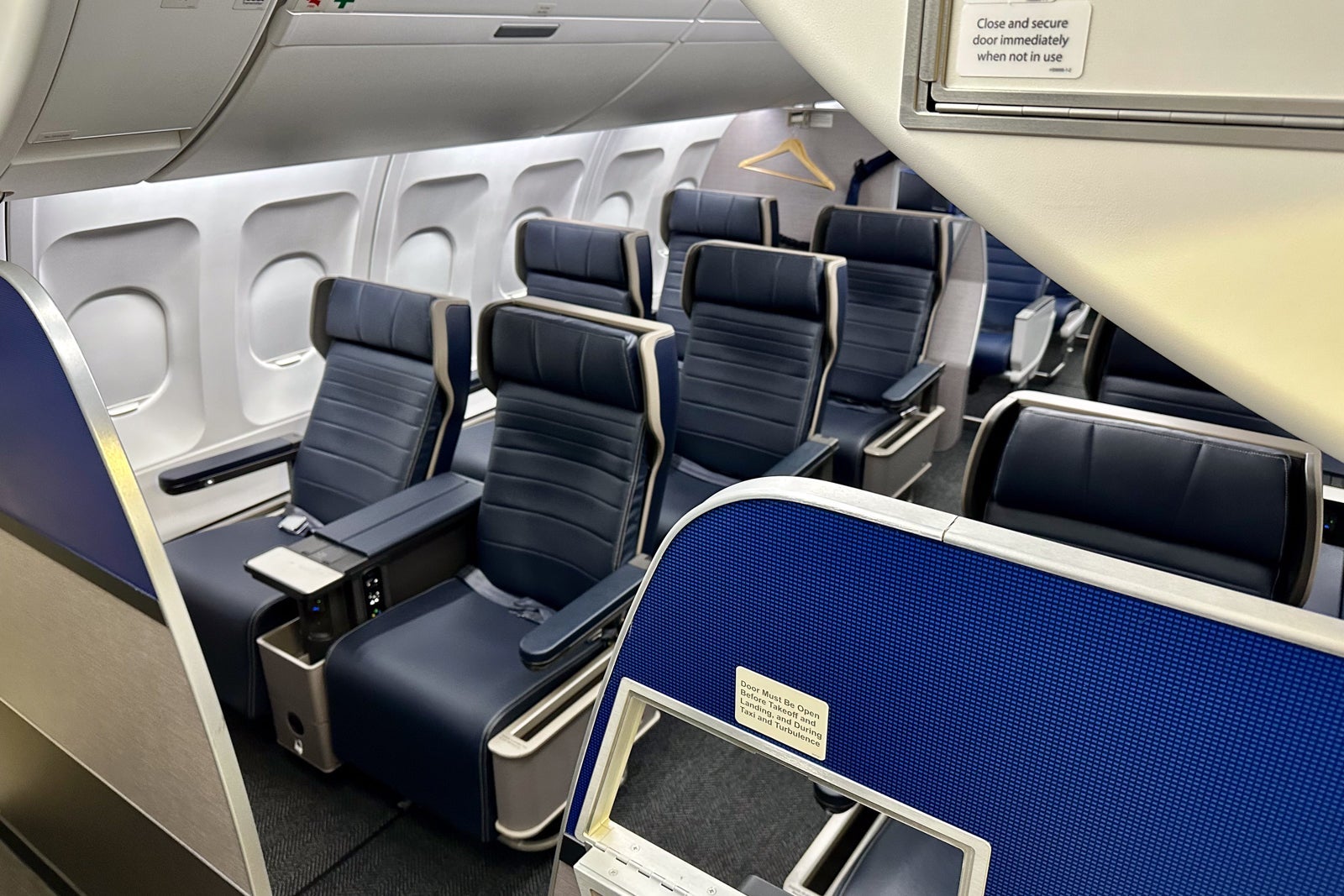
The airline kept the LOPA (or layout of passenger accommodations) with the retrofit, but it installed a new first-class product that's a small, but notable, upgrade over the old one.
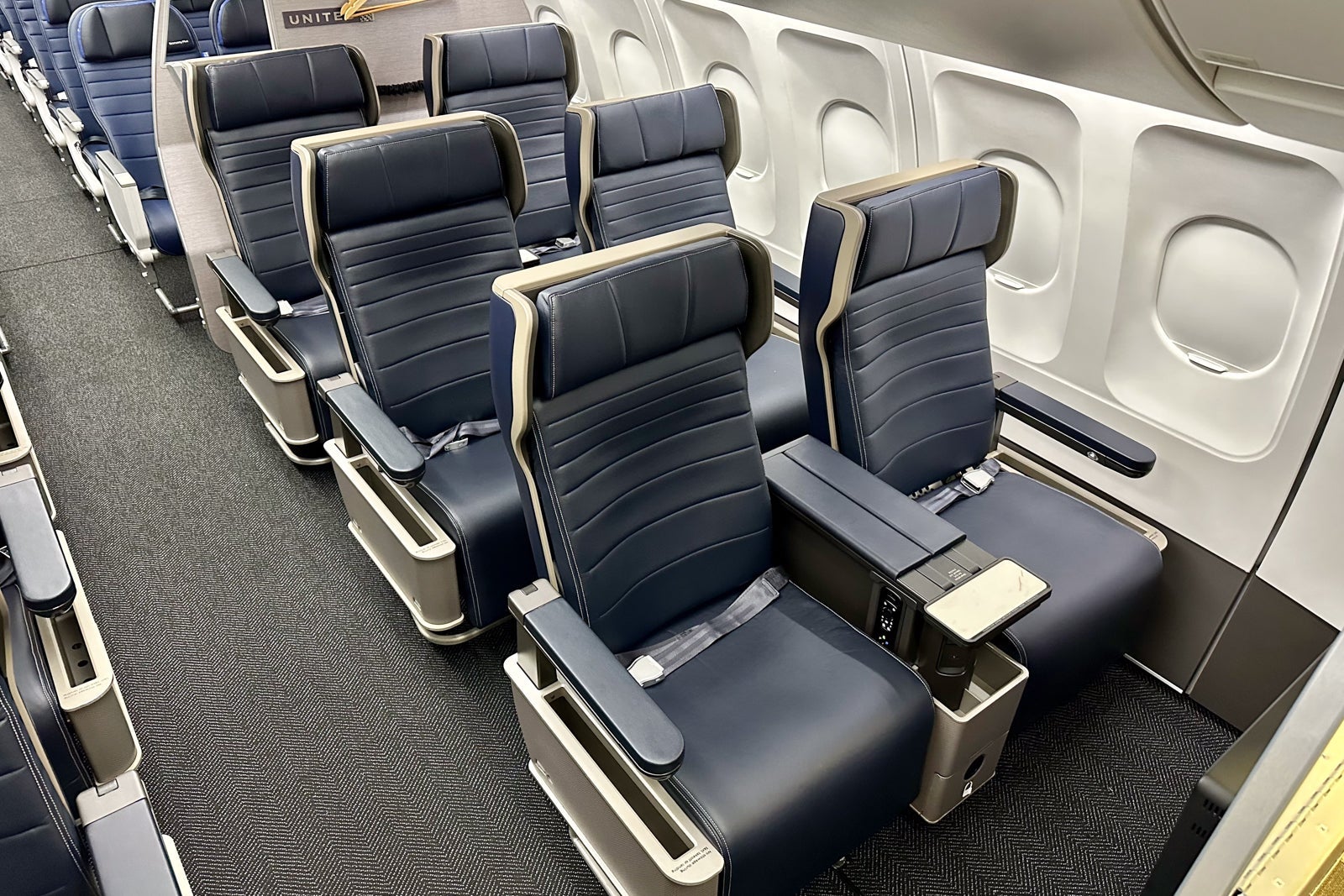
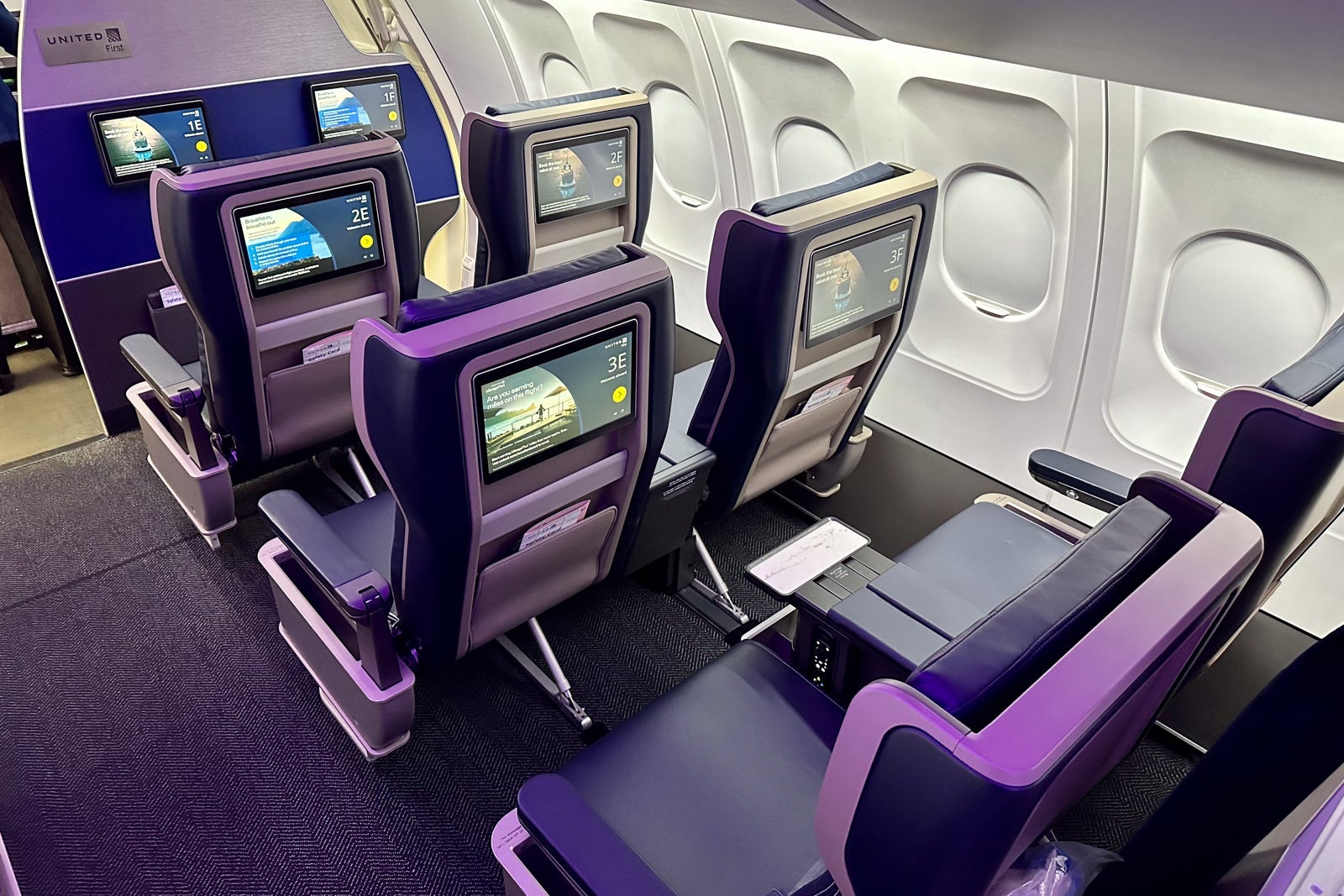
The biggest upgrade is the addition of small wings that jut out from the side of each seat to provide some additional privacy from your neighbor.
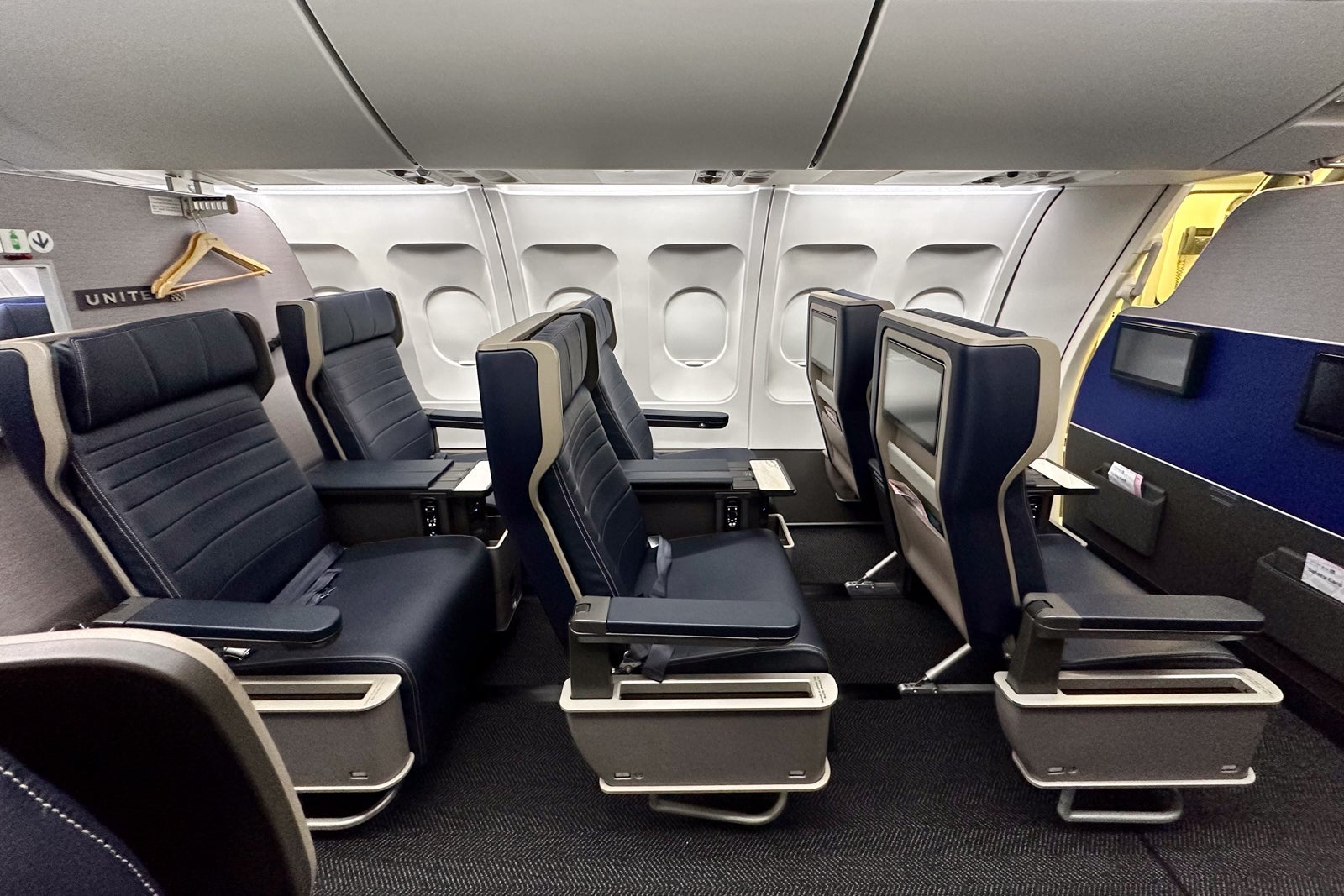
They're nowhere near as large as the privacy wings in first class on Delta's futuristic-looking Airbus A321neo, but they're certainly better than nothing.
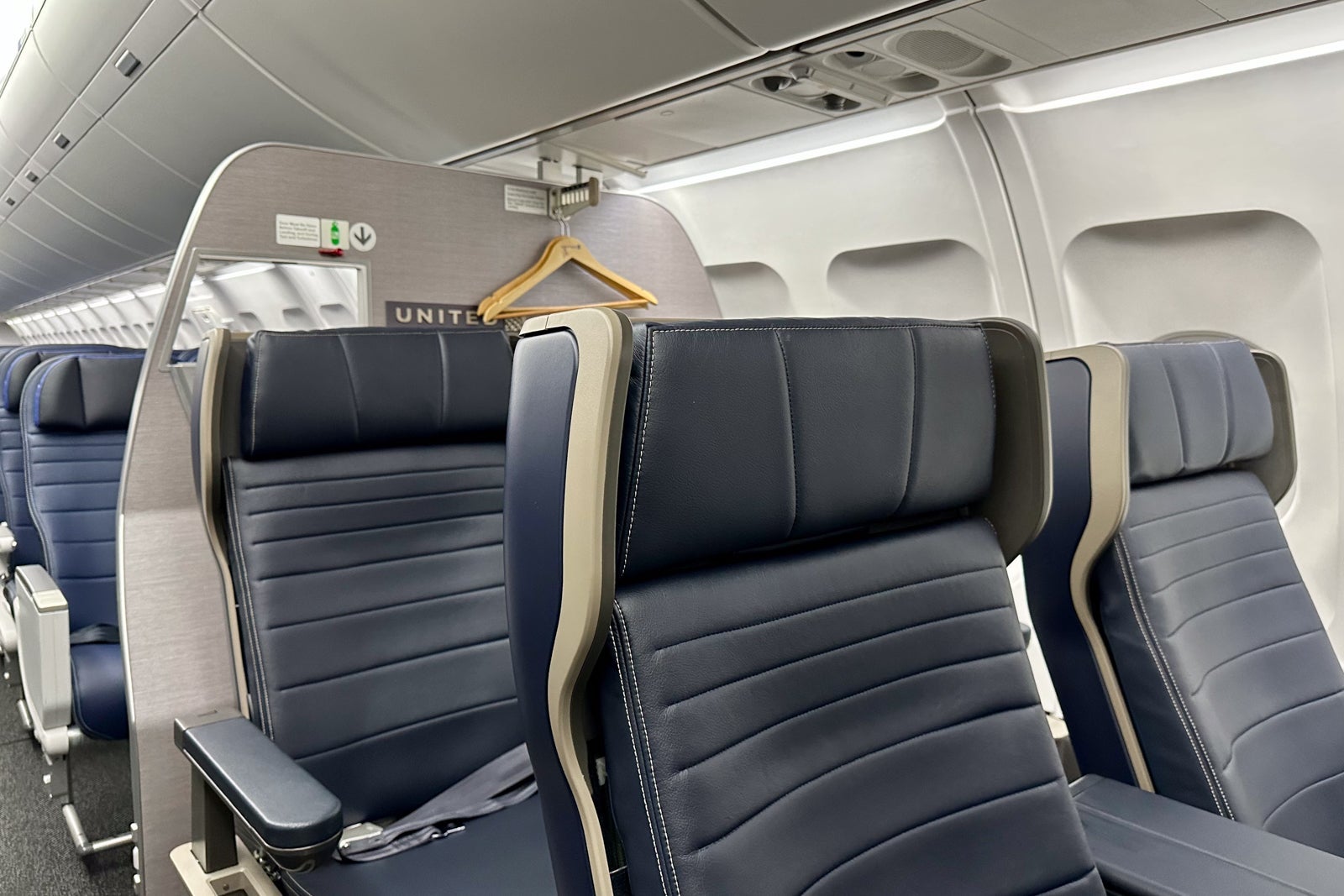
While these new 20 1/2-inch-wide seats are still "just" recliners, they do seem to feature a bit of extra recline compared to the old product. As you recline, the seat cushion slides forward. This cradle-like design hasn't traditionally been the most popular with flyers, but I found it to be comfortable for the three-hour ride to Houston.
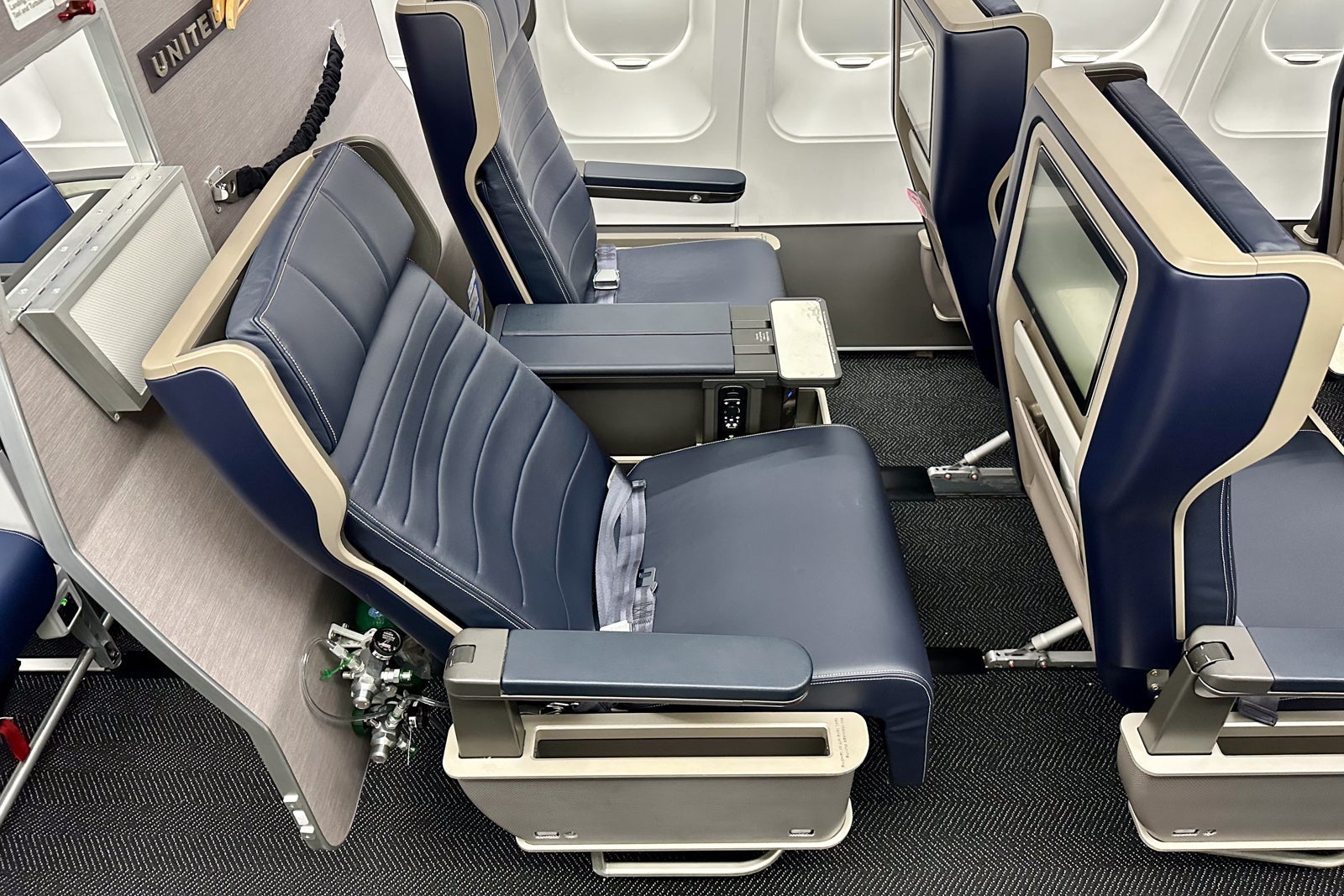
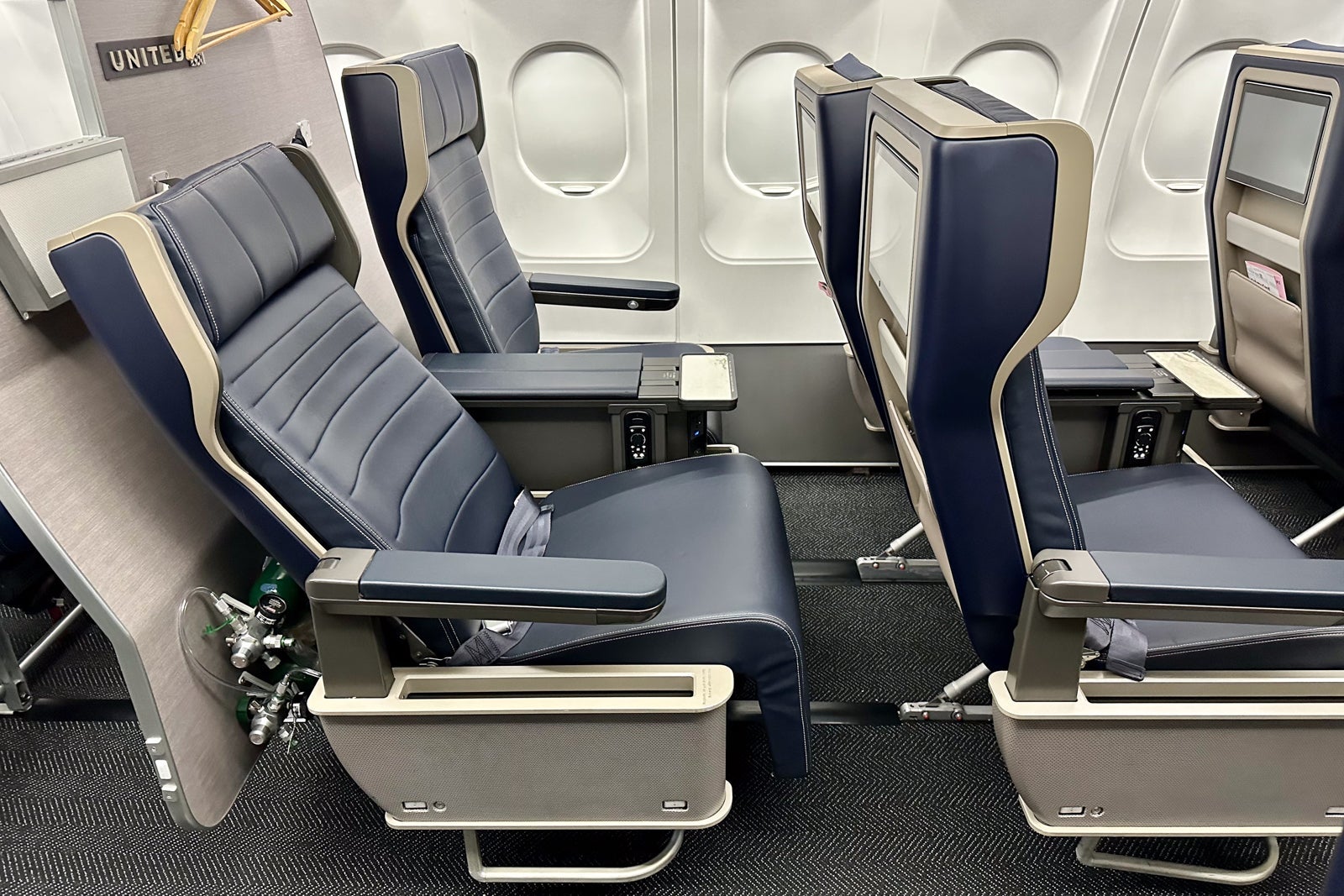
I also love how the headrest folds in on either side to provide some neck support when trying to rest. Just note that the headrest can't be raised for taller flyers.
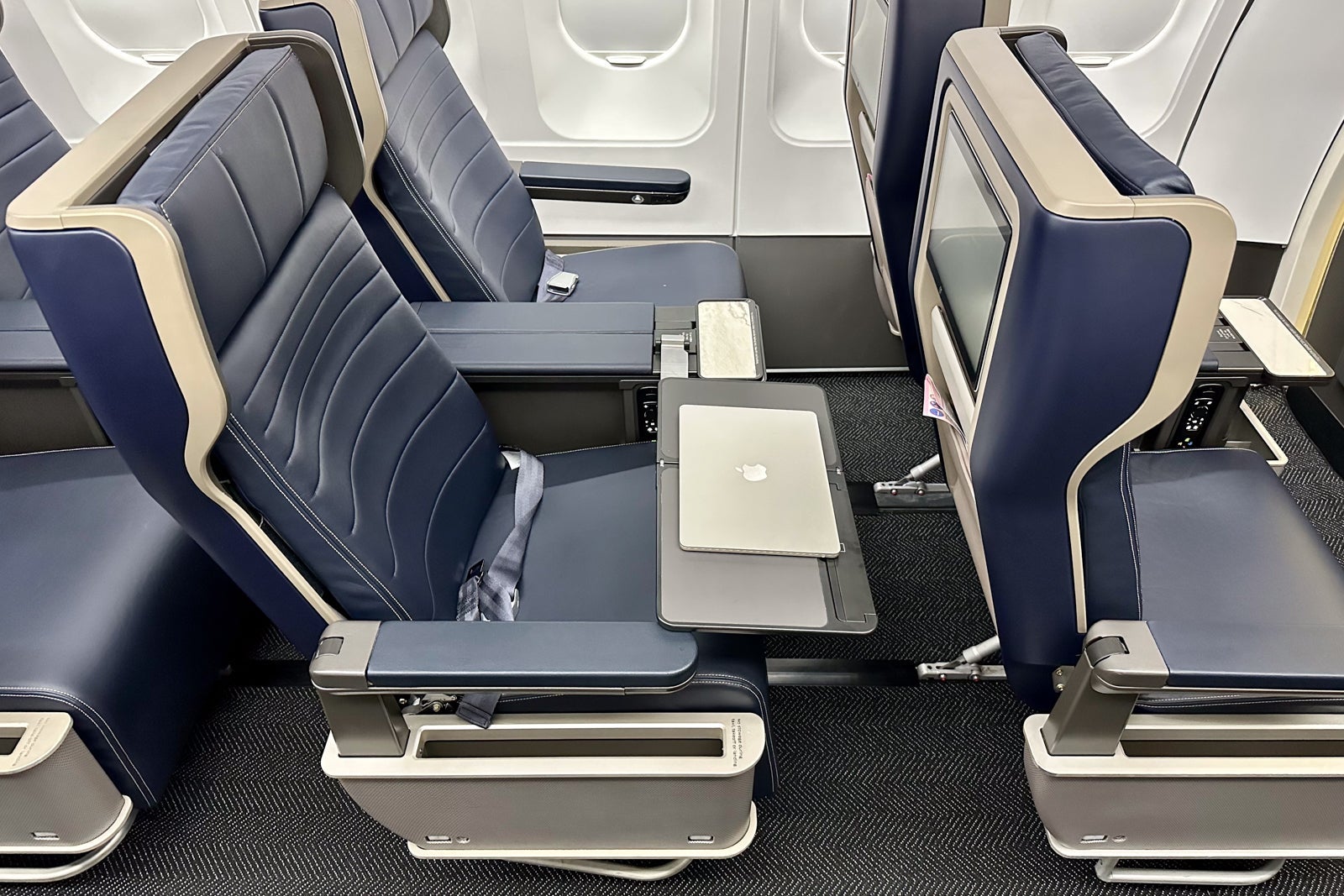
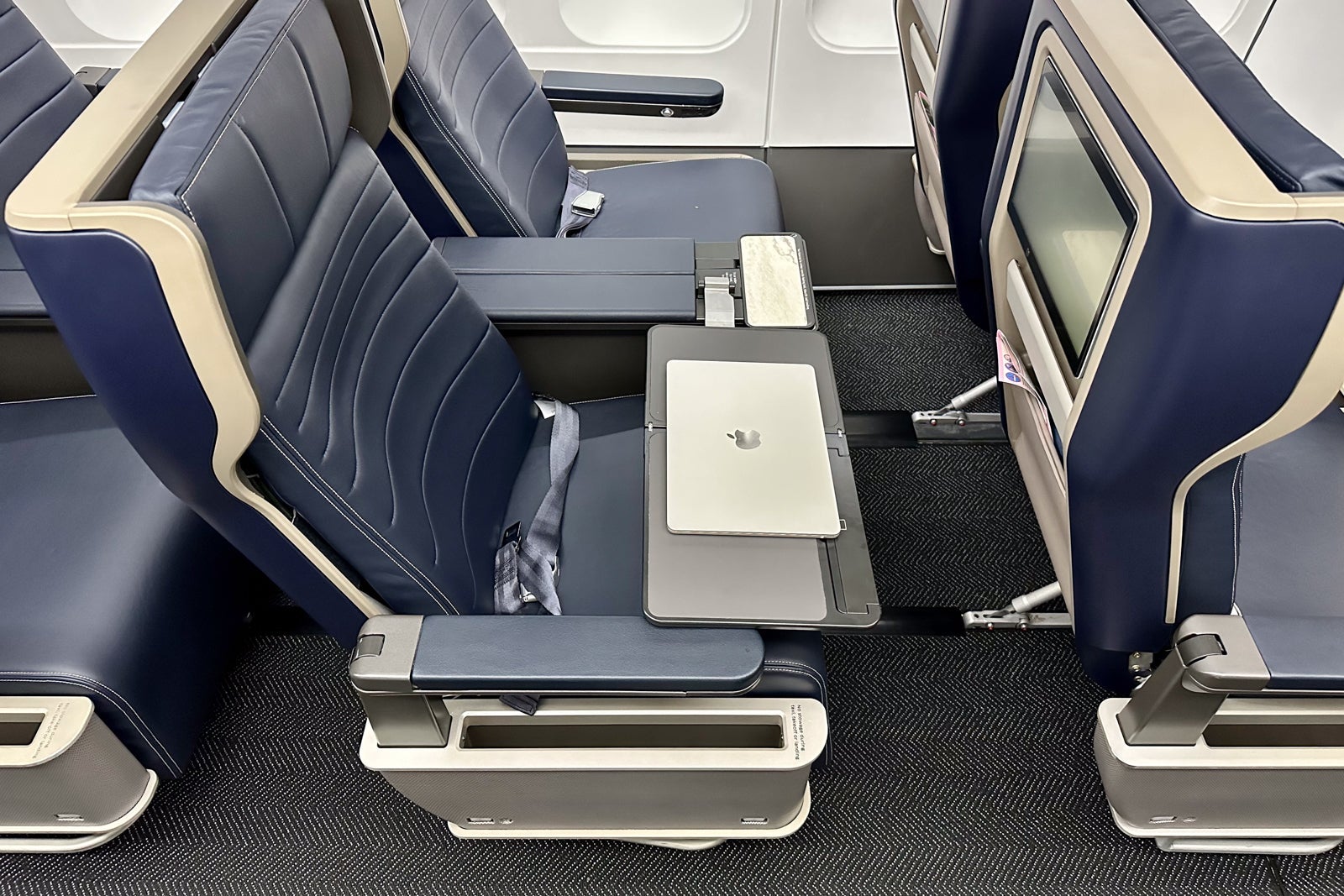
The other "bones" of the seat are largely reminiscent of the old first-class product on the Airbus A319. This includes a large and durable tray table that measures 20 inches wide and 11 inches long and features a tablet stand.
All the aisle and window armrests can be raised to make room for some additional storage. I found this side storage pocket to be the perfect place to leave my laptop during the meal service.
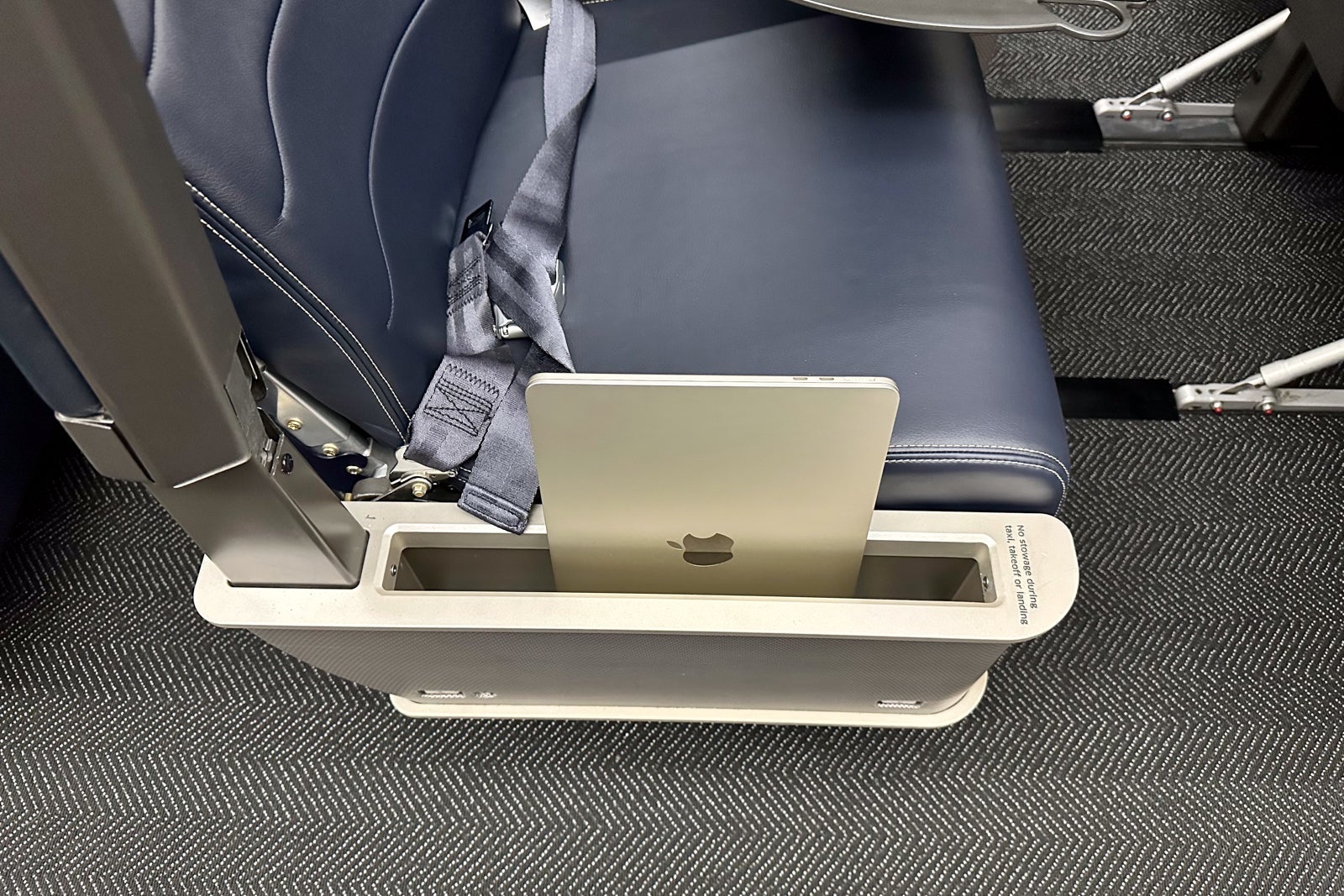
The movable armrests should also make it easier for someone using a wheelchair to get into and out of the aisle seat.
The center console between seats measures 8 1/2 inches wide and features a cocktail tray that can be enlarged at the push of a button.
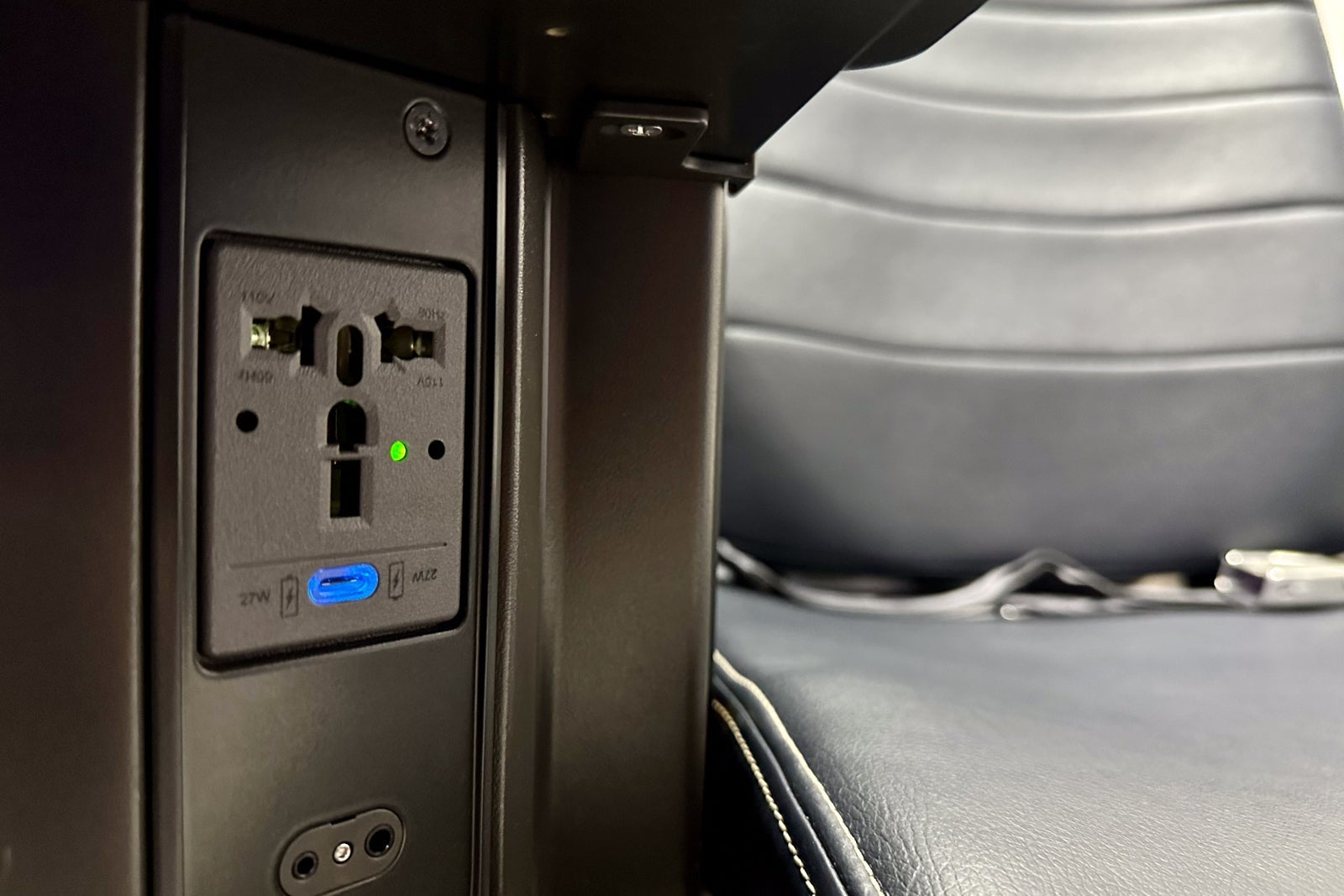
Underneath the cocktail tray is an additional storage area (perfect for a water bottle), as well as a universal power outlet and a 27-watt USB-C port.
I love how United took the opportunity to add USB-C charging ports during the retrofit. USB-C is the new charging standard, and with the next-generation iPhone expected to adopt this port later this year, USB-C is bound to become even more popular.
It's just too bad United didn't install a higher-wattage USB-C port like you'd find on some other airlines. This means you'll still want to plug your power-intensive devices (such as laptops) into the traditional power outlet for speedier charging.
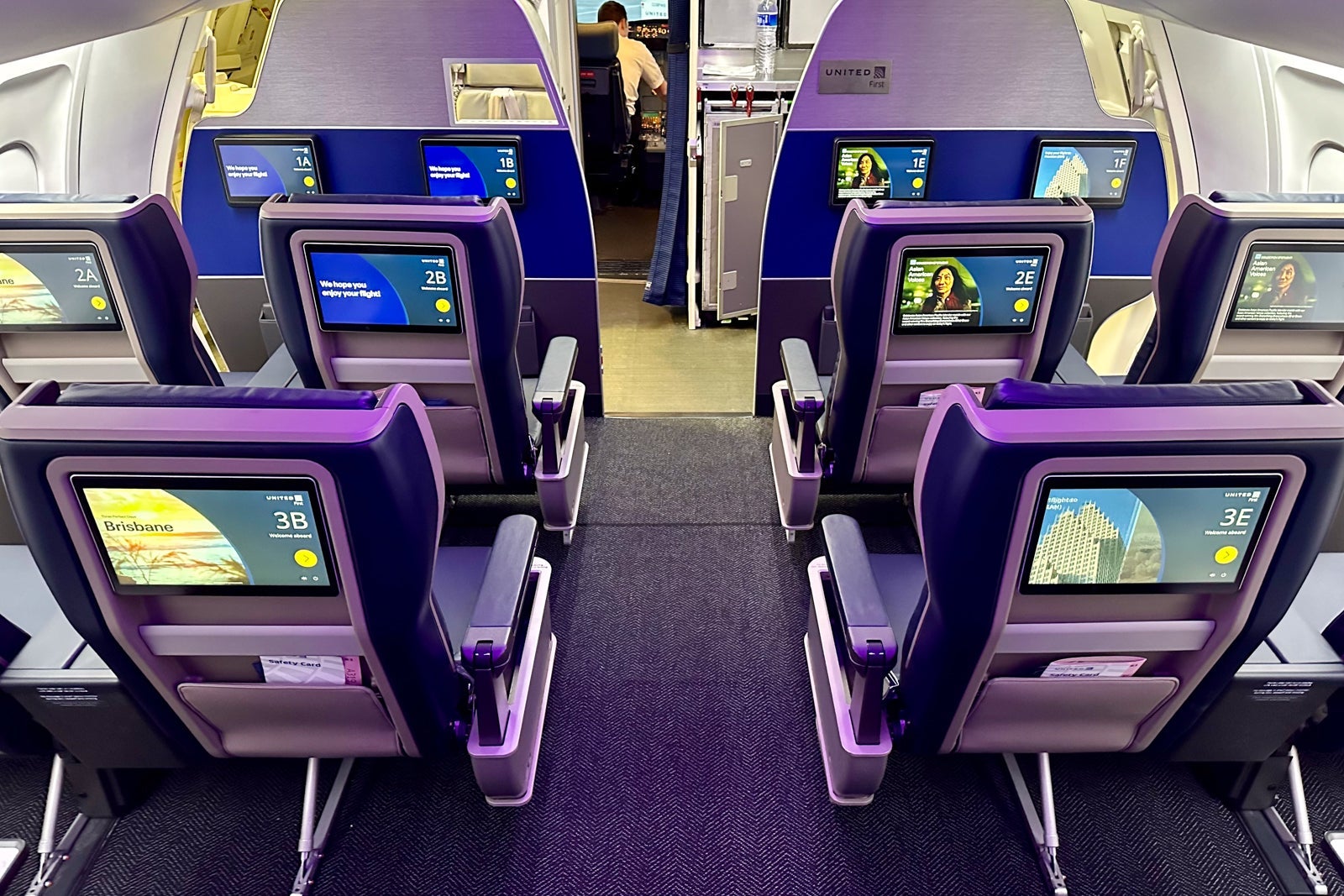
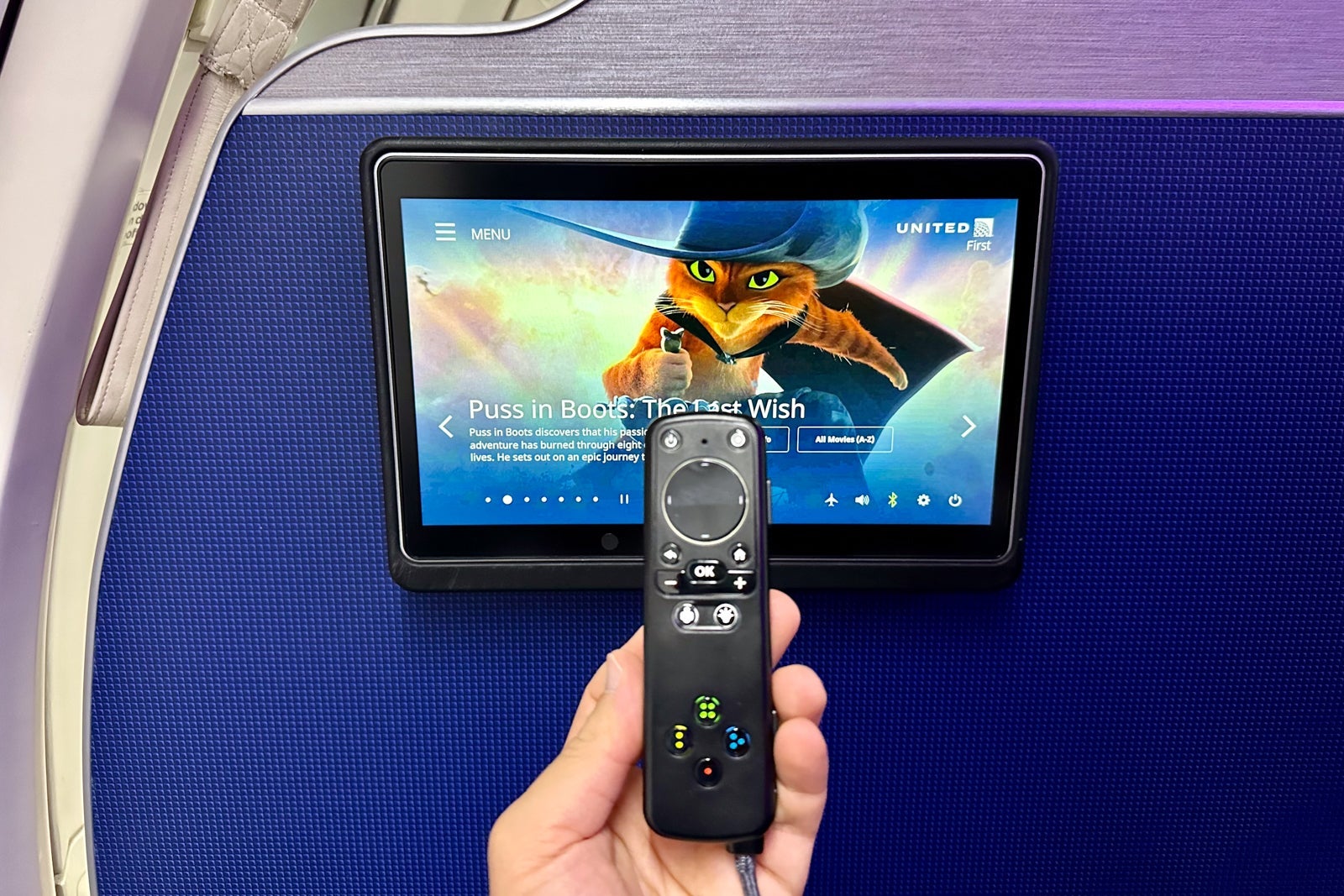
Another major upgrade is the installation of seatback entertainment screens. The high-definition monitors in first class measure 13 inches diagonally and feature hundreds of movies, TV shows, a detailed moving map and more.
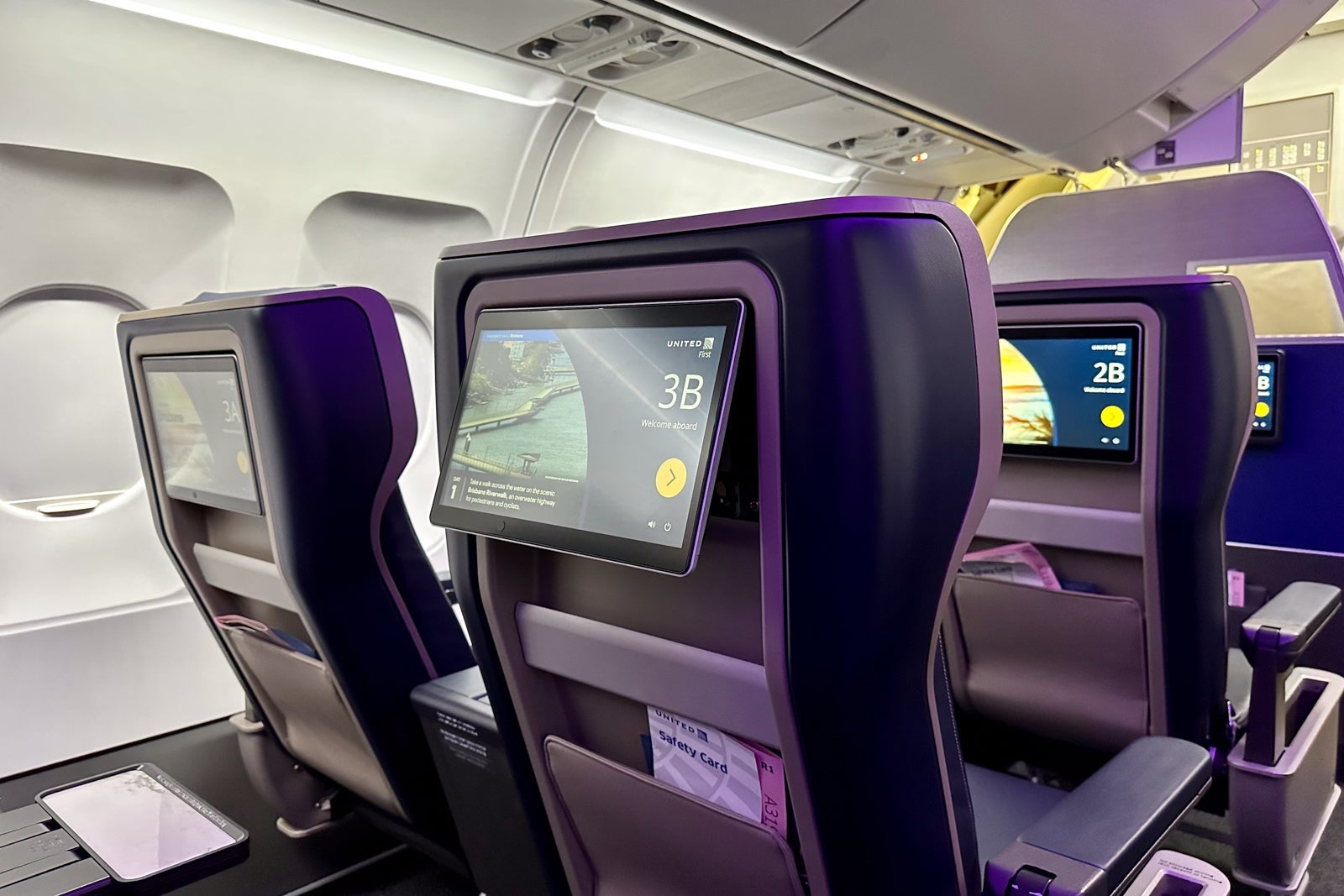
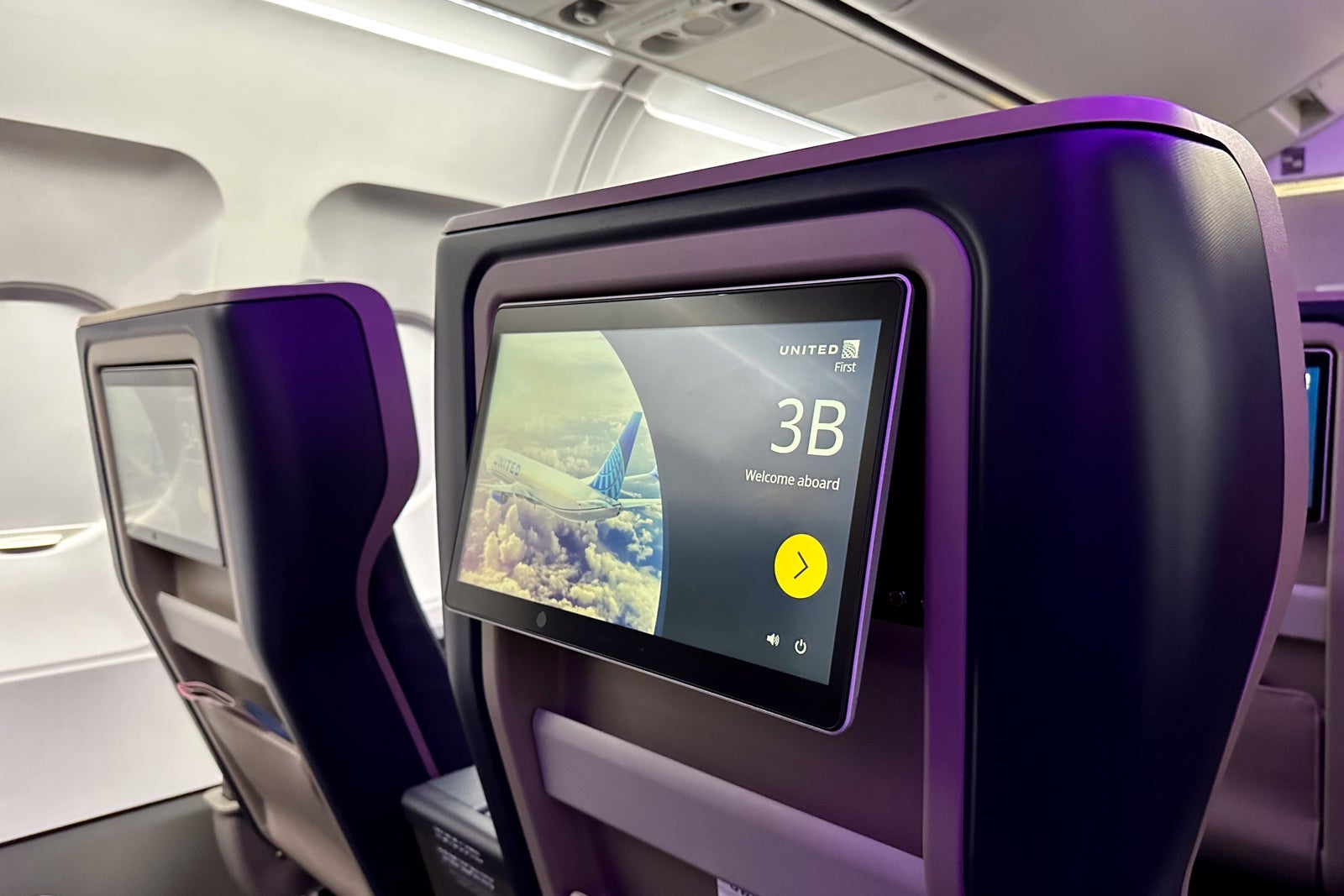
Anyone who's flown on United's international jets will be familiar with the easy-to-use user interface, but a few notable hardware and software upgrades include Bluetooth connectivity for pairing with AirPods and other wireless headphones, as well as some accessibility improvements, such as high-contrast text and magnification options.
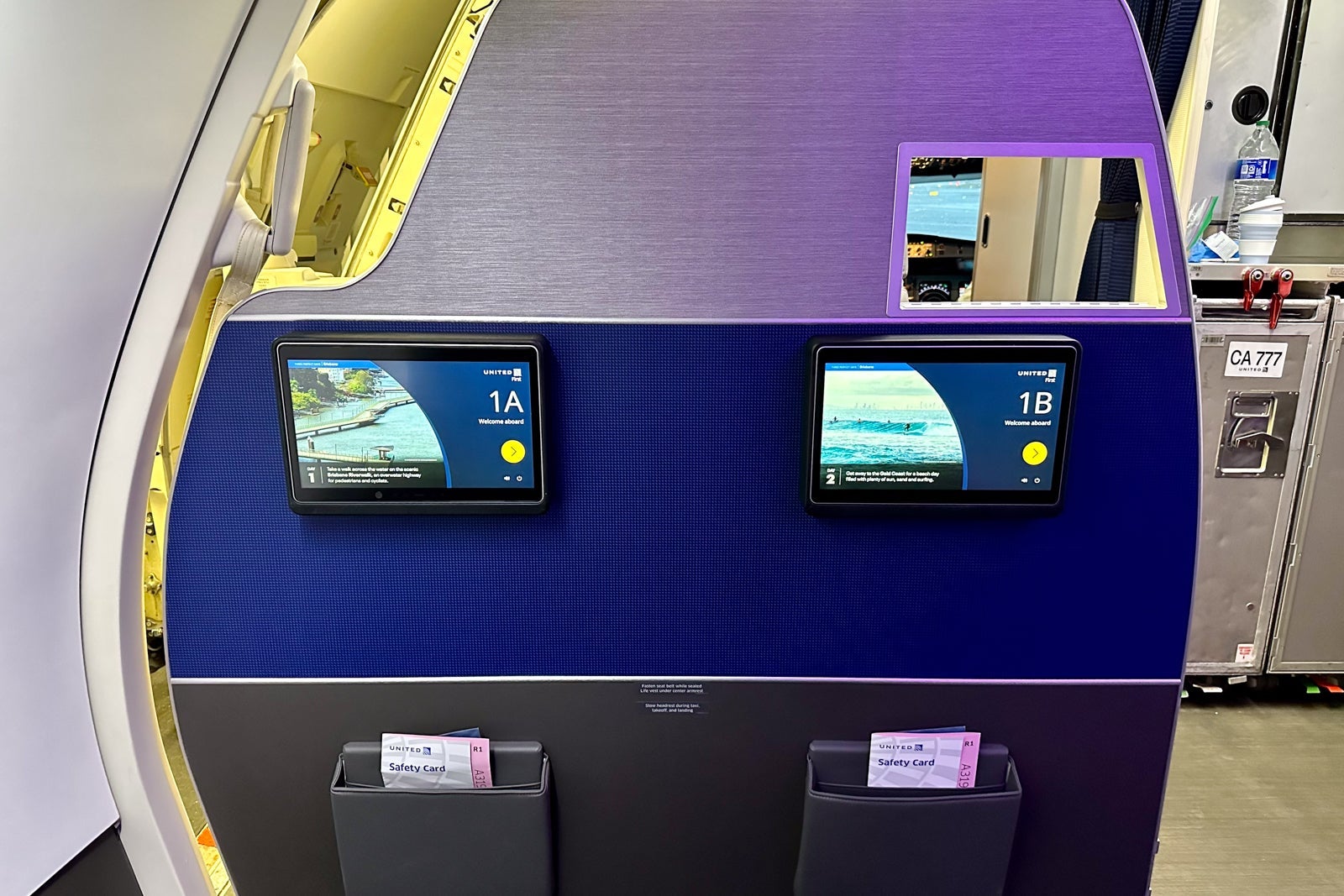
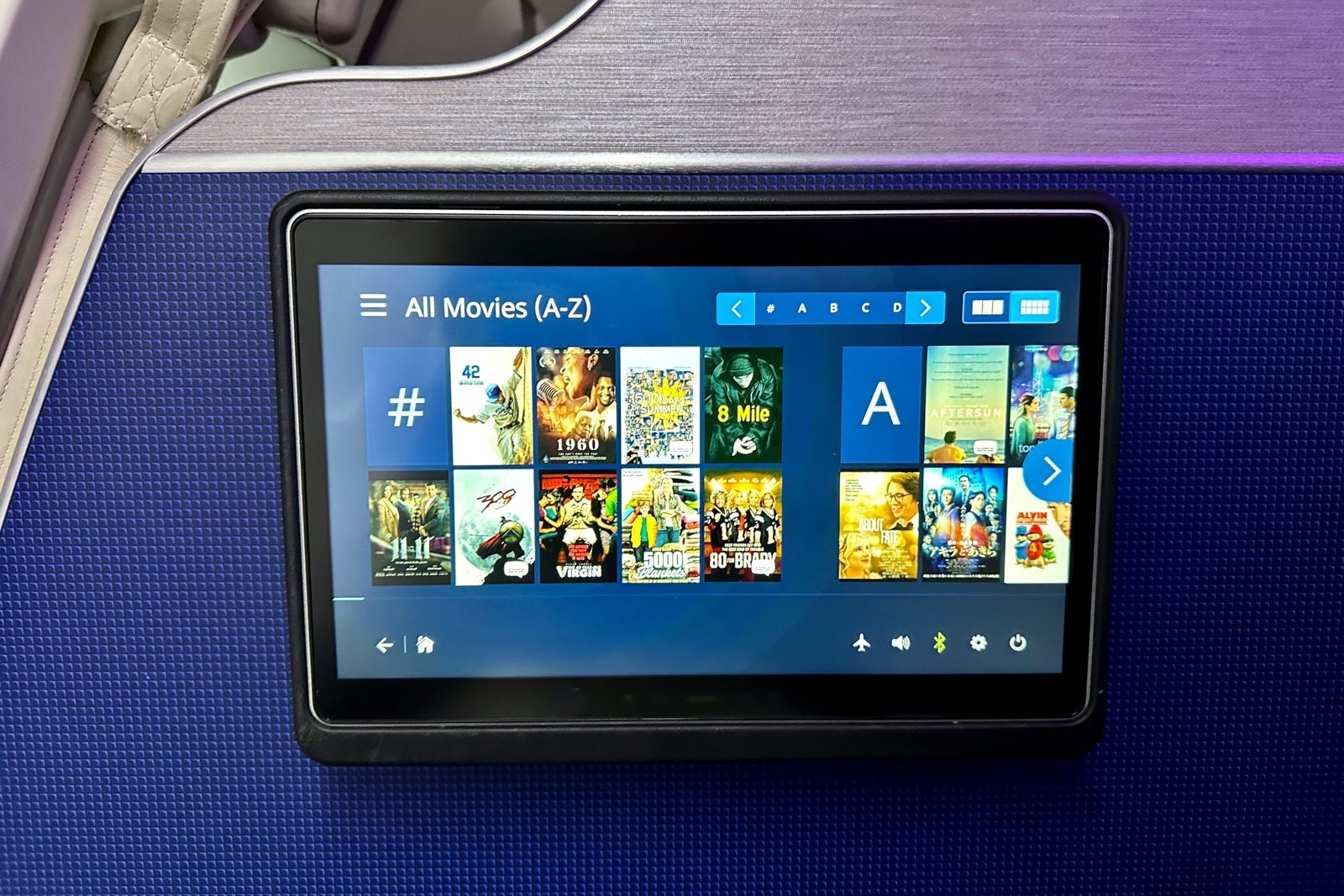
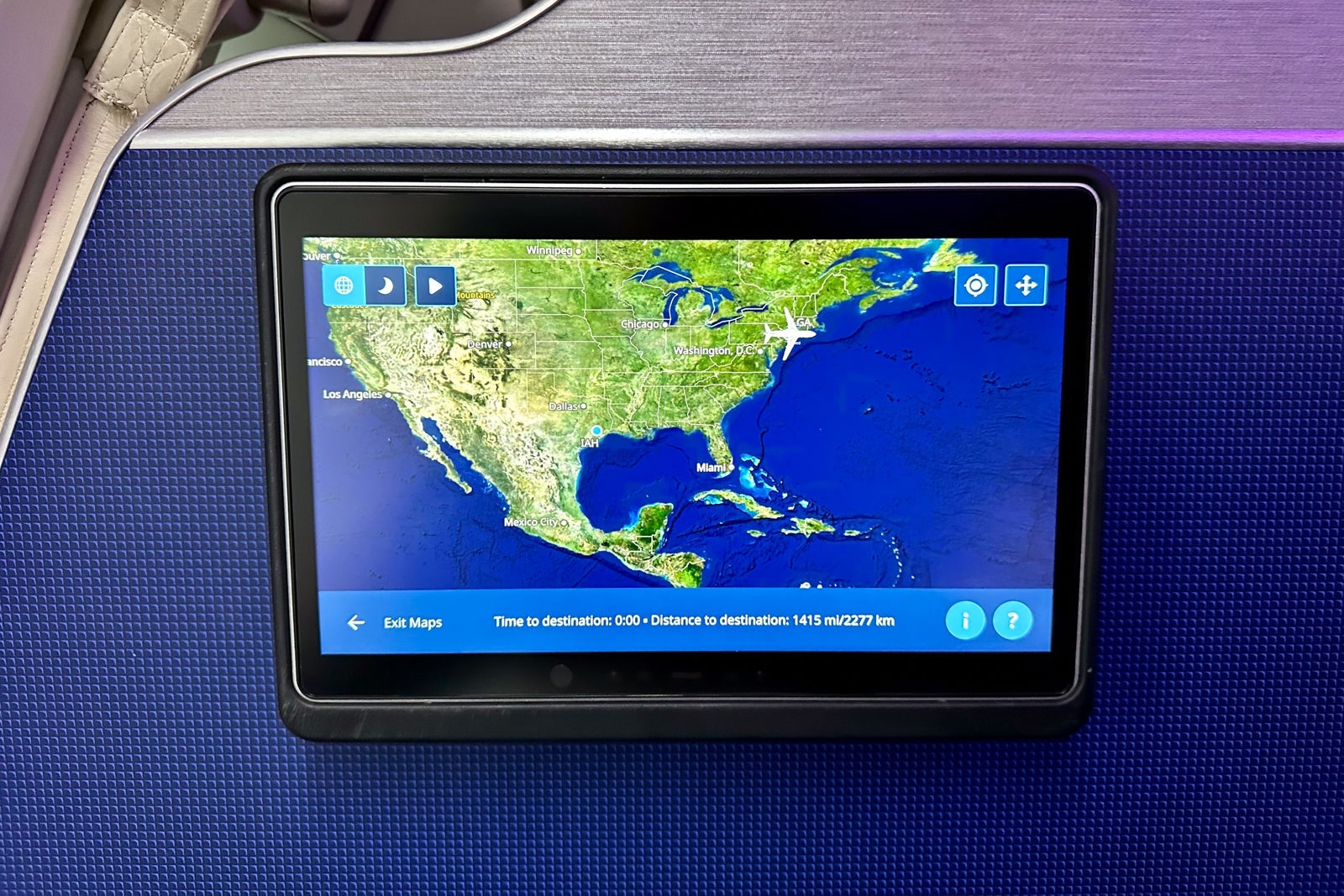
This isn't the first time I've paired my AirPods Pro with an airline entertainment system, but it's still a thrill to see this technology finally available on United jets.
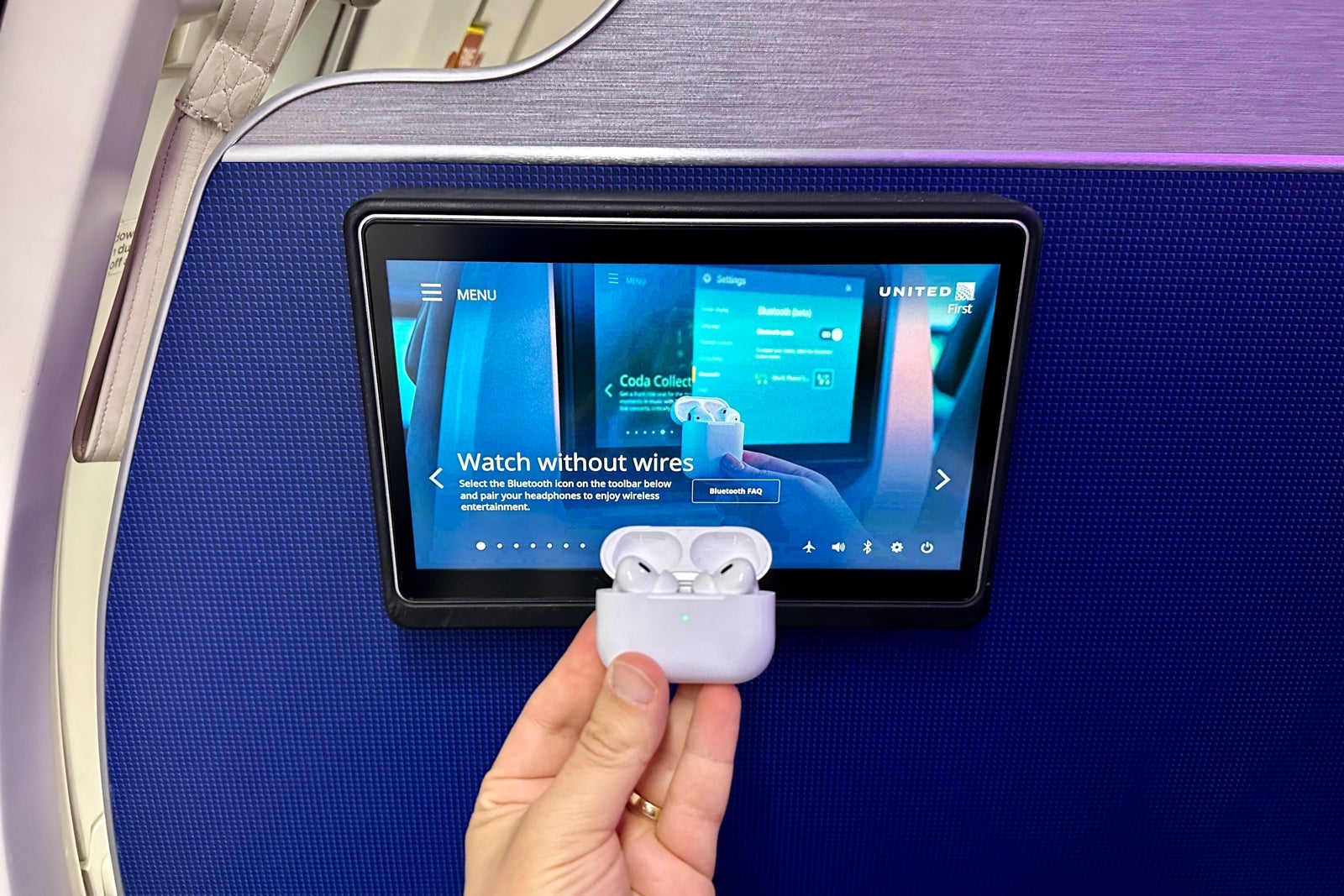
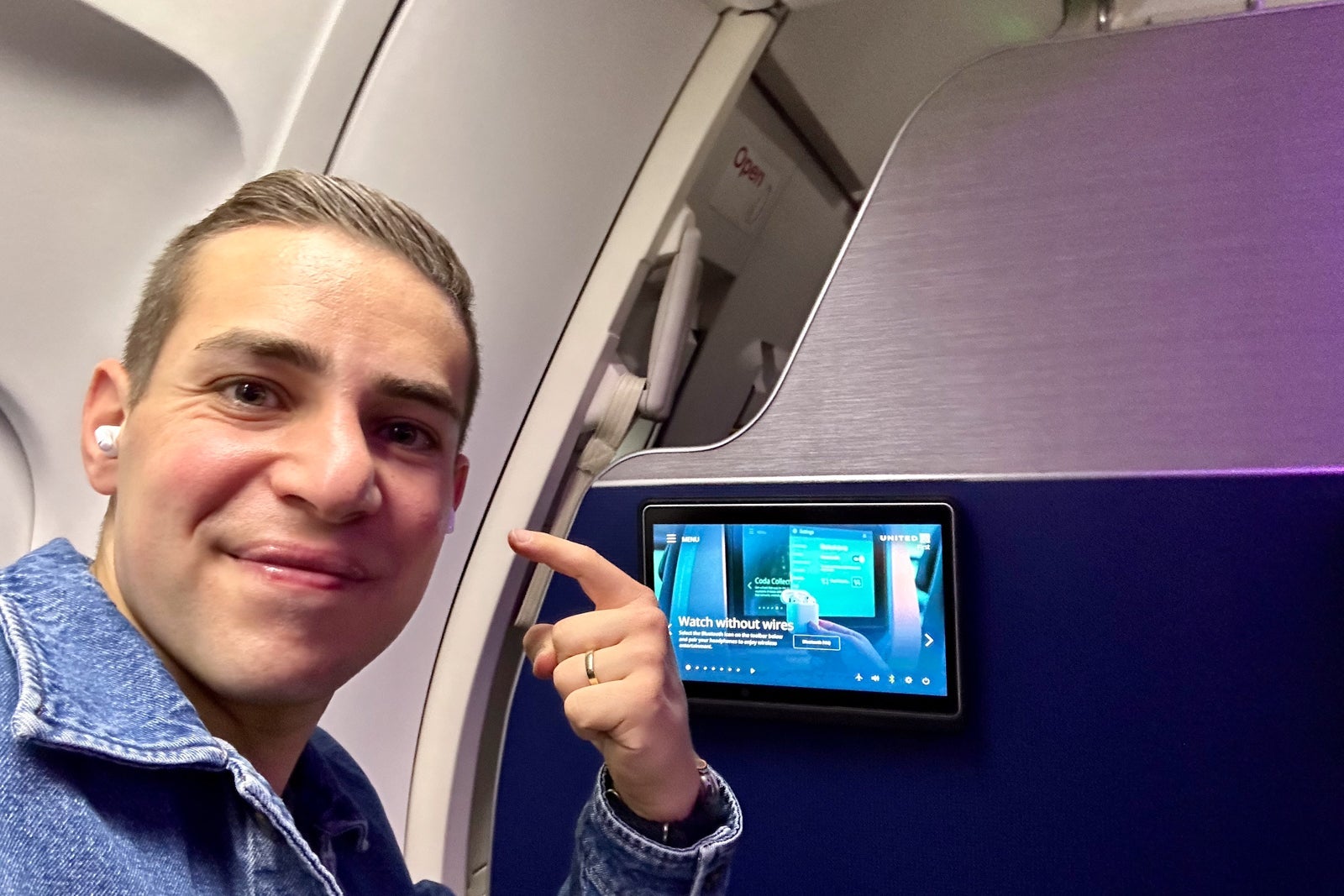
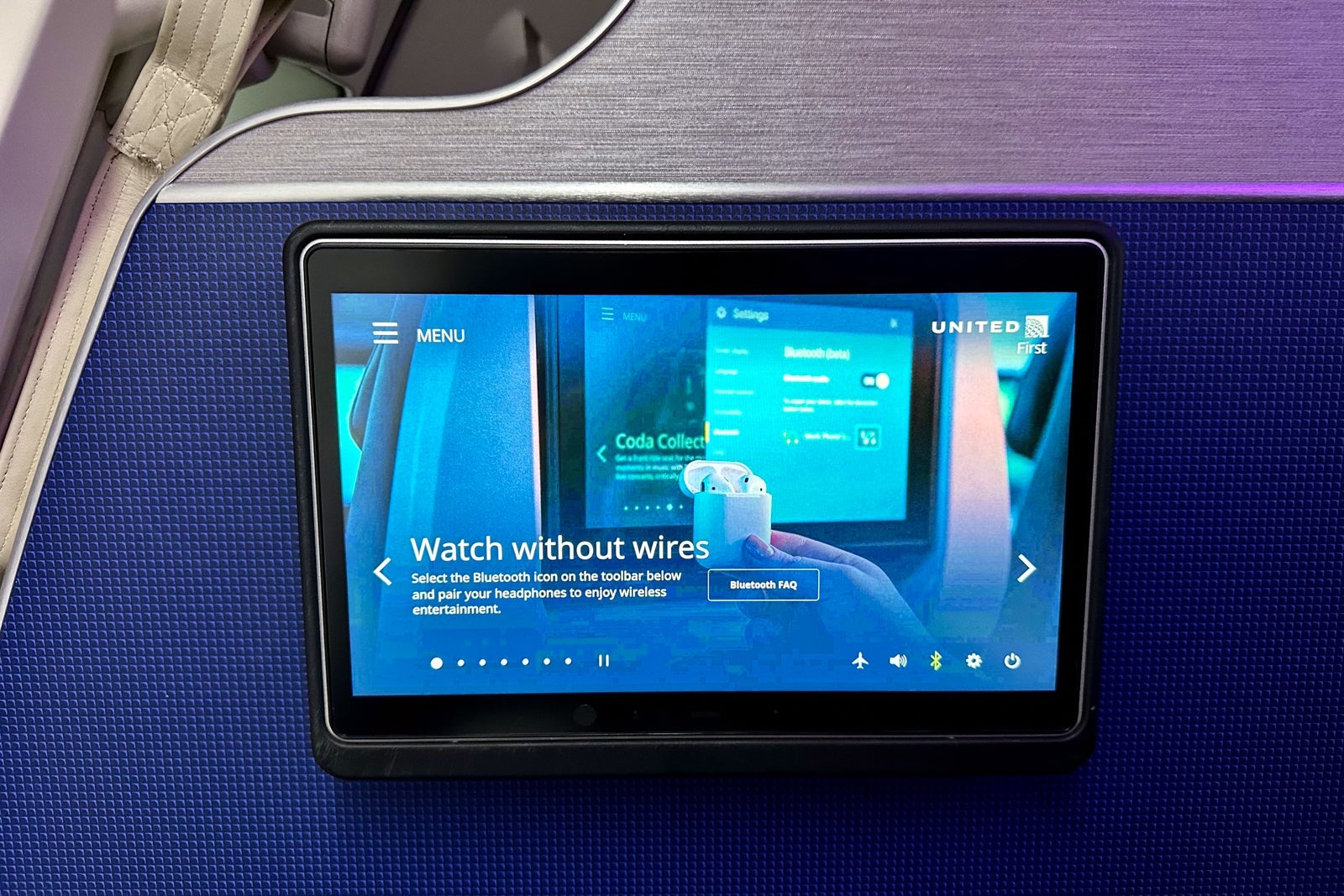
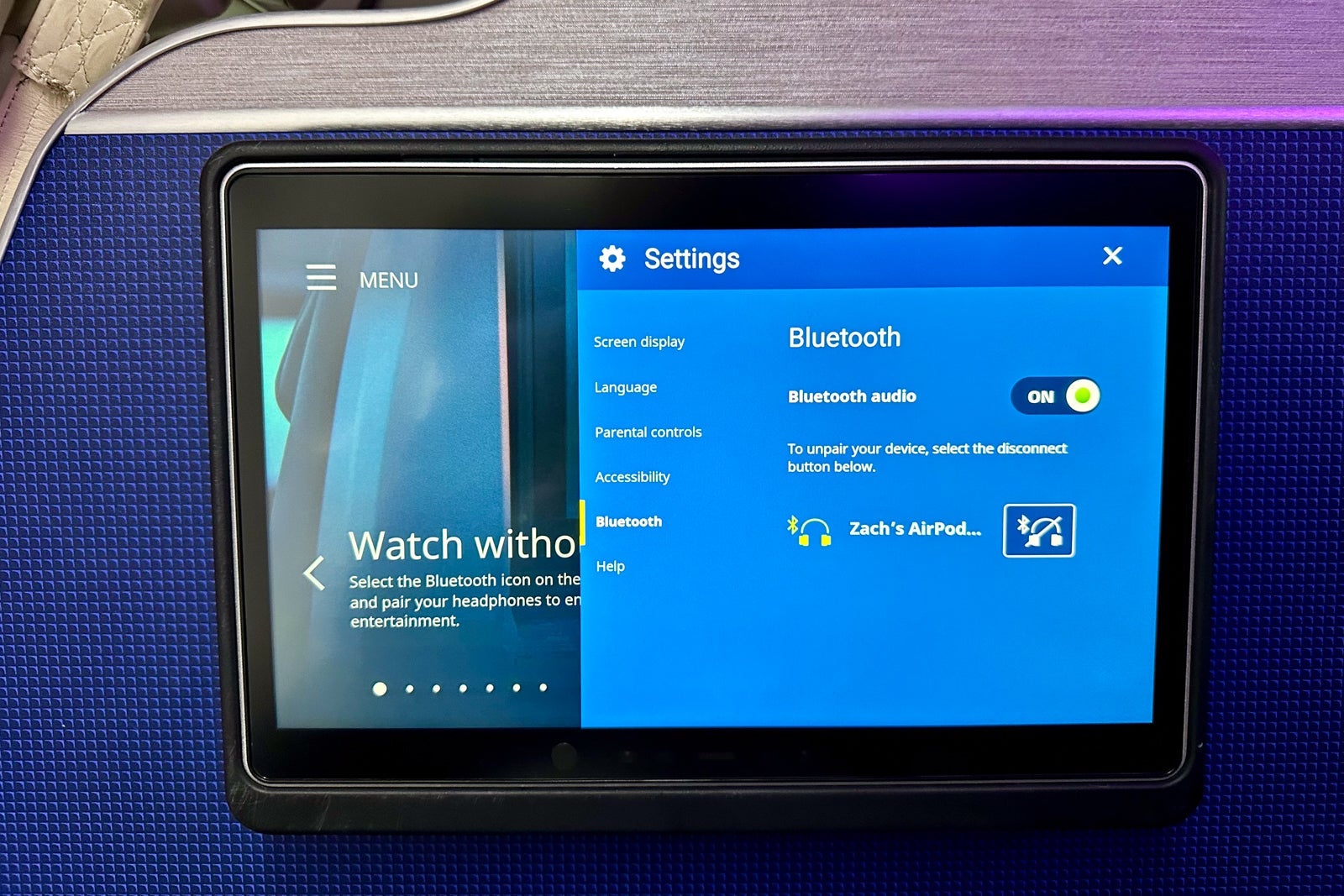
You can control the TVs using your fingers, or you can opt to play with the retractable remote that's located on the side of the center console between seats.
With just three rows of first class, you may not necessarily have a choice of where to sit depending on when you book your flight.
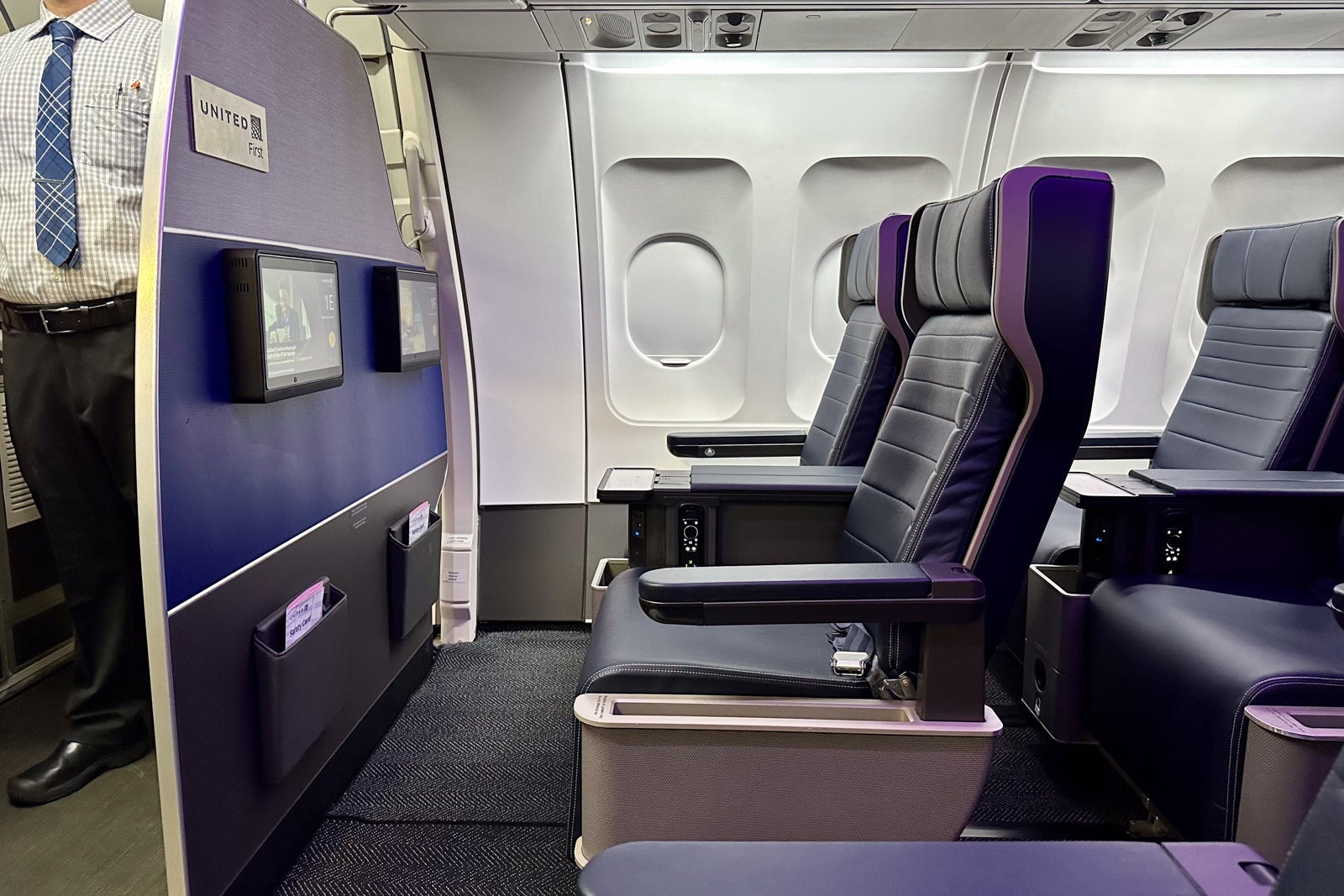
If you do, I'd avoid the bulkhead row due to the fixed walls (with no cutouts for additional legroom) and fixed TVs. I may also consider steering clear of Row 3 since those seats recline into the bulkhead wall separating first class from economy.
United's new economy cabin is sleek
Though the first-class seats are an improved product for United, the real highlight of the retrofit process for most flyers will likely be the economy-cabin upgrades.
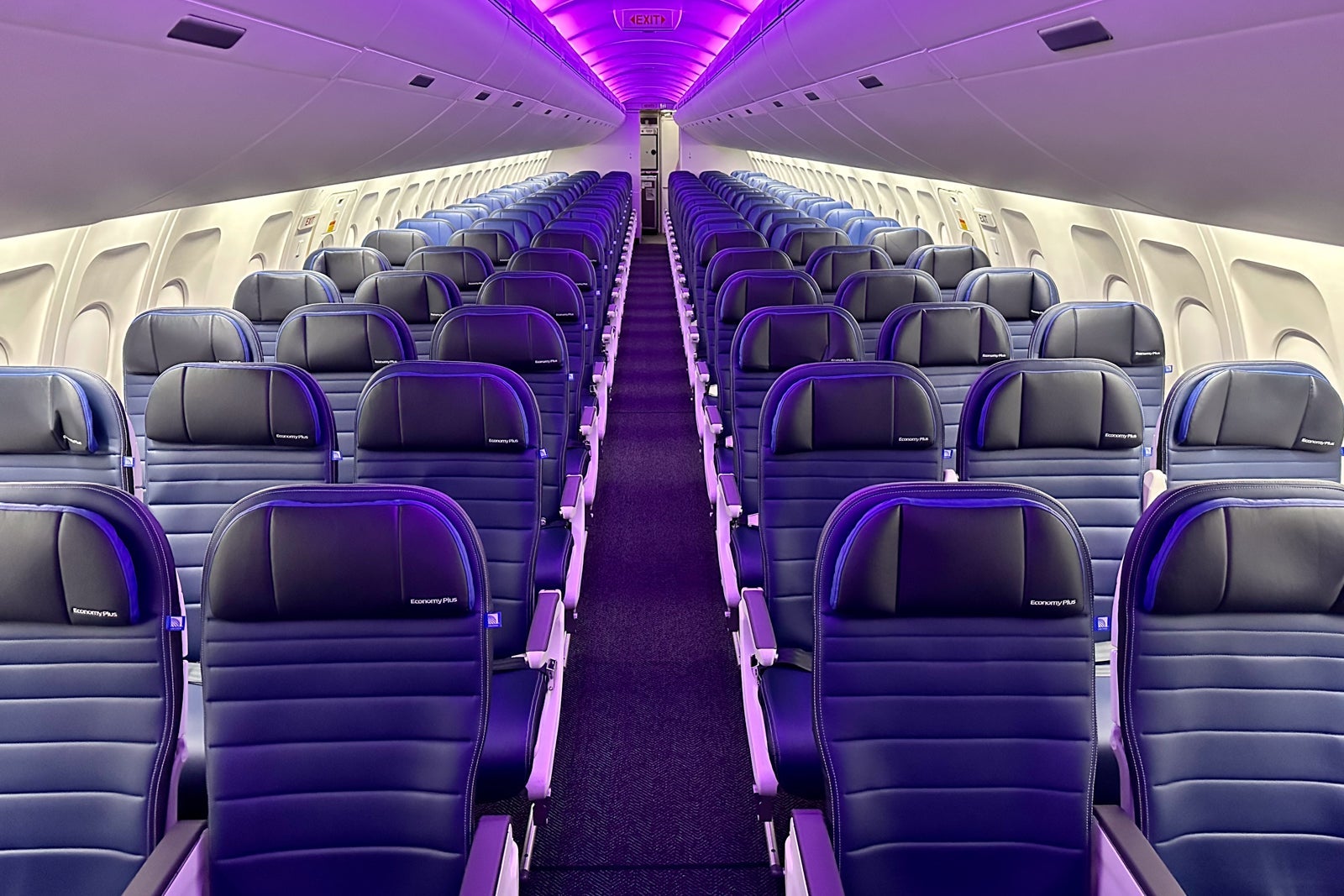
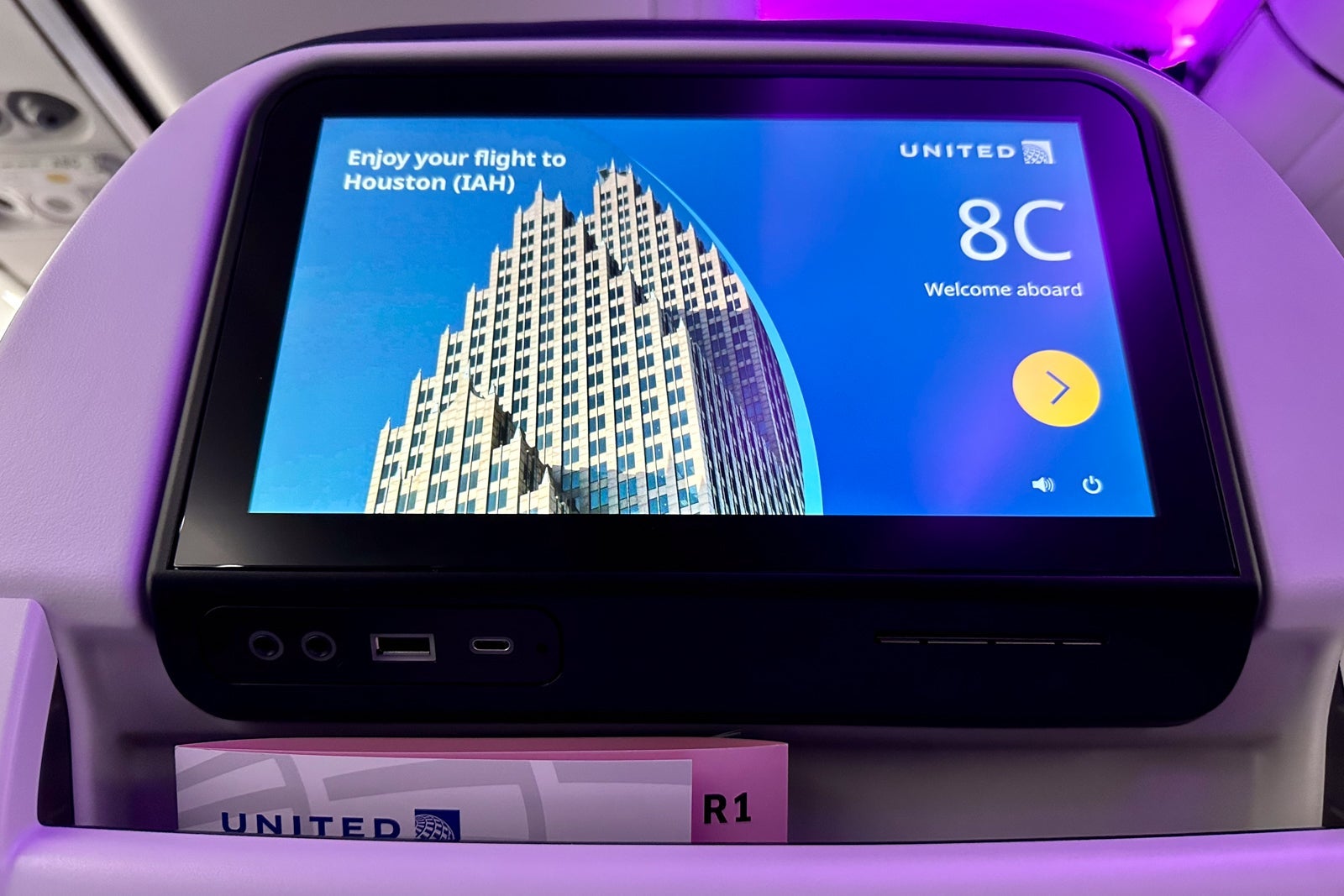
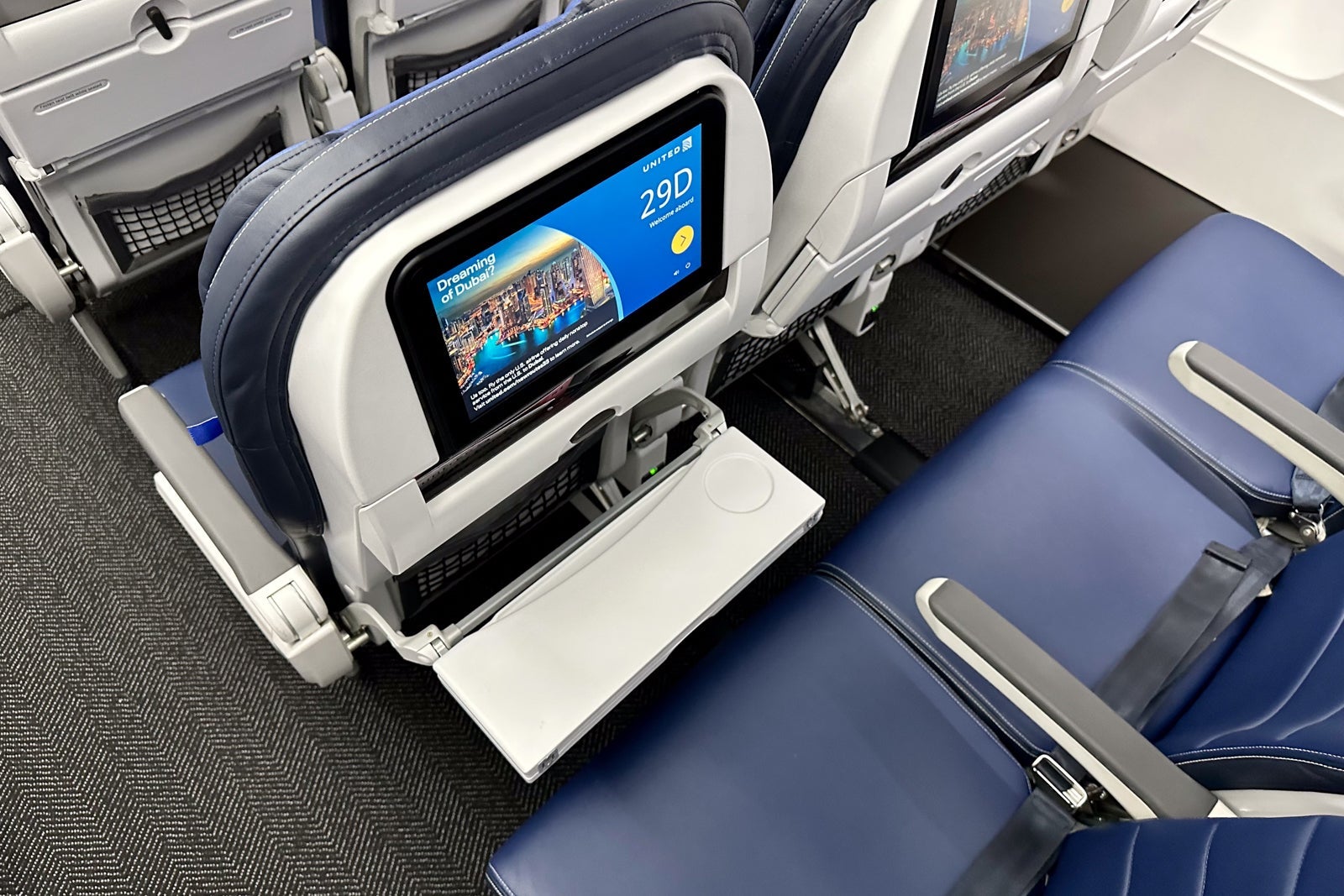
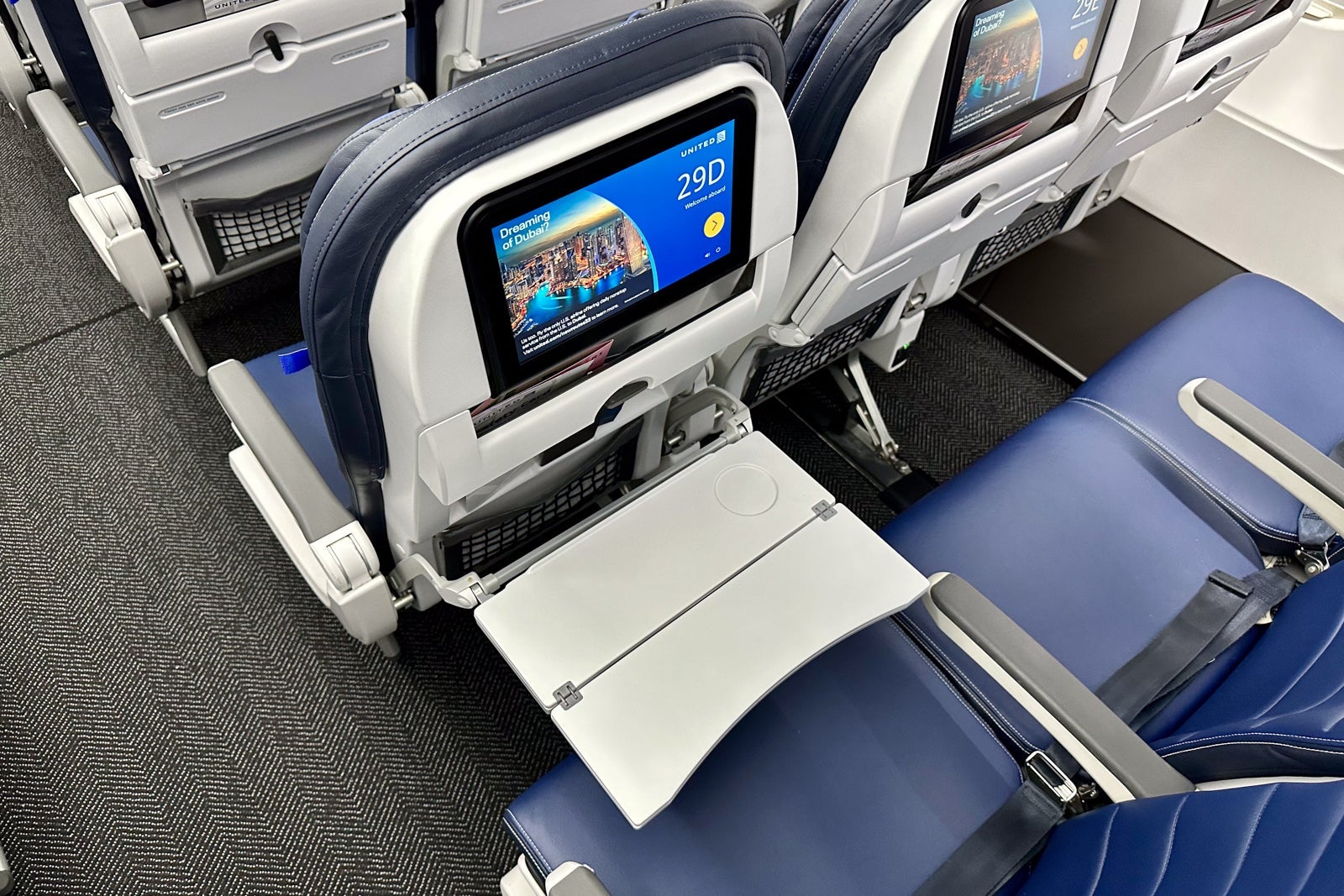
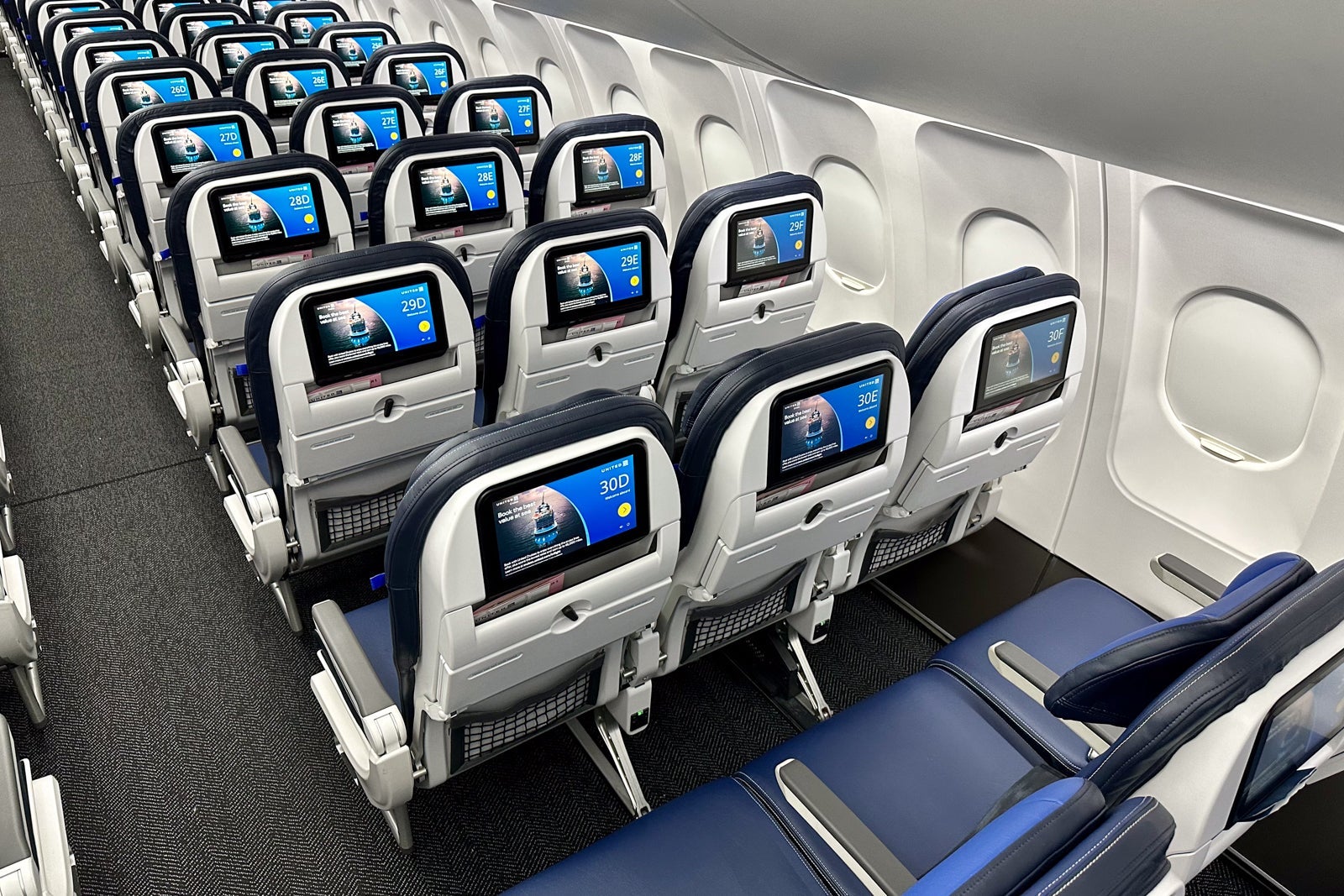
It starts with 10-inch (Android-powered) entertainment screens at each seat. Even if you don't bother using the TVs, they certainly make the cabin look significantly sleeker and more modern.
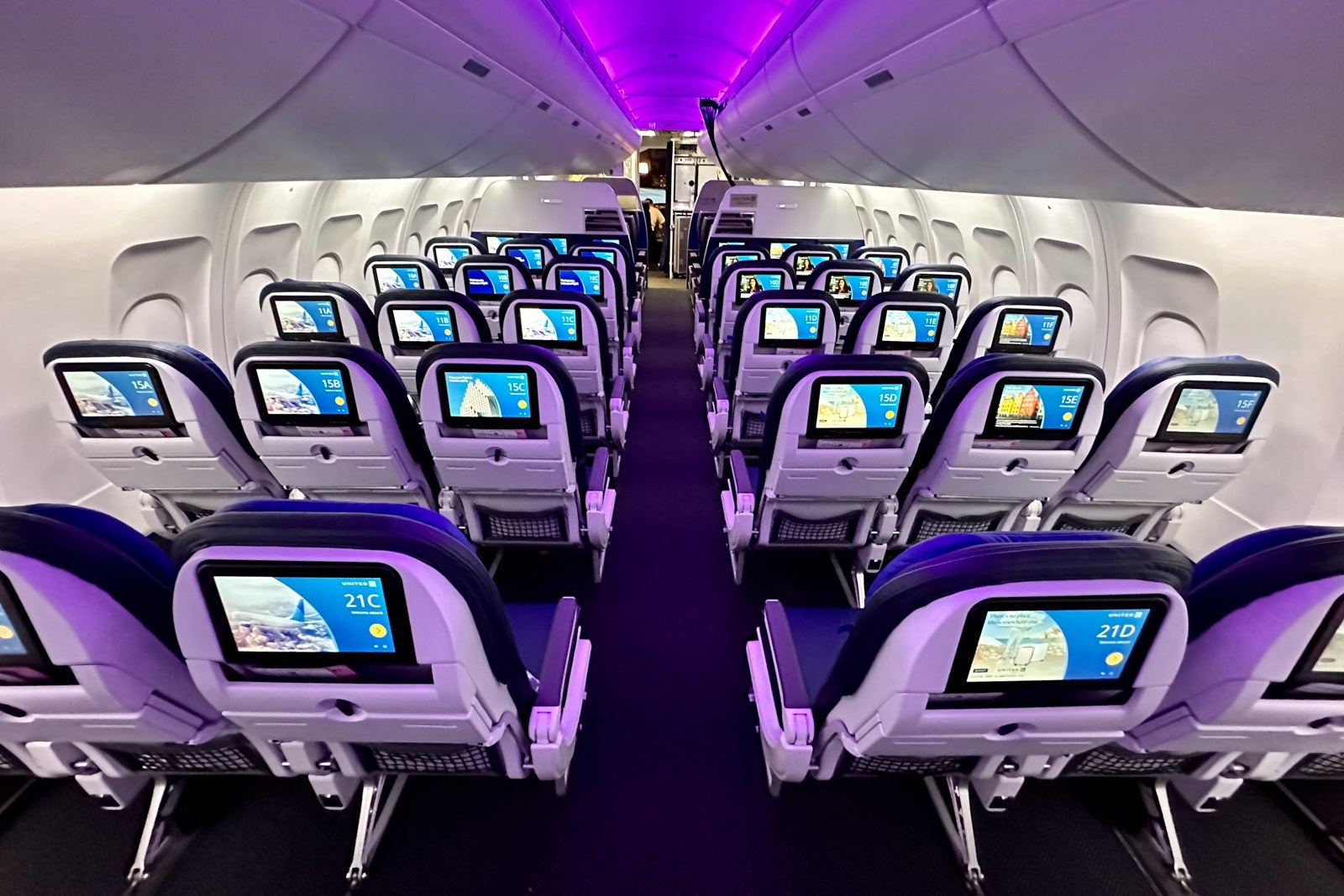
But if you do use them, you'll enjoy the same collection of content as you'd find in first class, just on a slightly smaller yet equally crisp screen.
There aren't any remotes in economy, so you'll need to use your finger to control the TV.
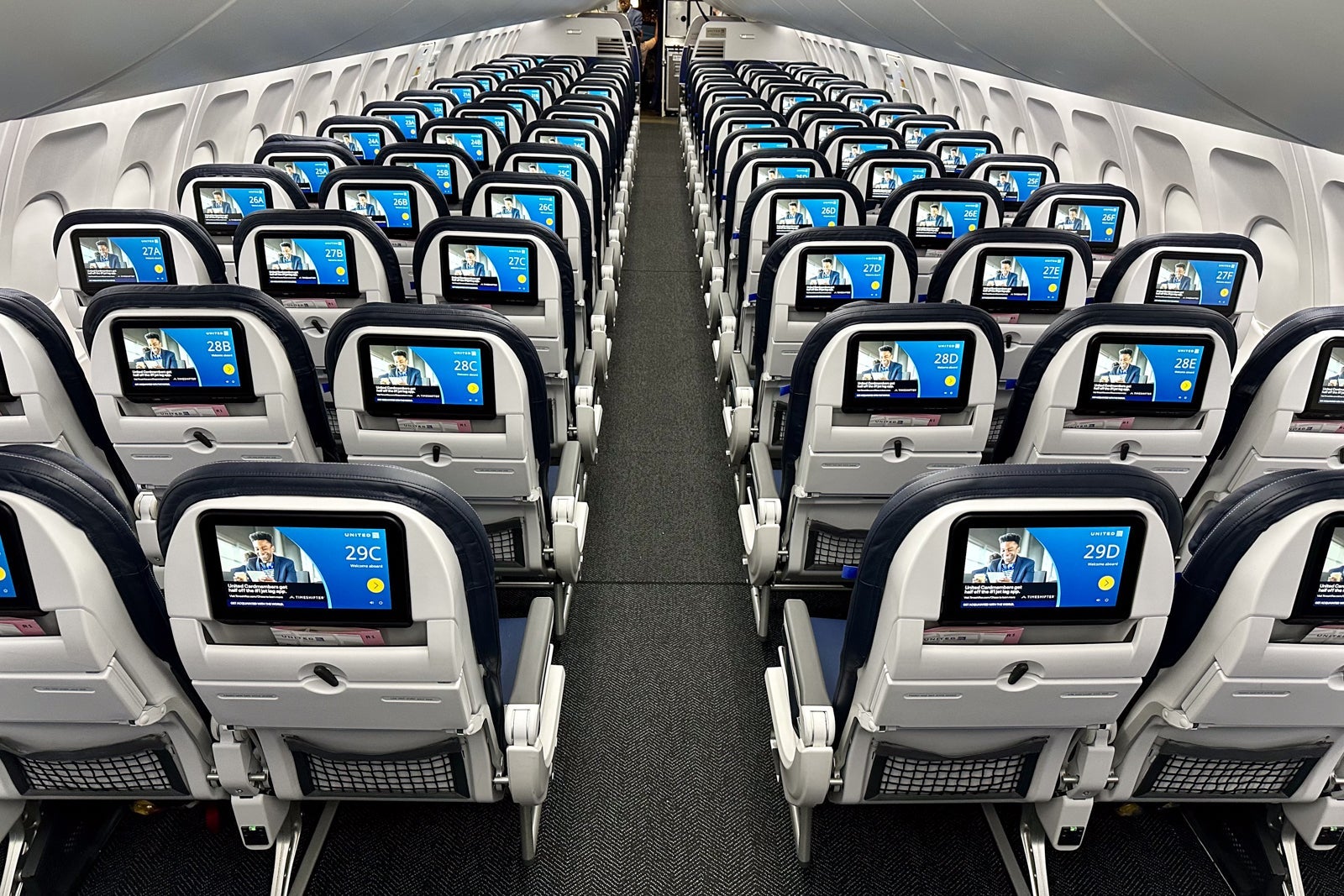
Just like first class, these screens feature built-in Bluetooth to pair your wireless headphones. (Don't worry, there's still a traditional 3.5-millimeter audio jack for those who use wired headphones.)
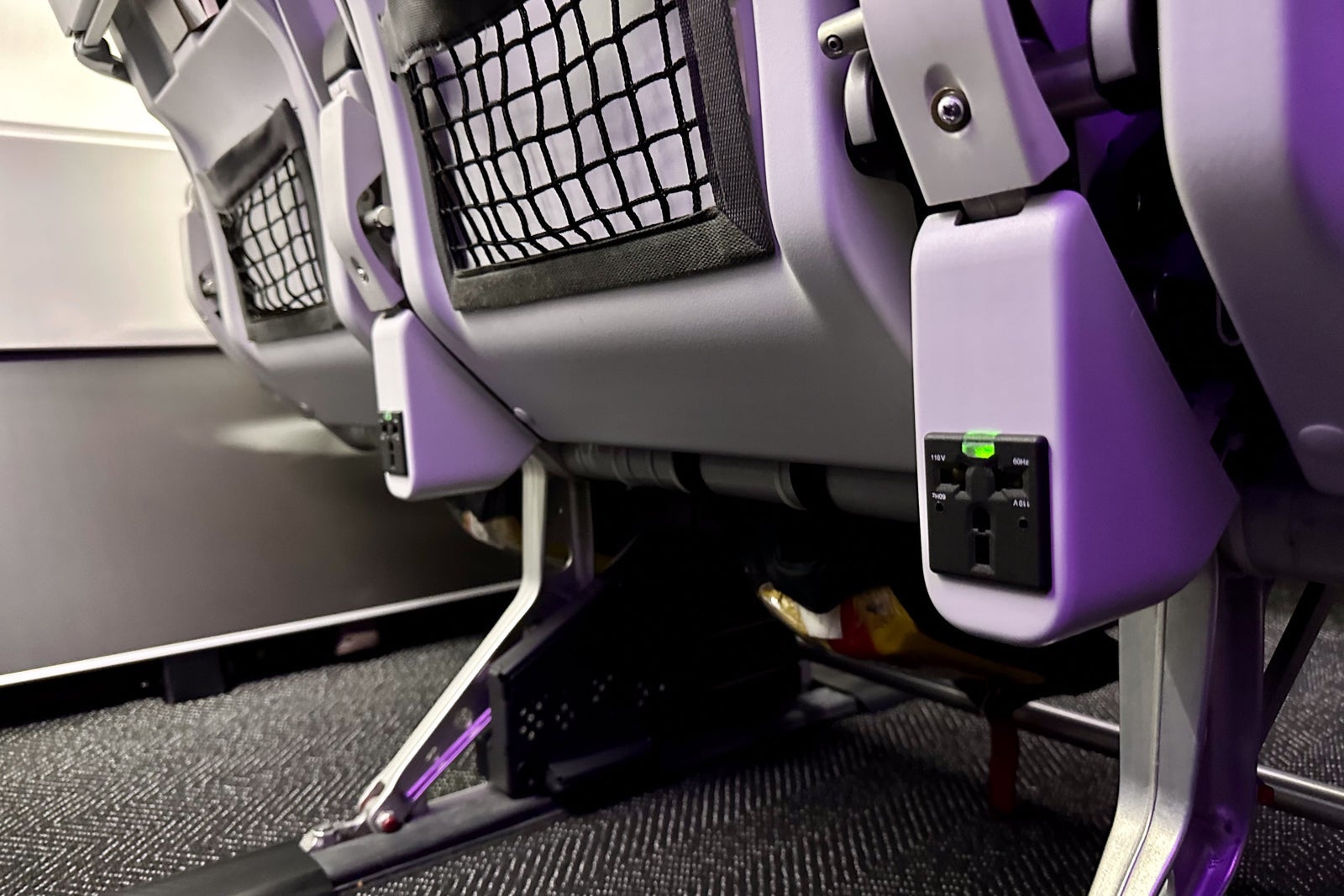
In terms of power, each trio of economy seats has access to two shared universal power outlets — one of the central tenets of United's new signature cabins. Back in the day, United kept power reserved for those splurging for the extra-legroom Economy Plus seats or first class.
Plus, the new economy seatback screens offer USB-A and USB-C charging ports (at an undisclosed wattage.)
Another easy-to-miss upgrade is sitting right above you on this jet: the new larger overhead bins that fit many more bags than before.
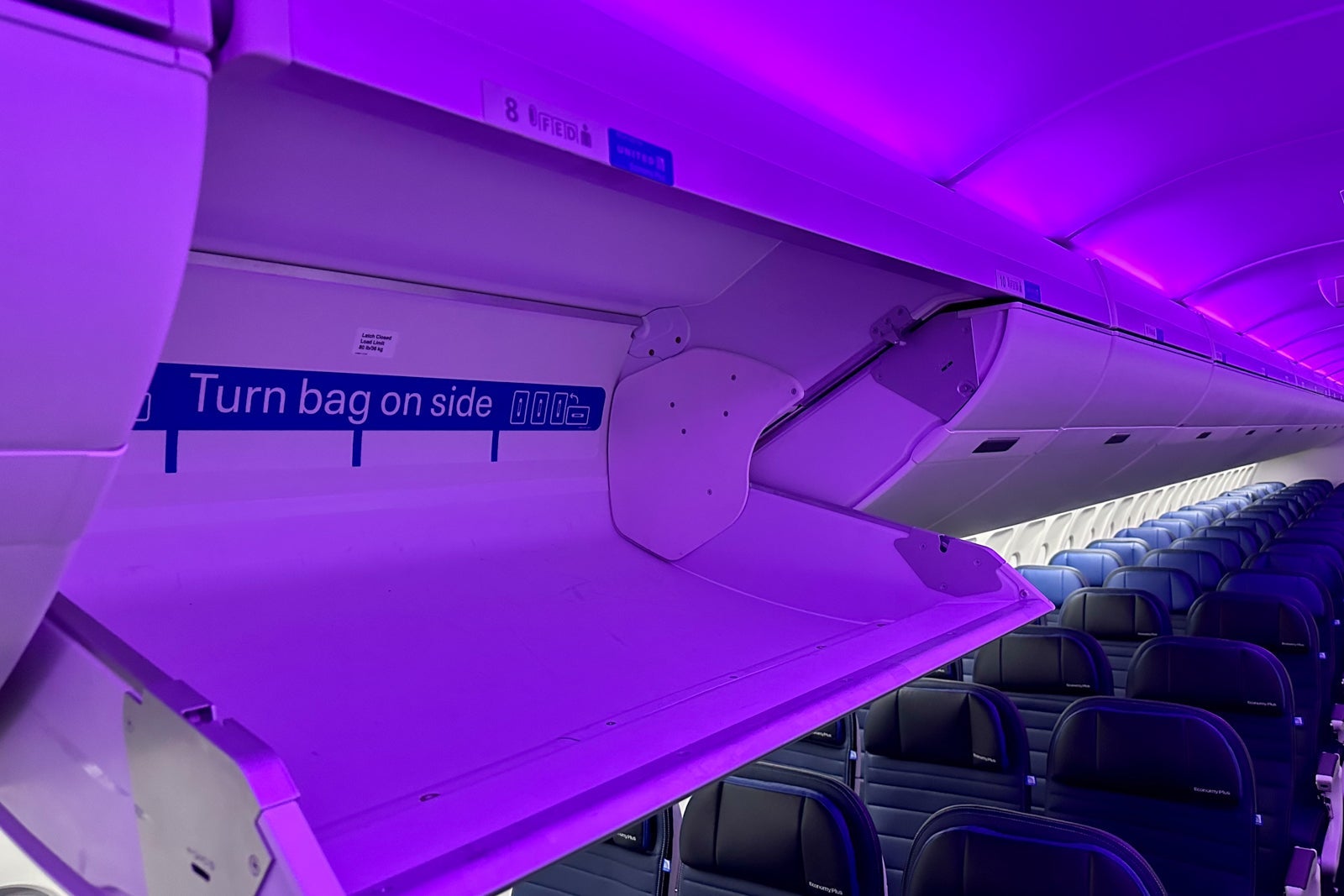
If everyone follows instructions to store their bags on their side — yes, that's a big if — then there should be many fewer gate-checked carry-ons on jets equipped with the United Next interior. In fact, these larger bins enable a 1:1 passenger-to-carry-on ratio.
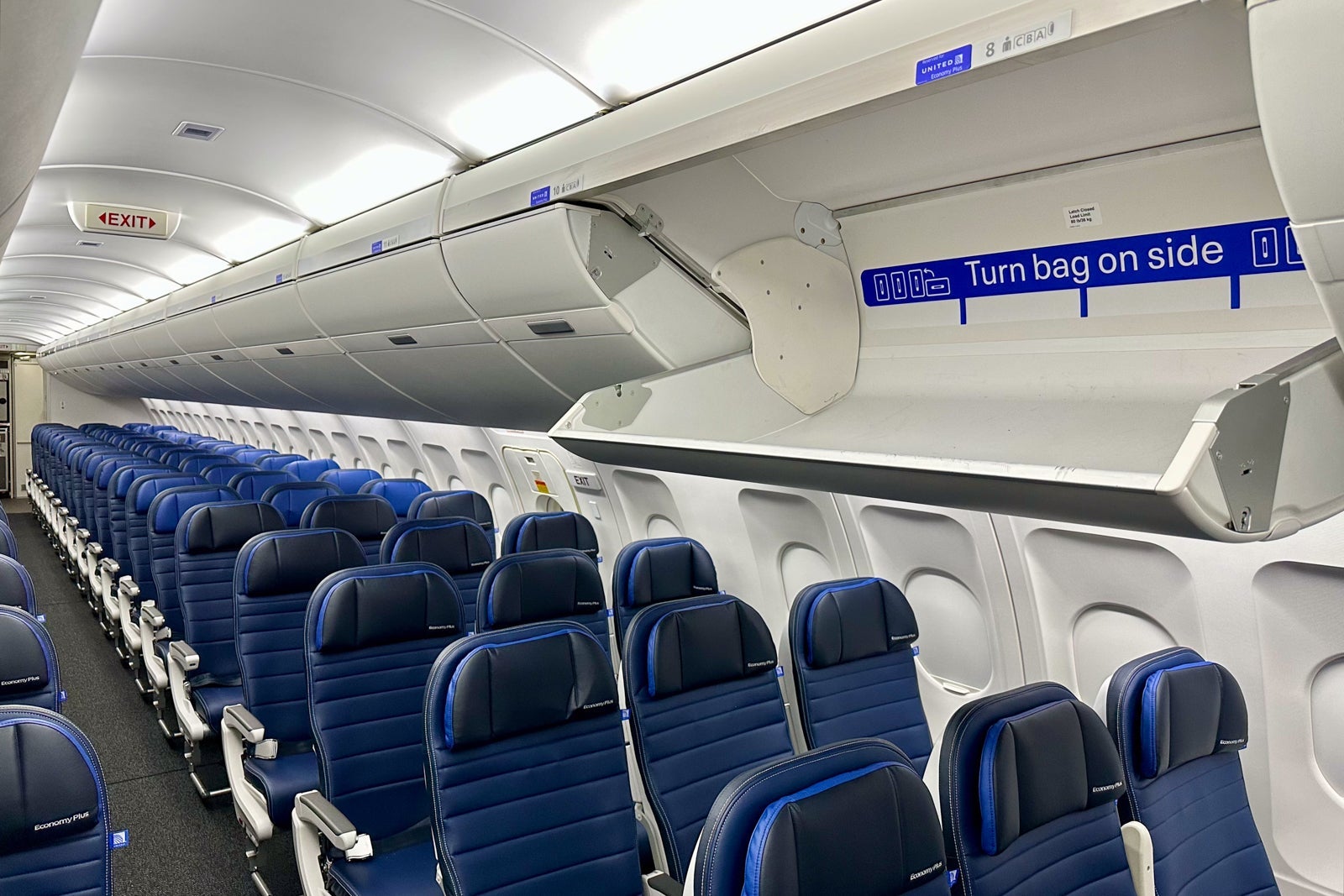
Economy seats are arranged in an industry-standard 3-3 arrangement. On United's A319, economy spans rows seven through 35, and there's not a single missing window — a real treat for aviation enthusiasts.
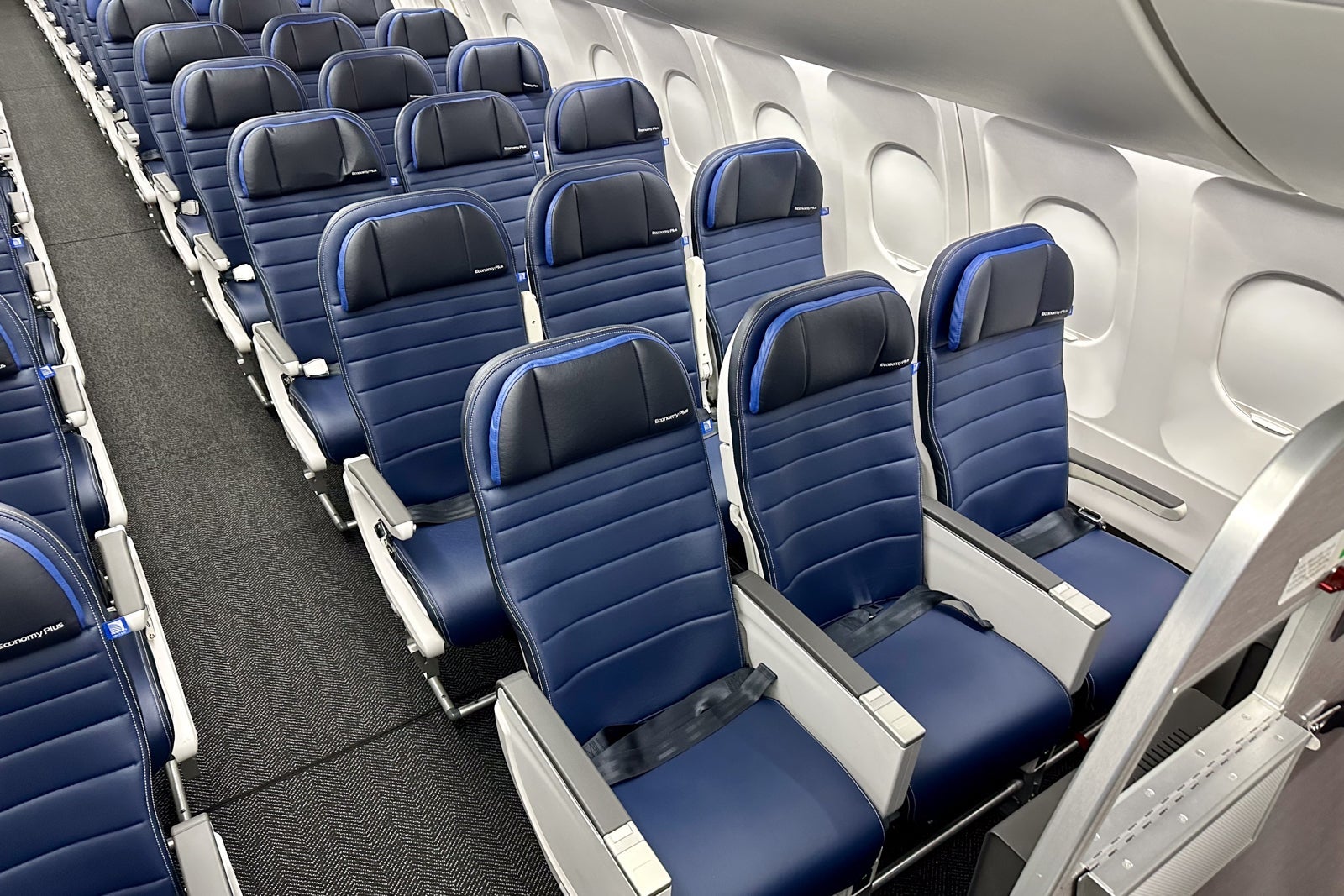
Though United is expanding the size of its extra-legroom Economy Plus section on new Boeing 737 MAX jets, the retrofitted planes have so far inherited the same seating layout as before.
I understand the rationale from an efficiency perspective, but with just 36 extra-legroom seats on the A319, some Premier elite members may end up sitting in one of the 78 regular economy seats.
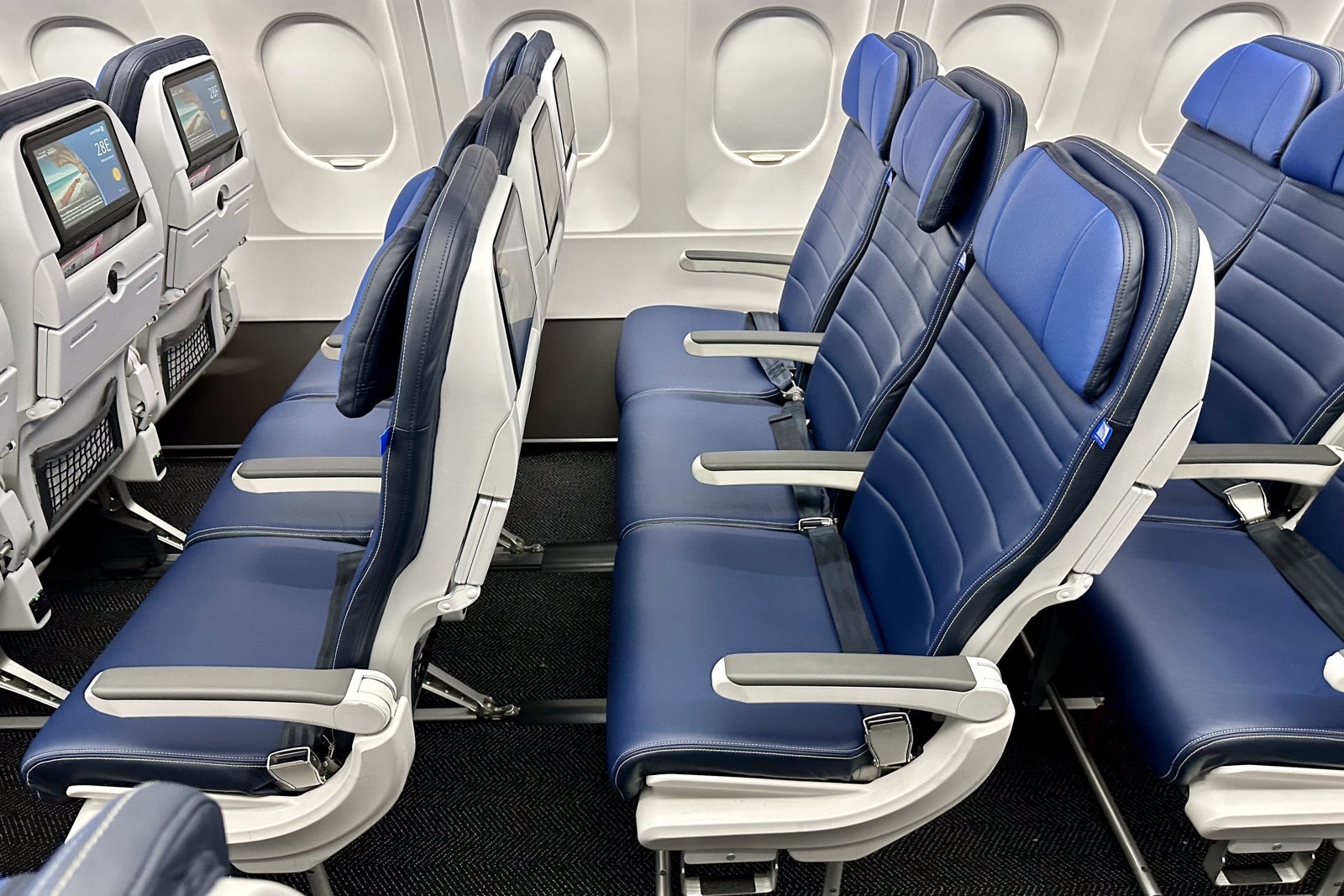
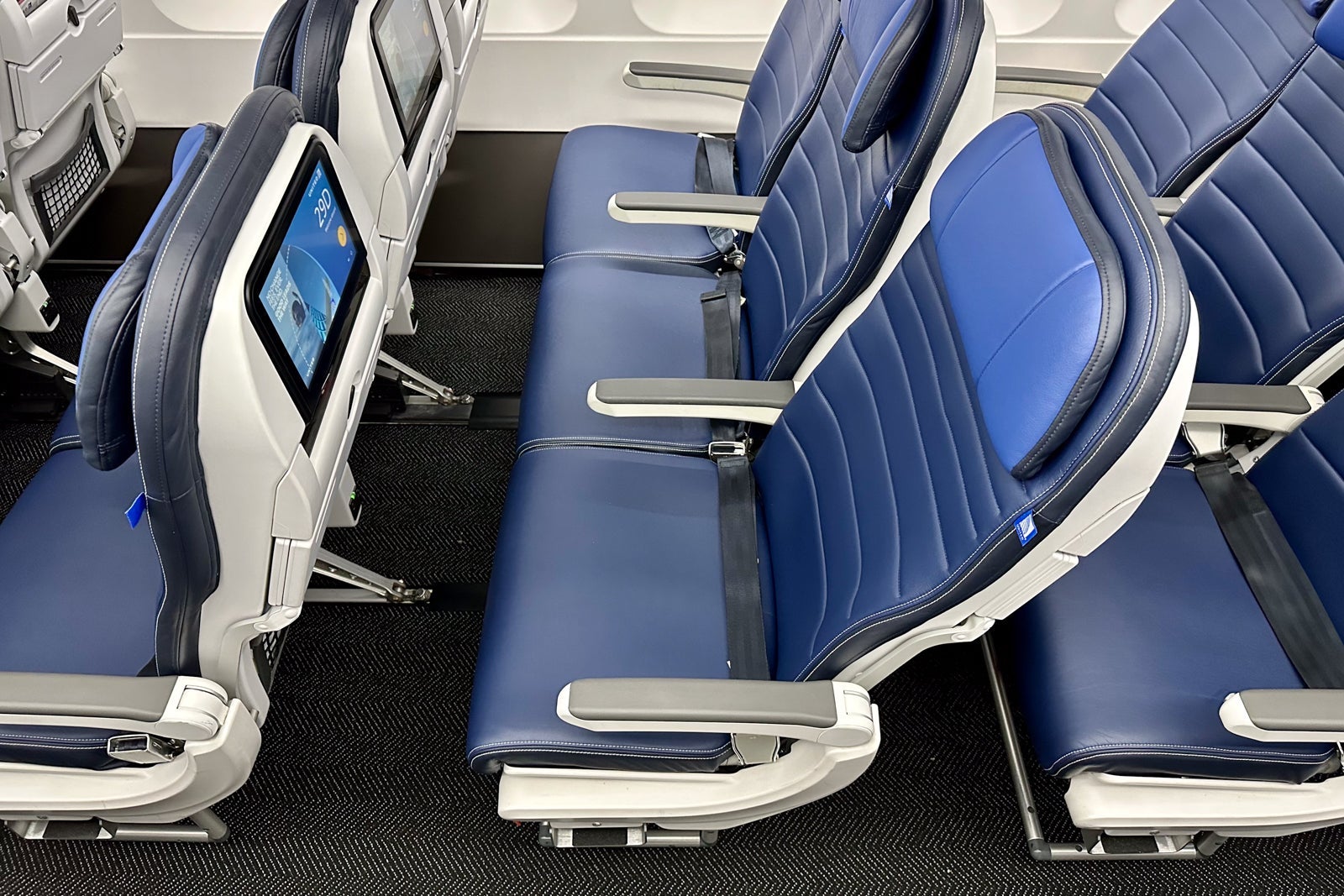
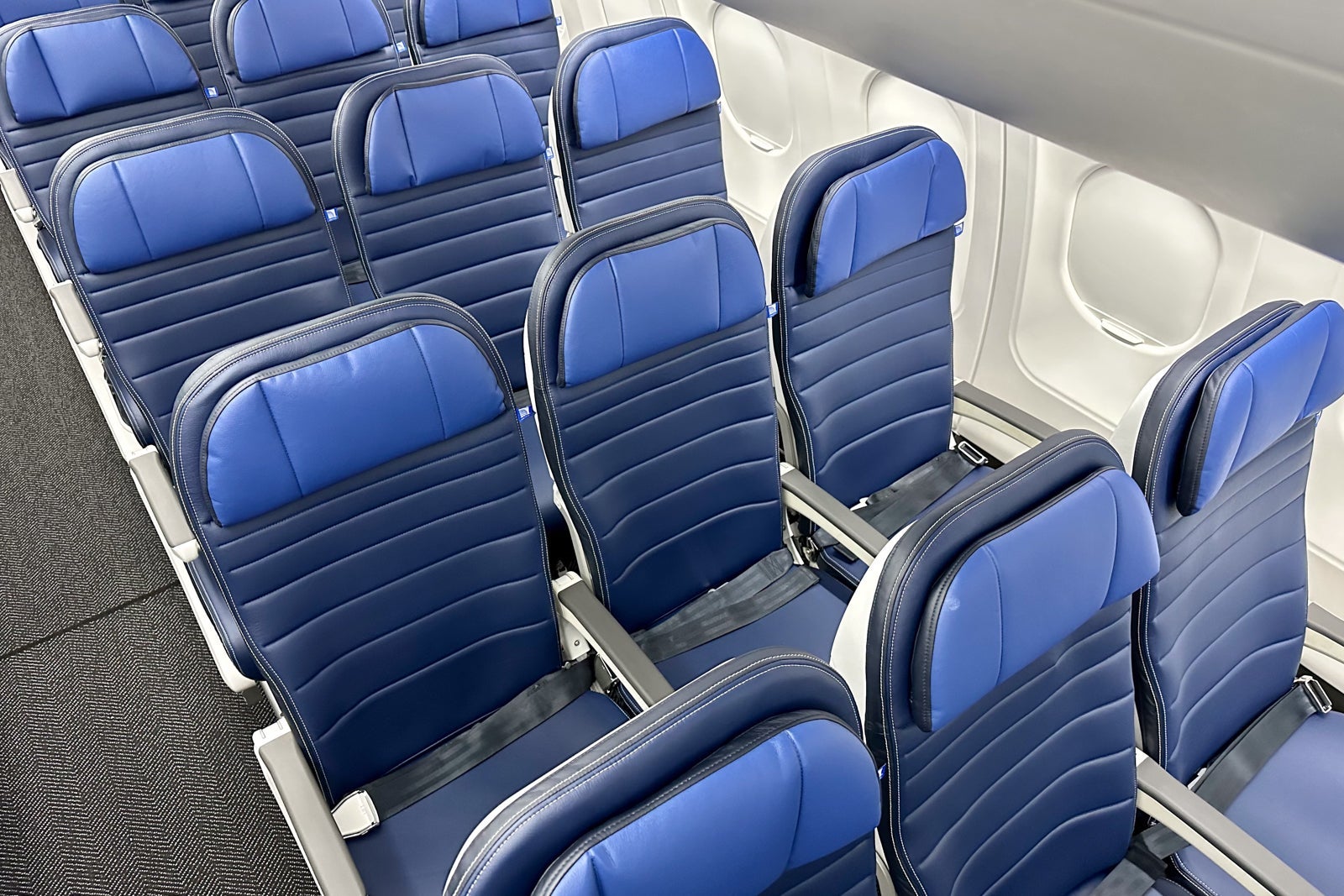
I'd avoid the bulkhead row, Row 7, in Economy Plus, and if faced with a choice, I'd choose the single exit row, Row 21, for the additional legroom. Most Economy Plus seats feature 33 inches of pitch, while those in economy have just 30 inches of pitch. (The exit row has a whopping 38 inches of pitch.)
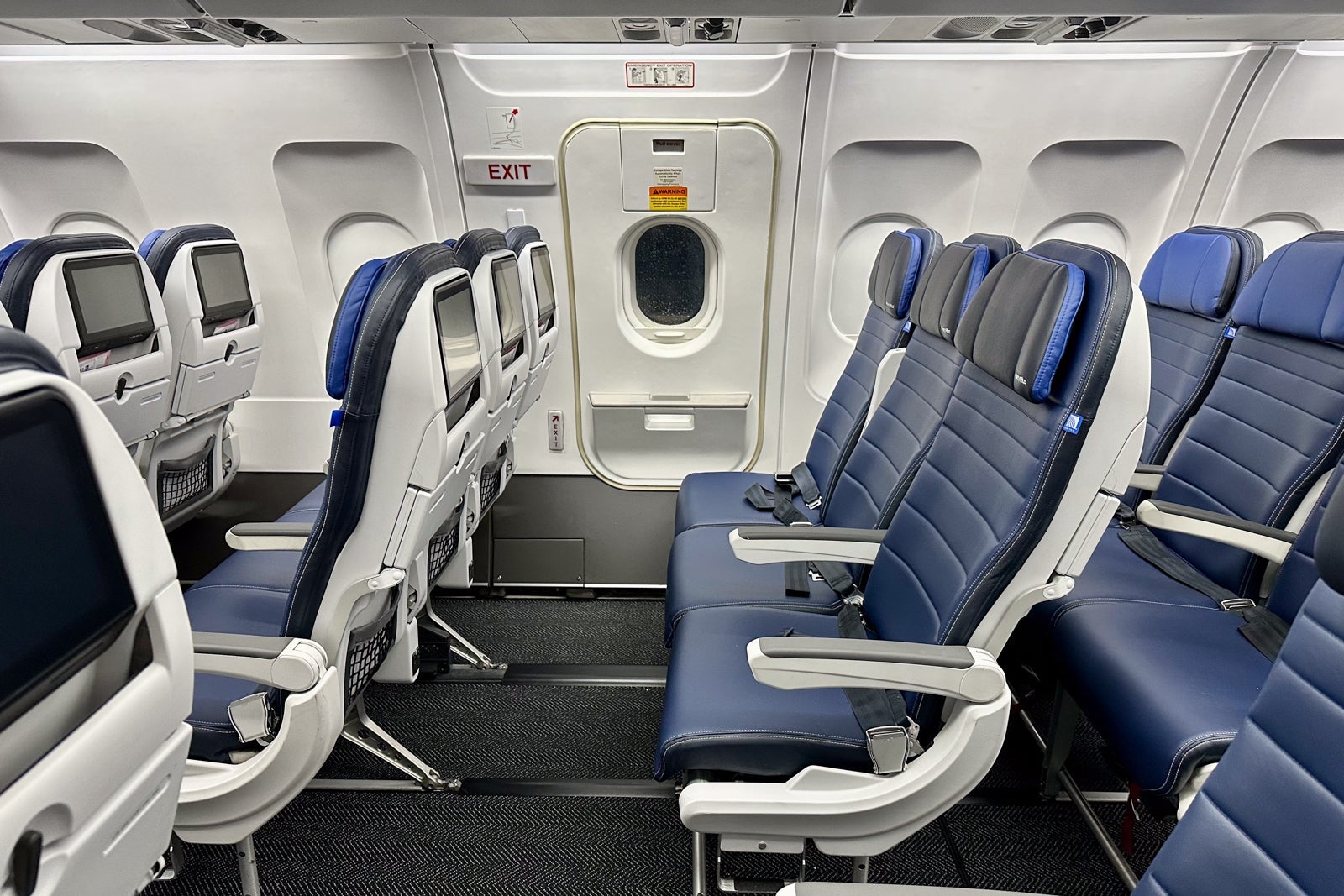
All economy seats measure 19 inches wide and feature bi-fold tray tables that measure 15 inches wide and 10 inches long.
While United's Airbus A319s are between 16 and 26 years old, you wouldn't know it when you step on board. Aside from the tech upgrades, United installed new colorful LED mood lighting and updated branding throughout the jet to make it feel more modern.
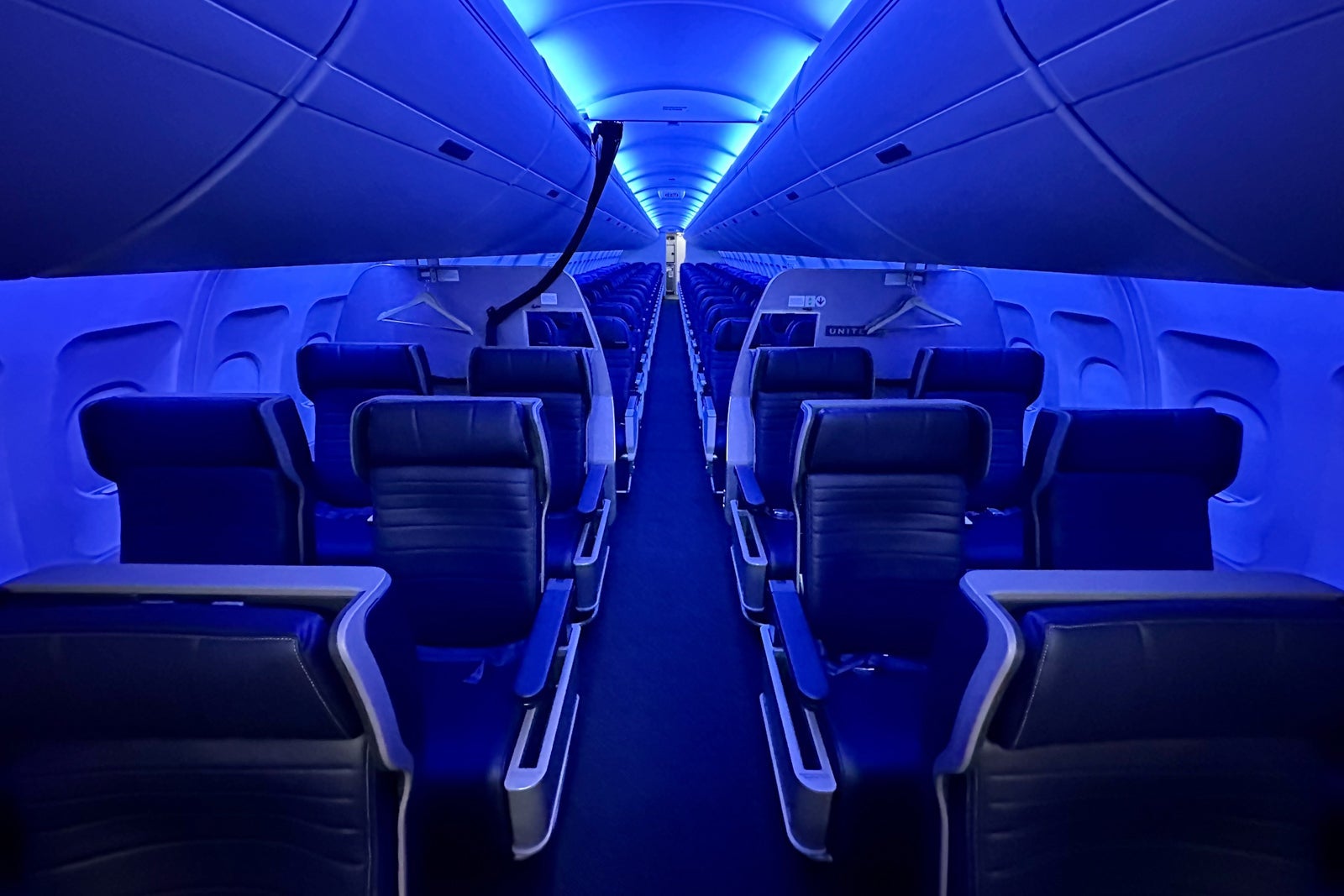
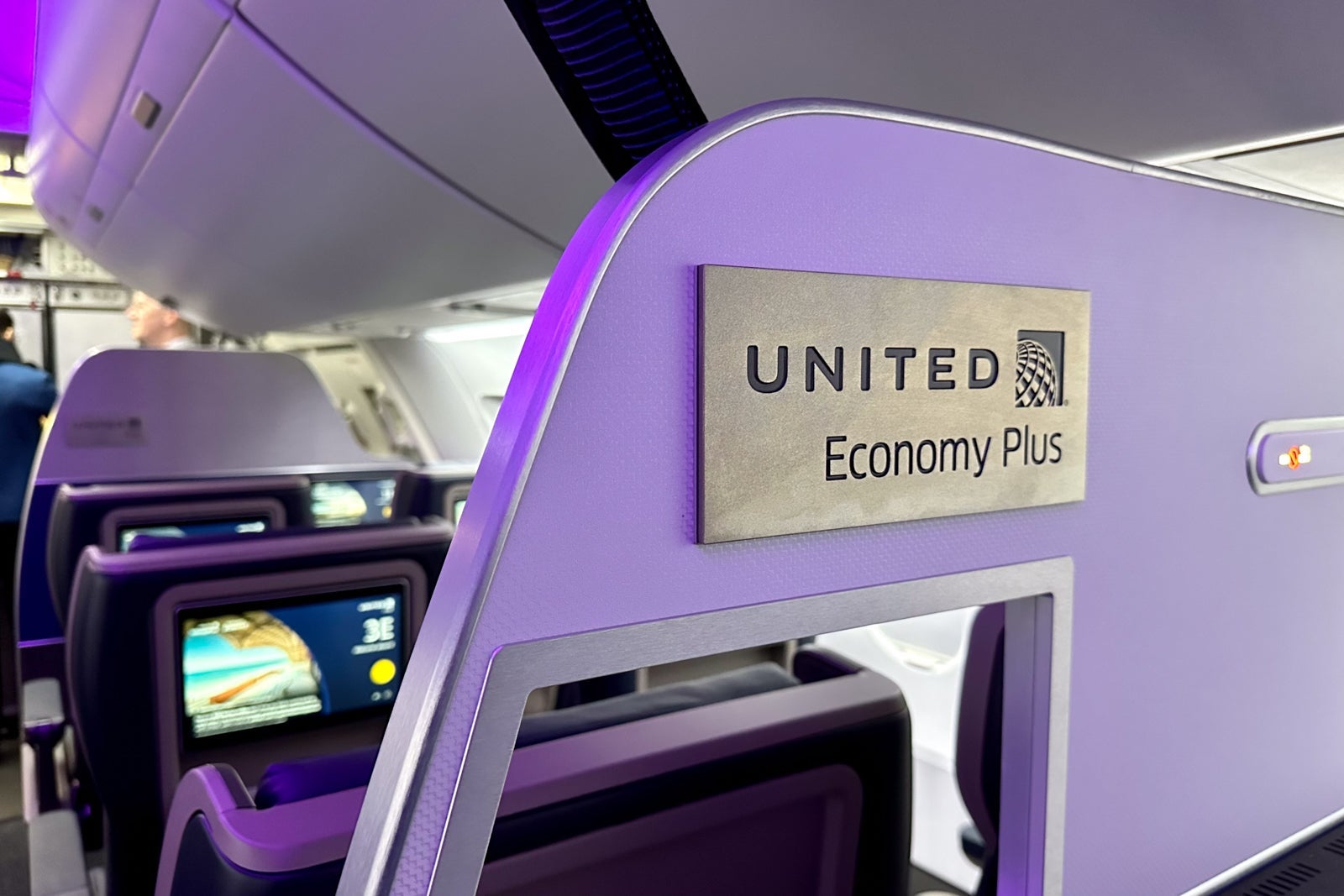
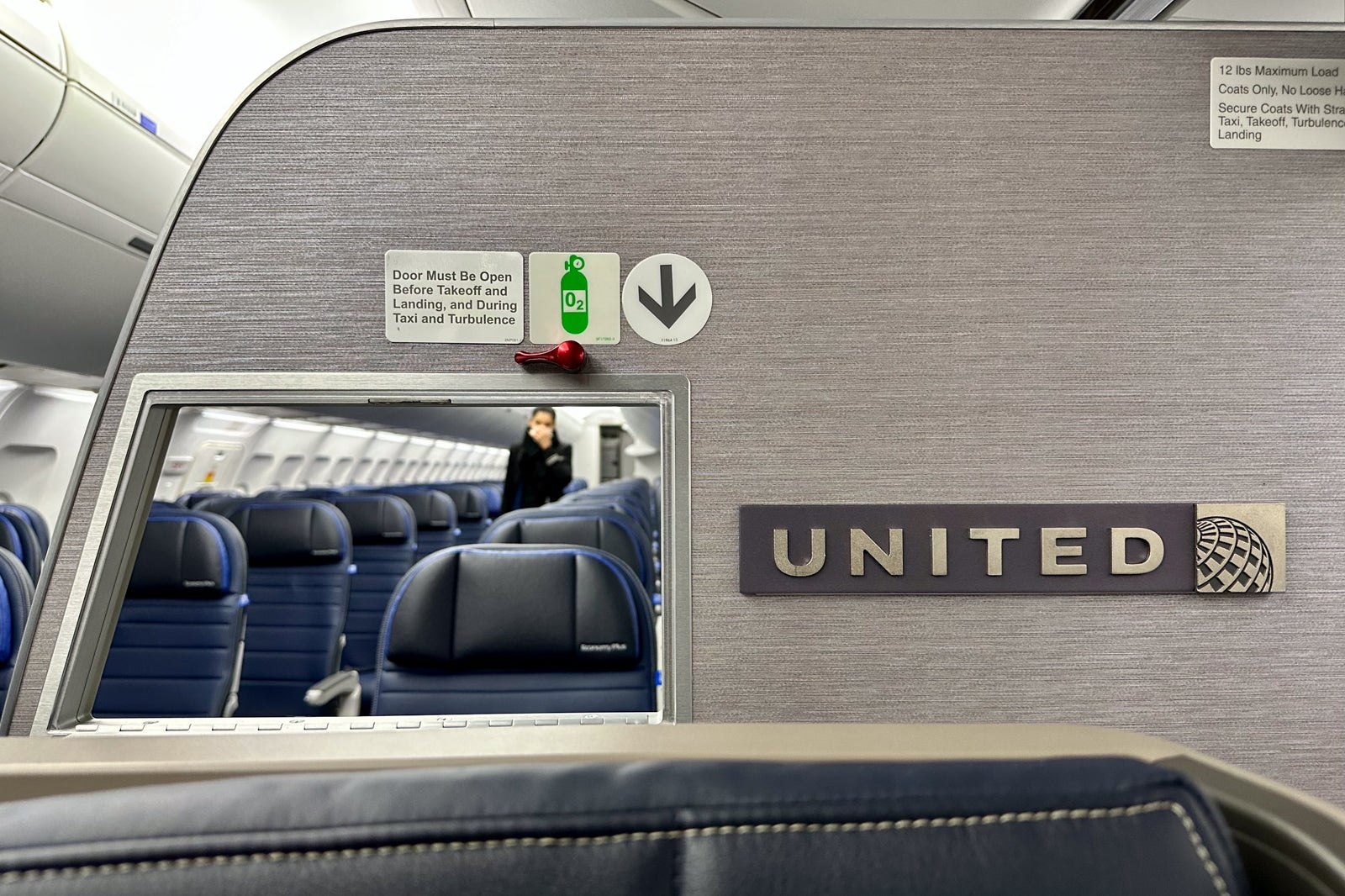
Though you won't enjoy the new plane smell on the retrofitted planes, you will enjoy a sleek, modern experience that's sure to impress — regardless of which cabin you choose.
What hasn't changed
While the nose-to-tail modernization project is a big step forward for the United passenger experience, it's not necessarily complete just yet.
When the airline unveiled the United Next campaign, it promised faster and more reliable Wi-Fi. That's an area where United has historically lagged, but new aircraft deliveries are receiving the far superior Viasat service.
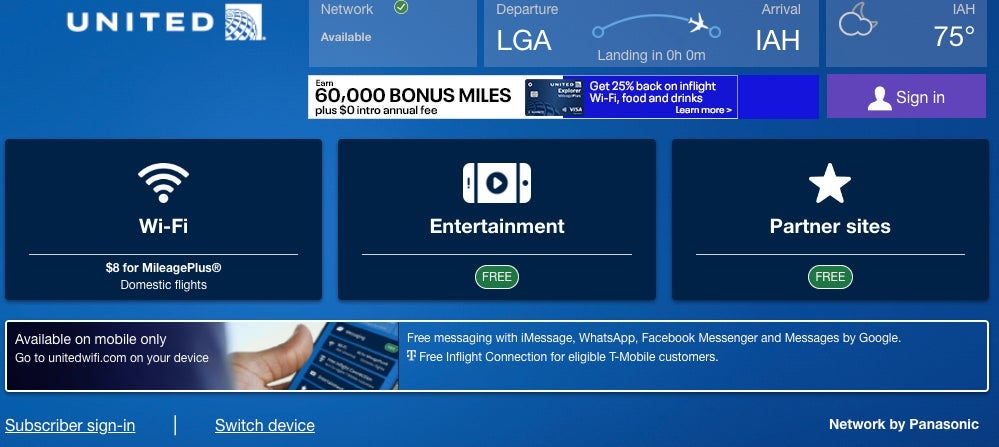
I was expecting United to transition its existing fleet outfitted with Panasonic Wi-Fi to Viasat, but that hasn't happened just yet. Hopefully, this switch is still in the works because the Wi-Fi on the A319 was seriously lagging. It cut out for a good portion of the flight, and when it worked, download and upload speeds hovered at 10Mbps and 5Mbps, respectively.
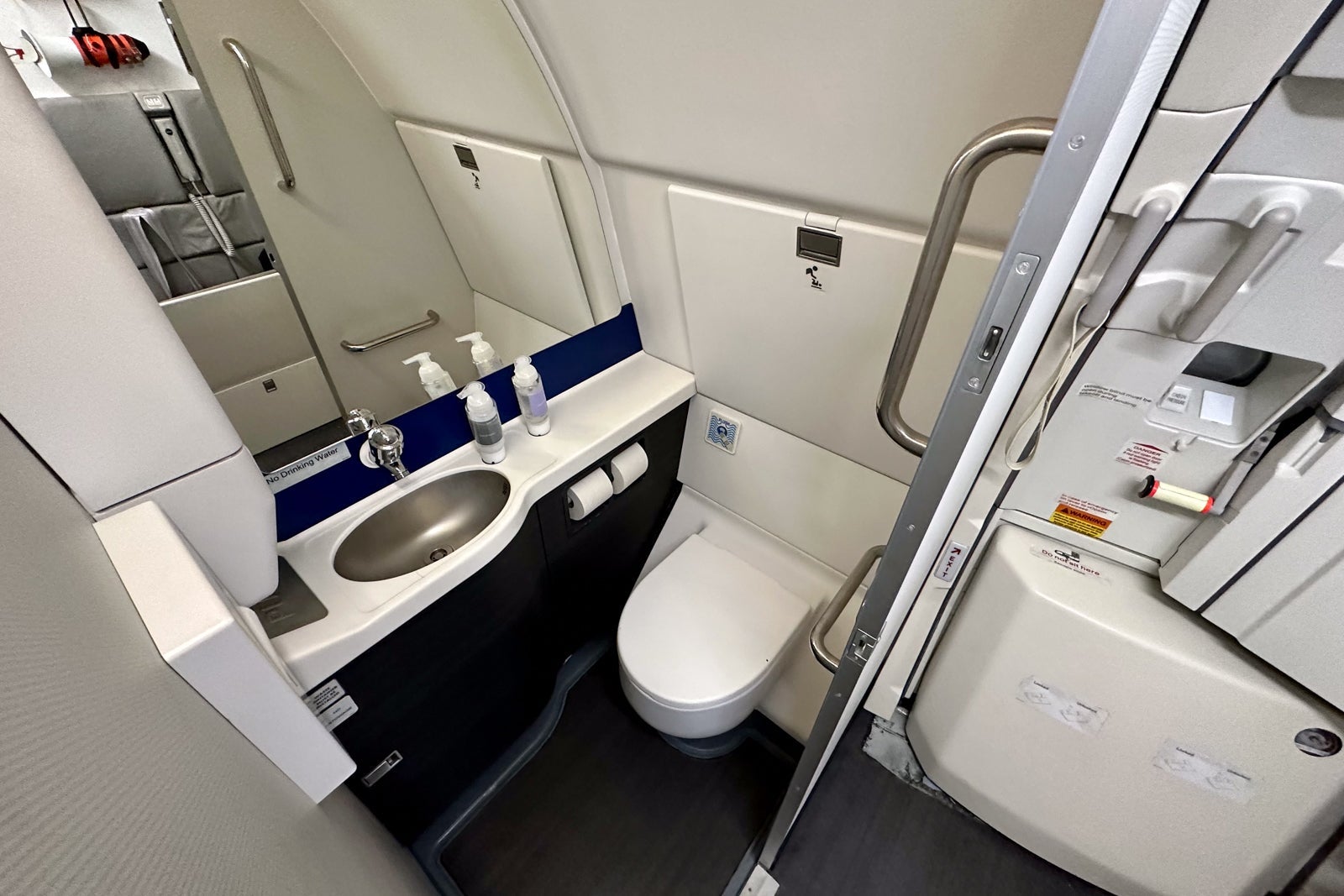
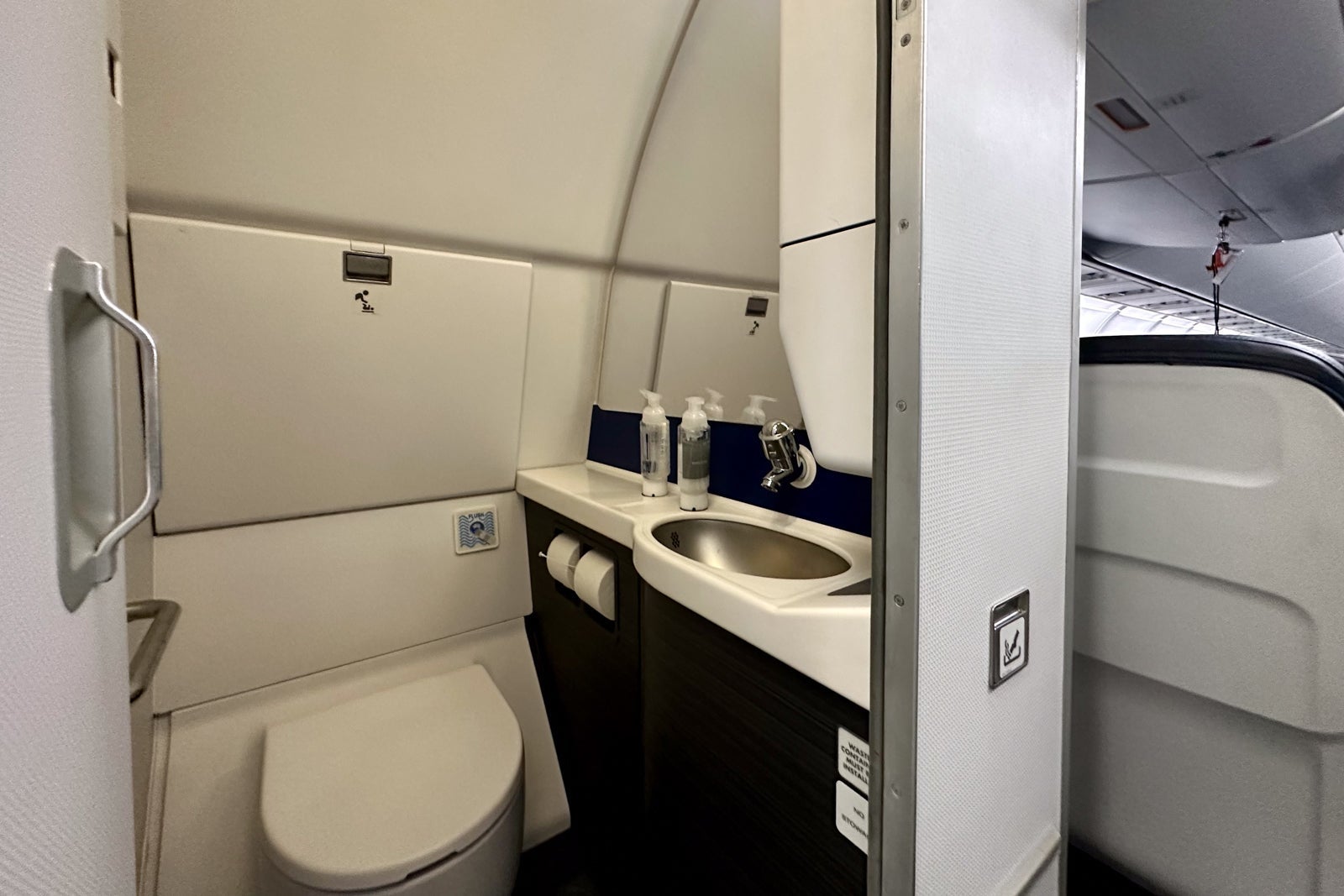
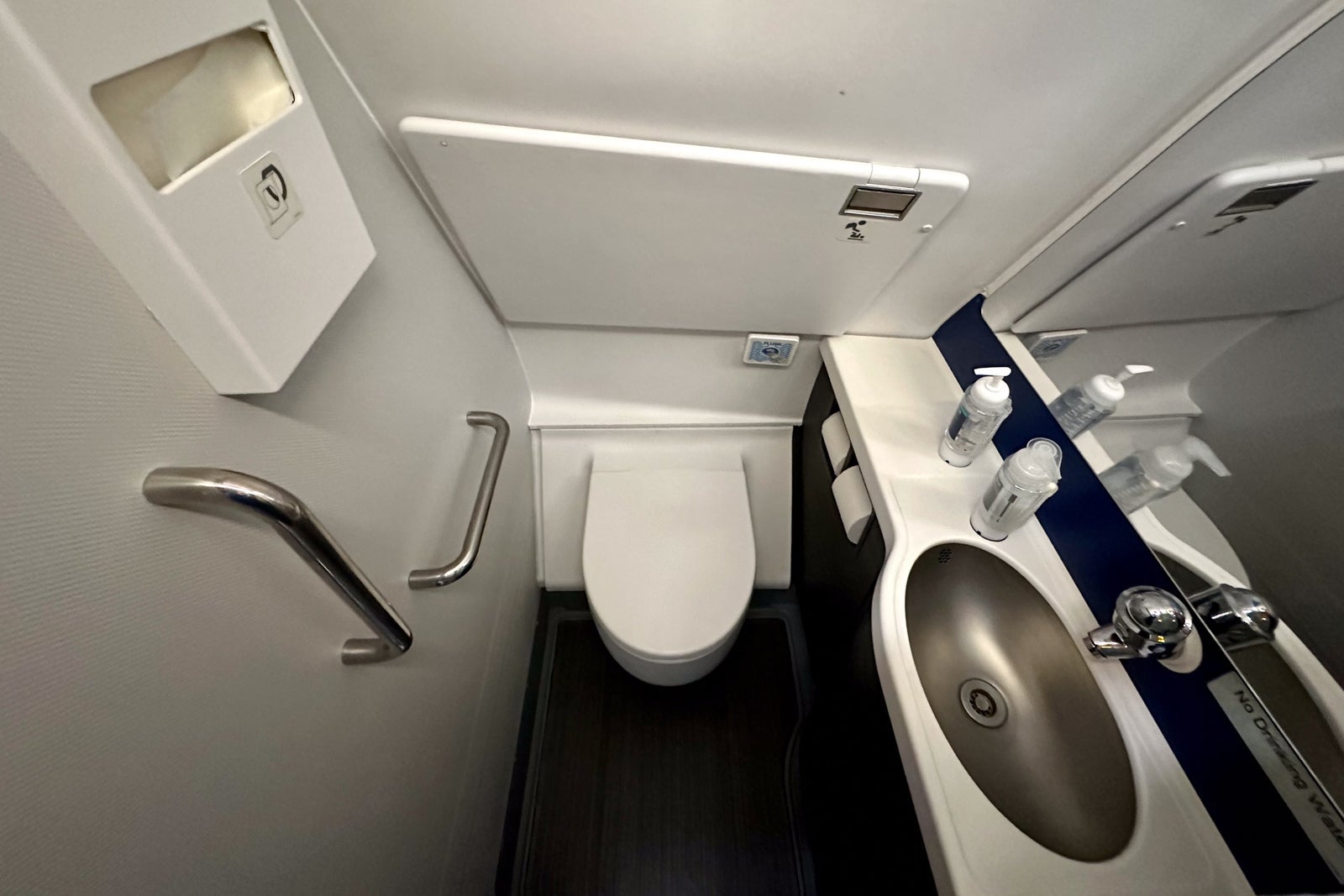
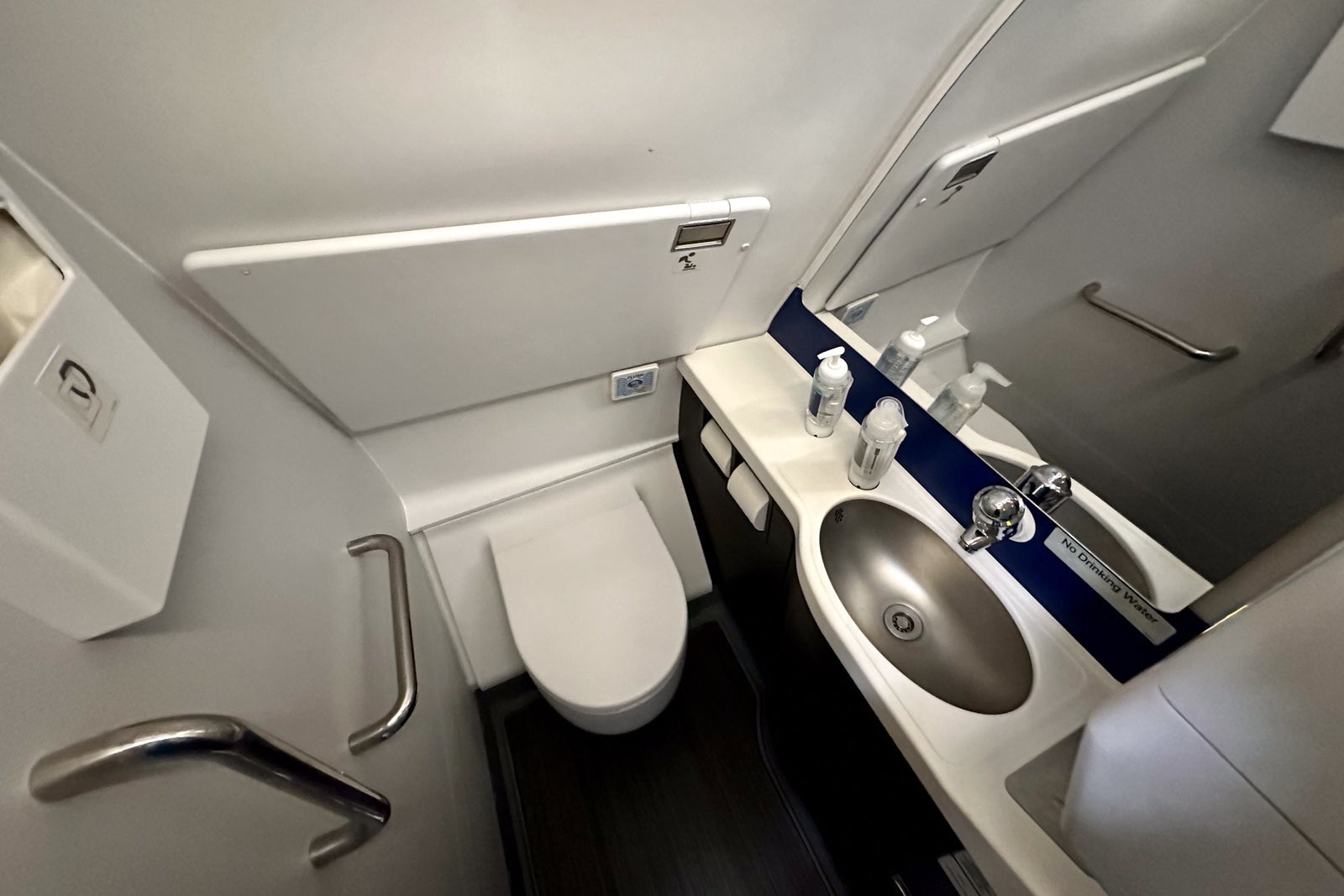
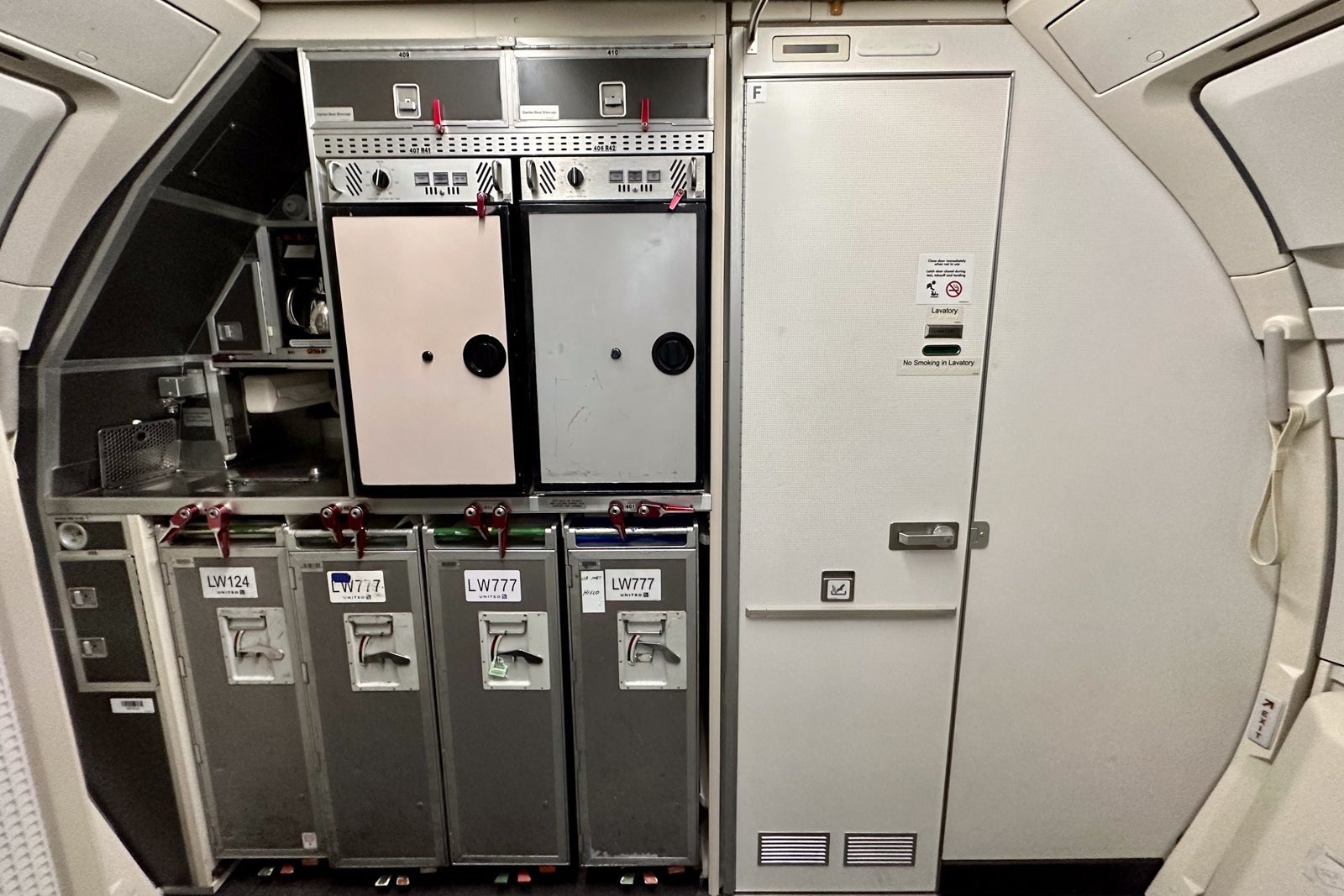
United didn't change the location or size of the lavatories, but it did upgrade them with its latest branding motifs and finishes, including blue and gray wallpaper. (You'll find one lavatory at the front of the plane and two in the back galley.)
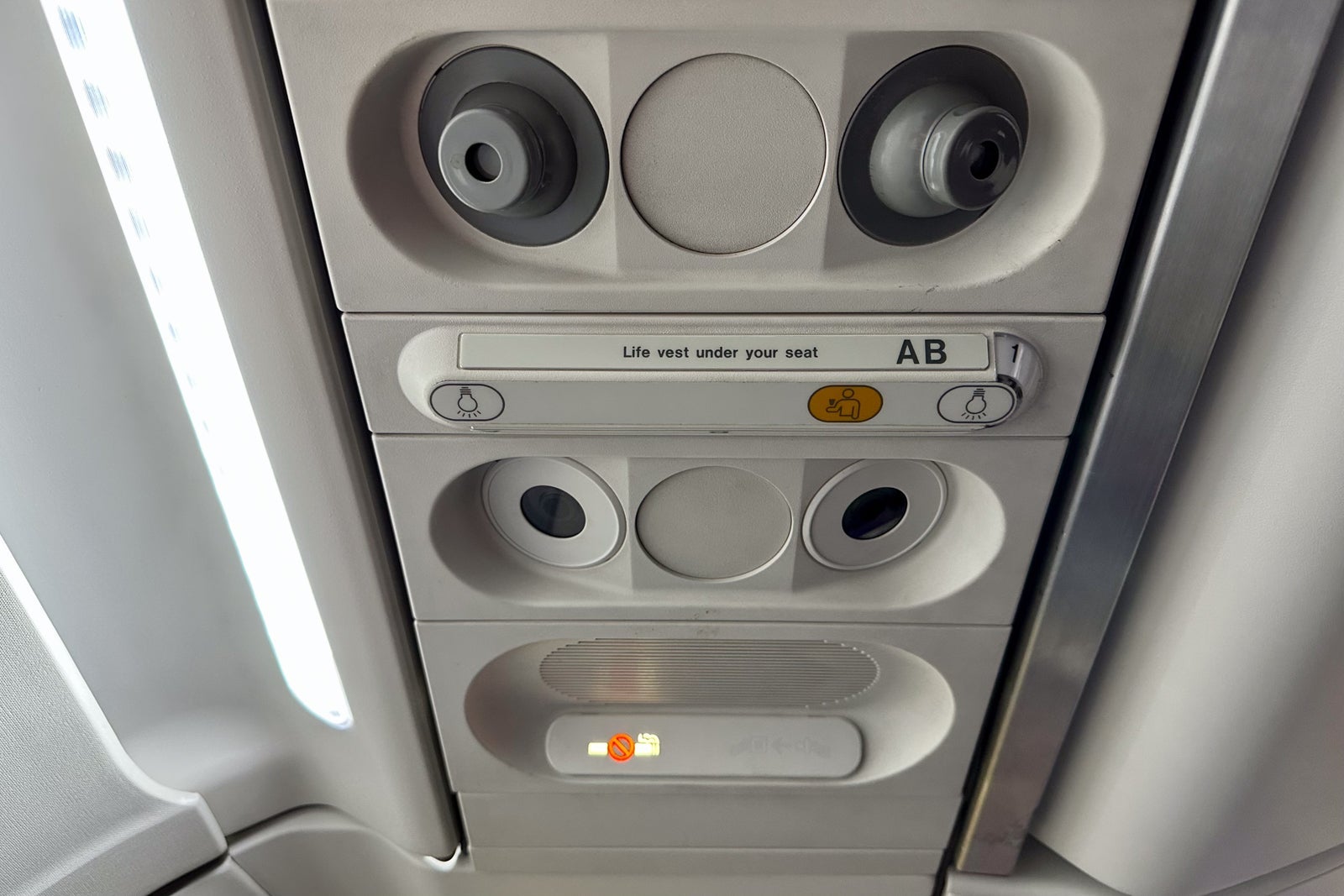
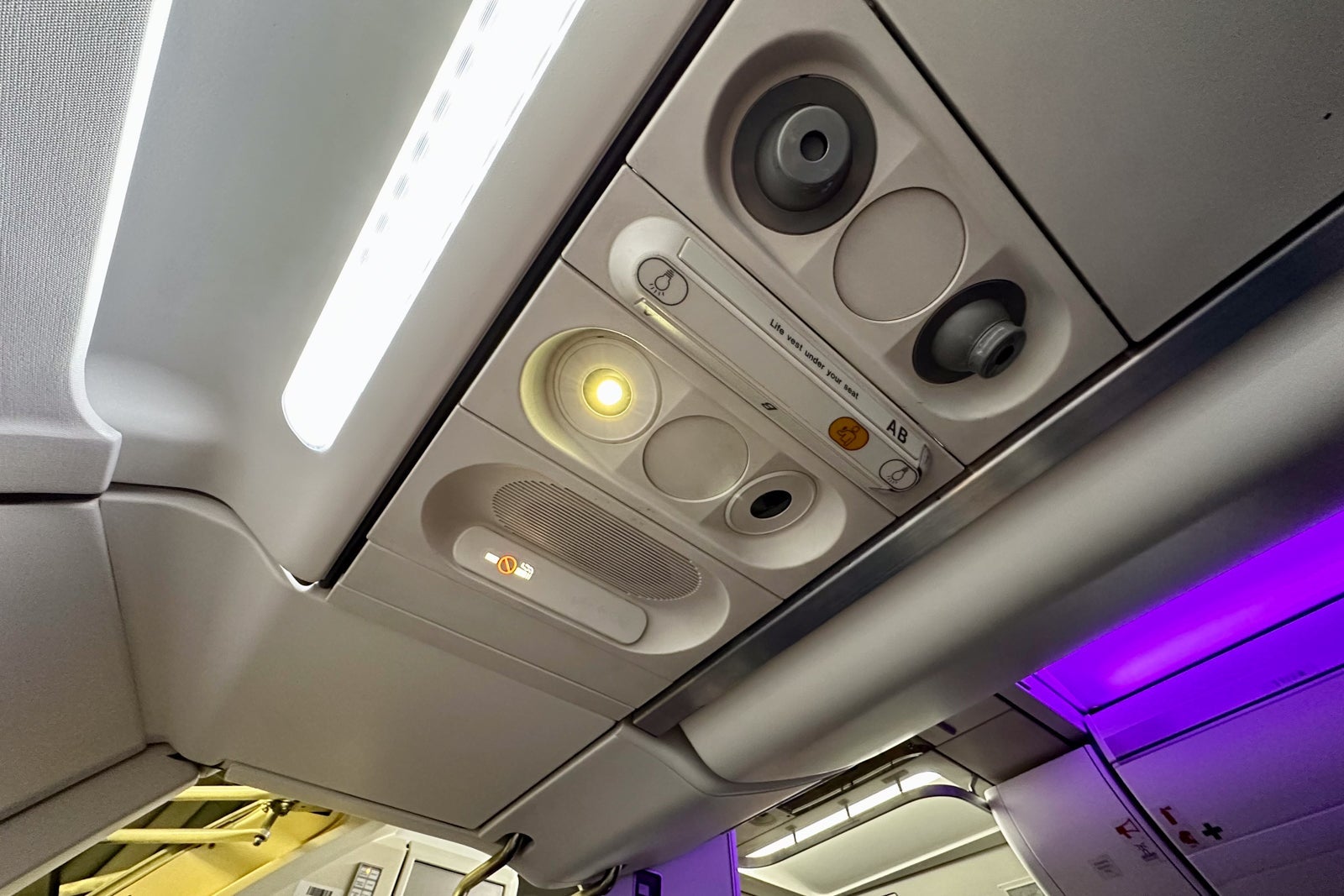
If there's one part of the onboard experience that still feels "old," it's the passenger-service unit above each seat. Unlike on Delta Air Lines, which installs futuristic units on its retrofitted planes, the service unit here looks just like it did before the retrofit with one change: You'll now enjoy brighter LED reading lights.
Bottom line
There's welcome news for United flyers: The onboard experience is getting a serious makeover with the rollout of all-new cabins across the domestic fleet.
Though the retrofit process may be taking a bit longer than initially anticipated, the upgrades are certainly worth the wait. From entertainment screens with Bluetooth connectivity to enhanced connectivity to larger overhead bins, there's lots to love about United's new signature interior.
The airline already proved that it can install a high-quality onboard product on its new planes, and now it's doing the same on its first batch of reconfigured jets.
More and more Airbus A319s will receive new cabins over the coming months, and the first retrofitted Airbus A320 (registered N438UA) just reentered service with the upgraded interior.
While United still has a ways to go, let's hope the airline can keep the momentum going for the next few years. Once the project is complete, the airline may even win some awards for its domestic travel experience.