United Airlines currently has 'no interest' in 100-seat jets

United Airlines does not need a 100-seat jet. At least according to Ankit Gupta, the man who would put such an aircraft to work across the carrier's domestic network.
"Over our five-year plan, we have no interest in buying a 100-seater," Gupta, who leads the Chicago-based carrier's domestic network planning team, said in an interview with TPG on Wednesday.
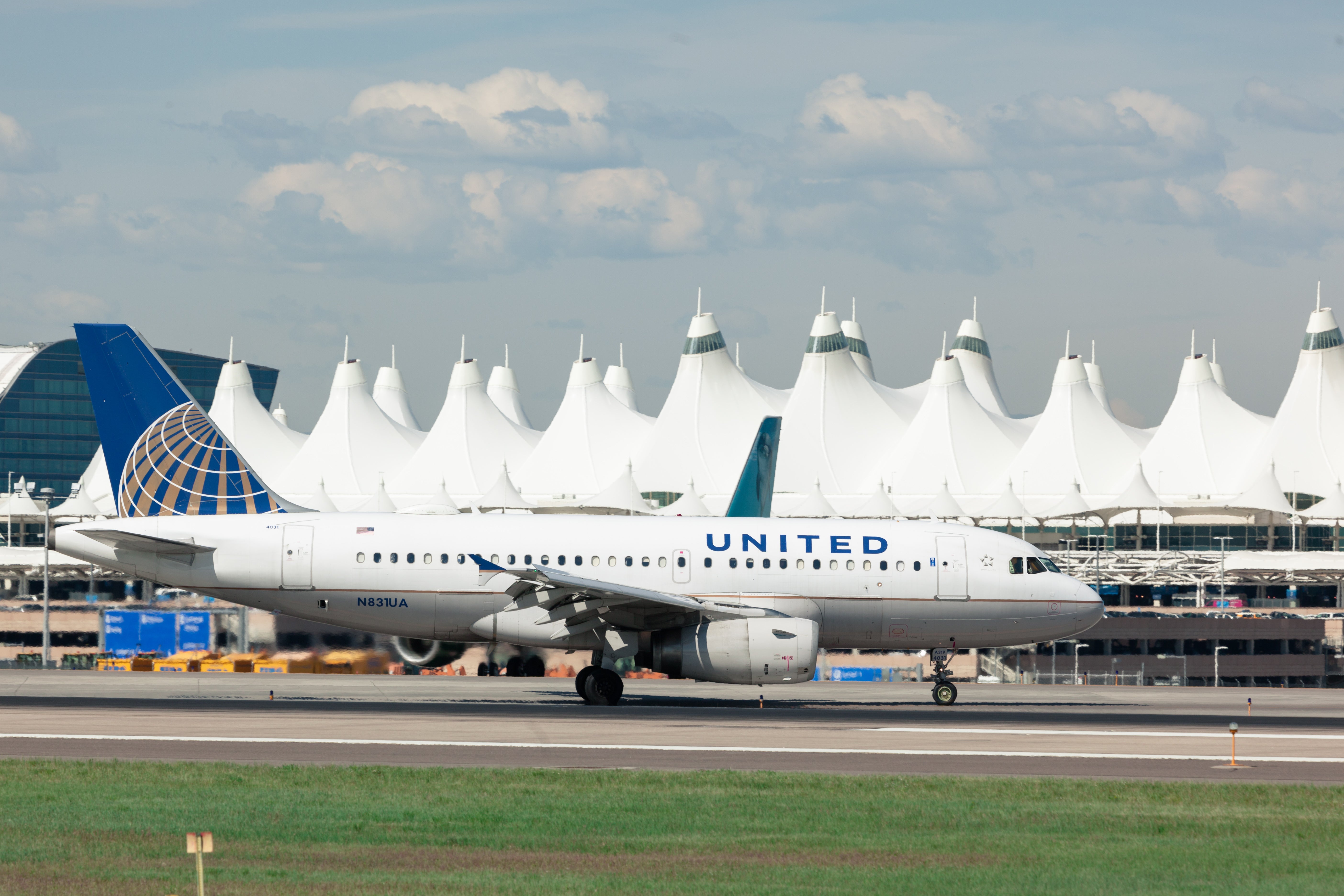
United, at least in the view echoed by Gupta, already has two aircraft in the "100-seat" segment — a misnomer of sorts as it often refers to aircraft with that can actually seat 110 to about 120 seats — the Airbus A319 and Boeing 737-700. The airline configures both types with 126 seats.
This is the latest installment in the Chicago-based carrier's on-again, off-again relationship with 100-seat mainline aircraft. Since at least 2012, speculation has swirled around whether the airline would add either the Airbus A220, previously the Bombardier CSeries, or Embraer E-Jet-E2 to its fleet.
Related: Is United inching closer to buying a 100-seat mainline aircraft?
Delta Air Lines, faced with the same decision, took the airway less traveled. The Atlanta-based carrier added the Boeing 717 to its mainline fleet in 2013 as part of a deal with its pilots that allowed it to also add more large regional jets to its feeder fleet. Today, the deal is widely viewed as a success and one that has contributed to the airline's leading financial performance this decade. (Delta also ordered almost 100 Airbus A220s, later.)
United, which has a similar agreement with its pilots, was on the cusp of ordering the CSeries — as the Airbus A220 was called then — in 2016 only to get a sweetheart deal from Boeing for 737-700s. The order was deferred and converted to larger 737-800s and 737 MAXes later in 2016.
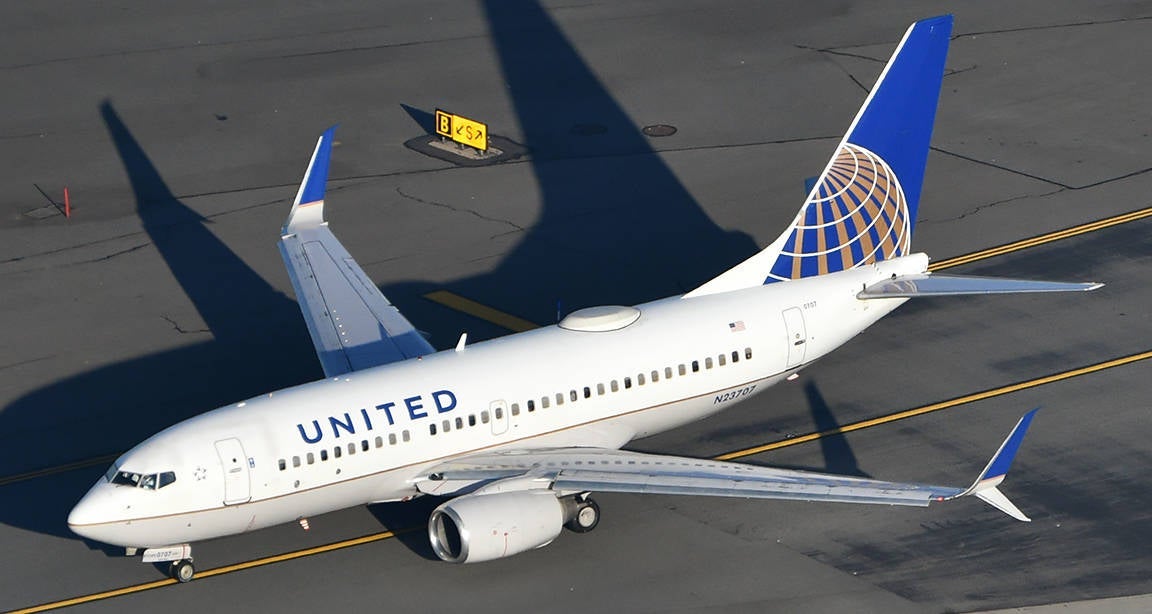
In the past few years, the airline has turned to the used aircraft market to meet its small narrow-body needs. United will add 39 used A319s and 737-700s by 2022, helping it meet its domestic growth targets —and increase the size of aircraft, or "upgauge," on select routes — over the next few years.
100-seater gap

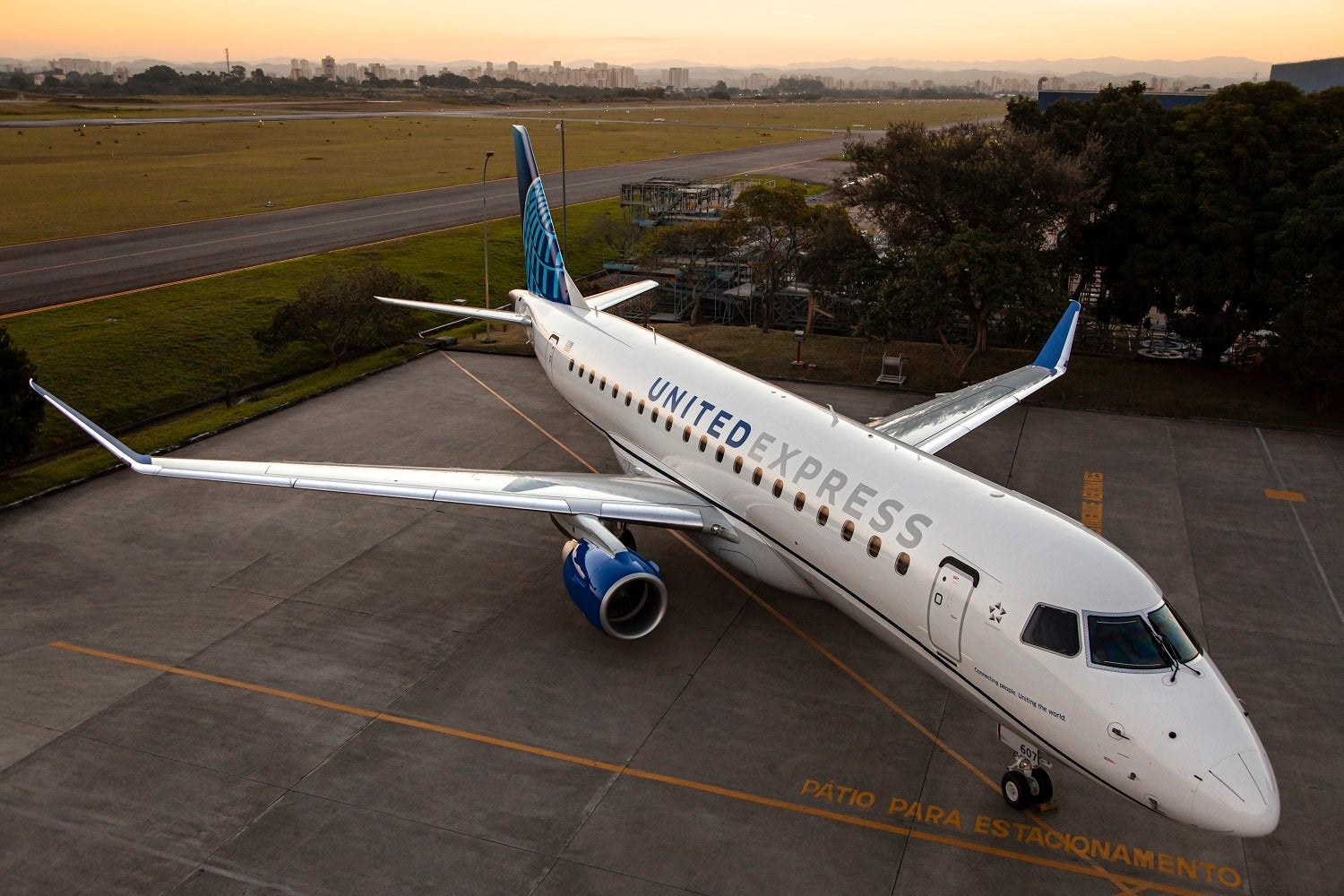
United has a gap of 50 seats between its largest regional jet — the 76-seat Embraer 175 — and the A319 and 737-700. For comparison, the gap between Delta's largest regional jet and the 717 is just 34 seats. American Airlines will have a gap of 52 seats between its largest regional jets and its mainline A319s after it phases out the 99-seat Embraer 190s next year.
Airlines can more closely tailor capacity to demand with smaller gaps between aircraft gauge. Incrementally filling 20 or 30 more seats is easier than filling 50 more, especially as carriers do not want to depress fares by adding excess capacity.
At United, the gap between the largest regional and smallest narrow-body gauge is among the largest within the company's narrow-body fleet. On the regional side, the airline contracts 50-, 70- and 76-seat jets, and on the mainline side it operates 126-, 150-, 166-, 169-, 176-, 179- and 234-seat aircraft. Only the 55-seat gap between its 737-900ERs and Boeing 757-300s is larger.
However, United has orders for 100 737 MAX 10 aircraft that will eventually slot between its two largest narrow-bodies. Executives have said that the MAX 10 will seat around 189 passengers.
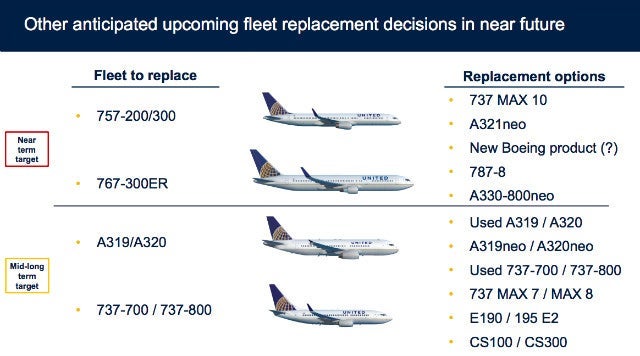
Even United CFO Gerry Laderman, in a 2017 presentation when he was treasurer, said that the A220 or E2 families were among the medium- to long-term replacement options for the airline's smaller mainline narrow-bodies.
So, why not a 100-seater now for United?
Complexity
"The A319s and 737-700s are enablers of future [gauge growth] given the complexity cost of bringing in a new fleet type," said Gupta. The key word being "complexity," something United executives — including president Scott Kirby and Laderman — have repeatedly referenced.
Adding a new type to an airline's fleet is costly, especially when it's a entirely new aircraft type and not a derivative of an aircraft already in a carrier's fleet. With an entirely new aircraft, pilots need to be hired and trained, maintenance staff familiarized and parts acquired — not to mention acquiring enough of that aircraft acquired to create economies of scale and allow for operational flexibility.
Delta took a gamble with the 717s and found the benefits outweighed the costs. United, at least in Gupta's five-year planning horizon, sees the equation weighted to the other side of the scale.
Gupta explained United's calculus on this in the language he knows best — network. United's hubs are situated in some of the largest markets in the U.S., like Chicago, New York and San Francisco, where it faces greater facility constraints than its competitors American and Delta do at their largest hubs.
Yes, American also has a hub at Chicago O'Hare (ORD) but its largest connecting complexes are expanding to accommodate its growth. Delta, similarly, has slot-constrained hubs at New York's John F. Kennedy (JFK) and LaGuardia (LGA) airports, but it also operates what is the busiest and widely acknowledged as the most efficient hub in the world in Atlanta (ATL).
United does not have this luxury at many of its hubs. Terminals are constrained pretty much everywhere, while its hubs at Newark Liberty (EWR) and San Francisco (SFO) also face notable runway and air-traffic congestion.
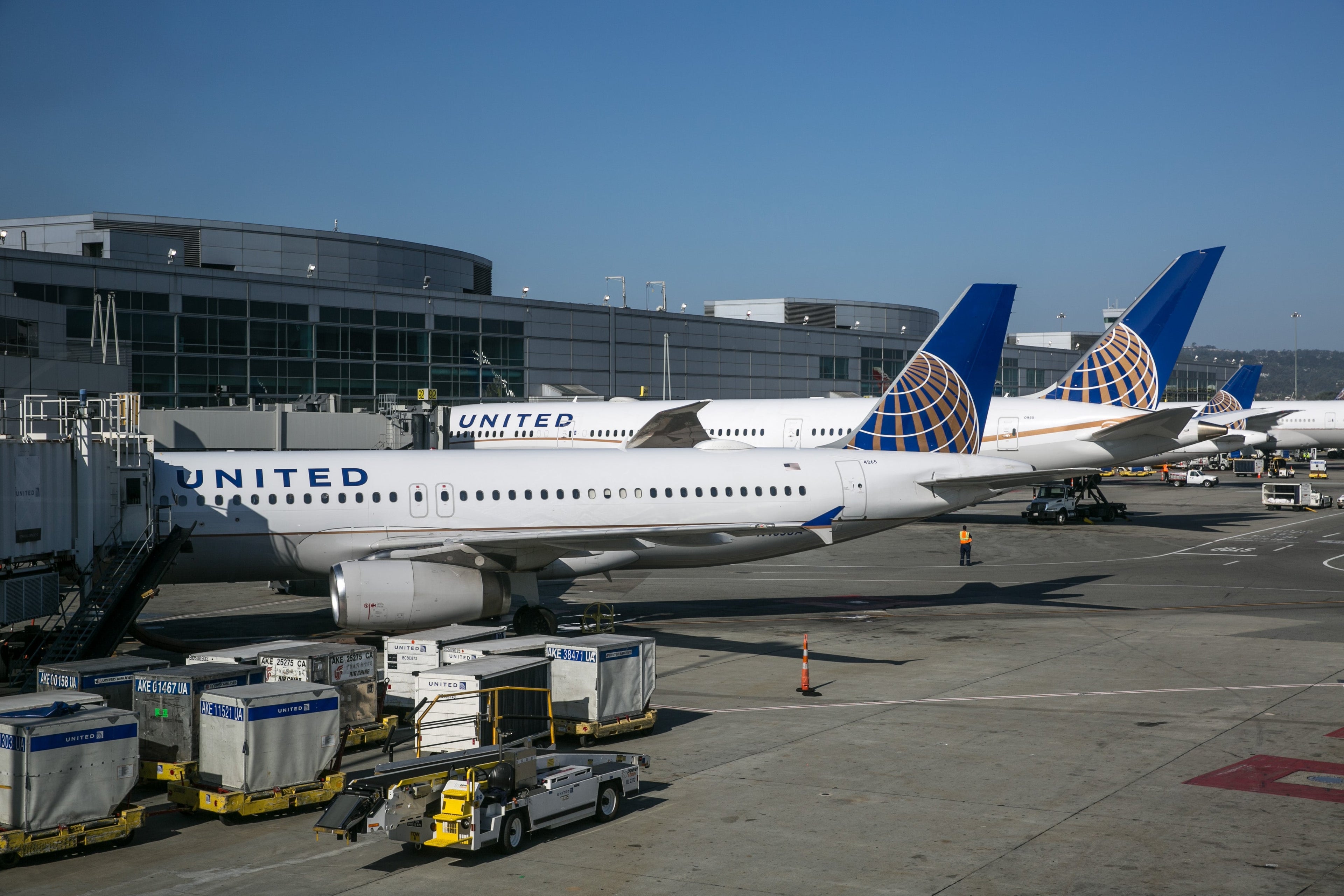
At Newark and San Francisco particularly, but elsewhere as well, the "bigger airplane will always win" when it comes to deciding on gauge, Gupta said earlier in September.
That said, 50-seat jets are still scheduled fly the highest percentage of United's flights at both Newark and San Francisco this year, according to Diio by Cirium data.
Related: United 787-10 in Polaris Business Class From LAX to Newark
Gupta acknowledged the prevalence of 50-seat jets at these airports and said they play an important role in providing a "frequency footprint" to smaller communities. This, in turn, allows United to fly even larger aircraft — for example the Boeing 787-10 on select flights between Newark and San Francisco — on more routes.
But given the choice between a 100-seat jet and either an A319 or 737-700 — or even larger narrow-body — for a flight from either Newark or San Francisco, and it's the latter any day for Gupta.
TPG featured card

at Capital One's secure site
Terms & restrictions apply. See rates & fees.
| 5X miles | Earn 5X miles on hotels, vacation rentals and rental cars booked through Capital One Travel |
| 2X miles | Earn unlimited 2X miles on every purchase, every day |
Pros
- Stellar welcome offer of 75,000 miles after spending $4,000 on purchases in the first three months from account opening. Plus, a $250 Capital One Travel credit to use in your first cardholder year upon account opening.
- You'll earn 2 miles per dollar on every purchase, which means you won't have to worry about memorizing bonus categories
- Rewards are versatile and can be redeemed for a statement credit or transferred to Capital One’s transfer partners
Cons
- Highest bonus-earning categories only on travel booked via Capital One Travel
- LIMITED-TIME OFFER: Enjoy $250 to use on Capital One Travel in your first cardholder year, plus earn 75,000 bonus miles once you spend $4,000 on purchases within the first 3 months from account opening - that’s equal to $1,000 in travel
- Earn unlimited 2X miles on every purchase, every day
- Earn 5X miles on hotels, vacation rentals and rental cars booked through Capital One Travel
- Miles won't expire for the life of the account and there's no limit to how many you can earn
- Receive up to a $120 credit for Global Entry or TSA PreCheck®
- Use your miles to get reimbursed for any travel purchase—or redeem by booking a trip through Capital One Travel
- Enjoy a $50 experience credit and other premium benefits with every hotel and vacation rental booked from the Lifestyle Collection
- Transfer your miles to your choice of 15+ travel loyalty programs
- Top rated mobile app