United's new Asia strategy: 'You don’t double down on something that does poorly'

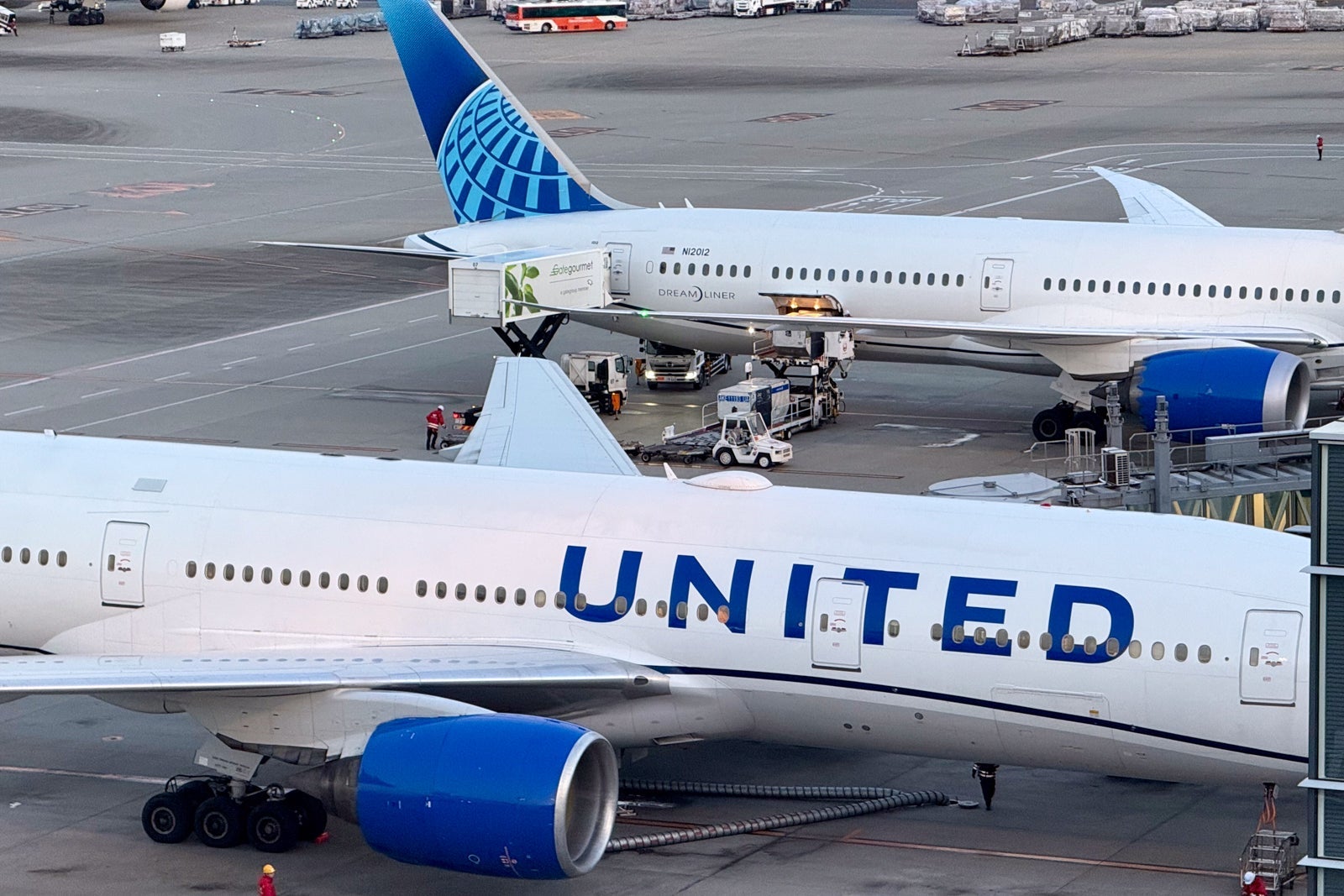
The morning of Feb. 11, 1986, was a new dawn for United Airlines. Overnight, the carrier went from offering just three flights across the Pacific Ocean to operating a full hub at Tokyo's Narita International Airport (NRT) and connecting the U.S. with at least six cities in Asia.
That hub, which United bought from Pan Am for the bargain price of $715 million (about $2 billion today when adjusted for inflation), lasted another 30 years. Then, the Chicago-based airline ended its last nonstop flight into Asia from Tokyo — which went to Seoul's Incheon International Airport (ICN) — in favor of connections with partner All Nippon Airways.
By the late 2010s, the word from United executives was that the airline could serve cities like Bangkok and Taipei, Taiwan, more profitably either nonstop from the U.S. or via a partner airline. Similarly, competitor Delta Air Lines closed its Narita hub in 2020 in favor of connections through Seoul with partner Korean Air.
When to go: These are the best times to buy an international flight
History has now come full circle.
United will launch flights from Tokyo to Chinggis Khaan International Airport (UBN) in Mongolia on May 1. Service to Kaohsiung International Airport (KHH) in Taiwan begins July 11. Both flights will operate on Boeing 737s from the carrier's hub at Guam's Antonio B. Won Pat International Airport (GUM).
The new dots on the airline's map are the latest in an experiment that tests American travelers' desire for easy access to off-the-beaten-path destinations. No longer is United happy with just ferrying travelers to Tokyo and handing them off to ANA — it instead wants to carry them on United planes in a gambit that it sees as having greater potential rewards than costs.
"We've reimagined Narita for today's world with the efficient nonstops that we have but then going after high-value traffic [to] hard-to-reach places that we can offer a unique selling proposition for," Patrick Quayle, who leads global network planning and alliances at United, said in an interview.
Reimagining Tokyo Narita
United can reimagine Narita thanks to two unique aspects of its business.

The first is the Pan Am assets it bought years ago. The assets came with the rare right to fly passengers beyond Tokyo to other countries (something that is known as "fifth freedom" in aviation parlance). United kept those rights even when it ended intra-Asia flights from Tokyo in 2017.
Fifth-freedom routes are rare, but not unheard of, among global airlines. Some of the best known — and maybe most controversial — are the ones Emirates flies between Athens International Airport (ATH) and Newark Liberty International Airport (EWR); Milan Malpensa Airport (MXP) and John F. Kennedy International Airport (JFK); and Miami International Airport (MIA) and Bogota's El Dorado International Airport (BOG). Travelers can buy tickets on these routes without ever flying through the carrier's Dubai base.
The second unique aspect working in United's favor is that the airline gained a hub in Guam through its merger with Continental Airlines in 2010. The Boeing 737s there give United the option to serve secondary cities in Asia with a plane almost half the size of the larger Boeing 777s and 787s that it flies nonstop from the mainland U.S.
Those attributes prompted the carrier to give a Tokyo hub one more try. It first tested flights from Narita to Mactan-Cebu International Airport (CEB) in the Philippines beginning in October 2024, and it added Palau International Airport (ROR) this April.
"We have these 737s and a slot portfolio at Narita, and all the feed from the United States on wide-body jets, and it created a unique opportunity," Andrew Nocella, United's chief commercial officer, said on The Air Show podcast last June. "This seemed like something we would like to try, and the advanced bookings indicate that it's going to be very successful."
United doubles down on intra-Asia routes
Quayle was coy when asked about Cebu — United's first intra-Asia route from Tokyo in seven years. He said only that the airline aims for "double-digit" margins across its network.
"You don't double down on something that does poorly, I'll just put it that way," he added.
And if the new routes from Tokyo to Taiwan, Palau and Mongolia were not proof enough of success, United has unveiled plans to add new connections via Hong Kong International Airport (HKG) to Bangkok's Suvarnabhumi Airport (BKK) and Ho Chi Minh City's Tan Son Nhat International Airport (SGN) in October.
United also has the right to fly fifth-freedom routes from Hong Kong. Remember its short-lived, round-the-world flight in the 1990s that stopped in Hong Kong en route to Delhi and London? Those rights allow it to add the new Bangkok and Ho Chi Minh City nonstops.
But these are not "tag" flights in the traditional sense. Brett Snyder, founder of Cranky Concierge and author of the Cranky Flier blog, put it well when he said: "A single 787 can connect perfectly to and from the four flights over the Pacific. And those four flights over the Pacific just happen to be split into two banks with the same cities served. It makes this an easy set-up."
Analyzing United's proposed schedules, Snyder found that United could fly both routes from Hong Kong with a single plane and that each intra-Asia flight would connect to two U.S.-bound flights: one to Los Angeles International Airport (LAX) and another to San Francisco International Airport (SFO).
None of this logic guarantees success, however. Bangkok and Ho Chi Minh City are two destinations that United travelers can already easily access via ANA and other partners. The airline is betting that there's enough traffic to make its own flights profitable.
The current geopolitical situation — wherein the U.S. is at odds with many countries amid President Donald Trump's trade war — certainly does not improve the odds of success for United's global expansion. Already, foreign arrivals to the U.S. from Canada and Western Europe are down.
But Quayle remains confident that the new routes will pay off.
"It's going to get to a point where we're going to have to add more capacity into Narita because the demand is so strong," he said.
Related reading:
- United Airlines MileagePlus: Guide to earning and redeeming miles, elite status and more
- The best credit cards for United Airlines flyers
- United Premier status: How to earn it — and is it worth it?
- Maximize your airfare: The best credit cards for booking flights
- The best credit cards to reach elite status
- How to survive basic economy on United Airlines
TPG featured card
at American Express's secure site
Terms & restrictions apply. See rates & fees.
| 4X | Earn 4X Membership Rewards® points per dollar spent on purchases at restaurants worldwide, on up to $50,000 in purchases per calendar year, then 1X points for the rest of the year. |
| 4X | Earn 4X Membership Rewards® points per dollar spent at US supermarkets, on up to $25,000 in purchases per calendar year, then 1X points for the rest of the year. |
| 5X | Earn 5X Membership Rewards® points on prepaid hotel stays booked through AmexTravel.com or the Amex Travel App™. |
| 3X | Earn 3X Membership Rewards® points on flights booked through AmexTravel.com, the Amex Travel App™, or purchased directly from airlines. |
| 2X | Earn 2X Membership Rewards® points on prepaid car rentals booked through AmexTravel.com or the Amex Travel App™ and cruises booked and paid through AmexTravel.com. |
| 1X | Earn 1X Membership Rewards® point per dollar spent on all other eligible purchases. |
Pros
- Valuable dining and food-related credits
- Flexible rewards with airline and hotel transfer partners
- Multiple travel and purchase protections
- No foreign transaction fees
- Access to Amex Offers for additional savings (enrollment required)
Cons
- Not as useful for those living outside the U.S.
- Some may have trouble using Uber and other dining credits
- You may be eligible for as high as 100,000 Membership Rewards® Points after you spend $8,000 in eligible purchases on your new Card in your first 6 months of Card Membership. Welcome offers vary and you may not be eligible for an offer. Apply to know if you’re approved and find out your exact welcome offer amount – all with no credit score impact. If you’re approved and choose to accept the Card, your score may be impacted.
- Earn 4X Membership Rewards® points per dollar spent on purchases at restaurants worldwide, on up to $50,000 in purchases per calendar year, then 1X points for the rest of the year.
- Earn 4X Membership Rewards® points per dollar spent at US supermarkets, on up to $25,000 in purchases per calendar year, then 1X points for the rest of the year.
- Earn 5X Membership Rewards® points on prepaid hotel stays booked through AmexTravel.com or the Amex Travel App™.
- Earn 3X Membership Rewards® points on flights booked through AmexTravel.com, the Amex Travel App™, or purchased directly from airlines.
- Earn 2X Membership Rewards® points on prepaid car rentals booked through AmexTravel.com or the Amex Travel App™ and cruises booked and paid through AmexTravel.com.
- Earn 1X Membership Rewards® point per dollar spent on all other eligible purchases.
- Pay It® lets you tap in the American Express® App to quickly pay for small purchase amounts throughout the month and still earn rewards the way you usually do. Plan It® gives you the option to split up big purchases into equal monthly payments with a fixed fee. You’ll know upfront exactly how much you’ll pay.
- $120 Dining Credit: Earn up to a total of $10 in statement credits monthly when you pay with the Gold Card at Grubhub (including Seamless), Buffalo Wild Wings, Five Guys, The Cheesecake Factory, and Wonder. This can be an annual savings of up to $120. Enrollment required.
- $100 Resy Credit: Get up to $100 in statement credits each calendar year at over 10,000 qualifying U.S. Resy restaurants after you pay for eligible purchases with the American Express® Gold Card. That’s up to $50 in statement credits semi-annually. Enrollment required.
- $84 Dunkin' Credit: Earn up to $7 in monthly statement credits after you pay with the American Express® Gold Card at U.S. Dunkin’ locations. Enrollment required.
- $120 Uber Cash on Gold: Enjoy up to $120 in Uber Cash annually with your Gold Card. Just add your Card to your Uber account and you'll get $10 in Uber Cash each month to use on orders and rides in the U.S. when you select an Amex Card for your transaction.
- Enjoy complimentary Hertz Five Star® Status benefits like skipping the counter at select locations, adding an additional driver at no additional cost*, and vehicle upgrades**. Benefit enrollment and Hertz Gold+ registration are required. *Additional drivers must meet standard rental qualifications and must be a spouse or domestic partner to qualify as complimentary. Other additional drivers subject to fees. **Benefits are subject to availability and vary by location. Additional Hertz program Terms and Conditions including age restrictions apply.
- Book two nights or more with The Hotel Collection through AmexTravel.com and receive a $100* credit towards eligible charges at over 1,300 upscale hotels worldwide.§ *Eligible charges vary by property.
- Book your travel through the Amex Travel App™ with added peace of mind – backed by American Express® service and support. Only for American Express® Card Members.
- Whenever you need us, we're here. Our Member Services team will ensure you are taken care of. From lost Card replacement to statement questions, we are available to help 24/7.
- No Foreign Transaction Fees.
- Annual Fee is $325.
- Terms Apply.