Insider Series: How Are TSA Officers Trained?

TPG Contributor "Patrick Down" is presently employed as a TSA officer at a US airport. In this installment of our Insider Series, he answers a question he's frequently asked: What does it take to become a TSA officer?
The general requirements for being a TSA officer (TSO) are a high school diploma or GED, a clean criminal history and a fair credit score. You also can't be color blind or deaf, and you have to be able to lift 50 pounds — but that's pretty much it. For most new hires, the biggest hurdle is making it through the training process — not because it's actually difficult, but because it's pretty damn tedious.

When I was first hired on in 2011, I knew very little about the TSA. I had a relative who worked for US Customs and Border Protection and knew that they'd been sent to the Federal Law Enforcement Training Center (FLETC) in Georgia for three months to receive their training — and I assumed, rather excitedly, I would be doing something similar. My dreams of running obstacle courses and being taught hand-to-hand combat were quickly dashed on my first day, when it was explained that I'd be receiving one month of classroom training before being sent to the checkpoint as an On the Job Trainee (OJT).
My training instructor was one of the good ones, but let's face it, there's only so much you can do to cover for poorly written government-contract PowerPoints. For four long weeks, I found myself either sitting through bone-dry presentations or memorizing TSA's arcane (and occasionally contradictory) Standard Operating Procedures (SOPs).
There are at least six separate SOPs that a typical TSO is required to learn — Checkpoint, Travel Document Checker, Advanced Imaging Technology, Precheck, Managed Inclusion and Checked Baggage — and each SOP contains a minimum of 50 pages' worth of rules. This staggering page count inspires many working TSOs to either creatively interpret or utterly ignore some rules, resulting in screening procedures that vary from airport to airport.

Newly hired TSOs are also taught how to operate the different types of screening equipment and how to perform pat-downs and bag searches, and they're given a quick primer on how to interact with the public. Most of this information is extremely dull and repetitive ... with the exception of learning the basic components of explosives. That's as close as training gets to FLETC territory.
Once TSOs finish this month of in-class training, they begin their three months of on-the-job training. During this period, a newly hired TSO is paired with a mentor who's tasked with watching and correcting the new hire's every action for the next three months. This is one of the reasons you'll occasionally see a TSO who appears to be doing nothing; if they're simply standing next to or shadowing another TSO, they're probably mentoring a trainee.

Having a more senior officer mentor a new hire is a good idea on TSA's part, but as with many things the agency touches, it often drops the ball in implementation. For instance, almost no thought is given to matching up the mentors and new hires based on their personality types/temperaments; I've often seen surly, jaded TSOs pass on their bad attitudes to optimistic new hires, receiving no reprimand for their behavior and creating yet another difficult team member.
Once a new hire's three months are up, he or she must pass three tests to demonstrate their competence with X-ray screening, ability to perform a proper bag search and pat-down aptitude. Once these three tests have been completed, a TSO's training is finished, and right away, they're usually given a part-time schedule of screening, searching and patting at an airport near you.


That new TSO officer who's about to scan you and your luggage has proven not only that he or she can perform required tasks, but also withstand daily tedium while staying alert and focused. With this in mind, the training seems perfectly designed to fit the job.
One thing that makes the boredom of training worthwhile is the crazy stuff I find while at work — so be sure to stay tuned for my next "Insider Series" installment!
[card card-name='Citi Prestige® Card' card-id='221410589' type='javascript' bullet-id='1']
TPG featured card
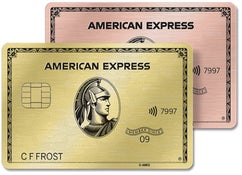
at American Express's secure site
Terms & restrictions apply. See rates & fees.
| 4X | Earn 4X Membership Rewards® points per dollar spent on purchases at restaurants worldwide, on up to $50,000 in purchases per calendar year, then 1X points for the rest of the year. |
| 4X | Earn 4X Membership Rewards® points per dollar spent at US supermarkets, on up to $25,000 in purchases per calendar year, then 1X points for the rest of the year. |
| 5X | Earn 5X Membership Rewards® points on prepaid hotel stays booked through AmexTravel.com or the Amex Travel App™. |
| 3X | Earn 3X Membership Rewards® points on flights booked through AmexTravel.com, the Amex Travel App™, or purchased directly from airlines. |
| 2X | Earn 2X Membership Rewards® points on prepaid car rentals booked through AmexTravel.com or the Amex Travel App™ and cruises booked and paid through AmexTravel.com. |
| 1X | Earn 1X Membership Rewards® point per dollar spent on all other eligible purchases. |
Pros
- Valuable dining and food-related credits
- Flexible rewards with airline and hotel transfer partners
- Multiple travel and purchase protections
- No foreign transaction fees
- Access to Amex Offers for additional savings (enrollment required)
Cons
- Not as useful for those living outside the U.S.
- Some may have trouble using Uber and other dining credits
- You may be eligible for as high as 100,000 Membership Rewards® Points after you spend $8,000 in eligible purchases on your new Card in your first 6 months of Card Membership. Welcome offers vary and you may not be eligible for an offer. Apply to know if you’re approved and find out your exact welcome offer amount – all with no credit score impact. If you’re approved and choose to accept the Card, your score may be impacted.
- Earn 4X Membership Rewards® points per dollar spent on purchases at restaurants worldwide, on up to $50,000 in purchases per calendar year, then 1X points for the rest of the year.
- Earn 4X Membership Rewards® points per dollar spent at US supermarkets, on up to $25,000 in purchases per calendar year, then 1X points for the rest of the year.
- Earn 5X Membership Rewards® points on prepaid hotel stays booked through AmexTravel.com or the Amex Travel App™.
- Earn 3X Membership Rewards® points on flights booked through AmexTravel.com, the Amex Travel App™, or purchased directly from airlines.
- Earn 2X Membership Rewards® points on prepaid car rentals booked through AmexTravel.com or the Amex Travel App™ and cruises booked and paid through AmexTravel.com.
- Earn 1X Membership Rewards® point per dollar spent on all other eligible purchases.
- Pay It® lets you tap in the American Express® App to quickly pay for small purchase amounts throughout the month and still earn rewards the way you usually do. Plan It® gives you the option to split up big purchases into equal monthly payments with a fixed fee. You’ll know upfront exactly how much you’ll pay.
- $120 Dining Credit: Earn up to a total of $10 in statement credits monthly when you pay with the Gold Card at Grubhub (including Seamless), Buffalo Wild Wings, Five Guys, The Cheesecake Factory, and Wonder. This can be an annual savings of up to $120. Enrollment required.
- $100 Resy Credit: Get up to $100 in statement credits each calendar year at over 10,000 qualifying U.S. Resy restaurants after you pay for eligible purchases with the American Express® Gold Card. That’s up to $50 in statement credits semi-annually. Enrollment required.
- $84 Dunkin' Credit: Earn up to $7 in monthly statement credits after you pay with the American Express® Gold Card at U.S. Dunkin’ locations. Enrollment required.
- $120 Uber Cash on Gold: Enjoy up to $120 in Uber Cash annually with your Gold Card. Just add your Card to your Uber account and you'll get $10 in Uber Cash each month to use on orders and rides in the U.S. when you select an Amex Card for your transaction.
- Enjoy complimentary Hertz Five Star® Status benefits like skipping the counter at select locations, adding an additional driver at no additional cost*, and vehicle upgrades**. Benefit enrollment and Hertz Gold+ registration are required. *Additional drivers must meet standard rental qualifications and must be a spouse or domestic partner to qualify as complimentary. Other additional drivers subject to fees. **Benefits are subject to availability and vary by location. Additional Hertz program Terms and Conditions including age restrictions apply.
- Book two nights or more with The Hotel Collection through AmexTravel.com or the Amex Travel App™ and receive a $100* credit towards eligible charges at over 1,400 upscale hotels worldwide. *Eligible charges vary by property.
- Book your travel through the Amex Travel App™ with added peace of mind – backed by American Express® service and support. Only for American Express® Card Members.
- Whenever you need us, we're here. Our Member Services team will ensure you are taken care of. From lost Card replacement to statement questions, we are available to help 24/7.
- No Foreign Transaction Fees.
- Annual Fee is $325.
- Terms Apply.