These Airlines Charge the Most Extra Fees

Fees, fees, and more fees — the airline industry is full of them, and there seems to be a new one every month.
These fees make up a large portion of many airline's revenue. Specifically referred to as ancillary fees, these extras include paying for things like checked bags, seat selection or on-board food — essentially whatever's not included in the initial cost of the ticket.
IdeaWorksCompany released its annual ancillary revenue rankings showing the top 10 carriers based on average fees charge per passenger:
- Spirit: $51 per passenger
- WOW Air: $49 per passenger
- Allegiant: $49 per passenger
- Frontier: $48 per passenger
- Jet2.com: $43 per passenger
- Qantas Airways: $43 per passenger
- United: $39 per passenger
- AirAsia X: $33 per passenger
- HK Express: $33 per passenger
- Wizz Air: $31 per passenger
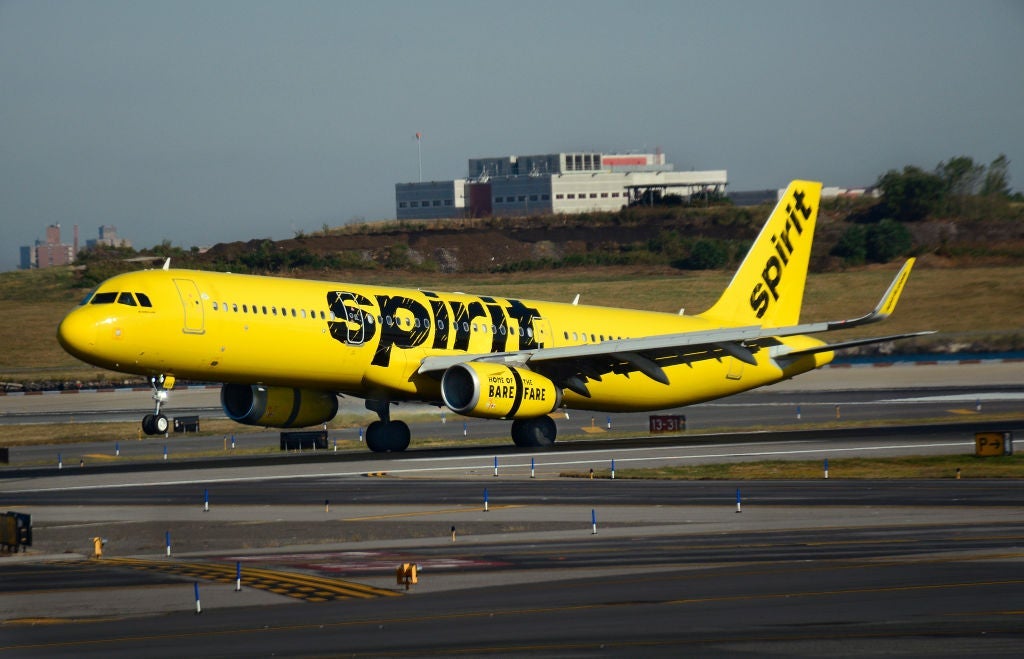
Not surprisingly, the list was full of ultra-low cost carriers. US-based Spirit Airlines topped the rankings with its fees averaging $51 per passenger. Tied for second was Icelandic ULCC WOW Air and Allegiant, with Frontier coming in at close fourth.
Surprisingly, Qantas and United, both large legacy carriers ranked six and seven, respectively. This is likely due to the recent implementation of basic economy fares (even on international routes) and other fees by larger carriers so their fares can stay competitive with budget carriers. Remember, you can use a co-branded credit card to get around many basic economy fees — most provide free checked bags.
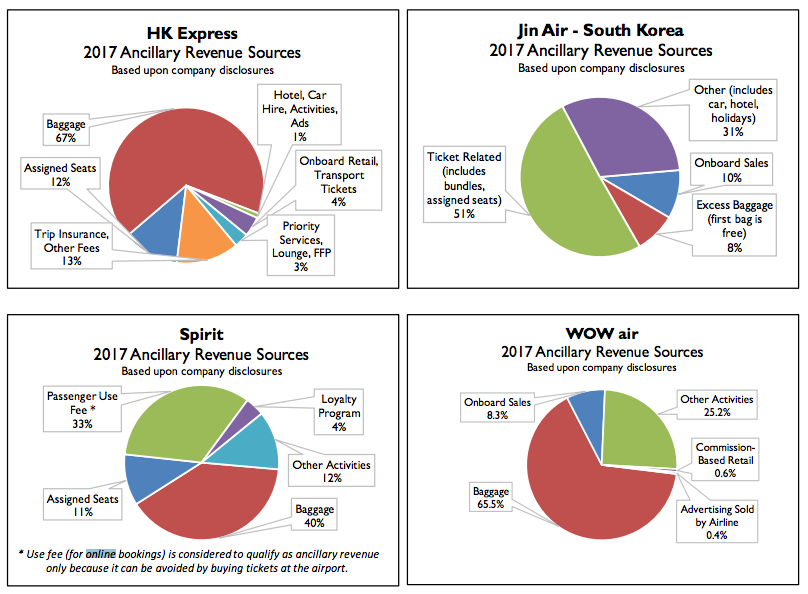
IdeaWorks found that baggage was the biggest income generator in the category of ancillary fees, which makes sense considering it's quite hard to travel without any sort of luggage. It also discovered that one of the biggest boosts to Spirit's ancillary revenue was its online booking fee, making up 33% of that revenue source. Surprisingly, it can actually be avoided if you book your ticket with a Spirit agent at one of their airport locations .

Spirit came in first on another list, which ranked ancillary revenue as a percent of total revenue:
- Spirit - 46.6%
- VivaAeroBus - 43.6%
- Frontier - 42.4%
- Wizz Air - 41.6%
- Allegiant - 39.8%
- Volotea - 34.2%
- WOW Air - 28.5%
- Ryanair - 28.2%
- Volaris - 27.7%
- Jet2.com - 27.6%
Predictably, the list is full of low-cost carriers who's business models are essentially based on the bet that most passengers will be tacking on a thing or two to their tickets.
A final comparison ranked the revenue from frequent flyer programs in terms of how large of a chunk it contributed to their total ancillary revenue:
- Southwest - 79%
- Alaska - 64%
- American - 59%
- Delta - 56%
- Lufthansa Group - 43%
- United - 41%
- Air Canada - 41%
- Air France/KLM - 20%
Southwest and Alaska likely came out on top since neither have basic economy fares and Southwest doesn't charge for the first two checked bags of every passenger.
For those who follow the industry, this news won't come as a shock — airlines rely heavily on their frequent flyer programs and miles purchased by banks through credit card co-brand relationships to boost their profits. Delta receives about 35% of its revenue by selling miles to American Express and American about 50% through its co-brand relationships.
TPG featured card

at Capital One's secure site
Terms & restrictions apply. See rates & fees.
| 5X miles | Earn 5X miles on hotels, vacation rentals and rental cars booked through Capital One Travel |
| 2X miles | Earn unlimited 2X miles on every purchase, every day |
Pros
- Stellar welcome offer of 75,000 miles after spending $4,000 on purchases in the first three months from account opening. Plus, a $250 Capital One Travel credit to use in your first cardholder year upon account opening.
- You'll earn 2 miles per dollar on every purchase, which means you won't have to worry about memorizing bonus categories
- Rewards are versatile and can be redeemed for a statement credit or transferred to Capital One’s transfer partners
Cons
- Highest bonus-earning categories only on travel booked via Capital One Travel
- LIMITED-TIME OFFER: Enjoy $250 to use on Capital One Travel in your first cardholder year, plus earn 75,000 bonus miles once you spend $4,000 on purchases within the first 3 months from account opening - that’s equal to $1,000 in travel
- Earn unlimited 2X miles on every purchase, every day
- Earn 5X miles on hotels, vacation rentals and rental cars booked through Capital One Travel
- Miles won't expire for the life of the account and there's no limit to how many you can earn
- Receive up to a $120 credit for Global Entry or TSA PreCheck®
- Use your miles to get reimbursed for any travel purchase—or redeem by booking a trip through Capital One Travel
- Enjoy a $50 experience credit and other premium benefits with every hotel and vacation rental booked from the Lifestyle Collection
- Transfer your miles to your choice of 15+ travel loyalty programs
- Top rated mobile app