The Queen and I: Saying Goodbye to the 747 at United Airlines’ Farewell Ceremony


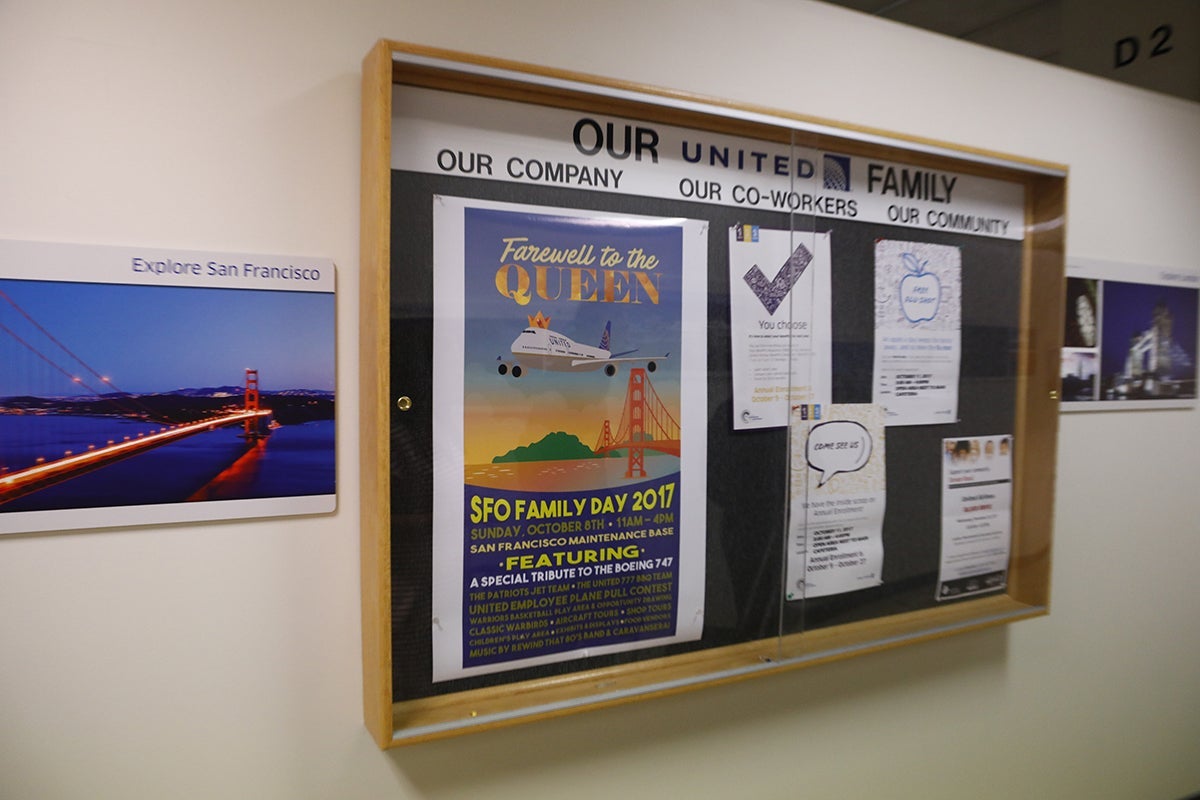
When I saw the poster, I felt a lump in my throat: Farewell to the Queen, it said, in an oddly cheerful typeface. The Queen herself appeared at the top, wearing her crown, her unmistakable face familiar to millions.
But I was not in a funeral procession for a beloved monarch, and my fellow mourners were not her subjects. I was in a neon-lit hallway at the United Airlines maintenance center in San Francisco, with a few thousand other aviation lovers, and the queen we were there to see wasn't even, strictly speaking, a real one. She was the Queen of the Skies: the Boeing 747, known by that regal nickname since entering service with Pan Am in 1969. And we were all there to say goodbye, before the most recognizable airplane ever made was to leave the United fleet.
United is retiring its 747s on Tuesday after 47 years of service, with a final flight from San Francisco to Honolulu. Delta Airlines will follow with its own last 747 flight in December, marking the end of scheduled "Jumbo Jet" service by US carriers. On October 7, United held a farewell ceremony befitting the airplane that had been its flagship since 1970; it turned its annual Family Day into a daylong party to celebrate the 747 and brought two of the planes to the show.
I had traveled from New York to be there in person, with a group of TPG staffers and 100 readers chosen through a Twitter contest. The United flight that had brought my colleagues and me to San Francisco the day before had been an uneventful cross-country hop in a 777-300ER, the modern and fuel-efficient twinjet that's replacing the 747 and its four thirsty engines. A lovely flight in Polaris class, sure, but with none of the romance of the Jumbo Jet. The 777 is a mighty fine machine, but it's not the airplane that embodied the golden age of aviation, when crossing oceans was still a big deal, and a 747 was the most glamorous way to do it.
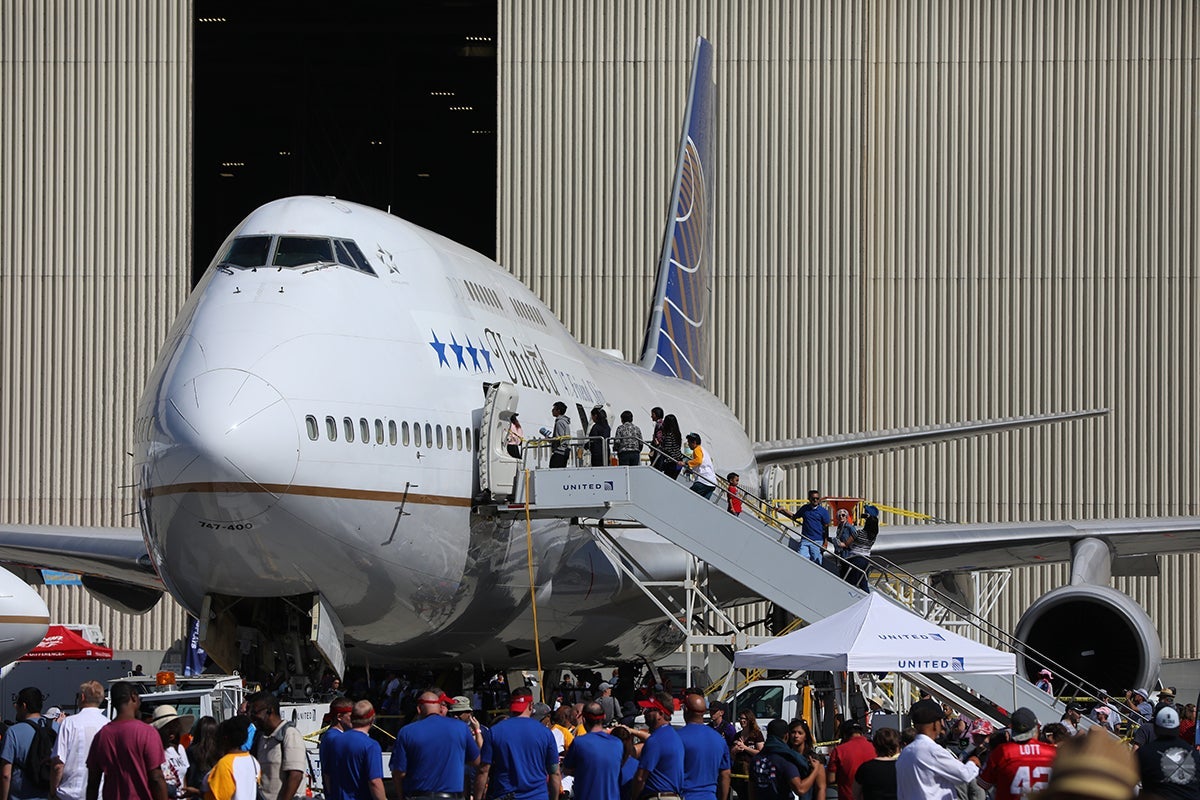
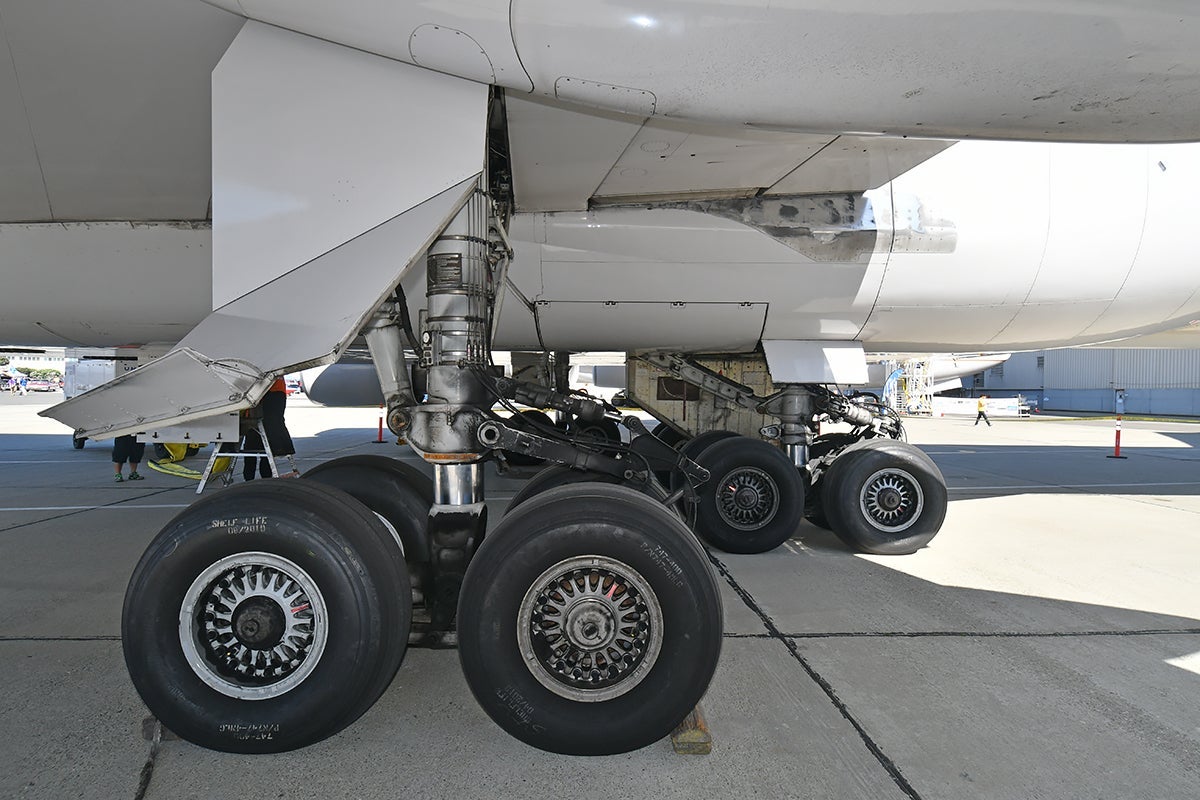
The next day, making my way around one of the two Jumbos on display, it dawned on me that the United 747s and I are exactly the same age — both 1970 vintage. Granted, today's United Jumbos are 747-400 models, updated versions from the late 1980s that share little with the original birds. But they are 747s all right, and I could feel the magic as I stood next to the enormous landing gears, thinking of the many touchdowns they had seen all over the world.
Once inside, I sat at the controls, the four throttles controlling 230,000 pounds of thrust in my hand, trying to imagine what unleashing all that power would feel like. Behind me, Captain Denna Gollner, a 15-year veteran of the 747, was graciously ushering visitors into the cockpit — and making no effort to hide her own nostalgia. She will fly the 787 next, and I asked her what she would miss. "Everything," she replied. "It was a fabulous airplane."
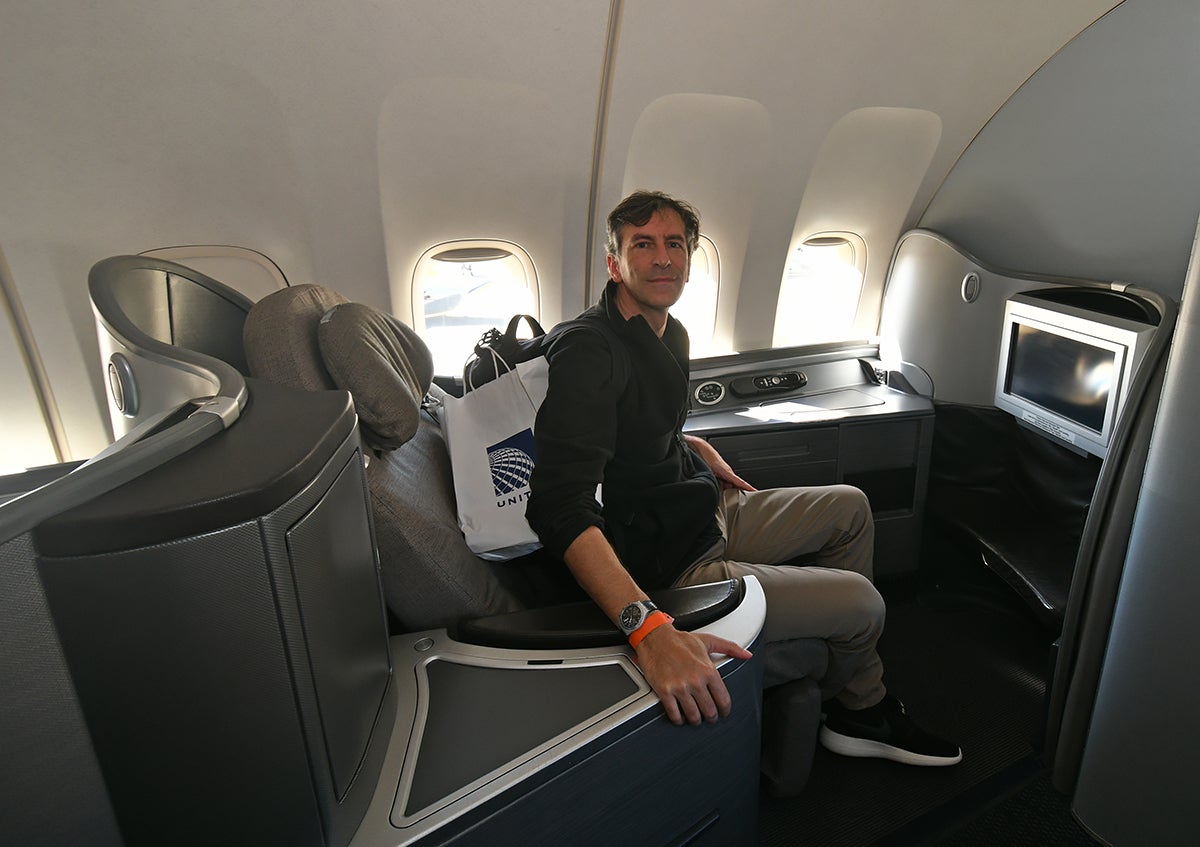
The past tense was appropriate: The yoke in my left hand was worn from decades of use, the paint on the dashboard chipped. The cabin I had walked through to reach the flight deck was great in the 1990s, but today, it's hopelessly dated. Business class was in a 2-4-2 layout, an arrangement that creates not one but two middle seats, a huge competitive disadvantage when rivals are flying business cabins with enclosed individual suites. Economy had no individual video screens, a throwback to 20 years ago. And first class, a relic that United will retire on long-haul flights when the Queen goes, looked barely on a par with today's best business classes.

But that's not why the Queen earned her title. She got it when she stunned the world upon her appearance, the largest passenger airplane in history. It was a record she held for almost four decades, until the Airbus A380 arrived.
But the Airbus giant doesn't stir the same emotions. In fact, I've never even flown on the 380 — hard to admit for a frequent-flying AvGeek. But the Queen and I go way back.

My first 747 flight was on Alitalia in the 1980s, when an enterprising high school student enamored with aviation could snag a jumpseat on the flight deck. On the Rome to Milan portion of a transatlantic route, I sat behind the captain, marveling at the number of dials and gauges in the cockpit of that classic 747-200 model, built before the age of digital instruments.
And, in an important moment for a future TPG editor, it was on a 747 that I got my first upgrade — as a college student on my first visit to New York, when a Swissair check-in employee in Zurich informed me and two friends that, due to overbooking, the coach class tickets we had scrounged for were being bumped to business.
Many years later, a Virgin Atlantic 747 brought my new wife and me back to New York, our chosen city, from our Roman wedding: another milestone marked by the Queen of the Skies.
And from seat 1A in that outdated first class on the United jet, I could see out the window almost in front of the plane, because of the 747's unique nose shape. What other airplane gives you that thrill?
Next to the two Jumbos, United had parked its most modern jet, a 787, as if to underscore the changeover. The Dreamliner — a nice enough name from Boeing's marketing department, but nothing like "Queen of the Skies" — gleamed under a perfect California sun.
While I waited to take a look inside, United mechanic James Butler told me some of his 747 stories. "This is my bird," he said proudly, gesturing towards the Jumbo behind us, fleet number 8418. It had been delivered new from the Boeing factory in February 1999, "two months after I was hired on," he recalled. Like Captain Gollner, he's moving on to the 787, but the Queen has his heart.
That was clear when his old buddy from the United shop, Paul Clem, recalled with him the time they had taxied a 747 at full power during a maintenance stop. They were still giddy with excitement as they told the story, their own breathtaking adventure with the Jumbo Jet.
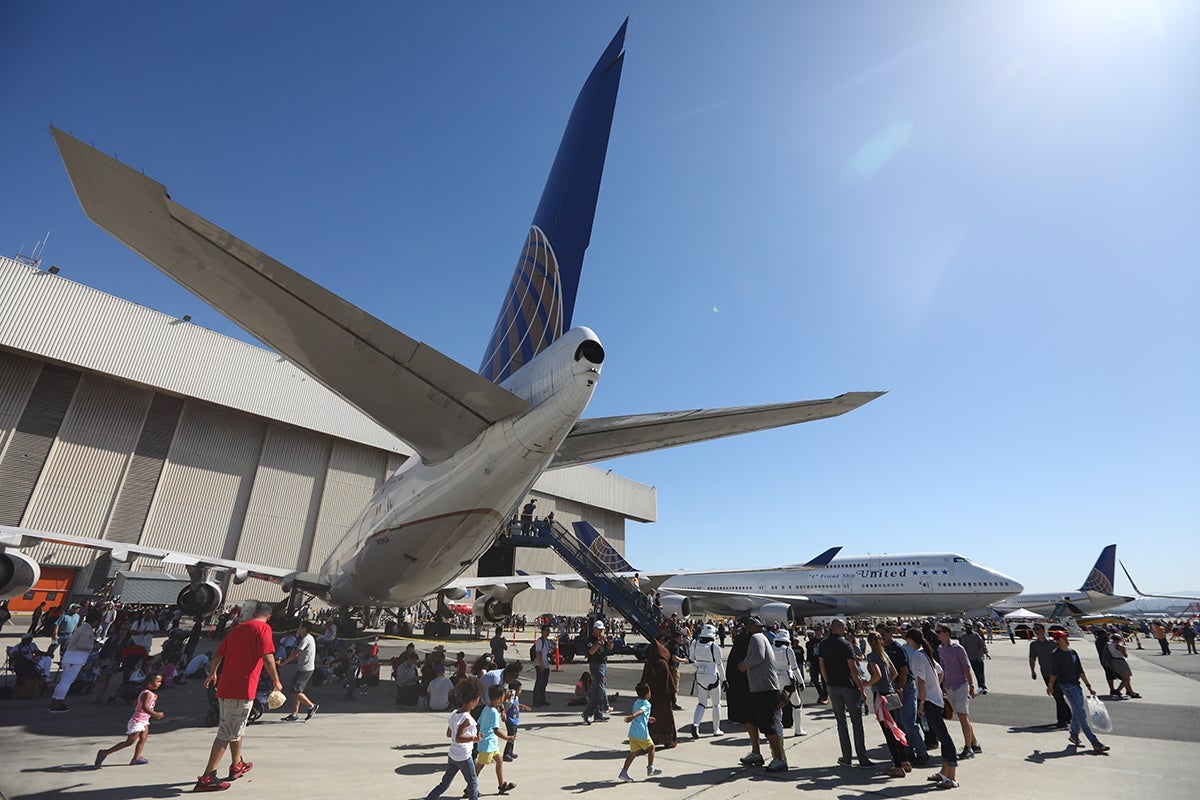
Later, while leaving the Dreamliner and looking from the top of the stairs at the long lines still waiting to get inside the 747, I remembered something Clem had told me: "Aviation is about people." It's safe to say that no airplane has flown more people to more places than the 747. Like me, so many that day in San Francisco had their own Jumbo Jet story to share. And, like me, they all had come for their Queen.
This post has been updated to show that the Delta retirement of its 747s marks the end of scheduled 747 service by US carriers, not in the US altogether.
TPG featured card
at American Express's secure site
Terms & restrictions apply. See rates & fees.
| 4X | Earn 4X Membership Rewards® points per dollar spent on purchases at restaurants worldwide, on up to $50,000 in purchases per calendar year, then 1X points for the rest of the year. |
| 4X | Earn 4X Membership Rewards® points per dollar spent at US supermarkets, on up to $25,000 in purchases per calendar year, then 1X points for the rest of the year. |
| 5X | Earn 5X Membership Rewards® points on prepaid hotel stays booked through AmexTravel.com or the Amex Travel App™. |
| 3X | Earn 3X Membership Rewards® points on flights booked through AmexTravel.com, the Amex Travel App™, or purchased directly from airlines. |
| 2X | Earn 2X Membership Rewards® points on prepaid car rentals booked through AmexTravel.com or the Amex Travel App™ and cruises booked and paid through AmexTravel.com. |
| 1X | Earn 1X Membership Rewards® point per dollar spent on all other eligible purchases. |
Pros
- Valuable dining and food-related credits
- Flexible rewards with airline and hotel transfer partners
- Multiple travel and purchase protections
- No foreign transaction fees
- Access to Amex Offers for additional savings (enrollment required)
Cons
- Not as useful for those living outside the U.S.
- Some may have trouble using Uber and other dining credits
- You may be eligible for as high as 100,000 Membership Rewards® Points after you spend $8,000 in eligible purchases on your new Card in your first 6 months of Card Membership. Welcome offers vary and you may not be eligible for an offer. Apply to know if you’re approved and find out your exact welcome offer amount – all with no credit score impact. If you’re approved and choose to accept the Card, your score may be impacted.
- Earn 4X Membership Rewards® points per dollar spent on purchases at restaurants worldwide, on up to $50,000 in purchases per calendar year, then 1X points for the rest of the year.
- Earn 4X Membership Rewards® points per dollar spent at US supermarkets, on up to $25,000 in purchases per calendar year, then 1X points for the rest of the year.
- Earn 5X Membership Rewards® points on prepaid hotel stays booked through AmexTravel.com or the Amex Travel App™.
- Earn 3X Membership Rewards® points on flights booked through AmexTravel.com, the Amex Travel App™, or purchased directly from airlines.
- Earn 2X Membership Rewards® points on prepaid car rentals booked through AmexTravel.com or the Amex Travel App™ and cruises booked and paid through AmexTravel.com.
- Earn 1X Membership Rewards® point per dollar spent on all other eligible purchases.
- Pay It® lets you tap in the American Express® App to quickly pay for small purchase amounts throughout the month and still earn rewards the way you usually do. Plan It® gives you the option to split up big purchases into equal monthly payments with a fixed fee. You’ll know upfront exactly how much you’ll pay.
- $120 Dining Credit: Earn up to a total of $10 in statement credits monthly when you pay with the Gold Card at Grubhub (including Seamless), Buffalo Wild Wings, Five Guys, The Cheesecake Factory, and Wonder. This can be an annual savings of up to $120. Enrollment required.
- $100 Resy Credit: Get up to $100 in statement credits each calendar year at over 10,000 qualifying U.S. Resy restaurants after you pay for eligible purchases with the American Express® Gold Card. That’s up to $50 in statement credits semi-annually. Enrollment required.
- $84 Dunkin' Credit: Earn up to $7 in monthly statement credits after you pay with the American Express® Gold Card at U.S. Dunkin’ locations. Enrollment required.
- $120 Uber Cash on Gold: Enjoy up to $120 in Uber Cash annually with your Gold Card. Just add your Card to your Uber account and you'll get $10 in Uber Cash each month to use on orders and rides in the U.S. when you select an Amex Card for your transaction.
- Enjoy complimentary Hertz Five Star® Status benefits like skipping the counter at select locations, adding an additional driver at no additional cost*, and vehicle upgrades**. Benefit enrollment and Hertz Gold+ registration are required. *Additional drivers must meet standard rental qualifications and must be a spouse or domestic partner to qualify as complimentary. Other additional drivers subject to fees. **Benefits are subject to availability and vary by location. Additional Hertz program Terms and Conditions including age restrictions apply.
- Book two nights or more with The Hotel Collection through AmexTravel.com or the Amex Travel App™ and receive a $100* credit towards eligible charges at over 1,400 upscale hotels worldwide. *Eligible charges vary by property.
- Book your travel through the Amex Travel App™ with added peace of mind – backed by American Express® service and support. Only for American Express® Card Members.
- Whenever you need us, we're here. Our Member Services team will ensure you are taken care of. From lost Card replacement to statement questions, we are available to help 24/7.
- No Foreign Transaction Fees.
- Annual Fee is $325.
- Terms Apply.