The Points & Miles Backpacker: Dealing With Bed Bugs at a Hostel

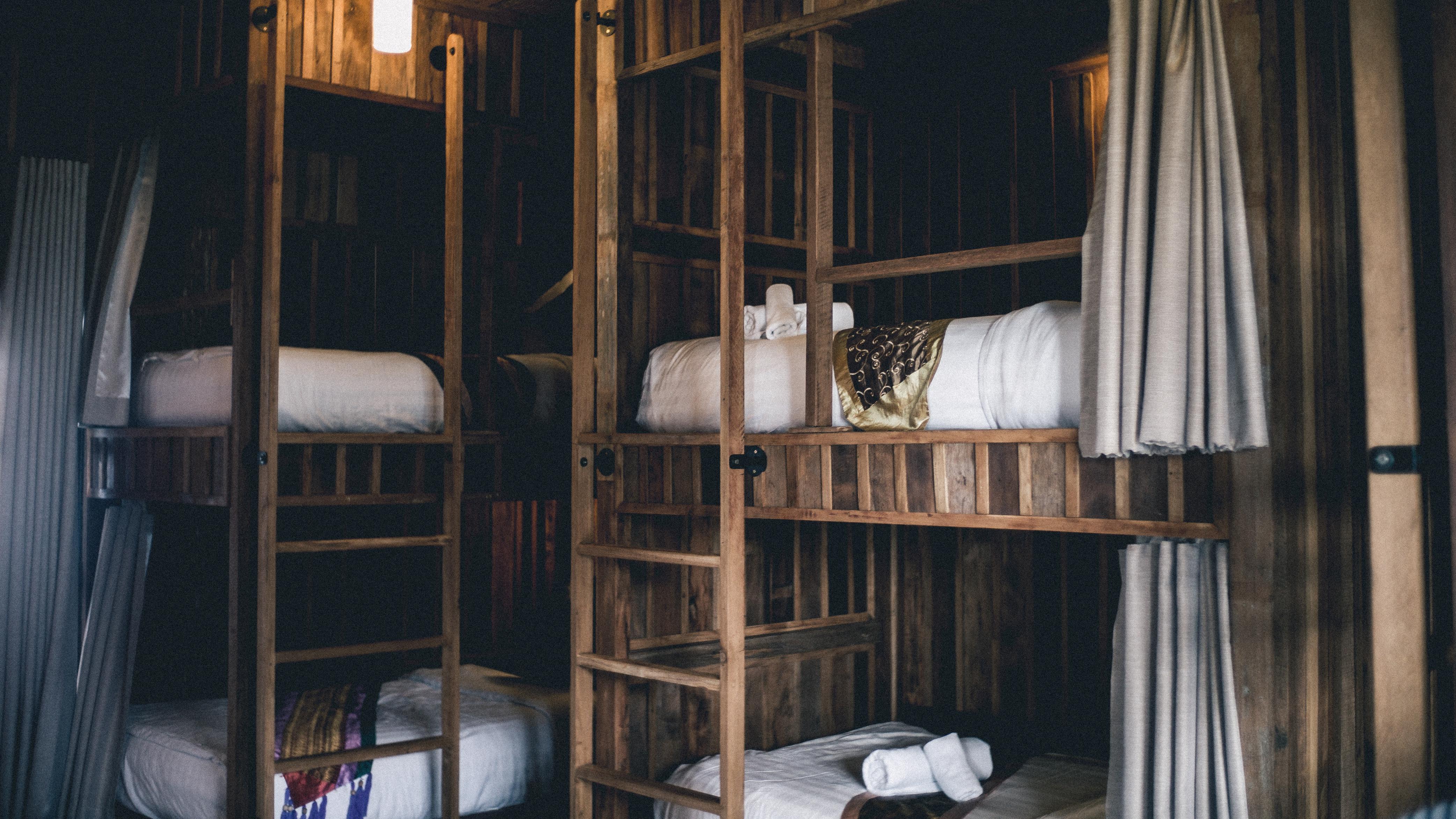
I'm often asked "What scares you when you travel? Kidnapping? Political unrest? Terrorism? Plane crashes? Nuclear war? Volcanoes? Tsunamis? Sharks? Ebola?" I've honestly never lost a minute of sleep over any of the above, often exaggerated, threats. But there is one littler critter that has kept me up at night: bed bugs.
If you're unfamiliar — consider yourself lucky — bed bugs are tiny insects that feed on the blood of humans and other animals. They prefer to live and lay their eggs in dark, soft cloth areas such as mattresses (hence the name). They are the Freddy Krueger of insects, waiting until you are peacefully asleep and defenseless, then attacking and making you never want to sleep again. Bed bugs have been terrorizing backpackers in hostels long before the hotel infestations of recent years. An encounter can be traumatizing, and an infestation is even worse. If I could rid the planet of one species, it would be... mosquitoes. But bed bugs would be second.

How to Spot Them
Bed bugs are easily visible to the naked eye as adults grow to 1/4 of an inch long. They have brown, oval, flat bodies and resemble a large flax seed. Normally, they move pretty slowly, but when disturbed they speed up considerably. Thankfully, they cannot jump or fly. In daytime or light, they stay well hidden, sometimes in seams or zippers of mattresses or cushions. They also hide in dark corners, vents and socket covers.
When you first check into a hostel, look for evidence of bed bugs. Tiny black or brown dots resembling ink spots could be bed bug excrement. Their eggs are about the size of a poppyseed and are white and sticky. Look for these indicators in seams and the same dark, hidden areas you'd check for bed bugs.

I couldn't bring myself to post a picture of a bed bug. I didn't want to trigger anyone's PTSD, including my own. Yes, I'm willing to post a picture of Freddy Krueger, but not of a bed bug. If you'd like to see bed bug pictures, Google will show you.
Protection
Before booking a hostel, check reviews on Hostelworld and TripAdvisor. If there are recent mentions of bed bugs, it's safest to stay elsewhere. But even if the hostel and bed look clean, you should still take precautions. The more clothes you sleep in, the less exposed skin bed bugs have to attack. Your best protection is a sleeping liner, which will shield the majority of your body from these critters getting to your skin. It's not complete security, as they can still enter the top or attack your exposed face, but it's a great first line of defense, especially if your feet are toward the corner or most likely hiding spots.
Also, sleep with a headlamp next to you. If you do wake up in the middle of the night, or think you may feel something crawling on you, do a quick glance at the bed, posts and walls. This is when you can catch them out in the open.
If you spot a bed bug, kill it. You may not have time to go grab a tissue and a shoe might not be enough pressure on a soft surface. The most effective way to kill it is to firmly press it with the flat side of your finger nail into whatever surface it is on until you feel it pop. If you can't stomach killing it with your bare hands, cover your nail with a bed sheet or something near by. A book or phone can work too. Just don't let it get away. If it does, it'll be back after dark to seek its revenge.
Also, you'll want to be able to show the hostel manager the evidence. An infestation can devastate a hostel's business, so news of bed bugs might be met with resistance. Bites are often blamed on mosquitoes, and the little black excrement dots aren't as definitive a proof. But there's no denying a fresh bed bug carcass.

If You Get Bit...
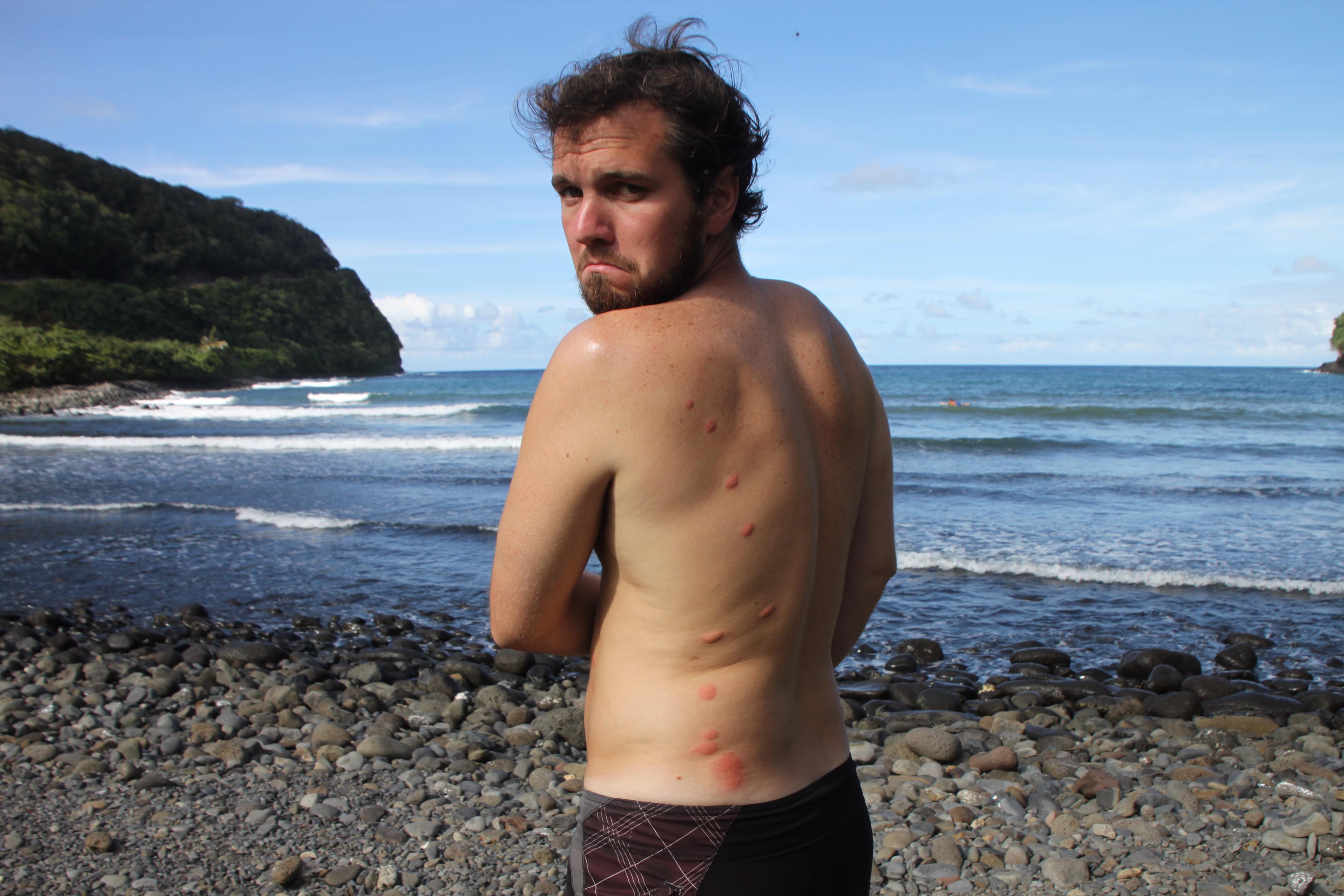
Bed bug bites are usually red itchy bumps (like mosquito bites) which are technically allergic reactions to the bugs' saliva. They often occur in a line showing the feasting path the critter took on your helpless, sleeping body. The reason you don't feel the actual bite of a bed bug like you do a mosquito is they numb you with a mild anesthetic before biting. Reactions often don't show up until many hours later, after the bed bugs are well fed and safely back in hiding. It's the perfect crime.
If you have bites, let the hostel manager know immediately. Don't initially get angry at them. The frequent movement and shared accommodation of backpacking makes it very easy for bed bugs to spread, and hostels have no way to prevent this. Remember it's not you versus the hostel, it's humans versus bed bugs. Make sure the hostel takes the problem seriously though and is taking steps to address it. At the very least, you need to switch to a new room. But don't go straight there, you'll first need to make sure you're not a carrier.
It's possible that the bed bugs have made their way into your luggage and even laid eggs, or they may be in seams of the clothes you wore to sleep. Put everything from your backpack, including the backpack itself, in a dryer on high heat (over 120 degrees) for at least 30 minutes to kill the bugs and their eggs. If a dryer isn't available or some items can't go in one, seal them in a black plastic bag and put the bag in direct sunlight all day. You don't need to wash your clothes, as it won't kill the bed bugs or their eggs, but it might make you feel better.
Other solutions include using a heat box or steamer, or sprinkling everything with diatomaceous earth. You are less likely to have access to these while backpacking, but it's worth asking the hostel.
It's tempting to pack up your stuff and get out of the hostel right away, but that might not be the best action. The hostel where you were attacked will do the most to make sure you get rid of the, like by letting you use the dryers for free. If you walk into another hostel covered in bites or mentioning bed bugs, expect to be treated like a leper. Many hostels won't even let you in.
If the infested hostel's staff isn't doing all they can to accommodate you, a threat to post about your encounter online will usually get them moving.
Don't Let This Stop You
Before you start your "And this is why I don't..." comment below, remember that bed bugs are not a unique problem to hostels and backpacking. Infestations in hotels and homes are on the rise. Bed bugs can also be found in airplanes, restaurants (where I once found one), theaters, public transit and offices. However, unlike mosquitoes, fleas, and ticks, bed bugs do not transmit disease, meaning they are not a health risk.
They are, however, a reality that we have to live with in backpacking, travel and life. So unless you want to live in a bubble, the threat will always be there. They shouldn't be a deterrent though — from backpacking, traveling or living outside of a protective bubble. Even with the rise of infestations, you are still very unlikely to get attacked. And if you're diligent and take the right precautions, you can minimize the risk, or the impact of an encounter. Enough to even sleep peacefully at night.
The Points & Miles Backpacker is a weekly column appearing every Monday. TPG Contributor Brian Biros, who has backpacked the globe for the past 15 years, discusses how to fund this adventurous, budgeted and increasingly popular form of travel with points and miles. He'll also explore all things backpacking-related. Read his story here and his high-level approach here.
If you're looking to back that pack up and get some guidance, send your questions to backpacker@thepointsguy.com !
Feature photo by by Nicate Lee on Unsplash
TPG featured card

at Capital One's secure site
Terms & restrictions apply. See rates & fees.
| 5X miles | Earn 5X miles on hotels, vacation rentals and rental cars booked through Capital One Travel |
| 2X miles | Earn unlimited 2X miles on every purchase, every day |
Pros
- Stellar welcome offer of 75,000 miles after spending $4,000 on purchases in the first three months from account opening. Plus, a $250 Capital One Travel credit to use in your first cardholder year upon account opening.
- You'll earn 2 miles per dollar on every purchase, which means you won't have to worry about memorizing bonus categories
- Rewards are versatile and can be redeemed for a statement credit or transferred to Capital One’s transfer partners
Cons
- Highest bonus-earning categories only on travel booked via Capital One Travel
- LIMITED-TIME OFFER: Enjoy $250 to use on Capital One Travel in your first cardholder year, plus earn 75,000 bonus miles once you spend $4,000 on purchases within the first 3 months from account opening - that’s equal to $1,000 in travel
- Earn unlimited 2X miles on every purchase, every day
- Earn 5X miles on hotels, vacation rentals and rental cars booked through Capital One Travel
- Miles won't expire for the life of the account and there's no limit to how many you can earn
- Receive up to a $120 credit for Global Entry or TSA PreCheck®
- Use your miles to get reimbursed for any travel purchase—or redeem by booking a trip through Capital One Travel
- Enjoy a $50 experience credit and other premium benefits with every hotel and vacation rental booked from the Lifestyle Collection
- Transfer your miles to your choice of 15+ travel loyalty programs
- Top rated mobile app