The Points & Miles Backpacker: 8 Tips for Traveling With Only a Carry-On

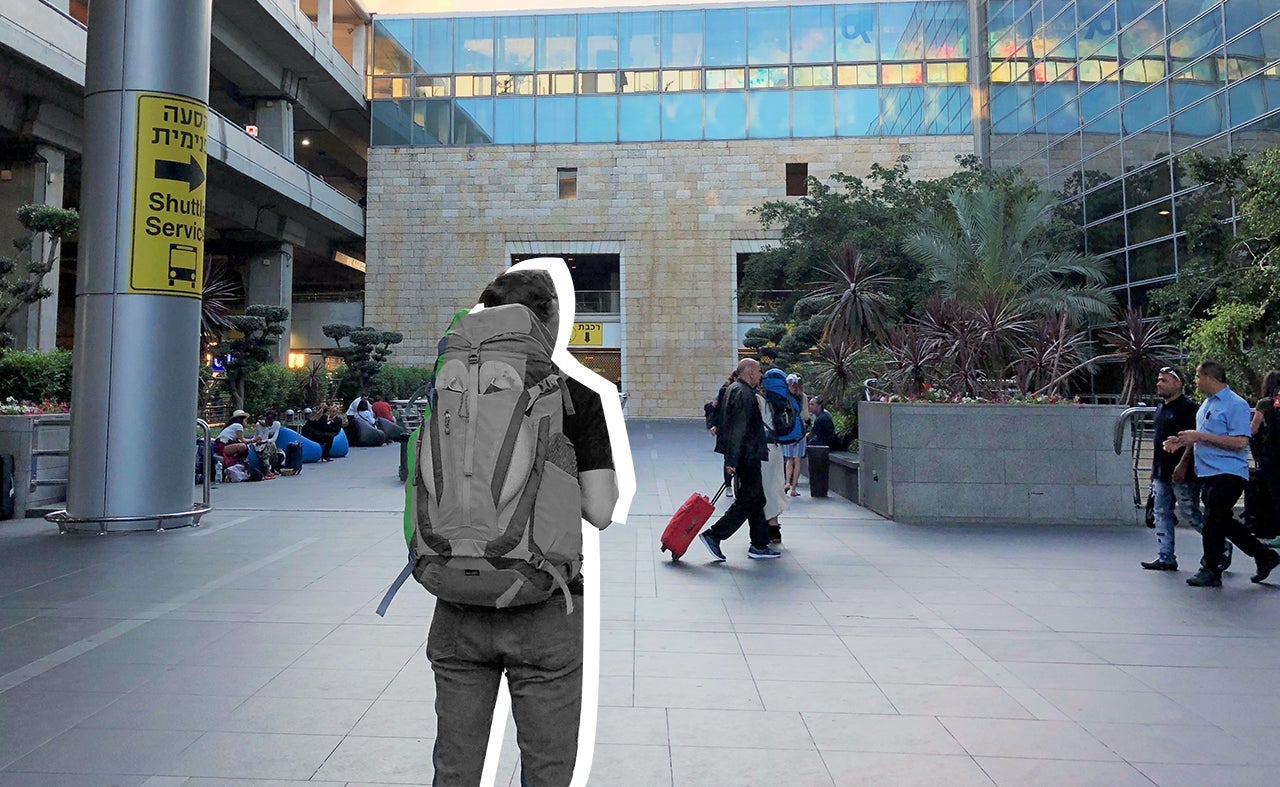
Fitting everything you need for an extended trip into a carry-on sized pack is a skill that took me a long time to perfect. "Be prepared" and "just in case" were phrases I told myself that led to overpacking, baggage fees, time wasted at baggage claim and lost-luggage annoyances. I'll share the key tips I've acquired during my downsizing journey as an experienced traveler with just a backpack, so you really can live for weeks or months out of a carry-on.
1) Know Your Limits
For most US carriers, the size limit for carry-on luggage is 9" x 14" x 22". However, when shopping for a backpack, you'll typically find size listed in liters, not dimensions. Generally, 40-liter packs will work as a carry-on, although with the flexibility of a backpack, that can vary. My 40-liter pack won't fit in a measurement bin if I jam it full, but I've seen 50-liter and bigger backpacks tightened up and taken on board. You'll want to pack completely and measure at home to avoid surprises at the airport.
If you're close to the limit on size or weight, you can strategically pick your travel outfit. On the same trip where I climbed Mt. Kilimanjaro, I had a small regional flight from Zanzibar back to the mainland where they wanted to charge me ridiculous fees for my slightly overweight luggage. So I put on my hiking gear and got just below the weight limit. I looked slightly ridiculous wearing a winter coat, hiking pants and hiking boots through a tropical island airport, but I was also wearing a smile because I avoided a $50 baggage fee on a $50 flight.

Unfortunately, many international airlines, especially low-fare ones, have really cut down on carry-on allowances. Ryanair, for example, now only allows one small personal item (8" x 10" x 16") brought on board with its base fare. These sizes and allowances vary drastically, so make sure you check the airline website directly for your allowance. Occasionally, checking your bag may be unavoidable, so be sure to factor in all of the fees before booking an ultra-low-fare on an airline that charges high fees.
2) Make Efficient Use of Your Personal Item
My laptop backpack also holds my DSLR camera, toiletries and other electronics along with things I want readily available for a flight like a book or eye mask. I also find it's a better place to protect smaller or fragile items like sunglasses.
To carry, go with the classic backpacker look: big pack on your back and smaller pack in front. It actually helps with weight distribution and keeps you from hunching forward. You don't want too big of a personal item though — stay well below the common 9" x 10" x 17" US limit or it'll be too awkward to carry in front.
3) Choose Footwear that Packs Small
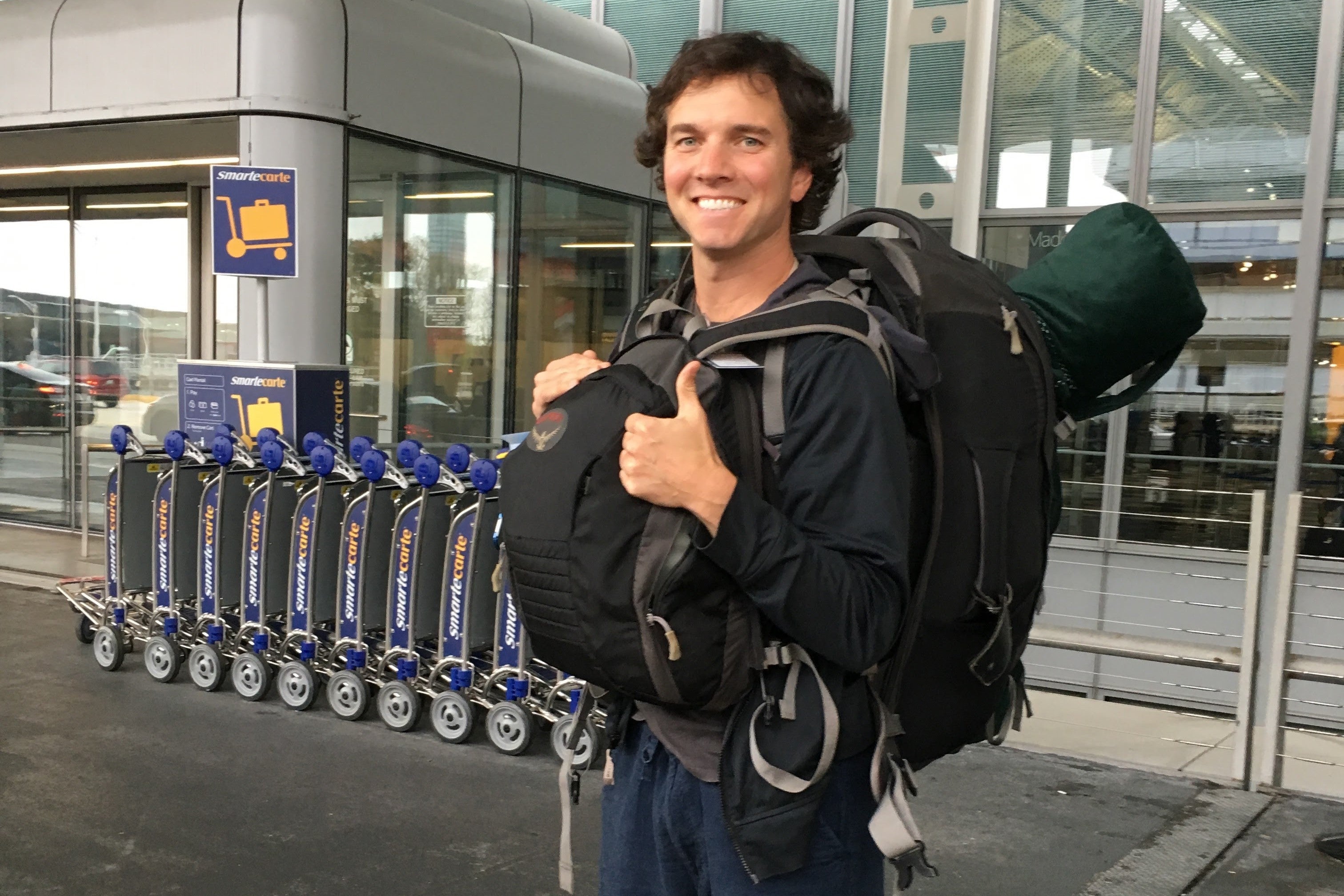
Ditching regular shoes is probably your biggest space saver, but I'm not suggesting you travel hobo style. Bring footwear that is versatile and can pack very small. For me, it's a pair of TOMS Canvas Men's Classics which are comfy enough to walk around in all day but also stylish enough to make myself mildly presentable. While I'm not a fan of the $50 price tag for what is essentially slippers, that includes a second pair that the company takes credit for giving to charity. I haven't found a travel shoe I like better, but many TPG team members though swear by Allbirds.
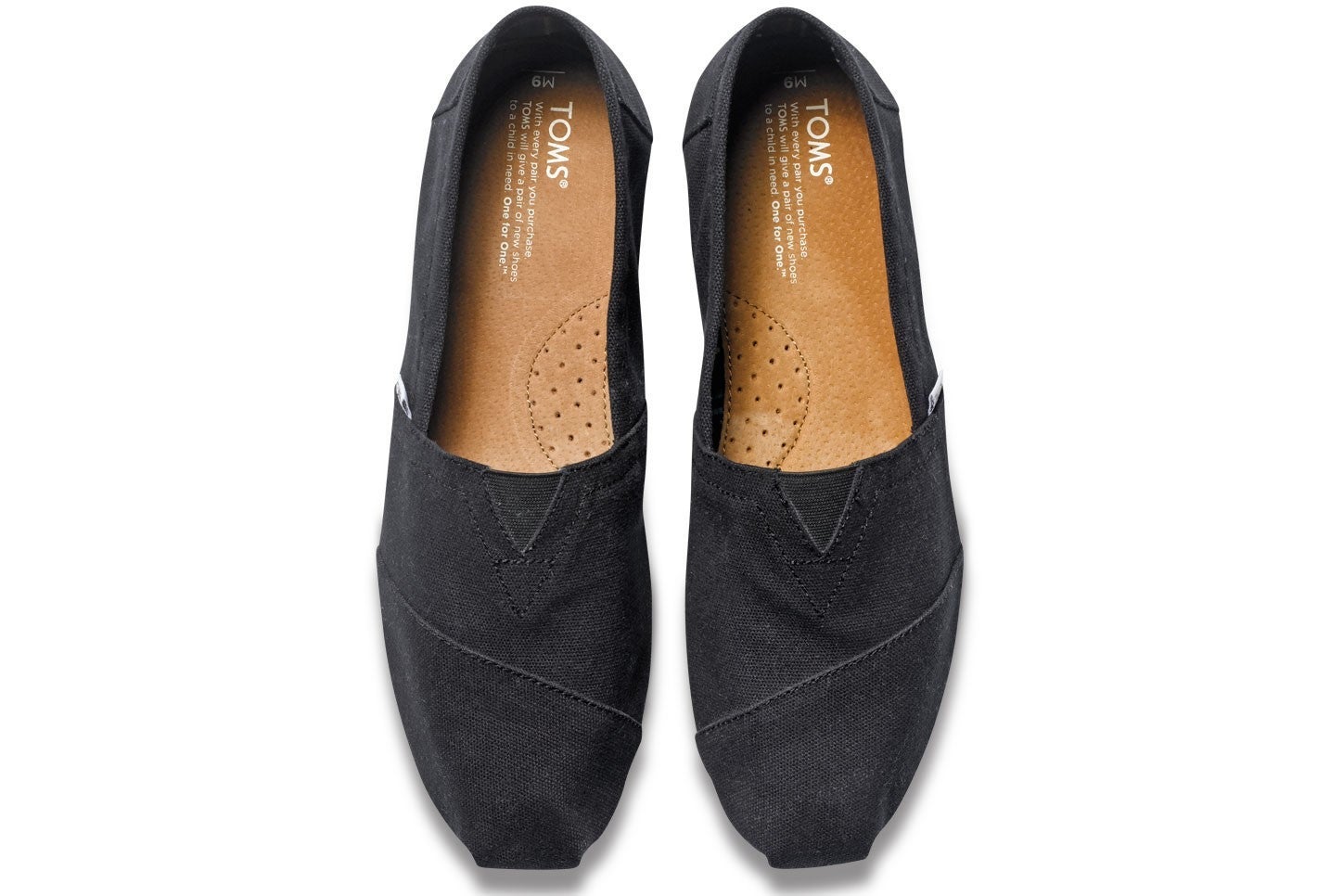
A pair of flip-flops is also essential, especially if you'll be seeing a beach. Invest in a comfy, durable pair, and avoid leather or cloth so you can also use them as shower shoes. Havaianas do the trick for me.
If you need something with a bit more support — I travel with running shoes — wear those shoes on flight days. On other transit days that don't involve luggage restrictions or other people handling your bags, you can tie the shoes to the outside of your pack.

4) Here Is What You Can and Can't Bring in a Carry-On
TSA publishes a list of all questionable items and whether they are allowed in carry-on and/or checked luggage. Note the common disclaimer that the final decision rests with the TSA officers. Also, you should expect similar guidelines abroad, but perhaps not exactly the same. So while you may be able to crisscross the US with deer antlers on board, other countries may make you check them.
5) You Don't Need a Pocket Knife
Swiss Army knives can be pretty handy, but you don't often need tools when traveling. Most times I've wanted a knife, it's been for pretty minor cutting, and I've been able to substitute nail clippers for it.
Scissors with rounded points and less than 4 inch blades are technically allowed by the TSA, but remember the note about airport officers getting final discretion and varying regulations abroad. You can find multi-tools without knives like this Leatherman, but given the resemblance to a pocket knife, expect to be stopped and be ready to do some convincing.
6) You Can Buy Most of What You Need at Your Destination
This is how you can justify leaving behind your "just in case" pile, and these new items can double as a souvenir. Nights colder than you thought? Grab a jumper with the logo of your favorite Argentine beer. Back home, "What is Quilmes?" will be a conversation starter. Do your arms need freedom from t-shirt sleeves? Buy a tank top and get ready for story time after people ask "What is the Vang Vieng?" when your tank declares to the world you went tubing down it.

Also, don't feel like you need to pack a pharmacy. Decent, English-speaking health care is widely available across the world for pretty much anything your medical kit would combat. Even without insurance, the cost for doctor visits and medicine often compares to the price of a deductible in the USA (but travel insurance is a great idea).
However, if you have specific, non-generic go-tos for ailments, you may want to bring a bit of that. For me, it's Alka Seltzer Plus Cold, Wellness Formula and Pepto-Bismol tablets. The same would apply to regularly taken prescriptions or birth control for the duration of your trip unless you have confirmed you can get it abroad. Finally, my recommendations on medicine are very general, so research your destinations specifically. And beware that taking prescription medication overseas may be problematic.
7) 100 ml Is Enough for Your Liquids
TSA has been drilling the 3-1-1 rule into our subconscious for over a decade now, but don't let these limits force you into checked baggage. Shampoo, conditioner, toothpaste, lotion, sunscreen, bug spray and pretty much any other type of liquid, aerosol, gel, cream or paste that you'd want while traveling you can buy at your destination. However, like with medicine, if you have a specific, branded preferences, you're far less likely to find those abroad (contact lens solution is a common example).
Get some 100 ml reusable travel bottles for your essential brands. If 100 ml won't be enough, fill up a couple bottles and buy your other liquids on arrival. It's best not to push the limits, but in my experience the "100 ml bottle size" requirement is enforced much more strictly than the "in a one quart bag" requirement.
8) Roll Your Clothes
The folding vs. rolling debate lives on, but I am firmly a supporter of the roll — especially if you "Ranger Roll" your clothes as demonstrated by this guy. The roll works especially well with packing cubes, which I also highly recommend.
The main argument against rolling is wrinkles, but I'm normally not packing nice button downs or dress pants. If I am, I'll fold only those items as the exception. Anything else you need to get wrinkles out of, hang next to you in the shower and let the steam take care of it.
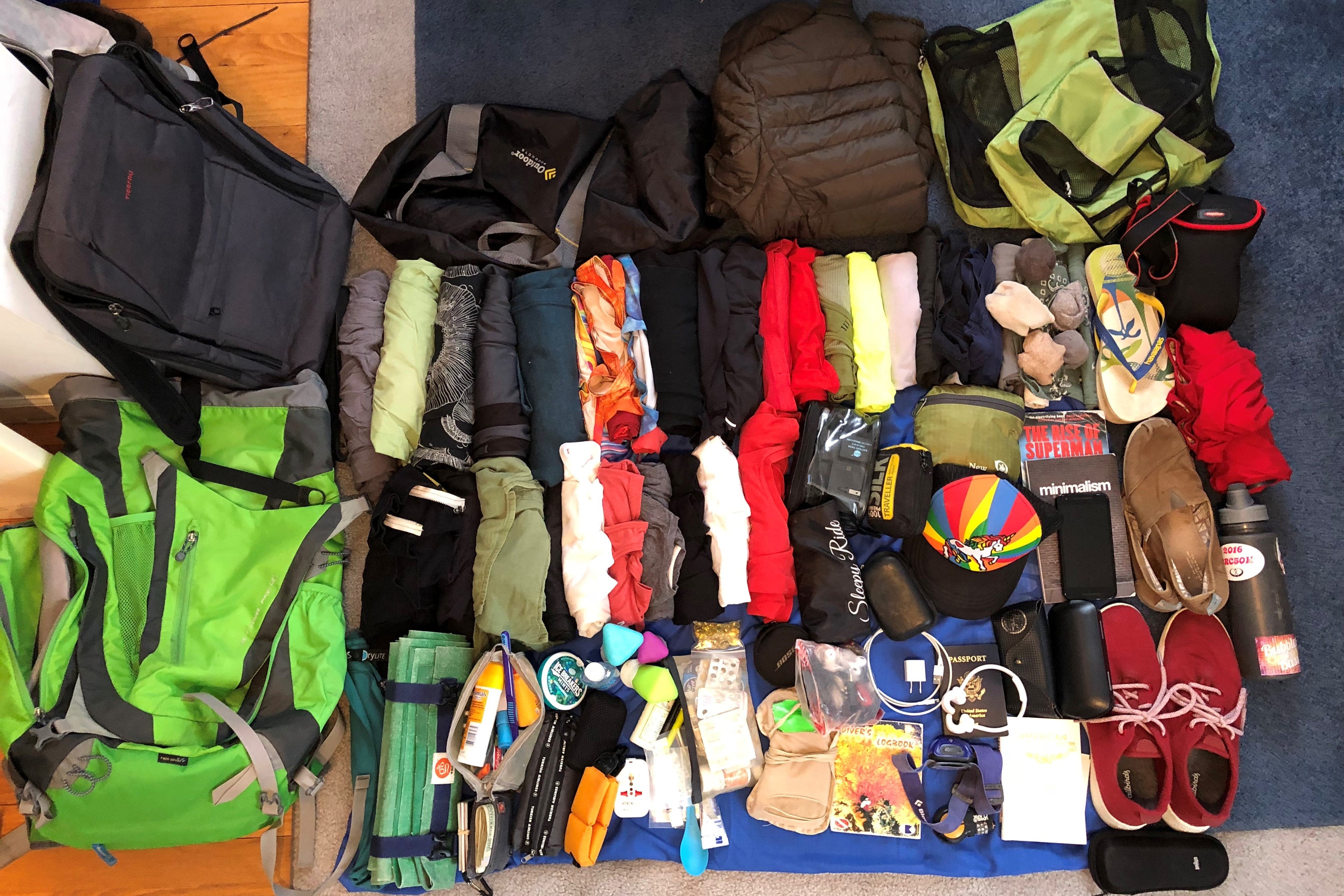
The Points & Miles Backpacker is a weekly column appearing every Monday. TPG Contributor Brian Biros, who has backpacked the globe for the past 15 years, discusses how to fund this adventurous, budgeted and increasingly popular form of travel with points and miles. He'll also explore all things backpacking-related. Read his story here and his high-level approach here.
If you're looking to back that pack up and get some guidance, send your questions to backpacker@thepointsguy.com !
TPG featured card

at Capital One's secure site
Terms & restrictions apply. See rates & fees.
| 5X miles | Earn 5X miles on hotels, vacation rentals and rental cars booked through Capital One Travel |
| 2X miles | Earn unlimited 2X miles on every purchase, every day |
Pros
- Stellar welcome offer of 75,000 miles after spending $4,000 on purchases in the first three months from account opening. Plus, a $250 Capital One Travel credit to use in your first cardholder year upon account opening.
- You'll earn 2 miles per dollar on every purchase, which means you won't have to worry about memorizing bonus categories
- Rewards are versatile and can be redeemed for a statement credit or transferred to Capital One’s transfer partners
Cons
- Highest bonus-earning categories only on travel booked via Capital One Travel
- LIMITED-TIME OFFER: Enjoy $250 to use on Capital One Travel in your first cardholder year, plus earn 75,000 bonus miles once you spend $4,000 on purchases within the first 3 months from account opening - that’s equal to $1,000 in travel
- Earn unlimited 2X miles on every purchase, every day
- Earn 5X miles on hotels, vacation rentals and rental cars booked through Capital One Travel
- Miles won't expire for the life of the account and there's no limit to how many you can earn
- Receive up to a $120 credit for Global Entry or TSA PreCheck®
- Use your miles to get reimbursed for any travel purchase—or redeem by booking a trip through Capital One Travel
- Enjoy a $50 experience credit and other premium benefits with every hotel and vacation rental booked from the Lifestyle Collection
- Transfer your miles to your choice of 15+ travel loyalty programs
- Top rated mobile app