Southwest to add seat assignments, extra legroom and red-eye flights

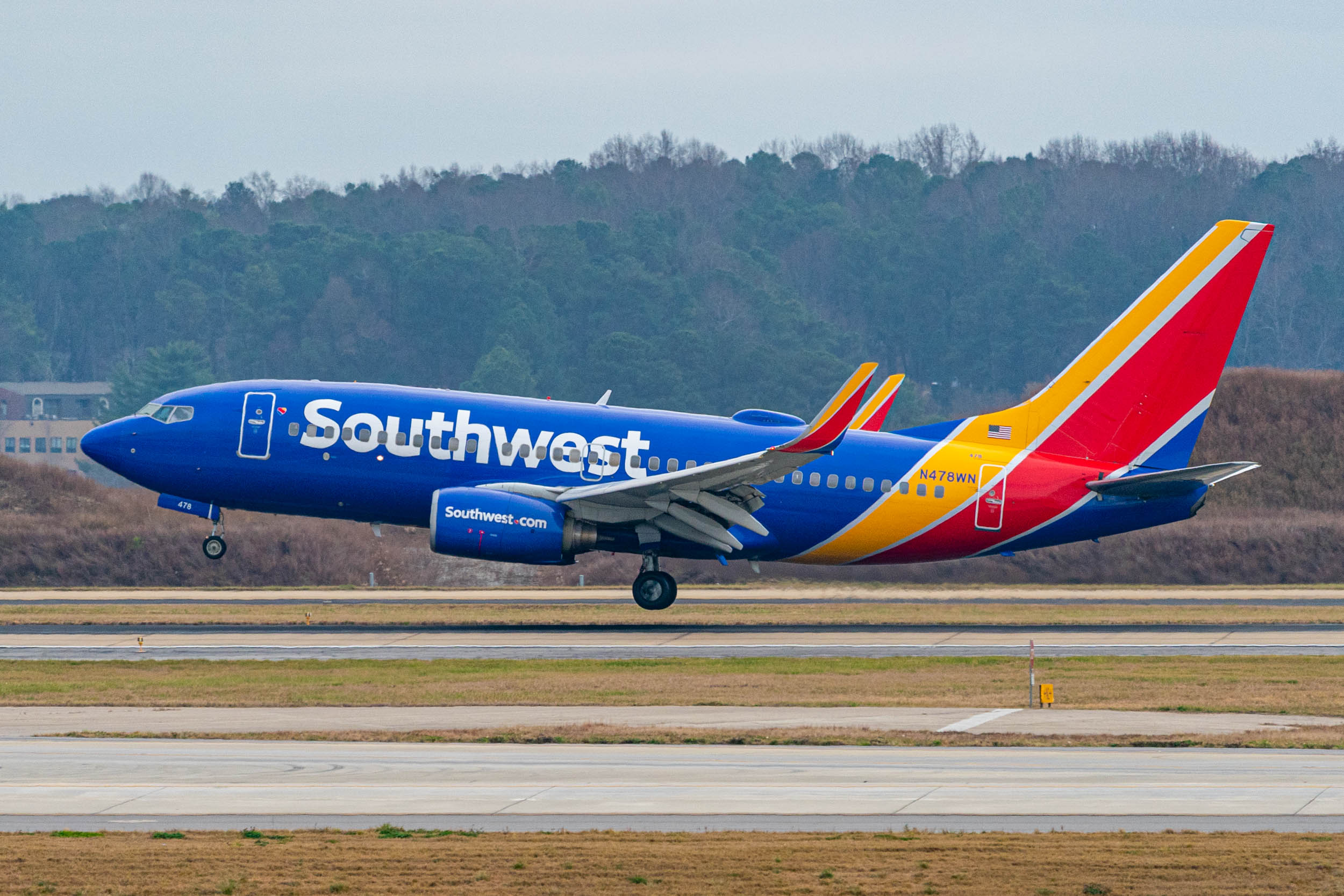
Southwest Airlines is flying somewhere it's never flown before: into the night, and by seat number.
The airline said on Thursday that it will begin assigning seats and will add extra-legroom premium seats to its cabins.
The airline also plans to operate overnight flights for the first time in its history, Southwest said Thursday. It's joining other major U.S. airlines that offer red-eye service on longer eastbound routes.
It was not immediately clear when the seating and cabin changes will take effect, although Southwest said it would share more details at its investor day in September. The airline said it expected bookings to open sometime in 2025.
The moves come as Southwest faces off with activist investor group Elliott Management, which recently disclosed it had accumulated an 11% stake in the airline via publicly traded shares. The group has pushed for Southwest to remove its top executives and make systematic changes to its business and operating model. The airline's board said it continues to stand by its current strategy and has adopted a "poison pill" plan — a move typically used by companies to resist hostile takeovers.
In the background has been one change subject to the most speculation: an end to Southwest's open-seating policy — exactly what the airline confirmed Thursday.
Aside from pressure from Elliot, airfare pricing has been softening globally — particularly in the short-haul market that Southwest specializes in. Some airlines have found that revenue from premium products — like first-class cabins, extra-legroom seats and premium economy seats — has been enough to boost their finances and help power them through. With only one class of service and no real additional products to buy, Southwest has missed out on that ancillary revenue that's proven crucial at other airlines.
Now, in saying a change is coming, Southwest cites customer surveys in that show about 80% of customers wanted to move to an assigned seating system, rather than the open seating that has been characteristic of the airline since it first began offering flights more than 50 years ago. It said it would share details about "product designs, cabin layout, timing, and incremental financial value" at the investor day in September.
Quick take: Southwest Airlines will end open seating: What you need to know

As for the red-eye service will begin with five daily flights Feb. 13, 2025, the airline said. It then plans to ramp up through the rest of the year, with more routes to begin in March and June. For now, the initial routes are:
- Las Vegas' Harry Reid International Airport (LAS) to Baltimore/Washington International Thurgood Marshall Airport (BWI)
- LAS to Orlando International Airport (MCO)
- Los Angeles International Airport (LAX) to BWI
- LAX to Nashville International Airport (BNA)
- Phoenix Sky Harbor International Airport (PHX) to BWI
In an interview with TPG ahead of Thursday's announcement, Southwest's chief operating officer, Andrew Watterson, said that the addition of overnight flying is about more than the situation with Elliott. Instead, the move is about improving the company's overall operating efficiency as it waits for severely delayed aircraft orders to be fulfilled by Boeing.
"The world is short of aircraft, and we need to get more out of our [existing] aircraft," Watterson said. "By doing this, we get more flying."
Red-eye flights typically offer passengers slightly lower fares in addition to more flexibility; you can spend your last full day in Las Vegas having fun, fly home overnight and make it to work the next day (maybe after a quick shower). They also offer airlines more productive use of expensive aircraft, improving their overall cost efficiency.
"[Revenue averages], what we see from the industry, tends to be a bit below average," Watterson said of overnight flights. "But the aircraft is already paid for, so to speak."
"And if you're a little bit tight on aircraft, getting more flying out of the aircraft has a financial benefit," he added.
Southwest first hinted last fall that overnight flying was in the pipeline, and it confirmed in March that the service was coming soon. In the past, the airline was hampered by technology limitations, particularly with its reservations system — the airline first began to sell overnight connecting itineraries last year.
Provisions for overnight flights were already included in labor contracts with various labor groups, Watterson said, and they had been in previous versions of those collective bargaining agreements. The airline reached an agreement with flight attendants over a new contract this spring.
In a way, the overnight flights represent a transformation for Southwest at a time when the airline might need it — even if not to the degree that Elliott wants.
Southwest's share prices have fallen steadily since early 2021, and its finances have struggled as pricing power and demand growth have softened this year. It's also singularly reliant on Boeing for new aircraft since it operates a single fleet type — the 737 family. There are kinks throughout the aerospace supply chain affecting every plane-maker and component supplier; however, the delivery rate from Boeing has slowed to a trickle in the aftermath of a production slowdown as the manufacturer develops and implements a new safety process.
That has severely restricted Southwest's growth, driving the stock further down. At the start of 2024, the airline expected to take delivery of 88 new aircraft over the course of the year, Watterson said. Now, it only expects to receive 20.
The airline's board and executives support its low-cost, quick-turn business model and unique onboard experience (the airline doesn't assign seats and instead enforces boarding groups that determine who can board sooner and choose their preferred seat.) Still, they admit that something needs to change, particularly if Southwest is to thrive in the current environment.
That includes flying overnight.
"It's definitely new, definitely different," Watterson acknowledged. "You see the airline doing lots of things that we didn't do before."
The airline is in the process of adding power ports to all of its seats for device charging (something that it had previously resisted), upgrading its Wi-Fi and redesigning its seats for new aircraft.
"These are not innovative, huge steps forward, but they are a shift into a kind of different positioning, different zone than Southwest was in five years ago," Watterson said.
Southwest has also changed its tactics surrounding its daily operation, approaching things like storms and other disruptions differently; it tries to minimize delays and cancellations and prevent them from spiraling out of control like during the 2022 holidays. TPG previously reported on the changes Southwest was making to its handling of operational disruptions and the early, positive results.
"We're running a high-quality operation, and I couldn't be happier or prouder of our people," Watterson said.
So far, the airline's performance has continued to appear better than before the 2022 crisis. Delays and cancellations are broadly down, particularly in the aftermath of severe weather. While the airline was mostly unaffected by the recent CrowdStrike and Microsoft Windows outage, the ongoing meltdown at Delta Air Lines, once known for its reliability, underscored the contrast to Southwest over the past 18 months.
"It was stressful and hectic, and a lot of work," but it's paying off, Watterson said. "And the key is we will never be done. Once you stop upgrading, it starts aging."
Watterson said that's the approach Southwest's leadership is taking to its product. While the airline is keen to maintain its unique culture and brand perception, its management team sees the pitfalls that come from falling behind. So, it sees these changes as small but impactful upgrades and tweaks rather than an outright transformation.
"Incremental steps, always adding onto it," is how Watterson described it. "After a while, the accumulative effect is like, 'Oh, yeah, that's different.'"
As for Southwest's delay in aircraft delivery delays, a casual observer might think that a blessing in disguise since adding more capacity would only further contribute to a general oversupply of capacity in the U.S. market. However, Watterson noted that really isn't how things work.
"We kind of built the company up for a bigger airline," he said. "You don't want that shortage to come to you unexpectedly."
With more warning and managed expectations, "we can tune the company for that," he added. But when the shortage comes after a certain expectation was built into the airline's plans for the year, "that's disruptive."
Ultimately, change is coming to Southwest, whether Elliott succeeds in assuming a controlling stake (or convincing other shareholders to ascribe to its vision) or not.
For now, even as the broader transformation comes slowly, change comes overnight — and also with a seat assignment.
TPG featured card

at Capital One's secure site
Terms & restrictions apply. See rates & fees.
| 5X miles | Earn 5X miles on hotels, vacation rentals and rental cars booked through Capital One Travel |
| 2X miles | Earn unlimited 2X miles on every purchase, every day |
Pros
- Stellar welcome offer of 75,000 miles after spending $4,000 on purchases in the first three months from account opening. Plus, a $250 Capital One Travel credit to use in your first cardholder year upon account opening.
- You'll earn 2 miles per dollar on every purchase, which means you won't have to worry about memorizing bonus categories
- Rewards are versatile and can be redeemed for a statement credit or transferred to Capital One’s transfer partners
Cons
- Highest bonus-earning categories only on travel booked via Capital One Travel
- LIMITED-TIME OFFER: Enjoy $250 to use on Capital One Travel in your first cardholder year, plus earn 75,000 bonus miles once you spend $4,000 on purchases within the first 3 months from account opening - that’s equal to $1,000 in travel
- Earn unlimited 2X miles on every purchase, every day
- Earn 5X miles on hotels, vacation rentals and rental cars booked through Capital One Travel
- Miles won't expire for the life of the account and there's no limit to how many you can earn
- Receive up to a $120 credit for Global Entry or TSA PreCheck®
- Use your miles to get reimbursed for any travel purchase—or redeem by booking a trip through Capital One Travel
- Enjoy a $50 experience credit and other premium benefits with every hotel and vacation rental booked from the Lifestyle Collection
- Transfer your miles to your choice of 15+ travel loyalty programs
- Top rated mobile app