Skip to content

Delays up, passenger traffic down at DCA following Jan. 29 crash, government layoffs

March 22, 2025
6 min read
Plane Spotting Assorted
The cards we feature here are from partners who compensate us when you are approved through our site, and this may impact how or where these products appear. We don’t cover all available credit cards, but our analysis, reviews, and opinions are entirely from our editorial team. Terms apply to the offers listed on this page. Please view our advertising policy and product review methodology for more information.

About four in 10 flights were delayed or canceled last month at Ronald Reagan Washington National Airport (DCA) as disruptions persisted in the wake of the deadliest U.S. commercial airline crash in more than two decades.

The Federal Aviation Administration continued to limit the number of planes arriving at the airport — the closest one to our nation's capital — in the interest of safety following the Jan. 29 collision between an American Airlines regional jet and a U.S. Army Black Hawk helicopter that claimed 67 lives.

Still, the air traffic limitations have fueled travel difficulties at the busy airport, DCA's governing body revealed this week.

Flight disruptions mounted at DCA

During the month of February, close to 34% of flights encountered delays arriving at DCA, the Metropolitan Washington Airports Authority said in a new report. That's about three times more than last February.

Read more: Flight canceled or delayed? Here's what to do next

Secretary of Transportation Sean Duffy speaks at a press conference with other officials to give updates following a collision between an American Airlines plane and an Army helicopter in Washington, DC on January 30, 2025.
Transportation Secretary Sean Duffy speaking to reporters following the Jan. 29 crash near Ronald Reagan Washington National Airport (DCA). NATHAN POSNER/ANADOLU/GETTY IMAGES

Close to 8% of flights headed to DCA were canceled last month, the MWAA said — up significantly from around 0.5% of flights axed during that same period last year.

The FAA began limiting air traffic at DCA immediately after the late-January crash, initially halting all flights and diverting planes to nearby Dulles International Airport (IAD) amid a large-scale investigation.

Then, as runways reopened in the ensuing days and weeks, the FAA maintained caps on the number of hourly flights that could land at DCA. For most of February, the number of flights that could land each hour was down by more than 10% from the normally allowed rate.

Adding to the disruptions: routine halts in air traffic due to helicopters in the area.

Daily Newsletter
Reward your inbox with the TPG Daily newsletter
Join over 700,000 readers for breaking news, in-depth guides and exclusive deals from TPG’s experts

Following the deadly collision, the FAA quickly implemented restrictions on helicopter traffic and said last week it would heed urgent safety recommendations from the National Transportation Safety Board by closing off chopper routes near the airport and only allowing essential helicopter traffic.

Still, some helicopter flights — including Marine One transportation of President Donald Trump — are still allowed and frequently lead the agency to halt all flights at DCA, the MWAA noted.

Fear of flying: New polling suggests 65% of respondents are more nervous in light of recent plane crashes
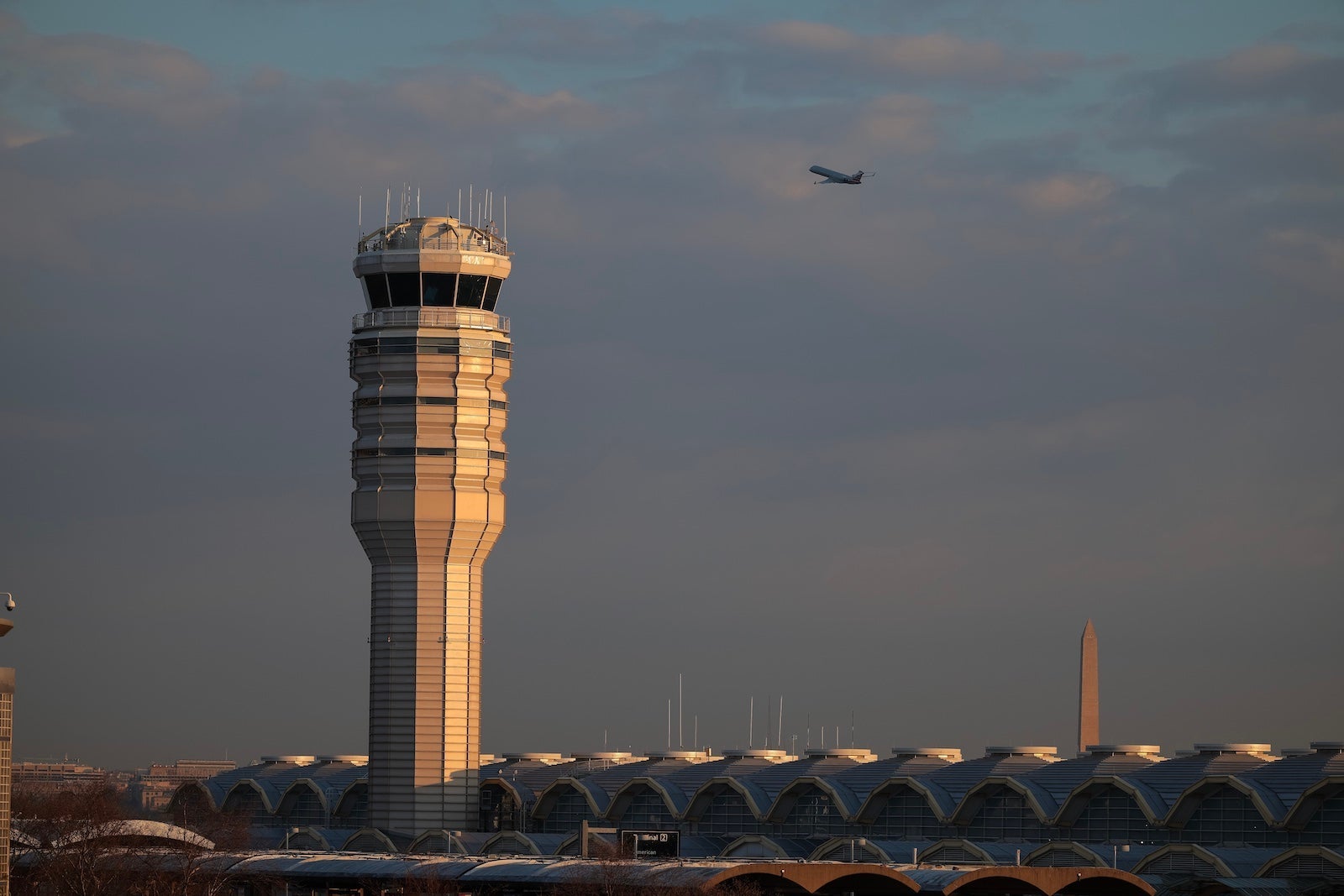
Ronald Reagan Washington National Airport (DCA). KAYLA BARTKOWSKI/GETTY IMAGES

Delays have been less widespread in recent weeks, the MWAA reported. On Feb. 28, the FAA inched up the number of hourly arrivals allowed at the airport to nearly 95% of ordinary levels.

At the time of writing this story on the afternoon of March 20, about 12% of DCA-bound flights on the day's schedule had been delayed, according to FlightAware.

Travelers particularly concerned about encountering a flight delay could always consider flying out of IAD or nearby Baltimore/Washington International Thurgood Marshall Airport (BWI).

While both airports are farther from the center of Washington, D.C., IAD is accessible via the region's Metro transportation system. BWI travelers can connect to the airport on Amtrak via Union Station in D.C.

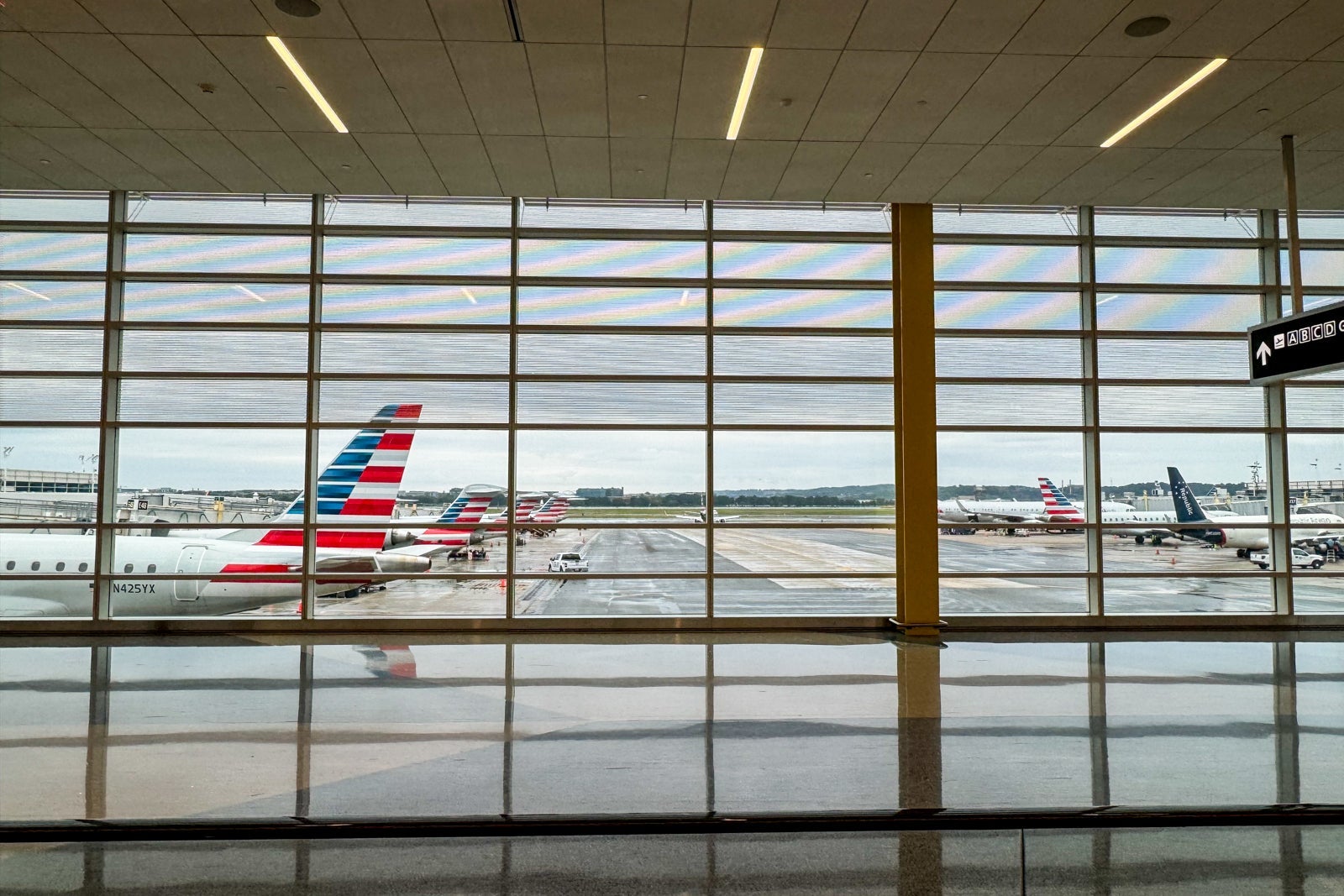
Situated along the Potomac River in Virginia, DCA is a popular regional airport. Several of the largest U.S. airlines have a sizable presence there — most notably American Airlines, which operates its mid-Atlantic hub at the airport.

DCA passenger traffic down

This week, airport officials also revealed a marked drop in passenger traffic in recent weeks.

The number of passengers that boarded flights at DCA last month was down about 12% to 13% versus last year, the MWAA said in its report this week.
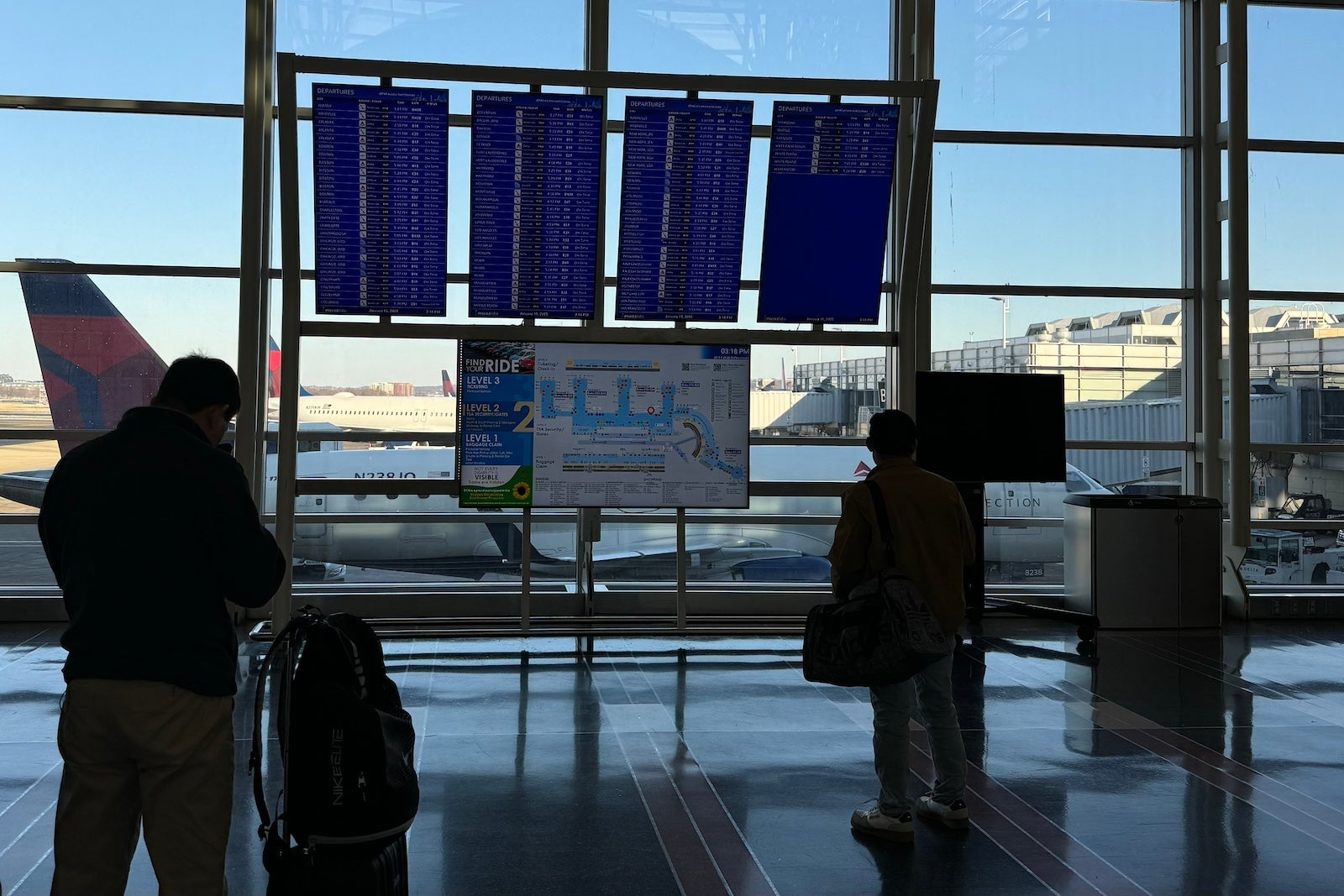
Travelers check their flight status at Ronald Reagan Washington National Airport (DCA). SEAN CUDAHY/THE POINTS GUY

Airport officials said this reduction in travel was due in large part to reduced government travel and economic concerns amid the Trump administration's sweeping cuts to the federal and contractor workforces.

Some of those concerns go beyond DCA.

U.S. airlines began to voice concerns about potential softness in travel demand last week. At least one major European carrier this week told TPG that it's seeing some hesitancy among travelers to vacation in the U.S.

The total number of passengers who transited through Transportation Security Administration checkpoints nationally in February 2025 was roughly even with that of February 2024, according to data reviewed by TPG. This trend differs from the 6% to 7% year-over-year surge we've become used to seeing since the coronavirus pandemic.

Bottom line

It's worth noting the recent increase in flight disruptions — and decrease in passenger traffic — at DCA comes as several airlines launched new transcontinental routes from the airport in the last month. Congress authorized these routes last year in a controversial move.

Those new routes included nonstop American Airlines service to San Antonio International Airport (SAT), Alaska Airlines service to San Diego International Airport (SAN), Southwest Airlines flights to Las Vegas' Harry Reid International Airport (LAS) and Delta Air Lines service to Seattle-Tacoma International Airport (SEA).

United Airlines was also set to launch a second daily nonstop flight to San Francisco International Airport (SFO) as part of congressionally authorized exceptions to DCA's long-standing limits on long-distance flights.

Related reading:

Featured image by SEAN CUDAHY/THE POINTS GUY
Editorial disclaimer: Opinions expressed here are the author’s alone, not those of any bank, credit card issuer, airline or hotel chain, and have not been reviewed, approved or otherwise endorsed by any of these entities.

TPG featured card

Best for businesses with high spending
TPG Editor‘s Rating
4.5 / 5
Go to review

Rewards

2 - 10X miles

Intro offer

LIMITED-TIME OFFER: Earn up to 400K bonus miles

Annual Fee

$395

Recommended Credit

740-850
Excellent

Why We Chose It

The Capital One Venture X Business Card has all the Capital One Venture X Rewards Credit Card has to offer and more. It offers an incredible welcome bonus and requires an equally impressive spend to qualify. In addition, the card comes with premium travel perks like annual travel credit. (Partner offer)

Pros

  • The Capital One Venture X business card has a very lucrative welcome offer.
  • In addition, the card comes with many premium travel perks such as an annual $300 credit for bookings through Capital One Business Travel.
  • Business owners are also able to add employee cards for free.

Cons

  • The card requires significant spending to earn the welcome offer.
  • Another drawback is that the annual travel credit can only be used on bookings made through Capital One Business Travel.
  • LIMITED-TIME OFFER: Earn up to 400K bonus miles: 200K miles when you spend $30K in the first 3 months, and an additional 200k miles when you spend $150k in the first 6 months
  • Earn unlimited 2X miles on every purchase, everywhere—with no limits or category restrictions
  • Earn 10X miles on hotels and rental cars and 5X miles on flights and vacation rentals booked through Capital One Business Travel
  • With no preset spending limit, enjoy big purchasing power that adapts so you can spend more and earn more rewards
  • Empower your teams to make business purchases while earning rewards on their transactions, with free employee and virtual cards. Plus, automatically sync your transaction data with your accounting software and pay your vendors with ease
  • Redeem your miles on flights, hotels and more. Plus, transfer your miles to any of the 15+ travel loyalty programs
  • Every year, you'll get 10,000 bonus miles after your account anniversary date. Plus, receive an annual $300 credit for bookings made through Capital One Business Travel
  • Receive up to a $120 credit for Global Entry or TSA PreCheck®. Enjoy access to 1,300+ airport lounges worldwide, including Capital One Lounge locations and Priority Pass™ lounges, after enrollment
  • Enjoy a $100 experience credit and other premium benefits with every hotel and vacation rental booked from the Premier Collection
  • This is a pay-in-full card, so your balance is due in full every month
Apply for Capital One Venture X Business
at Capital One's secure site
Terms & restrictions apply. See rates & fees
Best for businesses with high spending
TPG Editor‘s Rating
4.5 / 5
Go to review

Rewards Rate

2X miles2 miles per dollar on every purchase
5X miles5 miles per dollar on flights and vacation rentals booked through Capital One Business Travel
10X miles10 miles per dollar on hotels and rental cars booked through Capital One Business Travel
  • Intro Offer

    LIMITED-TIME OFFER: Earn up to 400K bonus miles
  • Annual Fee

    $395
  • Recommended Credit

    740-850
    Excellent

Why We Chose It

The Capital One Venture X Business Card has all the Capital One Venture X Rewards Credit Card has to offer and more. It offers an incredible welcome bonus and requires an equally impressive spend to qualify. In addition, the card comes with premium travel perks like annual travel credit. (Partner offer)

Pros

  • The Capital One Venture X business card has a very lucrative welcome offer.
  • In addition, the card comes with many premium travel perks such as an annual $300 credit for bookings through Capital One Business Travel.
  • Business owners are also able to add employee cards for free.

Cons

  • The card requires significant spending to earn the welcome offer.
  • Another drawback is that the annual travel credit can only be used on bookings made through Capital One Business Travel.
  • LIMITED-TIME OFFER: Earn up to 400K bonus miles: 200K miles when you spend $30K in the first 3 months, and an additional 200k miles when you spend $150k in the first 6 months
  • Earn unlimited 2X miles on every purchase, everywhere—with no limits or category restrictions
  • Earn 10X miles on hotels and rental cars and 5X miles on flights and vacation rentals booked through Capital One Business Travel
  • With no preset spending limit, enjoy big purchasing power that adapts so you can spend more and earn more rewards
  • Empower your teams to make business purchases while earning rewards on their transactions, with free employee and virtual cards. Plus, automatically sync your transaction data with your accounting software and pay your vendors with ease
  • Redeem your miles on flights, hotels and more. Plus, transfer your miles to any of the 15+ travel loyalty programs
  • Every year, you'll get 10,000 bonus miles after your account anniversary date. Plus, receive an annual $300 credit for bookings made through Capital One Business Travel
  • Receive up to a $120 credit for Global Entry or TSA PreCheck®. Enjoy access to 1,300+ airport lounges worldwide, including Capital One Lounge locations and Priority Pass™ lounges, after enrollment
  • Enjoy a $100 experience credit and other premium benefits with every hotel and vacation rental booked from the Premier Collection
  • This is a pay-in-full card, so your balance is due in full every month