How pilots keep their wingtips clear of obstacles

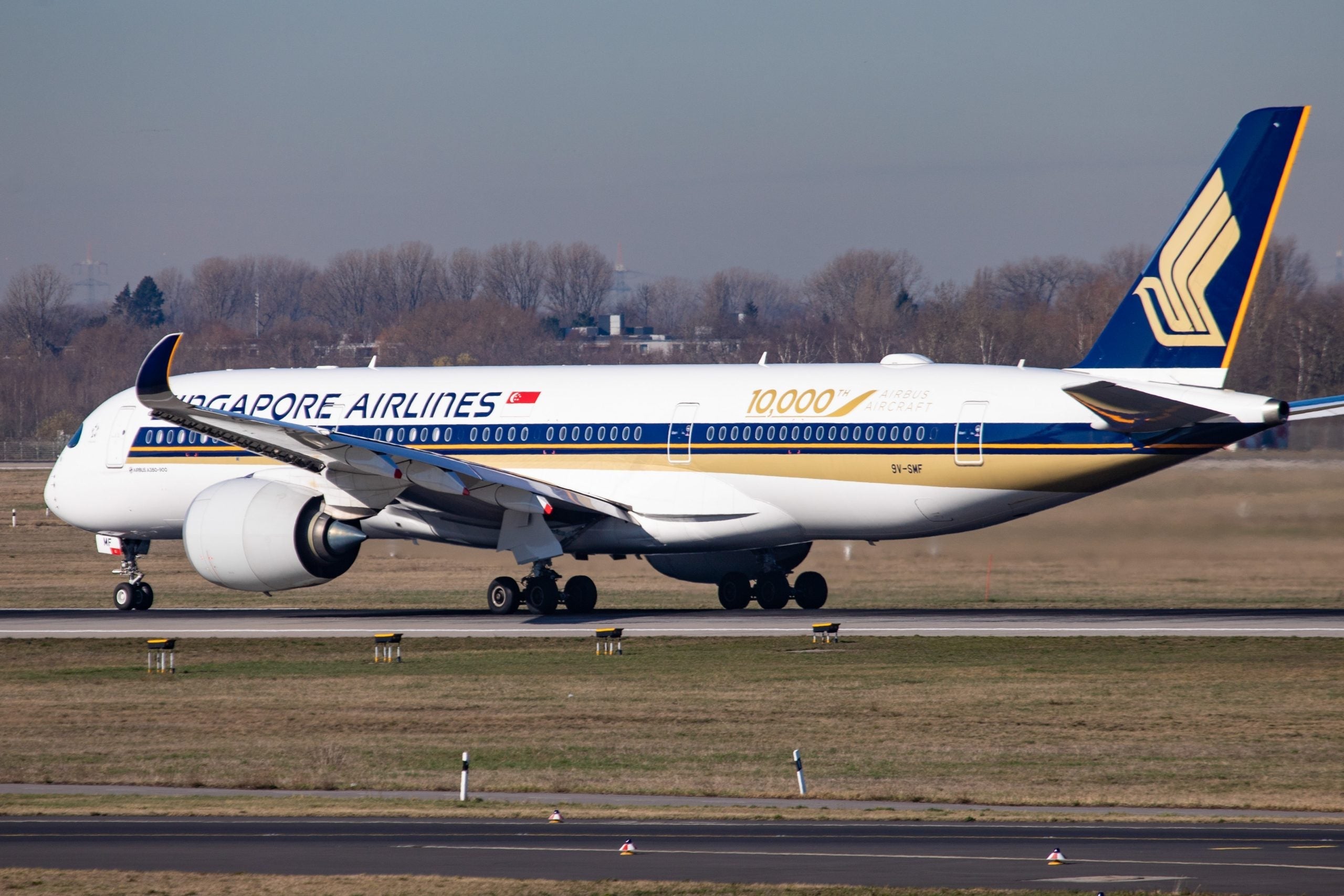
This week, an American Airlines Boeing 737-800 reportedly struck a lamp post as it taxied out from the ramp area at Dallas-Fort Worth Airport. Video footage showed the left wing tip of the aircraft clipping the post, causing it to be uprooted from its base and falling to the ground. The aircraft then came to an abrupt stop.
It may seem surprising that it's possible for an aircraft to hit such an obvious structure, particularly during the daytime. However, incidents like this occur more often than most people realize. Taxiing an aircraft around a busy airport is often the most challenging part of a flight. At 39,000 feet, there is very little to collide with. However, the dynamic airport environment provides plenty of obstacles for even the most modest of aircraft to contend with.
What was a lamp post doing there in the first place?
Think of a lamp post and you probably imagine a dark road being lit from above, helping divers guide their cars safely down the street. On the highway, lights help illuminate the road ahead, enabling cars to travel safely at speed. So what purpose do they serve for aircraft at airports?
The reality of lamp posts at airports isn't so much for the aircraft, but more for the ground staff working around the gates and cargo areas.
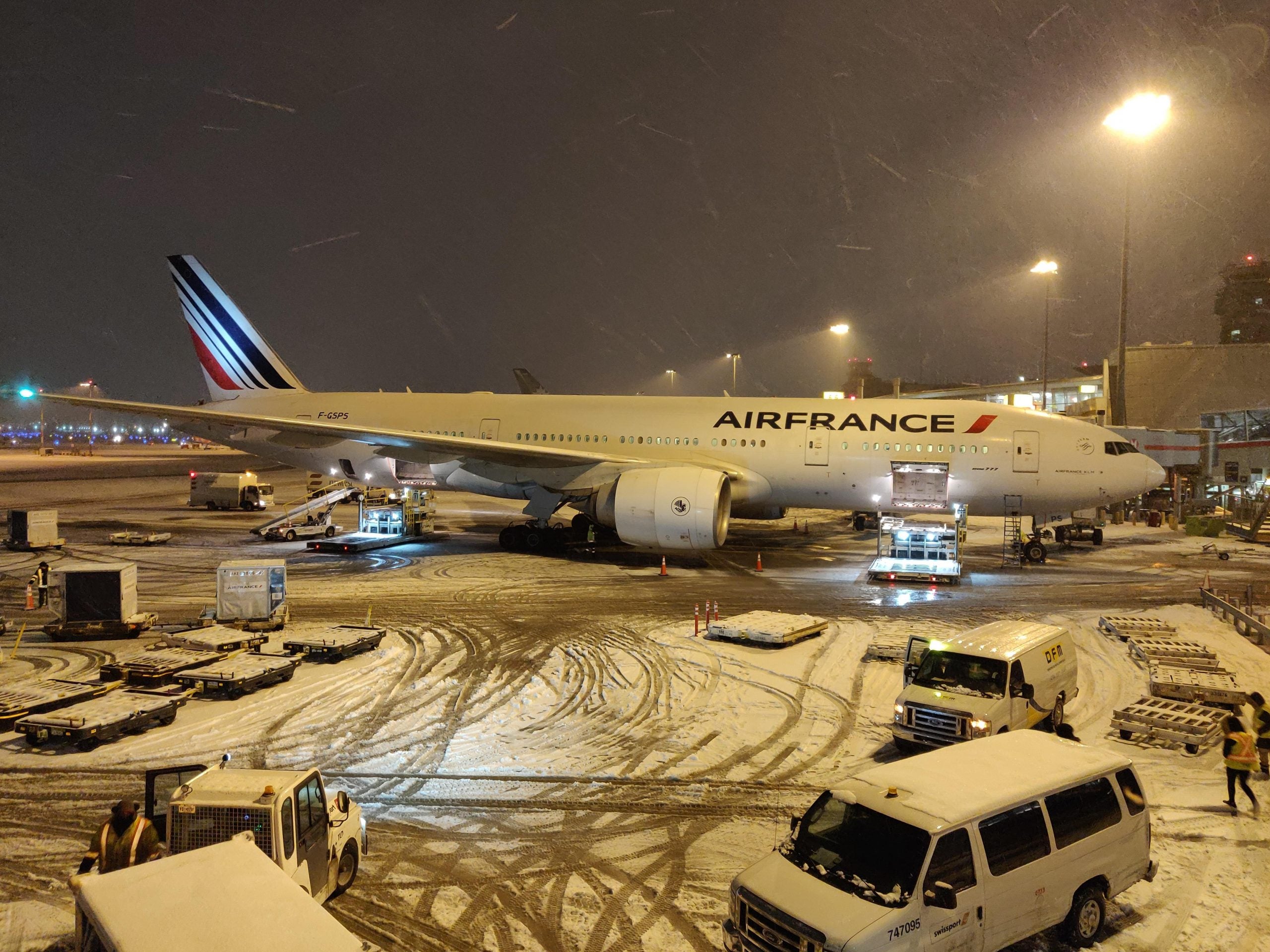
Getting an aircraft away from the gate on time is more than just boarding the passengers from the terminal and closing the door. When a flight arrives on the parking stand, a team of ground crew swarms the aircraft to prepare it for its next flight. Baggage and cargo must be offloaded, toilet waste tanks emptied, potable water uploaded, engineering checks completed and fuel pumped into the wing tanks for the next trip.
The ramp area is a hazardous place during this hive of activity, with vehicles and people working closely in the same space. It's bad enough in the daytime, but in the darkness of night, it's even more dangerous. In order to enable the ground staff to do their job effectively and safely in the hours of darkness, large lamp posts are positioned around the ramp area to illuminate the parking stands and cargo areas.
However, these are not placed at random. Significant thought must go into where they are located so that they do not interfere with ground equipment or provide a hazard to aircraft.
Turning corners
Taxiing between the runway and the gate can be quite a journey in itself. Large hub airports such as Amsterdam (AMS) in the Netherlands and Dallas-Fort Worth, Texas (DFW) have multiple runways, with many of them often being used at the same time. The runway in use for arrivals will depend on a number of factors including the wind direction, local noise regulations and the direction in which the flight is coming from.
When there is more than one runway available for arrival, to keep things as straightforward as possible, air traffic control (ATC) will normally try to land aircraft on a runway located on the side of the airport from which the aircraft is coming. For example, Amsterdam Schipol airport has a combination of five runways that are used for landing and takeoff.

On a normal day, two of these will be used for arrivals and two will be used for departures. For aircraft arriving from the west, the runway on the western edge of the airfield (Runway 18R) is used, and for flights coming from the east, the runway farther to the east (18C) is used.
This leaves Runway 18L and Runway 24 for departing flights, as can be seen in the image below.
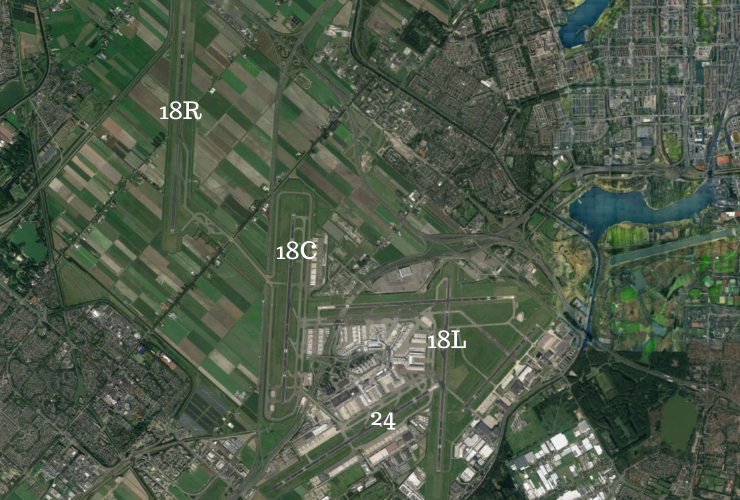
However, you will notice that once landed on 18R, you're still a significant distance away from the terminal buildings. In fact, it's around two miles away. Not only does this take a significant amount of time, but it also requires us to navigate a number of different taxiways, links and ramp entry points before we finally arrive at the gate.
How we find our way around
Taxiing around an airport is quite often the most challenging part of a flight. Vacating a runway in the dark, we are met with a myriad of lights and junctions, some routes leading us towards the gate, others towards active runways. As a result, we need to have a rough plan of our taxi route to the gate before we even touch down. This is done as part of the approach brief back in the calm of the cruise.
Related: Parking a 200-ton aircraft: How pilots move a plane around on the ground
An hour or so before we are due to land, our operations department will send us an ACARS message notifying us of our gate. With this information on hand, we then know where we need to end up. But how do we plot our route between the runway and the gate? The simple answer is by use of a map.
Every airport around the world publishes a collection of charts that detail the approach and departure procedures and also a map of the taxiways and gates. During the brief, we discuss the most likely route from the runway to the gate, particularly the exit point from the runway we plan to use and the first turn after that.

This enables us to vacate the runway expeditiously, allowing the aircraft behind us to land safely. Of course, this may all change depending on what ATC requires at the time, but with a little local knowledge built up from visiting airports regularly, we get an idea of what to expect.
Instead of being given names like roads, taxiways are given alphanumeric names, for example, A, B, D6 and E3. When instructing us where to go, ATC will read out a string of these letters over the radio and we must then find them on our charts to work out where to go.
However, finding the route on the chart is not the same as actually doing it. To help with this, airports have signboards on the side of the taxiways, indicating which routes are where. Bigger airports will also have this information painted on the taxiway itself.
Different markings, different instructions
To make things less confusing and reduce the potential for error, most airports around the world have standard markings and lights on the runways and taxiways. These vary from solid lines which tell us where the center of the taxiway is, to pairings of solid and dotted lines allowing access from one direction but not the other.
Related: Runway approaching: How pilots find their way safely to the ground in all elements
Taxiway markings are relatively simple with a solid yellow line indicating the centerline. During the hours of darkness, green lights are spaced along the yellow line to make the centerline clear. At some large airports, for example, London Heathrow, ATC is able to control the taxiway lighting, providing green lights for the route they want us to take and indicating where they want us to stop by use of red lights across our path.
However, some airports, particularly those in the U.S., also use yellow lines to indicate the edge of the taxiway, as can be seen in the image below.
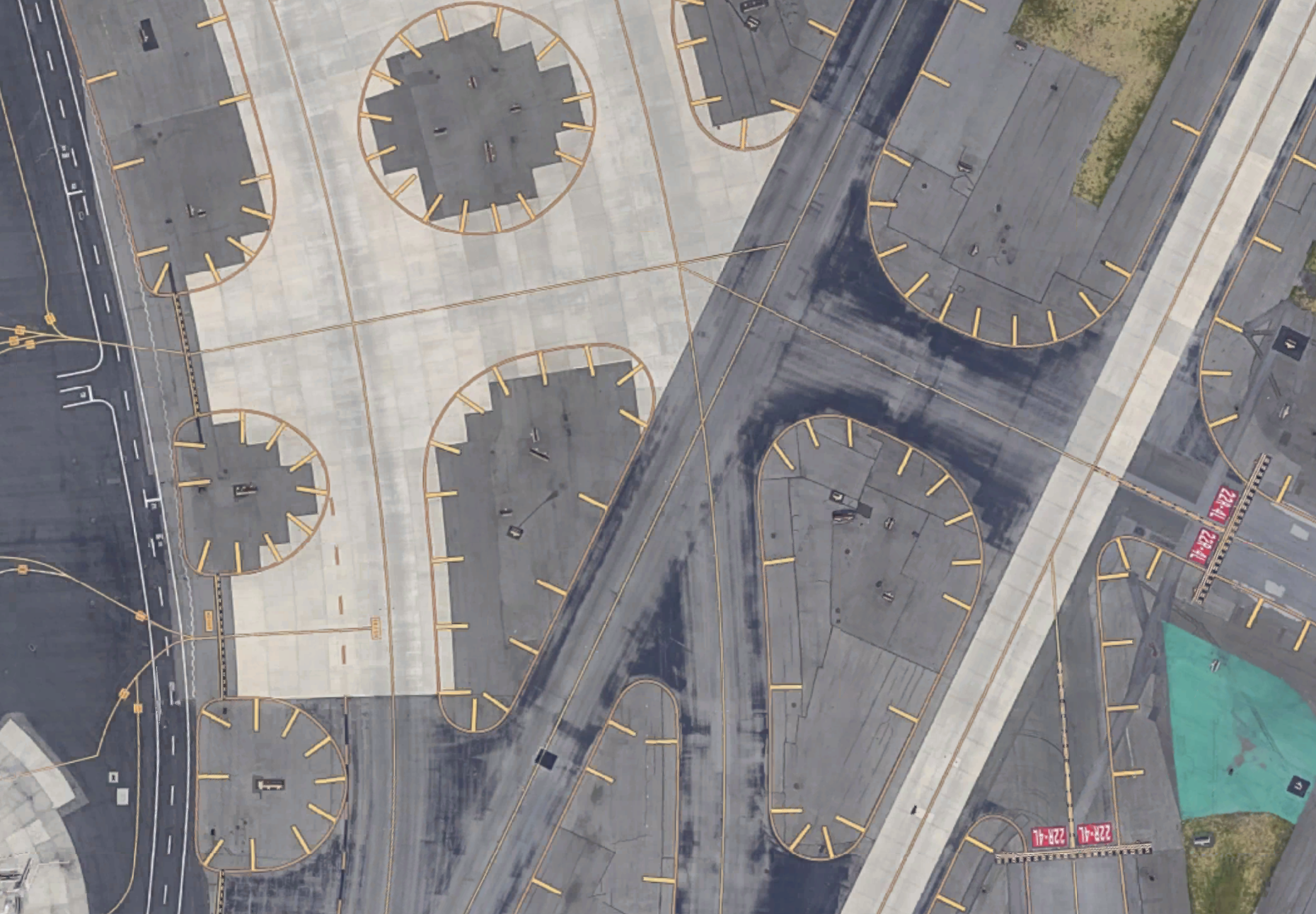
However, not all taxiways are created equal. At some airports, particularly older ones, some taxiways are not suitable for larger aircraft types. The area around the gates can be quite tight, with parking stands, baggage facilities and lamp posts getting in the way. As a result, some taxiways may only provide enough wingtip clearance for certain types of aircraft.
Unfortunately, there are not always signs on the ground indicating that a taxiway is only suitable for aircraft with a wingspan below a certain value. The only way we can ascertain this is by looking in another section of our airport charts.
When using a taxiway, so long as we keep the aircraft on the centerline, we will be assured wingtip clearance from any obstructions on either side. However, as straightforward as this is when taxiing in a straight line, it can be a little more problematic when turning corners.
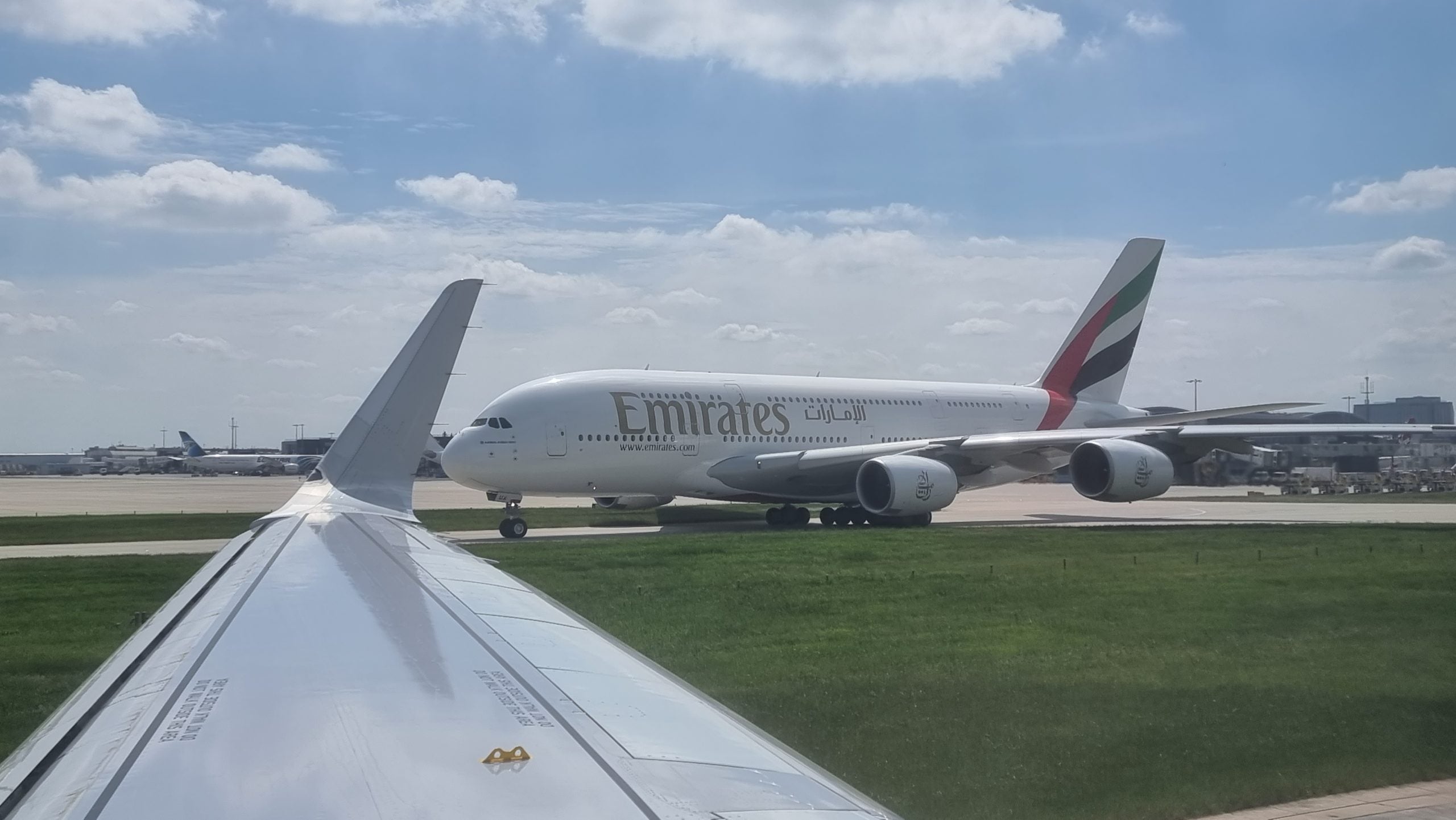
'Driving' a 787 Dreamliner
The 787-10 is 223 feet long, with a wingspan of 197 feet. This means that from our seats in the flight deck, we are unable to see the wingtips. Our eye level is 18 feet above the ground, and this creates a 46-foot blind spot ahead of the aircraft. As a result, accurate taxiing is essential.
This is done through two different sets of controls. Limited steering is possible using the rudder pedals, which sit underneath our feet. Unlike in your car, the pedals under our feet have very little to do with acceleration and a lot to do with braking and steering. These primarily control the rudder on the tail (mainly used in crosswind landings) and also control the brakes. However, the main source of steering comes from the nosewheel steering tiller, which can turn the nose wheel up to 70 degrees.
Taxiways can vary in width and load-bearing strength depending on the airfield. Depending on these factors, they are categorized so that pilots know which taxiways they are able to use for their aircraft type. The taxiways at some airports can be particularly tight, especially for bigger aircraft like the 787-10 and 777-300.
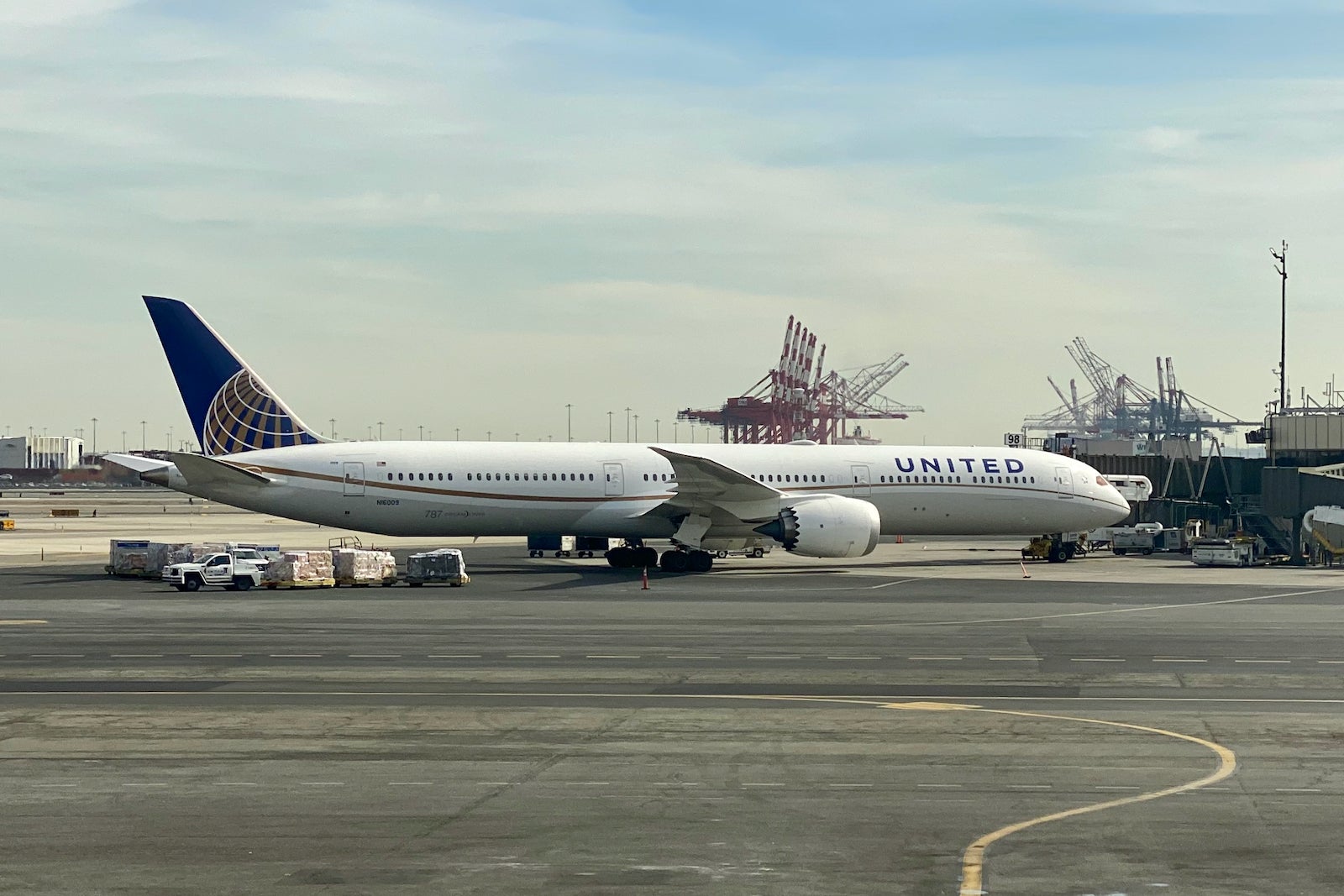
A gradually curved corner isn't much of an issue, as we simply ease the tiller into the corner and the aircraft will follow the centerline. Where it becomes more challenging is when the corners are a tight 90°, for example, at Newark Liberty International Airport (EWR), outside of New York City.
On a 787-10, the main landing gear is nearly 100 feet behind the nose wheel. If we were to start the turn as we approached the yellow line of the new taxiway, the main wheels would cut the corner and end up in the grass. Not ideal.
To stop this from happening, what we want is for the main wheels to track the centerline of the taxiways, not the nose wheel. To do this, we have to ensure that we taxi "deep" into the new taxiway, before inputting a good amount of tiller application and starting the turn. To do this, we keep going until the new centerline is over our shoulder and then start the turn. This means that the nose of the aircraft will almost be overhanging the grass before we start the turn.
If judged correctly, the nose wheel will swing wide of the centerline but the main wheels will continue to track it.
How do we stop?
Getting moving is no good unless you can bring the aircraft safely to a stop. To do this, each wheel on the main landing gear has a brake unit. On most aircraft, the brakes are powered by the hydraulics system. However, on the 787 Dreamliner, the eight main wheel brakes are electrically powered instead. This means that the aircraft then produces fewer CO2 emissions due to the lower weight — 245 pounds for each 787-9 aircraft. The simplified system also benefits engineers, as the procedure to replace a brake unit is much quicker and easier.
Related: How do aircraft brakes work?
Being such a safety-critical part of the aircraft, the braking system has to work well under all conditions. This includes situations where a brake unit isn't working. During the testing stage of the aircraft, engineers put them through a punishing process.
Bottom line
Taxiing around an airport is often the most challenging part of a flight. With airport service vehicles crossing taxiways and other objects in close proximity to the parking stands, pilots have to be uber alert when moving between the gate and the runway.
Yellow centerlines on taxiways show use the path that will keep us clear of most obstructions, but we have to ensure that we don't find ourselves on a taxiway for which our aircraft wingspan is too big. In addition, taxiway markings at some airports are more confusing than at others, using the same color line to indicate the edge as they do to indicate the centerline.
TPG featured card

at American Express's secure site
Terms & restrictions apply. See rates & fees.
| 3X | Earn 3X Miles on Delta purchases. |
| 1X | Earn 1X Miles on all other eligible purchases. |
Pros
- Delta SkyClub access when flying Delta
- Annual companion ticket for travel on Delta (upon renewal)
- Ability to earn MQDs through spending
- Various statement credits for eligible purchases
Cons
- Steep annual fee of $650
- Other Delta cobranded cards offer superior earning categories
- Earn 100,000 Bonus Miles after you spend $6,000 or more in purchases with your new Card within the first 6 months of Card Membership and an additional 25,000 bonus miles after you make an additional $3,000 in purchases on the Card within your first 6 months, starting from the date that your account is opened. Offer Ends 04/01/2026.
- Delta SkyMiles® Reserve American Express Card Members receive 15 Visits per Medallion® Year to the Delta Sky Club® when flying Delta and can unlock an unlimited number of Visits after spending $75,000 in purchases on your Card in a calendar year. Plus, you’ll receive four One-Time Guest Passes each Medallion Year so you can share the experience with family and friends when traveling Delta together.
- Enjoy complimentary access to The Centurion® Lounge in the U.S. and select international locations (as set forth on the Centurion Lounge Website), Sidecar by The Centurion® Lounge in the U.S. (see the Centurion Lounge Website for more information on Sidecar by The Centurion® Lounge availability), and Escape Lounges when flying on a Delta flight booked with the Delta SkyMiles® Reserve American Express Card. § To access Sidecar by The Centurion® Lounge, Card Members must arrive within 90 minutes of their departing flight (including layovers). To access The Centurion® Lounge, Card Members must arrive within 3 hours of their departing flight. Effective July 8, 2026, during a layover, Card Members must arrive within 5 hours of the connecting flight.
- Receive $2,500 Medallion® Qualification Dollars with MQD Headstart each Medallion Qualification Year and earn $1 MQD for each $10 in purchases on your Delta SkyMiles® Reserve American Express Card with MQD Boost to get closer to Status next Medallion Year.
- Enjoy a Companion Certificate on a Delta First, Delta Comfort, or Delta Main round-trip flight to select destinations each year after renewal of your Card. The Companion Certificate requires payment of government-imposed taxes and fees of between $22 and $250 (for itineraries with up to four flight segments). Baggage charges and other restrictions apply. Delta Basic experiences are not eligible for this benefit.
- $240 Resy Credit: When you use your Delta SkyMiles® Reserve American Express Card for eligible purchases with U.S. Resy restaurants, you can earn up to $20 each month in statement credits. Enrollment required.
- $120 Rideshare Credit: Earn up to $10 back in statement credits each month after you use your Delta SkyMiles® Reserve American Express Card to pay for U.S. rideshare purchases with select providers. Enrollment required.
- Delta SkyMiles® Reserve American Express Card Members get 15% off when using miles to book Award Travel on Delta flights through delta.com and the Fly Delta app. Discount not applicable to partner-operated flights or to taxes and fees.
- With your Delta SkyMiles® Reserve American Express Card, receive upgrade priority over others with the same Medallion tier, product and fare experience purchased, and Million Miler milestone when you fly with Delta.
- Earn 3X Miles on Delta purchases and earn 1X Miles on all other eligible purchases.
- No Foreign Transaction Fees. Enjoy international travel without additional fees on purchases made abroad.
- $650 Annual Fee.
- Apply with confidence. Know if you're approved for a Card with no impact to your credit score. If you're approved and you choose to accept this Card, your credit score may be impacted.
- Terms Apply.
- See Rates & Fees