Know your rights: DOT fines Spirit for under-compensating passengers who were denied boarding

Editor's Note
Airlines have two options for how to accommodate passengers when they oversell flights. The first and more desirable outcome is to find volunteers who are willing to take a later flight in exchange for compensation, usually in the form of travel vouchers, cash or miles. If the airline can't find a volunteer they'll be forced to "bump" someone, which in industry parlance is known as an "IDB" or "involuntary denial of boarding."
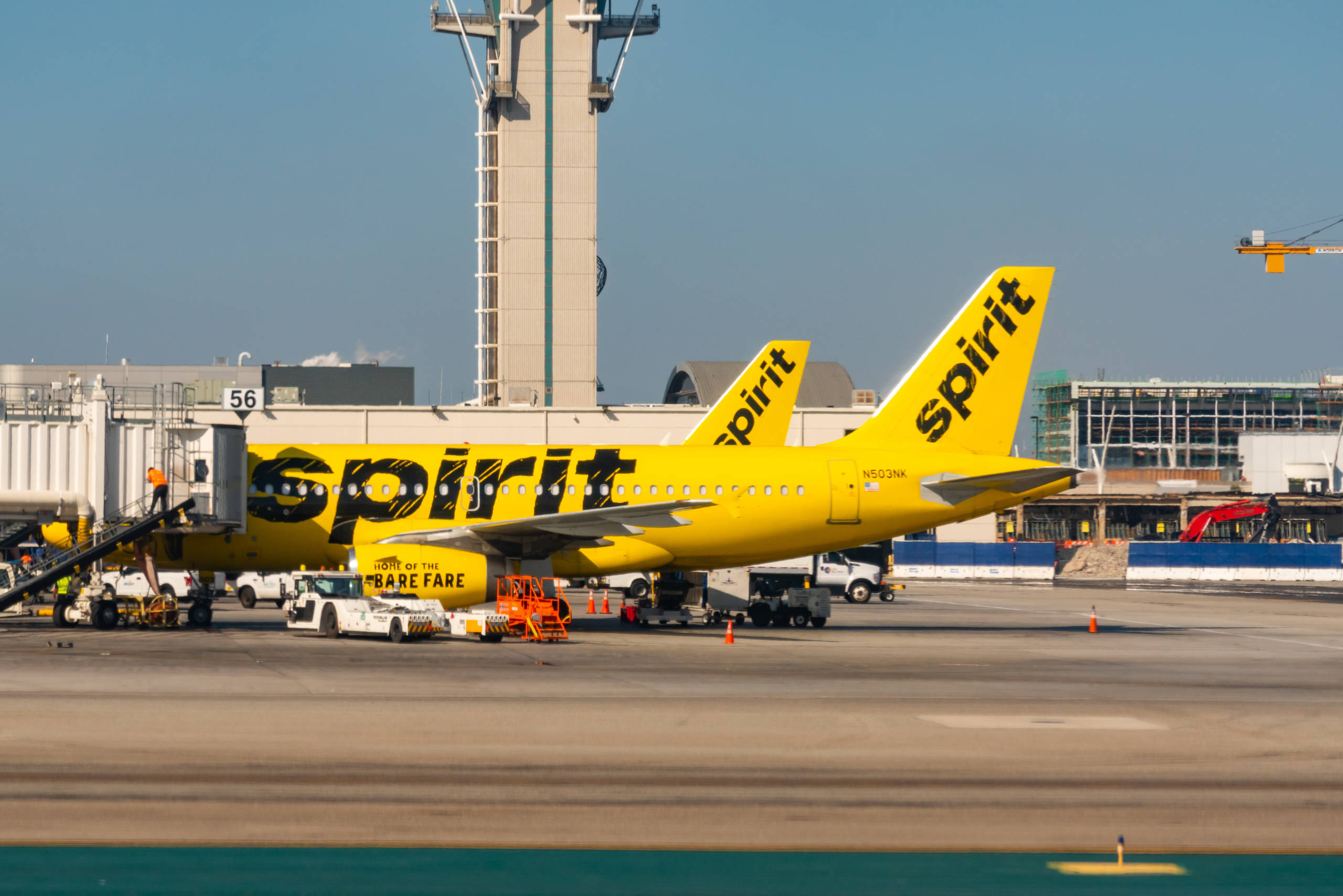
The Department of Transportation clearly defines the rights of passengers who are involuntarily denied boarding, but that doesn't mean they're always adhered to. This week, the DOT fined Spirit Airlines $350,000 for violating the rights of some passengers who were involuntarily bumped between 2017 and 2018 as well as for not accurately reporting the number of passengers who were involuntarily denied boarding during that same times period.
Specifically, the DOT alleges that Spirit:
Sign up for the free daily TPG newsletter for more airline news
- Required passengers who were involuntarily bumped to sign waivers suggesting that they had volunteered.
- Offered travel vouchers to passengers who were involuntarily denied boarding, without first informing them that under federal law they had the right to receive compensation in the form of cash or a check.
- Under-compensated certain passengers relative to federal requirements.
- From 2017 to 2018, mis-categorized over 1,000 passengers as "volunteers" when in reality they'd been involuntarily bumped.
The $350,000 fine is broken up into three parts. That includes an immediate payment of $155,000 and a credit of $110,000 for costs incurred rebooking passengers on other airlines related to equipment changes. There's also an $85,000 snapback penalty if Spirit violates the rules again.
Normally a $155,000 fine would be a relatively minor expense for an airline, but Spirit is sure to feel this much more now given the difficult financial situation that nearly all airlines around the globe find themselves in.
It's also worth noting Spirit has made a number of improvements since the violations that triggered this fine occurred several years ago. During all of 2019, Spirit involuntarily denied boarding to just 380 passengers, a rate of .12 per 10,000. This is a huge improvement from the year before, when during 2018 Spirit involuntarily denied boarding to .56 out of every 10,000 passengers. This puts Spirit ahead of major carriers like American Airlines and many regional carriers when it comes to involuntary denials of boarding.
What are your rights if you're denied boarding?
First of all, it's very important to understand the difference between a voluntary bump and an involuntary denial of boarding. You can volunteer to give up your seat on a flight for any amount of compensation the airline is willing to offer. While airlines will usually start the bidding at just a few hundred dollars, they may go up to several thousand dollars in order to find a volunteer and avoid bumping someone against their will.

I personally had luck getting bumped off the exact same American Airlines flight from Fort Lauderdale (FLL) to Chicago (ORD) on January 2 three years in a row when I was coming back to college after spending winter break with my girlfriend. Each year I happily volunteered my seat in exchange for a $500 AA travel voucher which I used to fly to Australia, India and Paris.
If you're denied boarding, you shouldn't sign any waiver saying you volunteered. Airlines want to keep their involuntary bump numbers as low as possible and may be willing to offer you a massive voucher in order to say you volunteered, even if you didn't initially. That's how one United Airlines passenger ended up walking away with a $10,000 travel voucher after she was bumped from a flight in 2018.
The DOT has very clear guidelines on how much compensation passengers are owed when they're involuntarily denied boarding, based on the length of their delay and whether they were flying domestically or internationally. Airlines are required to offer you compensation at the airport, or if you're rebooked on a flight before the airline can compensate you, within 24 hours of your denial of boarding.
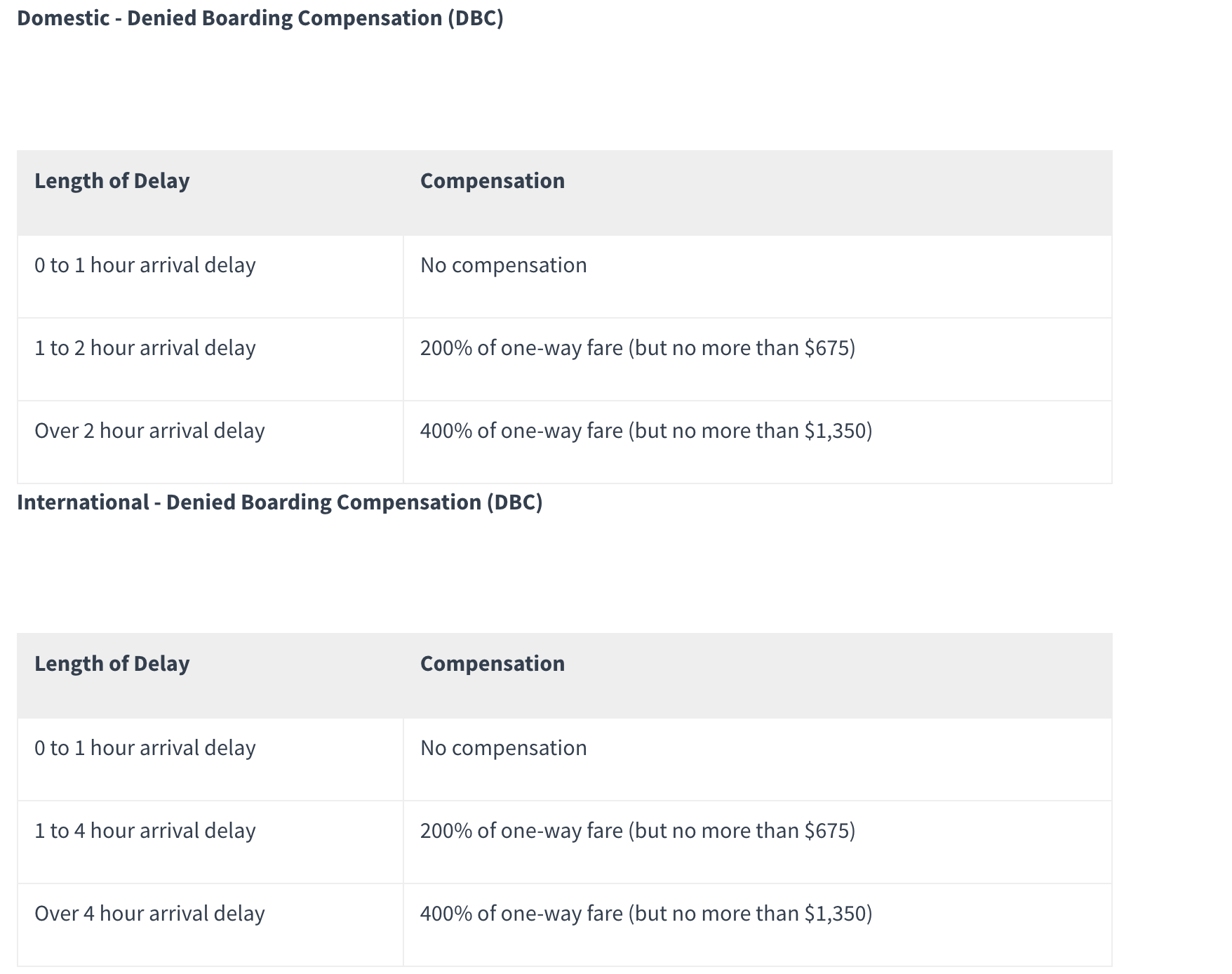
While most cases of involuntary denials of boarding require some form of compensation, the DOT also spells out a few examples where airlines do not owe any compensation:
- Aircraft change. If an airline downgrades your flight from a 777 to a 787 with fewer seats, they don't owe you compensation for bumping you off the flight.
- Weight and balance. Denied boarding due to weight or balance restrictions that apply to planes with 60 or fewer seats for operational or safety reasons doesn't trigger compensation.
- Downgrading. If you're downgraded to a lower class of service, like from business class to economy, you're entitled to a refund in the difference of the fare price but not additional compensation.
- Charter flights, or flights that are not part of an airline's regularly scheduled operations, are not covered.
- Small aircraft. Flights operated by jets holding fewer than 30 passengers are not covered.
- Flights departing from a foreign location. The DOT regulations only apply to flights originating in the U.S, though many airlines may voluntarily provide compensation if you're denied boarding on a flight from a foreign country to the U.S. Many countries also have similar passenger rights, such as EU 261 for flights departing Europe.
Bottom line
The Department of Transportation strongly dis-incentivizes airlines from involuntarily denying boarding to passengers. Not only are the compensation requirements stricter for involuntary bumps, but those numbers get reported to the public and can adversely affect an airline's reputation. Spirit's fine is an important enforcement of passenger rights, though it's clear that the airline has already taken steps to reevaluate its procedures and training surrounding involuntary denials of boarding. Still, the DOT move — coupled with its recent actions regarding refunds during the COVID crisis — may serve as a reminder to airlines that the agency will intervene when needed to enforce passenger protections.
TPG featured card

at Capital One's secure site
Terms & restrictions apply. See rates & fees.
| 5X miles | Earn 5X miles on hotels, vacation rentals and rental cars booked through Capital One Travel |
| 2X miles | Earn unlimited 2X miles on every purchase, every day |
Pros
- Stellar welcome offer of 75,000 miles after spending $4,000 on purchases in the first three months from account opening. Plus, a $250 Capital One Travel credit to use in your first cardholder year upon account opening.
- You'll earn 2 miles per dollar on every purchase, which means you won't have to worry about memorizing bonus categories
- Rewards are versatile and can be redeemed for a statement credit or transferred to Capital One’s transfer partners
Cons
- Highest bonus-earning categories only on travel booked via Capital One Travel
- LIMITED-TIME OFFER: Enjoy $250 to use on Capital One Travel in your first cardholder year, plus earn 75,000 bonus miles once you spend $4,000 on purchases within the first 3 months from account opening - that’s equal to $1,000 in travel
- Earn unlimited 2X miles on every purchase, every day
- Earn 5X miles on hotels, vacation rentals and rental cars booked through Capital One Travel
- Miles won't expire for the life of the account and there's no limit to how many you can earn
- Receive up to a $120 credit for Global Entry or TSA PreCheck®
- Use your miles to get reimbursed for any travel purchase—or redeem by booking a trip through Capital One Travel
- Enjoy a $50 experience credit and other premium benefits with every hotel and vacation rental booked from the Lifestyle Collection
- Transfer your miles to your choice of 15+ travel loyalty programs
- Top rated mobile app