Ryan is a former TPG credit cards writer who has been around points and miles for several years and has published content at Miles to Memories, AwardWallet and The Points Guy. His wife joins him on many of his trips, and they enjoy snowboarding, diving, and seeing animals in the wild. When not traveling, Ryan is probably answering questions from his family about how he travels so much and whether this points & miles stuff is illegal.
May 21, 2022 • 8 min read
The cards we feature here are from partners who compensate us when you are approved through our site, and this may impact how or where these products appear. We don't cover all available credit cards, but our analysis, reviews, and opinions are entirely from our editorial team. Terms apply to the offers listed on this page. Please view our advertising policy and product review methodology for more information.Editorial disclaimer: Opinions expressed here are the author's alone, not those of any bank, credit card issuer, airline or hotel chain, and have not been reviewed, approved or otherwise endorsed by any of these entities.
Comments
By commenting, you agree to our Community Guidelines to help create a positive space for conversation. The responses below are not provided or commissioned by the bank advertiser, our partners, or The Points Guy (“TPG”). They have not been reviewed, approved, or otherwise endorsed by any of these parties. All responses are submitted by individual contributors, and neither the bank advertiser, our partners, nor TPG are responsible for ensuring that all posts and/or questions are answered.
Related stories
Quick summary
The article explores unconventional methods one family uses to maximize points and miles from everyday spending.
Examples include splitting grocery purchases into multiple transactions to trigger bonus offers and paying for others' purchases to accumulate rewards.
Labeling cards for specific spending categories helps simplify the process for less-engaged family members.
Creative approaches can yield significant rewards, especially when paired with large or unexpected expenses.
What to consider
Some promotions require a minimum transaction amount or a specific number of transactions to qualify for bonuses.
Maximizing rewards may involve extra effort or unusual behavior, which could be perceived as odd by others.
Point values for hotel and airline programs can fluctuate; for example, 5,000 points may be worth $85 as of June 2024 per TPG’s valuations.
What you'll miss from the article
Real-life examples and practical tips for leveraging everyday spending and unique situations to boost your points and miles balances.
Generated by AI with support from our editorial team.
Update: Some offers mentioned below are no longer available. View the current offers here.
Quick: What's the most off-the-wall thing you've ever done to earn extra points and miles?
If your friends and family don't really participate in this hobby, they may consider everything you do "weird." I asked my wife what she thinks the weirdest thing I've done for points and miles is, and her response was akin to "everything."
Barring the mindset that "applying for lots of credit cards is weird," let's look at some of the more unique things my family has done to earn lots of points and miles.
For starters, I don't consider these 2 things to be strange
(Photo by Dan Gold/Unsplash)
Before we continue, I want to mention that some things my friends and relatives may consider strange really aren't that odd -- at least not in my view.
I don't find having more than 20 credit cards to be that strange. In fact, maybe I should write an article explaining why my wife and I each have 20-plus credit cards and how we get value from all of them -- beyond just the sign-up bonus.
So, no, I don't consider these things weird. I consider them pretty normal.
The strangest things my family has done to earn more points and miles
(Photo by Shutterstock)
You may be thinking, "If those aren't weird for you, what is weird?" Here are some of the more off-the-wall things my family has done to earn extra points and miles.
Split purchases into separate transactions
Last year, there was a promotion for Hyatt credit cardmembers to earn bonus points after making numerous transactions in a month. The best value from this promotion obviously came from making lots of small transactions with low price points. Each transaction only needed to be $1 or above to qualify.
While at the supermarket, I paid for each item in my shopping cart individually. Fifty-plus items, each priced over $1 -- and I earned 5,000 bonus World of Hyatt points. Based on TPG’s valuations, 5,000 World of Hyatt points are worth $85.
Yes, you could try this at the self-checkout. However, I felt it would look really suspicious, so I went to a cashier. To be clear, I only did this when there was no line and the cashier didn't mind. I wouldn't subject others to waiting extra time unnecessarily.
Similarly, my wife and I used a less eccentric version of this same concept just this month. I received an offer to "tap to pay" three times on my Chase Freedom Flex. If each transaction totaled $1.75 or higher, I could get $5 cash back. My wife received a similar offer on her Marriott Bonvoy Boundless Credit Card of 500 bonus Marriott Bonvoy points after three "tap to pay" transactions of $1.75 or more. According to TPG’s valuations, those points are worth a little over $4.
During two separate visits to a nearby 7-Eleven, we bought chips, a Coke and some candy, with each item as a separate transaction. Of course, we tapped our cards to pay and met the requirements for the three transactions each, netting those bonus points on things we were going to buy anyway -- we just approached the payment differently.
Labeling my wife's credit cards
(Photo by Ryan Smith/The Points Guy)
Admittedly, my wife is not well versed in the points and miles hobby. She applies for credit cards and closes them based on what I recommend to her.
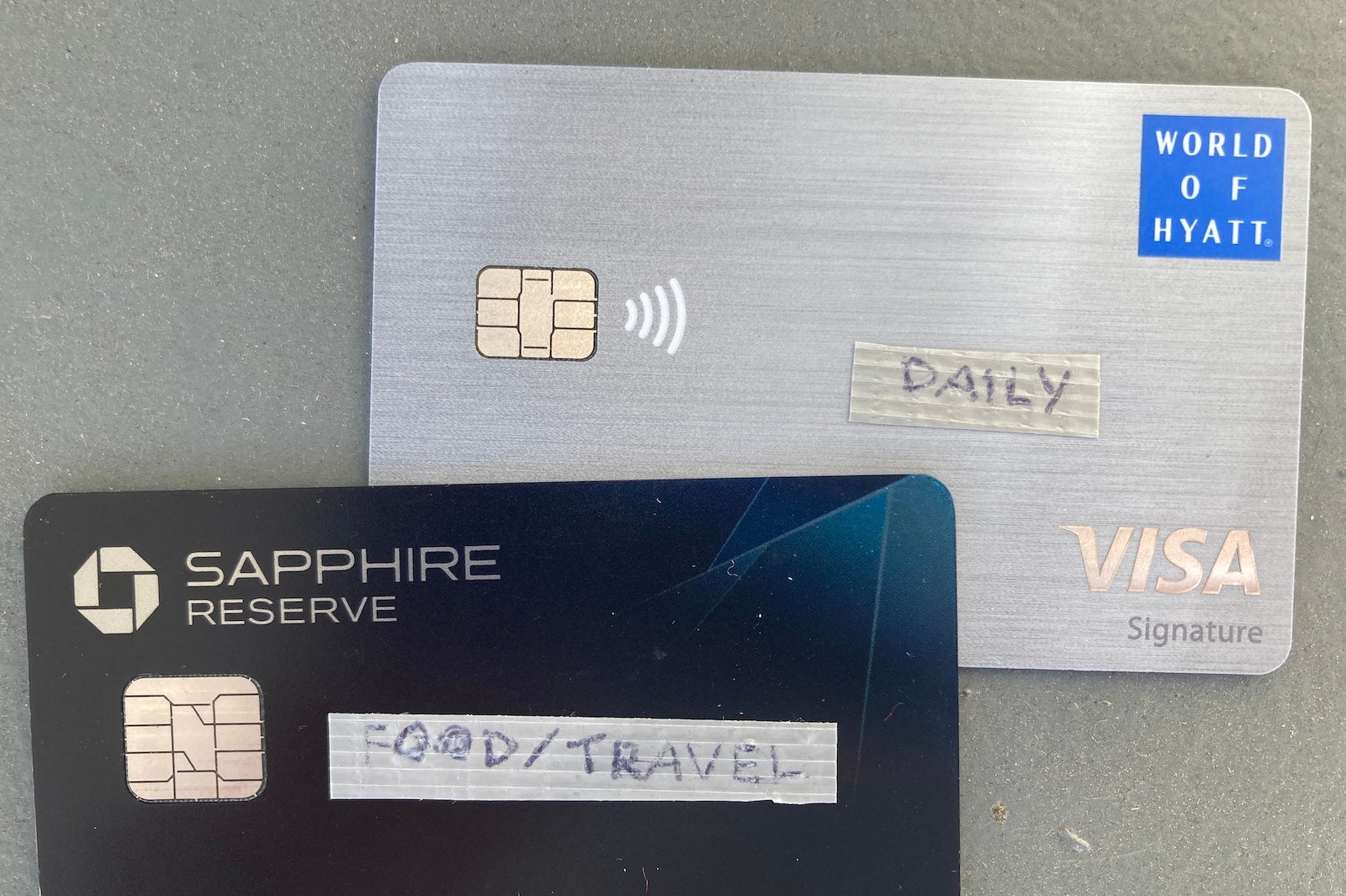
Keeping track of the many credit cards she has, and their bonus-earning categories, is a bit beyond her knowledge of points and miles. Instead of overwhelming her, I've made things simpler over the years. She carries just two "all the time" cards in her wallet: the Chase Sapphire Reserve for its earnings at restaurants and on travel, and the World of Hyatt Credit Card as we work toward the free night award that comes from spending $15,000 on the card each calendar year.
I've labeled these two cards to help her remember which purchases are best for which card. There may also be a third card in her wallet at any given time: the card for which she is working on a new sign-up bonus. She will recognize that card by it not being one of the regular cards in her wallet and can use it for any purchase.
This system helps us maximize points and miles on each purchase without making it complicated, without her worrying about messing up and without me needing to remind her which card to use for each purchase. It might seem strange, but these labels can give us 1 or 2 extra points on every purchase over the course of the year.
Paying with my card and keeping the cash from strangers
(Photo by Tetra Images/Getty Images)
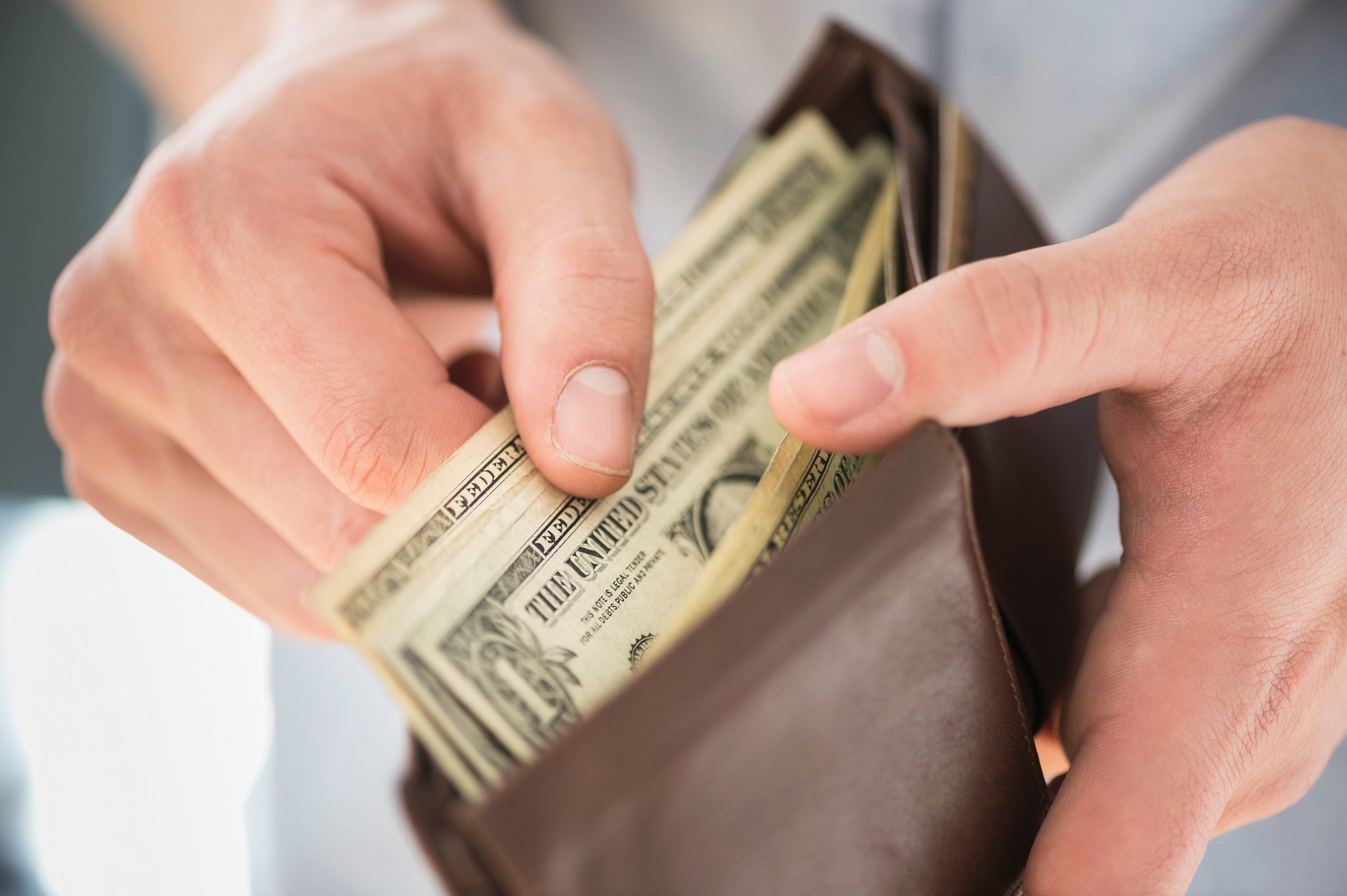
Have you ever had that feeling of "I can't believe they're paying cash! They could be earning so many points!" when you see strangers handing over real money to a cashier? I have. One time, I decided to do something about it.
I had just opened a new credit card with a significant spending requirement to earn the sign-up bonus. I was also at the Apple Store to buy an Apple Watch as a Christmas gift for my wife.
The family in line in front of me was buying multiple iPhones and a laptop and planning to pay cash. I saw a golden opportunity: I took their cash and paid for everything on my credit card. On the way home, I stopped at the bank to deposit the cash and smiled at the more than $4,000 I had just put toward earning my card's sign-up bonus.
The family definitely thought I was strange. I showed them my ID and promised this was legitimate -- I just wanted to earn the credit card points, I explained. In the end, this definitely worked in my favor. I'm always on the lookout for another opportunity to do this.
When my grandmother died a few years ago, this is exactly what my mom did. She put the funeral expenses on a new credit card and earned a bunch of frequent flyer miles in the process. While it didn't bring Grandma back or cure our sadness, it was a silver lining for my grieving mother.
Bottom line
When it comes to earning points and miles in my family, we've done some things that are ... let's call them "unique." However, they all fall under the guiding principles that you should always be working on a sign-up bonus, or, if you aren't, using the best credit card available for the purchase at hand.
A little creative thinking can help you turn an errand — such as grocery shopping — into a windfall of bonus points. It all depends on how you pay for the transaction and what other opportunities you can find for earning more points without increasing your own out-of-pocket expenses.
Next time you see people paying cash for expensive items, I bet you'll think about this post.
By commenting, you agree to our Community Guidelines to help create a positive space for conversation. The responses below are not provided or commissioned by the bank advertiser, our partners, or The Points Guy (“TPG”). They have not been reviewed, approved, or otherwise endorsed by any of these parties. All responses are submitted by individual contributors, and neither the bank advertiser, our partners, nor TPG are responsible for ensuring that all posts and/or questions are answered.