How a cruise line evacuated 3,000 guests from the Caribbean in 4 days

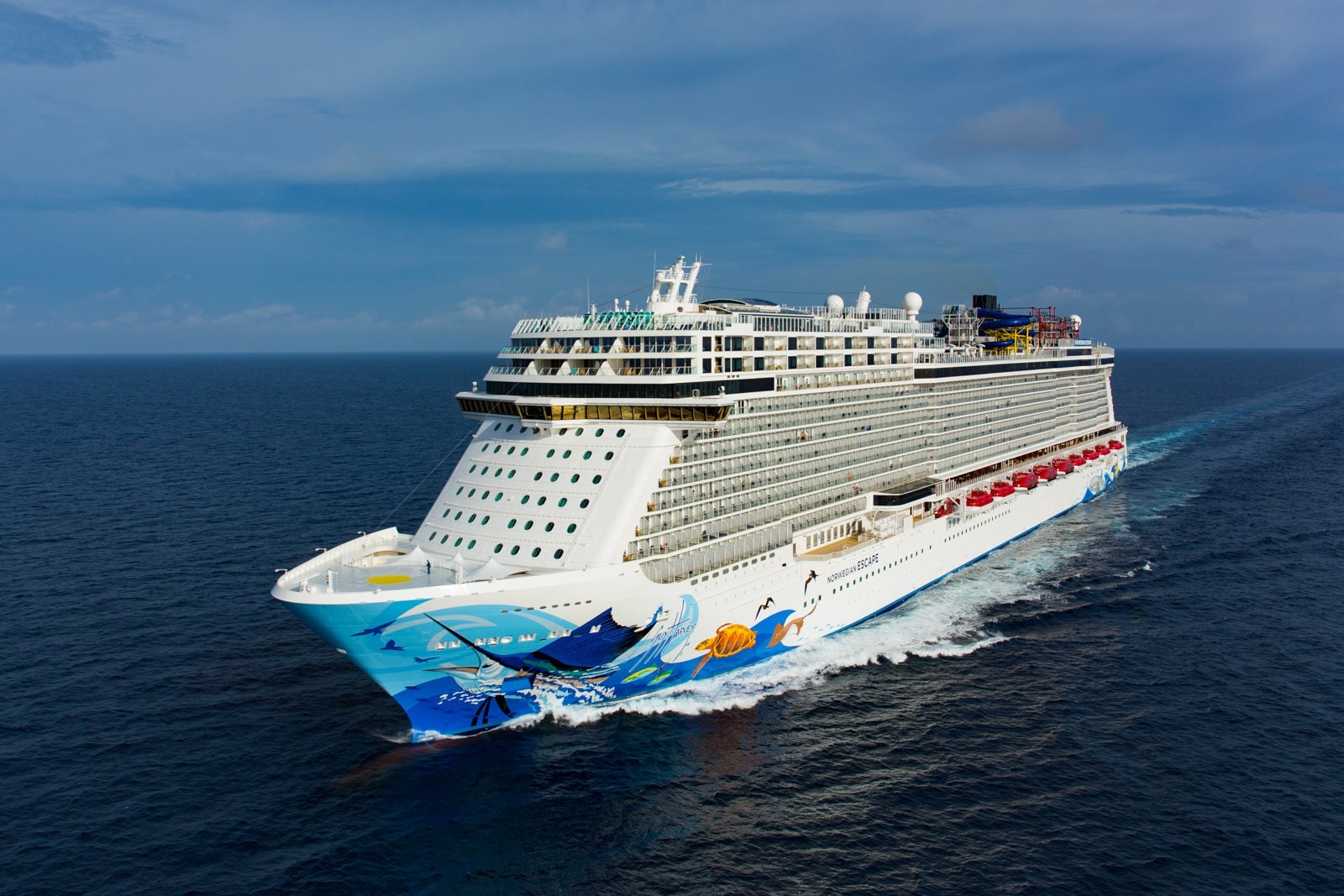
A week ago Tuesday, Norwegian Cruise Line executives got some good news — and some bad news.
The good news was that Norwegian Escape, which had been damaged when it ran aground off Puerto Plata in the Dominican Republic on Monday, March 14, was deemed seaworthy and able to sail back to its home in Port Canaveral, Florida.
The bad news? The line's expert consultants thought it best that passengers not be on the ship for that transit.
Suddenly, the cruise line's home office team had to drop their daily responsibilities and transform into an emergency evacuation squad. Their mission: Fly more than 3,000 passengers back to Florida from the Dominican Republic in time to catch their Saturday flights home — just four days away.
To complicate matters, the nearby Puerto Plata Airport (POP) is tiny without a large number of daily commercial flights. And roughly 350 passengers were not carrying passports because they're not required for a round-trip Florida cruise. It was spring break, with record numbers of people traveling due to pent-up pandemic demand.
It wasn't always pretty, but here's how Norwegian Cruise Line pulled it off, according to its president and CEO, Harry Sommer.
The planes
Even before the decision was made that passengers would not sail home with the ship, Norwegian's travel department reached out to the three or four charter flight companies they work with regularly.
The conversation, according to Sommer, went something like this: "OK, not quite sure if we're going to need you or not, and we won't know for a few hours, but if we need you, what type of planes can you put out? How fast can you turn them?"
To complicate matters further, most of the carriers Norwegian was working with did not have preestablished landing rights with the Dominican Republic. The process of acquiring those rights typically takes several months, but the cruise line told the charter companies, "We don't have three months to figure this out. You have one day."

The charter companies worked some magic, but it wasn't instantaneous.
The first got approval to land in the Dominican Republic on Wednesday, with the rest acquiring landing rights later in the week. The first charter flight took off with Escape passengers on Wednesday, but most of the flights went out Thursday and Friday, with two on Saturday. (It was supposed to be just one, but one plane had a mechanical issue, and those passengers had to spend a night in a hotel until they could get out Saturday morning.)
In total, the line required 16 flights across five carriers to get upwards of 3,000 passengers back to Florida. Though Norwegian wouldn't say which charter companies they used, a search on the FlightAware flight tracking website showed flights operated by Eastern Airlines, Omni Air International, Air Century, Nolinor and GlobalX. The cruise line used a mix of 767s, A320s and A321s, and a handful of people actually boarded a commercial flight back to Orlando International Airport (MCO).
Other considerations included not having flights land after midnight because U.S. Customs and Border Patrol at Orlando International shuts down for the night between 12 and 1 a.m., and cabs stop running then as well.
The passports
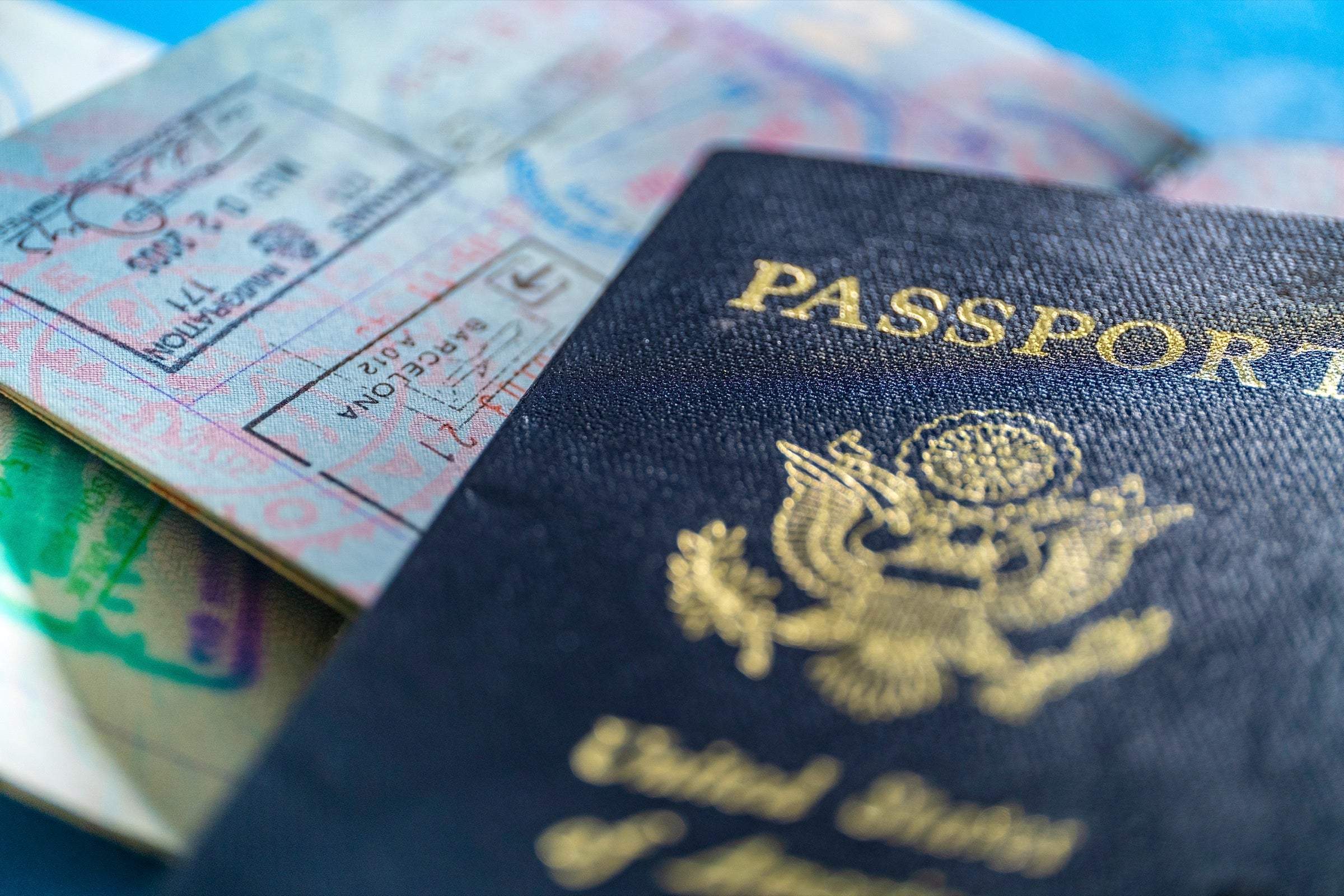
The Western Hemisphere Travel Initiative allows U.S. citizens to exit and re-enter the U.S. without a passport if they're sailing on a cruise round-trip from one U.S. port and visiting only destinations in North and Central America (including U.S. states and territories, Canada, Mexico, the Caribbean, the Bahamas and Bermuda).
Norwegian Escape was sailing an itinerary that fit these parameters, and roughly 350 passengers on board were not carrying passports. In order to fly back to the U.S. from the Dominican Republic, however, travelers are required to have a passport.
"So, we had to work closely with our contacts at Customs and Border Patrol to see if we can make an exception for these 300 people," explained Sommer, a process "that doesn't happen in five minutes."
Related: Trip wrecked: 7 ways to prepare for any kind of travel disaster
While they waited, the Norwegian Cruise Line team played through all the possibilities of how to get passengers home if the exemption wasn't granted. "Our Plan L — I wouldn't even call it a Plan B — is we have other ships that call on Puerto Plata on a regular basis," said Sommer. Because Norwegian Encore calls weekly in Puerto Plata, one option could have been for passengers to board that ship when it arrived and sail back to Miami, where they could be bussed to Port Canaveral.
Another possibility would be to take all the guests without passports to the nearest American consulate in Santo Domingo, the capital city of the Dominican Republic.
"I can't imagine that would have been a very good experience for our guests. Or the consulate, used to dealing with one or two people, not 350 guests showing up all at once," said Sommer.
In the end, though it took them a few hours to respond, U.S. Customs and Border Patrol did grant the exemption to the Norwegian Escape passengers and let them return to the U.S. despite not having passports with them. The best-case scenario was the one that came to pass.
The people
With thousands of passengers to get home, how did Norwegian decide which guests to put on which flights? Would the VIP suite occupants get priority over the folks in the cheaper cabins? Sommer said they used three factors to determine who got on which flight.
"We were trying to split out the people that lived locally in the Orlando region from the other people," he said. Basically, the passengers who drove to the port would need to get bussed to Port Canaveral on arrival in Orlando so they could pick up their cars and drive home. The folks who flew to their cruise would likely want to stay in Orlando to catch their flights home.
Keeping the Central Floridians and other drivers together made the logistics easier when it came to organizing buses during the busy spring break season and organizing staff to monitor the port area, given preexisting pandemic-era staffing issues.
Norwegian also needed to keep families and other people traveling together on the same flight. And, finally, the CBP requested that all the passengers without passports fly together on their own flights, not mixed in with other travelers, so the processing would be simpler.
"We tried to use those parameters to put people on flights," said Sommer. The bulk of the passengers -- 90% according to Sommer -- were flown home on either Thursday or Friday.
The airport
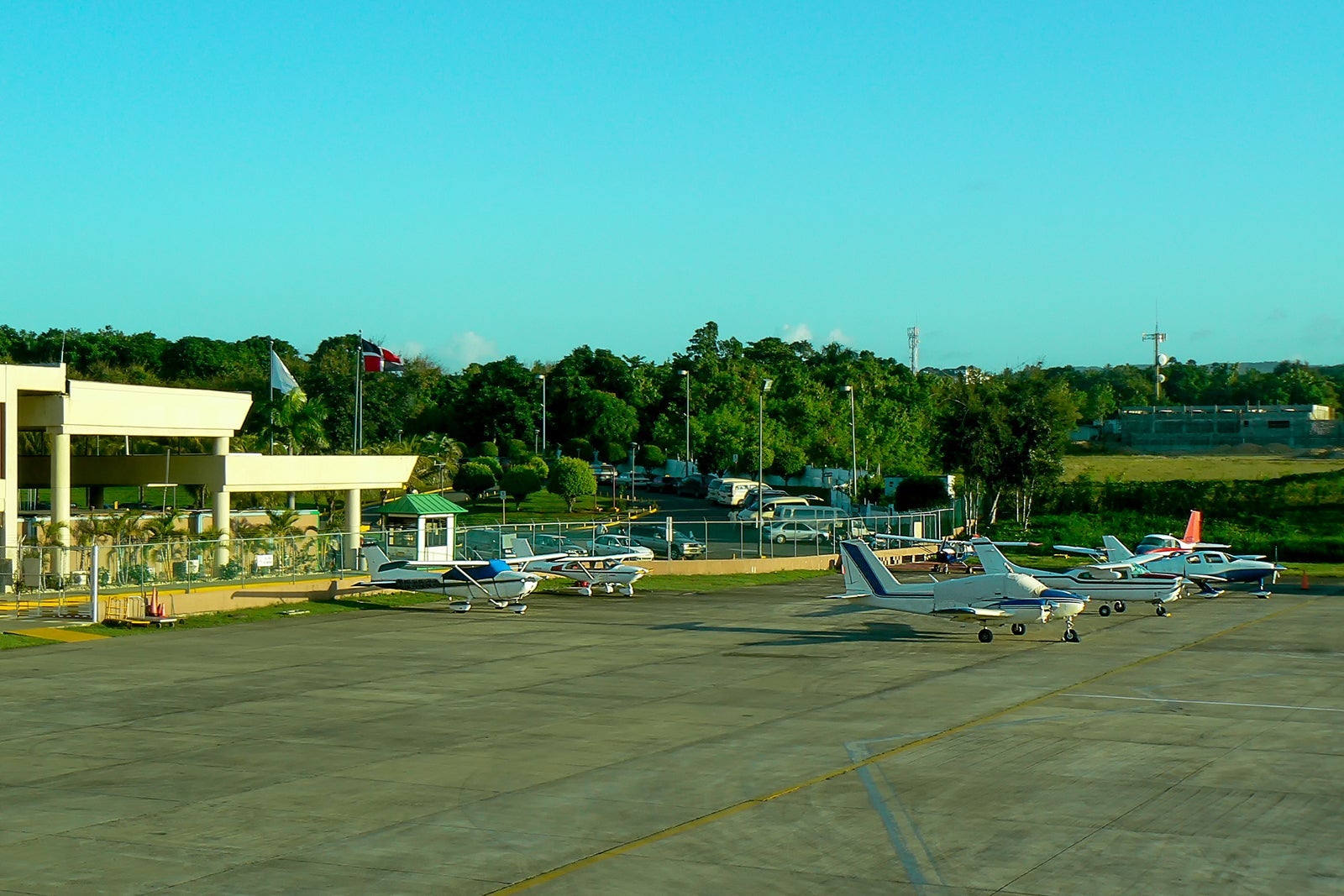
The most chaotic portion of the evacuation effort was definitely the situation at Puerto Plata airport. Take a look at Twitter, and you'll see complaints coming from passengers who spent hours at the airport with nothing to eat and little idea when their flight would depart.
So why did Norwegian Cruise Line choose to send cruisers home from this tiny airport?
"In a normal world, we try to go to a bigger airport like Santiago or Santo Domingo, but those were relatively far away from where the ship was and are relatively busy," said Sommer.
A transfer to a larger airport would involve a two-hour or longer bus ride, possibly over mountains. So, the line made the decision to base its airlift operation at the closest airport to the ship, Puerto Plata.
Unfortunately, the infrastructure of the airport was not set up to handle the onslaught of nearly 2,000 Norwegian passengers trying to get home. "It's a really small airport, so there's only a limited number of check-in counters," said Sommer. Suddenly, the airport had to accommodate six or seven extra flights on both Thursday and Friday, and it didn't have enough check-in counter space to handle that efficiently.
Nor did it have the staff.
"The charter companies contracted with the local company that does check-in at the airport. They pulled out all the stops and found every single person that they could to come in," said Sommer.
It wasn't enough. Even with NCL's local on-the-ground representatives stationed at the airport (and at the hotel that accommodated passengers scheduled for Saturday flights), Sommer acknowledges they could have used more people to make the transfers go more smoothly.
Related: What to ask for when things go wrong on your cruise ship
That's an understatement. From what passengers posted on social media, most didn't know there were any Norwegian representatives at the airport and they certainly weren't getting the level of service from them they were used to on board the ship. The nearly 2,000 Norwegian passengers were left in the hands of the charter airlines and their hastily assembled on-the-ground teams, at an overwhelmed airport that could not handle the crowds, and the experience was incredibly stressful.
The ship
"It wasn't really a huge difference between the first flight and the last flight," said Sommer, and while that is true when talking about time, he neglected to mention one huge difference. On Friday, Norwegian Escape disembarked all its remaining passengers and left.
Thursday travelers could wait on the ship, with all its amenities, until it was time to go to the airport. Friday travelers had to get off the ship early, wait at the port for buses to the airport, then sit at the airport -- sometimes all day -- waiting for their flight.
That meant tensions were high and moods were sour even before people arrived to check in for their flights.
So why didn't Norwegian Escape stay in port an extra day to ease the burden on the airport and see everyone off safely?
"We had operational issues that required us to return on Friday" was all Norwegian would say. Which doesn't feel like a satisfying answer for guests who spent an uncomfortable day at the airport.
Norwegian did go above and beyond to make guests whole. It refunded the entire cost of their paid cruise fare and gave them a future cruise credit to take another sailing on Norwegian's dime. The cruise line's travel department rescheduled travel plans for passengers who'd booked airfare through Norwegian and did not charge any change fees. Independent travelers were given free Internet access onboard to make any necessary arrangements.
And, of course, the cruise line footed the bill for the entire rescue operation, from hiring the charter planes to providing buses from Orlando back to Port Canaveral.
Mission accomplished?
In just four days, Norwegian managed to fly more than 3,000 passengers from the Caribbean to Florida — including successfully repatriating hundreds of guests without passports. It chartered 16 flights, found last-minute hotel space in Puerto Plata, and mobilized teams in the Dominican Republic and Florida to assist guests.
For some passengers, however, the logistical successes of Norwegian employees pale in comparison to the communication and people management failures that occurred once the ship departed.
When your dream holiday or much-awaited spring break goes wrong, and you're subjected to uncertainty, queues, long waits and unexpected costs from changed travel plans, you're not likely to think about the huge effort that went into simply getting you home. Many are likely wondering if the whole situation could have been avoided by better decision-making by the captain. (No verdict has been announced about whether the grounding was due to human error or a combination of unexpected wind and bad luck.)
The takeaway? Travel always involves a certain amount of risk. You can't avoid unexpected problems on the road, but you can take steps to make getting through the situation less stressful.
Purchase travel insurance to cover airline change fees or last-minute hotel stays when your travel plans go awry. Always pack extra snacks and medications, and bring an external battery to charge electronics on the go. Whenever you leave the country, even on cruises where you don't need one, carry a passport. And try, as hard as it might be, to embrace a Zen and patient attitude in the face of adversity.
In this case, having a major cruise line working tirelessly to get folks home kept a bad situation from becoming even worse. (Imagine trying to get, on your own, from Puerto Plata to Santo Domingo to the consulate to apply for an emergency passport and then have to make and pay for your own flight arrangements home during spring break.)
In hindsight, the ship should have stayed longer and the line should not have relied on the charter airlines to manage the airport crowds, but in the end, everyone got home safely, and that was the cruise line's number-one priority.
Unfortunately, as is often the case when travel plans go awry, while the solution was certainly impressive, it was not always pretty.
TPG featured card

at Capital One's secure site
Terms & restrictions apply. See rates & fees.
| 5X miles | Earn 5X miles on hotels, vacation rentals and rental cars booked through Capital One Travel |
| 2X miles | Earn unlimited 2X miles on every purchase, every day |
Pros
- Stellar welcome offer of 75,000 miles after spending $4,000 on purchases in the first three months from account opening. Plus, a $250 Capital One Travel credit to use in your first cardholder year upon account opening.
- You'll earn 2 miles per dollar on every purchase, which means you won't have to worry about memorizing bonus categories
- Rewards are versatile and can be redeemed for a statement credit or transferred to Capital One’s transfer partners
Cons
- Highest bonus-earning categories only on travel booked via Capital One Travel
- LIMITED-TIME OFFER: Enjoy $250 to use on Capital One Travel in your first cardholder year, plus earn 75,000 bonus miles once you spend $4,000 on purchases within the first 3 months from account opening - that’s equal to $1,000 in travel
- Earn unlimited 2X miles on every purchase, every day
- Earn 5X miles on hotels, vacation rentals and rental cars booked through Capital One Travel
- Miles won't expire for the life of the account and there's no limit to how many you can earn
- Receive up to a $120 credit for Global Entry or TSA PreCheck®
- Use your miles to get reimbursed for any travel purchase—or redeem by booking a trip through Capital One Travel
- Enjoy a $50 experience credit and other premium benefits with every hotel and vacation rental booked from the Lifestyle Collection
- Transfer your miles to your choice of 15+ travel loyalty programs
- Top rated mobile app