New Zealand Will Begin Taxing Tourists This Fall — Here's Where That Money Goes

If you're a frequent traveler, chances are you've already been taxed for the privilege. Some cities in France tack on a small "taxe de séjour" when guests check out from overnight accommodation. "Bed taxes" are common across the US, too. In Italy, Venice does the same, and recently announced they would tax day tourists by charging them to enter the canal system. Earlier this year, Japan introduced a departure tax of 1,000 Yen ($9). And in October, the cost of visiting New Zealand is about to get a little bit steeper, too, when they join the list.
The International Visitor Conservation and Tourism Levy (IVL) was announced by the government last September. Visitors will pay a fee of $35 NZD (about $23) when they apply for an Electronic Travel Authority (ETA), which is a border security mechanism already used by several countries.
Not everyone will be required to pay: Permanent residents are exempt, as are visitors from some other South Pacific islands and Australia. The tax will raise an estimated $450 million NZD ($300 million) over the next five years, which will be split between conservation and tourism infrastructure.

"Projects funded by the IVL will contribute to the long-term sustainability of tourism here, by protecting and enhancing our natural environment, upholding New Zealand's reputation as a world class experience and addressing the way vital tourism infrastructure is funded," said New Zealand's Minister of Tourism, Kelvin Davis.
So why is New Zealand, along with so many other destinations, looking past the pockets of its own residents when it comes to collecting taxes?
Tourism Is Rising — And Causing Problems
Globally, tourism is on the rise. Back in 1950, there were 25 million people traveling internationally. In 2017, that number was more than 1.3 billion.
All that travel has an impact. Recently, we've heard stories about the fallout from overtourism, like Maya Bay, Thailand (famous for being the setting of the movie "The Beach") which stopped allowing tourists so they could try to repair the coral reefs; Amsterdam's floating flower market, whose last true florist just announced it will shut down because it's been overrun by tourists; and the new regulations in Venice restricting tourist access to certain areas of town. For a few days this month, the Faroe Islands shut down to visitors entirely so they could focus on cleaning and maintenance.
New Zealand is no exception to either trend. Last year, the number of visitors increased by almost 8%, and these numbers are expected to keep growing. Estimates say there will be over 5 millions visitors pouring in by 2024. To put that in perspective, New Zealand's current population is around 4.9 million.
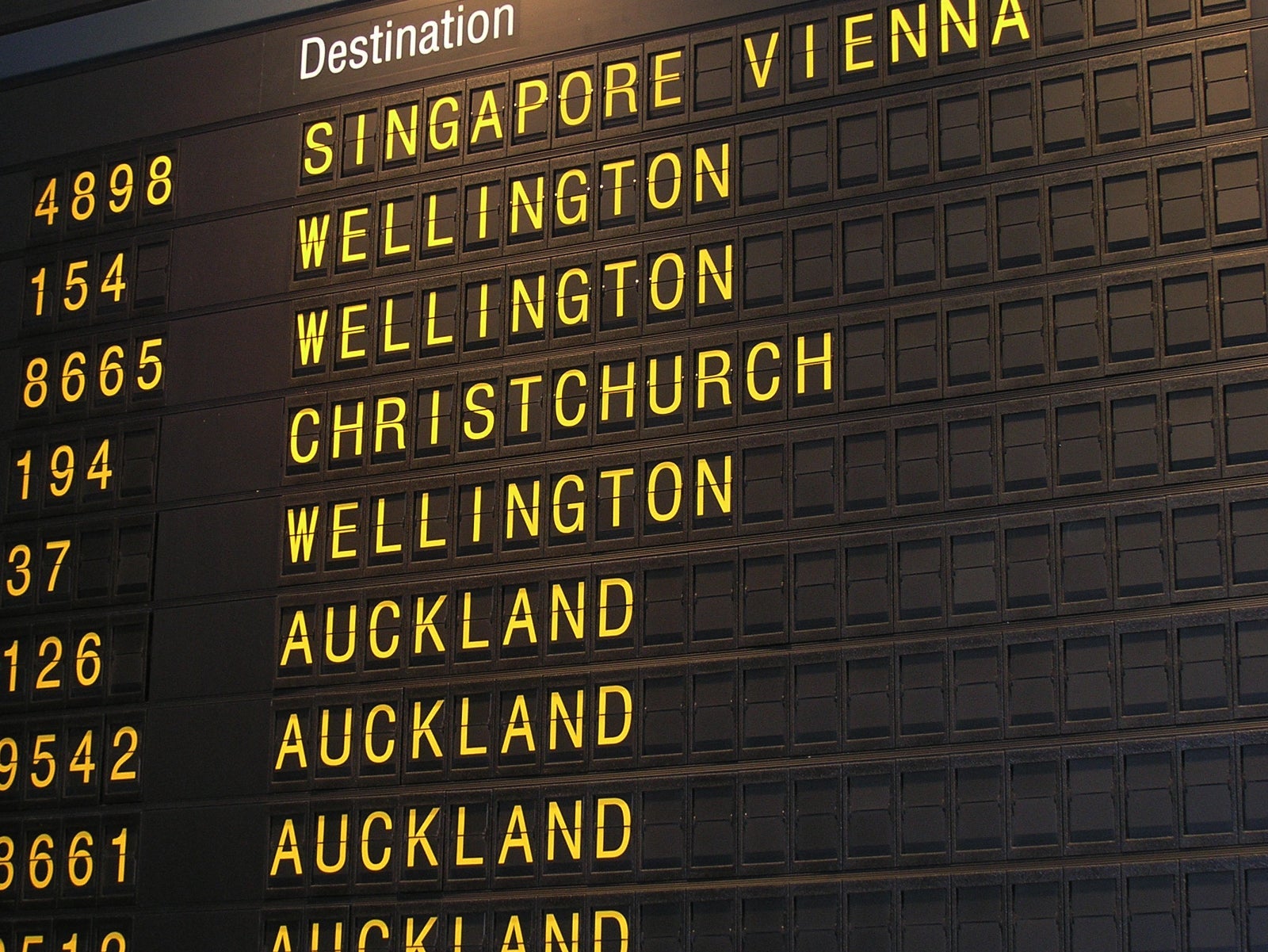
"For many years in New Zealand, we had levels of visitor arrivals that we could cope with and that could be sustained," said professor James Higham, from the University of Otago's Department of Tourism. "For most of the last decade, the growth in arrivals to New Zealand has been high and relentless."

Tourists Play, Locals Pay
One of New Zealand's major draws for visitors is the dramatic natural scenery. Though there are fees for overnight visitors to camp (and this month, the government is wrapping up a trial charging overseas visitors higher fees than locals in some parks), it doesn't cost anything to access the parks. That's unusual — many countries charge visitors at the gate.

This means that taxpayers are responsible for funding conservation, as well as the infrastructure that enables tourism, with no help from tourists.
"Tourism is a double edged sword. It can bring great benefits to communities and there are plenty of examples in New Zealand of communities that have thrived with successful and sustainable tourism growth. But it has a sting in its tail potentially," Higham said.
Is Adding a Tax Worth the Risk?
Still, these international visitors are bringing in plenty of cash — tourism is now New Zealand's biggest export industry. Last year, tourism spending increased by nearly 10%, to $16.2 billion NZD (about $10.8 billion in USD). The industry puts money directly in Kiwi's pockets, too: one in seven New Zealanders works in tourism.
If tourism brings so much money into the country already, is it worth risking it all for a little extra?
Studies are conflicted. One research review, out of Italy, found that while adding a city tourism tax lead to a drop in domestic tourism, there was no impact on the number of visitors coming from abroad. Another more recent report suggested taxes did play into travelers' decisions to visit a destination, because they factored it into the overall cost. But that report looked at case studies in Europe. It's one thing to decide between two European cities, but a different story when it comes to flying all the way to New Zealand.
Higham thinks that people who've had the country on their bucket list won't think twice.
"I don't think people would say, 'Oh gosh that's a show stopper. That really puts me off visiting New Zealand,'" he said. "I just don't think that's the way people think."
According to the World Economic Forum's 2017 Travel & Tourism Competitiveness Report, there's a strong correlation between a country's environmental sustainability and how many people visit. Simply put, the more untouched a destination, the more people tend to visit, so possibly, tourists might even appreciate a tax meant to keep the country immaculate.

"It provides an opportunity for visitors to New Zealand to directly contribute to the infrastructure they use, and the environment they enjoy," Davis said.
Though Higham suspects some visitors might feel good about paying the tax because it will allow them to feel good about their visit, in his view, it's time for New Zealand to take action to keep the country's tourism sector sustainable anyway.
"We've reached a point where we've got to make some hard decisions about who funds tourism and how tourism is managed to ensure that it is sustainable, and these funding initiatives are now very central to that conversation," he said. "It's overdue, in my opinion."
TPG featured card

at American Express's secure site
Terms & restrictions apply. See rates & fees.
| 3X | Earn 3X Miles on Delta purchases. |
| 1X | Earn 1X Miles on all other eligible purchases. |
Pros
- Delta SkyClub access when flying Delta
- Annual companion ticket for travel on Delta (upon renewal)
- Ability to earn MQDs through spending
- Various statement credits for eligible purchases
Cons
- Steep annual fee of $650
- Other Delta cobranded cards offer superior earning categories
- Earn 100,000 Bonus Miles after you spend $6,000 or more in purchases with your new Card within the first 6 months of Card Membership and an additional 25,000 bonus miles after you make an additional $3,000 in purchases on the Card within your first 6 months, starting from the date that your account is opened. Offer Ends 04/01/2026.
- Delta SkyMiles® Reserve American Express Card Members receive 15 Visits per Medallion® Year to the Delta Sky Club® when flying Delta and can unlock an unlimited number of Visits after spending $75,000 in purchases on your Card in a calendar year. Plus, you’ll receive four One-Time Guest Passes each Medallion Year so you can share the experience with family and friends when traveling Delta together.
- Enjoy complimentary access to The Centurion® Lounge in the U.S. and select international locations (as set forth on the Centurion Lounge Website), Sidecar by The Centurion® Lounge in the U.S. (see the Centurion Lounge Website for more information on Sidecar by The Centurion® Lounge availability), and Escape Lounges when flying on a Delta flight booked with the Delta SkyMiles® Reserve American Express Card. § To access Sidecar by The Centurion® Lounge, Card Members must arrive within 90 minutes of their departing flight (including layovers). To access The Centurion® Lounge, Card Members must arrive within 3 hours of their departing flight. Effective July 8, 2026, during a layover, Card Members must arrive within 5 hours of the connecting flight.
- Receive $2,500 Medallion® Qualification Dollars with MQD Headstart each Medallion Qualification Year and earn $1 MQD for each $10 in purchases on your Delta SkyMiles® Reserve American Express Card with MQD Boost to get closer to Status next Medallion Year.
- Enjoy a Companion Certificate on a Delta First, Delta Comfort, or Delta Main round-trip flight to select destinations each year after renewal of your Card. The Companion Certificate requires payment of government-imposed taxes and fees of between $22 and $250 (for itineraries with up to four flight segments). Baggage charges and other restrictions apply. Delta Basic experiences are not eligible for this benefit.
- $240 Resy Credit: When you use your Delta SkyMiles® Reserve American Express Card for eligible purchases with U.S. Resy restaurants, you can earn up to $20 each month in statement credits. Enrollment required.
- $120 Rideshare Credit: Earn up to $10 back in statement credits each month after you use your Delta SkyMiles® Reserve American Express Card to pay for U.S. rideshare purchases with select providers. Enrollment required.
- Delta SkyMiles® Reserve American Express Card Members get 15% off when using miles to book Award Travel on Delta flights through delta.com and the Fly Delta app. Discount not applicable to partner-operated flights or to taxes and fees.
- With your Delta SkyMiles® Reserve American Express Card, receive upgrade priority over others with the same Medallion tier, product and fare experience purchased, and Million Miler milestone when you fly with Delta.
- Earn 3X Miles on Delta purchases and earn 1X Miles on all other eligible purchases.
- No Foreign Transaction Fees. Enjoy international travel without additional fees on purchases made abroad.
- $650 Annual Fee.
- Apply with confidence. Know if you're approved for a Card with no impact to your credit score. If you're approved and you choose to accept this Card, your credit score may be impacted.
- Terms Apply.
- See Rates & Fees