Passport stamps to be phased out as Europe launches new border control system

Editor's Note
- Europe’s long-awaited new Entry/Exit System began its rollout Oct. 12. and will be fully implemented by April 2026.
- The new system will replace physical passport stamps.
- Your biometric data (fingerprints and photo) will be stored, and records of your entries and exits to countries using the EES will be kept.
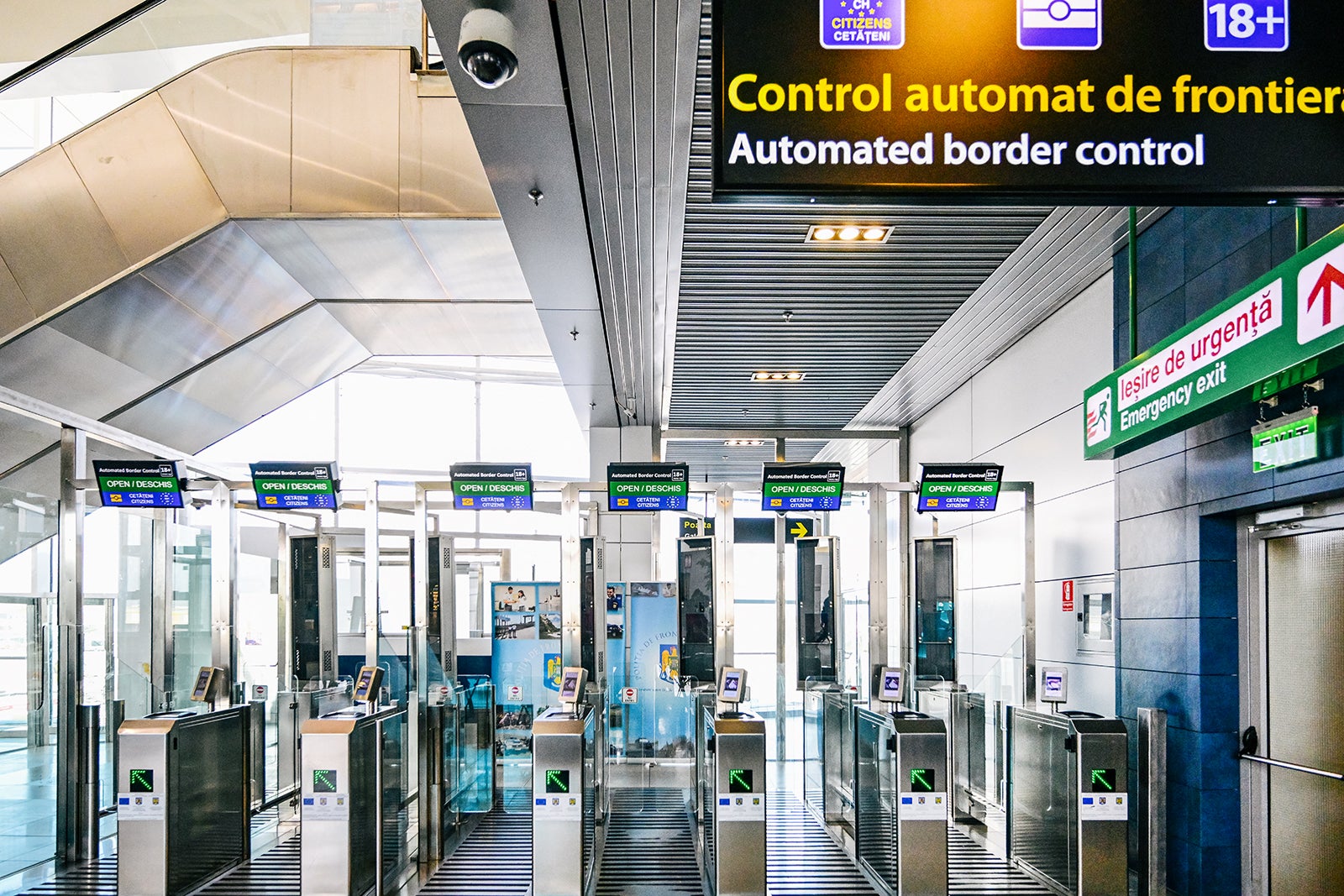
Travelers to certain European countries will say goodbye to passport stamps and experience a new border control process as Europe's long-awaited new Entry/Exit System began its rollout Oct. 12. The launch of the system, which uses biometric data instead of passport stamps to register the visits of non-European Union travelers, was initially expected in 2021.
The EES is mandatory for all non-EU nationals, and you cannot opt out of having your biometric data captured. If you refuse, you will be denied entry.
What is the EES?
The EES is an automated information technology system designed to register non-EU nationals traveling for a short stay to any of the 29 European countries using the system. A "short stay" is defined as up to 90 days within any 180-day period. One of the system's main functions is identifying those who overstay the allotted time.
"The EES modernises border management by increasing efficiency and quality of processes at the border. It also simplifies travel and makes it safer," according to the official website of the European Union.
The countries using the system are Austria, Belgium, Bulgaria, Croatia, the Czech Republic, Denmark, Estonia, Finland, France, Germany, Greece, Hungary, Iceland, Italy, Latvia, Liechtenstein, Lithuania, Luxembourg, Malta, the Netherlands, Norway, Poland, Portugal, Romania, Slovakia, Slovenia, Spain, Sweden and Switzerland.
EES countries include 25 of the 27 EU member states, with only Cyprus and Ireland not participating. Those countries will continue to perform manual border passport checks. Iceland, Liechtenstein, Norway and Switzerland are non-EU countries but are members of the Schengen Area and follow the short-stay rules.
When will it be fully implemented?
On Oct. 12, 2025, the system began a six-month phased launch. During that period, data collection will gradually be introduced at border crossing points. It is expected to be fully implemented by April 10, 2026.
During the rollout period, travelers may not have their biometric data collected at every border crossing or their personal information registered in the system, and passports will continue to be stamped as usual.
On Monday, Oct. 13, Eric Rosen, TPG's director of content, departed Amsterdam for Los Angeles on KLM.

"Along with EU passengers, I was directed to e-gates that took my picture and scanned my passport, then I was still directed to talk to border patrol agents at a nearby kiosk who gave me a physical passport stamp," he said. "I asked about the rollout, and they said it would be some time before they stopped stamping passports, according to what they had been told by supervisors."
According to the website of Amsterdam Airport Schiphol (AMS), the new EES system will be implemented in phases starting Nov. 3. Other airports, including Germany's Dusseldorf Airport (DUS), Rome Fiumicino Leonardo da Vinci Airport (FCO), Václav Havel Airport Prague (PRG) and Luxembourg Airport (LUX), began using the new system immediately Oct 12. This is not an exhaustive list of airports already using the EES, so it's worth double-checking the airport's website before you depart.
How US travelers are affected
The next time you fly through an airport with the new border crossing point system, you must provide your personal data from your passport, including your full name and date of birth. Passport control officers will scan four of your fingerprints and/or take a photo of your face to be stored in a digital file called the Biometric Matching Service. You may be able to register some of your data in advance using a self-service system if it's available at your border crossing point or a mobile app if the country you're traveling to has one. However, you will still need to see a passport control officer.
The fingerprints of children younger than 12 will not be scanned.
The EES tracks the date and location of each entry and exit, along with whether you were refused entry. Records of entries, exits and refusals will be kept for three years and then automatically erased. Travelers can request access to their data, request corrections and ask that their data be deleted.
You may need to arrive at the airport earlier than usual while travelers navigate the new systems.
According to LUX's website, "while the introduction of the new EES system may lead to slightly longer border processing times, the Luxembourg Airport teams remain fully committed to providing a smooth and pleasant travel experience. Dedicated staff will be available to assist passengers, and we will continue to closely monitor the situation to ensure the journey through the airport remains as seamless and comfortable as possible."
PRG's website advises non-EU nationals to anticipate "longer waiting times at both arrival and departure border control."
Bottom line
The EES is not the only change coming to European travel. The European Travel Information and Authorisation System is still expected to be implemented for visa-free travelers in the last quarter of 2026. The ETIAS application fee will now be 20 euros (about $23), an increase from the initially announced fee of 7 euros (about $8).
Related reading:
TPG featured card

at Capital One's secure site
Terms & restrictions apply. See rates & fees.
| 5X miles | Earn 5X miles on hotels, vacation rentals and rental cars booked through Capital One Travel |
| 2X miles | Earn unlimited 2X miles on every purchase, every day |
Pros
- Stellar welcome offer of 75,000 miles after spending $4,000 on purchases in the first three months from account opening. Plus, a $250 Capital One Travel credit to use in your first cardholder year upon account opening.
- You'll earn 2 miles per dollar on every purchase, which means you won't have to worry about memorizing bonus categories
- Rewards are versatile and can be redeemed for a statement credit or transferred to Capital One’s transfer partners
Cons
- Highest bonus-earning categories only on travel booked via Capital One Travel
- LIMITED-TIME OFFER: Enjoy $250 to use on Capital One Travel in your first cardholder year, plus earn 75,000 bonus miles once you spend $4,000 on purchases within the first 3 months from account opening - that’s equal to $1,000 in travel
- Earn unlimited 2X miles on every purchase, every day
- Earn 5X miles on hotels, vacation rentals and rental cars booked through Capital One Travel
- Miles won't expire for the life of the account and there's no limit to how many you can earn
- Receive up to a $120 credit for Global Entry or TSA PreCheck®
- Use your miles to get reimbursed for any travel purchase—or redeem by booking a trip through Capital One Travel
- Enjoy a $50 experience credit and other premium benefits with every hotel and vacation rental booked from the Lifestyle Collection
- Transfer your miles to your choice of 15+ travel loyalty programs
- Top rated mobile app