Mexico’s controversial Maya Train route is now complete

It has been a full year since the Yucatan Peninsula's Maya Train, or Tren Maya, celebrated its inaugural departure for its first section connecting Cancun to Merida on Dec. 15, 2023. Former Mexican President Andrés Manuel López Obrador set this ambitious, multibillion-dollar project in motion in 2018.
On Sunday, Mexico's new president, Claudia Sheinbaum, inaugurated the final section between Escarcega and Chetumal, completing this nearly 1,000-mile rail network that runs in a loop across five states and 34 stations in Mexico.
While the Maya Train offers a new way for tourists and locals to move around Quintana Roo, Yucatan, Chiapas, Campeche and Tabasco, it's not without its controversies.
Here's everything you need to know about this new train route in Mexico.
Maya Train routes and key stations
The Maya Train operates three main routes:
- Cancun to Palenque
- Cancun to Chetumal International Airport (CTM)
- Chetumal International Airport to Escarcega
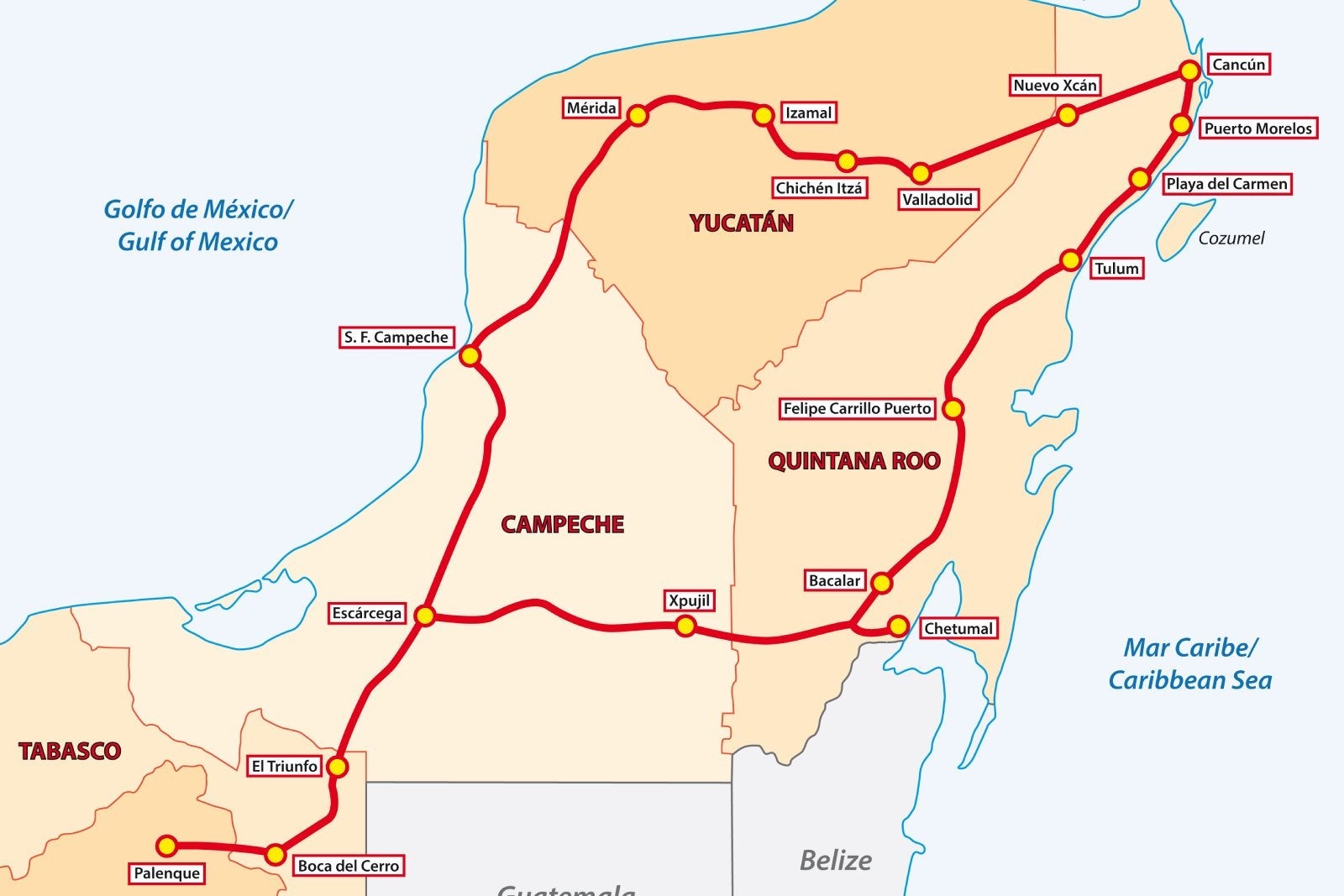
Andres Martinez, director of the Quintana Roo tourism board, highlights the significance of the Cancun International Airport (CUN) station, calling it the "elemental station" and the "heart" of the train system. From Cancun, travelers can head west to Yucatan's capital city, Merida, or south to Palenque and its misty jungle archaeological ruins and on to Chetumal, the capital of Quintana Roo, covering the entire southern peninsula.
Currently, the most traveled route is the one in Quintana Roo along the Caribbean Sea, which links stations like Puerto Morelos, Playa del Carmen, Tulum (which has two stops, including Tulum's new airport and downtown Tulum), Bacalar and Chetumal.
Designed to be more than a transit system, the Maya Train's stations are evolving into thematic attractions. "It's not only going from point A to point B," Martinez said. "The experience of visiting the station will be something else."

The Tulum station, for instance, is connected to the newly inaugurated Jaguar Park, which opened in September. This protected natural reserve features bike paths and a small museum featuring local artifacts and regional art — and is connected to the Tulum Archaeological Site.
Classes of service and cost
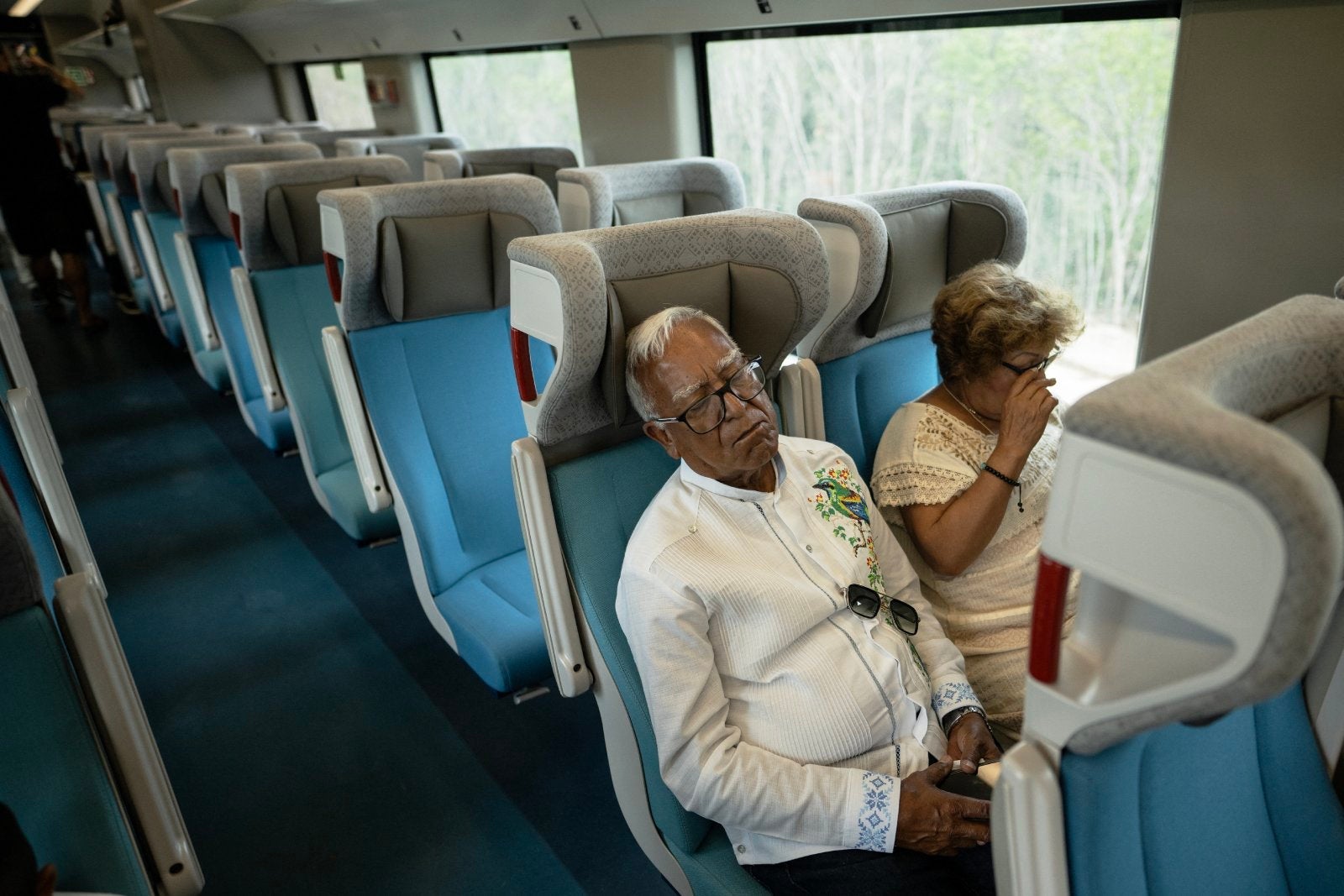
The "Standard Trains" currently offer two classes of service: Tourist Class and Premier Class. Both provide a comfortable ride through the jungle and along the peninsula. Premier Class, however, features a more spacious seating arrangement with three seats per row instead of four and includes complimentary box lunches.
Dining and sleeper trains are still being developed for longer-haul routes, such as from Cancun to Palenque, an 11-hour journey.
Maya Train tickets can be purchased at all stations. You can also allegedly prebook online at this website, though every time I put in my desired stations and date of travel, the website told me it was unable to find a timetable. Tickets can cost 40 pesos ($1.98) up to 4,500 pesos ($223), depending on ticket class and distance.
Impact on tourism and local communities
Martinez underscores the dual benefits of the Maya Train, noting that it is "not only for tourists but also for locals." The train provides connectivity for residents, particularly those commuting to work at the region's resorts. "It's been a major infrastructure facility," he says.
The train offers tourists an alternative way to explore the peninsula without renting a car. It also links the region's major airports, which is a perk for travelers who don't want to book costly transportation shuttles or private drivers.
That said, just because it's operational doesn't mean things always go smoothly. Aside from the online booking snags, The New York Times reported in April that scheduling issues and unfinished stations have left travelers feeling confused.
Environmental and social concerns
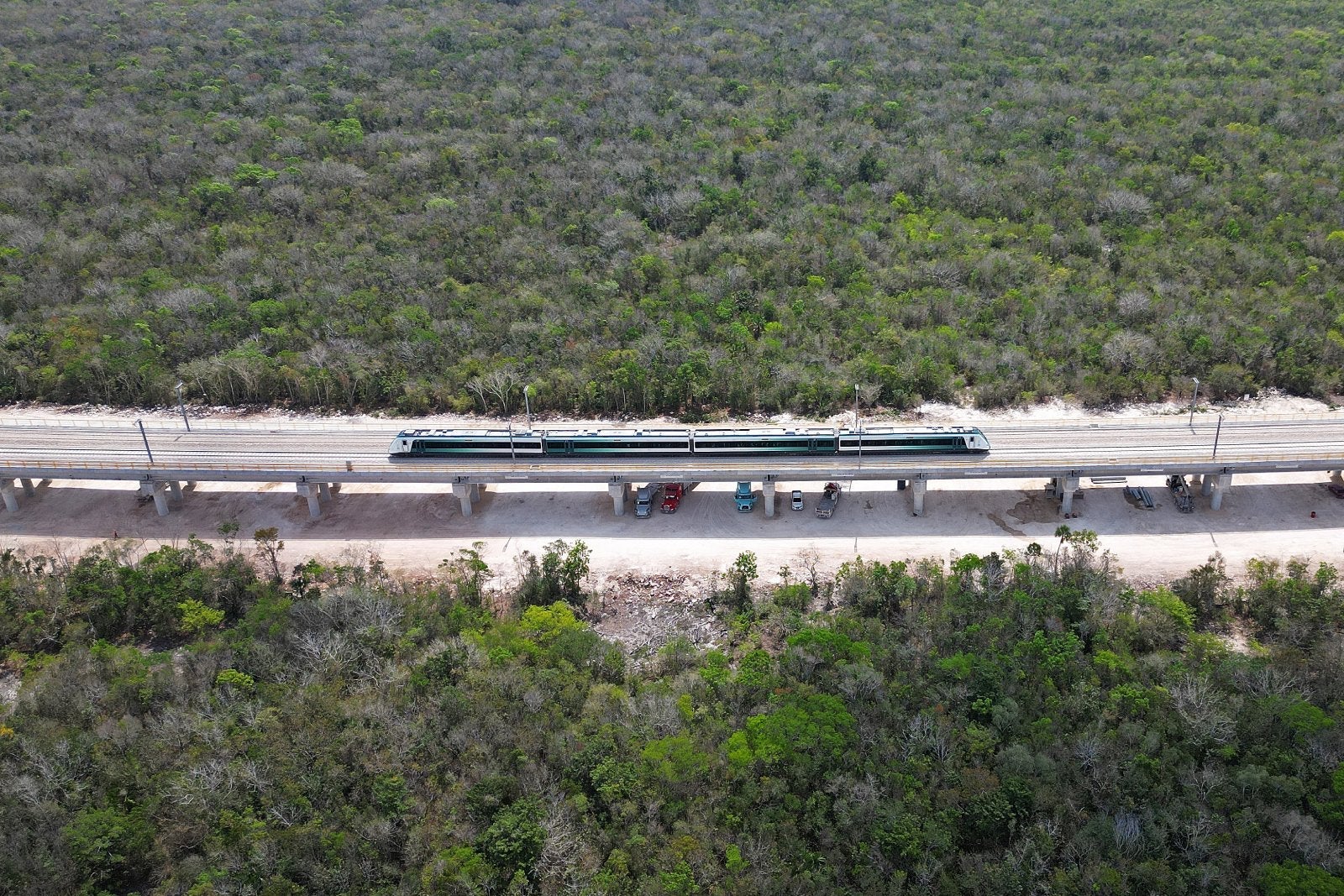
Despite its promises, the Maya Train has been the subject of significant controversy. Environmentalists have raised concerns about the impact of construction on fragile ecosystems, particularly the jungle areas home to endangered species. Additionally, activists have voiced opposition over the potential disruption to local Mayan communities, some of whom feel their voices were not adequately included in the planning process.
In 2022, for example, conservation groups filed complaints with Semarnat, Mexico's environmental ministry, pointing out the government's inaccuracies in assessing the environmental impacts of some sections of the train.
"Mexican officials failed to comprehensively consider the Maya train's environmental harms, but we know it's a huge threat to jaguars and other wildlife," Alejandro Olivera, Mexico representative at the Center for Biological Diversity, said in a statement. "The government's analysis failed to meaningfully address risks ranging from bulldozing away vegetation to operating the train itself. Along this section's 67 kilometers, there will be only two wildlife passages for jaguars and ocelots, and 15 kilometers of track won't have any wildlife passages at all. If this goes forward, it'll be a disaster for some of Mexico's rarest animals."
The Center for Biological Diversity has also said that the project violates local regulations regarding dredging, filling, excavating, expanding cenotes and removing vegetation.
Looking ahead
While the Maya Train has faced polarizing conversations, it has redefined travel in the Yucatan Peninsula. As the final touches are made to its stations, travelers have a whole new way to get closer to destinations across southern Mexico that were once more difficult to access.
Related reading:
- The best all-inclusive resorts in Mexico
- TPG's favorite points hotels on the beach in Mexico
- Marriott Cancun, An All-Inclusive Resort: An impressive first for the Marriott brand
- The 10 best places to travel in January
- Laptops, tents, binoculars and other surprising items you could be fined for when you travel to Mexico
- These are the best times to visit Mexico
TPG featured card

at Capital One's secure site
Terms & restrictions apply. See rates & fees.
| 5X miles | Earn 5X miles on hotels, vacation rentals and rental cars booked through Capital One Travel |
| 2X miles | Earn unlimited 2X miles on every purchase, every day |
Pros
- Stellar welcome offer of 75,000 miles after spending $4,000 on purchases in the first three months from account opening. Plus, a $250 Capital One Travel credit to use in your first cardholder year upon account opening.
- You'll earn 2 miles per dollar on every purchase, which means you won't have to worry about memorizing bonus categories
- Rewards are versatile and can be redeemed for a statement credit or transferred to Capital One’s transfer partners
Cons
- Highest bonus-earning categories only on travel booked via Capital One Travel
- LIMITED-TIME OFFER: Enjoy $250 to use on Capital One Travel in your first cardholder year, plus earn 75,000 bonus miles once you spend $4,000 on purchases within the first 3 months from account opening - that’s equal to $1,000 in travel
- Earn unlimited 2X miles on every purchase, every day
- Earn 5X miles on hotels, vacation rentals and rental cars booked through Capital One Travel
- Miles won't expire for the life of the account and there's no limit to how many you can earn
- Receive up to a $120 credit for Global Entry or TSA PreCheck®
- Use your miles to get reimbursed for any travel purchase—or redeem by booking a trip through Capital One Travel
- Enjoy a $50 experience credit and other premium benefits with every hotel and vacation rental booked from the Lifestyle Collection
- Transfer your miles to your choice of 15+ travel loyalty programs
- Top rated mobile app