Marriott soars to full US recovery thanks to higher room rates


If Marriott International, with its wide array of brands from Fairfield Inn & Suites to W and St. Regis, is the bellwether for the hotel industry, it's a good time to be in hospitality — especially if you run a hotel in the U.S. and Canada.
Marriott on Wednesday reported a $377 million profit for the first three months of the year, up from the $11 million loss the company reported for the same time last year. Overall hotel performance for Marriott brands around the world was just under 20% off 2019 levels while those in the U.S. and Canada were down by 14.5%.
But make no mistake: The travel recovery is well underway.
The U.S. and Canadian portfolio at Marriott returned to 2019 performance levels last month, Marriott CEO Anthony Capuano said in a statement ahead of an investor call this week. The company expects the region to continue to operate at pre-pandemic levels through the end of the year.
While there is still plenty of volatility in the global travel environment — China, where Marriott last year momentarily saw a full performance recovery, is once again struggling amid lockdowns during an omicron case surge — Marriott leaders are optimistic about sustaining its recovery momentum.
"Many countries have started to cautiously adopt a live-with-COVID policy, leading to a rise in demand for all types of travel," Capuano said on the Wednesday investor call.
Canada and the U.S., where a bulk of Marriott's hotels are parked, might have a strong recovery underway. But the numbers are even better for hotels in the Middle East and Africa, where hotel performance was up 12% from 2019 levels.
Hilton leaders gave a similarly optimistic outlook on the travel recovery during their own earnings call earlier in the week; though, some investor analyst reports following that call appeared to chide the company for taking too conservative an outlook given how much travel demand is expected during the summer.
Marriott's estimation that U.S. and Canadian hotels would remain in line with 2019 levels through the end of the year drew similar questions about if company leaders were playing it safe with their forecast.

Even though analysts and industry executives anticipate record-setting demand levels this summer at hotels, Marriott doesn't have as clear an outlook for the fall and winter when it comes to business and group booking demand. Both sectors made significant recovery gains to date this year, but booking windows remain shorter than usual.
"It's that murkiness of visibility in the back half of the year that's causing us not to be more bullish in terms of forecasting," Capuano said.
A luxury rate liftoff
It's already well-documented that it's more costly now to book a hotel stay than before the pandemic, and it's only going to get more expensive as the summer travel season picks up.
Hotel companies held onto pre-pandemic rates on rooms, even in more negatively impacted cities like New York and San Francisco, due to the industry ideology that discounts wouldn't stimulate demand in a health crisis. The move likely saved the industry years in its pandemic recovery timeline, as executives argue occupancy came back much quicker with pricing power than in prior downturns.
Marriott's leadership team Wednesday indicated average rates across the company were 5% higher than 2019 levels in March. Hilton reported this week that rates across its network were 3% above 2019 levels in March.
But the real eye-popper for the wallet at Marriot comes from the luxury sector, where company leaders on Wednesday said rates in the first quarter were 27% higher than 2019 levels. Rates at upper-upscale resorts (brands like Sheraton and Westin) in the U.S. were up roughly 20% in the first quarter as well.
"[It is] clear proof of the strength of the leisure business," Leeny Oberg, Marriott's chief financial officer, said in an interview with TPG following Wednesday's earnings call.
The number of room nights booked for leisure travel were up 17% from 2019 for the quarter. Business and group travel demand were still lagging, as that combined sector was down about 20% for room nights in the first quarter.
Much of that was driven by the omicron surge at the beginning of the year, Oberg noted. But there was an overall uptick in travel demand, as overall room nights booked in the U.S. were down 8% from 2019 levels for the first quarter but only down 2% in March.
What inflation concerns?
There have been some lingering concerns that inflation, while beneficial to hotel owners looking to recover financially from the depths of the pandemic, would take a toll on travelers who typically stay in more affordable hotels.
Rising gas prices and hotel rates might eventually lead some people to think twice about taking a vacation, the thinking goes.
The CEOs of Wyndham and Hilton refuted that claim over the last week, arguing they haven't seen any negative impact from inflation to date. Marriott's leaders were no different in their observations on Wednesday.
TPG featured card
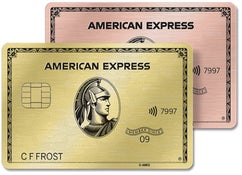
at American Express's secure site
Terms & restrictions apply. See rates & fees.
| 4X | Earn 4X Membership Rewards® points per dollar spent on purchases at restaurants worldwide, on up to $50,000 in purchases per calendar year, then 1X points for the rest of the year. |
| 4X | Earn 4X Membership Rewards® points per dollar spent at US supermarkets, on up to $25,000 in purchases per calendar year, then 1X points for the rest of the year. |
| 5X | Earn 5X Membership Rewards® points on prepaid hotel stays booked through AmexTravel.com or the Amex Travel App™. |
| 3X | Earn 3X Membership Rewards® points on flights booked through AmexTravel.com, the Amex Travel App™, or purchased directly from airlines. |
| 2X | Earn 2X Membership Rewards® points on prepaid car rentals booked through AmexTravel.com or the Amex Travel App™ and cruises booked and paid through AmexTravel.com. |
| 1X | Earn 1X Membership Rewards® point per dollar spent on all other eligible purchases. |
Pros
- Valuable dining and food-related credits
- Flexible rewards with airline and hotel transfer partners
- Multiple travel and purchase protections
- No foreign transaction fees
- Access to Amex Offers for additional savings (enrollment required)
Cons
- Not as useful for those living outside the U.S.
- Some may have trouble using Uber and other dining credits
- You may be eligible for as high as 100,000 Membership Rewards® Points after you spend $8,000 in eligible purchases on your new Card in your first 6 months of Card Membership. Welcome offers vary and you may not be eligible for an offer. Apply to know if you’re approved and find out your exact welcome offer amount – all with no credit score impact. If you’re approved and choose to accept the Card, your score may be impacted.
- Earn 4X Membership Rewards® points per dollar spent on purchases at restaurants worldwide, on up to $50,000 in purchases per calendar year, then 1X points for the rest of the year.
- Earn 4X Membership Rewards® points per dollar spent at US supermarkets, on up to $25,000 in purchases per calendar year, then 1X points for the rest of the year.
- Earn 5X Membership Rewards® points on prepaid hotel stays booked through AmexTravel.com or the Amex Travel App™.
- Earn 3X Membership Rewards® points on flights booked through AmexTravel.com, the Amex Travel App™, or purchased directly from airlines.
- Earn 2X Membership Rewards® points on prepaid car rentals booked through AmexTravel.com or the Amex Travel App™ and cruises booked and paid through AmexTravel.com.
- Earn 1X Membership Rewards® point per dollar spent on all other eligible purchases.
- Pay It® lets you tap in the American Express® App to quickly pay for small purchase amounts throughout the month and still earn rewards the way you usually do. Plan It® gives you the option to split up big purchases into equal monthly payments with a fixed fee. You’ll know upfront exactly how much you’ll pay.
- $120 Dining Credit: Earn up to a total of $10 in statement credits monthly when you pay with the Gold Card at Grubhub (including Seamless), Buffalo Wild Wings, Five Guys, The Cheesecake Factory, and Wonder. This can be an annual savings of up to $120. Enrollment required.
- $100 Resy Credit: Get up to $100 in statement credits each calendar year at over 10,000 qualifying U.S. Resy restaurants after you pay for eligible purchases with the American Express® Gold Card. That’s up to $50 in statement credits semi-annually. Enrollment required.
- $84 Dunkin' Credit: Earn up to $7 in monthly statement credits after you pay with the American Express® Gold Card at U.S. Dunkin’ locations. Enrollment required.
- $120 Uber Cash on Gold: Enjoy up to $120 in Uber Cash annually with your Gold Card. Just add your Card to your Uber account and you'll get $10 in Uber Cash each month to use on orders and rides in the U.S. when you select an Amex Card for your transaction.
- Enjoy complimentary Hertz Five Star® Status benefits like skipping the counter at select locations, adding an additional driver at no additional cost*, and vehicle upgrades**. Benefit enrollment and Hertz Gold+ registration are required. *Additional drivers must meet standard rental qualifications and must be a spouse or domestic partner to qualify as complimentary. Other additional drivers subject to fees. **Benefits are subject to availability and vary by location. Additional Hertz program Terms and Conditions including age restrictions apply.
- Book two nights or more with The Hotel Collection through AmexTravel.com or the Amex Travel App™ and receive a $100* credit towards eligible charges at over 1,400 upscale hotels worldwide. *Eligible charges vary by property.
- Book your travel through the Amex Travel App™ with added peace of mind – backed by American Express® service and support. Only for American Express® Card Members.
- Whenever you need us, we're here. Our Member Services team will ensure you are taken care of. From lost Card replacement to statement questions, we are available to help 24/7.
- No Foreign Transaction Fees.
- Annual Fee is $325.
- Terms Apply.