Sean Cudahy is an aviation reporter covering news about airlines, frequent flyer programs and consumer travel issues.
July 2, 2022 • 7 min read
The cards we feature here are from partners who compensate us when you are approved through our site, and this may impact how or where these products appear. We don't cover all available credit cards, but our analysis, reviews, and opinions are entirely from our editorial team. Terms apply to the offers listed on this page. Please view our advertising policy and product review methodology for more information.Editorial disclaimer: Opinions expressed here are the author's alone, not those of any bank, credit card issuer, airline or hotel chain, and have not been reviewed, approved or otherwise endorsed by any of these entities.
Comments
By commenting, you agree to our Community Guidelines to help create a positive space for conversation. The responses below are not provided or commissioned by the bank advertiser, our partners, or The Points Guy (“TPG”). They have not been reviewed, approved, or otherwise endorsed by any of these parties. All responses are submitted by individual contributors, and neither the bank advertiser, our partners, nor TPG are responsible for ensuring that all posts and/or questions are answered.
Related stories
Quick summary
A traveler missed out on trip delay reimbursement after booking a flight through a digital wallet instead of directly with a travel card.
Separate itineraries on different airlines complicated rebooking and led to significant out-of-pocket expenses after a delayed flight in Europe.
Travel protections often require booking directly with a qualifying card, not through third-party payment platforms.
Planning extra time for airport connections and understanding booking methods can help avoid costly travel disruptions.
What to consider
Travel protections may not apply if a trip is booked via a digital wallet or third-party service, even if linked to a qualifying card.
Separate itineraries on different airlines or alliances can limit rebooking options and increase costs during disruptions.
Always review the terms of your card's travel protections to confirm eligibility before booking.
What you'll miss from the article
A detailed real-world example illustrating how booking methods and itinerary structure can impact your ability to claim travel protection benefits.
Generated by AI with support from our editorial team.
Update: Some offers mentioned below are no longer available. View the current offers here.
We’ve all been there.
You have the perfect setup on the couch with your laptop or tablet, and would like nothing more than to avoid getting up as you surf the web, perhaps doing some shopping … or booking a trip. Then a site asks for your credit card, but your wallet is across the room.
Michael Martin found a common solution, though: His browser had his PayPal information stored and available for auto-fill.
"Great!" he thought. He wanted to quickly lock in the deal he’d found as he booked a final portion of his family’s summer trip to Europe, a flight from Spain to Amsterdam on KLM, ahead of the family’s already-booked overseas portion of the trip.
Unfortunately, he now admits this may have prevented him from receiving reimbursement for hundreds of dollars in expenses incurred when his trip got interrupted.
An epic trip through Europe
Like many U.S. tourists, Martin and his family were eager to get to Europe this summer. Along with his wife and daughter, their itinerary took them to Spain and on a river cruise through France, Germany and Switzerland.
The Martins’ trip back to the U.S. involved the aforementioned flight on KLM from Basel Airport (BSL) on the French border with Switzerland to Amsterdam Airport Schiphol (AMS), followed by a transatlantic flight aboard United Airlines – Martin is a United Premier Platinum member. The flight from Amsterdam would go first to Houston's George Bush Intercontinental Airport (IAH) and then on to their home airport in San Diego.
Because of the separate itineraries, the family would have to exit security in Amsterdam, re-check any bags and clear security again ahead of the United flight.
Martin figured, even with the operational issues at Schiphol Airport over the last few months, that the three-hour window between flights would be sufficient.
Chaos last month at Amsterdam's Schipol International Airport. (Photo by Clint Henderson/The Points Guy)
Problem 1: Separate Itineraries meant no easy solutions
The Martins’ itinerary quickly unraveled while awaiting their KLM flight from Basel to Amsterdam. The flight got delayed by 2 1/2 hours, all but ensuring they’d have little hope of making their United flight back to the U.S.
Ultimately, their plane landed at Schiphol Airport just 35 minutes before they were supposed to take off on the next leg of their trip.
The family's fears they’d miss their flight out of Amsterdam were confirmed when they saw the security line they’d have to stand in, a common sight at the airport recently.
“It went out the door and outside, and down the side of the terminal,” Martin told TPG. “There was no chance of making it.”
Michael Martin snapped this photo as he tried to catch a flight at Amsterdam's Schiphol Airport. (Photo courtesy of Michael Martin)
Because the initial delay was on a separate itinerary, airline and alliance, he didn't have the easy and cost-free option for re-booking like someone would typically have if the first leg of their trip got significantly delayed.
Instead, he found he would have to pay a $125 fee to United in order to change the flights for each of the three members of his traveling party. Their flight back to the U.S. would now be the next day – which meant they’d have to spend the night in Amsterdam.
Martin booked a room for him and his wife, and another for his daughter, at a cost of $350 each.
Quickly, the costs they’d incurred from their flight disruptions totaled more than $1,000. Those expenses stung quite a bit more when Martin realized he might have been able to get a significant portion reimbursed had he approached booking differently.
Problem 2: Not booking with the right card
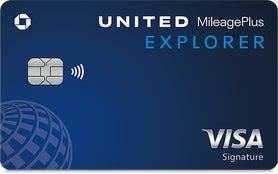
A frequent traveler and United elite member, Martin told TPG he carries two Chase credit cards: The United Explorer Card, and the Marriott Bonvoy Boundless Credit Card. Each offers travel protections that may have been of assistance in Martin’s situation.
The United Explorer Card can cover up to $500 in expenses like lodging, ground transportation, meals and toiletries for travelers and their traveling companions who get delayed 12 hours or more.
The Marriott Bonvoy Boundless Credit Card will reimburse you for select, otherwise unreimbursed expenses for up to $500 per ticket, when your trip is delayed by more than 12 hours or when it requires an overnight stay.
If you’ll recall, though, Martin booked the KLM flight – the one that got delayed, causing the problems – through PayPal, rather than using one of his travel credit cards.
When he went to look into reimbursement, he found out he likely would not be eligible for reimbursement for the expenses because he had not booked the flight directly with one of his credit cards offering the protection, Martin told TPG. Those protections likely would have covered the hotel rooms, as well as any transit and meals the family had during their unexpected stay in Amsterdam.
“I just wasn’t thinking when I booked the KLM flight,” he told TPG after arriving back in the U.S. “I was kind of in a hurry trying to plan the vacation.”
A bright spot of the Martins' air travel experience: Enjoying the United Polaris Lounge at Washington Dulles International Airport (IAD). (Photo courtesy of Michael Martin)
Lessons learned
Fortunately, after a night in Amsterdam, it was fairly smooth sailing for the rest of the Martins’ trip. Having seen the long security line the day prior, they arrived hours early to Schiphol – only to breeze through the checkpoint with little wait.
Still, among the “several lessons learned,” Martin said, is: Leave more time than you think you’ll need this summer when changing planes in Amsterdam. He now suggests planning for an overnight stop.
Regardless of where you’re traveling, though, take it from him: Be careful about booking a trip with separate itineraries, and make sure you’re booking with the right card. While there are cases where using a third party app like PayPal, linked to your credit card, can still earn you the points you're expecting for a purchase, it's a good idea to just read the terms of your credit card closely to see whether benefits like travel protections still would apply under the particular circumstances.
In Martin's case, it may have eliminated quite a few of his expenses.
“It was, like they say, the perfect storm,” he said. “All those things came together to [mess] up our return and cost me a bunch of money.”
By commenting, you agree to our Community Guidelines to help create a positive space for conversation. The responses below are not provided or commissioned by the bank advertiser, our partners, or The Points Guy (“TPG”). They have not been reviewed, approved, or otherwise endorsed by any of these parties. All responses are submitted by individual contributors, and neither the bank advertiser, our partners, nor TPG are responsible for ensuring that all posts and/or questions are answered.