‘Skiplagging’ your airline ticket might be legal, but it comes with major risks

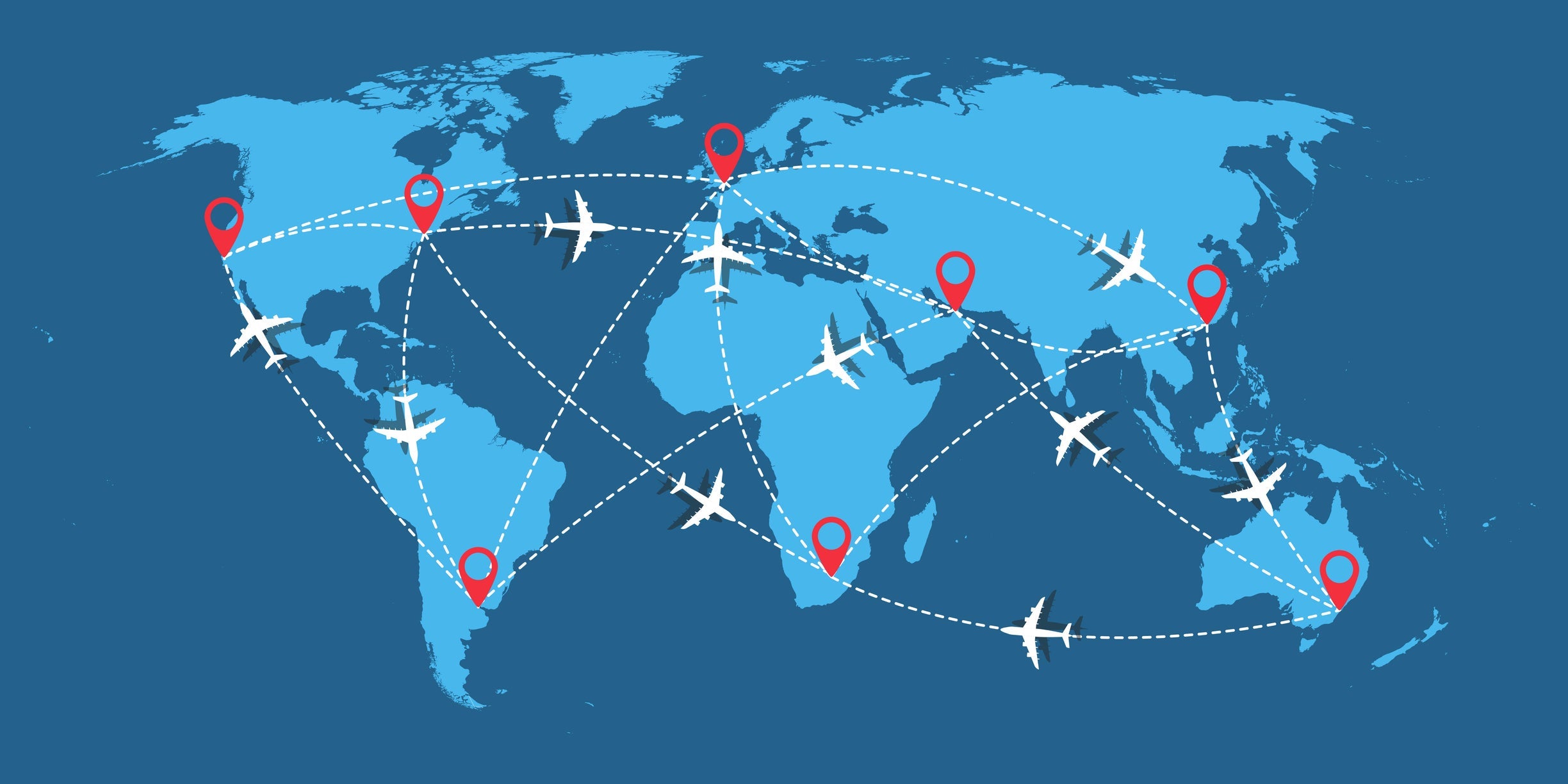
- Skiplagging (aka hidden city ticketing) refers to a way some travelers try and save on airfare by booking a ticket with a connection point that they use as their final destination, throwing away additional segments of the trip.
- While this practice isn't illegal, it is very frowned upon by the airlines and can lead to problematic consequences, as experienced by a teen flying American Airlines recently.
- Risks of skiplagging include unexpected bills from the airline, forfeiture of frequent flyer miles or even a ban from the airline.
"Skiplagging" is back in the headlines. Also called throwaway ticketing or hidden city ticketing, this practice seems to pop up in the media every few months.
But what exactly is skiplagging — and is it worth the risk?
You may remember a notorious case from 2023 when American Airlines temporarily detained a U.S. teenager after he allegedly used the flight hacking technique to book a cheaper flight to his destination.
The teenager was scheduled to fly from Gainesville, Florida, to New York City, but he planned to disembark during a layover in Charlotte. His North Carolina driver's license reportedly raised red flags for gate agents about his true final destination, so he was reportedly escorted to a secure area for questioning. The airline ultimately canceled his ticket, and his family had to pay for a new, more expensive flight to get him home.
With that cautionary tale in mind, here's a breakdown of what skiplagging is — and why the risks might not be worth the potential rewards.
Related: Nonstop vs. direct flights
What is skiplagging?
Broadly speaking, skiplagging is the art of exploiting certain flight routes by booking a multistop flight where one of the layovers is your intended destination rather than booking a more expensive ticket directly to that destination.
Upon reaching the stopover airport, you end your trip by just getting off the plane and walking away — skipping the following legs of the itinerary. You may have heard of the website Skiplagged.com, which allows regular folks to book these tickets.
For example, a passenger might book a flight between New York City and Las Vegas with a layover in Dallas. In this instance, Dallas would be the intended destination and where the passenger would vacate, cutting the journey short and not continuing to Las Vegas.

So, why would a passenger do this?
It's counterintuitive, but in certain instances, this controversial tactic can bring notable cash savings. This is because flight pricing doesn't always follow the logical assumption that a longer trip should be more expensive. Instead, the cost of a journey is often based on how popular the destination or route is — especially if it's nonstop — and the price at which the airlines have decided people will buy tickets.
At face value, skiplagging (also known as hidden city ticketing) may seem like a smart strategy to save money while taking advantage of illogical airfare pricing, but it's not without risk. As we've seen, the money saved might not be worth it if you get caught — a real risk as some airlines have been cracking down on the practice, increasingly employing technology to help identify suspicious itineraries.
Is skiplagging illegal?
Skiplagging is technically legal, but this doesn't mean it doesn't bring potential risks.
You may not face criminal charges for skiplagging or hidden city ticketing, but it's a violation of most airline policies. If an airline catches you skiplagging, it will punish you as per the terms and conditions of the ticket you're flying on in most scenarios. The punishments could range from financial penalties to restrictions on future booked travel.
In some instances, skiplagging passengers have been taken to court by the airline. In 2019, Lufthansa sued a passenger after they paid 657 euros ($735) for a business-class ticket from Oslo to Seattle via Frankfurt.
On the return flight, the passenger skipped the Oslo leg, flying on from Frankfurt to Berlin on a different ticket instead. Lufthansa claimed the ticket should have cost 2,769 euros ($3,097) and demanded a repayment of 2,112 euros ($2,362) plus interest.
The court ultimately sided with the passenger but, notably, agreed the airline's case for suing was valid. Lufthansa lost due to the technical details of the new price calculation, which the court viewed as lacking transparency. The case could have easily gone the other way. Courts in Spain have reached similar conclusions in cases involving Iberia.
This current precedent puts the law in favor of the passenger. However, it's not clear cut, and court battles can see ramped-up legal fees that most passengers can't afford to challenge. Regardless of how you'd fare in a court challenge, getting to that point will be both lengthy and costly.
What are the risks of skiplagging?
Skiplagging may not be illegal in the eyes of the law, but it can be damaging for the passenger doing it, the airline and, to a lesser extent, other passengers. If you're caught, it could cost you. For example, according to American Airlines' terms and conditions, this might involve:
- Canceling any unused part of your ticket. If you're booked on a round-trip flight, this would void the return part of your journey, even if it's an open-jaw flight from a different city.
- Void the refundable nature of your overall itinerary, even if you paid extra to book refundable flights.
- Prohibiting you from checking bags in the future.
- Being charged for the full actual cost of your de facto itinerary.
In other instances, airlines have also been known to blacklist passengers from future flights and cancel their frequent flyer numbers or points and miles accounts, wiping their accrued balance or elite status benefits.
Those are just the financial implications. Skiplagging can pose other risks too. For example, you won't be able to check your luggage as you won't be at the final destination to collect it. And sometimes, customers are forced to check carry-on bags when the overhead bins fill — so having to check a bag can be out of your control.
Another risk: If your flight is rerouted without your planned stopover due to delays or cancellations, you could find yourself stuck with few good options. Or, if your original itinerary is canceled, the airline might rebook you on a nonstop flight that skips your intended connection point altogether. In these circumstances, you could find yourself on a flight to a destination you never wanted to visit, without accommodations, booking another last-minute flight to reach your intended destination.
Skipping a leg of your journey can also affect other passengers and the airline you're flying with. "If a customer knowingly or unknowingly purchases a ticket and doesn't fly all of the segments in their itinerary, it can lead to operational issues with checked bags and prevent other customers from booking a seat when they may have an urgent need to travel," according to an American Airlines spokesperson.
In short, "Intentionally creating an empty seat that another customer or team member could have used is an all-around bad outcome."
Related: Best credit cards for earning airline elite status
Can you save money by skiplagging, and is it worth it?
In certain instances, you can save considerable amounts by skiplagging — but it won't be possible for all routes. The amount you save also depends on the flight.
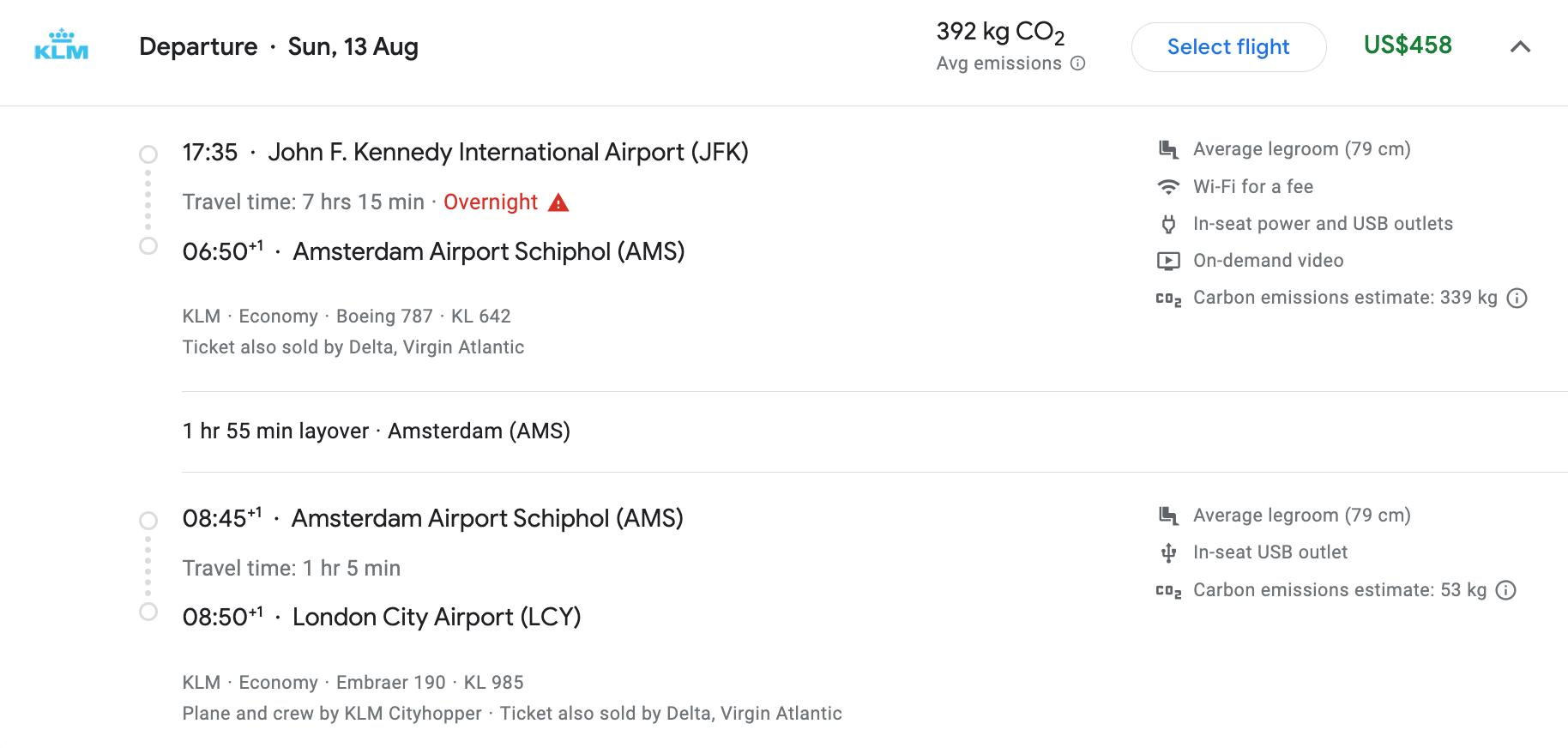
For example, TPG found you could save $659 by skiplagging to get from John F. Kennedy International Airport (JFK) to Amsterdam Airport Schiphol (AMS). In this example, booking a one-way flight from JFK with a final destination of London City Airport (LCY) and a layover at AMS would cost $458.
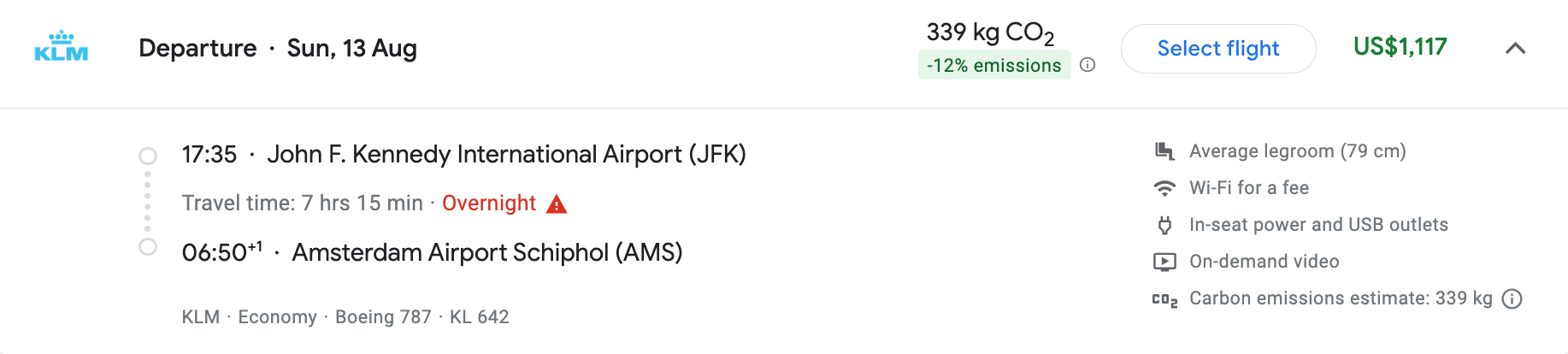
Booking the same flight but with Amsterdam as your final destination would cost $1,117. This is a considerable difference, making it easy to understand why this hidden city sort of ticketing might seem appealing.
In comparison, the savings can be much less on other routes. For example, flying from Newark Liberty International Airport (EWR) to Los Angeles International Airport (LAX) would cost $160, whereas flying from Newark to Salt Lake City International Airport (SLC) with a stopover at LAX is $147. By booking the multileg flight, you'd save $13.
Whether these savings are worth it depends on the risks you're willing to take — which, in our view, are likely not worth the reward.
Sure, a savings of $659 is a lot of money, but if you get caught and are forced to buy a new ticket that covers the full fare, you'll end up considerably out of pocket. Even worse, the airline you're flying with could ban you.
Related: 22 great tips for traveling on a budget
There are plenty of other effective ways to save on airfare that don't carry any risks. For one, being savvy and using points and miles could save you hundreds of dollars on your flight and open up premium cabins that may not have been within your budget if you were paying with cash.
It's also a good idea to be flexible with travel dates and destinations, and to use travel tools to help you find the best (legitimate) flight deals. Additionally, you might consider rail or bus options instead of flying if you're traveling domestically.
Bottom line
Skiplagging, or hidden city ticketing, might seem like a smart and financially savvy way to cut your travel costs, but it carries some very real risks. You can end up fielding an unexpected last-minute bill from the airline for the cost difference or, worse, blacklisted from the airline and losing out on a haul of airline miles you've spent years accruing. So, while we love a good saving tip, this is one we're going to skip out on.
In short, please don't do it!
Related reading:
- When is the best time to book flights for the cheapest airfare?
- The best airline credit cards
- What exactly are airline miles, anyway?
- 6 real-life strategies you can use when your flight is canceled or delayed
- Maximize your airfare: The best credit cards for booking flights
- The best credit cards to reach elite status
- What are points and miles worth? TPG's monthly valuations
TPG featured card

at American Express's secure site
Terms & restrictions apply. See rates & fees.
| 3X | Earn 3X Miles on Delta purchases. |
| 1X | Earn 1X Miles on all other eligible purchases. |
Pros
- Delta SkyClub access when flying Delta
- Annual companion ticket for travel on Delta (upon renewal)
- Ability to earn MQDs through spending
- Various statement credits for eligible purchases
Cons
- Steep annual fee of $650
- Other Delta cobranded cards offer superior earning categories
- Earn 100,000 Bonus Miles after you spend $6,000 or more in purchases with your new Card within the first 6 months of Card Membership and an additional 25,000 bonus miles after you make an additional $3,000 in purchases on the Card within your first 6 months, starting from the date that your account is opened. Offer Ends 04/01/2026.
- Delta SkyMiles® Reserve American Express Card Members receive 15 Visits per Medallion® Year to the Delta Sky Club® when flying Delta and can unlock an unlimited number of Visits after spending $75,000 in purchases on your Card in a calendar year. Plus, you’ll receive four One-Time Guest Passes each Medallion Year so you can share the experience with family and friends when traveling Delta together.
- Enjoy complimentary access to The Centurion® Lounge in the U.S. and select international locations (as set forth on the Centurion Lounge Website), Sidecar by The Centurion® Lounge in the U.S. (see the Centurion Lounge Website for more information on Sidecar by The Centurion® Lounge availability), and Escape Lounges when flying on a Delta flight booked with the Delta SkyMiles® Reserve American Express Card. § To access Sidecar by The Centurion® Lounge, Card Members must arrive within 90 minutes of their departing flight (including layovers). To access The Centurion® Lounge, Card Members must arrive within 3 hours of their departing flight. Effective July 8, 2026, during a layover, Card Members must arrive within 5 hours of the connecting flight.
- Receive $2,500 Medallion® Qualification Dollars with MQD Headstart each Medallion Qualification Year and earn $1 MQD for each $10 in purchases on your Delta SkyMiles® Reserve American Express Card with MQD Boost to get closer to Status next Medallion Year.
- Enjoy a Companion Certificate on a Delta First, Delta Comfort, or Delta Main round-trip flight to select destinations each year after renewal of your Card. The Companion Certificate requires payment of government-imposed taxes and fees of between $22 and $250 (for itineraries with up to four flight segments). Baggage charges and other restrictions apply. Delta Basic experiences are not eligible for this benefit.
- $240 Resy Credit: When you use your Delta SkyMiles® Reserve American Express Card for eligible purchases with U.S. Resy restaurants, you can earn up to $20 each month in statement credits. Enrollment required.
- $120 Rideshare Credit: Earn up to $10 back in statement credits each month after you use your Delta SkyMiles® Reserve American Express Card to pay for U.S. rideshare purchases with select providers. Enrollment required.
- Delta SkyMiles® Reserve American Express Card Members get 15% off when using miles to book Award Travel on Delta flights through delta.com and the Fly Delta app. Discount not applicable to partner-operated flights or to taxes and fees.
- With your Delta SkyMiles® Reserve American Express Card, receive upgrade priority over others with the same Medallion tier, product and fare experience purchased, and Million Miler milestone when you fly with Delta.
- Earn 3X Miles on Delta purchases and earn 1X Miles on all other eligible purchases.
- No Foreign Transaction Fees. Enjoy international travel without additional fees on purchases made abroad.
- $650 Annual Fee.
- Apply with confidence. Know if you're approved for a Card with no impact to your credit score. If you're approved and you choose to accept this Card, your credit score may be impacted.
- Terms Apply.
- See Rates & Fees