Though a trip could start with a quick hop from New York to Chicago, I never knew where work would take me next.
That's also why I was sure to always pack one more international travel item: my yellow fever vaccination card. In addition to a passport and visa, some countries require proof of a yellow fever vaccination to enter.
Well, that proof of vaccination framework is what the International Air Transport Association (IATA), as well as Qantas, appear to be working towards as we recover from the coronavirus pandemic.
For more TPG news delivered each morning to your inbox, sign up for our daily newsletter.
On Monday, IATA announced that it's in the final stage of developing a digitalized "Travel Pass" that would help support the reopening of international borders.
This new online system would enable airlines to tap into a common data set of necessary testing or vaccine information for travelers. As part of the plan, travelers and laboratories could theoretically upload negative test results and vaccination information, which could be shared with airlines during check-in and international governments at border crossings.
Additionally, by centralizing all the COVID-19 related testing or inoculation procedures, airlines and travelers could use the Travel Pass as a one-stop-shop for figuring out necessary pre-travel requirements.
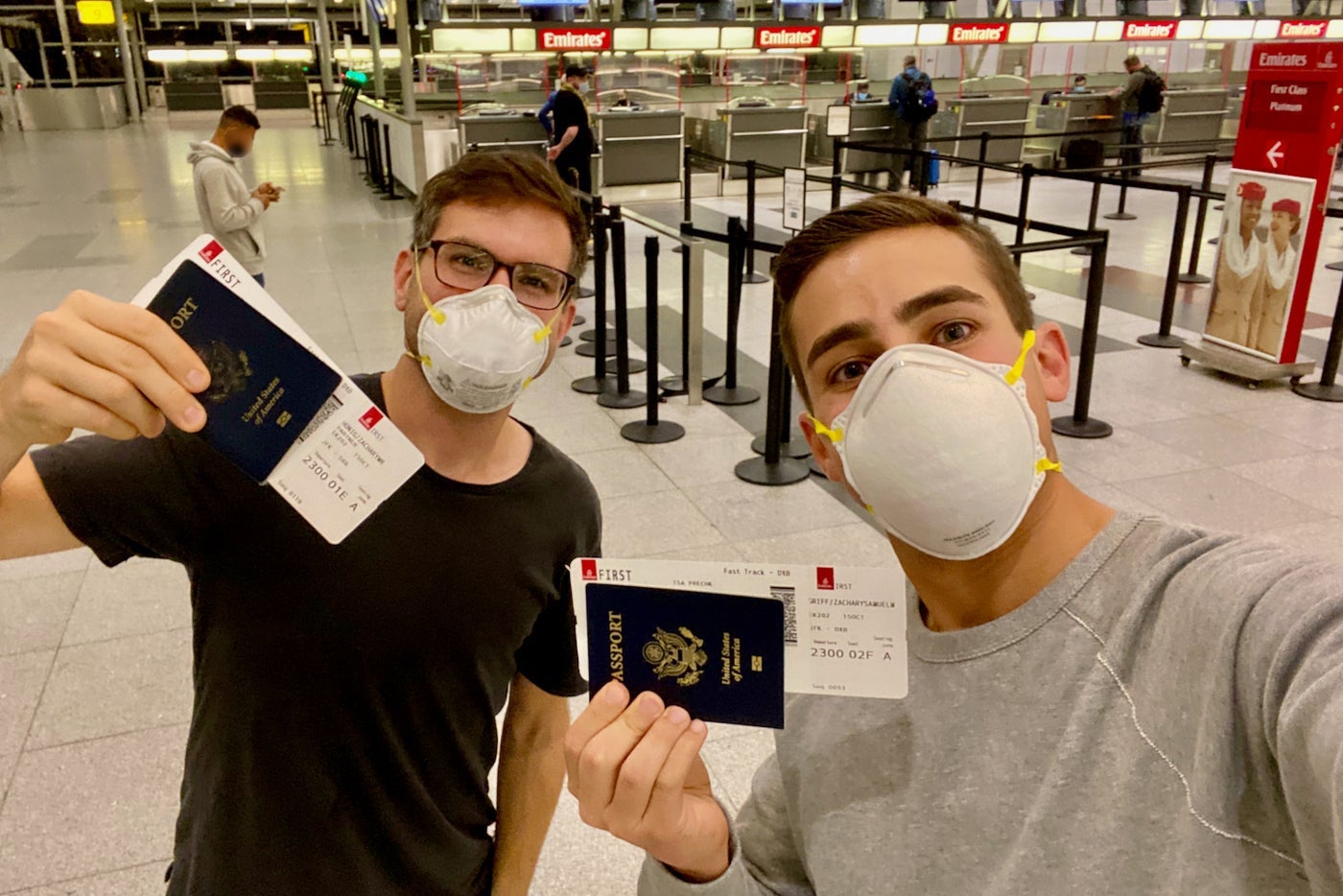
In fact, on my recent trip to Dubai, the airline staff simply checked my printed negative COVID-19 test before checking me in. There were no authenticity checks, nor did anyone else in New York or Dubai check the certificate.
With a Travel Pass, not only would the laboratory upload the test result directly to the centralized system, but airlines and governments could be reassured that no one's gaming the system.
And perhaps most importantly, a Travel Pass should hopefully have better safeguards for sensitive health information.
According to Alexandre de Juniac, IATA’s Director General and CEO, "We are bringing this to market in the coming months to also meet the needs of the various travel bubbles and public health corridors that are starting operation."
For now, IATA is working with International Airlines Group, which counts Aer Lingus, British Airways, Iberia, Level and Vueling as subsidiaries, to further develop this solution. The first cross-border Travel Pass pilot is scheduled for later this year and the full roll-out slated for the first quarter of 2021. The end goal, of course, is to convince airlines and governments to work together to reopen borders sooner.
Related: When will international travel return? A country-by-country guide to coronavirus recovery
IATA's move comes just as Qantas' CEO, Alan Joyce, told a local television network that the Sydney-based airline is working towards requiring all international travelers to be vaccinated against the coronavirus before boarding one of the company's flights.
"We are looking at changing our terms and conditions to say that for international travelers to ask people to have a vaccination before getting on the aircraft," said Joyce.
While the details remain light, Joyce hinted at a program similar to IATA's Travel Pass for managing the flow of health information.
"What we are looking at is how you can have a vaccination passport, an electronic version of it, that certifies what the vaccine is, is it acceptable to the country you are traveling to," Joyce concluded.
Only time will tell how the airline industry and governments collaborate to reopen international travel. But one thing's for certain: there's no shortage of concepts being piloted.