Skip to content

Insider Series: How Can ATC Keep Up With Increasing Traffic Levels?

Jan. 27, 2016
5 min read
shutterstock_292186376
Insider Series: How Can ATC Keep Up With Increasing Traffic Levels?
The cards we feature here are from partners who compensate us when you are approved through our site, and this may impact how or where these products appear. We don’t cover all available credit cards, but our analysis, reviews, and opinions are entirely from our editorial team. Terms apply to the offers listed on this page. Please view our advertising policy and product review methodology for more information.

TPG Contributor “Vic Vector” is an air traffic controller at a major ATC facility in the United States. In this installment of our “Insider Series,” he discusses the future of the national airspace system and how ATC is preparing to handle the forecasted increase in traffic volume.

In its most recent annual report on the state of the airline industry, PricewaterhouseCoopers predicted that the demand for air travel will double during the next 20 years. This comes only one year after the FAA issued a prediction that the most common metric for measuring air travel volume — Revenue Passenger Miles (RPM) — will increase 76% by the year 2034.
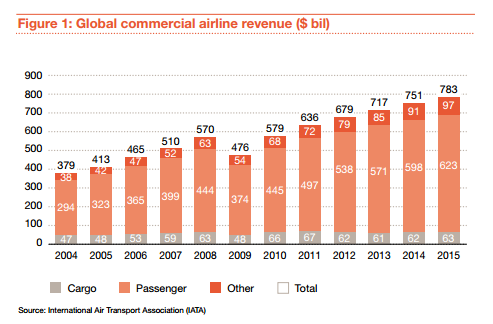
As air traffic levels increase, so does airline revenue.

Aviation is a historically cyclical industry. After a downturn in the 1970s, traffic levels soared in the 1980s and 90s, only to recede again following 9/11 — and now we're poised at the start of another upswing. The steady and significant increase of air traffic during the next couple of decades seems inevitable, but what are air traffic controllers doing to prepare for it?

The most obvious and largest-reaching effort is the FAA's Next Generation Air Transportation System (also called NextGen). Currently, the national airspace system relies on a network of outdated, ground-based navigation and radar-surveillance stations. NextGen aims to improve efficiency by transitioning to more modern satellite-based technology for these vital tasks, and at the same time boosting fuel savings for budget-conscious airlines and increasing the overall capacity of the airspace system. Planes will be able to fly more direct routes using GPS navigation and controllers will have access to more accurate position information, allowing them to safely fit more aircraft in their airspace.

Ideally, the improvements brought by NextGen will mean fewer flight delays. Image courtesy of Shutterstock.

One hallmark of the NextGen system that's already being rolled out at an airport near you is the Optimized Profile Descent (OPD). Historically, the transition from cruising altitude to landing has been akin to walking down a flight of stairs, with multiple level-offs along the way. With the OPD, instead of hard altitude restrictions that must be met by each aircraft, the FAA has constructed Performance Based Navigation (PBN) arrivals that allow an aircraft to descend at a range of altitudes. ATCs call this range of altitudes "windows," and they allow each aircraft to optimize their descent profile based on payload, wind and other environmental factors, with the goal of minimizing fuel burn.
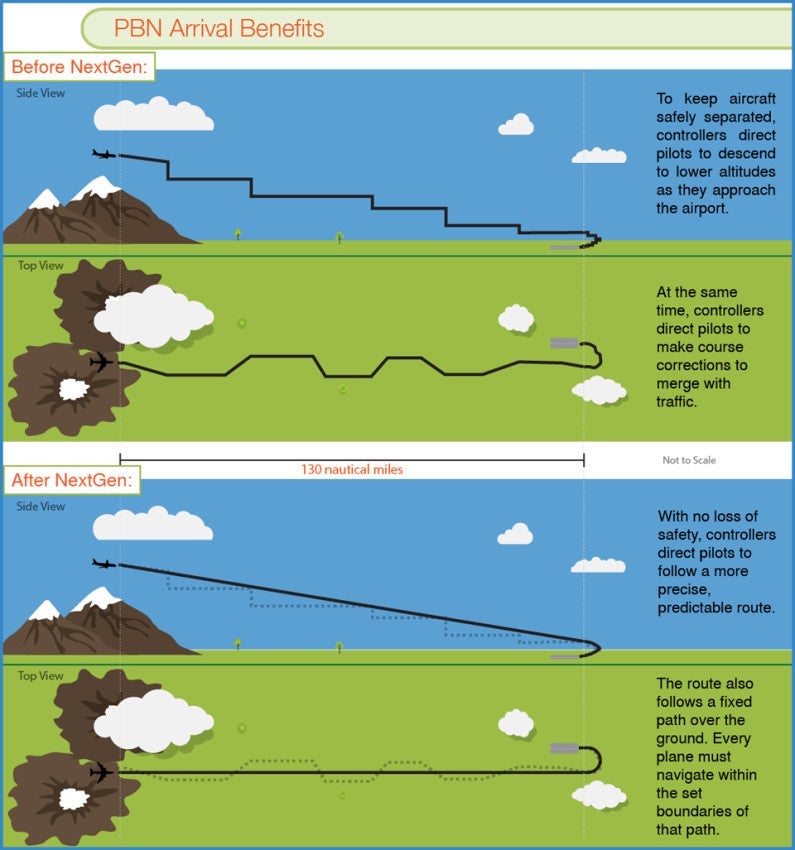
Image courtesy of the FAA.

Essentially, OPDs turn the aforementioned staircase into a ramp that allows each aircraft to descend at their own pace within prescribed windows. It's a win-win for both pilots and controllers, as instead of issuing multiple descent clearances for each aircraft, ATCs can now issue just one clearance to "descend via" the arrival. These arrivals are slowly being introduced at major US airports, and eventually these optimized profiles will be the norm for both arrivals and departures. In the meantime, though, the transition to NextGen has been fraught with issues.
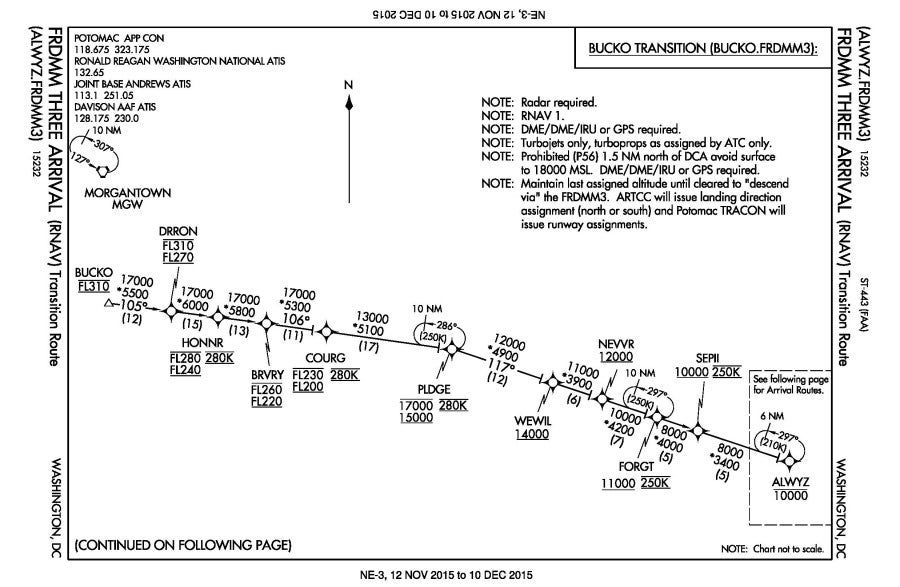
The FRDMM3 arrival to Washington National (DCA). Note the large altitude windows; for example, aircraft can be at any altitude between 15,000 and 17,000 feet at the PLDGE waypoint.

NextGen is scheduled to be fully in place by 2025, but budgetary concerns at the FAA have so far resulted in inconsistent funding of various NextGen programs and numerous delays in NextGen implementation. Paul Rinaldi, President of the National Air Traffic Controllers Association (our labor union), has gone on record saying that while they're staunchly opposed to privatization, something needs to change. “The status quo of unstable, unpredictable funding for the National Airspace System has led to serious problems at the FAA,” said Rinaldi. “It cannot finance long-term projects, develop the system for new users or modernize our country’s aging infrastructure. The FAA has also struggled to maintain proper resources and staff at our busiest air traffic control facilities.”

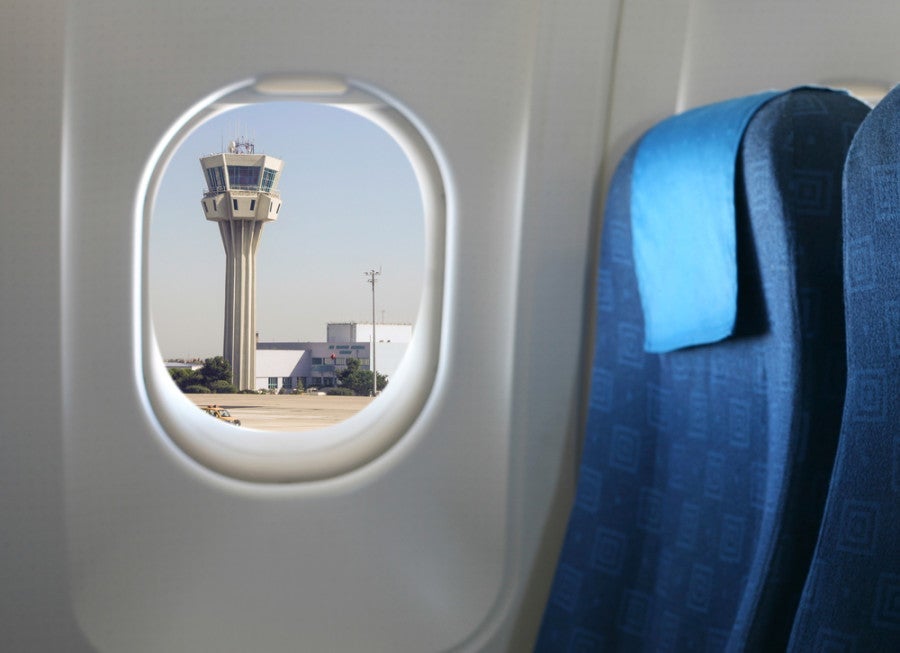
More flights with no more controllers to work them signals trouble. Image courtesy of Shutterstock.

Air traffic controllers in the US face mandatory retirement at age 56, and currently one-third of our entire workforce is eligible to retire – there will be significant turnover in the next decade. ATC staffing levels are currently at the lowest they've been in years, and considering the time it takes to train and fully certify an air traffic controller, it's not an overstatement to say our industry is facing a legitimate crisis.

NextGen's additional layers of safety and functionality are an excellent step toward modernizing our antiquated air traffic control system, but without qualified controllers in towers and in front of radar scopes, its potential is all for naught.

Daily Newsletter
Reward your inbox with the TPG Daily newsletter
Join over 700,000 readers for breaking news, in-depth guides and exclusive deals from TPG’s experts
Image courtesy of Shutterstock.

The aviation industry is on the way up, no pun intended. As our traffic levels continue to increase in the coming years, we'll no doubt require a more modern infrastructure and a corps of well-trained personnel — either without the other is pointless. Unless we receive clear, long-term budgetary guidance, we'll continue to waste more money on false starts and shortsighted goals.

We've always correctly aimed to be an industry that puts safety above all else, but now we stand on a precipice where money has become almost as important. There are good controllers in facilities all over the country working to keep you safe on a daily basis, and we have the technology required to lead us into the future of air traffic — but now all we need is the money and leadership to do the same.

TPG featured card

Best for dining at restaurants
TPG Editor‘s Rating
4 / 5
Go to review
Apply for American Express® Gold Card
at American Express's secure site

Rewards

1 - 4X points

Intro offer

As High As 100,000 points. Find Out Your Offer.

Annual Fee

$325

Recommended Credit

Excellent to Good

Why We Chose It

There’s a lot to love about the Amex Gold. It’s a fan favorite thanks to its fantastic bonus-earning rates at restaurants worldwide and at U.S. supermarkets. If you’re hitting the skies soon, you’ll also earn bonus Membership Rewards points on travel. Paired with up to $120 in Uber Cash annually (for U.S. Uber rides or Uber Eats orders, card must be added to Uber app and you can redeem with any Amex card), up to $120 in annual dining statement credits to be used with eligible partners, an up to $84 Dunkin’ credit each year at U.S. Dunkin Donuts and an up to $100 Resy credit annually, there’s no reason that foodies shouldn’t add the Amex Gold to their wallet. These benefits alone are worth more than $400, which offsets the $325 annual fee on the Amex Gold card. Enrollment is required for select benefits. (Partner offer)

Pros

  • 4 points per dollar spent on dining at restaurants worldwide and U.S. supermarkets (on the first $50,000 in purchases per calendar year; then 1 point per dollar spent thereafter and $25,000 in purchases per calendar year; then 1 point per dollar spent thereafter, respectively)
  • 3 points per dollar spent on flights booked directly with the airline or with amextravel.com
  • Packed with credits foodies will enjoy
  • Solid welcome bonus

Cons

  • Not as useful for those living outside the U.S.
  • Some may have trouble using Uber and other dining credits
  • You may be eligible for as high as 100,000 Membership Rewards® Points after you spend $6,000 in eligible purchases on your new Card in your first 6 months of Card Membership. Welcome offers vary and you may not be eligible for an offer. Apply to know if you’re approved and find out your exact welcome offer amount – all with no credit score impact. If you’re approved and choose to accept the Card, your score may be impacted.
  • Earn 4X Membership Rewards® points per dollar spent on purchases at restaurants worldwide, on up to $50,000 in purchases per calendar year, then 1X points for the rest of the year.
  • Earn 4X Membership Rewards® points per dollar spent at US supermarkets, on up to $25,000 in purchases per calendar year, then 1X points for the rest of the year.
  • Earn 3X Membership Rewards® points per dollar spent on flights booked directly with airlines or on AmexTravel.com.
  • Earn 2X Membership Rewards® points per dollar spent on prepaid hotels and other eligible purchases booked on AmexTravel.com.
  • Earn 1X Membership Rewards® point per dollar spent on all other eligible purchases.
  • $120 Uber Cash on Gold: Add your Gold Card to your Uber account and get $10 in Uber Cash each month to use on orders and rides in the U.S. when you select an American Express Card for your transaction. That’s up to $120 Uber Cash annually. Plus, after using your Uber Cash, use your Card to earn 4X Membership Rewards® points for Uber Eats purchases made with restaurants or U.S. supermarkets. Point caps and terms apply.
  • $84 Dunkin' Credit: With the $84 Dunkin' Credit, you can earn up to $7 in monthly statement credits after you enroll and pay with the American Express® Gold Card at U.S. Dunkin' locations. Enrollment is required to receive this benefit.
  • $100 Resy Credit: Get up to $100 in statement credits each calendar year after you pay with the American Express® Gold Card to dine at U.S. Resy restaurants or make other eligible Resy purchases. That's up to $50 in statement credits semi-annually. Enrollment required.
  • $120 Dining Credit: Satisfy your cravings, sweet or savory, with the $120 Dining Credit. Earn up to $10 in statement credits monthly when you pay with the American Express® Gold Card at Grubhub, The Cheesecake Factory, Goldbelly, Wine.com, and Five Guys. Enrollment required.
  • Explore over 1,000 upscale hotels worldwide with The Hotel Collection and receive a $100 credit towards eligible charges* with every booking of two nights or more through AmexTravel.com. *Eligible charges vary by property.
  • No Foreign Transaction Fees.
  • Annual Fee is $325.
  • Terms Apply.
Apply for American Express® Gold Card
at American Express's secure site
Terms & restrictions apply. See rates & fees
Best for dining at restaurants
TPG Editor‘s Rating
4 / 5
Go to review

Rewards Rate

4XEarn 4X Membership Rewards® points per dollar spent on purchases at restaurants worldwide, on up to $50,000 in purchases per calendar year, then 1X points for the rest of the year.
4XEarn 4X Membership Rewards® points per dollar spent at US supermarkets, on up to $25,000 in purchases per calendar year, then 1X points for the rest of the year.
3XEarn 3X Membership Rewards® points per dollar spent on flights booked directly with airlines or on AmexTravel.com.
2XEarn 2X Membership Rewards® points per dollar spent on prepaid hotels and other eligible purchases booked on AmexTravel.com.
1XEarn 1X Membership Rewards® point per dollar spent on all other eligible purchases.
  • Intro Offer

    As High As 100,000 points. Find Out Your Offer.
  • Annual Fee

    $325
  • Recommended Credit

    Excellent to Good

Why We Chose It

There’s a lot to love about the Amex Gold. It’s a fan favorite thanks to its fantastic bonus-earning rates at restaurants worldwide and at U.S. supermarkets. If you’re hitting the skies soon, you’ll also earn bonus Membership Rewards points on travel. Paired with up to $120 in Uber Cash annually (for U.S. Uber rides or Uber Eats orders, card must be added to Uber app and you can redeem with any Amex card), up to $120 in annual dining statement credits to be used with eligible partners, an up to $84 Dunkin’ credit each year at U.S. Dunkin Donuts and an up to $100 Resy credit annually, there’s no reason that foodies shouldn’t add the Amex Gold to their wallet. These benefits alone are worth more than $400, which offsets the $325 annual fee on the Amex Gold card. Enrollment is required for select benefits. (Partner offer)

Pros

  • 4 points per dollar spent on dining at restaurants worldwide and U.S. supermarkets (on the first $50,000 in purchases per calendar year; then 1 point per dollar spent thereafter and $25,000 in purchases per calendar year; then 1 point per dollar spent thereafter, respectively)
  • 3 points per dollar spent on flights booked directly with the airline or with amextravel.com
  • Packed with credits foodies will enjoy
  • Solid welcome bonus

Cons

  • Not as useful for those living outside the U.S.
  • Some may have trouble using Uber and other dining credits
  • You may be eligible for as high as 100,000 Membership Rewards® Points after you spend $6,000 in eligible purchases on your new Card in your first 6 months of Card Membership. Welcome offers vary and you may not be eligible for an offer. Apply to know if you’re approved and find out your exact welcome offer amount – all with no credit score impact. If you’re approved and choose to accept the Card, your score may be impacted.
  • Earn 4X Membership Rewards® points per dollar spent on purchases at restaurants worldwide, on up to $50,000 in purchases per calendar year, then 1X points for the rest of the year.
  • Earn 4X Membership Rewards® points per dollar spent at US supermarkets, on up to $25,000 in purchases per calendar year, then 1X points for the rest of the year.
  • Earn 3X Membership Rewards® points per dollar spent on flights booked directly with airlines or on AmexTravel.com.
  • Earn 2X Membership Rewards® points per dollar spent on prepaid hotels and other eligible purchases booked on AmexTravel.com.
  • Earn 1X Membership Rewards® point per dollar spent on all other eligible purchases.
  • $120 Uber Cash on Gold: Add your Gold Card to your Uber account and get $10 in Uber Cash each month to use on orders and rides in the U.S. when you select an American Express Card for your transaction. That’s up to $120 Uber Cash annually. Plus, after using your Uber Cash, use your Card to earn 4X Membership Rewards® points for Uber Eats purchases made with restaurants or U.S. supermarkets. Point caps and terms apply.
  • $84 Dunkin' Credit: With the $84 Dunkin' Credit, you can earn up to $7 in monthly statement credits after you enroll and pay with the American Express® Gold Card at U.S. Dunkin' locations. Enrollment is required to receive this benefit.
  • $100 Resy Credit: Get up to $100 in statement credits each calendar year after you pay with the American Express® Gold Card to dine at U.S. Resy restaurants or make other eligible Resy purchases. That's up to $50 in statement credits semi-annually. Enrollment required.
  • $120 Dining Credit: Satisfy your cravings, sweet or savory, with the $120 Dining Credit. Earn up to $10 in statement credits monthly when you pay with the American Express® Gold Card at Grubhub, The Cheesecake Factory, Goldbelly, Wine.com, and Five Guys. Enrollment required.
  • Explore over 1,000 upscale hotels worldwide with The Hotel Collection and receive a $100 credit towards eligible charges* with every booking of two nights or more through AmexTravel.com. *Eligible charges vary by property.
  • No Foreign Transaction Fees.
  • Annual Fee is $325.
  • Terms Apply.