How airlines keep aircraft from tipping over

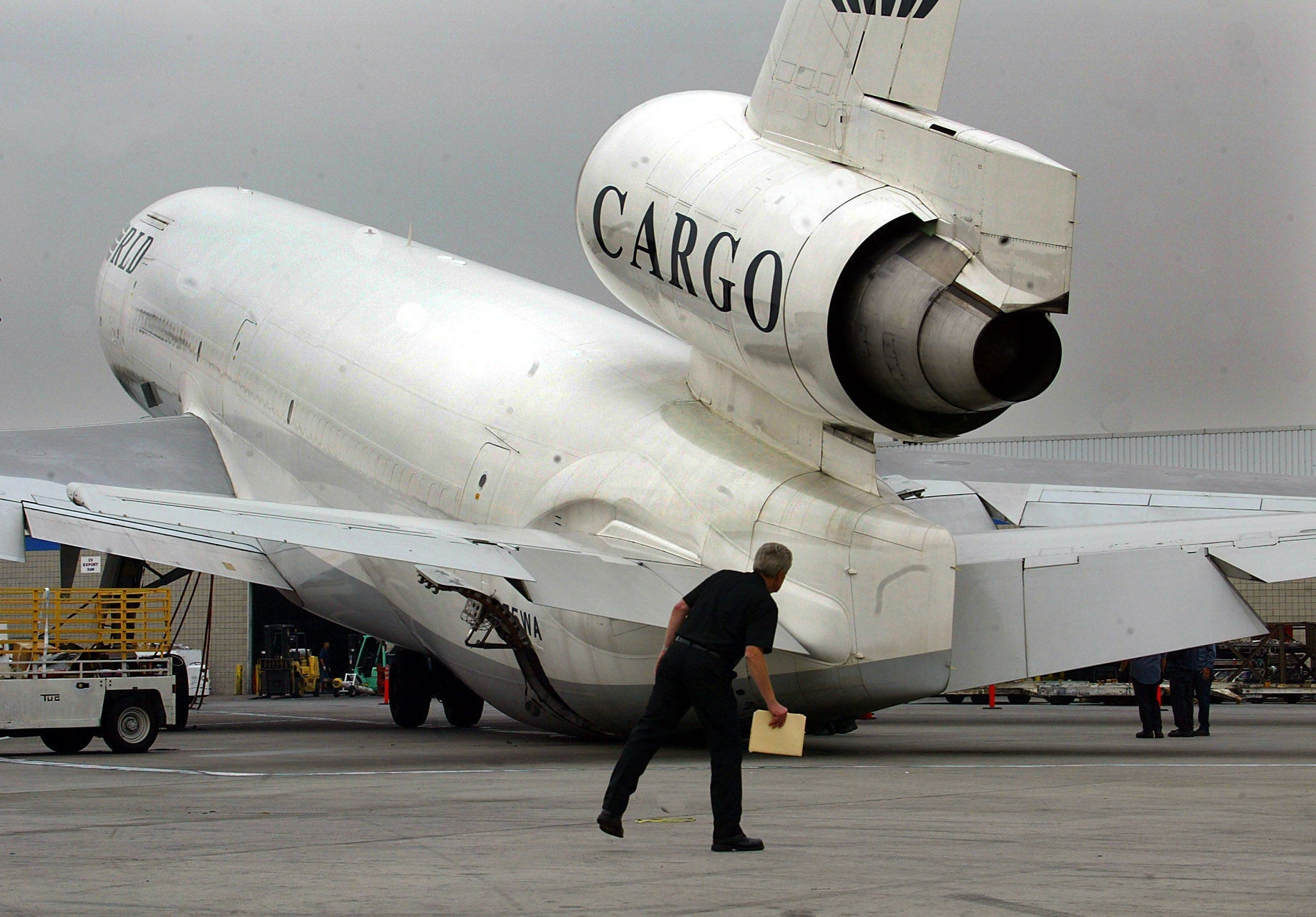
Last weekend, after landing safely at Lewiston Airport, Idaho, a United Airlines aircraft ended tipping backwards as it was being unloaded on the ramp. Photos show the Boeing 737-900 sat back on its tail with its nose up in the air, with the front cargo compartment open as baggage unloading was taking place.
In a statement to The Points Guy, United said that "United flight 2509 flying from Los Angeles, California to Lewiston, Idaho landed without incident. Due to a shift in weight and balance during the offloading process, the tail of the aircraft tipped backward. No injuries were reported among our customers, crew or ground personnel. The return flight was on a different aircraft as originally planned."
An aircraft is more than just a lump of metal which pilots take into the sky. There are more variables at hand than you might imagine, especially when it comes to the loading of the aircraft.
Want more aviation news? Sign up for TPG's free newsletter!
Not just raw power
Each time an aircraft gracefully soars away from a runway, there's far more going on than meets the eye. As important as the engines are, they are only a small part of what it takes to get airborne. In order to fly, an aircraft needs lift and this lift is generated by air passing over the wings.
At any given time, there are four forces acting on an aircraft. In the horizontal plane, thrust drives the aircraft backwards and drag slows the aircraft down. In the vertical plane, weight forces the aircraft towards the earth and lift directs the aircraft into the air.
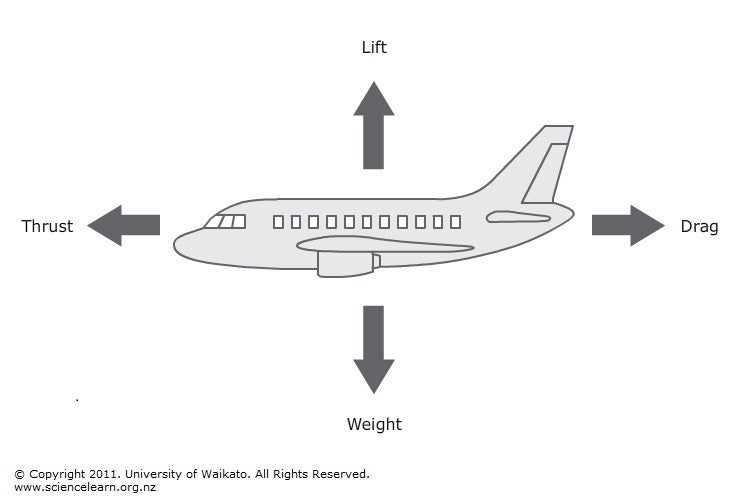
When all these forces are equal, the aircraft is stationary. However, if one force becomes greater than the other in the same plane, the aircraft will start to move.
The obvious example of this is when we power up the engines to start the take-off run. The forward thrust generated by the engines exceeds the drag on the aircraft caused by the air and friction with the runway, so the aircraft accelerates. With the aircraft accelerating, the wings cut through the air or, seen from the flip side, the air accelerates over the wings. As this airflow continues to speed up, something magical begins to happen.
Due to the shape of the wing and the angle at which it hits the air, it starts to generate lift. The faster the air flows over the wing, the more lift is generated. More and more lift is generated until a precise moment where the lift generated almost exceeds the weight of the aircraft.

At this moment, we pull back gently on the control column, causing the control surfaces on the horizontal stabilizers just under the tail to deflect up into the airflow. This pushes the tail down towards the runway and, as a result, the nose up into the air. This is known as 'rotating'. As the aircraft rotates, the angle at which the wings hit the air increases, creating even more lift and all of a sudden the lift generated is greater than the weight of the aircraft.
It is at this moment that the aircraft begins to lift away from the ground, as can be seen in the video below.
However, how do we know that when we pull back on the control column that the tail will sink lower to the ground and the aircraft will rotate? This critical moment of flight can be traced back several hours to when the aircraft was still at the gate.
Mass & Balance
How the aircraft is loaded plays a critical role in the safe departure, cruise and arrival of a flight. A typical long-haul flight may have 250 passengers, a similar number of suitcases plus freight which is carried in the cargo compartments along with the baggage. It is these factors that provide the variables in the loading of the aircraft.
All aircraft act like a see-saw at a kids playground. If the weight at each end is the same, the see-saw stays horizontal over the central pivot. However, if the weight at one end of the see-saw exceeds the weight at the other end, the heavier end will drop to the floor – like the 737 incident.
That said, it's not always as simple as this. If a heavier child sits halfway up their side of the see-saw, a lighter child at the end of their side will drop to the ground – it's all to do with the distance from the pivot.
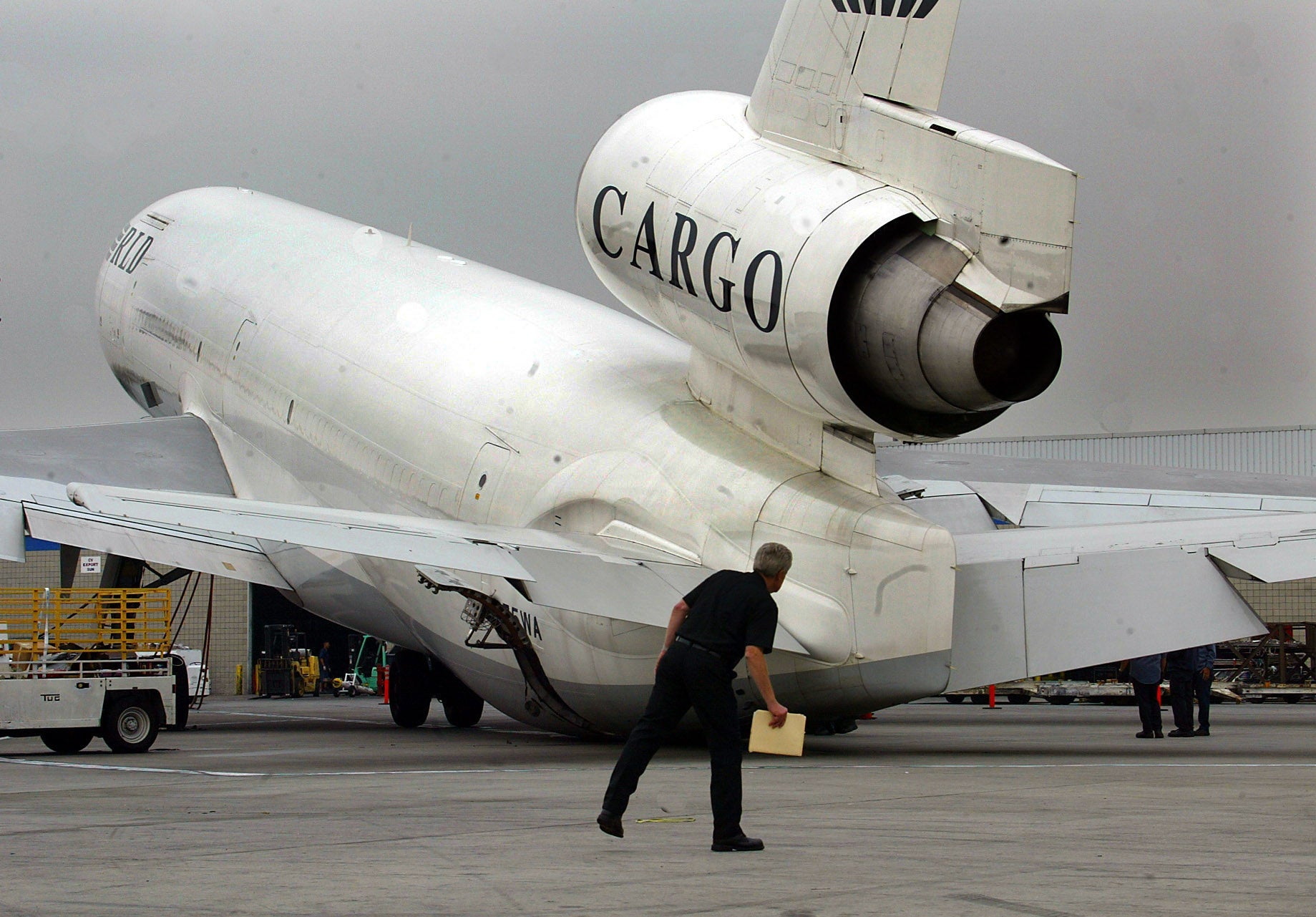
On an aircraft, it's similar, but the pivot point, or center of gravity (CoG), isn't always in the middle. When certifying the aircraft, the manufacturer calculates where the CoG is for the empty aircraft. If the passengers and baggage were always uniformly distributed throughout the aircraft, keeping the aircraft balanced, or 'in trim' would be straightforward.
However, this isn't always the case. If first and business class is full but economy is relatively empty, the majority of the passenger weight is focused at the front of the aircraft, giving it a forward center of gravity. Conversely, if all the passengers are at the rear of the aircraft, the center of gravity will move towards the rear of the aircraft.
As a result, during the design stage of the aircraft, the manufacturer will not only determine where the empty CoG is, but will also determine a safe range for the loaded CoG.
It is the responsibility of the loading department to ensure that the CoG remains within this safe range.
Keeping it Balanced
This is fine if the passenger load falls naturally within the CoG range, but what happens if, like mentioned above, economy is full but business and first is empty? With all that weight at the rear, there's a good chance that the aircraft could tip back onto its tail.
Before you get too excited that the solution to this problem is to upgrade passengers to even out the load distribution, let me tell you that it is not. Instead, the loading department uses the other variable that we haven't discussed yet. The baggage and freight.
Most large airliners have two cargo compartments, one at the front and one at the rear. Knowing where all the passengers will be sat, the aft CoG can be moved backwards or forwards by loading more baggage into one hold or the other.
Aircraft are at their most aerodynamic with a slightly aft CoG. As a result, the loading department will try to balance the aircraft so that the CoG is slightly towards the rear of the neutral point.
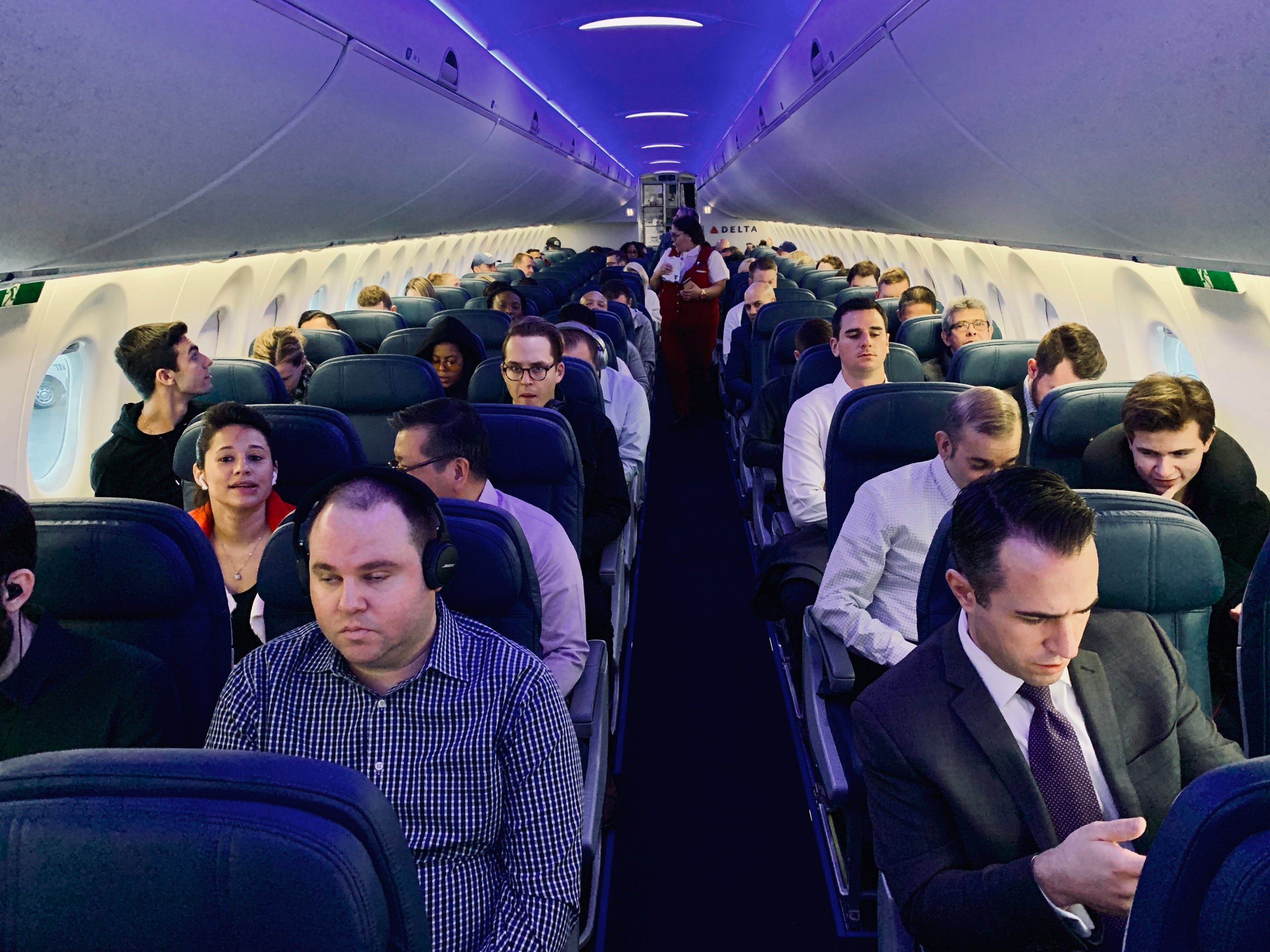
Once all the passengers have checked in and the flight is closed, the loading department can then determine exactly where the baggage needs to go so that the flight is safely in trim. This is why airlines have to close check-in a certain time before the flight departs, to give the staff time to ensure that the aircraft is safely loaded.
Every so often, the loading has to be done in such a way that could leave the aircraft unstable if the passenger distribution changes. This is why, particularly on an empty flight, passengers must sit in their allocated seats.
In these situations, when arriving at the destination, ground staff may require passengers to remain in their seats until they have offloaded some of the baggage and cargo. Once this has been done, and the aircraft is safely balanced, the passengers may then disembark.
ULDs, containers and pallets
On smaller aircraft types, baggage is loaded by hand directly into the cargo holds. They are stacked up and secured by netting to stop them from moving around. However, on a larger aircraft such as the 787 Dreamliner, there could be hundreds of bags plus an enormous variety of freight.
To make the loading and unloading process quicker and easier, ground staff use unit load devices (ULDs) such as containers and pallets.
Baggage containers
Containers are primarily used to load passenger baggage and are a standard shape and size to fit a range of aircraft. For example, an LD3 container will fit in A330, A340, A350, A380, B767, B777 and B787 aircraft types. This gives airlines great flexibility when operating a fleet of different aircraft.
As bags arrive from the check-in desks to the loading zone under the terminal building, ground staff begin to load them into the containers. Even with a container, the bags are not thrown in randomly. They are packed like a giant 3D jigsaw puzzle to ensure that the weight is evenly distributed and so that the bags don't shift position in flight.
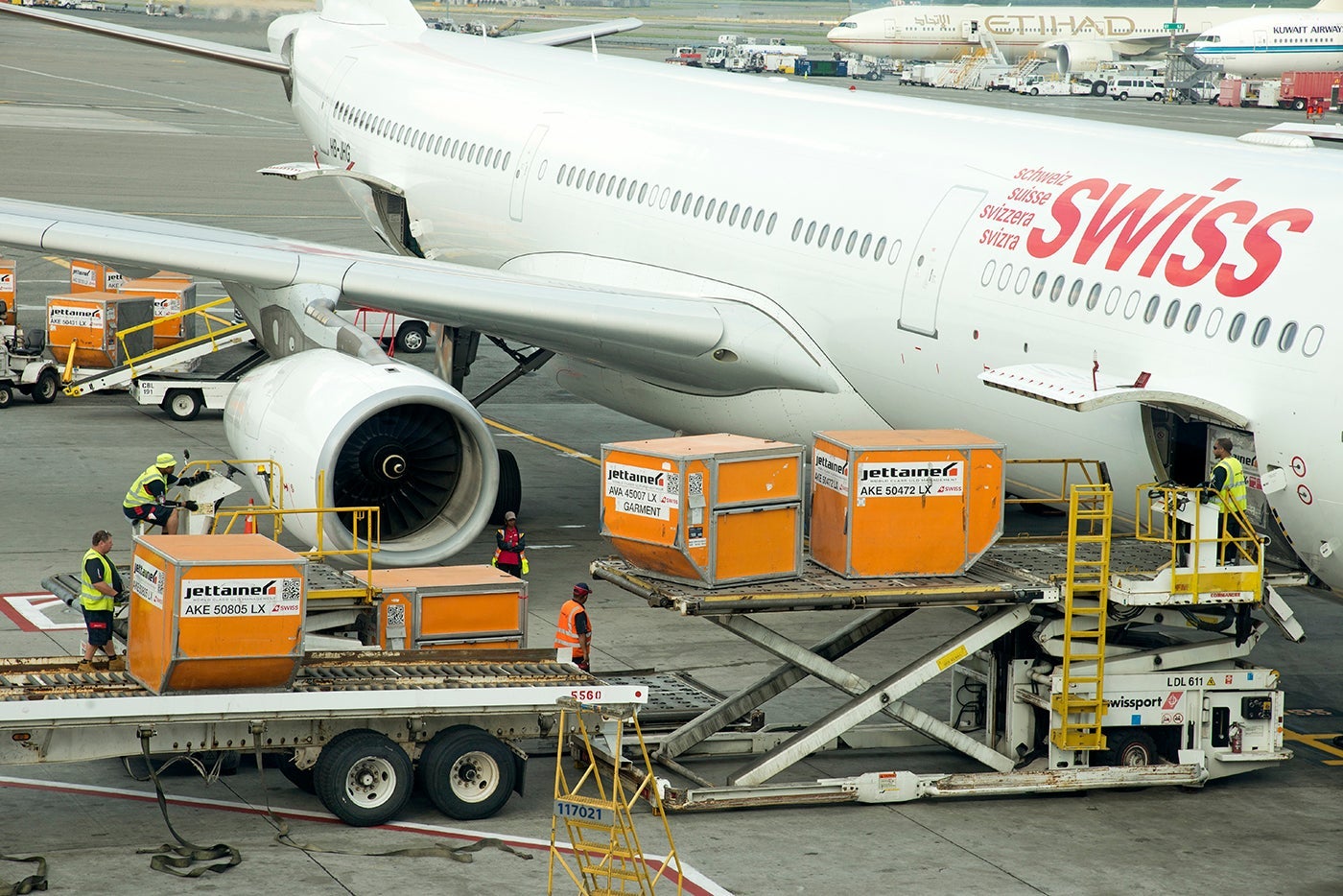
As each bag is loaded, the tag is scanned so that a record is kept of which bag is in which container. Should a passenger fail to make it to the gate on time and they are offloaded from the flight, their baggage must also be removed.
Instead of searching through every container for the bags, the ground staff can look at the log and see in which container the bags have been loaded. It's then a question of accessing the correct container and removing the bags.
This process saves time, allowing the loading process to begin even before the aircraft has arrived and then reducing lost time in the event of baggage offload.
Freight pallets
Freight comes in all shapes and sizes so it's not always possible to load it into baggage containers. As a result, freight tends to be loaded on pallets, which can then be put into the aircraft in the same fashion as the containers.
The versatility of the freight pallets enables them to carry all sorts of goods. Avocados, fresh-cut flowers, salmon, live eels, car engines, lawnmowers. The list is almost endless. Aircraft sometimes even carry human remains when a deceased person needs to be reunited with family in another country.
Take-Off Performance
With the holds carefully loaded to ensure that the aircraft is safely balanced for departure, the pilots can then calculate their take-off performance.
Aircraft don't just get airborne by luck. We know exactly how much runway is needed, how much engine power to use and what speed to lift off at. To calculate this, we use the Onboard Performance Tool (OPT).
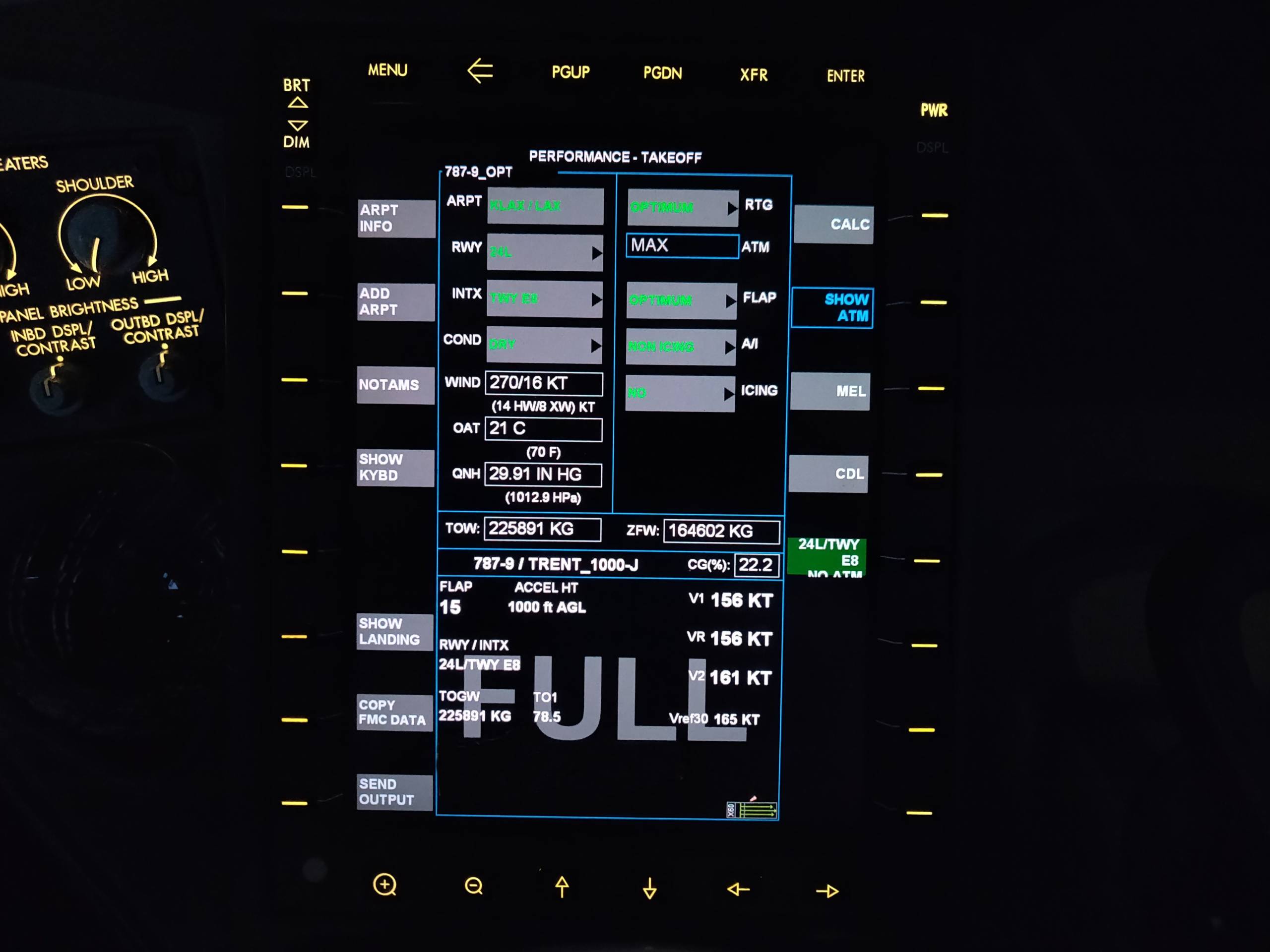
The OPT enables us to enter the airfield weather information and, using the take-off weight and trim setting given to us by the loading department, calculate the takeoff performance. This is one of the most critical stages of the flight. An error here could have serious consequences on the takeoff run.
It is by correctly calculating these figures that we know for certain that when the critical moment comes when we pull back on the control column approaching 200 mph, our 220-ton metal see-saw will indeed sink back on its tail, its nose will rise into the air and the aircraft will climb gracefully into the sky.
Bottom Line
The way in which an aircraft is loaded is critical to the safety of the flight. Too heavy at the rear and it could tip onto its tail. Too heavy at the front and the pilots will struggle to get the aircraft airborne. As a result, cargo and baggage are loaded in a way in which they will balance out how passengers are sat in the cabin.
The load sheet provides the pilots with information as to how the aircraft has been loaded. From this, we are able to set the trim of the horizontal stabilizer to ensure that all takeoffs handle in the same way.
TPG featured card

at American Express's secure site
Terms & restrictions apply. See rates & fees.
| 3X | Earn 3X Miles on Delta purchases. |
| 1X | Earn 1X Miles on all other eligible purchases. |
Pros
- Delta SkyClub access when flying Delta
- Annual companion ticket for travel on Delta (upon renewal)
- Ability to earn MQDs through spending
- Various statement credits for eligible purchases
Cons
- Steep annual fee of $650
- Other Delta cobranded cards offer superior earning categories
- Earn 100,000 Bonus Miles after you spend $6,000 or more in purchases with your new Card within the first 6 months of Card Membership and an additional 25,000 bonus miles after you make an additional $3,000 in purchases on the Card within your first 6 months, starting from the date that your account is opened. Offer Ends 04/01/2026.
- Delta SkyMiles® Reserve American Express Card Members receive 15 Visits per Medallion® Year to the Delta Sky Club® when flying Delta and can unlock an unlimited number of Visits after spending $75,000 in purchases on your Card in a calendar year. Plus, you’ll receive four One-Time Guest Passes each Medallion Year so you can share the experience with family and friends when traveling Delta together.
- Enjoy complimentary access to The Centurion® Lounge in the U.S. and select international locations (as set forth on the Centurion Lounge Website), Sidecar by The Centurion® Lounge in the U.S. (see the Centurion Lounge Website for more information on Sidecar by The Centurion® Lounge availability), and Escape Lounges when flying on a Delta flight booked with the Delta SkyMiles® Reserve American Express Card. § To access Sidecar by The Centurion® Lounge, Card Members must arrive within 90 minutes of their departing flight (including layovers). To access The Centurion® Lounge, Card Members must arrive within 3 hours of their departing flight. Effective July 8, 2026, during a layover, Card Members must arrive within 5 hours of the connecting flight.
- Receive $2,500 Medallion® Qualification Dollars with MQD Headstart each Medallion Qualification Year and earn $1 MQD for each $10 in purchases on your Delta SkyMiles® Reserve American Express Card with MQD Boost to get closer to Status next Medallion Year.
- Enjoy a Companion Certificate on a Delta First, Delta Comfort, or Delta Main round-trip flight to select destinations each year after renewal of your Card. The Companion Certificate requires payment of government-imposed taxes and fees of between $22 and $250 (for itineraries with up to four flight segments). Baggage charges and other restrictions apply. Delta Basic experiences are not eligible for this benefit.
- $240 Resy Credit: When you use your Delta SkyMiles® Reserve American Express Card for eligible purchases with U.S. Resy restaurants, you can earn up to $20 each month in statement credits. Enrollment required.
- $120 Rideshare Credit: Earn up to $10 back in statement credits each month after you use your Delta SkyMiles® Reserve American Express Card to pay for U.S. rideshare purchases with select providers. Enrollment required.
- Delta SkyMiles® Reserve American Express Card Members get 15% off when using miles to book Award Travel on Delta flights through delta.com and the Fly Delta app. Discount not applicable to partner-operated flights or to taxes and fees.
- With your Delta SkyMiles® Reserve American Express Card, receive upgrade priority over others with the same Medallion tier, product and fare experience purchased, and Million Miler milestone when you fly with Delta.
- Earn 3X Miles on Delta purchases and earn 1X Miles on all other eligible purchases.
- No Foreign Transaction Fees. Enjoy international travel without additional fees on purchases made abroad.
- $650 Annual Fee.
- Apply with confidence. Know if you're approved for a Card with no impact to your credit score. If you're approved and you choose to accept this Card, your credit score may be impacted.
- Terms Apply.
- See Rates & Fees