How flight-tracking site FlightAware works, for consumers and airlines
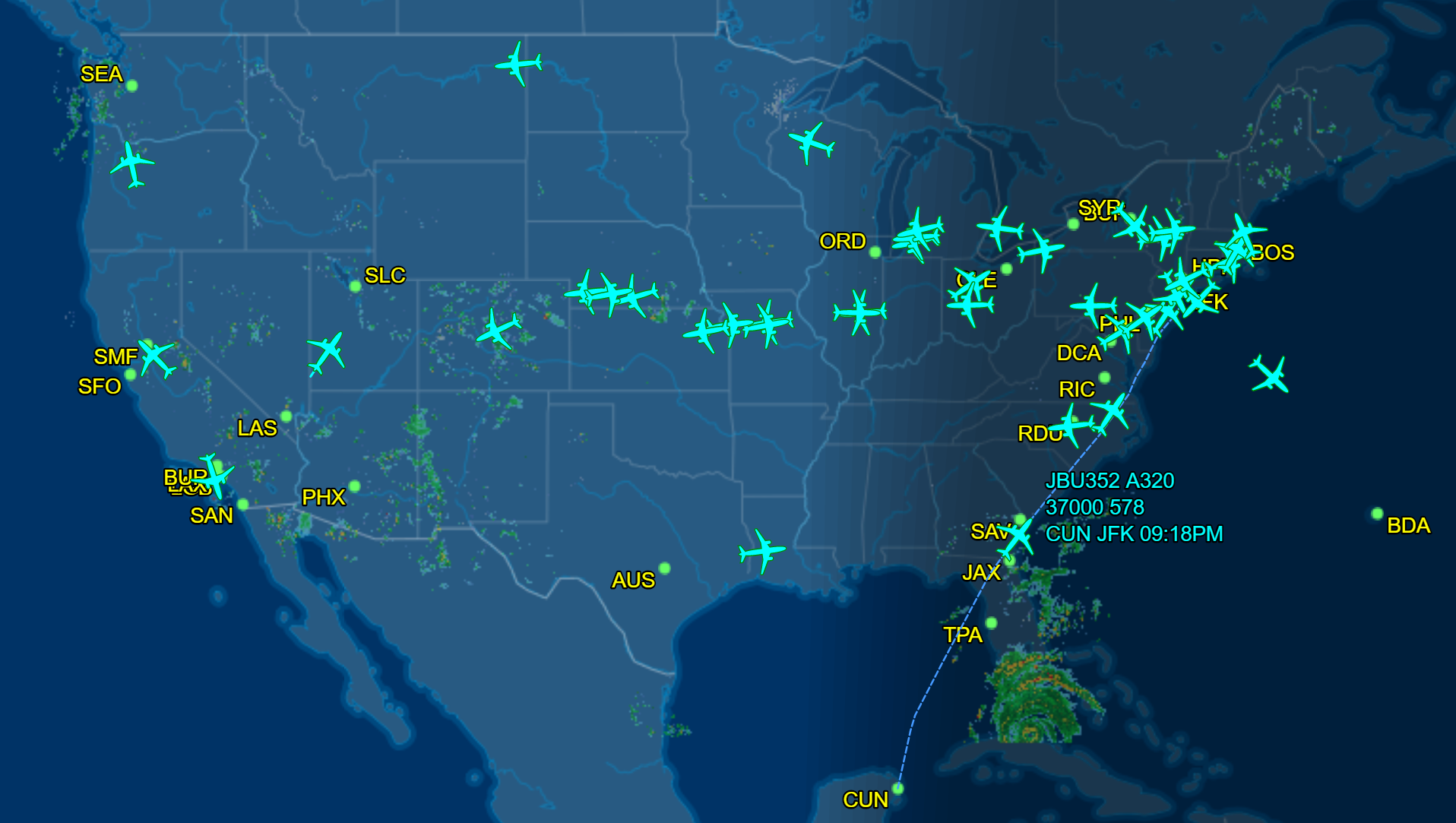
It started as the pet project of a software developer who was also a pilot. Today, the company boasts a team of 110 employees in four countries, and helps some 15 million travelers per month, over 200 airlines and 15,000 other companies.
It's FlightAware, a 15-year old company and the leader in providing flight data to passengers and commercial customers. The company provides a ubiquitous tool for travelers; search for your particular flight on Google, and FlightAware is invariably one of the first listings. And, if you want to know where your plane is now, say in the event of a delay, FlightAware is the go-to.
It shares the market with Sweden-based FlightRadar24, which also provides flight tracking; FlightAware's product suite is much more robust, used by passengers and airlines around the world.
I spoke with Daniel Baker, the founder of the Houston, Texas-based company that started tracking airline flights in 2005. For him, this job is a natural fit. "With the combination of good luck and good timing, I've been able to combine two passions of mine, aviation and software development," he said.
"We're an engineering-heavy company," Baker says, noting his team has 70 developers in-house, including a mobile-focused team in Austin.
"Being the CEO of FlightAware and a frequent traveler is a blessing and a curse," Baker said. "Feedback to our engineers is high when I'm traveling."
FlightAware is an AVGeek's dream. The company encourages flight training for employees and has a flying club.
How The Network Gets Data
Perhaps the most fascinating aspect of FlightAware is how most of the real-time data is ingested: it's from a global network of ADS-B receivers around the world, many in the homes of AvGeeks around the world. (Learn more about ADS-B here.) Indeed, FlightAware provides the receivers to people in low-coverage areas for free, or gives step by step instructions on how to build an ADS-B receiver.
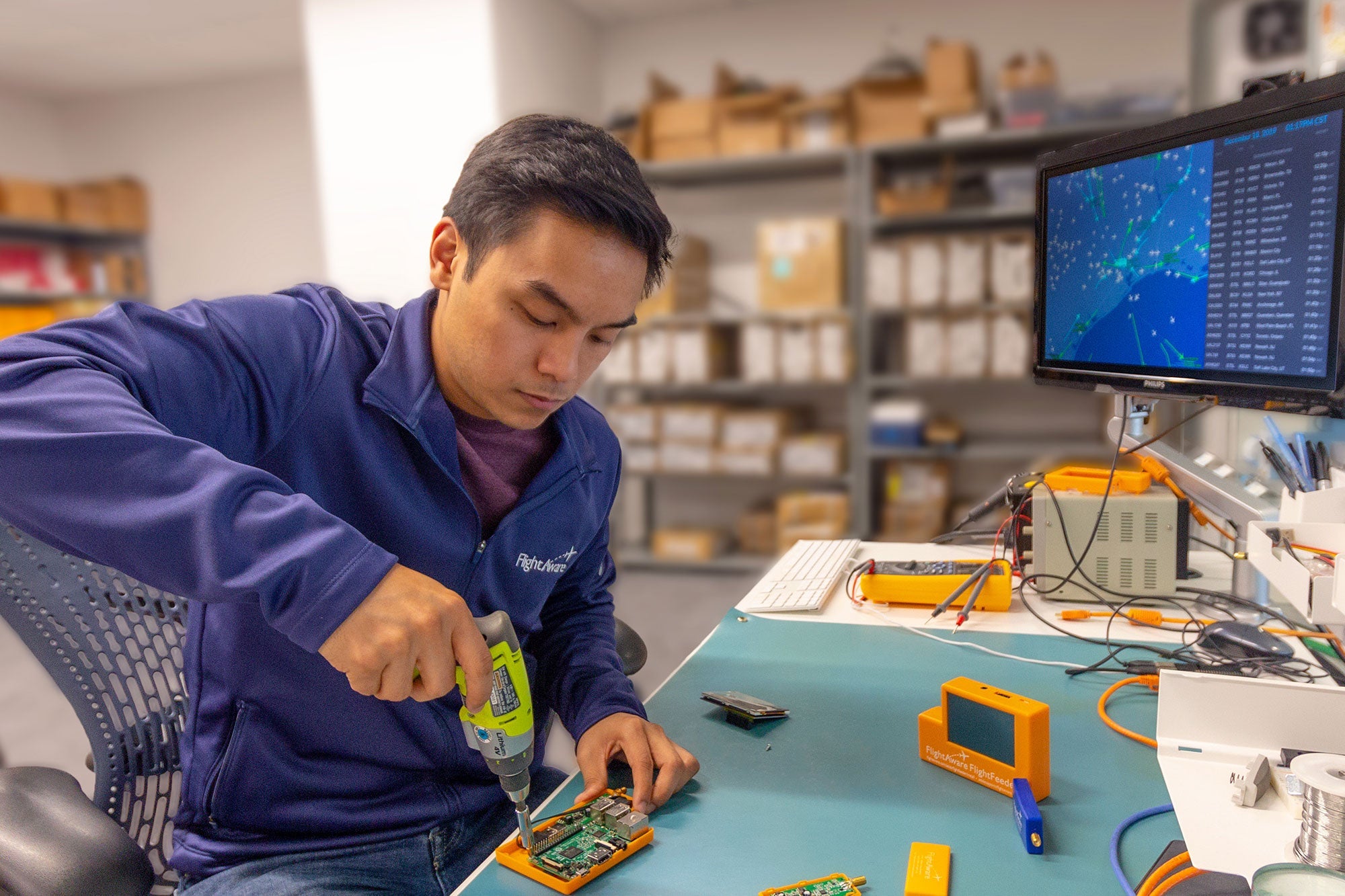
"In the 2000s, ADS-B data showed a plane's latitude and longitude, and we thought, 'Hey that is pretty cool.' So we built hardware to receive the data. If you can picture four shoe boxes, that was the first receiver and it cost about $5,000. But then, the technology got a lot better," Baker said, explaining that the microcomputer used by the receiver today is about 1/8 the size of a cell phone and costs around $25. Indeed, you can build your own receiver and plug into the Flight Aware network for less than $99.

Why go to all that trouble? FlightAware provides a complimentary enterprise-level subscription (an $89 value) to anyone who provides it data. Some 25,000 people do, around the world. Baker says there are receivers on oil rig platforms and maritime vessels. In addition, there's a robust and helpful community of fellow ADS-B geeks, along with support from FlightAware. The paid version of the app allows users to set alerts for particular flights and add on more data, such as maps of turbulence and even the registration of every aircraft.
Most passengers will pull up FlightAware on their desktop to track a flight. "People want to know if they're going to get home for dinner with their family," Baker said. "The functionality FlightAware provides helps set passenger expectations. Or their family's expectations. And it provides more confidence in the information provided by the airlines."
"In around 2010 or 2011, we launched 'Where's My Plane Now'" Baker said, explaining that being able to track flights by plane identifier allowed Flight Aware to piece together what airplane flies what route on a particular date. "We get data from the airlines, scheduling information, airport schedules or data feeds — and also we make deductions."
But not all flights will be tracked at all times — at least not by the version of FlightAware used by most people. Take, for example, this Cathay Pacific flight from New York to Hong Kong following the polar route. The white sections of the flight track are estimates; the flight "disappears" from real-time tracking for a portion over Canada, before getting picked up again over Siberia. It then goes in and out of coverage over Russia, Mongolia and China until it lands. There are simply fewer receivers in those areas. (Some flights do get picked up by receivers in places like Barrow, Alaska or Inuvik, Northwest Territories, Canada.)
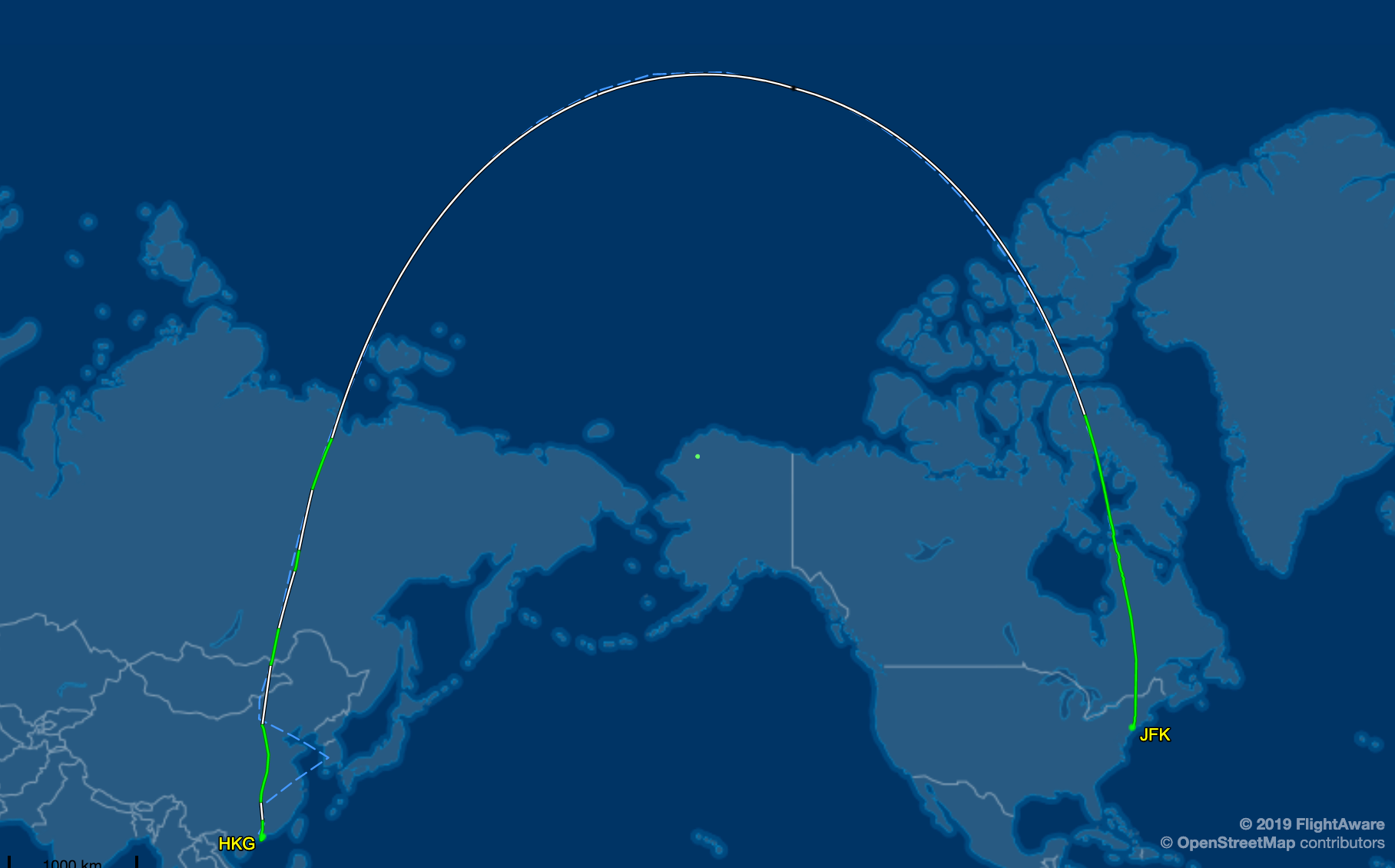
Nevertheless, FlightAware is still tracking the plane within some 20 feet, using satellites. "Our commercial customers get space-based ADS-B data," Baker said. "For that, we have 100% global coverage through our partnership with Aireon." Most normal users on the web won't see that always-on satellite tracking, but airlines do.
FlightAware is primarily focused on large data-wrangling projects and building products for passengers and its commercial customers, which includes a who's who of airlines, Baker explained. Its focus is very different from competitors such as FlightRadar24.
For example, Baker said that a leading North American airline will deploy FlightAware to its gate agents so that they can seamlessly understand where aircraft are. "FlightAware and its users will often know of delays before airline employees. It's a challenge for them and something we're working on with them," Baker said. "People want transparency."
In addition, two other North American airlines will soon deploy FlightAware's predictive tool to help their operations teams predict what aircraft might be late and where. This is technology the airlines couldn't build for themselves, and so FlightAware is the de-facto choice for most airlines.
"The solution provides real-time transparency, and allows for airlines to make better decisions, and to predict and prevent. This all goes back to helping passengers set expectations, but also help reduce delays and cancellations," Baker explained.
"Are airplanes in a holding pattern? What's the rate of planes departing and arriving? When will this particular aircraft actually get to the gate? Is there going to be a gate conflict if they arrive early? Could the ground crew meet another flight, instead of waiting around? All of this allows the airlines to make the operations more predictable," Baker said.
So which airlines are the most technology-forward? I suggested a number of airlines that I thought used technology tools like FlightAware for passenger benefit.
Baker was coy.
"Whoever signs with us first!"
Mike Arnot is the founder of Boarding Pass NYC, a New York-based travel brand, and a marketing consultant to airlines, none of which appear in this article.
TPG featured card

at Capital One's secure site
Terms & restrictions apply. See rates & fees.
| 5X miles | Earn 5X miles on hotels, vacation rentals and rental cars booked through Capital One Travel |
| 2X miles | Earn unlimited 2X miles on every purchase, every day |
Pros
- Stellar welcome offer of 75,000 miles after spending $4,000 on purchases in the first three months from account opening. Plus, a $250 Capital One Travel credit to use in your first cardholder year upon account opening.
- You'll earn 2 miles per dollar on every purchase, which means you won't have to worry about memorizing bonus categories
- Rewards are versatile and can be redeemed for a statement credit or transferred to Capital One’s transfer partners
Cons
- Highest bonus-earning categories only on travel booked via Capital One Travel
- LIMITED-TIME OFFER: Enjoy $250 to use on Capital One Travel in your first cardholder year, plus earn 75,000 bonus miles once you spend $4,000 on purchases within the first 3 months from account opening - that’s equal to $1,000 in travel
- Earn unlimited 2X miles on every purchase, every day
- Earn 5X miles on hotels, vacation rentals and rental cars booked through Capital One Travel
- Miles won't expire for the life of the account and there's no limit to how many you can earn
- Receive up to a $120 credit for Global Entry or TSA PreCheck®
- Use your miles to get reimbursed for any travel purchase—or redeem by booking a trip through Capital One Travel
- Enjoy a $50 experience credit and other premium benefits with every hotel and vacation rental booked from the Lifestyle Collection
- Transfer your miles to your choice of 15+ travel loyalty programs
- Top rated mobile app