Insider Series: How are Air Traffic Controllers Trained?
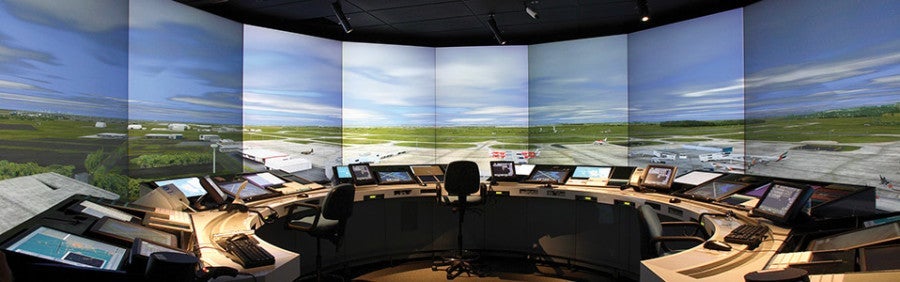
New to our Insider Series, TPG Contributor "Vic Vector" is an air traffic controller at a major ATC facility in the United States. His first installment covered the basic roles of air traffic controllers as well as the types of facilities in which they work — this time, he shares how air traffic controllers apply for and are trained to do one of the most important jobs in aviation.

The path to becoming an air traffic controller starts quite simply: You just have to apply at the right time. About once a year, an application window opens on usajobs.gov and generally remains open for a week or so. To apply, you must be an English-speaking US citizen younger than 31 years of age with a bachelor's degree, three years of work experience or a combination of the two. Over 28,000 candidates applied to the OTS bid in 2014, with only around 2,000 making it past the initial screening questionnaire.
From there, potential candidates are further screened using a computer-based test called the AT-SAT (Air Traffic Standardized Aptitude Test) where they must score above a 70, though a score of 85 or higher is preferred. There is an in-person interview, as well as psychological testing, medical screening and an extensive background check in order to obtain a security clearance.
It's at this point in the process that potential new hires are given a tentative offer letter (TOL). The TOL used to include your facility assignment as well, but that's no longer the case. Now when a candidate receives a TOL, they're told only the type of facility for which they've been selected: Terminal (Tower or TRACON) or Enroute (an ARTCC).
The entire process from application to employment can take months or even years. Assuming all goes well, the prospective controller will eventually receive a firm offer letter and and be given a report date to start class at the FAA Academy on the campus of the Mike Monroney Aeronautical Center in Oklahoma City.
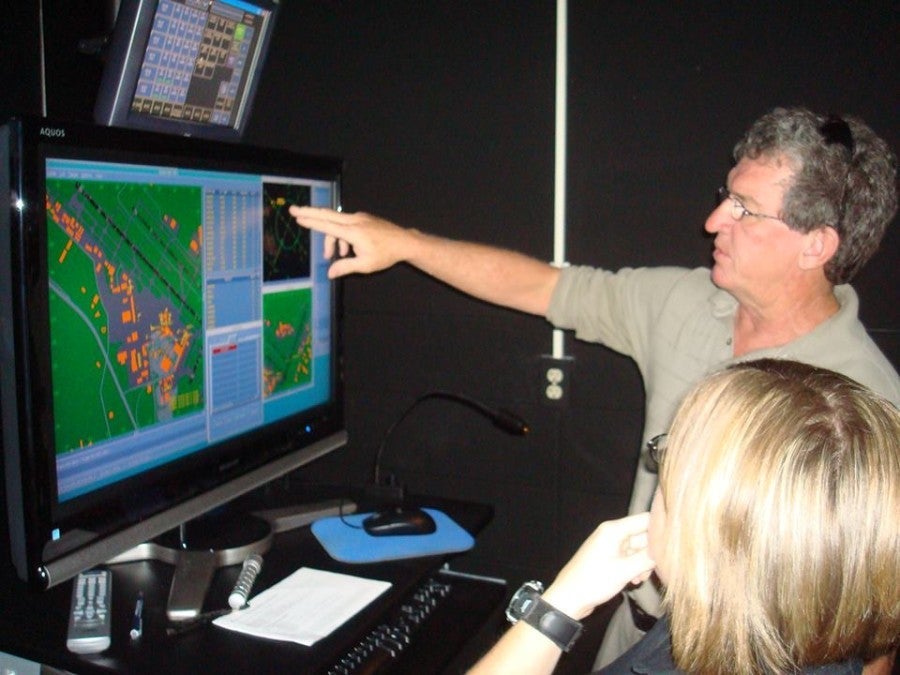
Academy classes can vary in length, from six weeks for terminal training to up to 12 weeks for enroute training, though the first stop is a five-week Aeronautical Basics course designed to provide a foundation for those without prior aviation experience. The academy in general is designed to teach the fundamentals of whichever brand of air traffic for which you've been selected, including separation standards, basic procedures and phraseology. Students train on realistic simulators for both tower and radar and are taught mostly by retired controllers. A running cumulative score is calculated based on written tests and scored simulations and students must score a 70 or above to keep their job. While attrition rates have varied over the years, generally around 25-40% of students wash out.
That harsh reality can be especially distressing for those like myself who gave up careers or positions they couldn't simply return to if they were unsuccessful. It's a stressful, high-stakes school preparing people for a stressful, high-stakes job.
When I came through the training pipeline, which wasn't all that long ago, academy students arrived already assigned to a specific facility. Today, however, students are ranked by their final score and given a choice of several facilities, like an ATC draft of sorts, with the highest-scoring student getting the first pick. Frankly, I find this particular policy to be a bit of a troubling and short-sighted change as it's essentially asking people — many with spouses and children — to uproot their entire lives and move to a random city in the country with about three days notice. ATC is a fantastic career opportunity, but that's more than some are willing to sacrifice. I can't say with certainty I would have left my previous job without knowing where in the country I'd be stationed pending academy completion.
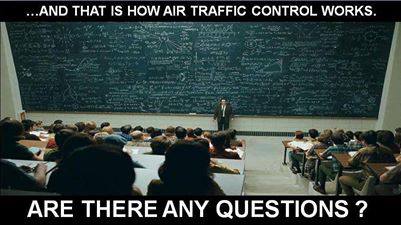
After anywhere from two to four months of training at the academy, new graduates report to their facility, where the real training begins in earnest. They must familiarize themselves with intricate aeronautical maps that display their airspace and the airspace of the surrounding facilities as well as the local standard operating procedures and letters of agreement. They have to learn things like radio frequencies, routes and airport/navigational aid identifiers surrounding their area of jurisdiction. There are literally thousands of pieces of information that the air traffic control trainee must commit to memory long before they ever step foot into a tower cab or radar room. It can be a rather daunting task, but the trainee who has made it to this point has already demonstrated keen memorization skills.

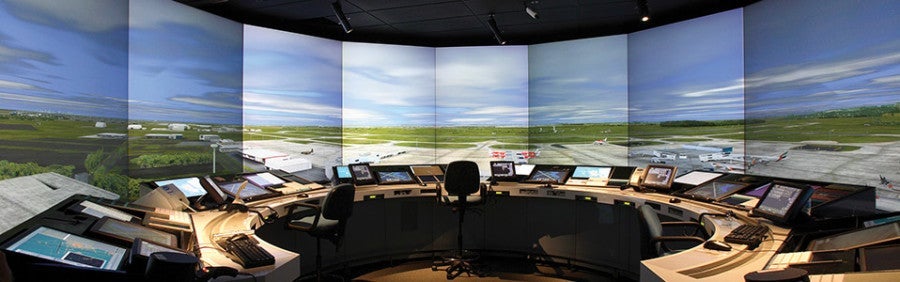
Trainees — or developmentals, as they're sometimes called — also do more simulations dealing now with their specific facility's airspace. These problems, like the ones at the academy, are specifically designed to create aircraft conflicts and hazardous situations that the student controller must identify and mitigate. It may be anywhere from months (in a tower) or years (in a center) of additional on-the-job training before a developmental ever actually puts on a headset and speaks to an airplane.
Eventually the developmental is deemed safe enough to practice real traffic scenarios with live airplanes, albeit under the close supervision of an experienced controller training them, who provides specific techniques for separating airplanes and who is ready to take over if and when the trainee makes a mistake. This is the real heart of all ATC training — everything before is just preparation — and it can be incredibly stressful for both trainee and trainer alike. There is still attrition along the way, though in certain cases, a new hire who struggled at a busy, high-level facility can be sent to a lower level one.

The goal of all developmentals is to attain the status of Certified Professional Controller (CPC). Depending on the facility, there could be anywhere from 3-8 positions or sectors on which the fledgling controller must be certified, each of which involves a formal "checkride" as it's called, with a supervisor plugging in and observing the developmental work before determining they're indeed safe and competent enough to work the position or sector on their own. Achieving the title of CPC means the end of training, though it's hardly the end of learning.
The day I made CPC was simultaneously the happiest and most nerve-wracking of my entire career to date because I came to the realization that I no longer had anyone watching my every move and correcting my mistakes on the spot. I realized the enormous magnitude of trust and the incredible responsibility for public safety that had been placed in me. My trainers used to tell me that I would learn way more working on my own than I ever did training with them, and they were right.
Time to full certification can vary from as little as six months at a small tower to as long as four years at a large radar facility. The learning, however, never ends. This is a profession which requires constant and continual improvement of one's skills because you, the flying public, count on us to do our job and keep you safe, which is a responsibility we take very seriously.
Speaking of seriousness, stress is one of the most talked-about aspects of the job — so next time, I'll discuss stress as it occurs for air traffic controllers on a day-to-day basis and how we deal with it.
TPG featured card

at Capital One's secure site
Terms & restrictions apply. See rates & fees.
| 5X miles | Earn 5X miles on hotels, vacation rentals and rental cars booked through Capital One Travel |
| 2X miles | Earn unlimited 2X miles on every purchase, every day |
Pros
- Stellar welcome offer of 75,000 miles after spending $4,000 on purchases in the first three months from account opening. Plus, a $250 Capital One Travel credit to use in your first cardholder year upon account opening.
- You'll earn 2 miles per dollar on every purchase, which means you won't have to worry about memorizing bonus categories
- Rewards are versatile and can be redeemed for a statement credit or transferred to Capital One’s transfer partners
Cons
- Highest bonus-earning categories only on travel booked via Capital One Travel
- LIMITED-TIME OFFER: Enjoy $250 to use on Capital One Travel in your first cardholder year, plus earn 75,000 bonus miles once you spend $4,000 on purchases within the first 3 months from account opening - that’s equal to $1,000 in travel
- Earn unlimited 2X miles on every purchase, every day
- Earn 5X miles on hotels, vacation rentals and rental cars booked through Capital One Travel
- Miles won't expire for the life of the account and there's no limit to how many you can earn
- Receive up to a $120 credit for Global Entry or TSA PreCheck®
- Use your miles to get reimbursed for any travel purchase—or redeem by booking a trip through Capital One Travel
- Enjoy a $50 experience credit and other premium benefits with every hotel and vacation rental booked from the Lifestyle Collection
- Transfer your miles to your choice of 15+ travel loyalty programs
- Top rated mobile app