The future of luxury hotels: Pay more but expect less


Higher leisure travel demand during the pandemic sent hotel rates soaring across all segments of the market, and luxury chains led the pack.
But with the world mostly adjusting to viewing coronavirus more as endemic — akin to treating surges more like spikes in the flu as opposed to something requiring travel restrictions — the hotel industry is settling into a new normal. That means an opportunity to pursue shifts in business strategy — some of which you're likely already feeling when you check into a hotel.
The pandemic accelerated industry trends already in place before the health crisis. Labor shortages ushered in less-frequent housekeeping during a stay. Single-use, mini bottles of shampoo and conditioner are increasingly rare in favor of more environmentally friendly wall-mounted dispensers that can be refilled (so say sayonara to upgrading the soap offerings in your guest bathroom with mini bottles of Le Labo from your last vacation). Companies even look to run hotels more efficiently by sometimes operating two different brands within the same building.
But most of these changes happened outside the highest tiers of hotel brands. Don't bank on that trend continuing.
Yes, even the very best hotels aren't immune to the changing hotel landscape.
"My view is that we need to keep our ears wide open and understand what's really most important to [our customers] because some of our luxury travelers don't want daily housekeeping," Hyatt CEO Mark Hoplamazian said this summer at a New York University hotel conference. "So, we have to pay attention to that same level of conscious decision about practicing empathy, listening carefully and applying choice where it's requested."
Hoplamazian's comments were made during a panel with Hilton CEO Christopher Nassetta, as part of a discussion about daily housekeeping and the decision companies like Hilton had made to offer an opt-in model during a guest's stay at many of the company's brands. You can still get your room cleaned during a stay but you have to call the front desk and specifically request it.
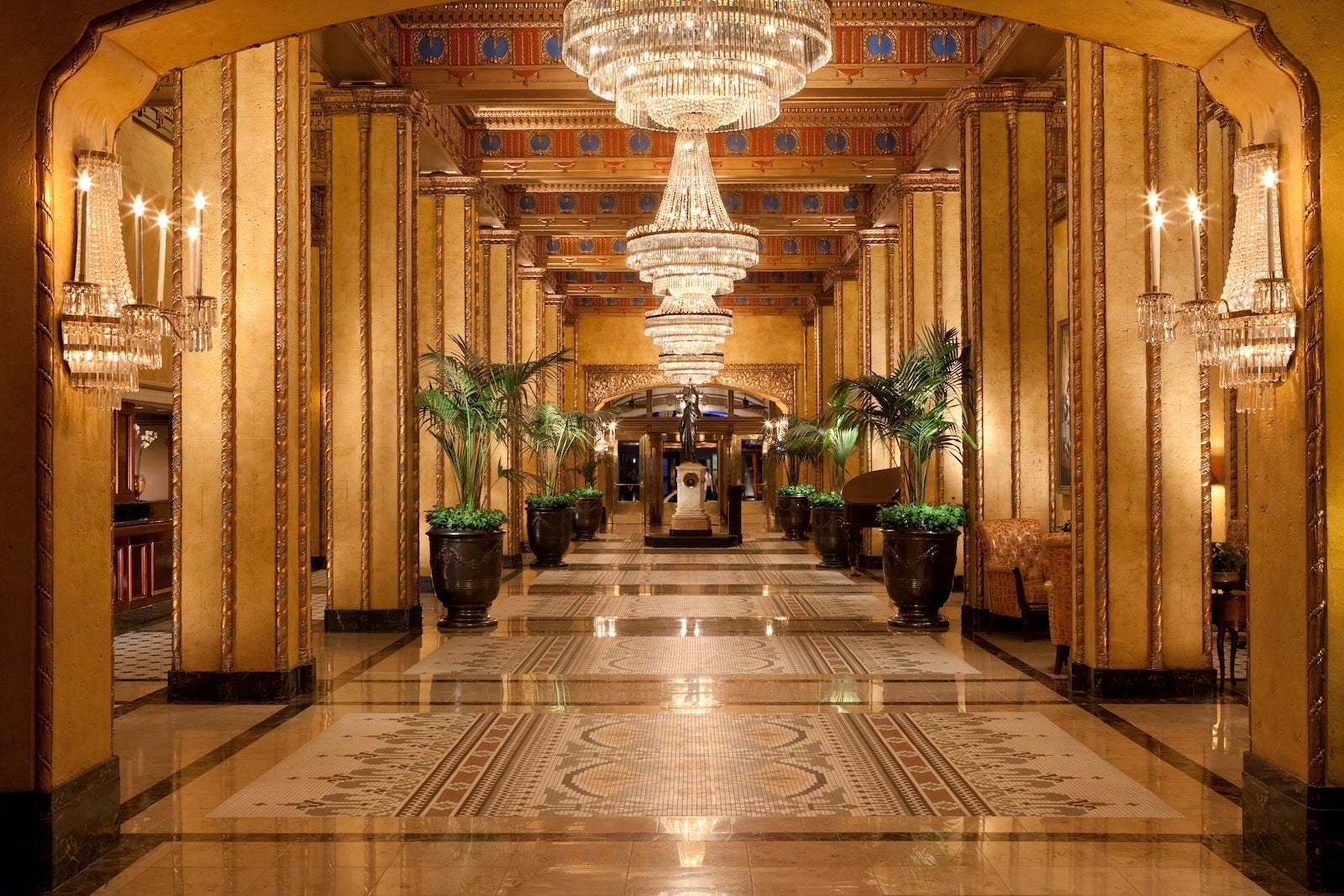
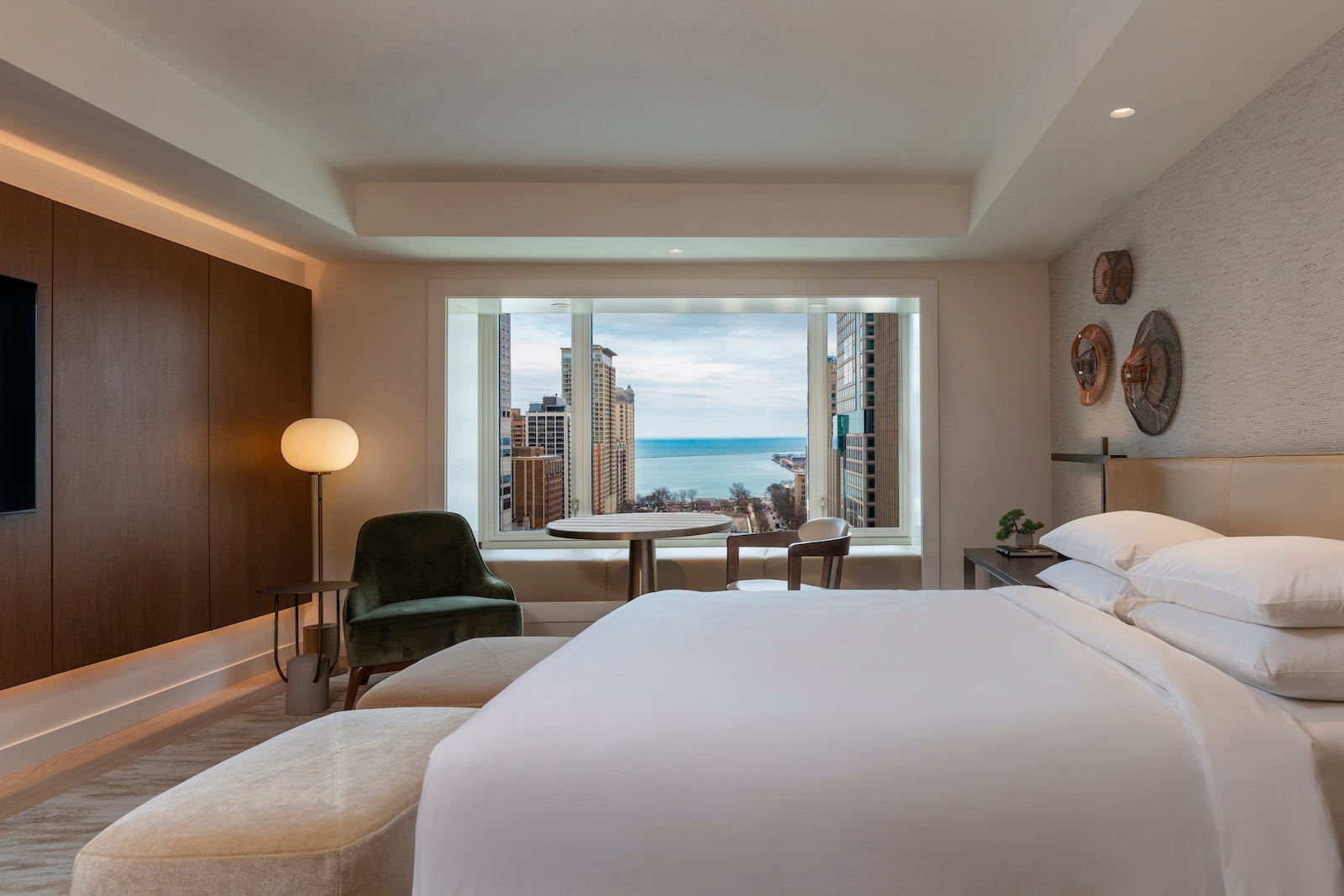
This doesn't mean a Waldorf Asotoria or a Park Hyatt is doing away with daily housekeeping during a stay (as I can attest during a recent stay at one in Chicago), but the fact Hoplamazian indicated there's a possibility even the most upscale brands could switch to an opt-in model for room cleaning marks the latest in a few shifts in the customer experience mindset.
And it's more than just the biggest hotel companies looking at ways to change the look and feel of a stay in a five-star hotel. Ian Schrager, a hospitality legend — known for co-founding Studio 54 as well as being one of the architects of the boutique hotel movement — recently announced plans to move beyond his partnership with Marriott International on the Edition brand to focus on Public, which he describes as a luxury hotel brand with elements of a limited-service experience.

If you think luxury and limited service are mutually exclusive terms, you're not wrong. I've grappled over the last year with what the execution of such a marriage would look like once Public starts expanding beyond its original hotel in New York City.
Schrager previously indicated the limited-service touches to his luxury hotel would likely mean greater reliance on technology to facilitate things like check-in rather than a fully staffed front desk. Think: mobile check-in and check-out as well as digital room keys — pretty standard stuff in today's hotel orbit.
Further, there could be additional efficiencies with restaurants that act almost like a modern automat, with less guest-employee interaction and consequently lower labor costs. Just order your food from a kiosk and grab it yourself, all with a fabulous Schrager flair, presumably. (After all, his kind of hospitality attracts the likes of rock stars and A-list actors and actresses — and even Bianca Jagger on a horse.)
Beyond labor, even in-room amenities are changing at certain high-end hotel brands. Many hotel companies have moved toward wall-mounted shampoo, conditioner and soap dispensers in recent years as a sustainability push over the old practice of using disposable plastic bottles. This practice, however, has been largely concentrated on more affordable brands, while the mini bottles remained at higher-end hotels.
IHG Hotels & Resorts has gone a step further by including even its most-expensive brands in its own shift, slated to finish by 2030. The company takes a glammed-up approach to this move at some brands, with hotels like Six Senses offering bath amenities in larger ceramic dispensers.
"My most expensive brand is Six Senses, which has a reputation for sustainability, and when I was going to our teams and said, 'We're going to take look at bath amenities,' which we're all doing now, they said, 'You can't do it at luxury hotels,'" IHG CEO Keith Barr said this summer at the NYU conference. "I'm going, 'Well, we do it over at Six Senses, and we're charging $5,000 a night for these hotels."
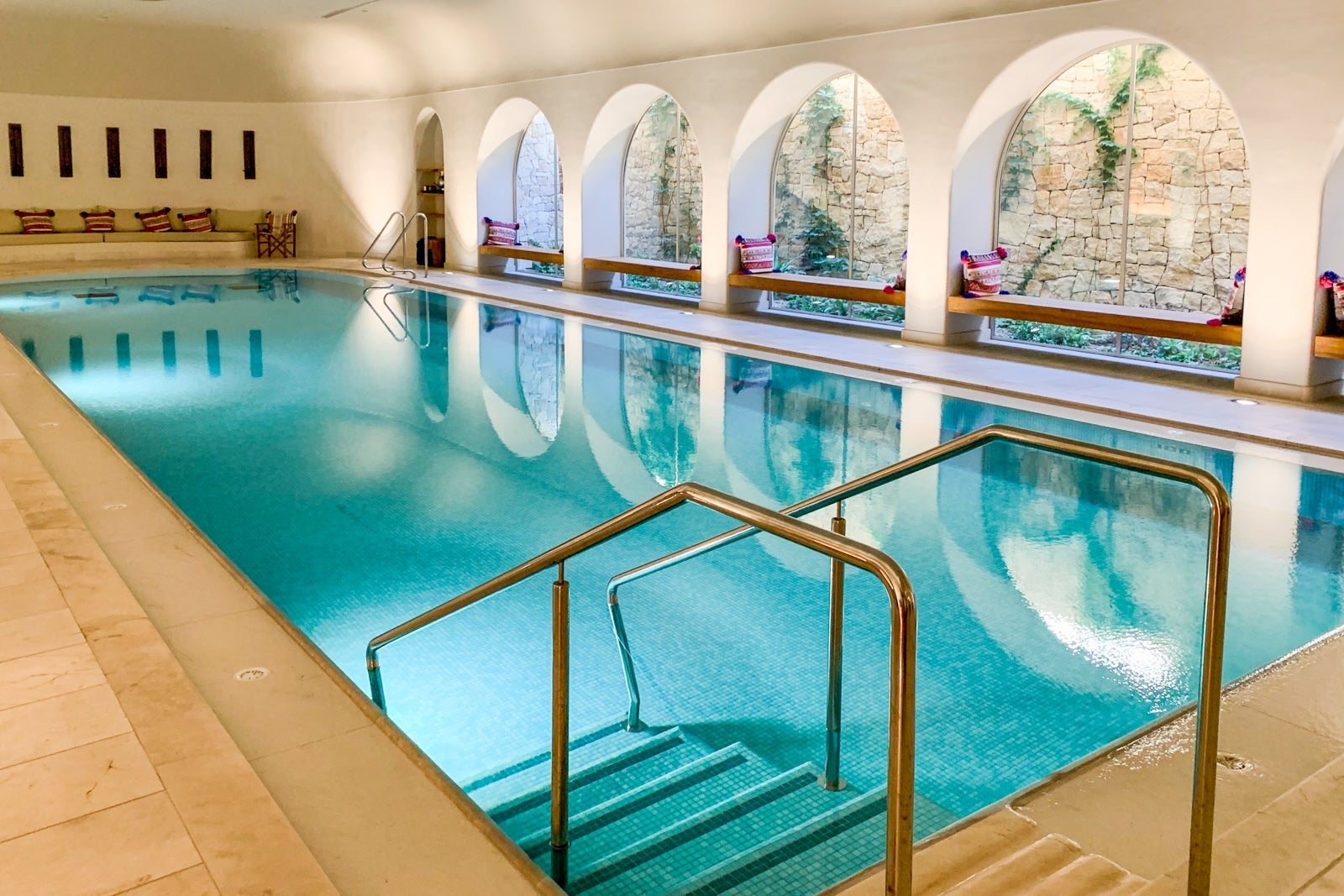
This doesn't necessarily mean you're going to have to haul a giant bottle of soap and shampoo from the shower over to a soaking tub if you do find yourself in one of these readjusted five-star hotel rooms. During my recent stay at the Park Hyatt in Chicago (granted, part of Hyatt and not IHG) there were still mini bottles here and there — including smaller soaps and body wash by the soaking tub — while the more sustainable, permanent bottles were available in the shower.
The cost limit doesn't exist
One of the biggest signs of a luxury hotel shift involves pricing. Inflation is one thing, but you aren't imagining it: High-end hotels cost more than ever during the pandemic. Experts say that was a long time coming.
Luxury hotel rates are 25% more expensive today than they were in 2019, according to Bernstein research. That's actually a much-needed lift in terms of regaining pricing premiums relative to more affordable segments of the hotel industry.
It may be hard for some to imagine glitzy brands were struggling over the last decade, but they certainly weren't making as much money over other brands as they had previously.
Luxury brands like Waldorf Astoria and Ritz-Carlton for years typically maintained a healthy price premium over their more affordable-albeit-upscale siblings like Hilton and Marriott. But following the 2007-2009 recession, luxury hotel rates plummeted, and the pricing gap between ultra-luxury and upscale brands remained below pre-recession levels until the pandemic.
"We see luxury's pricing strength as a price reset to a more expected premium to other hotels and expect pricing here to be sustainable, given the resilience of the luxury traveler," reads a Bernstein report from this summer. "If we extrapolate the pre-[recession] trend to today, we can see that luxury's current pricing strength is in fact exactly where it should be and that in the last decade, luxury pricing growth has been slower than historical levels. At our recent conference, Hyatt has called this the 'great pricing reset,' with luxury prices here to stay."
Surging leisure travel demand fueled pricing power, and Bernstein experts anticipate the hefty costs to remain.
"If a Hyatt Regency is $400 a night, should a Park Hyatt be $800? No, it should be $1,100. That's the right price premium to Hyatt Regency," Richard Clarke, a managing director at Bernstein who covers the hotel industry, said in an interview with TPG. "So, they've reset all their luxury prices higher, or their rack rates have gone up a lot, because they realized that [luxury] consumer probably has always been more time poor than cash poor and could have afforded a more expensive hotel."
Luxury is in the eye of the beholder
If shifting levels of service are on the table and prices are going higher, what does this even mean for the luxury hotel sector?
Some could argue a solidly staffed hotel is luxurious simply because there are more people to cater to individual guests and enhance their overall experience.
"I see lots of experiments and initiatives to create as many small, thoughtful, authentic memorable moments — without being overly contrived 'Instagrammable' moments that became a bit forced and overdone before the pandemic," said Dan Ryan, host of the Defining Hospitality podcast. "Whether these small moments are fresh fruit in your room, a fire pit with s'mores, handwritten notes, the music playing when you walk into the room, or any other of these thoughtful touch points — luxury has so much to do with tying these reflective small moments into an overall very memorable experience."
Given the push toward lifestyle hotels — more neighborhood-oriented properties with greater emphasis on dining and design — one could also argue the latest push in luxury is more about unique experiences rather than the industry's lifetime of standardization.
Since Holiday Inn entered the scene in the 1950s, the mantra of major hotel companies has been to provide consistent, similar service at properties around the world under the same flag. That means your stay at a Marriott or Ritz-Carlton in Shanghai should be similar to the ones in St. Louis. We all know that's easier said than done, but it is the general vibe the hotel industry strives for at most brands.
Hotel companies now see the future of stays as more about individual experiences that reflect a surrounding area and serve the individual guest. That means there are no set boundaries to the look and feel of a five-star stay.
"Luxury is a funny thing to me. Does anyone know what it is and how to define it?" Ryan asked. "You know it when you see it, or, in the case of hospitality, when you feel it."
In short: Luxury these days is in the eye of the beholder — but it's going to cost more today than it did just a few years ago.
TPG featured card

at American Express's secure site
Terms & restrictions apply. See rates & fees.
| 3X | Earn 3X Miles on Delta purchases. |
| 1X | Earn 1X Miles on all other eligible purchases. |
Pros
- Delta SkyClub access when flying Delta
- Annual companion ticket for travel on Delta (upon renewal)
- Ability to earn MQDs through spending
- Various statement credits for eligible purchases
Cons
- Steep annual fee of $650
- Other Delta cobranded cards offer superior earning categories
- Earn 100,000 Bonus Miles after you spend $6,000 or more in purchases with your new Card within the first 6 months of Card Membership and an additional 25,000 bonus miles after you make an additional $3,000 in purchases on the Card within your first 6 months, starting from the date that your account is opened. Offer Ends 04/01/2026.
- Delta SkyMiles® Reserve American Express Card Members receive 15 Visits per Medallion® Year to the Delta Sky Club® when flying Delta and can unlock an unlimited number of Visits after spending $75,000 in purchases on your Card in a calendar year. Plus, you’ll receive four One-Time Guest Passes each Medallion Year so you can share the experience with family and friends when traveling Delta together.
- Enjoy complimentary access to The Centurion® Lounge in the U.S. and select international locations (as set forth on the Centurion Lounge Website), Sidecar by The Centurion® Lounge in the U.S. (see the Centurion Lounge Website for more information on Sidecar by The Centurion® Lounge availability), and Escape Lounges when flying on a Delta flight booked with the Delta SkyMiles® Reserve American Express Card. § To access Sidecar by The Centurion® Lounge, Card Members must arrive within 90 minutes of their departing flight (including layovers). To access The Centurion® Lounge, Card Members must arrive within 3 hours of their departing flight. Effective July 8, 2026, during a layover, Card Members must arrive within 5 hours of the connecting flight.
- Receive $2,500 Medallion® Qualification Dollars with MQD Headstart each Medallion Qualification Year and earn $1 MQD for each $10 in purchases on your Delta SkyMiles® Reserve American Express Card with MQD Boost to get closer to Status next Medallion Year.
- Enjoy a Companion Certificate on a Delta First, Delta Comfort, or Delta Main round-trip flight to select destinations each year after renewal of your Card. The Companion Certificate requires payment of government-imposed taxes and fees of between $22 and $250 (for itineraries with up to four flight segments). Baggage charges and other restrictions apply. Delta Basic experiences are not eligible for this benefit.
- $240 Resy Credit: When you use your Delta SkyMiles® Reserve American Express Card for eligible purchases with U.S. Resy restaurants, you can earn up to $20 each month in statement credits. Enrollment required.
- $120 Rideshare Credit: Earn up to $10 back in statement credits each month after you use your Delta SkyMiles® Reserve American Express Card to pay for U.S. rideshare purchases with select providers. Enrollment required.
- Delta SkyMiles® Reserve American Express Card Members get 15% off when using miles to book Award Travel on Delta flights through delta.com and the Fly Delta app. Discount not applicable to partner-operated flights or to taxes and fees.
- With your Delta SkyMiles® Reserve American Express Card, receive upgrade priority over others with the same Medallion tier, product and fare experience purchased, and Million Miler milestone when you fly with Delta.
- Earn 3X Miles on Delta purchases and earn 1X Miles on all other eligible purchases.
- No Foreign Transaction Fees. Enjoy international travel without additional fees on purchases made abroad.
- $650 Annual Fee.
- Apply with confidence. Know if you're approved for a Card with no impact to your credit score. If you're approved and you choose to accept this Card, your credit score may be impacted.
- Terms Apply.
- See Rates & Fees