Space ships, storms and other reasons your Florida flight could be delayed this summer

Editor's Note
Headed to Florida sometime soon? You might have to wait just a bit longer to see Mickey Mouse or lounge on one of the state's beaches.
Air traffic congestion has become a major issue, affecting flights headed into and out of Florida – and, in extreme cases, across the county.
While flight delays are an accepted part of traveling, they've gotten so bad recently in the northern part of the state that airline executives are starting to speak up.
"The airline industry has specific impacts with respect to Florida air traffic control and travel through there," Southwest COO Mike Van de Ven said during the company's first-quarter earnings call in April.
"The weather issues and resulting downline impacts were exacerbated by staffing shortages at the Jacksonville Air Traffic Control Center, which controls airspace over the northern two-thirds of Florida," Frontier CEO Barry Biffle said during his company's first-quarter earnings call, adding that the airline would be trimming its capacity through that area.
The Federal Aviation Administration, which is responsible for the nation's air traffic control system, says that the issue is multi-faceted and the result of a number of problems happening at once. This week, the FAA met in Florida with airlines and other stakeholders about the issue, and the group will meet again to collaboratively work on solutions. Here are some of the issues that the FAA says is contributing to these delays.
Staffing
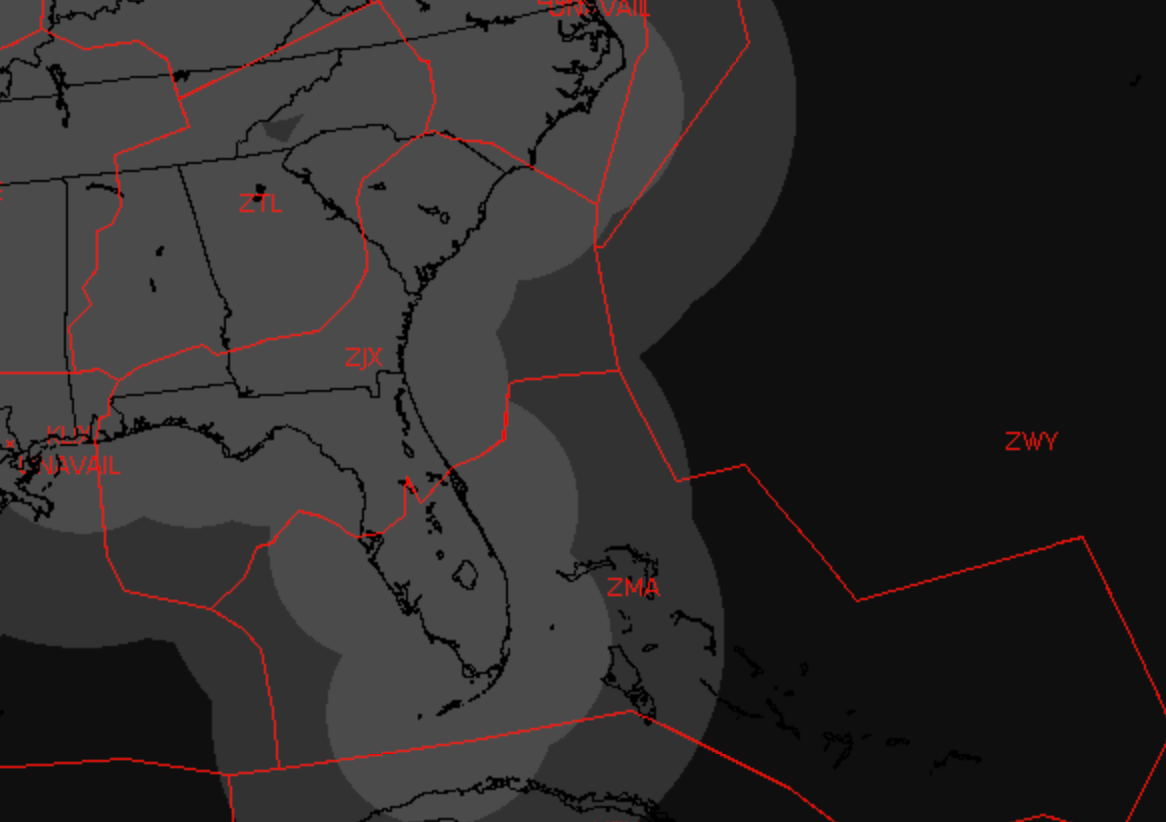
The airline executives tend to aim most of their ire on staffing, which is indeed a large part of the problem. The Jacksonville Air Route Traffic Control Center, known in the industry by its identifier, ZJX, is short-staffed, as are a number of other FAA facilities.
There has been a shortage of controllers for at least 15 years, a problem that surfaced as controllers hired after the 1981 ATC strike began to retire in waves. More recently, the issue has been exacerbated by COVID-19. The pandemic has affected the supply of new controllers — who take years to train — as well as the FAA's new-hire training academy in Oklahoma City, which was closed for a period during the pandemic. Facility-specific on-the-job training that is conducted once controllers graduate from the academy (or transfer from other facilities) has been on and off during the various COVID waves due to social distancing concerns. The National Air Traffic Controllers Association, the labor union representing air traffic controllers, did not respond to a request for comment.

Weather
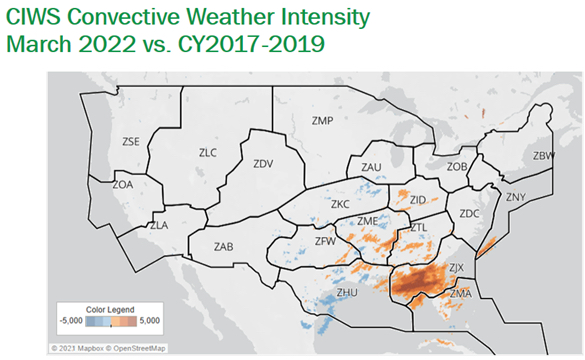
There's been a marked increase in convective weather — think thunderstorms — in northern Florida in recent years. The map below, provided by the FAA, shows a significant increase in stormy weather across the Jacksonville Center's airspace this past March, compared to previous years. That convective weather has the effect of closing down routing options for aircraft, meaning air traffic has fewer places to go, which can cause delays — especially on peak days, when a large number of flights are vying for space.
Space launches
NASA's Kennedy Space Center has seen a significant increase in space launches in recent months, mostly consisting of SpaceX's Falcon 9 rocket. For safety reasons, the airspace around the center, on Central Florida's east coast, must be closed around the time of the space launch. This has a similar effect as the weather: there are fewer options for routing aircraft during these events.
More: FAA announces $1 billion investment in air traffic control system
The airspace is shared with the military
Florida's peninsular shape makes some of its coastal waters an ideal spot for military aircraft to conduct training exercises. When Southwest had its severe operational issues last October, a U.S. Navy exercise that closed off some airspace was seen as one of the causes.
Florida is very popular right now
This is not only a supply issue but also a demand one. Since the early days of the pandemic, Florida has been one of the fastest domestic travel markets to recover, and many of the state's airports are now operating with more traffic than before the pandemic, as both airline and corporate jet demand surge. FAA data shows that Palm Beach International Airport (PBI) is operating at 132% of its pre-pandemic levels, with Jacksonville International Airport (JAX) at 116%, Miami International Airport (MIA) at 113% and Tampa International Airport (TPA) at 107%.
Bottom line
An almost perfect storm-like confluence of factors is causing significant ATC delays in Florida. Staffing, weather, rocket launches, military exercises and increased demand are all making life difficult for airlines and their passengers. As the industry meets this week to work on possible solutions, airline executives are hoping that they will soon see relief in this important leisure market.
TPG featured card
at American Express's secure site
Terms & restrictions apply. See rates & fees.
| 4X | Earn 4X Membership Rewards® points per dollar spent on purchases at restaurants worldwide, on up to $50,000 in purchases per calendar year, then 1X points for the rest of the year. |
| 4X | Earn 4X Membership Rewards® points per dollar spent at US supermarkets, on up to $25,000 in purchases per calendar year, then 1X points for the rest of the year. |
| 5X | Earn 5X Membership Rewards® points on prepaid hotel stays booked through AmexTravel.com or the Amex Travel App™. |
| 3X | Earn 3X Membership Rewards® points on flights booked through AmexTravel.com, the Amex Travel App™, or purchased directly from airlines. |
| 2X | Earn 2X Membership Rewards® points on prepaid car rentals booked through AmexTravel.com or the Amex Travel App™ and cruises booked and paid through AmexTravel.com. |
| 1X | Earn 1X Membership Rewards® point per dollar spent on all other eligible purchases. |
Pros
- Valuable dining and food-related credits
- Flexible rewards with airline and hotel transfer partners
- Multiple travel and purchase protections
- No foreign transaction fees
- Access to Amex Offers for additional savings (enrollment required)
Cons
- Not as useful for those living outside the U.S.
- Some may have trouble using Uber and other dining credits
- You may be eligible for as high as 100,000 Membership Rewards® Points after you spend $8,000 in eligible purchases on your new Card in your first 6 months of Card Membership. Welcome offers vary and you may not be eligible for an offer. Apply to know if you’re approved and find out your exact welcome offer amount – all with no credit score impact. If you’re approved and choose to accept the Card, your score may be impacted.
- Earn 4X Membership Rewards® points per dollar spent on purchases at restaurants worldwide, on up to $50,000 in purchases per calendar year, then 1X points for the rest of the year.
- Earn 4X Membership Rewards® points per dollar spent at US supermarkets, on up to $25,000 in purchases per calendar year, then 1X points for the rest of the year.
- Earn 5X Membership Rewards® points on prepaid hotel stays booked through AmexTravel.com or the Amex Travel App™.
- Earn 3X Membership Rewards® points on flights booked through AmexTravel.com, the Amex Travel App™, or purchased directly from airlines.
- Earn 2X Membership Rewards® points on prepaid car rentals booked through AmexTravel.com or the Amex Travel App™ and cruises booked and paid through AmexTravel.com.
- Earn 1X Membership Rewards® point per dollar spent on all other eligible purchases.
- Pay It® lets you tap in the American Express® App to quickly pay for small purchase amounts throughout the month and still earn rewards the way you usually do. Plan It® gives you the option to split up big purchases into equal monthly payments with a fixed fee. You’ll know upfront exactly how much you’ll pay.
- $120 Dining Credit: Earn up to a total of $10 in statement credits monthly when you pay with the Gold Card at Grubhub (including Seamless), Buffalo Wild Wings, Five Guys, The Cheesecake Factory, and Wonder. This can be an annual savings of up to $120. Enrollment required.
- $100 Resy Credit: Get up to $100 in statement credits each calendar year at over 10,000 qualifying U.S. Resy restaurants after you pay for eligible purchases with the American Express® Gold Card. That’s up to $50 in statement credits semi-annually. Enrollment required.
- $84 Dunkin' Credit: Earn up to $7 in monthly statement credits after you pay with the American Express® Gold Card at U.S. Dunkin’ locations. Enrollment required.
- $120 Uber Cash on Gold: Enjoy up to $120 in Uber Cash annually with your Gold Card. Just add your Card to your Uber account and you'll get $10 in Uber Cash each month to use on orders and rides in the U.S. when you select an Amex Card for your transaction.
- Enjoy complimentary Hertz Five Star® Status benefits like skipping the counter at select locations, adding an additional driver at no additional cost*, and vehicle upgrades**. Benefit enrollment and Hertz Gold+ registration are required. *Additional drivers must meet standard rental qualifications and must be a spouse or domestic partner to qualify as complimentary. Other additional drivers subject to fees. **Benefits are subject to availability and vary by location. Additional Hertz program Terms and Conditions including age restrictions apply.
- Book two nights or more with The Hotel Collection through AmexTravel.com or the Amex Travel App™ and receive a $100* credit towards eligible charges at over 1,400 upscale hotels worldwide. *Eligible charges vary by property.
- Book your travel through the Amex Travel App™ with added peace of mind – backed by American Express® service and support. Only for American Express® Card Members.
- Whenever you need us, we're here. Our Member Services team will ensure you are taken care of. From lost Card replacement to statement questions, we are available to help 24/7.
- No Foreign Transaction Fees.
- Annual Fee is $325.
- Terms Apply.