Take it from your pilot, a fear of flying is more common than you think

A few weeks ago during boarding for a flight back to London, I got chatting with the customer sitting in seat 1A. He was the top tier of the airline's frequent flyer club, most likely doing more flights than me in a normal year. Spending a night on an aircraft crossing the Atlantic would have been bread and butter to him. Yet, as our conversation continued, he was refreshingly honest about his fear of flying.
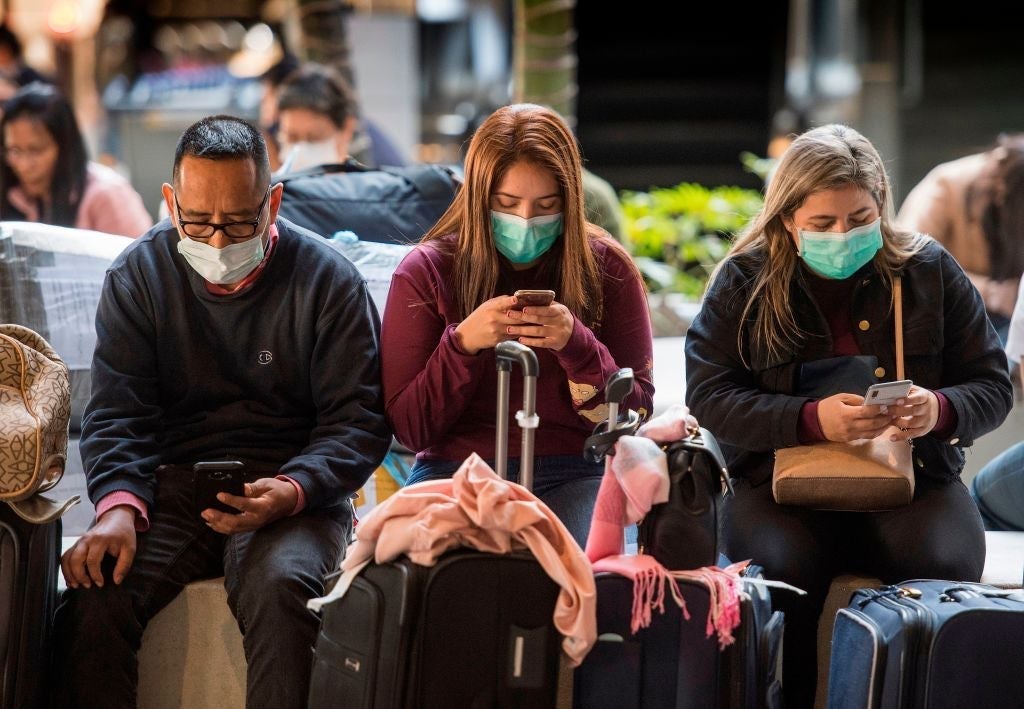
You may be surprised to hear that someone who flies so regularly can have a degree of nervousness about flying. But in my experience, it's extremely common. Depending on which figures you believe, on any given flight, one in three people will have some level of apprehension about flying.
I took the time to show him our route, the weather along the way and at which points during the flight it was likely to get bumpy. Due to the courses that he'd attended and books he'd read, he was able to read the charts just as well as me.
Our job isn't just about flying the aircraft, it's also about customer service and talking to people who are nervous about flying. Several hours later after arriving into London, he'd slept well and gave me a sincere thanks for the time I took to help him through the flight. It's small moments like this that make you feel good about the job.
Related: How science and psychology helped me overcome my fear of flying
Last week, my TPG colleague Katherine Fan wrote about her experiences of dealing with her fear of flying and how she used science and psychology to overcome it. So, how do pilots see the subject and do we ever get nervous ourselves about flying? This is the viewpoint from the other side of the flight deck door and will hopefully explain some of the aspects that give people a fear of flying.
What causes the fear?
Most of what causes people to be nervous about flying comes from not being in control. When you are in an alien environment such as an aircraft and don't really understand everything that is going on around you, your mind starts to run away with even the smallest of details.
If you traveled by car just a handful of times a year, sat in the back unable to see out the front, I imagine it would be a pretty uncomfortable experience. The same principle applies to flying and I'll be honest here. When I'm flying the aircraft, nothing worries or scares me — no matter how bad the weather gets or how bumpy the turbulence is. But here's the thing. When I'm a passenger and it starts to get bumpy, a little part of me gets nervous. Surprised?
This is down to not being in control. All my rational thoughts know that there's no need to be nervous, that if it were me in the flight deck, I'd just be getting annoyed that it's now more difficult to drink my coffee. However, sat there as a passenger, I don't know all the factors involved so am unable to know how bumpy it's really going to get. Hence the nerves. So, if an off-duty pilot can be nervous, never feel bad that you do.

Related: Top tips to beat your fear of flying
Turbulence
We may as well start with the one that normally comes top of the list for those with a fear of flying. Turbulence goes with flying as strawberries go with cream — you just can't have one without the other. A flight with no bumps whatsoever is incredibly rare. So what causes the bumps?
Related: A passenger's guide to turbulence
In its most basic form, turbulence is caused by changes in the airflow around the aircraft. It's these fluctuations in airflow that cause the bumps. It's very much liking being on a boat. As the water below the boat moves, the motion of the boat changes. The boat will never "fall through" the water, it will just bob up and down — and it's the same concept in the air.
First, let me dispel a common myth once and for all. There are no such things as "air pockets." I have no idea where this phrase came from, but it can only have been invented by someone who has never studied basic physics. Let's go back to the water analogy. Air behaves very much like a liquid — it will fill any void into which it can flow. As a result, there can be no such thing as an air pocket. Find me a similar "water pocket" and I'll happily give up my job and become a flat earther.
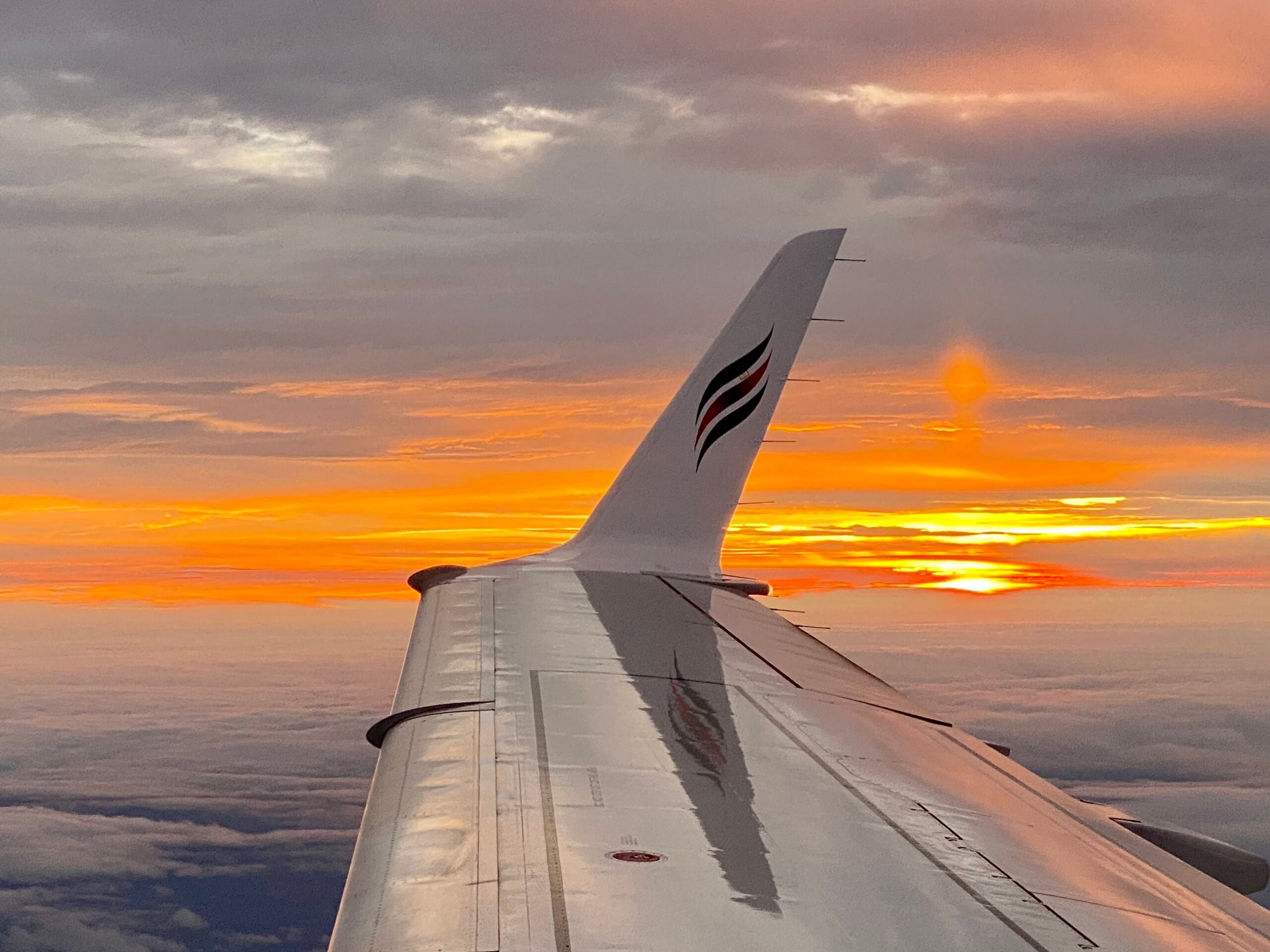
The wings are what makes an aircraft fly
Most turbulence is caused by fluctuations in the wind's velocity — its speed and direction. It is what's commonly known as Clear Air Turbulence, or CAT. To understand why this causes turbulence, we need a basic physics lesson.
Airflow over the wing generates lift. As the aircraft accelerates down the runway, the airflow over the wing increases. When this airflow reaches a critical point, enough lift is generated by the wings to enable the aircraft to leave the ground and start climbing up into the air. The engines merely provide the acceleration, the wings do the actual flying.
If the air flowing over the wings remains at a constant velocity, there will be no fluctuations in lift and thus a smooth flight. However, as the atmosphere is always changing, the wind velocity is always changing and as a result, there will always be constant fluctuations in the lift. As the lift momentarily increases, the aircraft climbs slightly. As the lift momentarily decreases, the aircraft descends slightly. Multiply these changes in lift several times a second and you get what you feel as turbulence. And that's it — just like the example of being on a boat.
How we predict it
Before each flight, pilots conduct a briefing where they review the weather not only for the destination but also for the entirety of the route. We want to know what the conditions are like on the ground at airports we would aim to use in the case of a diversion and also what the flying conditions are going to be like in the cruise.
As mentioned above, turbulence is caused by changes in wind velocity. As a result, we know that if our route takes us through any jet streams (areas of fast-moving winds), it is likely that it could get a little bumpy. The charts which the Meteorological services traditionally publish cover a 6hr time frame. However, as we know, a lot can change in a matter of hours.
Related: Can pilots predict turbulence?
eWAS Pilot uses more accurate forecast data and puts this in a dynamic graphical format, which enables us to see what weather we can expect at any given time of the flight. This is particularly useful when it comes to thunderstorms and turbulence. Even if these are forecast in the six-hour window between paper charts, by using eWAS Pilot, we are able to see if they will indeed impact our flight.
Even better, when connected to the internet when airborne, we are able to download the very latest weather reports and forecasts. It even plots thunderstorms in near real-time, giving us valuable time to plot a new route keeping us clear of the storms, reducing delays and keeping passengers comfortable and safe.
How you can predict it
Unfortunately, the briefing documents and eWAS Pilot are only available to professional crews. However, a new web-based app called Turbli enables passengers to check the weather along their route and to see how bumpy the flight is likely to be. Simply enter the flight details and the app uses data available to pilots to plot a graph to show you what the flight conditions on your flight are likely to be like.
Of course, this is a very rough estimate but on the flights where I've tested it out, it wasn't too far from the reality. So if you'd like to get a heads up on when your flight might be bumpy but don't have the opportunity to chat with the pilots, give Turbli a try,
Technical Problems
Aircraft are machines and machines go wrong. However, because of their safety-critical role, aircraft are not your average machine. A modern airliner has hundreds of different systems and the failure of each one must be carefully evaluated by the manufacturer for its implication on the safety of the aircraft.
If the loss of the system in flight would cause an issue, an identical backup system is installed, which can take over should the need arise. The air conditioning system is a good example of this. If the loss of both the primary and backup system will cause a major safety issue, then another backup system is installed, for example, the hydraulics.
With that in mind, did you know that on most flights that you have been on in the past and will go on in the future, there has most likely been a small technical problem with the aircraft? Fear not, this is not airlines being reckless, it's actually quite the opposite.
With so many systems and components, there is a higher probability that one part may have an issue. If airlines were obliged to fix every single fault before each flight, almost all flights would be delayed and ticket prices would go through the roof. Not ideal for anyone.
To allow us to depart safely with small technical issues, all aircraft types have a Minimum Equipment List — the MEL. This details every single aircraft system and tells us if we are allowed to depart with certain elements inoperative and any restrictions which may apply.
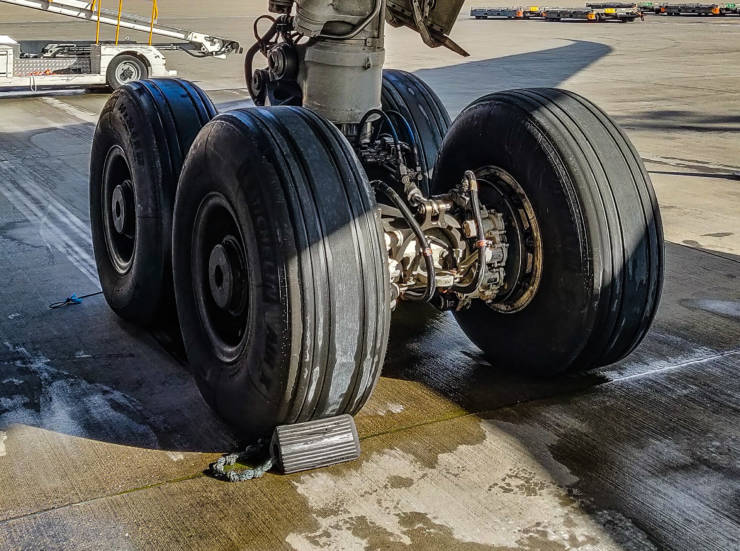
For example, sometimes brake units stop working and need replacing. Instead of doing this immediately, a fairly time-consuming process, we consult the MEL to see if we can depart with a brake inoperative. On the 787, we have a total of eight brake units, one for each wheel.
During the testing stage, Boeing demonstrated that the aircraft could abort its takeoff at its maximum takeoff weight, at its fastest speed and still stop safely with two brake units inoperative. As a result, the MEL states that we are safely allowed to depart with up to two brake units inoperative.
Engine failure
On a twin-engined aircraft, the idea of one of those engines failing worries a lot of passengers, particular were it to happen over the middle of the ocean. That's understandable. However, every six months pilots undergo two days of intensive training in a flight simulator to ensure they are proficient in handling events such as an engine failure.
An engine failure in the cruise is actually a relatively unimportant event compared to it happening on takeoff. When it happens at 39,000 feet, there is plenty of time to fly the aircraft safely on the other engine and initiate a diversion to an airfield within three hours of flying time.
Even on takeoff, it really isn't a big deal. Rarely do we take off using full engine power. In fact, we quite often take off anywhere down to 75% of maximum engine power. This is to reduce the noise for people around the airport and also to reduce wear and tear on the engine.
Should one engine fail, the aircraft will still be able to climb safely away from the ground with the other engine still on 75% power. That's how big the safety margins are when it comes to commercial aviation.
Bottom Line
A fear of flying is way more common than you may think, so if you're one of those people who feel their mouth start to go dry and hands get sweaty as the takeoff run begins, you're not alone. The feeling of not being in control is enough to make even professional pilots feel a little uneasy during a flight.
That said, understanding how the aircraft works and what the reasons are behind the events which make you nervous can go a long way in helping calm your nerves.
As pilots, we're always delighted to chat with passengers if they are worried about the flight. Next time you board a flight, try and do so early and have a word with the cabin crew. If we are not too busy, chances are we'll ask you to come and visit us in "the office" so you can see for yourself that we're just normal people like you, just getting you safely from A to B.
TPG featured card

at Capital One's secure site
Terms & restrictions apply. See rates & fees.
| 5X miles | Earn 5X miles on hotels, vacation rentals and rental cars booked through Capital One Travel |
| 2X miles | Earn unlimited 2X miles on every purchase, every day |
Pros
- Stellar welcome offer of 75,000 miles after spending $4,000 on purchases in the first three months from account opening. Plus, a $250 Capital One Travel credit to use in your first cardholder year upon account opening.
- You'll earn 2 miles per dollar on every purchase, which means you won't have to worry about memorizing bonus categories
- Rewards are versatile and can be redeemed for a statement credit or transferred to Capital One’s transfer partners
Cons
- Highest bonus-earning categories only on travel booked via Capital One Travel
- LIMITED-TIME OFFER: Enjoy $250 to use on Capital One Travel in your first cardholder year, plus earn 75,000 bonus miles once you spend $4,000 on purchases within the first 3 months from account opening - that’s equal to $1,000 in travel
- Earn unlimited 2X miles on every purchase, every day
- Earn 5X miles on hotels, vacation rentals and rental cars booked through Capital One Travel
- Miles won't expire for the life of the account and there's no limit to how many you can earn
- Receive up to a $120 credit for Global Entry or TSA PreCheck®
- Use your miles to get reimbursed for any travel purchase—or redeem by booking a trip through Capital One Travel
- Enjoy a $50 experience credit and other premium benefits with every hotel and vacation rental booked from the Lifestyle Collection
- Transfer your miles to your choice of 15+ travel loyalty programs
- Top rated mobile app