Experts Weigh In on Why Lion Air Flight 610 Crashed

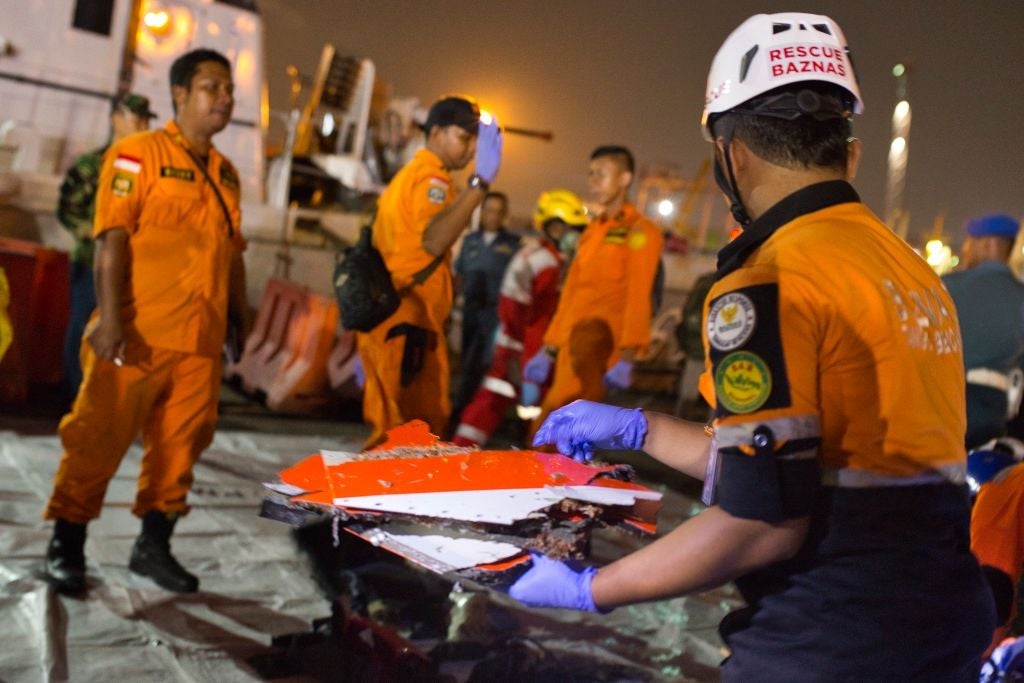
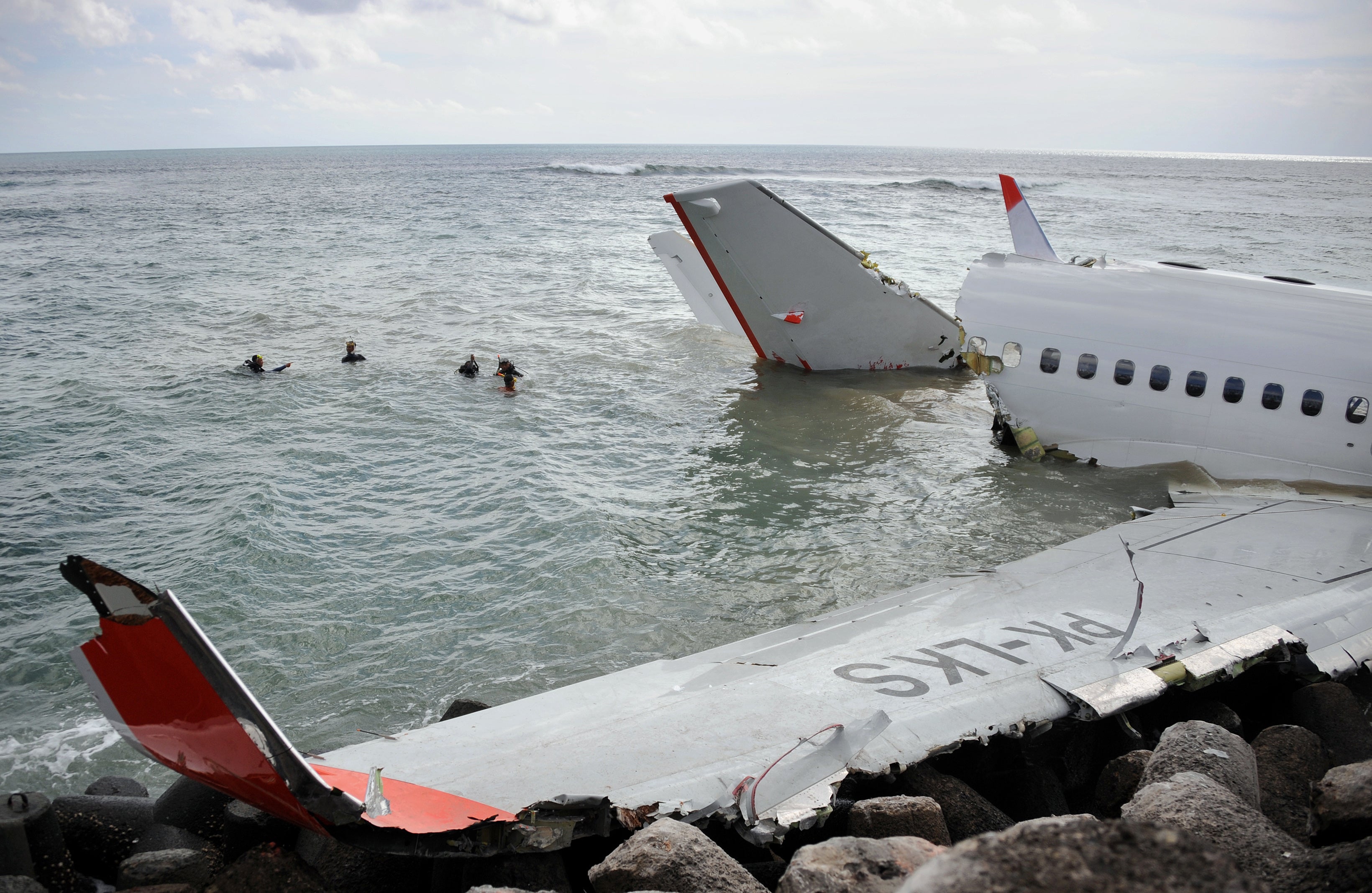
Early Monday morning in Indonesia, Lion Air Flight 610 lost contact with air traffic controllers and crashed into the Java Sea, presumably killing all 189 people on board.
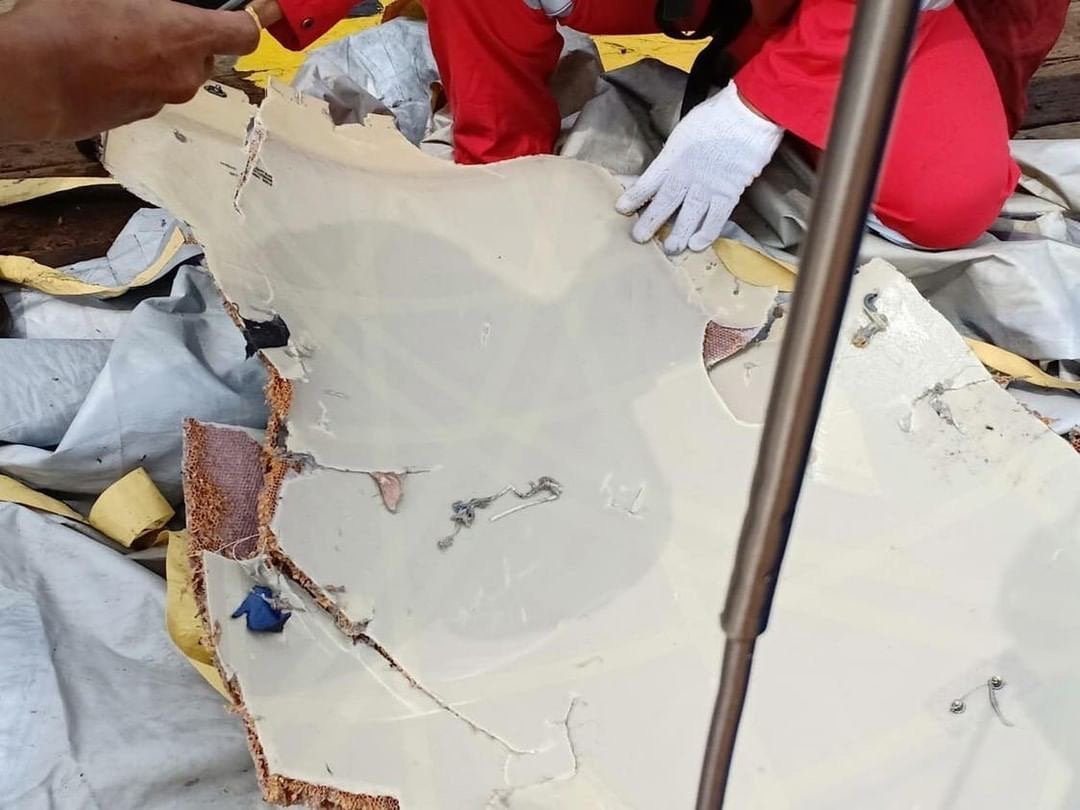
Although pieces of the plane, passengers' personal belongings and at least six bodies have been recovered from the sea, much remains unclear about the circumstances of the commercial flight's crash. Namely: What caused the wreck and could it have been prevented?
What Investigators Know So Far
The aircraft, a Boeing 737 MAX 8 that was delivered to Lion Air in August, departed just after dawn on Monday from Jakarta airport's runway 25L for Pangkal Pinang, an Island about 285 miles to the north to Jakarta, according to the Jet Airliner Crash Data Evaluation Centre.
"About three minutes after take-off — while in a steep left turn climb-out — JT610 stopped further climb at an estimated altitude of about 5,300 ft and rolled out on a heading of about 020 °," JACDEC says. At this time, the aircraft pilots asked the controllers to return to Jakarta Airport (CGK).
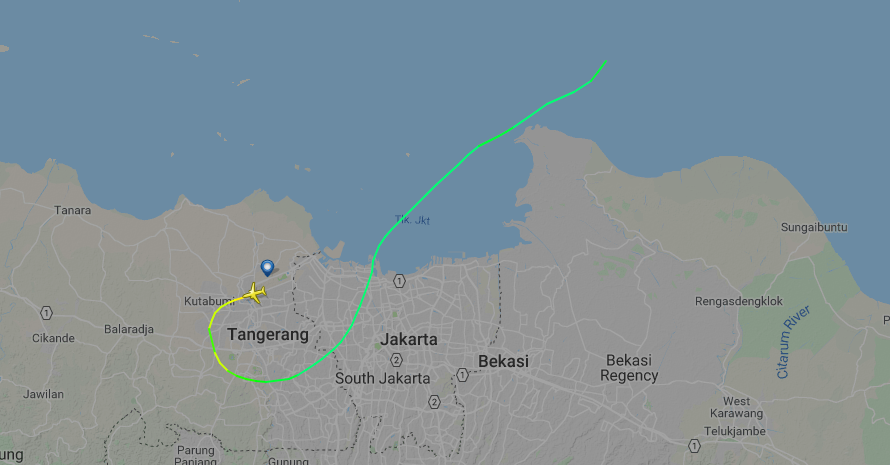
The aircraft's altitude ping-ponged between about 4,000 and 5,000 feet. Eleven minutes into the flight, the aircraft made its last ADSB radar return, showing it at an altitude of 3,650 feet, in a gradual descent. Data from FlightRadar24 shows that in the last-recorded minute of the ill-fated flight, it was rocketing into the Java Sea at 7,688 feet per minute.
The plane was never heard from again.
"In the last minute, this airplane was plummeting out of the sky," aviation expert and author of "The Crash Detectives" Christine Negroni told TPG. "These pilots never got higher than about 5,000 feet," she continued, noting that the more altitude pilots have, the more time they have to correct issues before a malfunction turns into a fatal mishap. "The fact that things went wrong so early in this flight sealed their fate."
How Aviation Experts Are Interpreting the Early Crash Data
Flight 610's data was irregular from the start, Negroni says. While it's too early to know anything for sure, she speculates that the pilots could have had issues with the aircraft pitot tubes, which track an aircraft's speed and altitude, or other software problems that gave the pilots bad information, based on the preliminary findings of the crash investigation.
If aircraft pitot tubes are covered or clogged, then pilots can quickly become disoriented due to a lack of crucial information (i.e. speed and altitude). Pitot tube malfunctions are behind several high-profile plane crashes, like the 2009 crash of Air France Flight 447, in which an Airbus A330 crashed into the Atlantic Ocean, killing everyone on board.

Ground handlers also sometimes cover the pitot tubes with tape to prevent them from getting clogged while a plane is being cleaned or undergoing maintenance. Sometimes, those covers are left in place, as was the case with a Malaysia Airlines flight from Brisbane, Australia, in August. That flight was fortunately able to make a safe emergency landing.
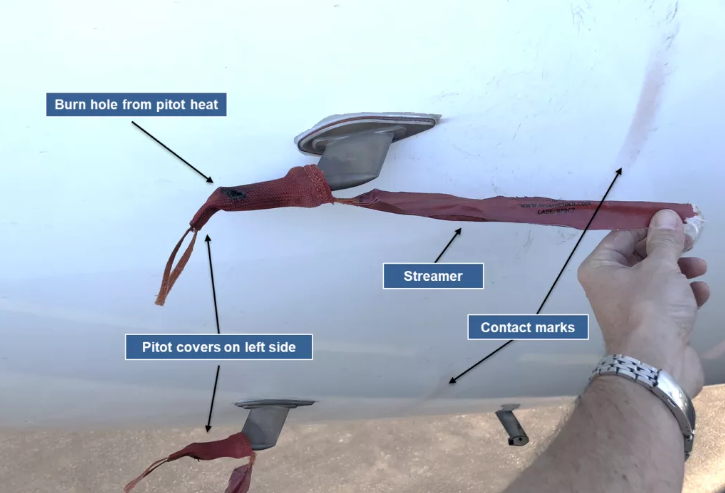
Indonesian aviation expert Gerry Soejatman told The New York Times he also suspects the pitot tubes could be to blame for downing the Lion Air flight. "The erratic flight path makes us suspect a problem with the pitot-static system," he said.
Lion Air pilots also reported a technical problem with the same 737 MAX 8 the day before the crash. The airline says it resolved the issue, and the plane was airworthy on Monday. But Soejatman thinks the issue might be linked to Monday's crash. Sunday's flight data, he says, "similar erratic climb and groundspeed problem," showing that the pitot tubes could have also been a problem on Sunday.
A passenger on Sunday's Lion Air flight with the same Boeing 737 MAX 8, registered PK-LQP, said that there were several oddities with the plane during the flight to Bali. As the aircraft was preparing for takeoff, the engine died several times, Conchita Caroline told the Times. When the plane finally did takeoff, Caroline said the floor felt hot to the touch, and she could see the right engine shaking out of her window.
Negroni also postulates that there's a chance the problems with Sunday's Lion Air flight could have been electronic-based, which are notably difficult to diagnose. "Problems with electronics are very hard to diagnose because they're intermittent," Negroni says.
Lion Air and Indonesia's Patchy Safety Record
According to JACDEC, Lion Air Flight 610 is Indonesia's second-worst aviation accident in the history of the country, which has a shaky aviation safety record overall.
The island nation has had 98 fatal accidents involving Indonesian carriers since 1945, resulting in 2,035 deaths, according to The Aviation Safety Network database — an average of just fewer than 28 casualties per year. Those numbers are significantly higher than countries that operate many, many more flights, like China and Germany, the Telegraph reports. Indonesia was not cleared to fly in airspace belonging to the US or the EU until 2016 and 2018, respectively, because it didn't keep up with international safety standards until several years ago, when the country made significant strides with aviation safety.
The same can be said for Lion Air's safety record. The carrier, Indonesia's largest airline, has been involved in several other serious safety incidents, one of which was fatal.
On Nov. 30, 2004, Lion Air Flight 538 overran a runway upon landing at Surabaya's Juanda International Airport (SUB), killing 25 people on board the MD-82 aircraft. In 2002, a Lion Air Boeing 737-200 crashed shortly after takeoff from Sultan Syarif Kasim II International Airport (PKU), but everyone survived. In April 2013, Lion Air Flight 904 crashed in the water surrounding Bali's Denpasar Airport (DPS) after a failed landing attempt. The fuselage of the Boeing 737-800 broke in two, and passengers had to swim to safety, but there were no fatalities.
According to the Telegraph, AirlineRatings.com, which ranks airlines based on government reports and historic crash data gave Lion Air a paltry one-star rating out of a possible seven stars in 2016. That safety rating jumped this year to six stars, reflecting the improvement in safety approvals from regulatory bodies like the FAA and the UN's International Civil Aviation Organization.
As for Monday's crash of Flight 610, Negroni guesses that at the rate information is being released, investigators will definitively know what happened soon.
"I don't look at this accident and think it will be a mystery," she says.
TPG featured card

at Capital One's secure site
Terms & restrictions apply. See rates & fees.
| 5X miles | Earn 5X miles on hotels, vacation rentals and rental cars booked through Capital One Travel |
| 2X miles | Earn unlimited 2X miles on every purchase, every day |
Pros
- Stellar welcome offer of 75,000 miles after spending $4,000 on purchases in the first three months from account opening. Plus, a $250 Capital One Travel credit to use in your first cardholder year upon account opening.
- You'll earn 2 miles per dollar on every purchase, which means you won't have to worry about memorizing bonus categories
- Rewards are versatile and can be redeemed for a statement credit or transferred to Capital One’s transfer partners
Cons
- Highest bonus-earning categories only on travel booked via Capital One Travel
- LIMITED-TIME OFFER: Enjoy $250 to use on Capital One Travel in your first cardholder year, plus earn 75,000 bonus miles once you spend $4,000 on purchases within the first 3 months from account opening - that’s equal to $1,000 in travel
- Earn unlimited 2X miles on every purchase, every day
- Earn 5X miles on hotels, vacation rentals and rental cars booked through Capital One Travel
- Miles won't expire for the life of the account and there's no limit to how many you can earn
- Receive up to a $120 credit for Global Entry or TSA PreCheck®
- Use your miles to get reimbursed for any travel purchase—or redeem by booking a trip through Capital One Travel
- Enjoy a $50 experience credit and other premium benefits with every hotel and vacation rental booked from the Lifestyle Collection
- Transfer your miles to your choice of 15+ travel loyalty programs
- Top rated mobile app