Why Embraer's E-Jets will remain a workhorse for US regional airlines into the 2030s

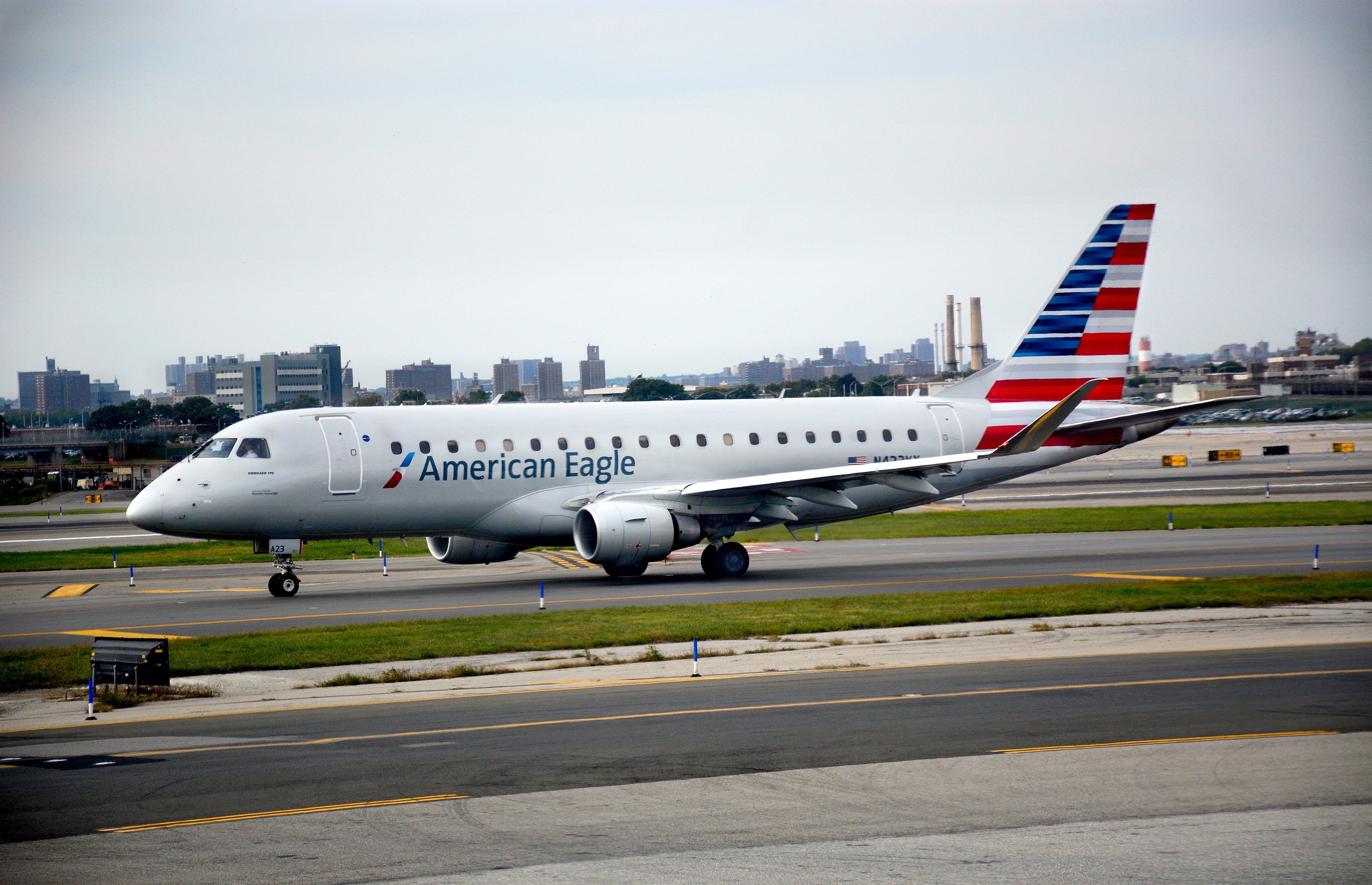
If you are flying on a regional flight in the U.S. today, chances are it's on an Embraer E-Jet.
The E-Jet family — the E170 and E175, specifically — make up about half of the 1,367 regional jets that were flying for Alaska Airlines, American Airlines, Delta Air Lines and United Airlines at the end of 2023, their respective fleet plans show. Other less common models include Mitsubishi's, and formerly Bombardier's, CRJ family and Embraer's older ERJ family.
The E-Jets are so popular — it helps that there's no competing plane in production — that American ordered another 90 E175s in March to complement the more than 240 already in its American Eagle fleet. Not bad for a plane that first flew more than 20 years ago.
"The 175-E1 is still a great aircraft for the U.S.," Arjan Meijer, president and CEO of Embraer Commercial, said at an investor event in New York on Monday. "We believe there is a tremendous market ahead of us."
In comfort: Why my favorite first-class seat is surprisingly on a regional jet
That market includes replacing older 50-seat aircraft, particularly CRJ200s and ERJ-145s, as they disappear from U.S. skies. Delta affiliates flew their last CRJ200 flight in December 2023, schedule data from aviation analytics firm Cirium Diio shows. United plans to retire the 50-seat models at its affiliates in the next few years and American by the end of the decade.
Meijer could not give an exact number of planes Embraer hopes to sell, as the replacement of 50-seat regional jets will not be one-for-one due to pilot contract limits. But, he said, the market for E175-size planes is substantial given that many destinations across the U.S. are too small for larger planes like the Airbus A320neo and Boeing 737 MAX families.
Regardless of the numbers, one thing is clear: U.S. flyers can expect to see E175s on regular rotation through the 2030s — and probably well into the 2040s.
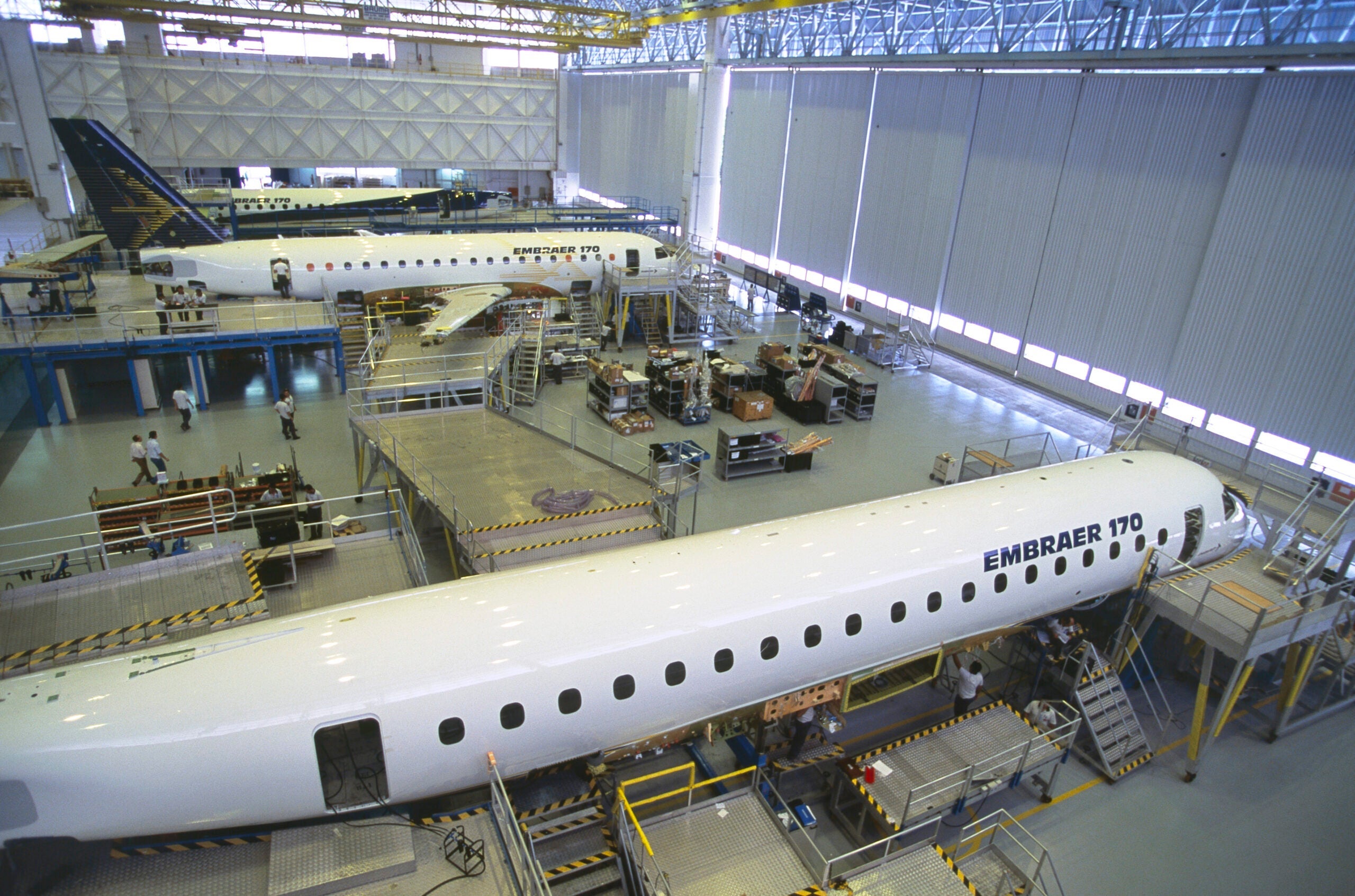
That's both good and bad news for Embraer. While continued E175 sales are a positive for the Brazilian plane-maker's bottom line, they come at the expense of its next generation of E-Jets, known as the E2, that were developed to replace the original models.

According to the company, the E175-E2 offers double-digit fuel efficiency gains over the E175, also known as the E175-E1, plus more range and slightly more seats. The updated plane seats 80 passengers, rather than 76, in the two-class configuration that is standard at U.S. regionals.
Despite those performance gains, the E175-E2 has yet to notch a single firm order from the U.S. The lack of deals prompted Embraer in 2022 to delay certification of the plane to 2027 or 2028, at least three years later than planned.
The lack of interest is the result of strict rules in the pilot contracts of Alaska, American, Delta and United. Those rules, known as "scope clauses," govern the size and number of regional aircraft that the major airlines can contract to affiliates. They currently cap the size of regional jets at 76 seats with a maximum takeoff weight of 86,000 pounds; the E175-E2 is slightly too large and heavy, seating 80 passengers with a maximum takeoff weight of 98,767 pounds.
"The E175-E1, it's such an amazingly strong aircraft, it's basically causing its own need not to change the scope clause," Meijer said.
Big changes: US-China flights are a quarter of what they were pre-pandemic — here's why
Pilot contracts at Alaska, American, Delta and United that lock in the current regional jet limits do not come up for renewal until 2026 at the earliest.
The E175 that American and other airlines are buying today is not the same plane that Embraer first flew in 2003. The addition of "wingtips" — angled extensions to the tip of the wings — in 2014 improved fuel efficiency by more than 6% compared to the original model with unmodified wings.
With continued E175 sales and the E2 on pause, Embraer is in a holding pattern in terms of what is next for the regional aircraft segment. Work on a potential new turboprop that could seat up to 90 passengers is in the "deep freezer," as Meijer put it. And while research into other new technologies, including hydrogen fuel cell propulsion and electric vertical takeoff and landing (or eVTOL) planes continues, the plane-maker has yet to set a specific direction for its next commercial aircraft.
"We are really investing in new technologies to keep our readiness for a new product," Embraer CEO Francisco Gomes Neto said Monday. "At this point of time, we don't have a concrete plan to go this way or that way."
Related reading:
TPG featured card
at American Express's secure site
Terms & restrictions apply. See rates & fees.
| 4X | Earn 4X Membership Rewards® points per dollar spent on purchases at restaurants worldwide, on up to $50,000 in purchases per calendar year, then 1X points for the rest of the year. |
| 4X | Earn 4X Membership Rewards® points per dollar spent at US supermarkets, on up to $25,000 in purchases per calendar year, then 1X points for the rest of the year. |
| 5X | Earn 5X Membership Rewards® points on prepaid hotel stays booked through AmexTravel.com or the Amex Travel App™. |
| 3X | Earn 3X Membership Rewards® points on flights booked through AmexTravel.com, the Amex Travel App™, or purchased directly from airlines. |
| 2X | Earn 2X Membership Rewards® points on prepaid car rentals booked through AmexTravel.com or the Amex Travel App™ and cruises booked and paid through AmexTravel.com. |
| 1X | Earn 1X Membership Rewards® point per dollar spent on all other eligible purchases. |
Pros
- Valuable dining and food-related credits
- Flexible rewards with airline and hotel transfer partners
- Multiple travel and purchase protections
- No foreign transaction fees
- Access to Amex Offers for additional savings (enrollment required)
Cons
- Not as useful for those living outside the U.S.
- Some may have trouble using Uber and other dining credits
- You may be eligible for as high as 100,000 Membership Rewards® Points after you spend $8,000 in eligible purchases on your new Card in your first 6 months of Card Membership. Welcome offers vary and you may not be eligible for an offer. Apply to know if you’re approved and find out your exact welcome offer amount – all with no credit score impact. If you’re approved and choose to accept the Card, your score may be impacted.
- Earn 4X Membership Rewards® points per dollar spent on purchases at restaurants worldwide, on up to $50,000 in purchases per calendar year, then 1X points for the rest of the year.
- Earn 4X Membership Rewards® points per dollar spent at US supermarkets, on up to $25,000 in purchases per calendar year, then 1X points for the rest of the year.
- Earn 5X Membership Rewards® points on prepaid hotel stays booked through AmexTravel.com or the Amex Travel App™.
- Earn 3X Membership Rewards® points on flights booked through AmexTravel.com, the Amex Travel App™, or purchased directly from airlines.
- Earn 2X Membership Rewards® points on prepaid car rentals booked through AmexTravel.com or the Amex Travel App™ and cruises booked and paid through AmexTravel.com.
- Earn 1X Membership Rewards® point per dollar spent on all other eligible purchases.
- Pay It® lets you tap in the American Express® App to quickly pay for small purchase amounts throughout the month and still earn rewards the way you usually do. Plan It® gives you the option to split up big purchases into equal monthly payments with a fixed fee. You’ll know upfront exactly how much you’ll pay.
- $120 Dining Credit: Earn up to a total of $10 in statement credits monthly when you pay with the Gold Card at Grubhub (including Seamless), Buffalo Wild Wings, Five Guys, The Cheesecake Factory, and Wonder. This can be an annual savings of up to $120. Enrollment required.
- $100 Resy Credit: Get up to $100 in statement credits each calendar year at over 10,000 qualifying U.S. Resy restaurants after you pay for eligible purchases with the American Express® Gold Card. That’s up to $50 in statement credits semi-annually. Enrollment required.
- $84 Dunkin' Credit: Earn up to $7 in monthly statement credits after you pay with the American Express® Gold Card at U.S. Dunkin’ locations. Enrollment required.
- $120 Uber Cash on Gold: Enjoy up to $120 in Uber Cash annually with your Gold Card. Just add your Card to your Uber account and you'll get $10 in Uber Cash each month to use on orders and rides in the U.S. when you select an Amex Card for your transaction.
- Enjoy complimentary Hertz Five Star® Status benefits like skipping the counter at select locations, adding an additional driver at no additional cost*, and vehicle upgrades**. Benefit enrollment and Hertz Gold+ registration are required. *Additional drivers must meet standard rental qualifications and must be a spouse or domestic partner to qualify as complimentary. Other additional drivers subject to fees. **Benefits are subject to availability and vary by location. Additional Hertz program Terms and Conditions including age restrictions apply.
- Book two nights or more with The Hotel Collection through AmexTravel.com or the Amex Travel App™ and receive a $100* credit towards eligible charges at over 1,400 upscale hotels worldwide. *Eligible charges vary by property.
- Book your travel through the Amex Travel App™ with added peace of mind – backed by American Express® service and support. Only for American Express® Card Members.
- Whenever you need us, we're here. Our Member Services team will ensure you are taken care of. From lost Card replacement to statement questions, we are available to help 24/7.
- No Foreign Transaction Fees.
- Annual Fee is $325.
- Terms Apply.