Why premium economy is more attractive than biz on Delta’s latest plane

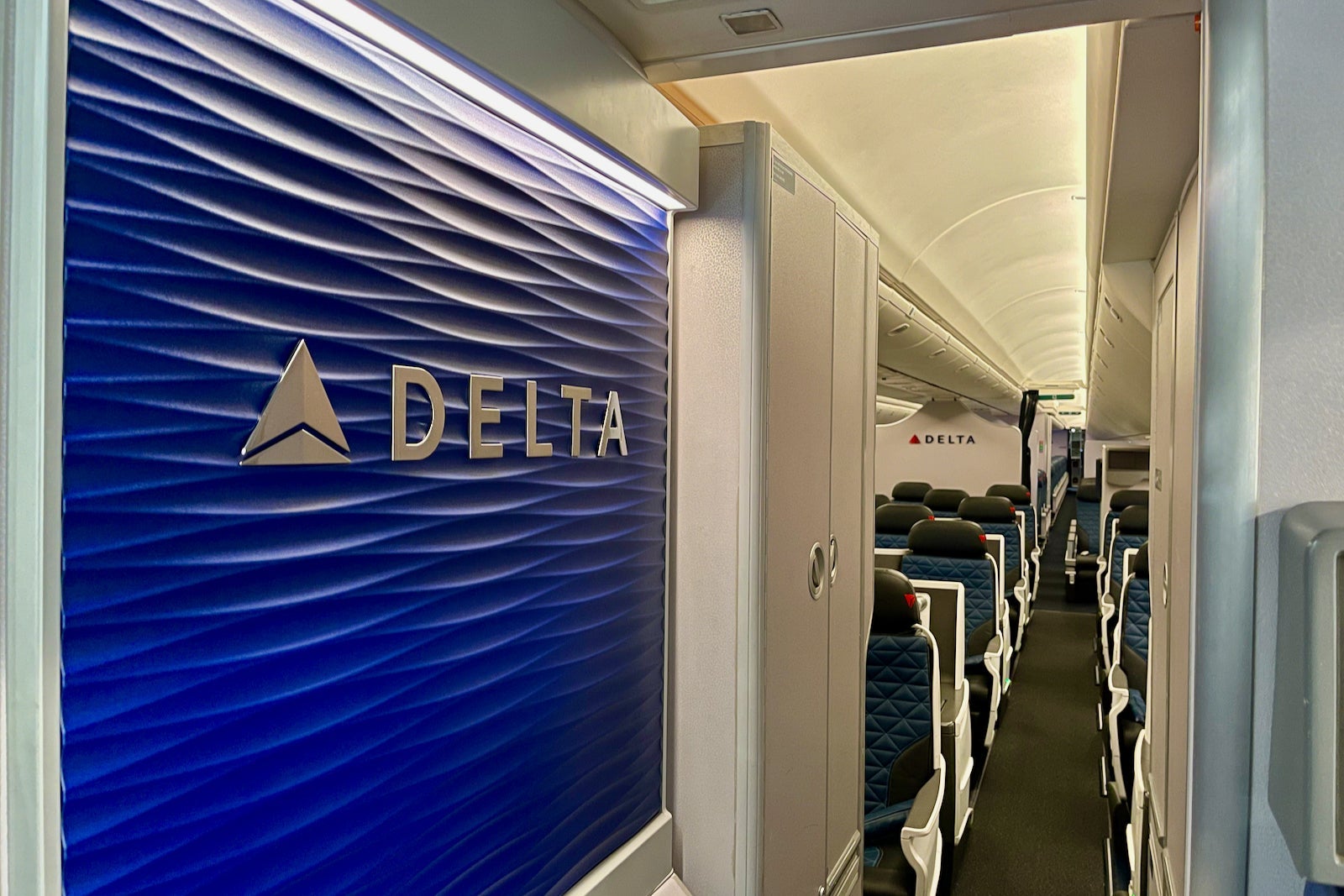
Delta's making a big bet on the future of travel.
Nowhere is that more apparent than in the airline's fleet strategy. Delta's just announced that it's adding 36 planes, while also embarking on a year-long cabin retrofit program for some of its oldest international jets, including the Airbus A330 and Boeing 767-300.
Earlier this week, I had the opportunity to check out the first reconfigured Boeing 767-300 in Atlanta. While the entire plane is decked out with enhancements, including mood lighting, modernized seat covers and updated lavatories, the real star of the show is the new premium economy cabin.
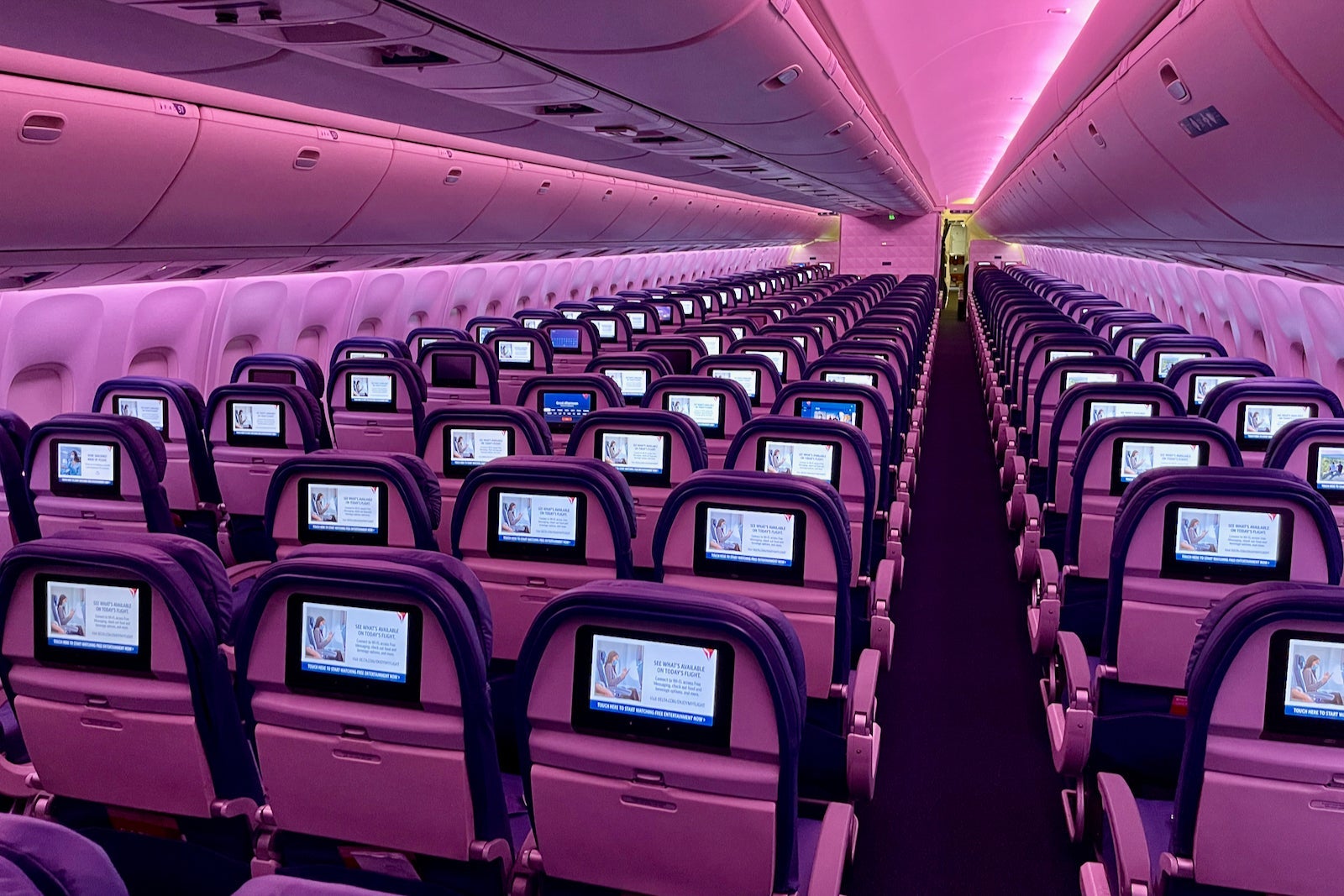
The 767-300 sports an 18-seat Premium Select cabin, with recliners arranged in a three-row, 2-2-2 configuration. This represents the fourth aircraft type to receive Delta's take on premium economy, after the cabin first debuted on the flagship Airbus A350 in 2017, followed thereafter by the Airbus A330neo and Boeing 767-400.
In recent years, Delta, along with the other U.S. Big 3 competitors, began realizing that a market exists for a product between a private lie-flat pod and a standard coach seat. That's exactly where premium economy fits — the cabin was designed to bridge the gap between business class and economy at an intermediate price.
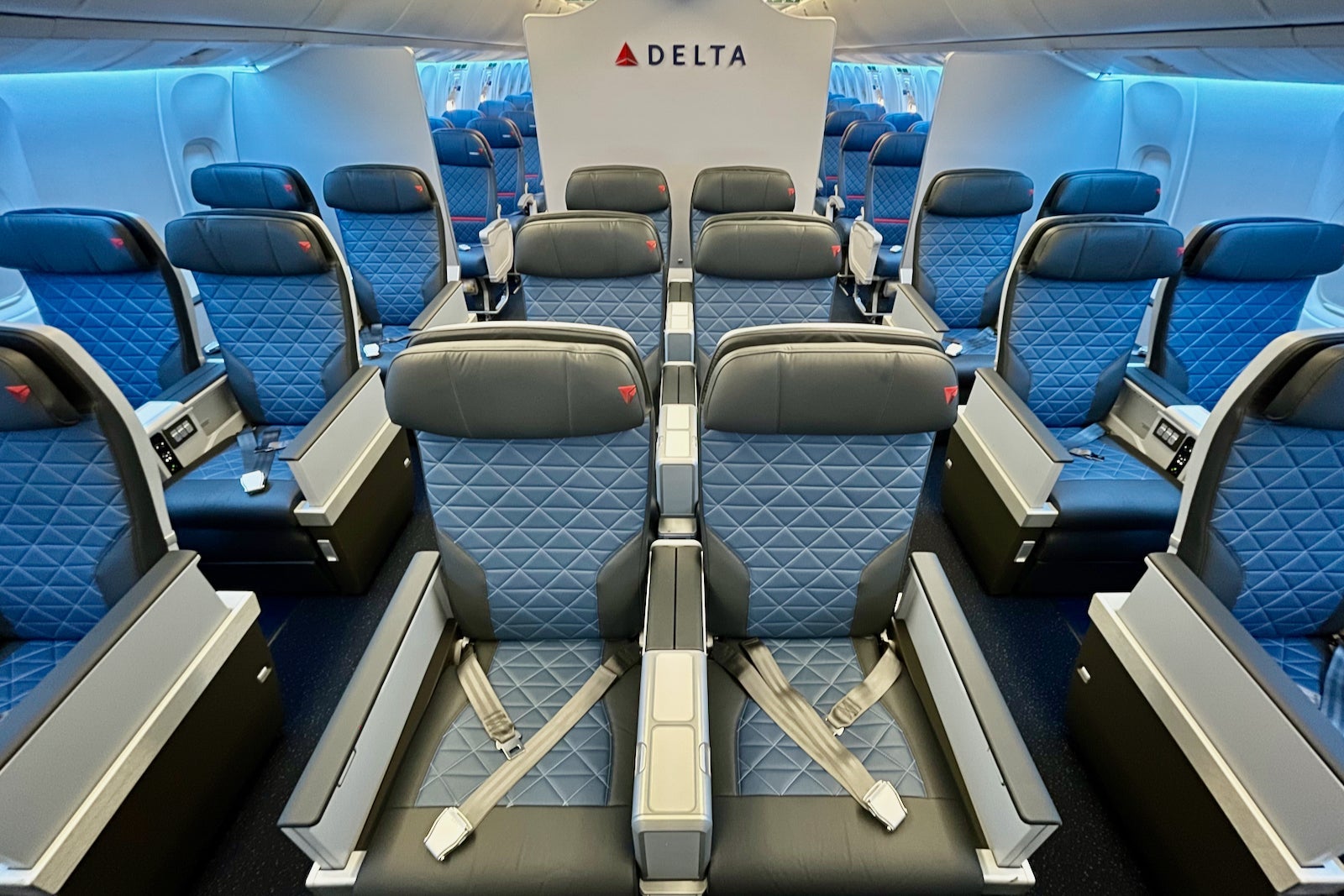
On some planes, the difference between the lie-flat business-class and premium economy cabins is stark. In Delta's case, there's a night-and-day contrast between the Delta One Suites at the pointy end of the A350 or A330neo relative to the Premium Select recliners behind the biz cabin.
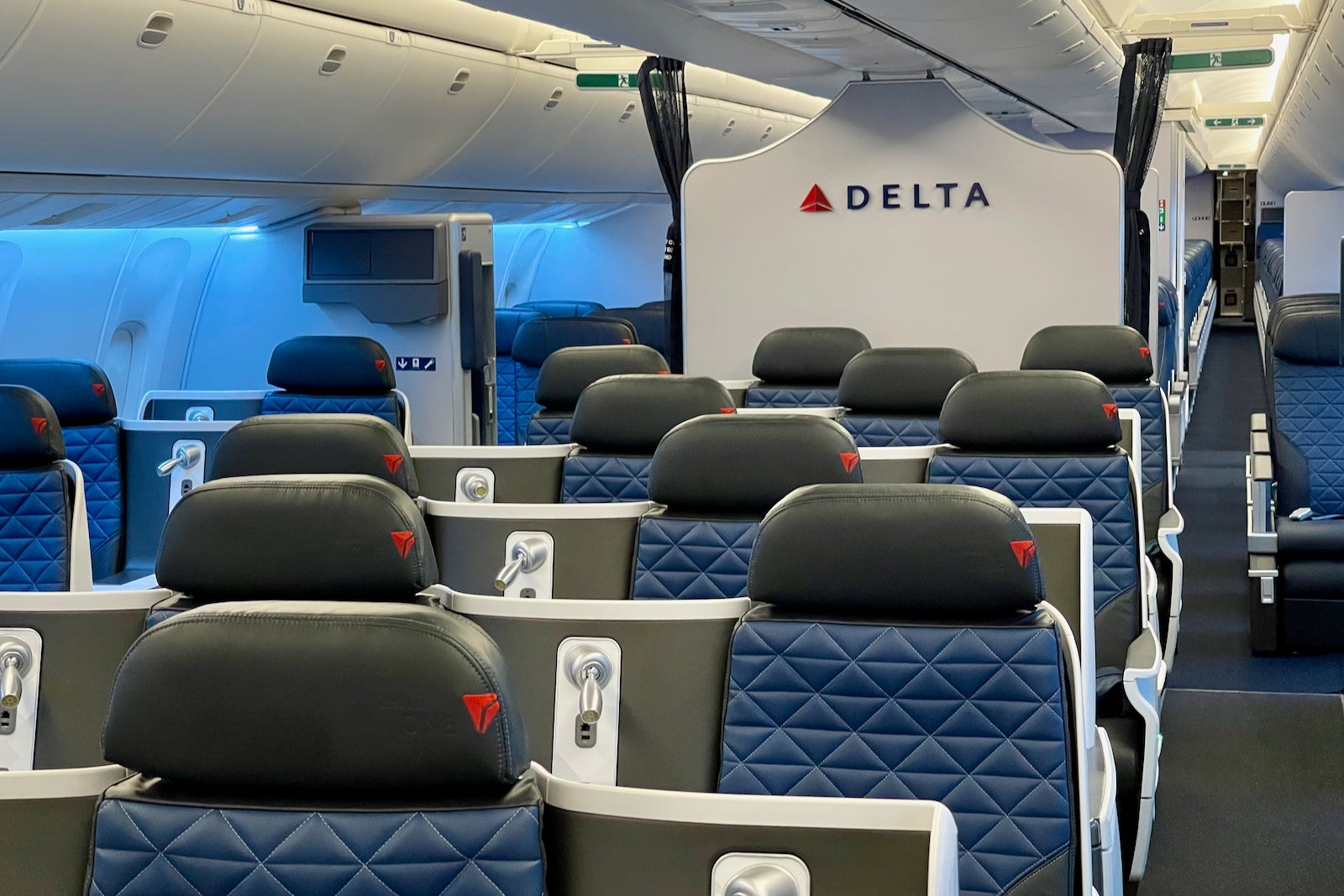
But, on the newly retrofitted 767-300, that gap between biz and premium economy is much smaller: so much so that it might be worthwhile to save some money and stick with premium economy.
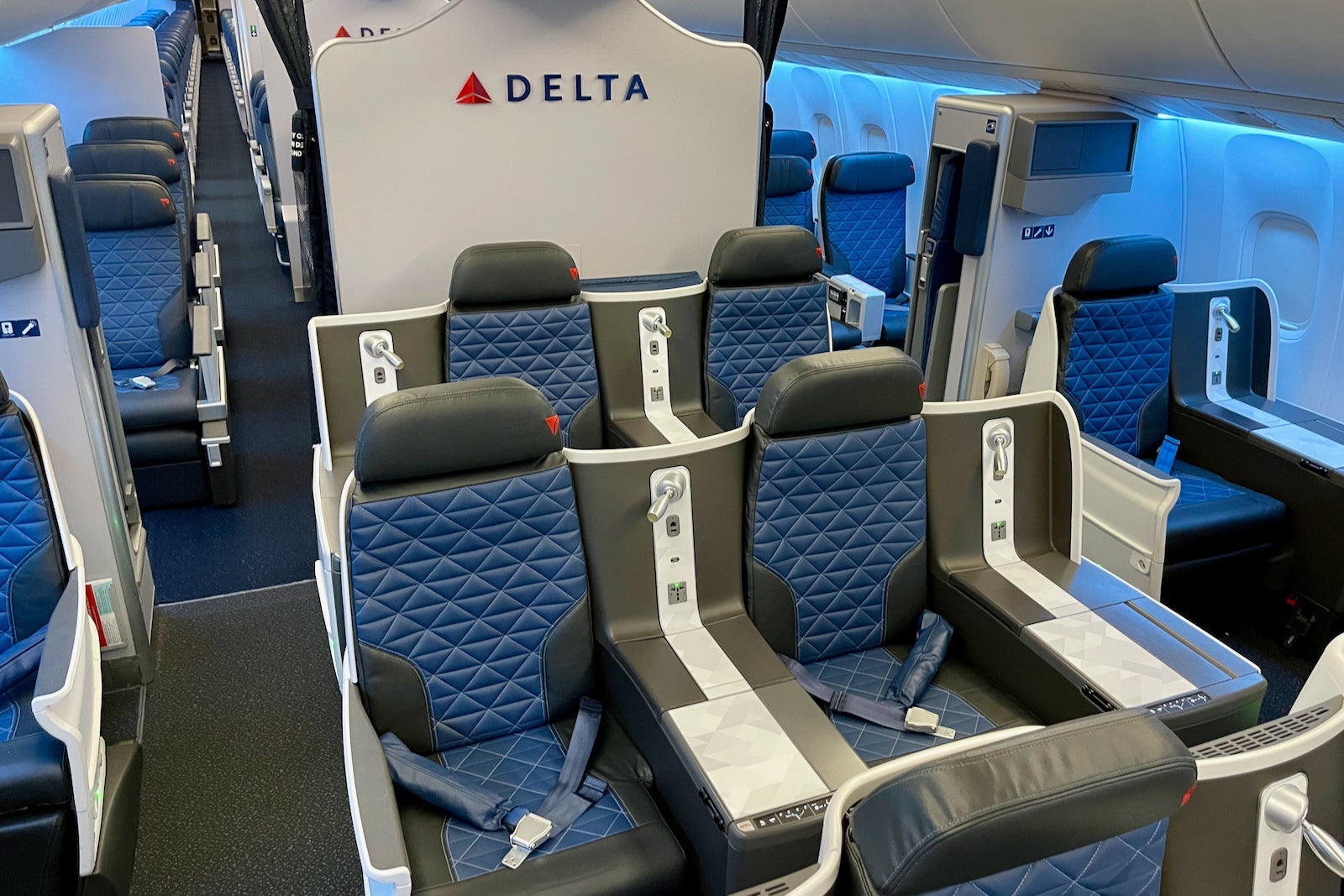
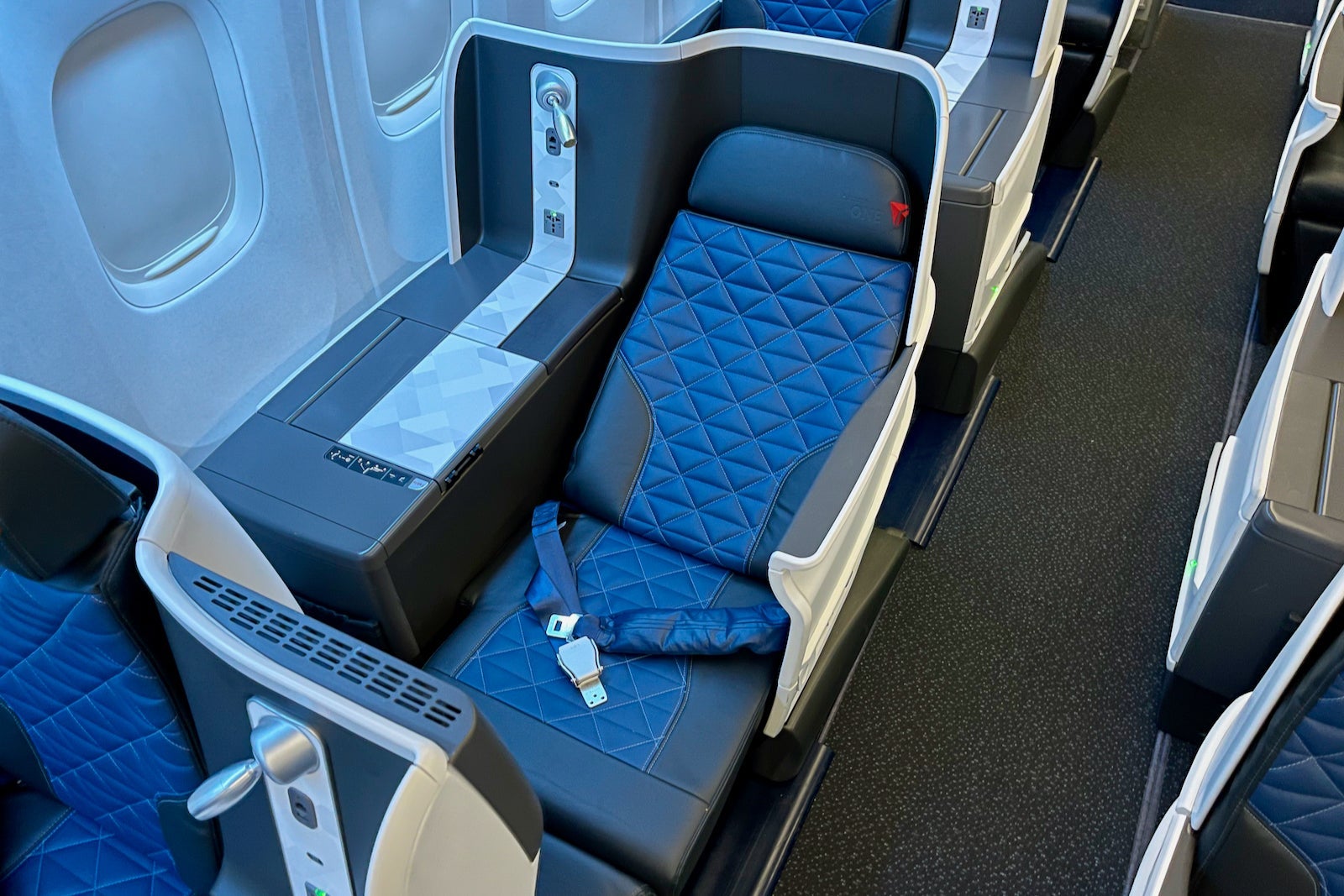
For one, despite the reconfiguration project, Delta isn't installing a new business-class seat in the biz cabin on the 767-300. That means you'll still find the woefully outdated first-generation Thompson Vantage seat when flying up front.
Sure, the airline added all-new finishes with extra memory foam, but the "bones" of the seat are ultimately the same. They're tight and offer limited privacy.

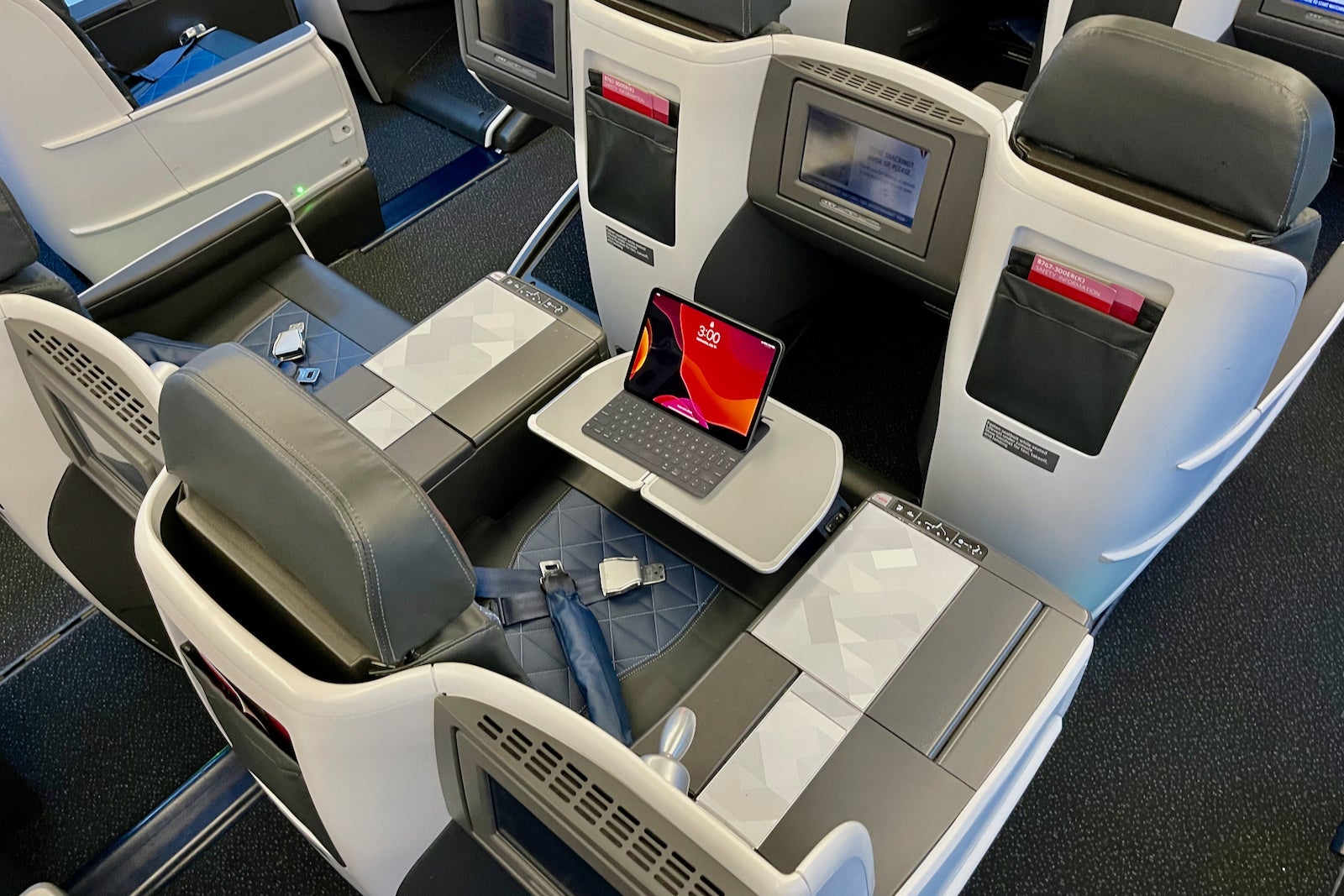
Additionally, the seat-back entertainment screens are some of the smallest you'll find across premium cabins on U.S. carriers. At just 10.1 inches, you might prefer to bring your own content on your higher quality iPad or laptop.
In premium economy, you'll find a much more modernized recliner. Of course, it's not a flat-bed pod, so if you need to be horizontal to catch some z's, then you're better off in biz.
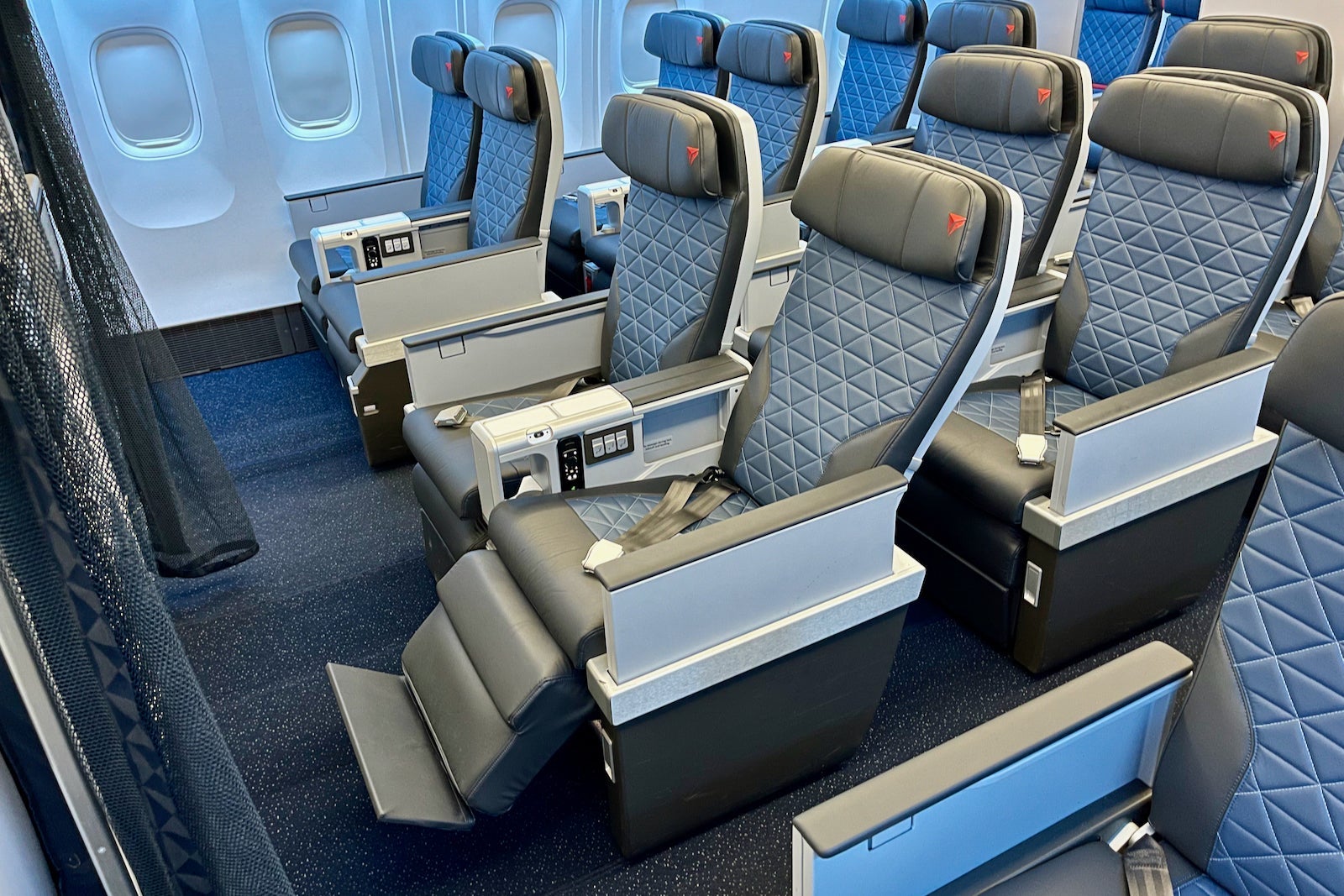
For everyone else, or if you're not planning to sleep, the comfortable leg rest, footrest and generous recline in Premium Select could be worth considering.
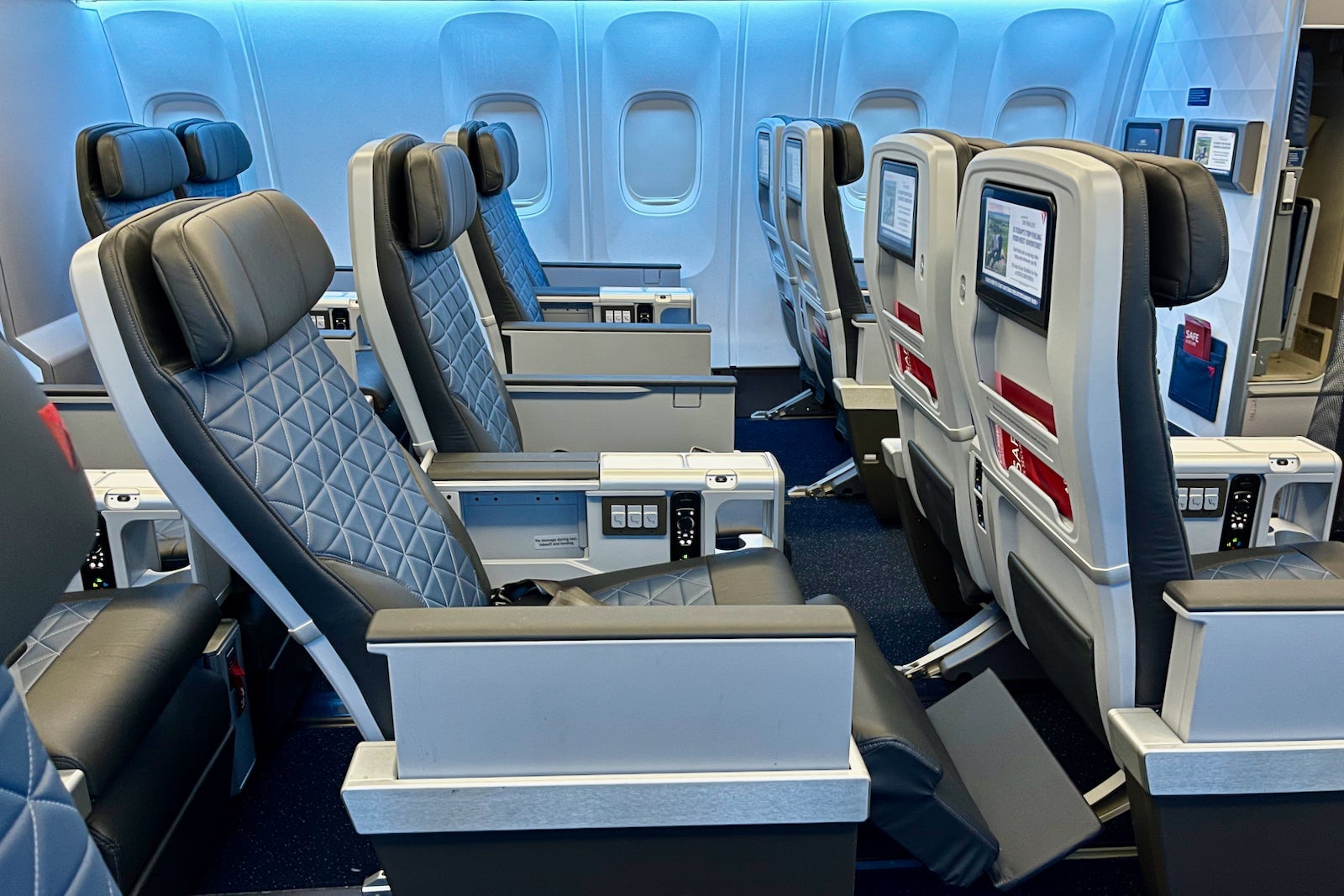
While there's no privacy divider between seats, this is Delta's most intimate premium economy cabin in the sky. With just 18 seats, odds are that it'll be a quieter ride in this mid-cabin section than on other Delta widebodies. Plus, if you're traveling with a companion, you might find it more comfortable to be seated closer to each other.
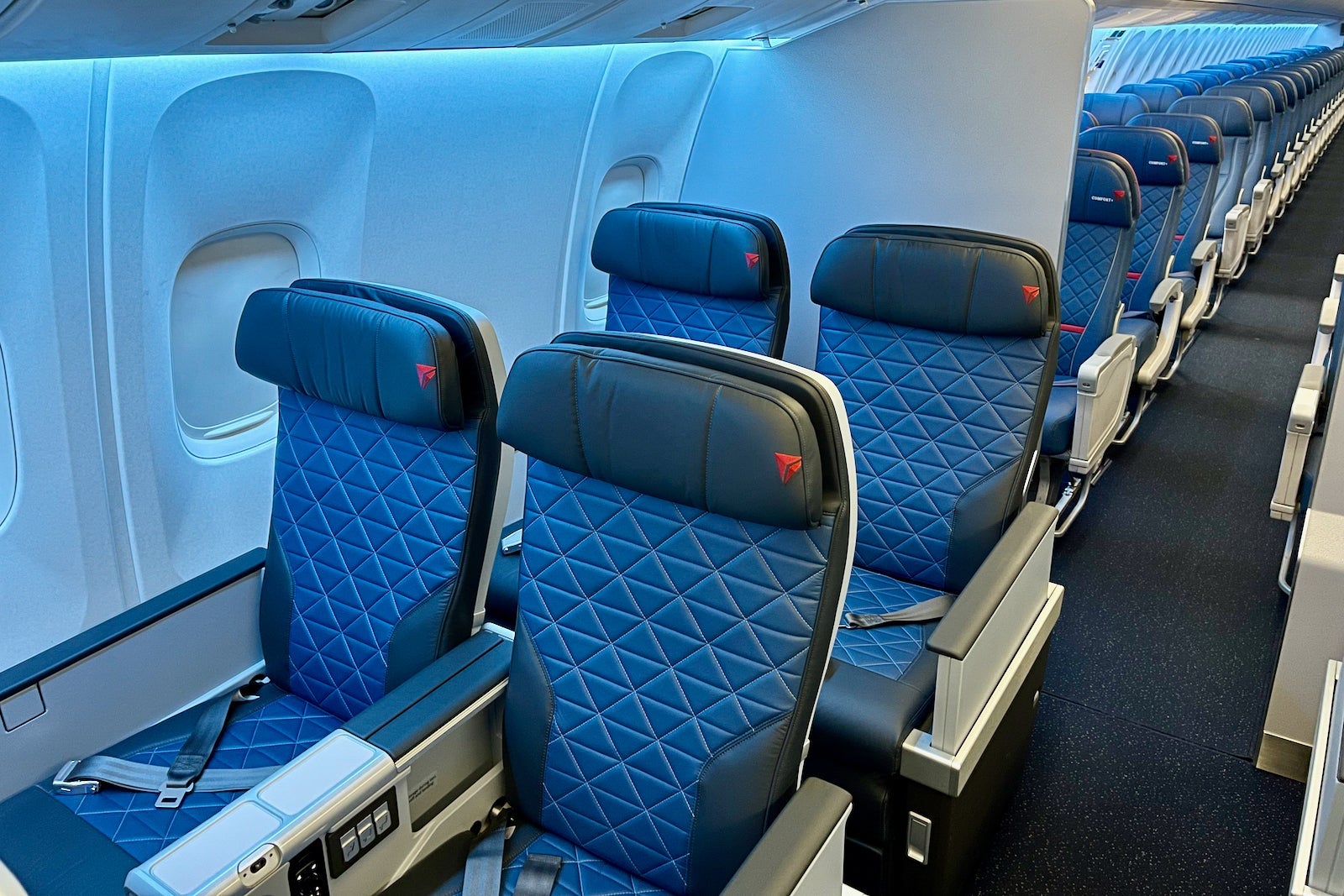
Additionally, the inflight entertainment system in the premium economy cabin is just as good, if not better than the one up front. Like biz, each premium economy seat has a 10-inch screen, but these ones appeared to offer much better resolution than the old screens you'll find in Delta One.
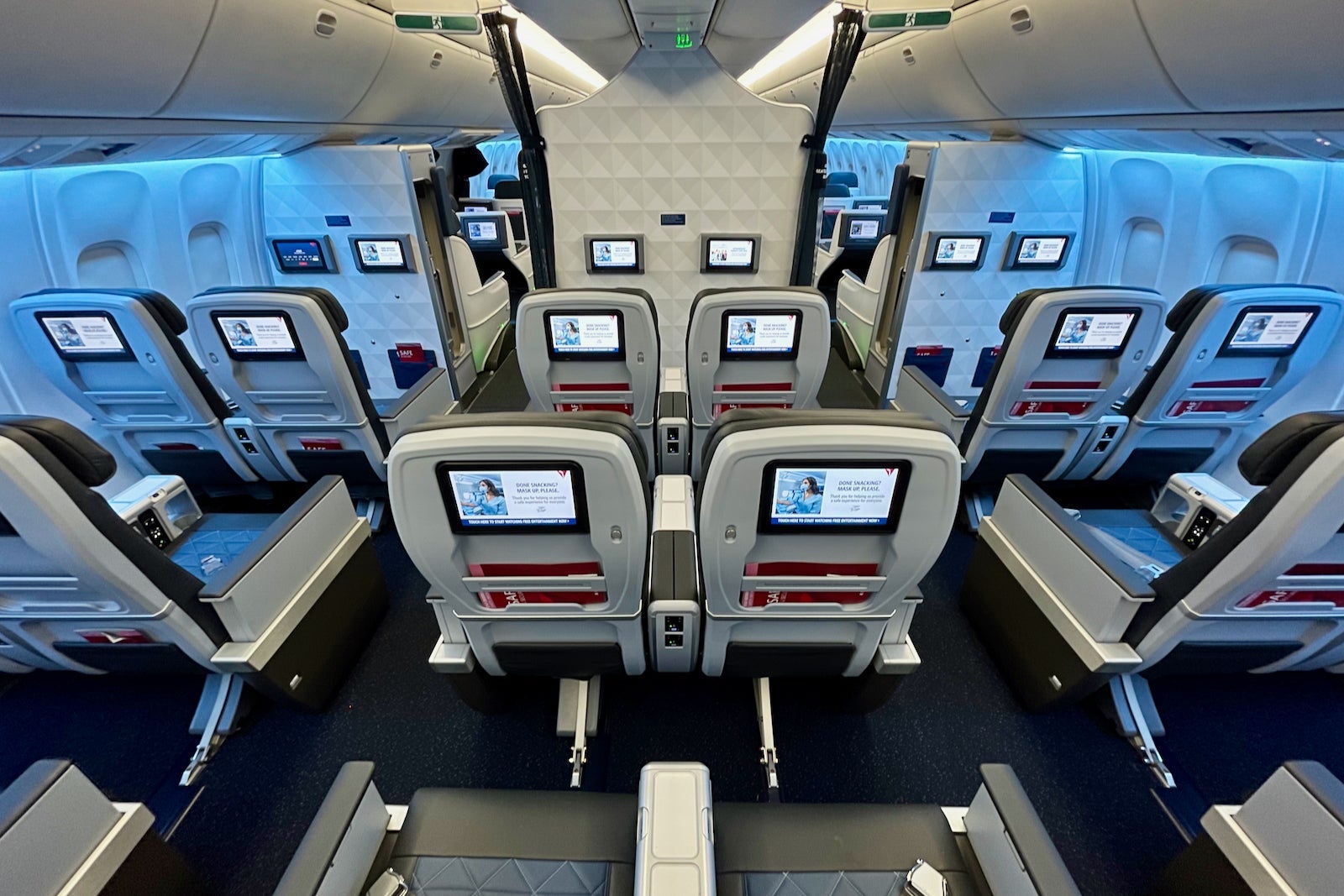
Though inflight service remains modified due to the pandemic, premium economy travelers can usually expect a watered-down version of business-class service. In Premium Select, flyers are served elevated meals on real china, a selection of wines, beers and premium spirits, and a Tumi-branded amenity kit.
It's not just the relative difference in products that might make it worthwhile to stick with a premium economy recliner on Delta's retrofitted Boeing 767-300. Consider the routes that the plane flies as well: many of them are within the U.S., including hops between Atlanta and both Los Angeles and San Francisco.
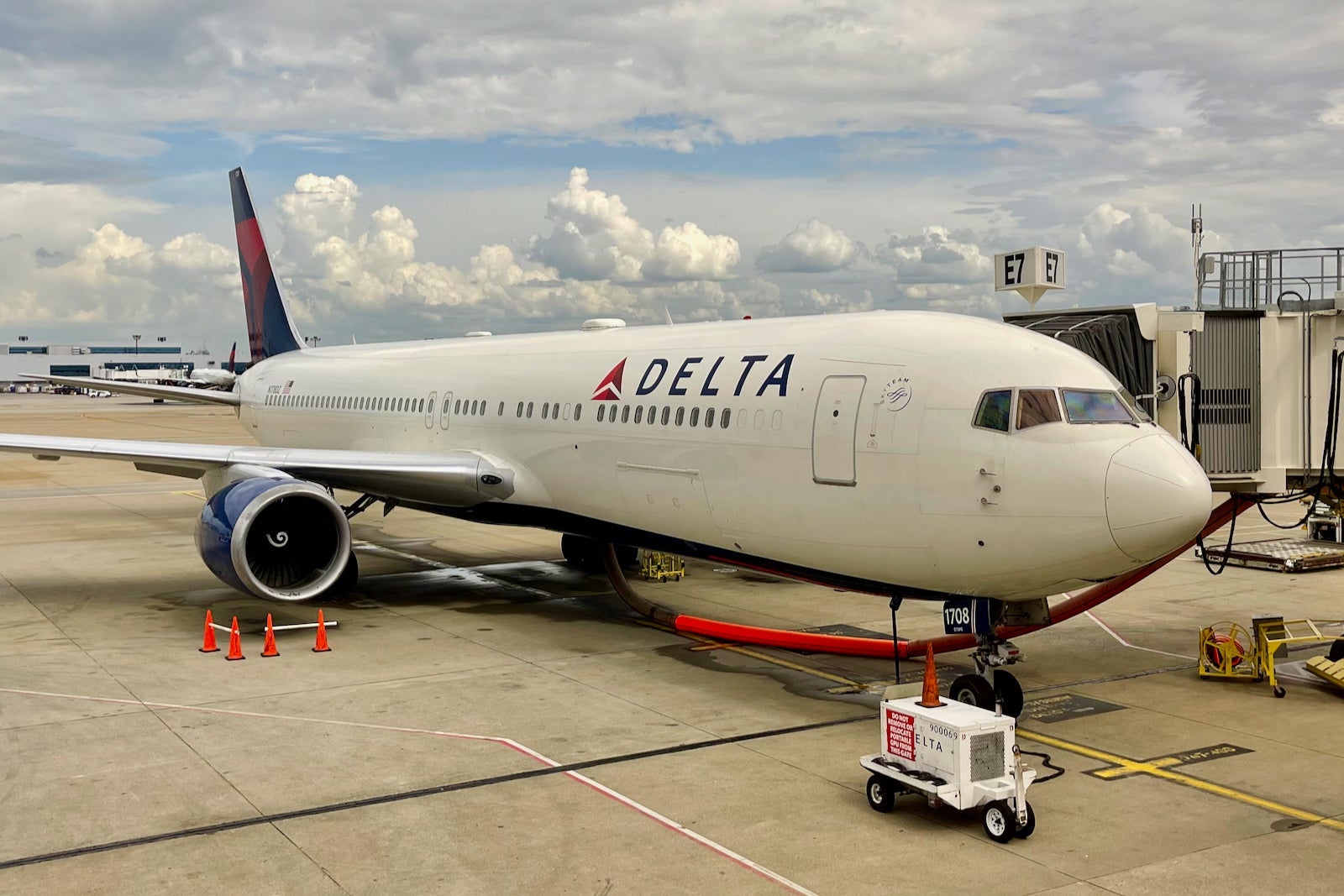
Internationally, Delta flies the 767-300 on shorter flights, like from Atlanta to Lima or New York to Madrid, both routes between 3,000 and 3,500 miles, or roughly six to seven hours. While it could make sense to splurge for biz on ultra-long-haul flights, like Delta's longest route from Atlanta to Johannesburg, the price difference might not be worth it for shorter hops.
Related: Onboard Delta's first retrofitted Boeing 767 with snazzy new cabins
Case in point: for a round-trip ticket from New York to Paris in early August, Delta's charging a whopping $6,600 for business class. Meanwhile, premium economy is "just" $1,500, a modest $500 upcharge compared to coach.
(For now, the Premium Select cabin on the 767-300 is currently being marketed as extra-legroom Comfort+, so top-tier Medallion elites can select one of these seats free of charge. Delta will likely start charging for these seats once it consistently deploys the retrofitted plane on a specific route.)
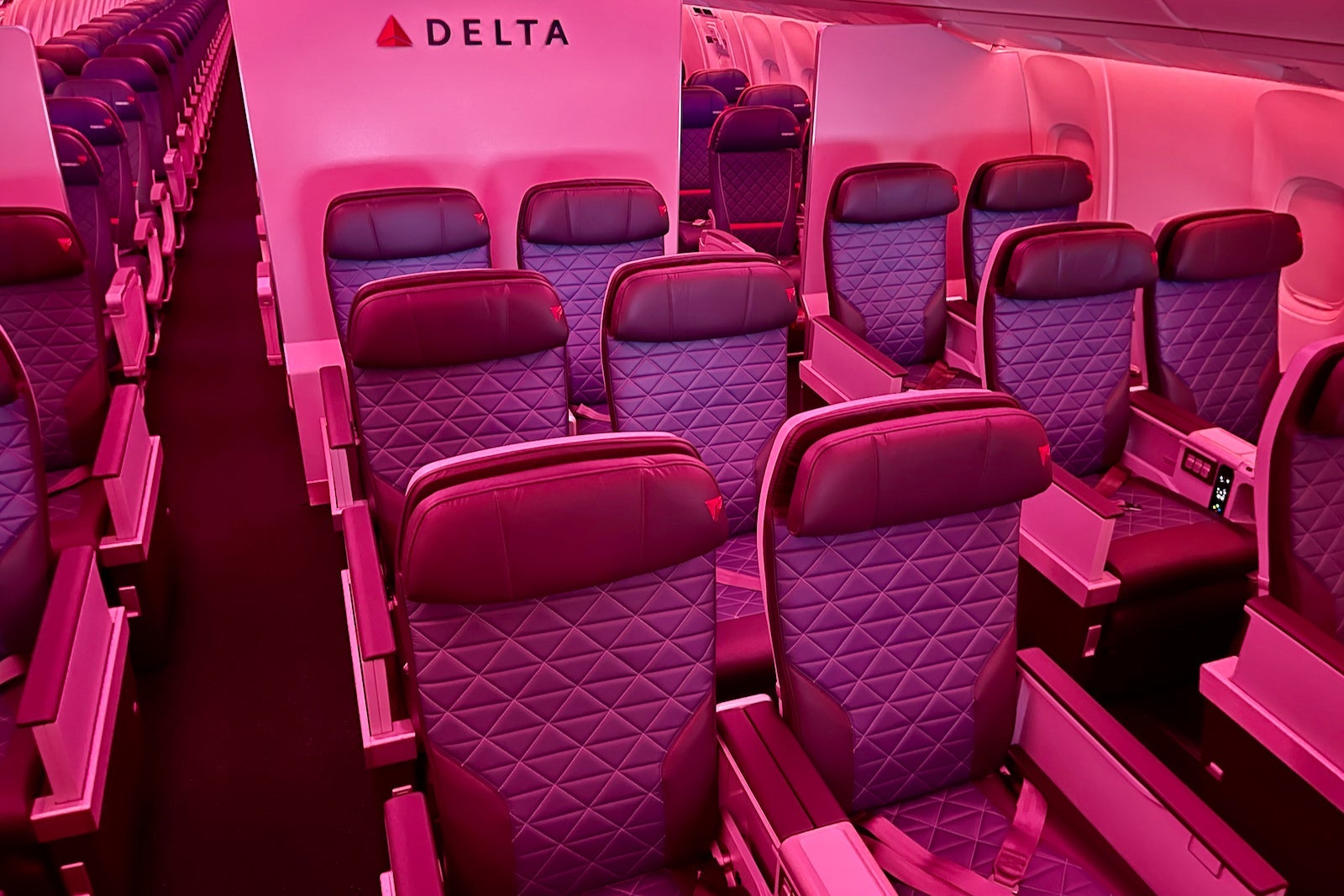
If those flights were operated by a retrofitted 767-300, there's no chance I'd fork over an additional five grand for an outdated lie-flat bed. In that case — and in many others — Premium Select might be the way to go.
TPG featured card
at American Express's secure site
Terms & restrictions apply. See rates & fees.
| 4X | Earn 4X Membership Rewards® points per dollar spent on purchases at restaurants worldwide, on up to $50,000 in purchases per calendar year, then 1X points for the rest of the year. |
| 4X | Earn 4X Membership Rewards® points per dollar spent at US supermarkets, on up to $25,000 in purchases per calendar year, then 1X points for the rest of the year. |
| 5X | Earn 5X Membership Rewards® points on prepaid hotel stays booked through AmexTravel.com or the Amex Travel App™. |
| 3X | Earn 3X Membership Rewards® points on flights booked through AmexTravel.com, the Amex Travel App™, or purchased directly from airlines. |
| 2X | Earn 2X Membership Rewards® points on prepaid car rentals booked through AmexTravel.com or the Amex Travel App™ and cruises booked and paid through AmexTravel.com. |
| 1X | Earn 1X Membership Rewards® point per dollar spent on all other eligible purchases. |
Pros
- Valuable dining and food-related credits
- Flexible rewards with airline and hotel transfer partners
- Multiple travel and purchase protections
- No foreign transaction fees
- Access to Amex Offers for additional savings (enrollment required)
Cons
- Not as useful for those living outside the U.S.
- Some may have trouble using Uber and other dining credits
- You may be eligible for as high as 100,000 Membership Rewards® Points after you spend $8,000 in eligible purchases on your new Card in your first 6 months of Card Membership. Welcome offers vary and you may not be eligible for an offer. Apply to know if you’re approved and find out your exact welcome offer amount – all with no credit score impact. If you’re approved and choose to accept the Card, your score may be impacted.
- Earn 4X Membership Rewards® points per dollar spent on purchases at restaurants worldwide, on up to $50,000 in purchases per calendar year, then 1X points for the rest of the year.
- Earn 4X Membership Rewards® points per dollar spent at US supermarkets, on up to $25,000 in purchases per calendar year, then 1X points for the rest of the year.
- Earn 5X Membership Rewards® points on prepaid hotel stays booked through AmexTravel.com or the Amex Travel App™.
- Earn 3X Membership Rewards® points on flights booked through AmexTravel.com, the Amex Travel App™, or purchased directly from airlines.
- Earn 2X Membership Rewards® points on prepaid car rentals booked through AmexTravel.com or the Amex Travel App™ and cruises booked and paid through AmexTravel.com.
- Earn 1X Membership Rewards® point per dollar spent on all other eligible purchases.
- Pay It® lets you tap in the American Express® App to quickly pay for small purchase amounts throughout the month and still earn rewards the way you usually do. Plan It® gives you the option to split up big purchases into equal monthly payments with a fixed fee. You’ll know upfront exactly how much you’ll pay.
- $120 Dining Credit: Earn up to a total of $10 in statement credits monthly when you pay with the Gold Card at Grubhub (including Seamless), Buffalo Wild Wings, Five Guys, The Cheesecake Factory, and Wonder. This can be an annual savings of up to $120. Enrollment required.
- $100 Resy Credit: Get up to $100 in statement credits each calendar year at over 10,000 qualifying U.S. Resy restaurants after you pay for eligible purchases with the American Express® Gold Card. That’s up to $50 in statement credits semi-annually. Enrollment required.
- $84 Dunkin' Credit: Earn up to $7 in monthly statement credits after you pay with the American Express® Gold Card at U.S. Dunkin’ locations. Enrollment required.
- $120 Uber Cash on Gold: Enjoy up to $120 in Uber Cash annually with your Gold Card. Just add your Card to your Uber account and you'll get $10 in Uber Cash each month to use on orders and rides in the U.S. when you select an Amex Card for your transaction.
- Enjoy complimentary Hertz Five Star® Status benefits like skipping the counter at select locations, adding an additional driver at no additional cost*, and vehicle upgrades**. Benefit enrollment and Hertz Gold+ registration are required. *Additional drivers must meet standard rental qualifications and must be a spouse or domestic partner to qualify as complimentary. Other additional drivers subject to fees. **Benefits are subject to availability and vary by location. Additional Hertz program Terms and Conditions including age restrictions apply.
- Book two nights or more with The Hotel Collection through AmexTravel.com or the Amex Travel App™ and receive a $100* credit towards eligible charges at over 1,400 upscale hotels worldwide. *Eligible charges vary by property.
- Book your travel through the Amex Travel App™ with added peace of mind – backed by American Express® service and support. Only for American Express® Card Members.
- Whenever you need us, we're here. Our Member Services team will ensure you are taken care of. From lost Card replacement to statement questions, we are available to help 24/7.
- No Foreign Transaction Fees.
- Annual Fee is $325.
- Terms Apply.