The real story behind Delta’s flight full of 1,000 lost bags — and no passengers

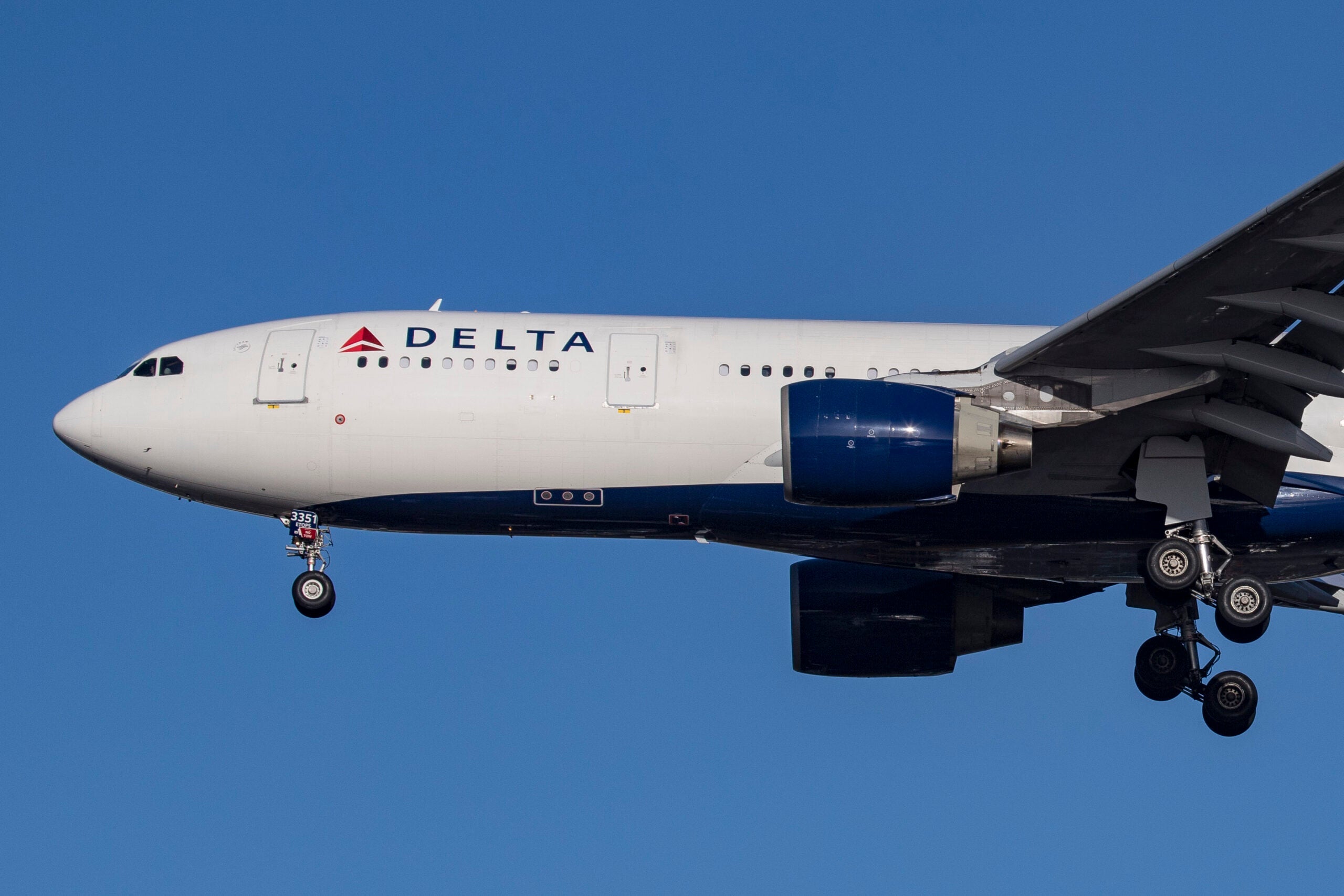
Delta CEO Ed Bastian raised eyebrows and made headlines on Wednesday when, during an earnings call with analysts, he said Delta had commissioned an aircraft just to retrieve customer luggage that had piled up at London's Heathrow Airport.
It's true that this week an Airbus A330-200 flew back to the U.S. from Heathrow with 1,000 bags and no passengers — but that's only part of the story. It wasn't initially sent there for that job.
During Wednesday's call, Bastian was asked whether the airline had been able to get its baggage handling under control after a higher number of lost bags than usual this spring and early summer.
"We had a separate charter just to repatriate bags back to customers that have been stranded because of some of the operational issues that European airports were having," Bastian said. "We did that on our own nickel just to reunite our Delta customers with their bags as quickly as possible."
In a follow-up, a spokesperson for Delta confirmed that the airline had loaded stranded luggage from Heathrow on an empty flight back to the United States.
But this wasn't a specially chartered plane that Delta sent to Heathrow on a cargo mission. Rather, this was a "creative solution," as the airline called it.
Delta was making the most out of a crummy situation that otherwise would have seen a ferry flight go to waste as a result of Heathrow limiting the number of daily passengers departing from the London hub.
Related: Delta CEO apologizes for recent flight woes, pledges a better end to summer
On Monday, July 11, Delta flight 17 had been scheduled to fly from London to Detroit before being canceled at the last minute. The cancellation was a result of the wider Heathrow passenger limits that the airport imposed due to a surge in travel demand coupled with understaffing at the airport. The situation had led to long queues, missed flights and a pile-up of bags over the last several weeks as the limited staff struggled to keep up with flights.

While passengers originally ticketed on DL17 were rebooked on other flights, the plane that was supposed to operate the flight, an Airbus A330-200 with the tail number N854NW, still needed to return to Detroit so that it could operate that evening's flight back to London, DL18.
Since the aircraft was flying back to the U.S. anyway, the crew and airline made the "operational decision" to retrieve around 1,000 passenger bags from Heathrow's luggage storage rooms and fly them back to Detroit so they could be forwarded on to their owners.
Notably, according to the Delta spokesperson (and in accordance with various safety regulations), the bags were all loaded into the cargo hold — not the passenger cabin, which remained empty.
The ferry flight, numbered DL9888, left Heathrow at 3:33 p.m., according to FlightRadar24, just under three hours after DL17 had been scheduled to depart.
Regardless of the details, news of the baggage-laden flight served to underscore the current challenges and dysfunction at Heathrow as well as other hubs in Europe, which have been caught understaffed and overwhelmed by strong travel demand.
Earlier this week, Heathrow said that it would impose a cap of 100,000 daily departing passengers through Sept. 11 — 4,000 fewer passengers than it otherwise expected to see each day — and asked airlines to stop selling tickets for the summer.
Also this week, Icelandair said that it had flown teams of baggage handlers to Amsterdam Airport Schiphol (AMS) to help ease pressure on overwhelmed staff at the Dutch hub. Similar baggage pileups appeared to be occurring at Paris-Charles de Gaulle Airport in France.
Related: Delta will pay flight attendants for working while boarding flights, a major change-up
The Delta ferry flight presented a good opportunity for the airline to put a dent in the baggage issue and showed creative and timely thinking. The airline used the opportunity to at least be able to reunite some passengers with their lost luggage, at the expense of a bit more fuel burn due to the added weight on the flight.
So while a plane did fly with just crew and bags across the ocean, that wasn't the original plan. Instead, it was Delta — creatively, and effectively —making the most of a bad situation.
TPG featured card
at American Express's secure site
Terms & restrictions apply. See rates & fees.
| 4X | Earn 4X Membership Rewards® points per dollar spent on purchases at restaurants worldwide, on up to $50,000 in purchases per calendar year, then 1X points for the rest of the year. |
| 4X | Earn 4X Membership Rewards® points per dollar spent at US supermarkets, on up to $25,000 in purchases per calendar year, then 1X points for the rest of the year. |
| 5X | Earn 5X Membership Rewards® points on prepaid hotel stays booked through AmexTravel.com or the Amex Travel App™. |
| 3X | Earn 3X Membership Rewards® points on flights booked through AmexTravel.com, the Amex Travel App™, or purchased directly from airlines. |
| 2X | Earn 2X Membership Rewards® points on prepaid car rentals booked through AmexTravel.com or the Amex Travel App™ and cruises booked and paid through AmexTravel.com. |
| 1X | Earn 1X Membership Rewards® point per dollar spent on all other eligible purchases. |
Pros
- Valuable dining and food-related credits
- Flexible rewards with airline and hotel transfer partners
- Multiple travel and purchase protections
- No foreign transaction fees
- Access to Amex Offers for additional savings (enrollment required)
Cons
- Not as useful for those living outside the U.S.
- Some may have trouble using Uber and other dining credits
- You may be eligible for as high as 100,000 Membership Rewards® Points after you spend $8,000 in eligible purchases on your new Card in your first 6 months of Card Membership. Welcome offers vary and you may not be eligible for an offer. Apply to know if you’re approved and find out your exact welcome offer amount – all with no credit score impact. If you’re approved and choose to accept the Card, your score may be impacted.
- Earn 4X Membership Rewards® points per dollar spent on purchases at restaurants worldwide, on up to $50,000 in purchases per calendar year, then 1X points for the rest of the year.
- Earn 4X Membership Rewards® points per dollar spent at US supermarkets, on up to $25,000 in purchases per calendar year, then 1X points for the rest of the year.
- Earn 5X Membership Rewards® points on prepaid hotel stays booked through AmexTravel.com or the Amex Travel App™.
- Earn 3X Membership Rewards® points on flights booked through AmexTravel.com, the Amex Travel App™, or purchased directly from airlines.
- Earn 2X Membership Rewards® points on prepaid car rentals booked through AmexTravel.com or the Amex Travel App™ and cruises booked and paid through AmexTravel.com.
- Earn 1X Membership Rewards® point per dollar spent on all other eligible purchases.
- Pay It® lets you tap in the American Express® App to quickly pay for small purchase amounts throughout the month and still earn rewards the way you usually do. Plan It® gives you the option to split up big purchases into equal monthly payments with a fixed fee. You’ll know upfront exactly how much you’ll pay.
- $120 Dining Credit: Earn up to a total of $10 in statement credits monthly when you pay with the Gold Card at Grubhub (including Seamless), Buffalo Wild Wings, Five Guys, The Cheesecake Factory, and Wonder. This can be an annual savings of up to $120. Enrollment required.
- $100 Resy Credit: Get up to $100 in statement credits each calendar year at over 10,000 qualifying U.S. Resy restaurants after you pay for eligible purchases with the American Express® Gold Card. That’s up to $50 in statement credits semi-annually. Enrollment required.
- $84 Dunkin' Credit: Earn up to $7 in monthly statement credits after you pay with the American Express® Gold Card at U.S. Dunkin’ locations. Enrollment required.
- $120 Uber Cash on Gold: Enjoy up to $120 in Uber Cash annually with your Gold Card. Just add your Card to your Uber account and you'll get $10 in Uber Cash each month to use on orders and rides in the U.S. when you select an Amex Card for your transaction.
- Enjoy complimentary Hertz Five Star® Status benefits like skipping the counter at select locations, adding an additional driver at no additional cost*, and vehicle upgrades**. Benefit enrollment and Hertz Gold+ registration are required. *Additional drivers must meet standard rental qualifications and must be a spouse or domestic partner to qualify as complimentary. Other additional drivers subject to fees. **Benefits are subject to availability and vary by location. Additional Hertz program Terms and Conditions including age restrictions apply.
- Book two nights or more with The Hotel Collection through AmexTravel.com or the Amex Travel App™ and receive a $100* credit towards eligible charges at over 1,400 upscale hotels worldwide. *Eligible charges vary by property.
- Book your travel through the Amex Travel App™ with added peace of mind – backed by American Express® service and support. Only for American Express® Card Members.
- Whenever you need us, we're here. Our Member Services team will ensure you are taken care of. From lost Card replacement to statement questions, we are available to help 24/7.
- No Foreign Transaction Fees.
- Annual Fee is $325.
- Terms Apply.