Delta to keep social distancing onboard until customer 'confidence' returns

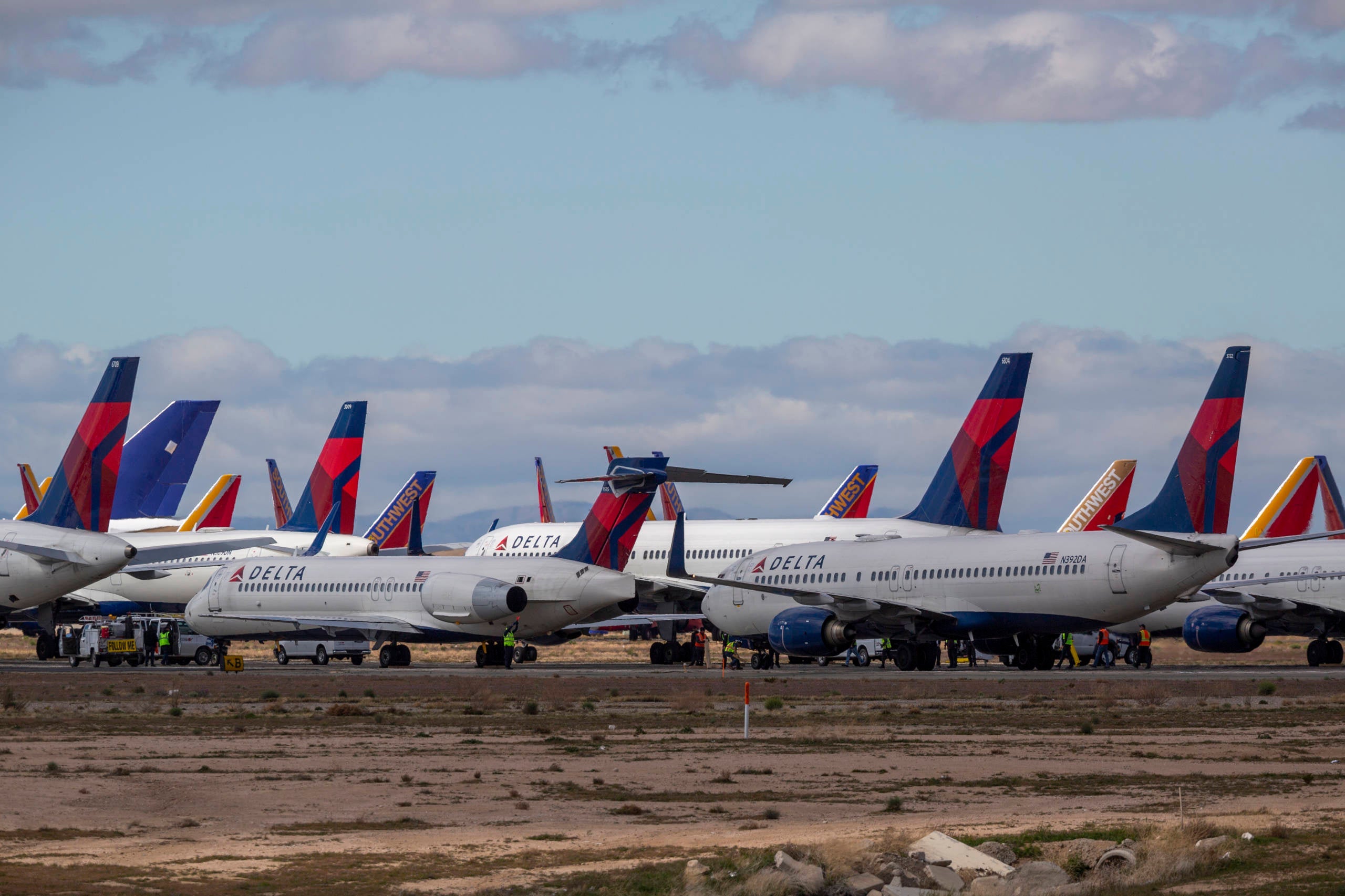
Delta Air Lines is in no hurry to lift social distancing rules on its flights during the coronavirus pandemic, extending a cap on the number of passengers on any given flight through September.
The Atlanta-based carrier will limit the number of travelers on its planes at 60% of economy seats, 50% of first class seats and 75% of Delta One suites through Sept. 30, Delta said on Wednesday. The caps allow Delta to block all middle seats on its flights.
"[Then] we'll reevaluate, if we gradually lift it at that point we'll see how the consumer confidence has grown at that point," Delta CEO Ed Bastian said of the cap expiration at the end of September during a Business Travel News (BTN) webinar on Wednesday. Sept. 30 is also the day that coronavirus aid package, or CARES Act, restrictions on airlines lift.
Sign up for the free daily TPG newsletter for more airline news!
Airlines are taking different approaches to problem of how to keep travelers and crew safe from the coronavirus onboard planes. American Airlines and United Airlines are not assigning middle seats at booking but will fill them with flyers if a flight is full. On the other hand, Southwest Airlines that offers open seating on all of is flights has capped the number of travelers that can be booked on any given flight.
"You can't be six feet apart on an airplane, middle seat or not," United CEO Scott Kirby said at an investor conference on May 28. "What makes an airplane safe is HEPA air filters, wearing a mask onboard an airplane, cleaning an airplane -- those are the things that make an airplane safe."
Blocked middle seats have, effectively, become a COVID-19 marketing tool that airlines are using to try and encourage wary travelers to take to the skies again.
Related: Which US airlines are blocking middle seats, requiring masks?
The break between airlines on onboard social distancing measures comes as the number of people flying in the U.S. creeps up. The Transportation Security Administration (TSA) screened 353,261 people on June 1, the highest number since the beginning of the crisis in March. However, the number remains below 15% of the people screened on the same day last year.

In addition, the average number of passengers on U.S. domestic flights hit 54 during the week ending May 31, according to trade group Airlines for America (A4A). The number bottomed out below 10 people per flight in April.
Delta's flights are averaging 46% to 48% full, Bastian told BTN. This is prompting the airline to add back several hundred domestic flights in June and July so that it can continue to block middle seats on all flights.
Related: Middle seats are blocked now, but don't expect that to last long
Not all is rosy. Delta still expects a recovery to take two- to three years, with domestic travel leading the way, Bastian said. The airline has retired its McDonnell Douglas MD-88s and MD-90s, and will retire its Boeing 777s, in preparation for a smaller market for the next few years.
As flights do come back, Delta plans to restore its core hubs in Atlanta (ATL), Detroit (DTW), Minneapolis/St. Paul (MSP) and Salt Lake City (SLC) first. Its coastal hubs in Boston (BOS), Los Angeles (LAX), New York John F. Kennedy (JFK) and LaGuardia (LGA), and Seattle (SEA) will return at a slower pace.
"I don't see international recovering in any meaningful way in at least 12 months," said Bastian. The focus, at least initially, will be on connecting Delta hubs to partner hubs abroad.
Bastian did not comment on the U.S. decision to bar Chinese carriers from operating scheduled passenger flights to the country beginning June 16. The move followed the failure of the Chinese government to authorize Delta and United Airlines to resume flights to Beijing and Shanghai in June.
Related: American, Delta and United plan to fly these long-haul international routes in June
TPG featured card

at Capital One's secure site
Terms & restrictions apply. See rates & fees.
| 5X miles | Earn 5X miles on hotels, vacation rentals and rental cars booked through Capital One Travel |
| 2X miles | Earn unlimited 2X miles on every purchase, every day |
Pros
- Stellar welcome offer of 75,000 miles after spending $4,000 on purchases in the first three months from account opening. Plus, a $250 Capital One Travel credit to use in your first cardholder year upon account opening.
- You'll earn 2 miles per dollar on every purchase, which means you won't have to worry about memorizing bonus categories
- Rewards are versatile and can be redeemed for a statement credit or transferred to Capital One’s transfer partners
Cons
- Highest bonus-earning categories only on travel booked via Capital One Travel
- LIMITED-TIME OFFER: Enjoy $250 to use on Capital One Travel in your first cardholder year, plus earn 75,000 bonus miles once you spend $4,000 on purchases within the first 3 months from account opening - that’s equal to $1,000 in travel
- Earn unlimited 2X miles on every purchase, every day
- Earn 5X miles on hotels, vacation rentals and rental cars booked through Capital One Travel
- Miles won't expire for the life of the account and there's no limit to how many you can earn
- Receive up to a $120 credit for Global Entry or TSA PreCheck®
- Use your miles to get reimbursed for any travel purchase—or redeem by booking a trip through Capital One Travel
- Enjoy a $50 experience credit and other premium benefits with every hotel and vacation rental booked from the Lifestyle Collection
- Transfer your miles to your choice of 15+ travel loyalty programs
- Top rated mobile app