In Search of Dark Skies: How Light Pollution Is Spurring a New Tourism Industry

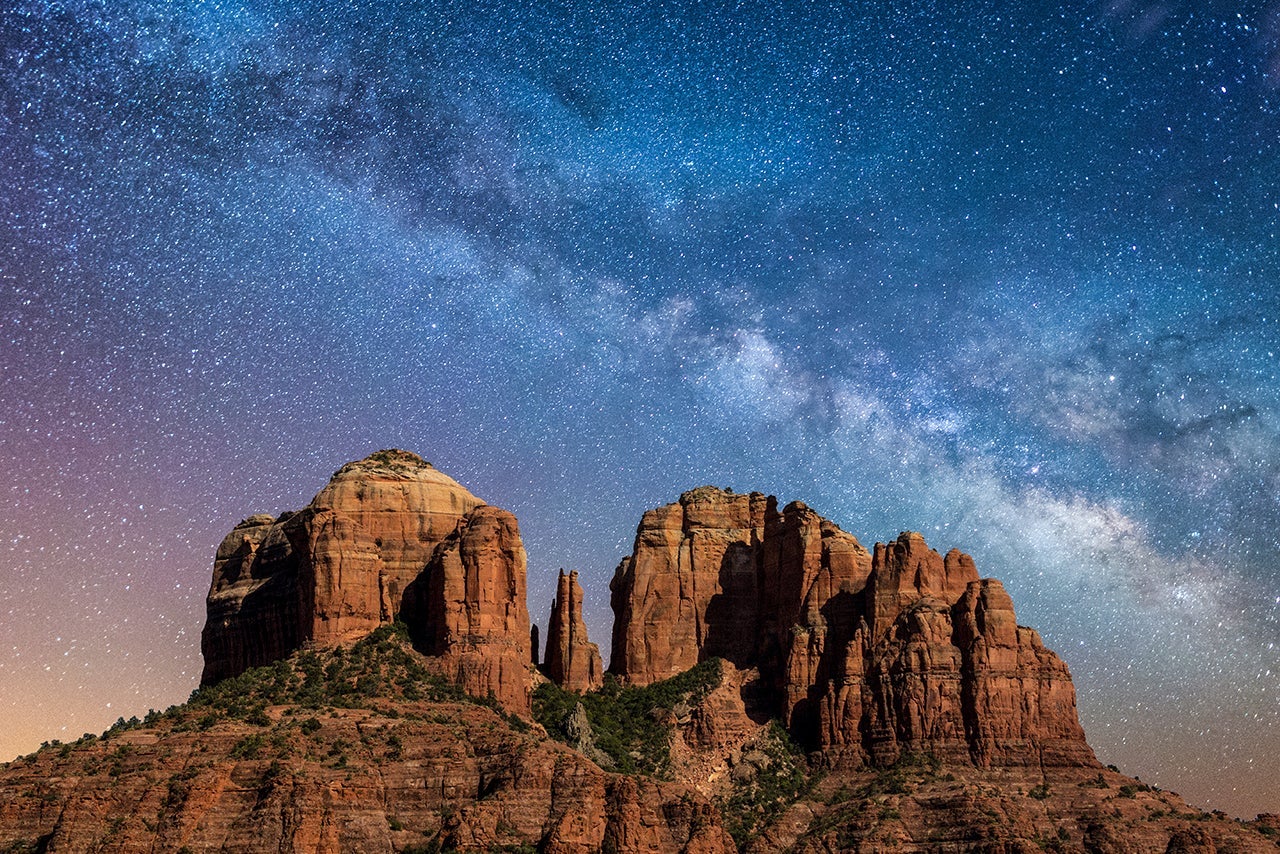
Jeff Hall sees more and more of them every year, and even though they're great for business, there's something inescapably sad about their growing numbers.
"I had a couple of visitors staring up at the sky and asking what it was — they were adults, and they'd never seen it before," Hall told The Points Guy. "And I had to explain that it was the Milky Way, and what it was: 'That's our galaxy.' They were like, 'Oh my goodness! We can actually see it!'"
Hall is the director of the Lowell Observatory in Flagstaff, Arizona, and just one of many to witness how the light pollution that seems to be encroaching everywhere has fed a growing genre of tourism. There are now travelers going to great lengths to see our increasingly rare, genuinely dark night skies. The observatory now sees 100,000 visitors a year.
An astonishing eight in 10 Americans live somewhere where they can't make out the Milky Way at night no matter the conditions, and there's no sign that figure will decrease. Overdevelopment and the rise of the standard LED (which illuminates at a bluish frequency that's especially effective at blotting out the stars when the sun goes down) are largely to blame. The older, yellowish sodium bulbs cause much less light pollution, and though there are amber-colored LEDs available, it's the standard white LEDs that have become ubiquitous.
"People are beginning to really understand that the starry night skies are a resource and an experience worth seeking out, and we've noticed a big increase in people seeking out these dark places," said Amanda Gormley, spokesperson for the International Dark-Sky Association, a nonprofit dedicated to preserving notable places around the world that are still free from light pollution.
In Sedona, Arizona, Cliff Ochser is the founder and president of Sedona Stargazing, a tourism company that caters to people coming to the northern part of the state for its legendarily great views of the nighttime lights of the Northern Hemisphere. He and his clients, who come from around the world, travel a little ways out of town, set down folding chairs and watch as humankind's oldest motion picture unfolds above them.

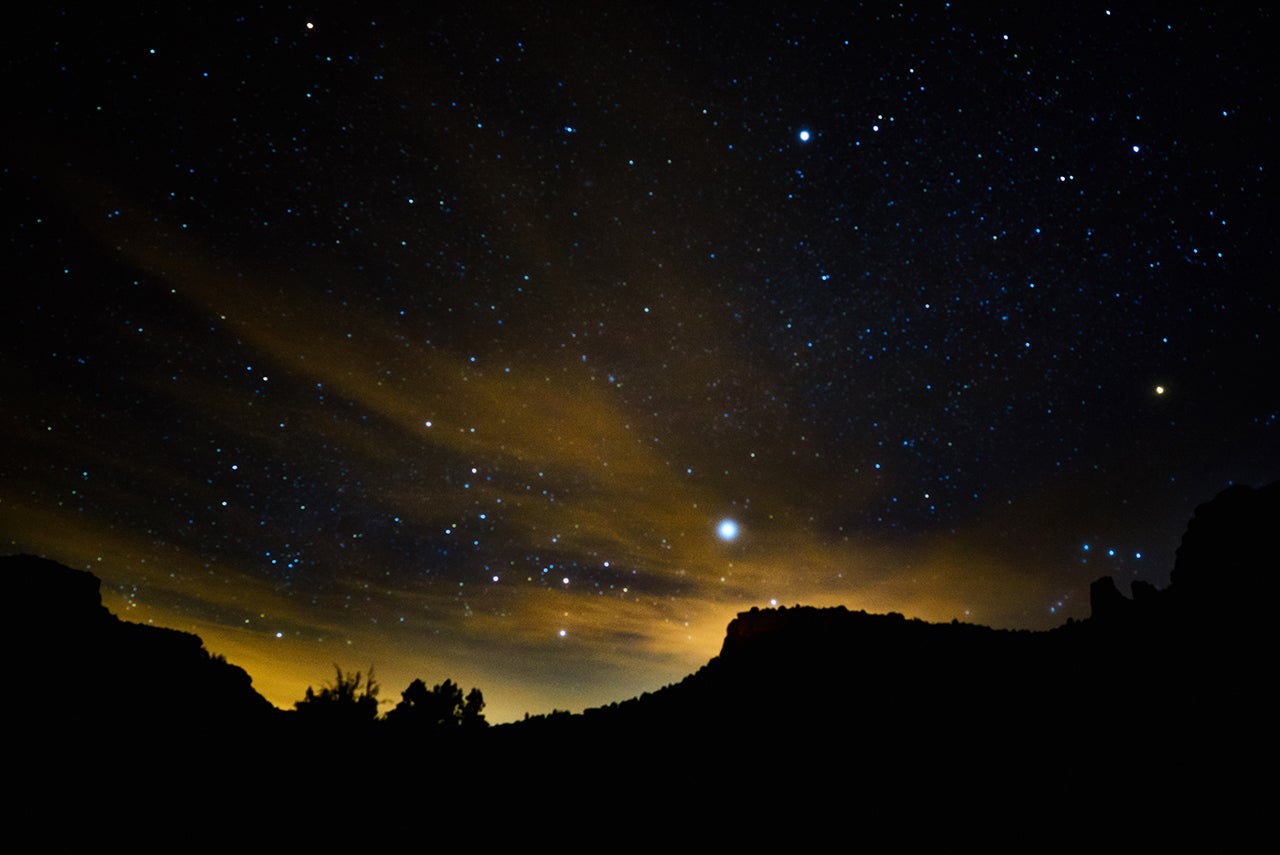
"What inspired me to start this company," Ochser explained, "is the fact that people around the world have lost their relationship with the night sky because of light pollution...They have to travel to a place where they can see. I wanted to try to reconnect people to the night sky."
In Oklahoma City, Angie Hendricks, president and CEO of Bentley Hedges Travel, placed dark-sky tourism in the rapidly growing adventure-tourism sector of travel, a twist on travel for those already drawn to hard-to-reach places. That light pollution is so pervasive makes dark-sky travel a natural match for people who want to get away from civilization. The places where they go, she said, are "really remote."
The IDA maintains a list of sites around the world that it certifies as having dutifully maintained dark skies, with locations as far-flung as New Zealand's Great Barrier Island and the Elqui Valley of northern Chile, and as close at hand as western New Mexico and north central Pennsylvania. But many of the sites are threatened by potential development and nearby urban growth, making the need to see the remaining dark skies even more pressing for astrotourism aficionados. Already, Hall noted, it's almost impossible to find a truly dark night sky anywhere in the US east of the Mississippi and north of the latitude of Dallas.
"I think there will always be remote places where you can see the night sky, but whether they're accessible to the general public is another question," Ochser said. "To have to travel to the see the sky is a real issue. The encroaching light pollution is not something to be ignored."
Featured photo by Robert Loe/Getty Images
TPG featured card

at Capital One's secure site
Terms & restrictions apply. See rates & fees.
| 5X miles | Earn 5X miles on hotels, vacation rentals and rental cars booked through Capital One Travel |
| 2X miles | Earn unlimited 2X miles on every purchase, every day |
Pros
- Stellar welcome offer of 75,000 miles after spending $4,000 on purchases in the first three months from account opening. Plus, a $250 Capital One Travel credit to use in your first cardholder year upon account opening.
- You'll earn 2 miles per dollar on every purchase, which means you won't have to worry about memorizing bonus categories
- Rewards are versatile and can be redeemed for a statement credit or transferred to Capital One’s transfer partners
Cons
- Highest bonus-earning categories only on travel booked via Capital One Travel
- LIMITED-TIME OFFER: Enjoy $250 to use on Capital One Travel in your first cardholder year, plus earn 75,000 bonus miles once you spend $4,000 on purchases within the first 3 months from account opening - that’s equal to $1,000 in travel
- Earn unlimited 2X miles on every purchase, every day
- Earn 5X miles on hotels, vacation rentals and rental cars booked through Capital One Travel
- Miles won't expire for the life of the account and there's no limit to how many you can earn
- Receive up to a $120 credit for Global Entry or TSA PreCheck®
- Use your miles to get reimbursed for any travel purchase—or redeem by booking a trip through Capital One Travel
- Enjoy a $50 experience credit and other premium benefits with every hotel and vacation rental booked from the Lifestyle Collection
- Transfer your miles to your choice of 15+ travel loyalty programs
- Top rated mobile app