The Fed plans to keep interest rates low in 2021 — what that means for your credit cards

Editor's Note
Editor's note: This post has been updated with new information.
Back in March 2020, the U.S. Federal Reserve cut its benchmark interest rate to almost zero in a historic move to help protect the economy during the COVID-19 pandemic. Prior to this, slashing rates had only been done once before — during the global recession of 2008.
But with a new administration sworn in and differing economic outlooks for 2021, what is the likelihood that the Fed will keep rates low? And what would this mean for cardholders? I sat down with Bankrate's U.S. economics reporter Sarah Foster to discuss the current state of the Fed and her predictions for 2021.
Want more TPG news and advice? Sign up for our daily newsletter
[table-of-contents /]
What is "the Fed" and what does it do?
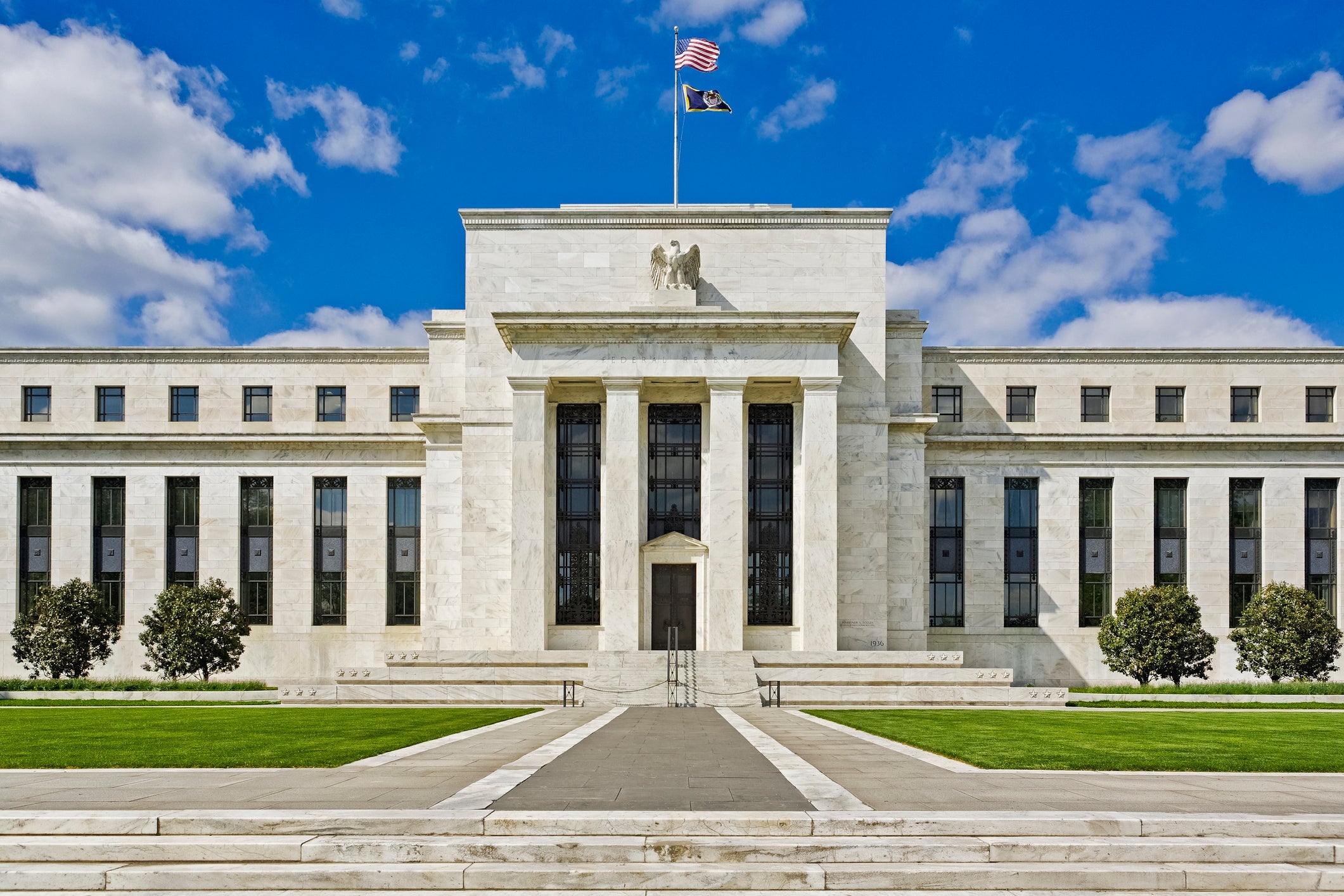
The Federal Reserve, America's centralized bank, plays a large role in the overall economic health of U.S. financial institutions. Investors and economists look to the Fed to steer the financial system in America, but what the Fed does impacts more than just those in the finance industry.
The Federal Open Market Committee (FOMC), made up of the board of governors and the 12 regional reserve banks, comes together to conduct monetary policy and set the benchmark for interest rates. The Fed can help make sure the U.S. economy doesn't grow too fast (which can cause a crash), but it also helps the U.S. maintain financial stability in a recession or other times of distress (such as the COVID-19 pandemic).
While the Fed has a number of responsibilities pertaining to economic policy, it garners the most attention when the FOMC sets interest rates. During times of financial crisis, the Fed can cut rates to help prop up the U.S. economy so that it can weather the storm — which is what it did back in 2020 by slashing rates to essentially zero. The move was an impressive one from current Fed Chairman Jerome Powell, who led his agency to cut rates in just eight days (compared to the 15 months it took the institution back during the 2008 financial crisis).
But something else to keep an eye out for is the Fed's bond-buying strategy. Since mid-2020, the Fed has been buying about $120 billion in Treasury and mortgage-backed debt a month as a way to keep credit cheap and accessible right now.

What does the Fed rate have to do with credit cards?
"When people say the Fed 'cut' rates, they actually mean the Fed reduced an interest rate that serves as a benchmark for other borrowing costs," explained Foster. "Basically, when the Fed's rate falls, so do others. It's distributed throughout the economy as a result."
The prime rate — the interest rate commercial banks use as a starting point for the interest rates they charge customers— is one example of a rate that is directly affected by the Fed's rate. The 2020 cut did lead to a drop in the average annual percentage rate (APR) across credit cards this past year, but it's unlikely you saw that directly impact your credit card interest rates.
Cardholders have seen lower APRs, but not a drastic change
After the Fed cut rates, the U.S. prime rate was set to 3.25%. Now, credit card companies charge a steep margin on top of the prime rate. It's one of the ways they make money, in addition to fees, such as an annual fee. That's why credit card debt is generally more expensive than some other types — while the prime rate has hovered between 4.0% and 5.5% in the two years leading up to 2020, the average credit card APR had been closer to around 16% to 17%.
As of now, rates have dropped from an average of 17.54% over a year ago to 16.05% since the Fed rate cut, according to CreditCards.com. That's less than a full percentage point difference, though, meaning you were unlikely to see any real impact across your credit cards. If anything, you may have seen an increase in interest rates and lower rates of approval for new lines of credit as banks tried to mitigate as much risk as possible throughout most of 2020.
Related: Ways to use a credit card responsibly

Is the Fed likely to keep interest rates low throughout 2021?
The short answer? Yes.
"It's low rates for as far as the eye can see at the Fed," said Foster. "Chairman Powell, who leads the rate-setting Federal Open Market Committee to consensus, has said that the central bank is gong to be extremely cautious before they want to lift off on the support they're providing for the economy."
Overall, the Fed isn't looking to hike interest rates anytime soon. Bankrate's December 2020 Fed Forecast survey reported half of the economists surveyed to believe we'll see 0% interest rates through 2024. And even the Fed's officials' forecast shows rates at zero for as far out as the chart lists (2023).
According to Foster, the Fed's current strategy has been to keep credit cheap and available and strive for a low unemployment rate — meaning it will want to give the U.S. labor market a long time to recover from the economic stressors caused by the coronavirus pandemic.
Will a shift in administration mean a change in leadership and strategy from the Fed?
Powell has a good reputation on both sides of the aisle with a reputation for staying out of politics. Paired with his leadership during a major regime shift within the Fed and a stellar track record of handling the economic crisis of the pandemic, it's not unlikely that he'll secure a second term as chairman. It's possible Biden may want to push for a more progressive candidate, but 56% of economists polled for Bankrate's December 2020 Fed Forecast survey predicted Powell being reappointed in 2022.
Will the Fed's continued low interest rates have negative impacts long-term?
The Fed has made it clear that it plans to continue its bond-buying strategy and keep interest rates low for the foreseeable future, which has led to some concerns that this might lead to higher inflation down the road.
"Fed officials might cheer that news at first because they've been struggling to get inflation up to target for more than a decade," said Foster. "But for [people] living on fixed income or retirees, rising price pressures tend to eat away at your purchasing power."
Others have raised concerns over potential financial instability. While the Fed has talked down both of these concerns, that doesn't mean they are outside the realm of possibility.
At the end of the day, her financial advice remains the same: Continue to save where you can and pay off high-cost debt. The Fed has delved into some never-before-seen territory here, so there's no cut-and-dry answer to what these unprecedented moves will mean for the future of the U.S. economy.
Using 0% APR credit cards
While the lower interest rate from the recent Fed rate cut may not have a massive impact on your credit card debt, one option to avoid interest when paying down debt or financing larger purchases is a 0% APR credit card.
Some cards offer a certain period of time (generally between 12 and 18 months) where you won't be charged interest on new purchases, balance transfers or both. If you have credit card balances that are accruing interest each month, you can save a lot of money by transferring those balances over to a balance transfer credit card and paying off that debt during the 0% APR period.
Alternatively, if you know you'll need to carry a balance to either make ends meet or to finance a larger purchase (some TPG staffers have invested in Pelotons, for example), you can use a card with a 0% APR intro period on new purchases to give you extra time to pay off expenses.
In either case, just make sure you're paying off your balance before the intro period ends to avoid racking up interest once the regular APR kicks in.
Bottom line
The Fed rate cut plays a significant role in the overall financial ecosystem. Cutting rates incentivizes banks to lend out money and can encourage consumer spending. Both help funnel money into the economy.
The moves the Fed and Congress have made over the past year to keep the U.S. economy from a full-blown meltdown made a significant impact in a lot of areas, but credit card consumers didn't see a lot of this impact first-hand. In fact, we saw lower credit limits and lower levels of credit card approvals from most issuers over the past year.
At TPG, we encourage paying off your bills in full each month. Of course, in times like these, that may not always be feasible for every cardholder. For those who do have to hold a balance, the rate cut from the Fed could mean a lower APR — at least in the short term.
TPG featured card

at American Express's secure site
Terms & restrictions apply. See rates & fees.
| 3X | Earn 3X Miles on Delta purchases. |
| 1X | Earn 1X Miles on all other eligible purchases. |
Pros
- Delta SkyClub access when flying Delta
- Annual companion ticket for travel on Delta (upon renewal)
- Ability to earn MQDs through spending
- Various statement credits for eligible purchases
Cons
- Steep annual fee of $650
- Other Delta cobranded cards offer superior earning categories
- Earn 100,000 Bonus Miles after you spend $6,000 or more in purchases with your new Card within the first 6 months of Card Membership and an additional 25,000 bonus miles after you make an additional $3,000 in purchases on the Card within your first 6 months, starting from the date that your account is opened. Offer Ends 04/01/2026.
- Delta SkyMiles® Reserve American Express Card Members receive 15 Visits per Medallion® Year to the Delta Sky Club® when flying Delta and can unlock an unlimited number of Visits after spending $75,000 in purchases on your Card in a calendar year. Plus, you’ll receive four One-Time Guest Passes each Medallion Year so you can share the experience with family and friends when traveling Delta together.
- Enjoy complimentary access to The Centurion® Lounge in the U.S. and select international locations (as set forth on the Centurion Lounge Website), Sidecar by The Centurion® Lounge in the U.S. (see the Centurion Lounge Website for more information on Sidecar by The Centurion® Lounge availability), and Escape Lounges when flying on a Delta flight booked with the Delta SkyMiles® Reserve American Express Card. § To access Sidecar by The Centurion® Lounge, Card Members must arrive within 90 minutes of their departing flight (including layovers). To access The Centurion® Lounge, Card Members must arrive within 3 hours of their departing flight. Effective July 8, 2026, during a layover, Card Members must arrive within 5 hours of the connecting flight.
- Receive $2,500 Medallion® Qualification Dollars with MQD Headstart each Medallion Qualification Year and earn $1 MQD for each $10 in purchases on your Delta SkyMiles® Reserve American Express Card with MQD Boost to get closer to Status next Medallion Year.
- Enjoy a Companion Certificate on a Delta First, Delta Comfort, or Delta Main round-trip flight to select destinations each year after renewal of your Card. The Companion Certificate requires payment of government-imposed taxes and fees of between $22 and $250 (for itineraries with up to four flight segments). Baggage charges and other restrictions apply. Delta Basic experiences are not eligible for this benefit.
- $240 Resy Credit: When you use your Delta SkyMiles® Reserve American Express Card for eligible purchases with U.S. Resy restaurants, you can earn up to $20 each month in statement credits. Enrollment required.
- $120 Rideshare Credit: Earn up to $10 back in statement credits each month after you use your Delta SkyMiles® Reserve American Express Card to pay for U.S. rideshare purchases with select providers. Enrollment required.
- Delta SkyMiles® Reserve American Express Card Members get 15% off when using miles to book Award Travel on Delta flights through delta.com and the Fly Delta app. Discount not applicable to partner-operated flights or to taxes and fees.
- With your Delta SkyMiles® Reserve American Express Card, receive upgrade priority over others with the same Medallion tier, product and fare experience purchased, and Million Miler milestone when you fly with Delta.
- Earn 3X Miles on Delta purchases and earn 1X Miles on all other eligible purchases.
- No Foreign Transaction Fees. Enjoy international travel without additional fees on purchases made abroad.
- $650 Annual Fee.
- Apply with confidence. Know if you're approved for a Card with no impact to your credit score. If you're approved and you choose to accept this Card, your credit score may be impacted.
- Terms Apply.
- See Rates & Fees