Skip to content

How a control tower works: Moving planes on the ground
Oct. 21, 2019
6 min read
feature
The cards we feature here are from partners who compensate us when you are approved through our site, and this may impact how or where these products appear. We don’t cover all available credit cards, but our analysis, reviews, and opinions are entirely from our editorial team. Terms apply to the offers listed on this page. Please view our advertising policy and product review methodology for more information.

This article is the first installment of a two-part story about how control towers work. Part two covers how the tower controls takeoffs and landings.

As passengers, we board the plane, get seated and play with our smartphones, patiently waiting for that moment when the plane pushes back. However, behind the scenes, there's a lot of coordination with planes from around the world landing, departing, taxiing and just about to push back.

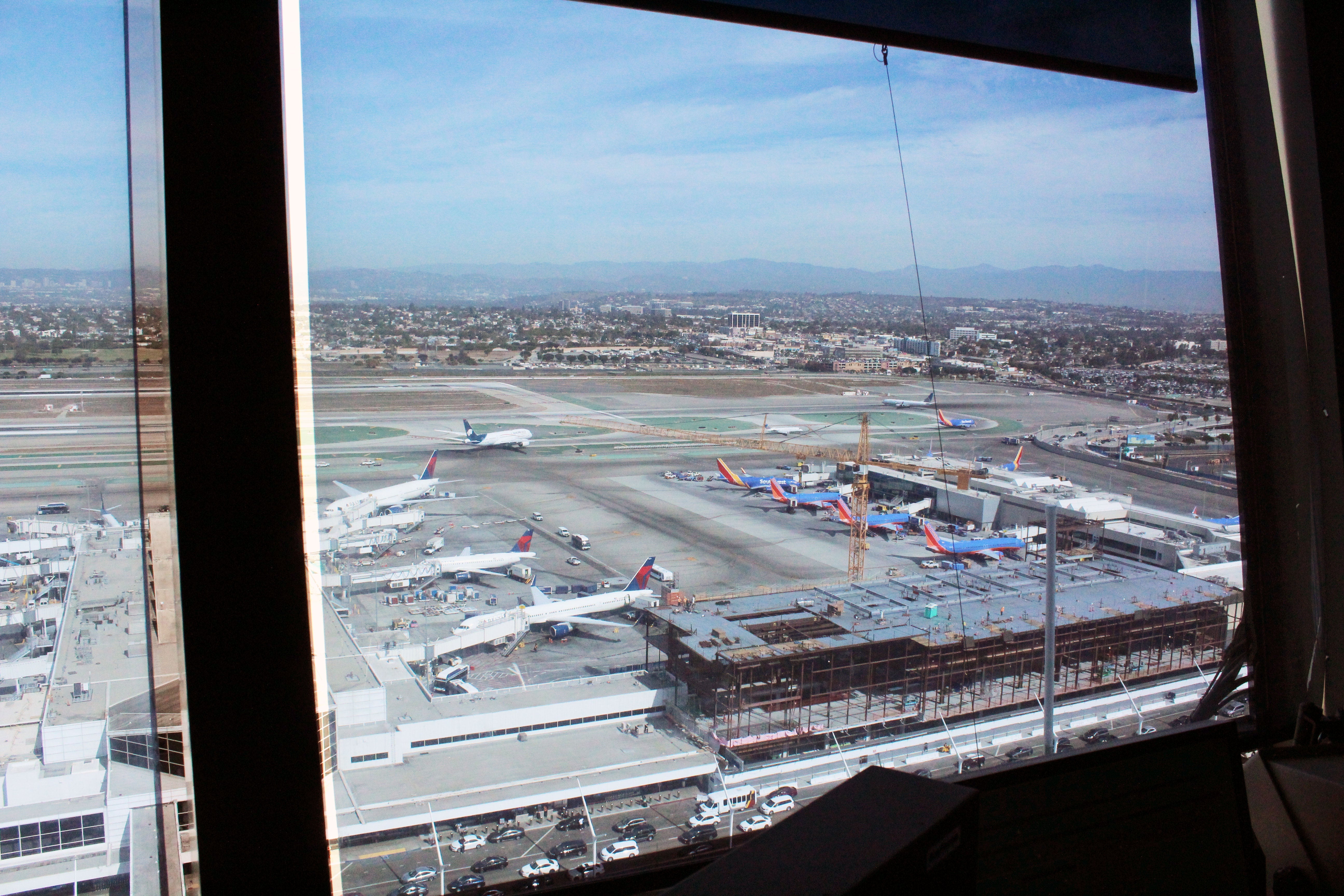
I recently visited the Los Angeles (LAX) control tower to learn how the puzzle pieces are coordinated to get the planes from the gate to the runway. The process is fascinating.

Getting Clearance

Prior to an aircraft pushing back from the gate, LAX Tower must issue a clearance of the airline's planned route and destination. 90% of commercial aircraft use a form of electronic “clearance delivery” which allows the controller and aircraft to communicate by computer. The tower can OK a requested route and the pilot can indicate compliance with the clearance with a click on their flight management computers. General-aviation aircraft (e.g. private jets) and many foreign carriers do not participate in this electronic system, so they will call up the tower on a special frequency, requesting clearance verbally. This clearance includes notice of the frequencies to monitor, initial projected direction of flight, altitude on departure and the confirmed routing.

The Ramp Tower: Airline-Controlled

Once the pilots have received this clearance, the aircraft will be given a time to push back from the gate. At this point in the process, the airlines deploy ground controllers of their own on the ramp to assist, rather than jam up the tower. These so-called "ramp towers" operate in non-movement areas. Although there is plenty of movement as planes are pushed back from the gate with tugs, it's an area not under the control of Air Traffic Control (ATC.) At LAX, United, Delta, American and Alaska all control the movement on their own aircraft near the gate. This system makes sense; the tower controllers are quite far away from the action to be able to supervise aircraft pulling in and out of gates. And these non-movement areas are tight, even at large airports like LAX.
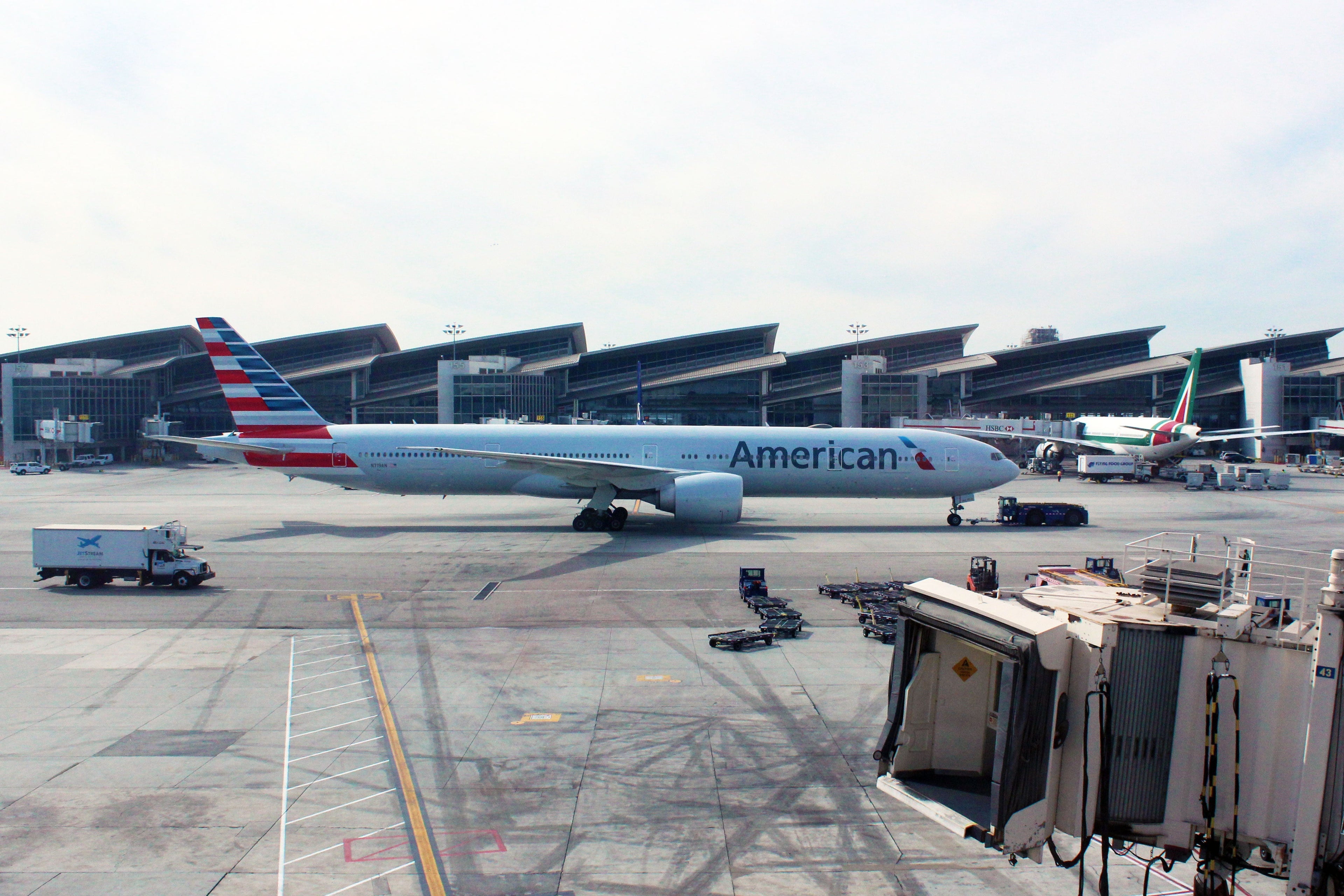
American Airlines pushed back, and now is communicating with the ground controllers in the tower.

Once the plane is pushed back, the pilots will contact the LAX Tower's ground controllers on one of a number of radio frequencies depending on where their aircraft is situated on the ramp.

Enter Paper Strips
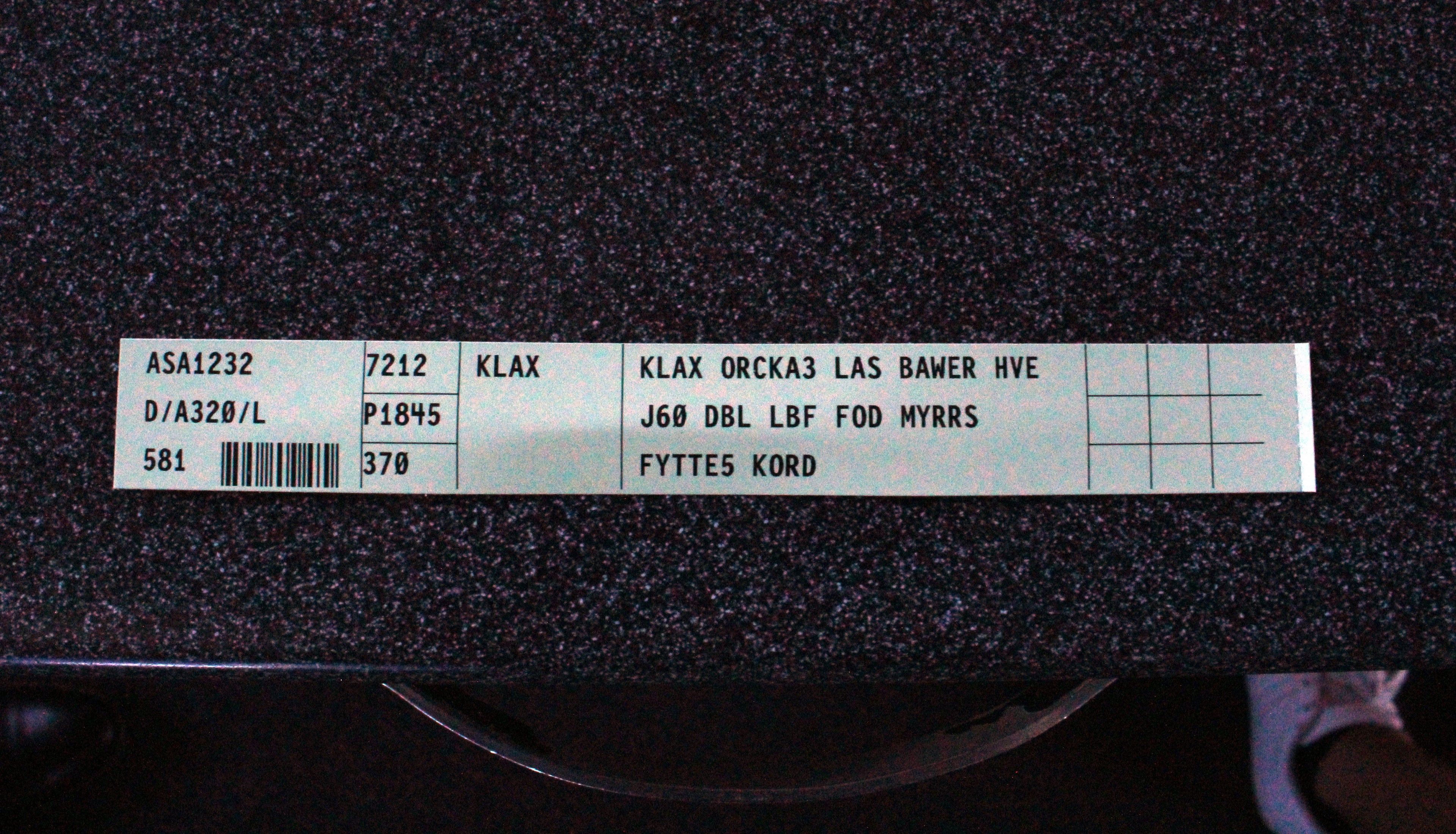
Paper strips with information relating to Alaska Airlines flight 1232 from LAX to Chicago O'Hare. From left to right: flight number, aircraft type, a computer code (581), bar code to scan into the computer, special code to designate the flight (7212), departure time in Greenwich Mean Time (18:45 or 6:45p.m.), requested altitude (37,000 feet), airport of origin in four-letter code, route of flight and destination.

Up in the tower, the flight information is printed on a small strip of paper. The ground controllers organize the flights on these strips of paper like a puzzle. They’ll electronically scan a bar code on the strip, which loads the information on a screen in front of them. They shuffle strips on their desk to keep track of aircraft movements. It’s still decidedly low-tech, but a system that works. One controller will transfer responsibility for the aircraft along the chain, and the paper signifies that transfer.
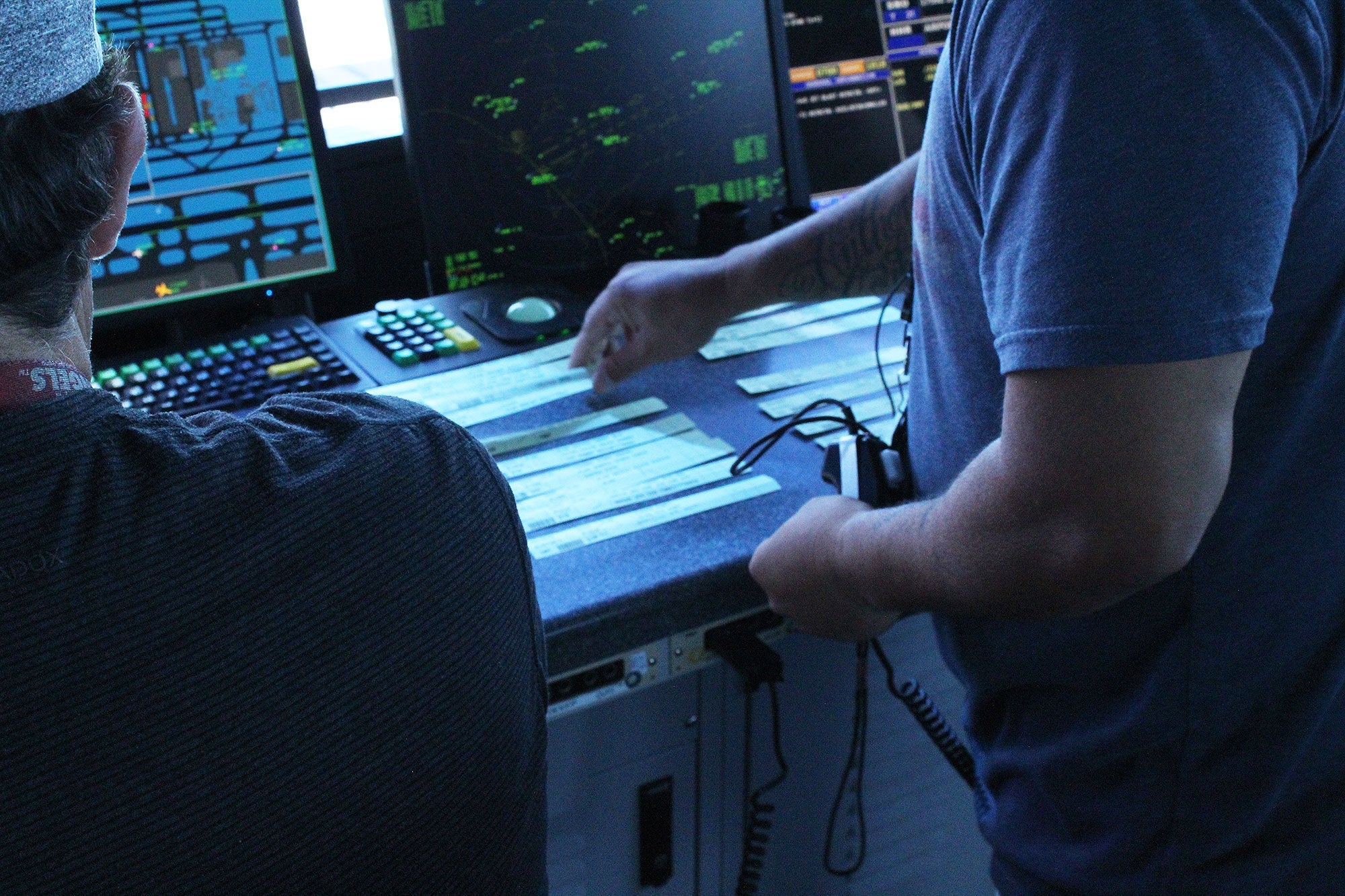
Organizing the flights at the ground controller's station.

The ground controller will assign a route for the aircraft to taxi, which depends on where the aircraft starts on the ramp, its wingspan, and where she’s heading. (You can follow along on your route, watching for the taxiway markings along the route.) Some aircraft, such as the Boeing 777-300ER, the A380 and the Boeing 747-8, are too large for some taxiways, so they have special taxi routes designated for them. This adds to the complexity of getting so many aircraft from the gate to the runway without clipping wings.
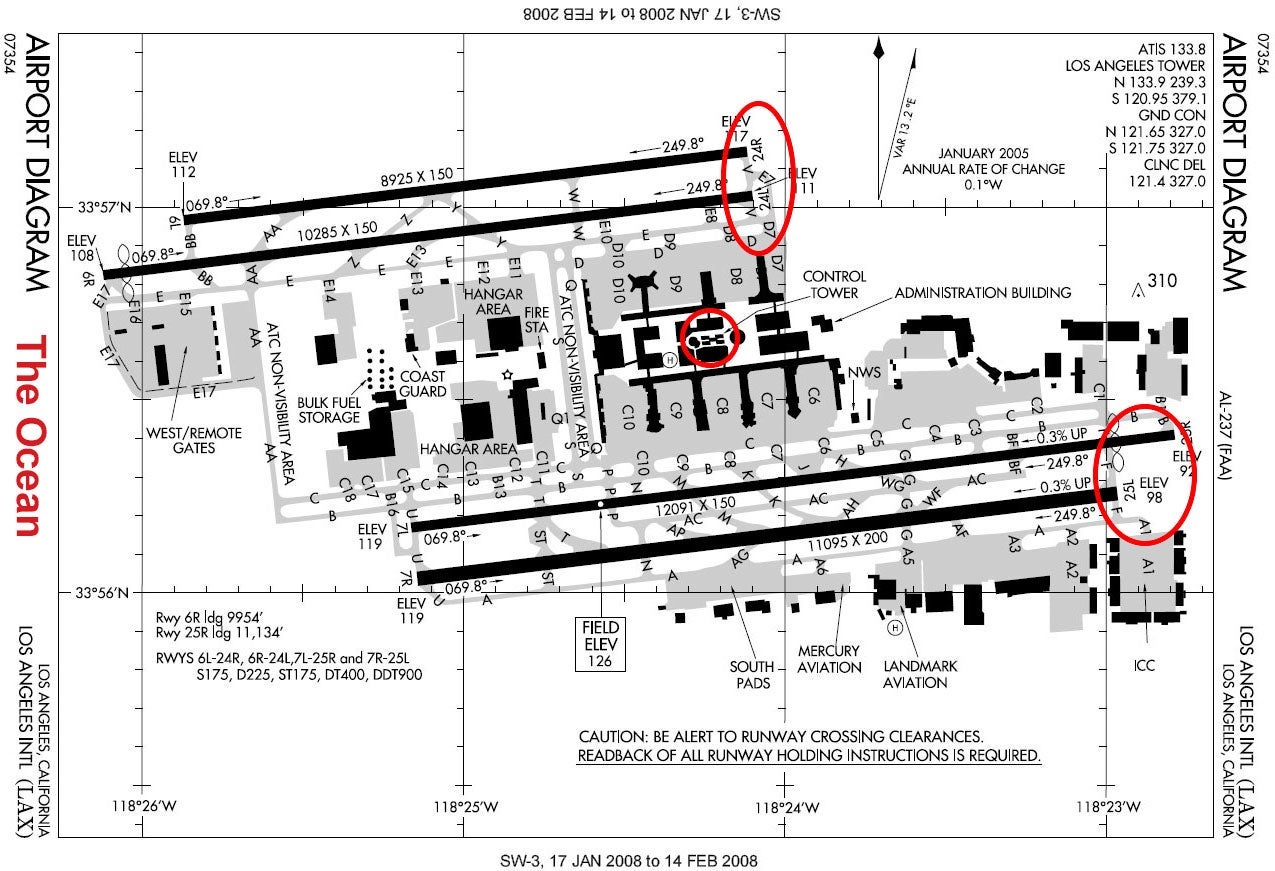
LAX airport diagram, showing the location of the Pacific Ocean. the tower and the runways.

Sometimes, aircraft from a particular gate will request a route that requires them to cross to the other side of the field. At LAX, this takes place on taxiway Q and S (seen in the middle of the airport diagram above). In this case, a ground controller on one side of the tower will physically walk the flight strip over to his colleague on the opposite side of the cab, remaining at all times hooked in to their radio.

Daily Newsletter
Reward your inbox with the TPG Daily newsletter
Join over 700,000 readers for breaking news, in-depth guides and exclusive deals from TPG’s experts

Quarter football

At LAX, the tower is in the middle of four sets of parallel runways. As the plane begins to taxi across the field to the other side of the airport, so goes the strip, as described above.

Once the aircraft is nearing a runway, the ground controller will physically pass the strip to the local, tower controller.

And by pass, I mean flick the strip down a long table to the local controller, like quarter football.

A ground controller passes a flight strip to the local controller. (Not a bad toss!)

The Federal Aviation Administration is working on electronic paper strips, rolling out the transition from tower to tower over time. LAX is slated to go live with the system in 2021. But these paper slips have been tried and true for decades.

Finally, the local controller will issue the takeoff clearance to the pilots.

Traffic jam
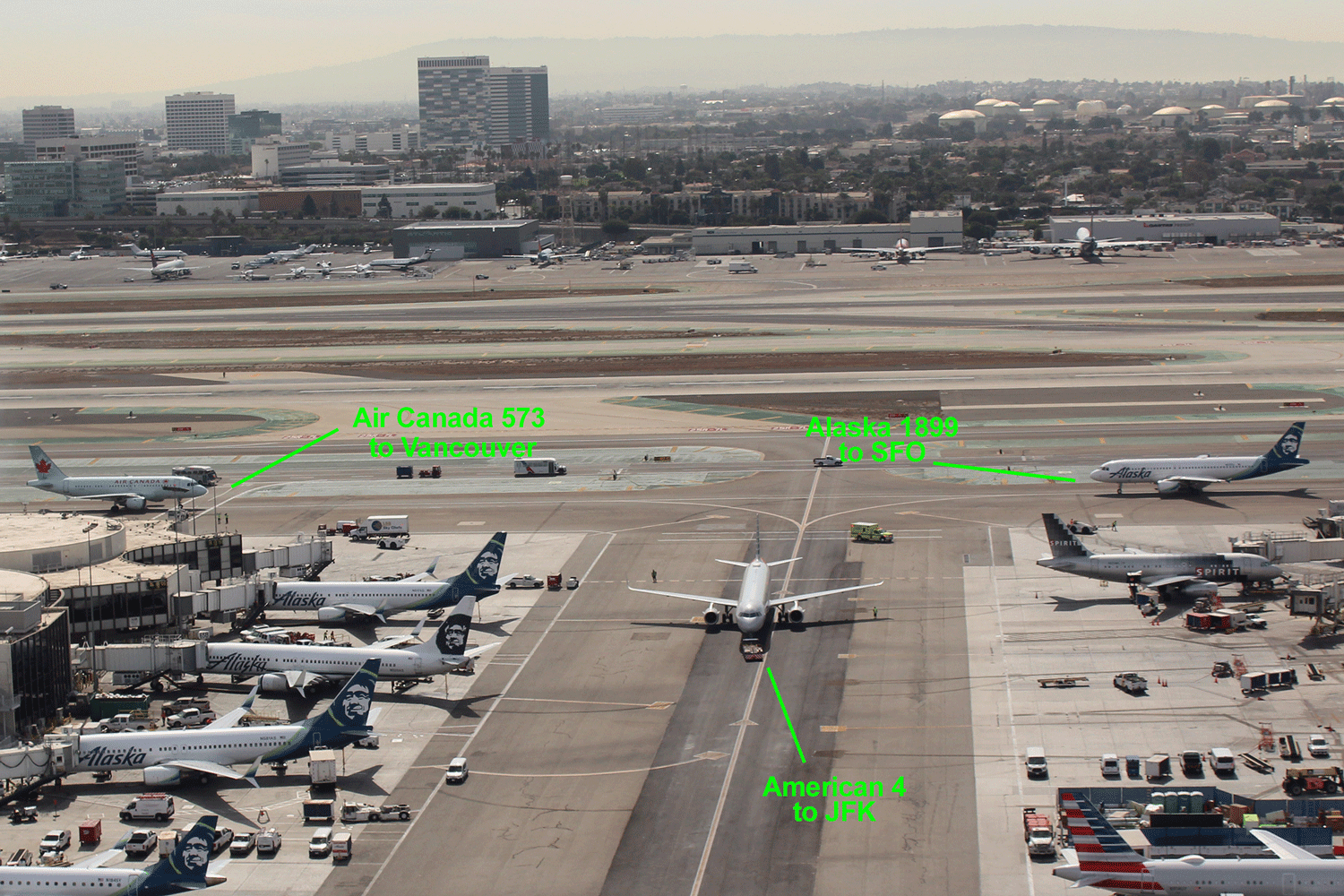
Nose to nose.

In the image above, American Airlines 4 (an A321T on the way to JFK) has pushed back, leaving the gate at 11:31 AM. The American ramp tower will have controlled the movements of this aircraft to this point, after which the American pilot will call up the tower requesting taxi instructions.

Already on a taxiway and nose to nose, you'll see Air Canada 573 (an Airbus A319 on the way to Vancouver) and Alaska 1899 (an Airbus A320 on the way to SFO). The Air Canada jet pushed back earlier than Alaska and has an earlier departure time; ground control called for it to taxi out with the Alaska plane following behind. Each plane departed on runway 24L, making a right turn northbound after takeoff.

Ground control is a highly coordinated, moving puzzle; this is how the puzzle is made.

Mike Arnot is the founder of Boarding Pass NYC, a New York-based travel brand, and a marketing consultant to airlines, none of which appear in this story.

All photos by the author.

TPG featured card

Best for dining at restaurants
TPG Editor‘s Rating
4 / 5
Go to review
Apply for American Express® Gold Card
at American Express's secure site

Rewards

1 - 4X points

Intro offer

As High As 100,000 points. Find Out Your Offer.

Annual Fee

$325

Recommended Credit

Excellent to Good

Why We Chose It

There’s a lot to love about the Amex Gold. It’s a fan favorite thanks to its fantastic bonus-earning rates at restaurants worldwide and at U.S. supermarkets. If you’re hitting the skies soon, you’ll also earn bonus Membership Rewards points on travel. Paired with up to $120 in Uber Cash annually (for U.S. Uber rides or Uber Eats orders, card must be added to Uber app and you can redeem with any Amex card), up to $120 in annual dining statement credits to be used with eligible partners, an up to $84 Dunkin’ credit each year at U.S. Dunkin Donuts and an up to $100 Resy credit annually, there’s no reason that foodies shouldn’t add the Amex Gold to their wallet. These benefits alone are worth more than $400, which offsets the $325 annual fee on the Amex Gold card. Enrollment is required for select benefits. (Partner offer)

Pros

  • 4 points per dollar spent on dining at restaurants worldwide and U.S. supermarkets (on the first $50,000 in purchases per calendar year; then 1 point per dollar spent thereafter and $25,000 in purchases per calendar year; then 1 point per dollar spent thereafter, respectively)
  • 3 points per dollar spent on flights booked directly with the airline or with amextravel.com
  • Packed with credits foodies will enjoy
  • Solid welcome bonus

Cons

  • Not as useful for those living outside the U.S.
  • Some may have trouble using Uber and other dining credits
  • You may be eligible for as high as 100,000 Membership Rewards® Points after you spend $6,000 in eligible purchases on your new Card in your first 6 months of Card Membership. Welcome offers vary and you may not be eligible for an offer. Apply to know if you’re approved and find out your exact welcome offer amount – all with no credit score impact. If you’re approved and choose to accept the Card, your score may be impacted.
  • Earn 4X Membership Rewards® points per dollar spent on purchases at restaurants worldwide, on up to $50,000 in purchases per calendar year, then 1X points for the rest of the year.
  • Earn 4X Membership Rewards® points per dollar spent at US supermarkets, on up to $25,000 in purchases per calendar year, then 1X points for the rest of the year.
  • Earn 3X Membership Rewards® points per dollar spent on flights booked directly with airlines or on AmexTravel.com.
  • Earn 2X Membership Rewards® points per dollar spent on prepaid hotels and other eligible purchases booked on AmexTravel.com.
  • Earn 1X Membership Rewards® point per dollar spent on all other eligible purchases.
  • $120 Uber Cash on Gold: Add your Gold Card to your Uber account and get $10 in Uber Cash each month to use on orders and rides in the U.S. when you select an American Express Card for your transaction. That’s up to $120 Uber Cash annually. Plus, after using your Uber Cash, use your Card to earn 4X Membership Rewards® points for Uber Eats purchases made with restaurants or U.S. supermarkets. Point caps and terms apply.
  • $84 Dunkin' Credit: With the $84 Dunkin' Credit, you can earn up to $7 in monthly statement credits after you enroll and pay with the American Express® Gold Card at U.S. Dunkin' locations. Enrollment is required to receive this benefit.
  • $100 Resy Credit: Get up to $100 in statement credits each calendar year after you pay with the American Express® Gold Card to dine at U.S. Resy restaurants or make other eligible Resy purchases. That's up to $50 in statement credits semi-annually. Enrollment required.
  • $120 Dining Credit: Satisfy your cravings, sweet or savory, with the $120 Dining Credit. Earn up to $10 in statement credits monthly when you pay with the American Express® Gold Card at Grubhub, The Cheesecake Factory, Goldbelly, Wine.com, and Five Guys. Enrollment required.
  • Explore over 1,000 upscale hotels worldwide with The Hotel Collection and receive a $100 credit towards eligible charges* with every booking of two nights or more through AmexTravel.com. *Eligible charges vary by property.
  • No Foreign Transaction Fees.
  • Annual Fee is $325.
  • Terms Apply.
Apply for American Express® Gold Card
at American Express's secure site
Terms & restrictions apply. See rates & fees
Best for dining at restaurants
TPG Editor‘s Rating
4 / 5
Go to review

Rewards Rate

4XEarn 4X Membership Rewards® points per dollar spent on purchases at restaurants worldwide, on up to $50,000 in purchases per calendar year, then 1X points for the rest of the year.
4XEarn 4X Membership Rewards® points per dollar spent at US supermarkets, on up to $25,000 in purchases per calendar year, then 1X points for the rest of the year.
3XEarn 3X Membership Rewards® points per dollar spent on flights booked directly with airlines or on AmexTravel.com.
2XEarn 2X Membership Rewards® points per dollar spent on prepaid hotels and other eligible purchases booked on AmexTravel.com.
1XEarn 1X Membership Rewards® point per dollar spent on all other eligible purchases.
  • Intro Offer

    As High As 100,000 points. Find Out Your Offer.
  • Annual Fee

    $325
  • Recommended Credit

    Excellent to Good

Why We Chose It

There’s a lot to love about the Amex Gold. It’s a fan favorite thanks to its fantastic bonus-earning rates at restaurants worldwide and at U.S. supermarkets. If you’re hitting the skies soon, you’ll also earn bonus Membership Rewards points on travel. Paired with up to $120 in Uber Cash annually (for U.S. Uber rides or Uber Eats orders, card must be added to Uber app and you can redeem with any Amex card), up to $120 in annual dining statement credits to be used with eligible partners, an up to $84 Dunkin’ credit each year at U.S. Dunkin Donuts and an up to $100 Resy credit annually, there’s no reason that foodies shouldn’t add the Amex Gold to their wallet. These benefits alone are worth more than $400, which offsets the $325 annual fee on the Amex Gold card. Enrollment is required for select benefits. (Partner offer)

Pros

  • 4 points per dollar spent on dining at restaurants worldwide and U.S. supermarkets (on the first $50,000 in purchases per calendar year; then 1 point per dollar spent thereafter and $25,000 in purchases per calendar year; then 1 point per dollar spent thereafter, respectively)
  • 3 points per dollar spent on flights booked directly with the airline or with amextravel.com
  • Packed with credits foodies will enjoy
  • Solid welcome bonus

Cons

  • Not as useful for those living outside the U.S.
  • Some may have trouble using Uber and other dining credits
  • You may be eligible for as high as 100,000 Membership Rewards® Points after you spend $6,000 in eligible purchases on your new Card in your first 6 months of Card Membership. Welcome offers vary and you may not be eligible for an offer. Apply to know if you’re approved and find out your exact welcome offer amount – all with no credit score impact. If you’re approved and choose to accept the Card, your score may be impacted.
  • Earn 4X Membership Rewards® points per dollar spent on purchases at restaurants worldwide, on up to $50,000 in purchases per calendar year, then 1X points for the rest of the year.
  • Earn 4X Membership Rewards® points per dollar spent at US supermarkets, on up to $25,000 in purchases per calendar year, then 1X points for the rest of the year.
  • Earn 3X Membership Rewards® points per dollar spent on flights booked directly with airlines or on AmexTravel.com.
  • Earn 2X Membership Rewards® points per dollar spent on prepaid hotels and other eligible purchases booked on AmexTravel.com.
  • Earn 1X Membership Rewards® point per dollar spent on all other eligible purchases.
  • $120 Uber Cash on Gold: Add your Gold Card to your Uber account and get $10 in Uber Cash each month to use on orders and rides in the U.S. when you select an American Express Card for your transaction. That’s up to $120 Uber Cash annually. Plus, after using your Uber Cash, use your Card to earn 4X Membership Rewards® points for Uber Eats purchases made with restaurants or U.S. supermarkets. Point caps and terms apply.
  • $84 Dunkin' Credit: With the $84 Dunkin' Credit, you can earn up to $7 in monthly statement credits after you enroll and pay with the American Express® Gold Card at U.S. Dunkin' locations. Enrollment is required to receive this benefit.
  • $100 Resy Credit: Get up to $100 in statement credits each calendar year after you pay with the American Express® Gold Card to dine at U.S. Resy restaurants or make other eligible Resy purchases. That's up to $50 in statement credits semi-annually. Enrollment required.
  • $120 Dining Credit: Satisfy your cravings, sweet or savory, with the $120 Dining Credit. Earn up to $10 in statement credits monthly when you pay with the American Express® Gold Card at Grubhub, The Cheesecake Factory, Goldbelly, Wine.com, and Five Guys. Enrollment required.
  • Explore over 1,000 upscale hotels worldwide with The Hotel Collection and receive a $100 credit towards eligible charges* with every booking of two nights or more through AmexTravel.com. *Eligible charges vary by property.
  • No Foreign Transaction Fees.
  • Annual Fee is $325.
  • Terms Apply.